Twitter AI Coding - 2026-09-11
1. What People Are Talking About
1.1 Antigravity shipped more visible workflow surfaces, but limits stayed attached (🡒)
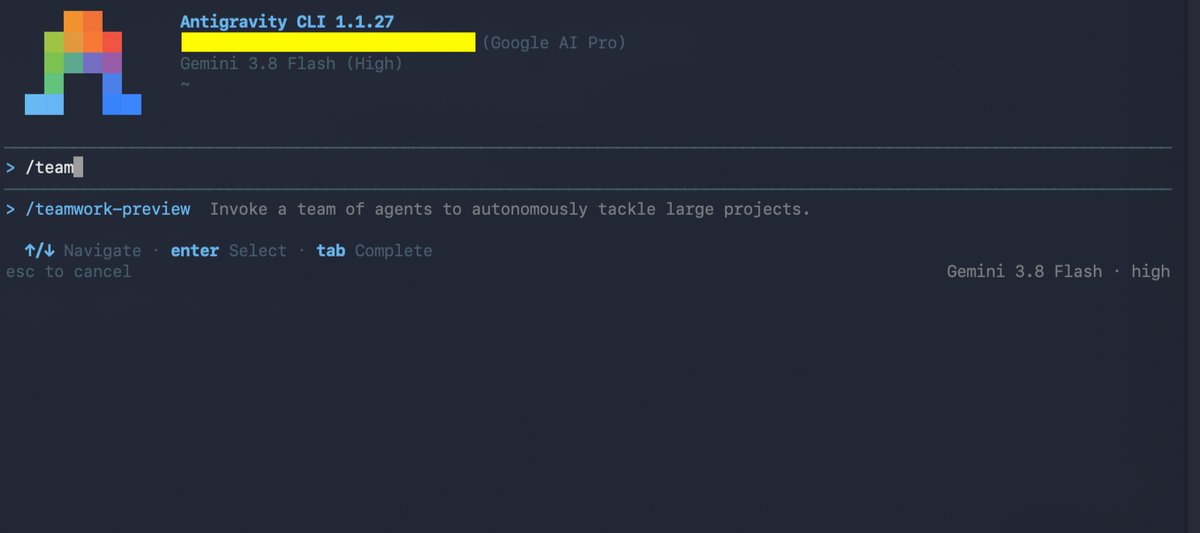
Antigravity remained one of the loudest product threads, but the conversation shifted from abstract promise to concrete workflow surfaces. At least three high-signal items covered split views, quote-copy and artifact controls, improved teamwork mode, and /boost, while still tying those gains to five-hour limits and permission friction.
@antigravity threaded (569 likes, 32 replies, 188 bookmarks, 31,071 views) a compact set of workflow shortcuts: split agent view, quote-copy into the next prompt, terminal split view, full-screen artifacts, and audio-file generation. The thread mattered because each reply named a concrete action rather than a vague productivity claim.
@googledevs summarized (246 likes, 28 replies, 48 bookmarks, 32,740 views) the broader platform rollouts around Antigravity: AlphaGenome Atlas Skills, a /boost multi-agent reasoning workflow, improved /teamwork-preview, inline generative artifacts, and more flexible git and terminal controls. Replies immediately pushed on the missing operational layer, especially an "always allow" permission system and the option to delegate work to cheaper models while keeping a stronger coordinator on top.
@ai_for_success reported (130 likes, 13 replies, 23 bookmarks, 5,508 views) that Teamwork Preview handled complex projects well because multiple agents plus verification worked better than a single loop, but the same setup could hit a Pro five-hour limit in 30 to 40 minutes on high settings. That combination made the theme more credible: users were not only praising the feature, they were naming the ceiling they hit when it worked.
Discussion insight: The strongest replies did not reject Antigravity's new features. They asked for safer defaults around permissions and cheaper worker-model delegation so the coordinator features would stay usable under rate limits.
Comparison to prior day: September 10 discussion centered more on trust and quota stress around Antigravity. September 11 kept the limit complaint, but the main evidence moved toward official product surfaces and how quickly people could put them to work.
1.2 Persistent coordinators and spec-first workflows gained ground over one-shot prompting (🡕)
The second clear theme was that people increasingly treated orchestration and specification as the real product, not just model quality. At least four items argued for persistent coordinator threads, spec-first development, and reusable workflow packages that reduce context drift before code generation starts.
@stretchcloud argued (19 likes, 6 replies, 7 bookmarks, 2,039 views) that Cursor Projects mattered less for raw subagent count than for keeping one coordinator thread alive across the life of a project, delegating work in the cloud and reacting to external signals like Slack bug reports. The quoted Cursor announcement supplied the direct product claim, while replies added a useful caveat: a coordinator that never edits code still has to prove that the delegated work actually succeeded.
@sauda_coder claimed (60 likes, 22 replies, 6 bookmarks, 778 views) GitHub's Spec Kit addresses "the biggest problem with vibe coding" by forcing a constitution, specification, clarification, plan, tasks, and only then implementation. The linked repository confirms a broader spec-driven process with a later converge step, while replies raised the practical question of how specs stay synchronized after APIs and tests change during implementation.
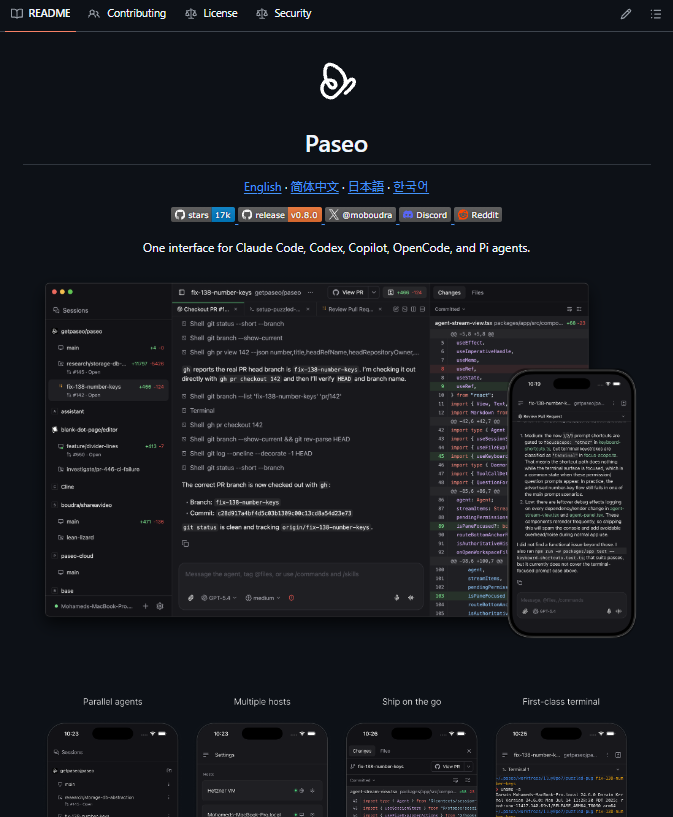
@RodmanAi collected (29 likes, 21 replies, 21 bookmarks, 1,011 views) a workflow-heavy repo list spanning gstack, Superpowers, OpenCode, Agent Skills, and Paseo. The attached images made the list more than bookmarks by surfacing real interfaces for multi-agent orchestration and approval-based plan-first development, while replies asked the right skeptical question: which of these tools improve time-to-merge on real tasks rather than just looking organized.
Discussion insight: Replies across both the Cursor Projects and Spec Kit threads converged on the same concern: orchestration only helps if the coordinator can verify reality, and a spec only helps if it stays aligned with a moving codebase.
Comparison to prior day: September 10 builder discussion focused more on sidecars for messaging, feedback, and publishing. September 11 moved the control point earlier, toward persistent coordinators and spec-first workflows that try to prevent drift before code is written.
1.3 Copilot looked less like one model and more like a routing and pricing layer (🡕)
Copilot's share of the conversation broadened from model quality into routing, custom providers, discounts, and confusing defaults. At least five items covered BYOK model access, HydraFusion orchestration, temporary Sol pricing, Astra's enablement and billing rules, and the tier logic visible in the model picker.
@code announced (162 likes, 9 replies, 35 bookmarks, 15,846 views) Bring Your Own Key support for Azure-hosted models inside GitHub Copilot in VS Code. The tweet framed it as choosing the right model for each coding task, and the linked documentation confirms that BYOK routes Copilot chat and agent requests to user-provided model endpoints under the user's or organization's own billing.
@GHchangelog linked (10 likes, 3 bookmarks, 1,248 views) GitHub's weekly release note, which added Project HydraFusion for adaptive model routing in Copilot CLI, Jira context in the Copilot app, new VS Code agent automations, and expanded enterprise controls in JetBrains. The HydraFusion blog fills in the operating model: single-model, cascade, and critique execution patterns chosen to balance quality, cost, and latency.
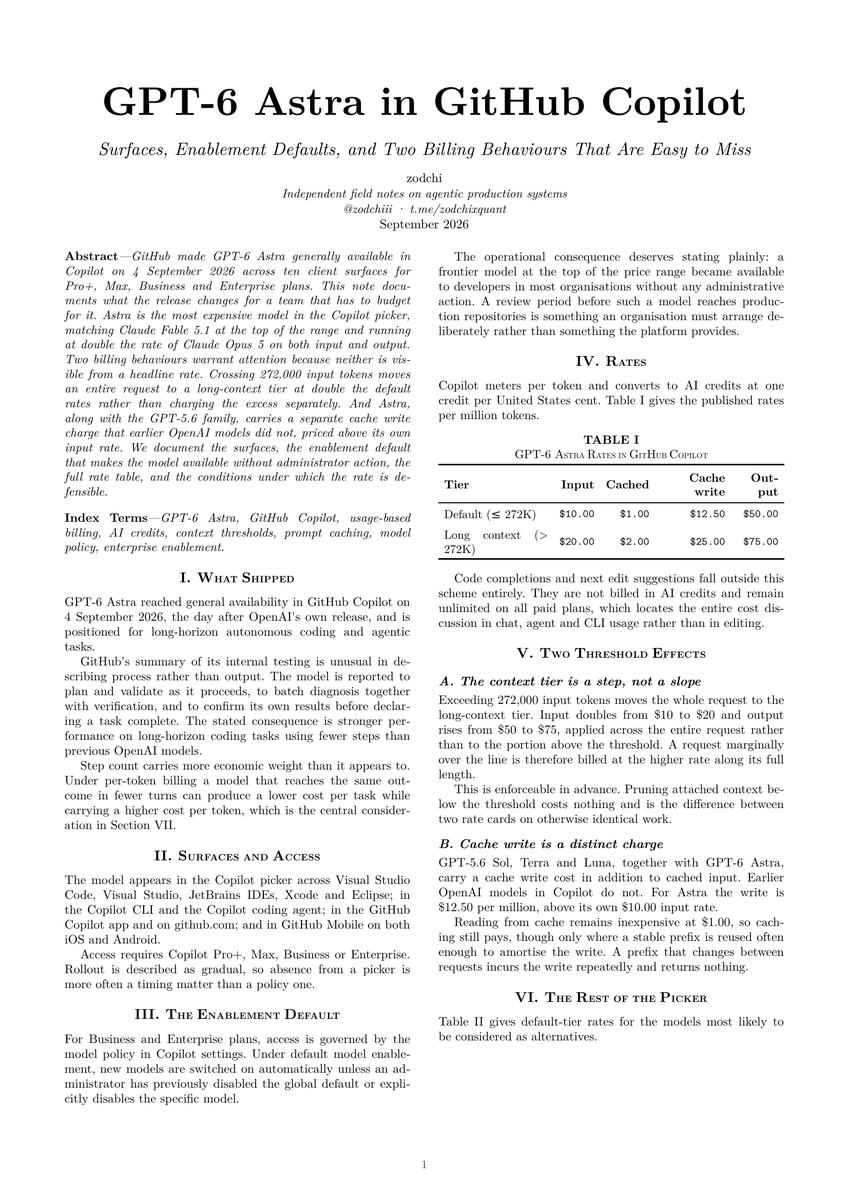
@github promoted (161 likes, 11 replies, 15 bookmarks, 33,654 views) a temporary 30 percent discount on GPT-5.6 Sol for Pro+ and Max users, while the quoted announcement restated the Sol, Terra, and Luna positioning for long-running, everyday, and lighter tasks respectively. In parallel, @0x_rody warned (6 likes, 1 reply, 2 bookmarks, 142 views) that GPT-6 Astra had been auto-enabled by default on September 4 and attached a pricing note covering the 272K context threshold and separate cache-write charges.
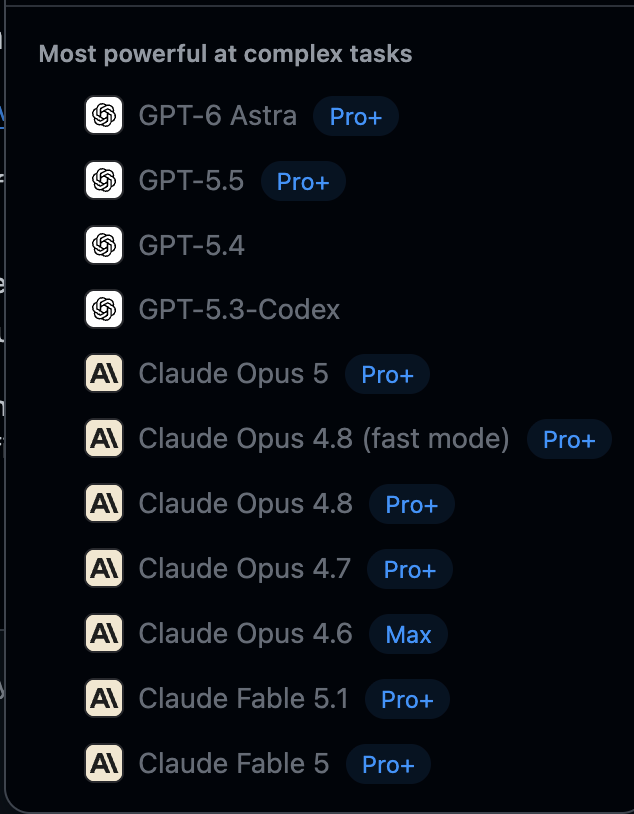
Discussion insight: Replies were positive about choosing models without changing editors, but they were negative about surprise enablement and hard-to-explain tier boundaries. Users want routing power, not opaque commercial logic.
Comparison to prior day: September 10 concentrated on quota burn and cheaper open-model routing. September 11 added official multi-model orchestration, third-party model endpoints, and more visible monetization choices inside the Copilot surface itself.
1.4 Builders kept adding memory, evaluation, security, and specialized skills around the agents (🡕)
A fourth theme was that builders were working around agent weaknesses with external infrastructure. At least six items covered memory curation, evaluators, security control planes, narrow specialist skills, cloud-workflow plugins, and context-compression helpers.
@dair_ai highlighted (52 likes, 14 replies, 49 bookmarks, 4,513 views) a Microsoft paper on environment-probing memory curation for persistent agents. The screenshot of the paper's first page makes the central claim inspectable: in a GitHub Copilot harness on CLBench, pass rate rose from 39% to 73%, queries per question fell from 8.8 to 4.7, and task-agent cost fell from $3.38 to $1.68.

@LukeParkerDev pointed (9 likes, 2 bookmarks, 237 views) to OpenEval for building evals inside OpenCode. The repository page and attached screenshot show a compact structure: prompt.md for the task, judge.md for pass/fail criteria, an optional eval.ts for workspace setup, and a viewer that lets people inspect the evidence behind each score.
@_ar9av introduced (12 likes, 10 replies, 3 bookmarks, 20,736 views) Prismor as an open-source security control plane for AI agents, with policy checks over shell, file, network, prompts, tool results, and MCP calls before execution. @gabrielbuzziv shared (58 likes, 3 replies, 97 bookmarks, 1,054 views) a narrower but equally practical artifact: an Apple App Store Review Specialist skill that audits code and metadata for likely review risks before submission.
Discussion insight: The replies under the memory paper sharpened the real problem: validating a memory before saving it does not solve future staleness by itself. The ecosystem response on September 11 was therefore broader than memory alone: evaluate, constrain, and specialize the agent rather than trust one raw transcript.
Comparison to prior day: September 10 already had observability and sidecar tools. September 11 pushed deeper into reusable guardrails and evidence systems that try to make agent behavior auditable before and after execution.
2. What Frustrates People
Hidden model costs and quota coupling
The clearest frustration was not that strong models cost more, but that people could not see the cost shape until work stopped. @0xLingjieKong showed (5 likes, 1 reply, 130 views) the sharpest example: on the same OfficeQA harness, GPT-6 Astra cost $11.46 per question, about 9x Fable 5.1, with only $1.41 attributed to the main agent and the rest to spawned subagents. @0x_rody added (6 likes, 1 reply, 2 bookmarks, 142 views) that Astra had been auto-enabled by default and attached the rate details most likely to surprise a team: $10 input and $50 output per million below the long-context threshold, doubled input pricing above 272K input tokens, plus a separate cache-write charge.

@therceman reported (6 likes, 3 replies, 1 bookmark, 748 views) another concrete quota datapoint after testing Devin with GPT-6 Astra: about 22 million tokens, roughly 400K context, and 16% of a weekly limit gone in one run. @koltregaskes showed (73 likes, 14 replies, 2,625 views) the operational consequence when those budgets are shared: once Codex credits ran out, scheduled jobs stopped too.

Severity: High. The observed coping strategies were to keep 8 to 10 percent of usage in reserve, avoid expensive settings for long-running tasks, switch to cheaper workers, and manually watch quota state outside the agent. This remains worth building for because users need task-aware budget forecasts and a breakdown that separates main-agent work from hidden subagent spend.
Permission and policy friction
People also kept running into too many approval boundaries for ordinary work. @SSShken said (5 likes, 5 replies, 511 views) it took 32 separate Allow clicks just to get a one-week planner planned. Under @googledevs post, one reply explicitly asked for an "always allow" permission system for repetitive safe commands like git diff, which made the complaint less like one isolated annoyance and more like a recurring workflow gap.
The friction was not only volume. @firsttimelifer reported (8 likes, 2 replies, 462 views) that Google Antigravity access through OMP was being hard-rejected on one exact <system-conventions> header, while replacing a hyphen with an underscore bypassed the block. In response, builders were already advertising external control layers such as @_ar9av introducing (12 likes, 10 replies, 20,736 views) Prismor's policy checks, approvals, and MCP gateway as a more explicit security boundary.
Severity: Medium-High. The coping behavior was manual approval, prompt mutation, or adding external policy tooling on top of existing agents. This looks worth building for because people want batched approvals, reusable allowlists for obviously safe actions, and policy surfaces that fail closed without becoming a click-tax.
Enforcement without enough explanation
A thinner but still high-severity thread was account enforcement that interrupted coding work without enough evidence attached. @Gourounou reported (2 likes, 3 replies, 178 views) that an OpenAI account had been disabled for "cyber abuse," that no explanation had been given, and that projects using ChatGPT or Codex were on hold while an appeal waited. The attached screen captures the disabled-account state and the only visible next step.

That concern echoed in softer form when @firsttimelifer said (8 likes, 2 replies, 462 views) a brittle Antigravity prompt-filter rule made the author wary of a ban. Severity: High, though evidence volume on this date was limited. The practical response was to appeal, avoid the blocked pathway, or keep sensitive workflows off the affected account. This is worth building for, but much of the solution sits with platform operators: users want explicit reasons, narrower sanctions, and recoverable appeal paths.
3. What People Wish Existed
Protected budget for autonomous features
The most explicit request came from @koltregaskes, who asked (73 likes, 14 replies, 2,625 views) for schedules and voice mode to have separate usage limits so they keep running when interactive Codex work burns through credits. Replies refined the need rather than rejecting it: one suggested reserving budget based on past runs, another said the bigger failure is that a stopped schedule can look identical to a schedule with nothing to do. This is a practical, urgent need only partially addressed today by manually leaving headroom. Opportunity: direct.
Reusable approval profiles for obviously safe actions
The request under @googledevs post for an "always allow" path for repetitive safe commands, plus @SSShken counting (5 likes, 5 replies, 511 views) 32 Allow clicks for a simple weekly planner, made the desired product shape fairly clear. People want scoped approval templates that distinguish git diff from risky shell or network actions, preserve human review for dangerous steps, and stop asking the same question dozens of times. Prismor partially addresses the governance side with step-up approvals and policy rules, but the native agent UX gap remains. Opportunity: direct.
Coordinators that can prove delegated work and keep specs current
@stretchcloud argued (19 likes, 6 replies, 2,039 views) that the persistent coordinator is the architectural shift that matters, while replies asked how a coordinator knows a subagent actually succeeded. @sauda_coder framed the complementary request from the planning side: if specification is the safeguard, how does it stay synchronized as implementation changes? This is a practical need, not an abstract research request. Spec Kit, OpenEval, and external verification loops cover parts of it, but no single surfaced tool combined persistent orchestration, proof of success, and ongoing spec reconciliation. Opportunity: competitive.
Memory that stays grounded after the environment changes
Replies under @dair_ai thread (52 likes, 14 replies, 49 bookmarks, 4,513 views) made a narrower but important request: validating a memory before saving it is not enough if the environment changes next week. People want persistent memory systems that can revisit old lessons, detect when they have gone stale, and stop agents from reusing confident but outdated facts. The need is practical for long-horizon agents, though today it is addressed mostly in research and bespoke stacks rather than mainstream tools. Opportunity: aspirational.
4. Tools and Methods in Use
| Tool | Category | Sentiment | Strengths | Limitations |
|---|---|---|---|---|
| Google Antigravity Teamwork Preview | Agent harness | (+/-) | Multiple agents plus verification, split views, quote-copy, artifact controls, updated terminal and git surfaces | Pro users reported hitting five-hour limits in 30 to 40 minutes; permission prompts and brittle filters still interrupt flow |
| Cursor Projects | Agent orchestrator | (+/-) | Persistent coordinator thread, cloud execution, proactive triggers, subagent delegation | Replies questioned how a non-coding coordinator verifies real success rather than trusting subagent reports |
| GitHub Copilot BYOK | Model access layer | (+) | Lets developers keep one editor while adding Azure-hosted models and selecting by task | One reply said support for a broken setup took too long; it does not remove pricing or tier confusion elsewhere in Copilot |
| Project HydraFusion | Multi-model router | (+) | Single, cascade, and critique patterns aim to balance quality, cost, and latency automatically | Still framed as research preview with benchmark-specific tradeoffs |
| GPT-6 Astra | Frontier coding model | (+/-) | Treated as the most capable Copilot option for complex, long-running work | Hidden long-context thresholds, cache-write charges, expensive subagent behavior, and high quota burn |
| GPT-5.6 Sol | Frontier coding model | (+/-) | Positioned for high reasoning work and temporarily discounted for Pro+ and Max | Access remains subscription-tiered and the discount was time-limited |
| Spec Kit | Workflow framework | (+) | Constitution, specify, clarify, plan, tasks, implement, and converge impose structure before code | Discussion immediately raised the hard part: keeping specs current once the code changes |
| OpenEval | Evaluation framework | (+) | Prompt-plus-judge design, optional workspace prep, and evidence viewer make eval criteria inspectable | OpenCode and Bun oriented, so setup is still more involved than an inline agent command |
| Prismor | Security control plane | (+) | Policy checks for tool calls, secret cloaking, step-up approvals, and MCP gateway support across major agents | Adds another self-hosted control layer that teams must configure and maintain |
| Chisle | Context compression | (+/-) | Shrinks tool output, avoids rereading files, and promises lower token spend with live counters | The strongest claims on this date came from a third-party summary rather than a first-party benchmark thread |
| OpenCode Go | Open-model subscription | (+/-) | $10 first month and access to newer open models like DeepSeek v4.1 Flash and GLM 5.3 | Promotion-heavy evidence, with replies pointing to competing low-cost tools and local Ollama setups |
| google-cloud-developer plugin | Cloud workflow plugin | (+) | Packages gcloud, auth, onboarding, docs MCP, and discoverable skills for several agent harnesses | Evidence was light on production outcomes beyond installability |
The satisfaction spectrum was widest where tools made control surfaces visible. Teamwork Preview, BYOK, HydraFusion, and Cursor Projects all promised a clearer operator role, but the praise was consistently paired with questions about cost, verification, or approvals. OpenEval, Prismor, and Chisle show the same pattern from independent builders: the agent itself is no longer enough, so users add evidence viewers, policy engines, and compression layers around it.


The day's clearest workaround pattern was layered operation: keep the primary agent, then add a router, a policy layer, an evaluator, or a context compressor around it. Migration pressure also favored staying in one interface while changing models underneath it, which is why BYOK and HydraFusion landed well. Competitive dynamics were less about a single winning model and more about who could offer durable coordination, understandable billing, and a lighter approval burden.
5. What People Are Building
| Project | Who built it | What it does | Problem it solves | Stack | Stage | Links |
|---|---|---|---|---|---|---|
| Spec Kit | GitHub, surfaced by @sauda_coder | Runs a spec-driven workflow before implementation | Vague prompts and drifting requirements produce inconsistent agent output | Python CLI, Markdown workflows, agent integrations, Git-based project artifacts | Shipped | tweet (60 likes, 22 replies, 778 views) · repo |
| Prismor | PrismorSec, surfaced by @_ar9av | Enforces policies and approvals on agent tool calls | Agents can leak secrets, run risky commands, or traverse MCP servers without enough guardrails | Python, TypeScript dashboard, YAML policies, MCP gateway, approval queue | Beta | tweet (12 likes, 10 replies, 20,736 views) · repo |
| OpenEval | Hona, surfaced by @LukeParkerDev | Lets teams define prompts, judges, and evidence-backed scoring for agent tasks | People need reproducible evals instead of trusting one impressive demo | Bun, TypeScript, Markdown rubrics, Docker, OpenCode integration | Beta | tweet (9 likes, 237 views) · repo |
| Apple App Store Review Specialist | skills.sh, surfaced by @gabrielbuzziv | Audits an iOS app from the perspective of App Store review | Teams want domain-specific review before submission rather than generic coding help | skills.sh skill definition, review instructions, App Store guideline references | Shipped | tweet (58 likes, 97 bookmarks, 1,054 views) · site |
| Chisle | Builder not named in the thread, surfaced by @VaibhavSisinty | Compresses context and tool output to cut repeated token spend | Tool chatter and reread files make agent sessions more expensive than necessary | npm package, context-compression layer, live token counter, web docs | Beta | tweet (2 replies, 745 views) · site |
| Infina hands-free interface | @shubhmx | Lets users speak to coding agents and switch apps hands-free | Keyboard-bound control is awkward for some agent workflows | On-device voice input layer; exact underlying stack not stated | Beta | tweet (7 likes, 2 replies, 316 views) · site |
| Vantage Track | @dillonzhaoSaaS | Watches competitor pricing pages and job listings | Founders want earlier competitive signals without manual monitoring | Web dashboard; exact implementation stack not stated | Alpha | tweet (1 like, 2 replies, 16 views) |
| google-cloud-developer plugin | Google Cloud contributors, surfaced by @RemikSamborski | Packages cloud auth, docs, and skills for several coding-agent clients | Cloud setup and documentation retrieval remain repetitive across agent tools | gcloud skills, auth helpers, docs MCP server, discoverable skills repo | Shipped | tweet (5 likes, 3 replies, 299 views) |
Spec Kit was the clearest process-oriented build signal. The repo turns pre-coding work into explicit project artifacts, and the strongest replies were not about whether structure is useful but about how to keep those artifacts synchronized once implementation starts. That makes Spec Kit evidence of a real shift from prompt craft toward repeatable operating procedure.
Prismor and OpenEval reflect a second pattern: builders are treating agent output as something that needs both policy and proof. Prismor inserts a runtime control plane before execution; OpenEval inserts a rubric and evidence viewer after execution. Together they show how quickly the ecosystem is filling the gap between "agent can do it" and "team can trust it."

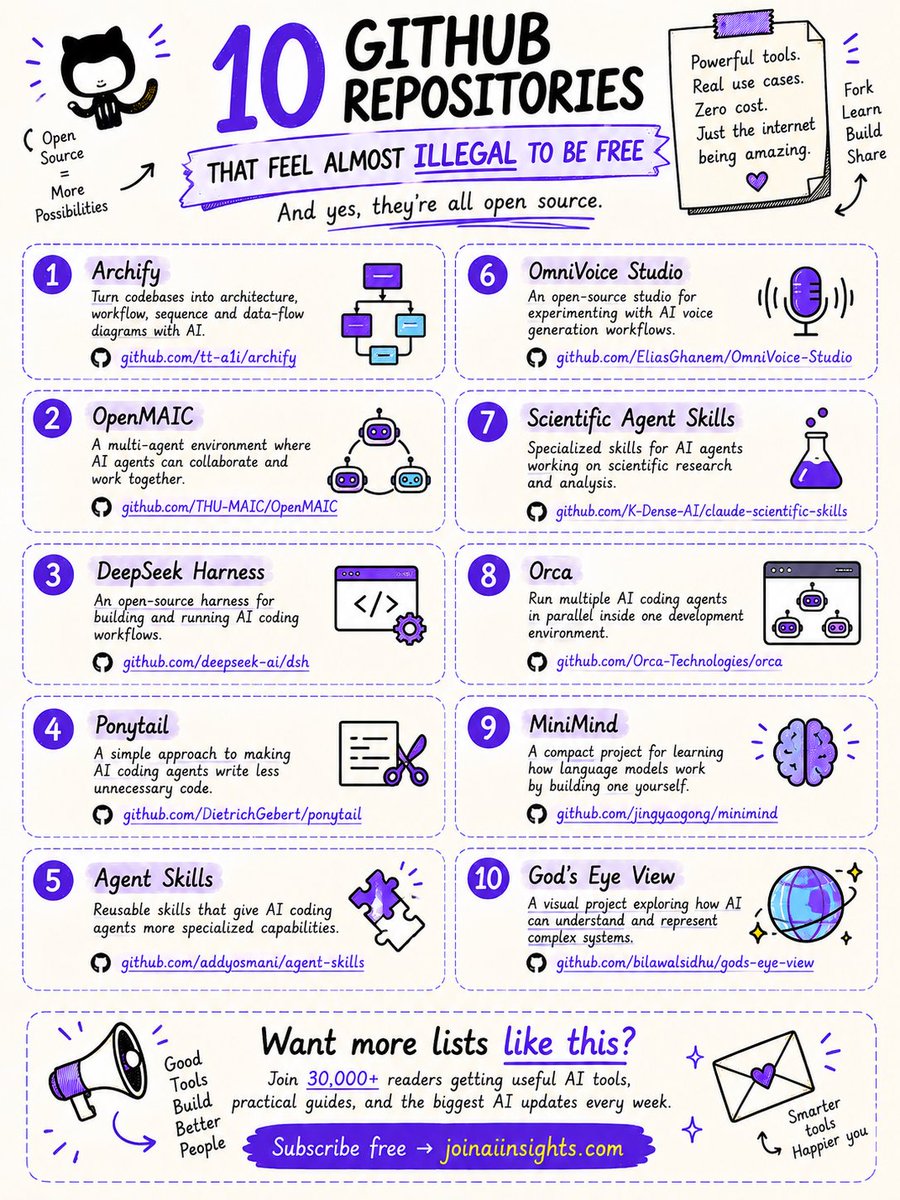
Roundup posts kept surfacing reusable workflow factories such as Paseo, OpenAgents, gstack, and Agent Skills even when the thread itself was only a list. That repeated pattern matters because builders are packaging roles, approvals, and orchestration as reusable products rather than one-off prompts.

The smaller projects on this date were narrow but concrete: an App Store review specialist instead of a general-purpose coding assistant, a plugin that bundles Google Cloud skills and docs retrieval, a voice-first control layer, and a micro-SaaS delivered after a nine-hour vibe-coding sprint. The repeated trigger across them was not missing code generation, but missing workflow packaging around deployment, review, monitoring, and control.
6. New and Notable
Adoption leadership shifted quickly inside developer surveys
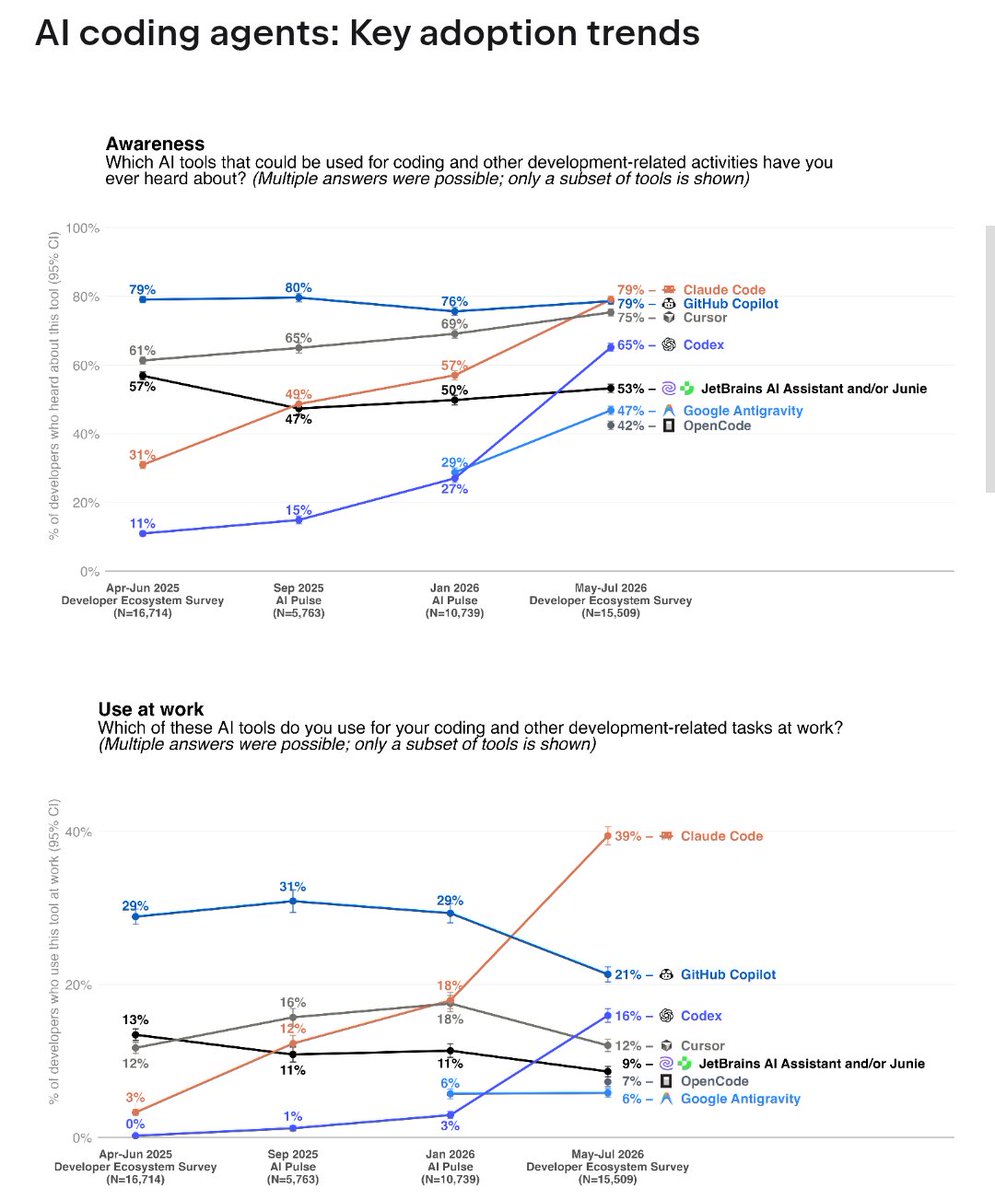
@DivyanshT91162 highlighted (13 likes, 3 replies, 933 views) a JetBrains survey of 15,000+ professional developers and argued that the "AI coding war" had flipped. The tweet's specific numbers are the signal: 90% of respondents reportedly use AI coding agents at work at least weekly, 68% daily, Claude Code rose from 18% to 39% workplace use in a few months, Codex from 3% to 16%, while GitHub Copilot moved from 29% to 21% and Cursor from 18% to 12% in the same comparison.
Internal coding-agent usage inside OpenAI became visible at a new scale
@derrickcchoi pointed (12 likes, 1 reply, 1,028 views) to a chart showing ChatGPT plus Codex output tokens growing 124x for the median OpenAI researcher from November 2025 to August 2026. The image matters because it separates that growth from the rest of the company, where the lines rise far less steeply. It is one of the clearest public hints on this date that internal coding-agent usage at a frontier lab is scaling much faster than general employee usage.

Exact-string prompt filtering surfaced as a brittle operational edge case
@firsttimelifer reported (8 likes, 2 replies, 462 views) that Google Antigravity access through OMP was rejected on one exact <system-conventions> RFC 2119 header, while replacing a hyphen with an underscore bypassed the block. This is notable less because of its engagement and more because it exposed a very specific, user-visible failure mode in how some coding-agent pathways appear to be filtered.
7. Where the Opportunities Are
[+++] Protected budget for autonomous work — @koltregaskes showed schedules stopping when credits ran out, @0xLingjieKong exposed how subagents can dominate model spend, and @therceman supplied another high-burn Astra datapoint. This is strong because the pain is concrete, repeated, and not solved by a simple cheaper-model recommendation.
[+++] Verifiable orchestration with living specs — Cursor Projects, Spec Kit, OpenEval, and the Microsoft memory paper all point to the same gap: teams want a coordinator that can delegate, prove success, keep artifacts synchronized, and revisit stale assumptions. The signal is strong because it appears across official platform launches, independent builders, and discussion replies rather than one isolated product pitch.
[+++] Native approval and policy layers that do not create click-tax — The 32-Allow complaint, the "always allow" reply under the Google dev post, and Prismor's policy engine all show demand for a middle ground between unrestricted execution and constant interruption. This is strong because both users and builders are describing the same product shape from opposite directions.
[++] Cost-aware context hygiene — Chisle, OpenEval, and the Astra cost threads suggest a moderate opportunity in trimming tool output, avoiding rereads, and measuring which routing decisions actually improve outcomes. The space is already becoming competitive, but the visible cost pain means teams will still try products that can show savings on real tasks.
[+] Specialized agent products for narrow workflows — The App Store Review Specialist skill, google-cloud-developer plugin, Infina hands-free interface, and Vantage Track all show that builders are packaging narrower agent experiences instead of one universal assistant. The signal is emerging rather than dominant, but the direction is clear: specialized workflows are becoming products in their own right.
8. Takeaways
- The control layer is moving above raw code generation. Cursor Projects framed the coordinator as the product, and Spec Kit framed specification as the precondition for reliable execution. (source; source)
- Hidden spend, not just model weakness, is driving frustration. Astra's attached billing note, the OfficeQA cost chart, and the 22M-token Devin run all showed that users can do meaningful work and still come away unable to predict the bill or quota hit. (source; source; source)
- Copilot is becoming a routing platform, not just a hosted model picker. BYOK brought in Azure-hosted models, HydraFusion added single/cascade/critique orchestration, and Sol promotion plus tier complaints showed that business-model choices are now part of the product experience. (source; source; source)
- Trust in agents increasingly depends on proof, policy, and revisitable memory. The Microsoft memory paper, OpenEval, and Prismor all approached the same problem from different sides: verify what the agent learned, verify what it produced, and verify what it is allowed to do. (source; source; source)
- Specialization kept surfacing as a practical way forward. An App Store review skill, a Google Cloud plugin, a voice-first interface, and a narrow competitor-monitoring app all showed builders packaging specific workflows instead of trying to win as one universal coding assistant. (source; source; source; source)