Twitter AI Coding - 2026-09-18
1. What People Are Talking About
1.1 Usage visibility, quota workarounds, and memory controls stayed at the center of daily practice (🡕)
The day's densest cluster was not a new model drop. It was the operating question of how a coding agent accounts for usage, memory, and billing once a session runs long. codex mentions held steady at 47 versus 47 on September 17, while memory / compaction / context mentions slipped from 19 to 14; the stronger evidence concentrated in a smaller set of high-engagement posts about usage analytics, compaction strategy, missing project memory, and plan anomalies.
@OpenAIDevs announced (495 likes, 79 replies, 60,791 views, 140 bookmarks) that Codex now shows how usage breaks down across tasks, subagents, and individual chats. The most useful replies did not treat that as the end of the problem. They immediately asked whether the analytics can expose per-routine patterns and what a wasteful versus healthy subagent spend pattern actually looks like, which shows that users now want not just limits but operating telemetry.
@theo argued (371 likes, 50 replies, 39,432 views, 170 bookmarks) that Jev-style line-by-line compaction is the wrong abstraction for coding agents because it drops tool-result context, breaks cache economics, and cannot preserve hidden reasoning traces from frontier APIs. The reply thread mattered because it turned a product complaint into a technical disagreement about what compaction is allowed to delete, whether tool calls remain meaningfully linked, and how much of an agent's apparent intelligence is really a function of preserving its full working history.
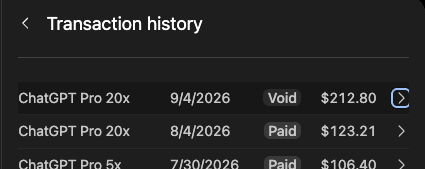
@thtbee_ laid out (224 likes, 16 replies, 19,719 views, 28 bookmarks) a wish list for Gemini 4 Pro and Antigravity that was really a wish list for project memory: private project spaces, inspectable memory, restored cross-chat memory, and desktop-local file access. A separate firsthand complaint came from @RileyRalmuto, who posted (19 likes, 4 replies, 2,428 views) a Codex billing screen showing a September 4 ChatGPT Pro 20x payment marked Void, with replies saying OpenAI had issues that day and handed out banked resets.
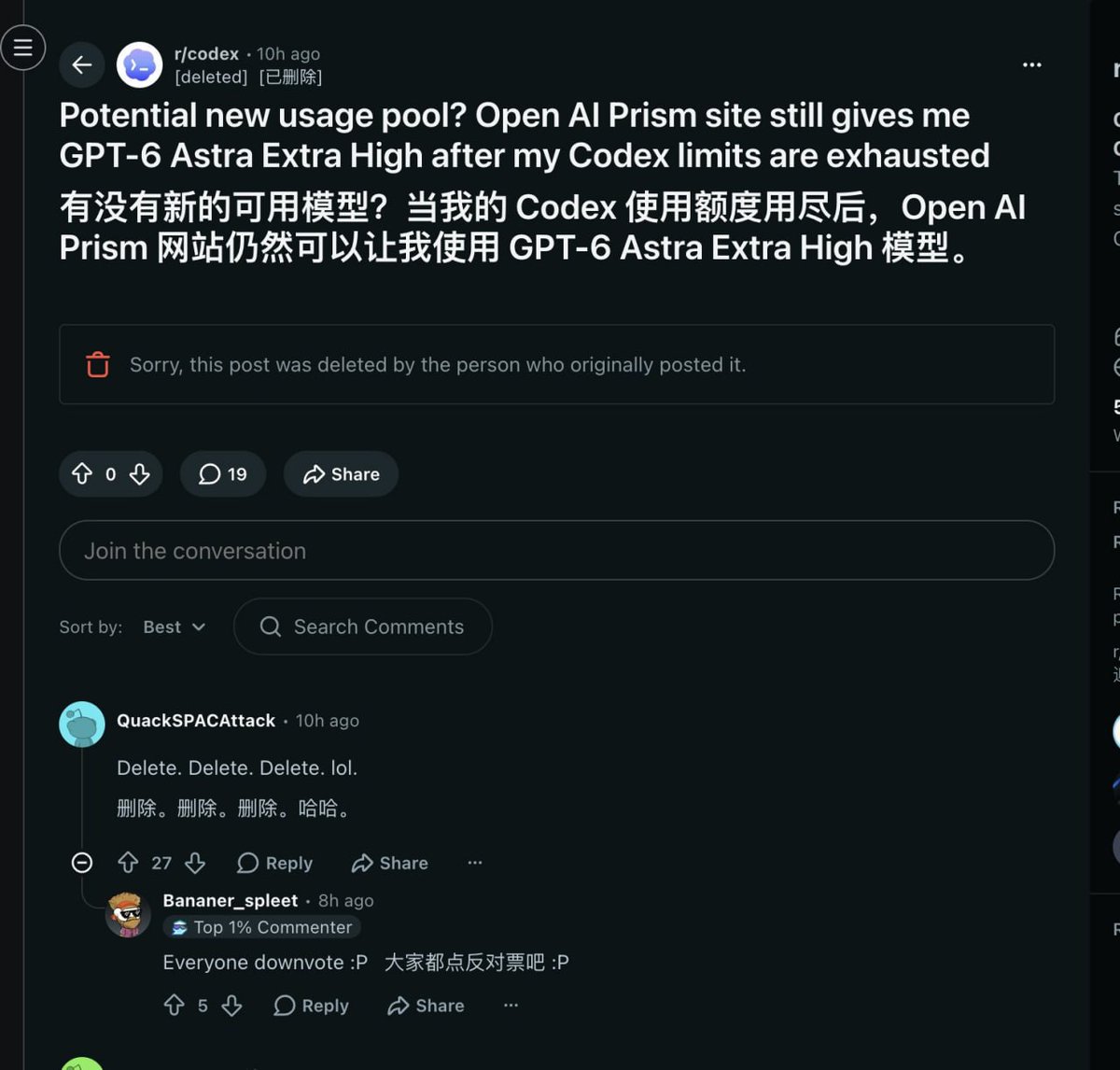
A lower-confidence workaround story also circulated. @grokkedd shared (26 likes, 7 replies, 387 views, 18 bookmarks) a screenshot of a deleted r/codex post claiming OpenAI Prism still exposed GPT-6 Astra Extra High after Codex limits were exhausted. Because the evidence was indirect and already deleted, it is best read as a signal that people are actively hunting alternate usage pools, not as a confirmed product policy.
Discussion insight: Official observability shipped, but the replies made clear that users still do not feel they can predict cost, understand memory loss, or trust billing surfaces once an agent session gets complicated.
Comparison to prior day: September 17 already centered context compaction and plan exhaustion. September 18 added an official usage-analytics surface, a concrete payment anomaly screenshot, and a rumor of alternative Astra access, so the conversation moved from limit anxiety to hands-on spend accounting and workaround seeking.
1.2 Security moved from background concern to concrete exploit-chain analysis (🡕)
Security discussion jumped sharply from a side topic into a first-order theme. Exploit- or vulnerability-related mentions rose to 15 from 2 on September 17, and the strongest posts were not speculative warnings. They were public exploit chains, patch-status discussions, and step-by-step explanations of how agent-connected systems can fail.
@justanotherlaw amplified (346 likes, 7 replies, 33,899 views, 187 bookmarks) the Wall Street Journal story that "three guys with Claude and Codex subscriptions" reached OpenAI auth tokens and write access to openai/openai. The reply chain quickly asked whether this was really a model story or simply weak operational security, which helped move the incident from security Twitter into mainstream coding-agent discourse.
@IntCyberDigest reported (377 likes, 24 replies, 22,016 views, 138 bookmarks) the fuller chain: a booby-trapped HEIF upload hit an outdated libheif path in OpenAI's Discourse forum, then an OpenAI SSO flaw escalated that foothold into employee ChatGPT and Codex accounts, and finally into a harmless pull request against an internal repository. The replies added two important pieces of nuance: OpenAI fixed the issue the same day and paid a $6,500 bounty, and the researchers used Claude as a tool inside a human-directed exploit process rather than as an autonomous attacker.

@The_Cyber_News summarized (13 likes, 1,547 views) the separate Plugin4Shell disclosure, and the linked Air Security write-up says the flaw is a SHA-pinning bypass in plugin installers for Claude Code, Codex, Copilot, and Gemini CLI. The important operational detail is that the attack becomes zero-click because already-installed plugins can auto-update into malicious code if the checkout never verifies that the working tree actually landed on the reviewed commit; Air says Claude Code 2.1.179 and Codex 0.146.0 were fixed, Gemini CLI will not be patched because it is deprecated, and Copilot had no shipped fix at disclosure time.

Discussion insight: The replies consistently pushed back on the lazy framing that "a model hacked OpenAI." What people actually discussed was the attack surface created when coding agents sit next to plugins, connected accounts, internal repos, and SSO systems.
Comparison to prior day: September 17 focused on budget, secret handling, and self-audits. September 18 escalated into concrete exploit chains, vendor version numbers, and direct patch guidance.
1.3 Harness research and device execution got much more concrete (🡕)
The strongest research posts were about how to structure agent work, not how to switch base models. antigravity mentions dipped slightly to 23 from 24 on September 17, but the underlying content moved deeper into named harness mechanisms, shared-memory research, and real-device execution loops.
@mirrokni shared (77 likes, 3 replies, 4,272 views, 40 bookmarks) the Stellar Colosseum paper, which describes a many-agent workflow with strategy exploration, readiness gates, proof decomposition, section-level solving, and global verification. The paper's stated results—71.0% on TCS-Bench and a 4,263 Codeforces score—and its integration into Antigravity Teamwork's "Long Proof" pattern made it notable as both research evidence and a product-transfer signal.
@omarsar0 highlighted (19 likes, 4 replies, 1,301 views, 33 bookmarks) NVIDIA's SoL-Pi release and paper (arXiv), which names four retained efficiency mechanisms—Action Fusion, Online Context Compact, ObservationPack, and Evidence-Preserving Reducer. The attached page is important because it shows the claimed EdgeBench result directly: 44.7-49.0% lower token traffic and roughly one-third lower API cost while staying near the baseline harness on GPT-5.6 Sol and Opus 5.

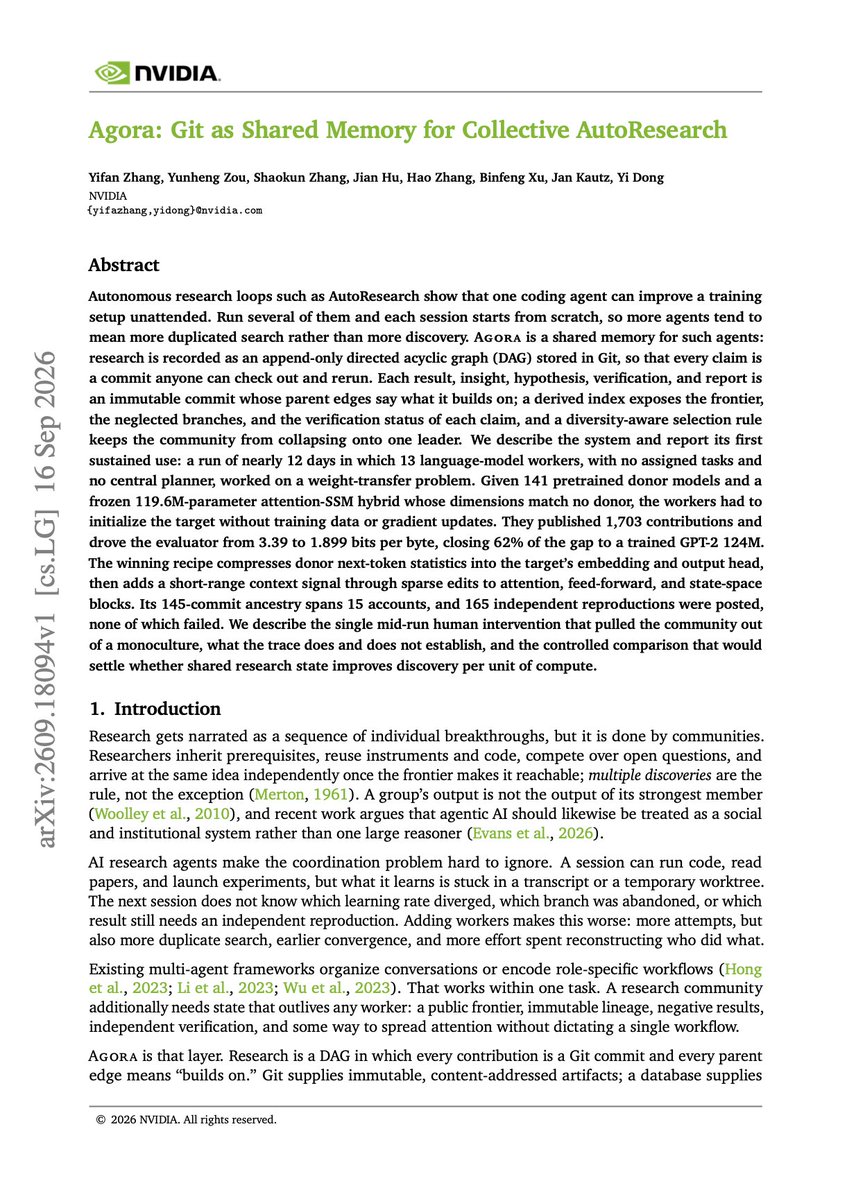
@alex_verem surfaced (2 likes, 2 replies, 524 views, 2 bookmarks) NVIDIA's Agora paper, whose abstract frames Git itself as shared memory for collective auto-research. The screenshot matters because it contains the concrete scale numbers—13 workers, a nearly 12-day run, 1,703 contributions, and a 62% gap closure toward a trained GPT-2 124M target—that turned a vague "shared memory" idea into an inspectable systems claim.
A parallel execution story showed up in mobile tooling. @sl1ma4 said (8 likes, 12 replies, 944 views, 10 bookmarks) that Google's ARTEMIS lets Claude Code, Codex, and Antigravity use a real Android device through MCP, while @hasantoxr expanded (18 likes, 8 replies, 4,898 views, 7 bookmarks) on the closed-loop value: build the app, run it on-device, capture screenshots and traces, then use the observed failure to repair the code. The public google/artemis README backs up the MCP integration, Flash/Pro execution profiles, and 99%+ AndroidWorld result that people kept repeating.
Discussion insight: The replies here were less interested in raw model IQ than in whether agents can preserve evidence, share state, and observe the actual environment they are trying to change.
Comparison to prior day: September 17 already leaned toward managed harnesses and long-proof workflows. September 18 added named efficiency mechanisms, shared-memory architecture, and real-device execution as concrete next steps.
1.4 Builders kept shipping the layers around agents: runtimes, queues, control planes, and skills (🡒)
The smaller-builder activity continued to cluster above the base model. copilot mentions stayed high at 34 after 35 on September 17, and the most concrete project posts were about packaging, routing, and distribution rather than novel model behavior.
@github promoted (43 likes, 12 replies, 11,547 views, 17 bookmarks) the GitHub Copilot SDK as a way to embed sessions, tools, MCP servers, and streaming events without writing the agent loop yourself. The replies were revealing: multiple developers said the loop is not the hard part anymore, because production pain sits in human approval gates, rollback paths, and deciding which actions must stay reversible. The same upward move showed up in GitHub's weekly Copilot release notes, which added auto-model selection tiers, shell-backed review checks, Sentry integration in the Copilot app, usage metrics for the VS Code Agents window, and AI credit budget requests.
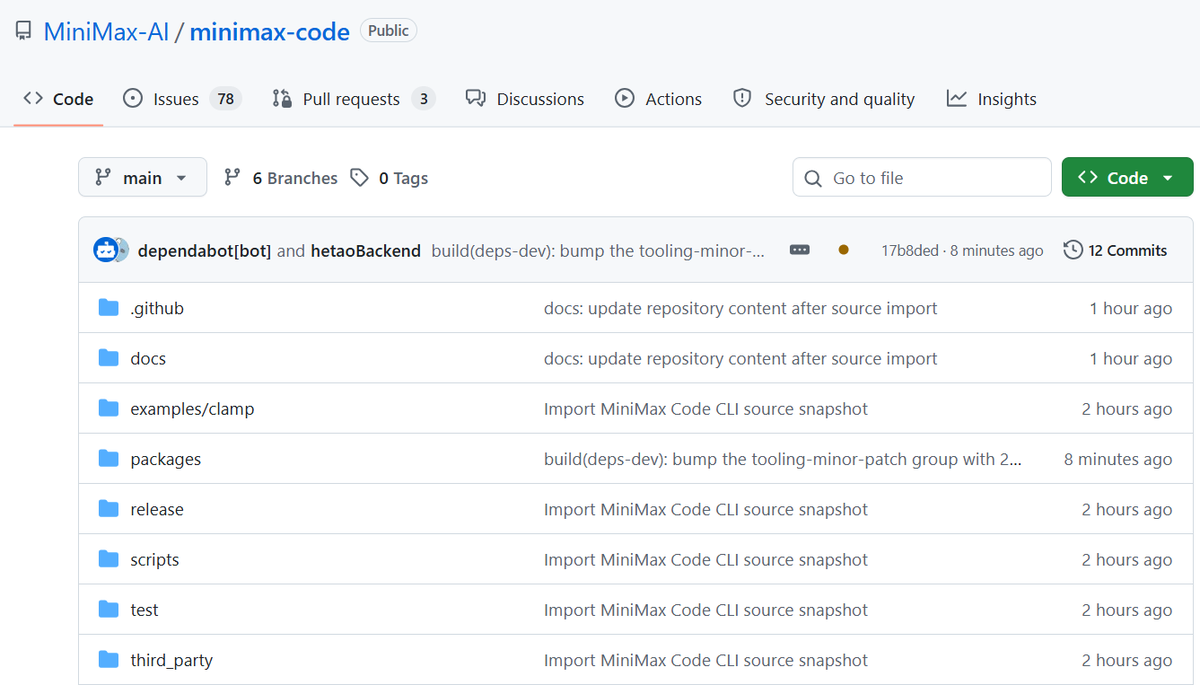
@kepochnik described (16 likes, 6 replies, 893 views) MiniMax Code as a full terminal coding agent with tests, subagents, MCP, plugins, session continuation, and BYOK support for OpenAI- and Anthropic-compatible APIs. The practical point in the replies was not benchmark supremacy. It was portability: one coding-agent surface, multiple provider backends.
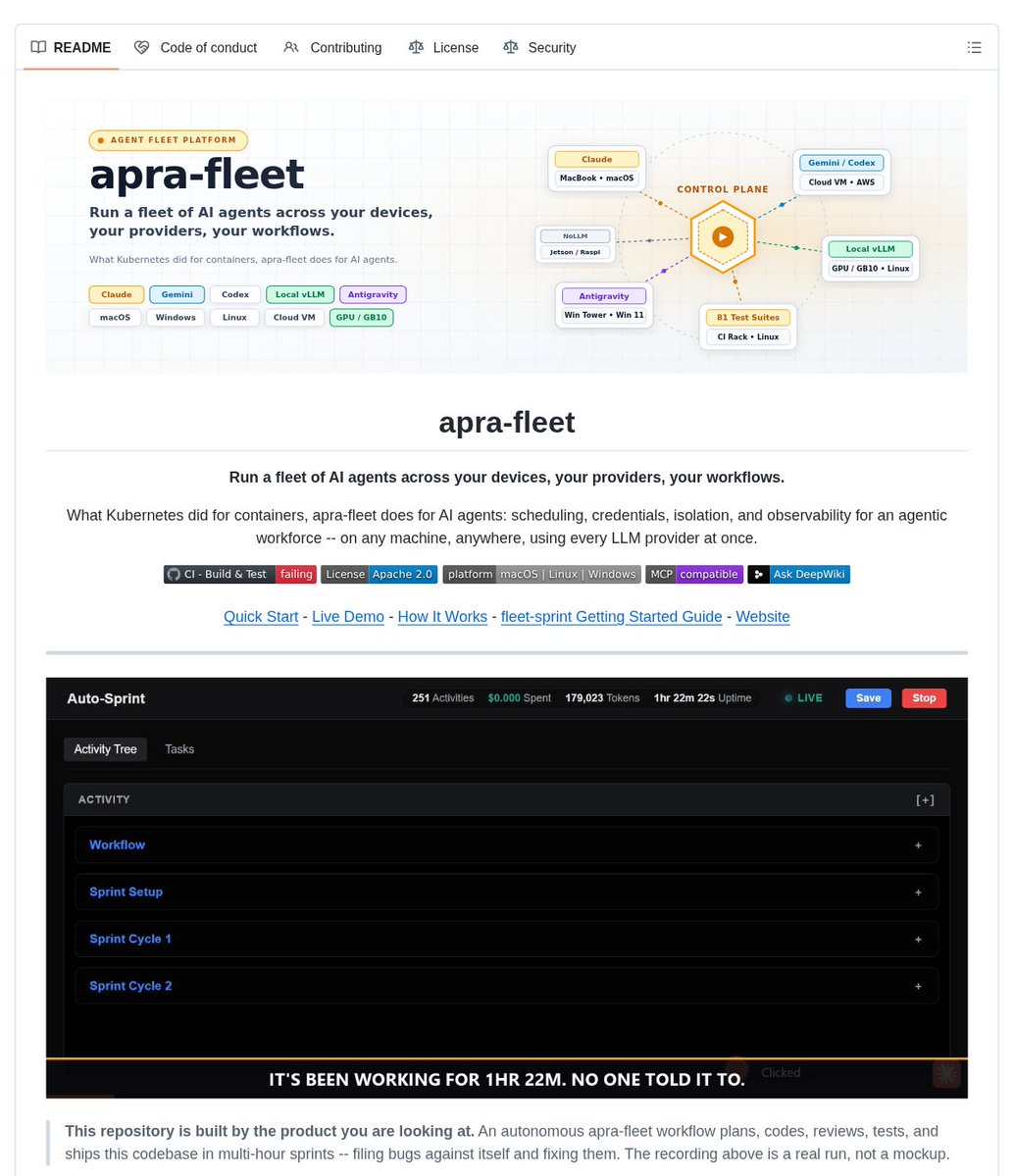
@DanKornas introduced (1 like, 2 replies, 468 views, 2 bookmarks) apra-fleet, a cross-device control plane for agent workflows, and followed it (1 like, 3 replies, 417 views) with Taskuary, a local-first inbox-to-agent task hub with human approval checkpoints. @DanKornas also shared (6 likes, 6 replies, 866 views) Geoscience Skills, a 48-skill domain pack that installs across Codex, Claude Code, Copilot, and Gemini CLI. Together, those posts show a consistent pattern: builders assume multiple agents already exist, and they are racing to own coordination, routing, approvals, and vertical packaging around them.
Discussion insight: The more ambitious builders were not promising "one agent for everything." They were packaging queues, fleet controls, approval checkpoints, or domain-specific constraints around existing agent backends.
Comparison to prior day: September 17 focused on adapters and deterministic wrappers. September 18 kept that pattern steady, but pushed it further into reusable runtimes, multi-machine control planes, inbox orchestration, and domain skill distribution.
2. What Frustrates People
Spend, billing, and quota surfaces still arrive after the interruption
The most immediate frustration was not that usage limits exist. It was that users still discover the real boundary only after work stalls. @OpenAIDevs made visible (495 likes, 79 replies, 60,791 views, 140 bookmarks) a Codex usage breakdown by task, subagent, and chat, but the replies immediately asked for routine-level optimization guidance rather than treating the feature as complete. @RileyRalmuto added (19 likes, 4 replies, 2,428 views) a sharper failure mode with a screenshot showing a paid Codex plan charge marked Void, and replies said OpenAI had already needed banked resets around the same date. Even the lower-confidence @grokkedd workaround post (26 likes, 7 replies, 387 views, 18 bookmarks) is part of the same story: users are probing for alternate access pools because the primary quota surface remains constraining.
GitHub's September 18 Copilot changelog reinforces that this is cross-vendor. Budget increase requests are now generally available, but only once a user hits the AI credit limit. This is High severity because the workaround stack—analytics tabs, budget request flows, banked resets, and alternate-product rumors—still begins after the interruption rather than before it. Worth building for: High.
Compaction and project memory still feel opaque inside long-running agent sessions
The deepest technical frustration was memory behavior the user cannot predict or inspect. @theo argued (371 likes, 50 replies, 39,432 views, 170 bookmarks) that line-by-line compaction breaks tool-result continuity, forces expensive cache rewrites, and drops reasoning traces that external summarizers cannot recover. @thtbee_ made explicit (224 likes, 16 replies, 19,719 views, 28 bookmarks) the user request for private project memory, inspectable memory, and the return of cross-chat memory in Antigravity.
The severity here is High because the coping strategies are all second-best: trust the default, keep more history than you want, or manually restate what the system forgot. The contrast with the day's research posts is telling. Stellar Colosseum, SoL-Pi, and Agora all treat memory, state, or evidence retention as design problems at the harness layer, which suggests users are correctly identifying a missing systems layer rather than merely complaining about UX. Worth building for: High.
Plugin and connected-account trust layers are still too fragile for the permissions agents now carry
The strongest fear signal came from the fact that both major security stories worked through the layers around the model. @justanotherlaw amplified (346 likes, 7 replies, 33,899 views, 187 bookmarks) the OpenAI exploit story, and @IntCyberDigest spread (377 likes, 24 replies, 22,016 views, 138 bookmarks) the fuller chain from public forum upload to SSO takeover to Codex-driven pull request. In parallel, the Air Security Plugin4Shell write-up described a separate plugin SHA-pinning bypass that could turn routine marketplace updates into zero-click remote code execution.
This is High severity because the blast radius is exactly where coding agents are valuable: local code, secrets, SSH keys, connected SaaS tools, and internal repositories. The public fix guidance—specific patched Claude Code and Codex versions, no Gemini CLI fix, and a disclosure-time Copilot gap—shows that users are already doing incident-response style version triage around their coding assistants. Worth building for: High.
Teams still need a queue and a control plane before agents become manageable workers
A quieter but consistent frustration was coordination overhead. @DanKornas summarized (1 like, 3 replies, 417 views) it directly with "Your inbox is full of work. Your agents need a queue," while the same author said (1 like, 2 replies, 468 views, 2 bookmarks) that coordinating coding agents across several machines should not require "babysitting every run." The replies under @github pushing the Copilot SDK (43 likes, 12 replies, 11,547 views, 17 bookmarks) made the same point from the platform side: even if an SDK abstracts the loop, the hard part is still deciding which actions need human gates and how to undo the ones that should not have happened.
This is Medium severity because it is less catastrophic than losing access or getting compromised, but it is still workflow-killing. The market signal is that builders are no longer waiting for base models to solve this for them; they are building queues, dashboards, approvals, and fleet routing as a separate layer. Worth building for: Medium.
3. What People Wish Existed
A persistent project memory that users can inspect and steer
The clearest unmet need was not a smarter single answer. It was a project memory that survives compaction, surface switches, and long runs without turning into a black box. @theo objected (371 likes, 50 replies, 39,432 views, 170 bookmarks) to external compaction because it can sever tool results from the reasoning that made them useful, while @thtbee_ explicitly asked (224 likes, 16 replies, 19,719 views, 28 bookmarks) for private project memory, local-file access, and the return of cross-chat memory in Antigravity. Even the positive @OpenAIDevs analytics launch (495 likes, 79 replies, 60,791 views, 140 bookmarks) points the same way: users want to inspect what happened inside a run, not just trust that the assistant remembers enough.
This is a practical need, not an aspirational one. Partial answers exist in usage analytics, default compaction strategies, and research harnesses such as Stellar Colosseum, SoL-Pi, and Agora, but none of those yet gives everyday users a simple, inspectable memory layer across product surfaces. Opportunity: direct.
A spend and permissions control plane that intervenes before the breakage
The second need was preventative governance. The signals lined up cleanly: @OpenAIDevs shipped (495 likes, 79 replies, 60,791 views, 140 bookmarks) Codex usage analytics because people need to understand where allowance is going, @RileyRalmuto showed (19 likes, 4 replies, 2,428 views) that plan billing can still become confusing at the exact moment trust matters, GitHub's weekly Copilot release notes added budget increase requests only after limits are hit, and Plugin4Shell showed what happens when a trusted plugin supply chain inherits the developer's full permissions.
What people appear to want is one layer that can answer four questions before a run starts: how much budget is left, what memory or context will persist, what connected accounts or secrets are in scope, and what plugin or action paths are allowed to execute. Today's controls are fragmented across billing pages, version-specific security advisories, budget-request queues, and manual credential discipline. Opportunity: direct.
A queue and control plane for agent work that still keeps humans in charge
The third unmet need is workflow coordination, not raw code generation. @DanKornas described (1 like, 3 replies, 417 views) Taskuary as an inbox-to-agent queue with approval checkpoints, while the same author described (1 like, 2 replies, 468 views, 2 bookmarks) apra-fleet as a control plane for long-running work across machines and providers. The replies to @github selling the Copilot SDK (43 likes, 12 replies, 11,547 views, 17 bookmarks) said the same thing from the opposite direction: once the loop is abstracted, the bottleneck becomes routing, reversibility, and human gating.
This is a practical need with live prototypes already on the table. The competitive challenge is not inventing the concept from scratch; it is delivering a queue, approval, routing, and observability layer that is simpler than today's ad hoc mix of terminals, dashboards, and chat threads. Opportunity: competitive.
Real-environment feedback loops for agents building interactive software
The fourth need is an execution layer that lets coding agents observe what they built in the actual target environment. @hasantoxr treated (18 likes, 8 replies, 4,898 views, 7 bookmarks) ARTEMIS as important because it gives agents eyes and hands on real Android devices through MCP, while @sl1ma4 framed (8 likes, 12 replies, 944 views, 10 bookmarks) it as immediately useful for mobile testing and debugging. @DemoWebAI showed (3 likes, 2 replies, 46 views) the same pattern in browser-based product demos: prompt the workflow, execute it locally, observe the result, then package the artifact.
This is a practical need for mobile, browser, and workflow-heavy products where "the code compiles" is not enough evidence. The opportunity is competitive because open-source and startup implementations already exist, but the appetite for broader platform support, safer credential handling, and tighter repair loops is obvious in the discussion. Opportunity: competitive.
4. Tools and Methods in Use
| Tool | Category | Sentiment | Strengths | Limitations |
|---|---|---|---|---|
| Codex | Agent/runtime | (+/-) | Usage analytics by task, subagent, and chat; strong connected-account workflow surface; widely used in serious builder workflows | Quota exhaustion, billing anomalies, compaction sensitivity, and large blast radius when connected accounts are compromised |
| Claude Code | Agent | (+/-) | Still treated as a baseline peer in exploit, ARTEMIS, and harness discussions; broad plugin and MCP ecosystem | Plugin4Shell exposure and ongoing worries about what survives compaction or proxy-layer changes |
| Antigravity | Managed agent/runtime | (+/-) | Teamwork patterns, ARTEMIS integration, and strong interest ahead of Gemini 4 Pro | Users still want better polish, private project memory, local-file access, and restored cross-chat memory |
| GitHub Copilot | IDE/runtime platform | (+/-) | SDK with sessions, tools, MCP, and streaming events; auto-model tiers; review and Sentry integrations | Budget increase flows are reactive, human gates remain external, and disclosure-time supply-chain concerns reached Copilot too |
| ARTEMIS | Device automation / MCP | (+) | Real Android device control, screenshots, Logcat, Flash/Pro modes, and 99%+ AndroidWorld results | Android-first today, iOS still roadmap, and setup still depends on device/toolchain plumbing |
| MiniMax Code | Terminal coding agent | (+) | BYOK, plugins, MCP, session continuation, and open-source source preview | New ecosystem, source preview status, and platform/runtime requirements raise adoption friction |
| SoL-Pi | Harness extension | (+) | Named efficiency mechanisms, lower token traffic, lower API cost, open-source release | Adds configuration complexity and solves harness efficiency rather than the broader UX/control-plane problem |
| apra-fleet | Agent operations / control plane | (+) | Cross-device member registration, tier-based model routing, dashboards, durable workflows, out-of-band secrets | Multi-machine orchestration is inherently operationally heavy and still niche relative to vendor platforms |
| Taskuary | AI task hub | (+) | Unified inbox, AI triage, coding-agent routing, live workspaces, human approval before action | Early pre-1.0 product surface and dependence on connectors plus operator review |
| Geoscience Skills | Domain skills pack | (+) | 48 portable skills across agents and scientific formats, plus workflow packaging for real vertical work | Requires task-specific dependencies and serves a narrower professional audience than generic coding tools |
| DemoWeb | Browser automation / demo generation | (+/-) | Turns prompted browser workflows into narrated 1080p videos and PDF reports inside chat workflows | Very early traction and the same local-browser credential/safety concerns that surround other execution layers |
Overall satisfaction was highest when the tool narrowed scope or made operations legible. ARTEMIS, SoL-Pi, apra-fleet, Taskuary, Geoscience Skills, and MiniMax Code all gained attention by reducing ambiguity: one gives agents a real phone, one names harness-cost mechanisms, one manages fleets, one organizes inbound work, one packages a vertical domain, and one makes provider portability explicit (ARTEMIS, SoL-Pi, apra-fleet, Taskuary, Geoscience Skills, MiniMax Code).
The mixed sentiment clustered around the general-purpose platforms. Codex, Claude Code, Antigravity, and Copilot all drew serious use, but today's evidence kept attaching that use to caveats around budget visibility, compaction, memory control, or supply-chain trust (OpenAIDevs usage analytics, theo compaction thread, thtbee_ Antigravity wishlist, GitHub changelog, Plugin4Shell).
The workarounds were revealing. People asked for banked resets, watched analytics tabs, hunted alternate Astra access in Prism, insisted on human approval loops, or moved state into explicit harness artifacts instead of trusting the base agent to remember everything. The clearest migration patterns were from single-provider agent surfaces toward BYOK or multi-provider routing, from code-only agents toward real-environment execution with ARTEMIS or DemoWeb, and from generic assistants toward domain or workflow packaging such as Geoscience Skills, Taskuary, and apra-fleet. Competitive dynamics are therefore moving upward: model quality still matters, but the live race is increasingly about runtime, control, coordination, and evidence surfaces.
5. What People Are Building
| Project | Who built it | What it does | Problem it solves | Stack | Stage | Links |
|---|---|---|---|---|---|---|
| ARTEMIS | Lets AI assistants and test suites drive real Android devices through MCP | Coding agents can write mobile code, but they still need a real-device loop to observe UI failures, logs, and traces | Python 3.12+, MCP, ADB, scrcpy/FFmpeg, multimodal models | Beta | post, repo | |
| Stellar Colosseum | @mirrokni | Many-agent harness for long-horizon proof and research workflows | Long proofs and theorem-style research need strategy exploration, decomposition, critique, and verification instead of one long prompt | Gemini 3.1 Pro, Gemini 3.7 Flash, Lean verification, Antigravity Teamwork pattern | Beta | post, paper |
| SoL-Pi | NVIDIA / NVlabs | Open-source Pi extension for more token-efficient harness execution | Long agent runs waste turns, replay oversized observations, and overpay to keep evidence in context | Node.js 22.19+, Pi coding agent, JSON config, extension APIs | Beta | post, repo, paper |
| MiniMax Code | MiniMax-AI | Terminal coding agent with BYOK, MCP, plugins, and session continuation | Builders want a full CLI agent without committing to one model vendor | Node.js 22.19+, npm, OpenAI-compatible APIs, Anthropic-compatible APIs, plugins, MCP | Beta | post, repo |
| apra-fleet | Apra-Labs | Cross-device control plane for running agent workflows across machines and providers | Long-running agent work needs routing, observability, secrets, and resumable workflows across real machines | Node.js 22+, MCP, workflow engine, dashboards, provider CLIs | Shipped | post, repo |
| Taskuary | ldbumble | Local-first inbox-to-agent task hub with approval checkpoints | Teams need a queue that turns inbound requests into organized agent work without removing human review | Python 3.10+, local web app, coding CLI connectors, approval workflow | Beta | post, repo |
| Geoscience Skills | SteadfastAsArt | Portable domain skill pack for geoscience workflows across many coding agents | Specialized scientific work keeps rebuilding the same tool-selection layer in each agent | Agent Skills format, skills CLI, Python domain libraries, workflow packs | Shipped | post, repo |
| DemoWeb plugin | @DemoWebAI | Generates browser-recorded demo videos and PDF reports from chat prompts | Product demos and onboarding walkthroughs still require repetitive manual capture and editing | Local agent, browser automation, MP4/PDF export, optional Runway/Kling pairing | Beta | post |
| Image Metadata Remover | @raywongy | Small utility that strips EXIF, XMP, and AI metadata from images client-side | Simple everyday utilities are now viable one-shot agent builds instead of weekend side projects | Client-side web app; exact stack not stated in the post | Alpha | post |
The most important build pattern was the control layer above the agent. apra-fleet and Taskuary are solving adjacent workflow problems: one coordinates providers, devices, secrets, and multi-hour workflows across real machines, while the other turns messy inbound work into a queue with explicit approvals and operator review. They are both evidence that builders think the next product opportunity is not another assistant window but an operating layer for agent work.

A second pattern was reusable specialization. Geoscience Skills packages a vertical domain as portable skills rather than another model wrapper, and ARTEMIS packages real-device execution as a reusable MCP layer rather than yet another bespoke mobile test harness. Stellar Colosseum and SoL-Pi fit the same pattern from the research side: one decomposes long-horizon proof work into named stages, the other packages efficiency mechanisms discovered by auto-research into an installable extension.

MiniMax Code is the clearest competitive entrant in the generic CLI category. The repo emphasizes project editing, tests, session continuation, plugins, MCP, and OpenAI-/Anthropic-compatible BYOK, which means the differentiation is workflow portability rather than a proprietary base model alone.
The smallest but most revealing builds were the ones that already returned finished artifacts. DemoWebAI showed ChatGPT and Codex producing an installable plugin workflow that can record browser actions and return a 1080p MP4 plus PDF report, while @raywongy showed (5 likes, 3 replies, 608 views) a working one-shot Antigravity build for removing image metadata. Those posts matter because they show the long tail of agentic coding spreading from infrastructure work into simple shippable utilities and marketing assets.


SoL-Pi and Stellar Colosseum together also show a repeated research-to-product loop. One is already open-sourced as an extension with install docs and conservative opt-in defaults, and the other is already described as part of Antigravity Teamwork's Long Proof pattern. ARTEMIS completes that picture from the testing side by treating a real phone as another environment the coding agent should be able to observe and repair against.
6. New and Notable
Codex got a first-class usage analytics surface
@OpenAIDevs announced (495 likes, 79 replies, 60,791 views, 140 bookmarks) that Codex now breaks usage down across tasks, subagents, and chats. That matters because quota management moved from a background billing concern into a visible operational surface inside the product itself.
Plugin4Shell made agent supply-chain security impossible to ignore
The Air Security disclosure, echoed by @The_Cyber_News summarizing it (13 likes, 1,547 views), turned plugin SHA handling into a mainstream coding-agent topic. What made it notable was not only the affected list—Claude Code, Codex, Copilot, and Gemini CLI—but the zero-click auto-update angle and the clear version-by-version fix status.
ARTEMIS pushed real-phone execution into everyday coding-agent discussion
@sl1ma4 posted (8 likes, 12 replies, 944 views, 10 bookmarks) and @hasantoxr expanded (18 likes, 8 replies, 4,898 views, 7 bookmarks) on google/artemis because it lets agents move past code generation into real-device observation, testing, and repair through MCP. That is a meaningful step up from emulator-only or screenshot-only workflows.
GitHub kept expanding Copilot as a platform, not just an assistant
GitHub's weekly Copilot release notes added auto-model tiers, review improvements, Sentry integration in the Copilot app, agents-window usage metrics, and AI credit budget requests. Paired with @github promoting the Copilot SDK (43 likes, 12 replies, 11,547 views, 17 bookmarks), the signal is that platform surface area is now a major part of the competition.
7. Where the Opportunities Are
[+++] Agent control planes for spend, memory, and permissions — This was the strongest cross-section signal in the dataset. Codex usage analytics, RileyRalmuto's voided charge screenshot, thtbee_'s request for inspectable memory, Theo's compaction critique, GitHub's budget-request release, the OpenAI exploit chain, and Plugin4Shell all point to the same missing layer: one place to understand cost, persistence, connected accounts, plugin trust, and human gates before a run goes wrong.
[++] Queues and orchestration layers for teams of agents — Taskuary, apra-fleet, and the replies to the Copilot SDK post all say the next problem is routing and governing work rather than generating another reply. The opportunity is moderate to strong because prototypes already exist, but the market still looks open on simplicity, approvals, and multi-provider execution.
[++] Closed-loop execution layers that let agents test what they build — ARTEMIS gives coding agents a real Android device through MCP, DemoWeb turns browser actions into recorded artifacts, and Stellar Colosseum plus SoL-Pi show the same pattern in research and harness efficiency: the agent gets more useful when it can observe the environment and preserve evidence. This looks especially strong for mobile, browser, and workflow-heavy products.
[+] Vertical skill packs and small shippable utilities — Geoscience Skills and the Antigravity-built Image Metadata Remover show two ends of the same market: reusable domain packaging for professionals and lightweight one-shot utilities for individuals. The signal is emerging rather than dominant, but it suggests distribution may increasingly happen through portable skills, workflows, and artifact-first builds instead of monolithic new apps.
8. Takeaways
- Usage visibility is now part of the product surface, not an admin afterthought. OpenAI shipped Codex usage analytics by task, subagent, and chat, and GitHub expanded Copilot metrics and budget flows in the same 24-hour window. (OpenAIDevs, GitHub changelog)
- The security story moved decisively from model behavior to the layers around the model. The OpenAI exploit chain and Plugin4Shell were both about forums, SSO, plugins, and connected systems rather than a model independently going rogue. (IntCyberDigest, Air Security)
- Harness design is becoming a visible competitive layer. Stellar Colosseum, SoL-Pi, Agora, and ARTEMIS all treated coordination, shared state, observation, or compaction as first-class engineering problems with named mechanisms and measurable results. (Stellar Colosseum, SoL-Pi, Agora, ARTEMIS)
- The fastest builder activity is clustering around control planes, queues, and vertical packaging. apra-fleet, Taskuary, Geoscience Skills, DemoWeb, and a one-shot metadata remover all show builders packaging workflows around existing agents instead of waiting for a single general assistant to solve the whole stack. (apra-fleet, Taskuary, Geoscience Skills, DemoWebAI, raywongy)