Twitter AI Coding - 2026-09-19
1. What People Are Talking About
1.1 Spend controls and runtime persistence stayed in the foreground (🡒)
The most engaged Codex conversation was still about usage policy, but the frame shifted again. September 18 focused on new analytics, billing oddities, and compaction behavior; September 19 narrowed to what happens when an agent session keeps running after the user stops watching. In the top-slice comparison, codex mentions fell from 57 to 40 and reset mentions fell from 4 to 2 versus September 18, yet the strongest evidence still clustered around resets, stuck loops, and whether the runtime can be trusted to stop spending on its own.
@testingcatalog reported (597 likes, 15 replies, 37,747 views, 52 bookmarks) that a new banked reset is coming for Codex and ChatGPT Work users, framing it as a rule that should apply whenever vendors fail to ship meaningful updates on schedule. The attached screenshot mattered because it showed the exact exchange the post was built around, and the replies immediately treated resets as an operational promise rather than a billing perk: one reply called it a "ship value or hand the quota back" SLA, while another warned that a failing test loop can still burn most of the quota before ship day.

A much smaller post still added concrete evidence. @CaptainInsightX shared (1 reply, 96 views) a screenshot from one user's Astra credit dashboard claiming auto-reload consumed more than 157,000 credits in two days and roughly $6.9k in charges. The tweet itself labels this as one unconfirmed user report, but the screenshot gives the community a specific failure mode to point at: not just expensive usage, but spending that appears to continue while tasks are stuck.

Discussion insight: The replies were not asking for higher limits in the abstract. They were asking for a runtime that can explain what counts as a reset, stop runaway loops before they spend again, and make quota recovery predictable.
Comparison to prior day: September 18 added official usage analytics and a voided-charge screenshot. September 19 kept the same trust problem in view, but pushed it toward policy enforcement and automatic over-spend risk rather than dashboard visibility alone.
1.2 Security talk stayed elevated, but more of it moved toward supply-chain hardening and disclosure process (🡕)
Security remained one of the clearest carryover themes from September 18, but the emphasis changed. In the same top-slice comparison, security mentions rose from 8 to 17 while hack mentions fell from 26 to 18, which fits what the strongest posts actually showed: less fascination with the exploit headline itself, more attention to shared dependency risk, disclosure boundaries, and the defensive tools people now want around skills and plugins.
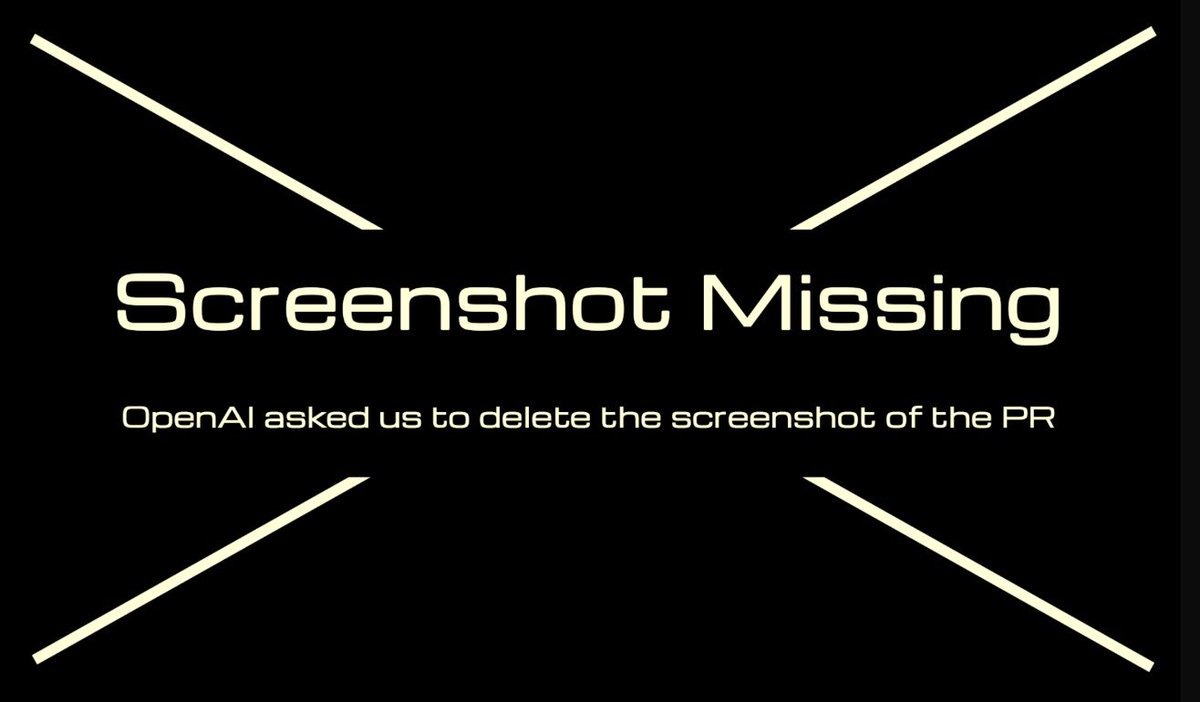
@IntCyberDigest reported (64 likes, 4 replies, 7,561 views, 16 bookmarks) that the researchers behind the OpenAI incident say OpenAI asked them to remove the proof screenshot, take OpenAI out of the title, and drop the link after their draft circulated. The attached images matter because they preserve both sides of that claim in public form: one slide explicitly says the screenshot is missing because OpenAI asked for its deletion, while the reconstructed Codex screen shows the README diff the researchers say proved account takeover into an internal monorepo context.

@shawnchauhan1 argued (5 likes, 5 replies, 442 views) that Claude Code, Codex, GitHub Copilot, and Gemini CLI were all carrying the same zero-click RCE flaw. The second image is the important one: it explains the pinning bypass in concrete terms, showing how a plugin checkout can still land on attacker-controlled code while the supposedly pinned commit continues to look intact.

The defensive response also surfaced inside the same day's dataset. @xuxin_AI shared (4 replies, 144 views) the open-source skill-audit scanner, and the project's README says it scans skills, plugins, MCP configs, and instruction files for prompt injection, hardcoded secrets, dangerous shell patterns, and other static-analysis issues. That did not attract the reach of the exploit threads, but it is one of the clearest signs that builders now see agent skills as a real supply-chain surface.
Discussion insight: The most useful security replies were procedural, not theatrical. They focused on documenting edit requests during disclosure, understanding how pinned plugins can still move, and auditing the growing pile of skills and MCP layers before they are trusted locally.
Comparison to prior day: September 18 centered exploit chains and patch guidance. September 19 kept security just as visible, but broadened it into disclosure governance and pre-install hardening for agent extensions.
1.3 The fastest builder activity stayed above the base model, in coordination and control surfaces (🡕)
The biggest day-over-day jump in the current top slice was not a single vendor name. It was agent, which rose from 90 to 159. The posts behind that jump were not generic "AI can code" claims. They were practical surfaces for background execution, shared context, blocked-state visibility, and multi-tool workspaces that try to make several agents manageable at once.
@thdxr wrote (79 likes, 12 replies, 5,778 views) that an opencode session reserved Trainium capacity for Saturday and scheduled itself to wake up when the slot opened so it could continue the same job. The replies made the real takeaway explicit: durable timers and resumable state are now part of the product requirement, because a delayed capacity slot is worthless if the system forgets why it resumed.
@alex_verem described (4 likes, 2 replies, 889 views) Herdr as a way to keep five or ten coding agents in one place instead of scattering them across terminal windows. The public README matches the tweet's pitch: Herdr keeps terminals alive in a background server, marks panes as working, blocked, or idle, combines local and remote machines in one view, and lets agents open panes and wait on each other through the same CLI and socket API.
@DanKornas introduced (8 likes, 2 replies, 977 views) First Tree as a shared-context workspace where agents read from a Git-native "Context Tree" instead of starting every task from an empty prompt. In a separate post, the same author introduced (5 likes, 6 replies, 562 views, 1 bookmark) Navop, a Rust and GPUI desktop workspace that keeps databases, SSH, remote files, and agent work inside one application, including ACP connections for Codex, Claude Code, and OpenCode.
Discussion insight: These builders are no longer trying to beat frontier models on raw intelligence. They are solving the operator problem around them: where work waits, who is blocked, what the shared context is, and how many tools a person has to hold open just to supervise one flow.
Comparison to prior day: September 18 already had control-plane and runtime packaging signals. September 19 moved that pattern away from abstract architecture and into visible products for background sessions, shared team memory, and all-in-one workbenches.
1.4 Platform packaging and real-environment loops continued to broaden what "coding agent" means (🡒)
Two adjacent strands from September 18 stayed active: vendors packaging agent runtimes as broader platforms, and builders pushing agents into real environments where they can observe what they changed. The result is that "AI coding" keeps looking less like a single editor pane and more like a stack of SDKs, workshops, MCP layers, and execution environments.
@github announced (76 likes, 15 replies, 20,331 views, 35 bookmarks) a GitHub Copilot SDK livestream centered on sessions, tools, MCP servers, and streaming events for embedded agentic apps. The replies were useful because they immediately pushed past the happy path: if the SDK handles the loop, production builders still want to see failed tool calls, reversible actions, and explicit human gates. In parallel, @JamesMontemagno shared (31 likes, 3 replies, 1,560 views, 17 bookmarks) a public First Steps with GitHub Copilot workshop that walks through the Copilot app, Copilot CLI, and VS Code in a 60–90 minute lab.
@hasantoxr highlighted (22 likes, 9 replies, 6,788 views, 17 bookmarks) ARTEMIS, and the repo README confirms why the project kept circulating: it lets assistants and test suites use real Android devices, integrates through MCP with Antigravity, Claude Code, Codex, and others, captures screenshots and Logcat, and advertises 99%+ completion on AndroidWorld. That gives the current tooling wave a more grounded target than "write code": build it, run it on a phone, inspect the result, and feed the failure back into the next step.
@thtbee_ captured (232 likes, 16 replies, 20,551 views, 30 bookmarks) the same shift from another angle. The post was nominally about Gemini 4 Pro hype, but the actual asks were for a more complete Antigravity environment: private project memory, restored cross-chat memory, local-file access, and more native integration across Google's surfaces. That is not a request for a smarter answer; it is a request for a better platform.
Discussion insight: The strongest product asks were about context, recovery, environment access, and packaging. Users increasingly judge the model through the runtime and the execution surface wrapped around it.
Comparison to prior day: September 18 already had ARTEMIS and Copilot-platform signals in motion. September 19 reinforced them with a public Copilot workshop and a stronger demand signal for agent platforms that can hold memory and act in real environments.
2. What Frustrates People
Spend still feels easier to trigger than to govern
The strongest spend frustration was not just that usage is expensive. It was that people still discover the failure after the runtime has already spent the money. @testingcatalog reported (597 likes, 15 replies, 37,747 views, 52 bookmarks) that banked resets are coming to Codex and ChatGPT Work, but the most repeated reply concern was that loops can still burn most of the quota before a reset matters. @CaptainInsightX added (1 reply, 96 views) the sharper edge case: a user-report screenshot claiming more than 157,000 credits were consumed across two days while auto-reload kept buying more.
The visible coping strategies were workarounds, not finished controls. People talked about waiting for banked resets, manually inspecting usage after the fact, and routing around seat exhaustion. @Jadu100x shared (1 like, 2 replies, 76 views) openllms, a self-hosted gateway that exposes one OpenAI-compatible API for ChatGPT, Claude, and Codex seats while watching quotas and failover. That is a useful operator patch, but it is also evidence that spend visibility and routing are still weak enough to motivate extra infrastructure. Worth building for: High.
Long-running agent work still needs inspectable memory and resumable state
The second frustration cluster was continuity. @thtbee_ laid out (232 likes, 16 replies, 20,551 views, 30 bookmarks) a Gemini 4 and Antigravity wishlist that was really a list of missing state controls: private project memory, local-file access, more native integration, restored cross-chat memory, and a way to see and customize what memory Gemini actually has. The replies supported the same direction by praising Google's usage limits and price, but not disputing the need for better workflow polish.
A second form of continuity failure showed up in compute scheduling rather than chat memory. @thdxr said (79 likes, 12 replies, 5,778 views) an opencode session had to reserve Trainium capacity for Saturday and schedule itself to wake later to continue the same job. The replies turned that into a product requirement: delayed work only helps if the runtime can preserve state, remember why it resumed, and make the blocked/waiting condition obvious to the operator. The response from builders was to ship extra layers such as Herdr and First Tree, which is itself evidence that the base tools still leave a gap. Worth building for: High.
Skills, plugins, and MCP layers are now trusted enough to be scary
The security frustration is no longer just "models might do something dumb." It is that the extension layers around them now look like a genuine software supply chain. @shawnchauhan1 framed (5 likes, 5 replies, 442 views) the Plugin4Shell disclosure as one flaw shared across Claude Code, Codex, GitHub Copilot, and Gemini CLI, while @IntCyberDigest kept attention (64 likes, 4 replies, 7,561 views, 16 bookmarks) on the evidence-handling and disclosure fallout around the OpenAI incident.
The practical reaction was to start scanning the agent layer itself. @xuxin_AI posted (4 replies, 144 views) skill-audit, whose README says it checks skills, plugins, MCP configs, and instruction files for prompt injection, secrets, and dangerous code patterns while keeping analysis local by default. That is a strong signal that teams now expect a pre-install audit step for agent extensions, much like they already expect dependency scanning elsewhere in the stack.

This is High severity because the permissions near these tools are unusually valuable: local files, terminal commands, SSH sessions, connected SaaS accounts, and project instructions. The workarounds already look like a new category of tooling. Worth building for: High.
3. What People Wish Existed
A spend governor that can stop, explain, and reroute agent work before the bill lands
The clearest practical need was not simply "more credits." It was a control layer that understands when work is stuck, when a reload should be blocked, when a reset qualifies, and when another route or seat should take over. @testingcatalog surfaced (597 likes, 15 replies, 37,747 views, 52 bookmarks) the demand for banked resets, @CaptainInsightX shared (1 reply, 96 views) the fear of auto-reload buying more usage while tasks appear stuck, and openllms exists because some users are already building quota-aware routing themselves.
This is a direct need, not an aspirational one. Partial answers exist in banked resets and self-hosted gateways, but the evidence still points to fragmented controls that activate after the problem begins. Opportunity: direct.
A durable context and resume layer that survives long-running work
People are no longer asking only for better answers. They are asking for a system that can keep the right state alive across time, surfaces, and interruptions. @thtbee_ asked (232 likes, 16 replies, 20,551 views, 30 bookmarks) for private project memory, visible memory controls, and restored cross-chat memory inside Antigravity, while @thdxr showed (79 likes, 12 replies, 5,778 views) the compute-scheduling version of the same need: a session that can wake later and still remember why it woke up.
Herdr and First Tree are partial answers because they preserve background execution or shared team context, but neither signal closes the broader cross-surface gap by itself. This is a practical need with active competition already underway. Opportunity: competitive.
A pre-install trust layer for skills, plugins, MCP servers, and project instructions
The third unmet need is a security checkpoint that treats agent extensions as first-class supply-chain inputs. @shawnchauhan1 reframed (5 likes, 5 replies, 442 views) the latest shared flaw as the cost of depending on closed agent surfaces you cannot inspect directly, while @xuxin_AI posted (4 replies, 144 views) skill-audit as a local-first scanner for skills, plugins, MCP configs, and instruction files.
That pairing suggests people want one gate that can combine static scanning, policy enforcement, and clear human review before an extension gets local privileges. The need is practical and immediate, but early tools are still narrow and mostly static. Opportunity: direct.
4. Tools and Methods in Use
| Tool | Category | Sentiment | Strengths | Limitations |
|---|---|---|---|---|
| Codex | Agent/runtime | (+/-) | High daily visibility, expanding reset policy discussion, still central to serious builder workflows | Reset ambiguity, runaway-credit anxiety, and shared plugin/security exposure |
| GitHub Copilot | Platform/runtime | (+/-) | SDK surface for sessions, tools, MCP, and streaming events; structured onboarding across App, CLI, and VS Code | Human gates, recovery behavior, and extension trust still sit outside the happy-path demos |
| Antigravity | Managed agent platform | (+/-) | Strong interest as a next-gen agent platform; ARTEMIS integration gives it real-device reach | Users still want private project memory, local-file access, restored cross-chat memory, and more polish |
| ARTEMIS | Device automation / MCP | (+) | Real Android device control, screenshots, Logcat, MCP support, and explicit Flash/Pro execution modes | Android-specific today and still dependent on device/toolchain setup |
| Herdr | Agent coordination runtime | (+) | Background server, blocked/idle status, multi-machine aggregation, and agent-native pane control | Solves supervision and persistence, not spend governance or shared project memory |
| First Tree | Shared-context workspace | (+) | Git-native team memory, persistent chats, human review points, and GitHub integration | Requires teams to adopt and maintain a shared context layer |
| Navop | All-in-one workspace | (+) | Combines databases, terminals, remote files, and ACP-connected agent work in one native desktop app | Larger trust surface in one app and more operational coupling than single-purpose tools |
| openllms | Gateway / routing layer | (+) | One OpenAI-compatible API for multiple paid seats, quota-aware routing, and failover | Adds another service to run and works around spend problems rather than removing them |
| skill-audit | Security scanner | (+) | Local-first auditing for skills, plugins, MCP configs, secrets, and dangerous shell/code patterns, with SARIF output | Static analysis only; cannot fully judge runtime behavior or contextual intent |
Overall satisfaction was highest when a tool made the agent runtime more legible. ARTEMIS, Herdr, First Tree, Navop, openllms, and skill-audit all gained traction by narrowing ambiguity: one gives the agent a real phone, one keeps terminals alive, one preserves shared context, one merges several operational surfaces, one routes across seats, and one scans extension risk.
Mixed sentiment stayed concentrated on the general-purpose platforms. Codex, Copilot, and Antigravity all drew strong attention, but the evidence kept attaching that use to caveats about spend, memory, human approval, or plugin trust (@testingcatalog banked reset, @github Copilot SDK, @thtbee_ Antigravity wishlist, @shawnchauhan1 Plugin4Shell framing).
The workarounds were revealing. People routed around quotas with open gateways, added background runtimes so agent work could survive disconnects, externalized team memory into a shared context layer, or started scanning skills and MCP configs before trusting them. The competitive dynamic is moving upward again: model quality still matters, but the sharper differentiation now sits in orchestration, environment access, policy control, and operator-visible state.
5. What People Are Building
| Project | Who built it | What it does | Problem it solves | Stack | Stage | Links |
|---|---|---|---|---|---|---|
| ARTEMIS | Lets AI assistants and test suites drive real Android devices and inspect the result | Coding agents can write mobile code, but they still need real-device feedback, screenshots, and logs to debug what they built | Python 3.12+, MCP, ADB, scrcpy/FFmpeg, multimodal models | Beta | post, repo | |
| Herdr | herdrdev | Keeps several coding-agent terminals alive in one backgrounded, reconnectable workspace | Multi-agent work becomes hard to supervise once runs spread across windows and machines | Rust, terminal multiplexer, background server, socket API, SSH | Shipped | post, repo |
| First Tree | first-tree-ai | Shared-context workspace where agents read and update a Git-native Context Tree | Teams need durable memory and human review instead of restarting from empty prompts every task | TypeScript, web workspace, CLI + daemon, GitHub integration, Context Tree | Beta | post, repo |
| Navop | feigeCode | Native all-in-one workspace for databases, terminals, remote files, and ACP-connected agents | Builders are juggling too many separate tools just to manage one deployment or debugging flow | Rust, GPUI, DB drivers, SSH/SFTP, RDP/VNC, ACP, Agent Hub | Shipped | post, repo |
| openllms | goodtekxyz | Self-hosted multi-account LLM gateway with one OpenAI-compatible API | Teams want failover and quota-aware routing across paid ChatGPT, Claude, and Codex seats | Go, Docker or local binary, SQLite, OpenAI-compatible API | Beta | post, repo |
| skill-audit | pors | Local-first CLI that audits agent skills, plugins, MCP configs, and instructions | As skills and MCP layers spread, teams need a pre-install security pass for prompt injection, secrets, and dangerous shell/code patterns | Python, shellcheck, semgrep, trufflehog/gitleaks, SARIF | Shipped | post, repo |
| Junie CLI | JetBrains | Model-agnostic terminal coding agent with BYOK pricing and remote monitoring/control | Users want a terminal agent that is not locked to one model vendor and can keep running after they step away | JetBrains-hosted agent runtime, BYOK providers, terminal and IDE integration, local-model support | Shipped | post, site |
The most consistent pattern was not a new base model. It was a growing set of control layers above the model. Herdr, First Tree, and Navop attack the same operator problem from different angles: persistent sessions, shared team context, or all-in-one operational panes.


A second pattern was infrastructure built specifically around the failure modes people complained about elsewhere in the dataset. ARTEMIS gives agents eyes and hands on real Android devices, which answers the "the app compiled, but did it actually work?" problem. openllms answers a different pain point by turning several paid seats into one quota-aware API surface rather than forcing every tool to manage subscriptions independently.
The third pattern was trust and portability. skill-audit treats agent skills and MCP layers as a new security boundary worth scanning before use, while Junie markets model choice itself as a product feature with BYOK and local-model support. Together with the control-layer projects above, that suggests builders think the next durable products sit around the agent runtime rather than inside the model alone.
6. New and Notable
Banked resets moved from rumor to explicit product-policy talk
@testingcatalog reported (597 likes, 15 replies, 37,747 views, 52 bookmarks) that a new banked reset is coming for Codex and ChatGPT Work users. That matters because quota relief is being discussed as a product contract tied to shipping cadence, not just a support-side exception.
GitHub kept widening Copilot into a runtime and training surface
@github announced (76 likes, 15 replies, 20,331 views, 35 bookmarks) a Copilot SDK livestream focused on sessions, tools, MCP, and streaming events, while @JamesMontemagno published (31 likes, 3 replies, 1,560 views, 17 bookmarks) a public workshop that walks through the Copilot app, Copilot CLI, and VS Code. The notable part is the combination: GitHub is shipping both the runtime surface and the onboarding path around it.
Herdr showed how quickly the coordination layer is maturing
@alex_verem described (4 likes, 2 replies, 889 views) Herdr as a way to run many coding agents in one place with blocked/idle status, background persistence, and multi-machine views. The public repo backs up that this is not just a mockup: it is a Rust runtime built specifically to supervise several existing agents at once.
skill-audit made agent-extension security feel like its own product category
@xuxin_AI shared (4 replies, 144 views) skill-audit, a local-first scanner for skills, plugins, MCP configs, and instruction files. That is notable because it treats "agent skill install" as something closer to dependency installation, complete with static checks and CI output.
7. Where the Opportunities Are
[+++] Preemptive spend governors for autonomous coding runs — The dataset repeatedly showed spend becoming visible after the runtime is already in trouble: banked resets, stuck loops, auto-reload anxiety, and seat-routing workarounds. A product that can detect stalled tasks, throttle or halt reloads, explain reset state, and reroute safely before more credits burn has direct evidence from sections 1, 2, and 4.
[+++] Shared-context and resumable-state layers for teams of agents — Herdr, First Tree, Navop, the Trainium reservation post, and the Antigravity memory wishlist all point to the same missing layer: background persistence, blocked-state visibility, and durable shared memory across surfaces. This is one of the strongest multi-section signals in the report.
[++] Security policy and auditing for skills, plugins, and MCP — The OpenAI disclosure dispute, Plugin4Shell framing, and the appearance of skill-audit all suggest that agent-extension trust is becoming its own category. The opportunity is moderate to strong because the need is immediate, but the current tools are still mostly static and piecemeal.
[++] Real-environment verification loops for agents that build interactive software — ARTEMIS gives one concrete version of this for Android, and the replies make clear why it resonates: tests are not enough when an agent has to open the app, inspect the screen, and react to what really happened. This looks especially promising for mobile, browser, and operations-heavy workflows where compile success is weak evidence.
8. Takeaways
- Users are evaluating coding agents as operating systems for work, not just code generators. The highest-signal posts were about resets, blocked states, background persistence, and memory control rather than raw benchmark wins. (source)
- Security attention is shifting toward the extension layer around agents. Today's strongest security items centered on proof handling, plugin pinning, and skill/package auditability across multiple agent surfaces. (source)
- The busiest builder lane is coordination above the model. Herdr, First Tree, and Navop all try to solve supervision, shared context, and multi-tool sprawl instead of competing on base-model intelligence. (source)
- Real-environment feedback loops are becoming a practical expectation. ARTEMIS resonated because it gives agents a real phone, screenshots, and logs, which is the missing step between "the code changed" and "the app actually worked." (source)
- Platform packaging is becoming part of the competitive story. GitHub's SDK push, public Copilot workshop, and Google's Antigravity wishlist all show that distribution, memory, and environment access are now product differentiators in their own right. (source)