Twitter AI Coding - 2026-09-21
1. What People Are Talking About
1.1 Hidden model names and cheaper routes changed tool choice (🡕)
The strongest single-day shift was that model talk got less abstract and more operational. Five items supported the theme: two separate Luna leak posts, GitHub's official Grok 4.7 rollout into Copilot, a community price/performance framing for Grok 4.7, and one concrete migration story from expensive frontier-model runs to cheaper maintenance routes.
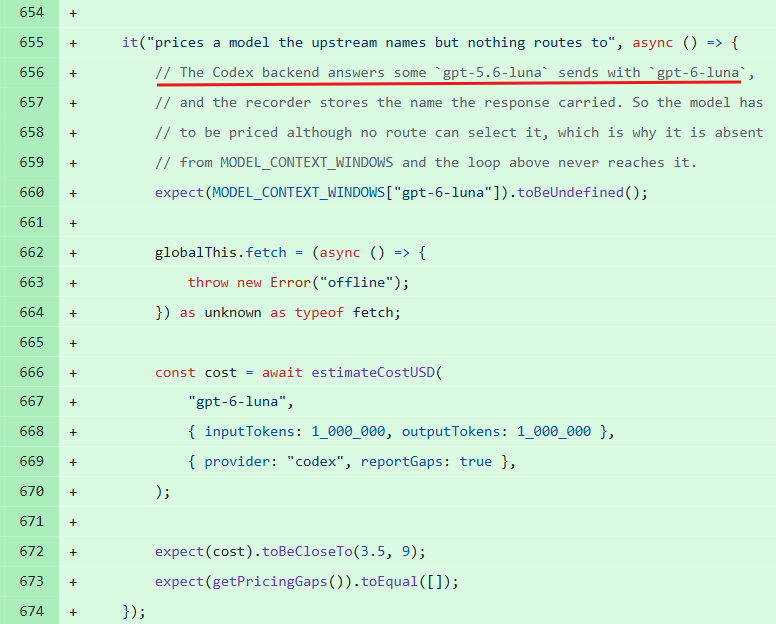
@LuminaBench reported (295 likes, 20 replies, 14,785 views, 21 bookmarks) that Codex backend responses were already surfacing gpt-6-luna even when requests still targeted gpt-5.6-luna. The important part was not the rumor value; the attached screenshot showed code-level handling for an unseen model name and explained that cost tracking had broken because the model was not yet recognized. @haider1 added (45 likes, 2 replies, 2,229 views) a second screenshot where the code explicitly priced gpt-6-luna, making the leak materially stronger than a single anecdote.
@GHchangelog announced (21 likes, 1,052 views) that Grok 4.7 was rolling out in GitHub Copilot across VS Code, Visual Studio, Copilot CLI, the cloud agent, the app, JetBrains, Xcode, and Eclipse. The linked GitHub changelog made the rollout official and attached it to usage-based billing, while @MTSlive framed (18 likes, 3 replies, 2,857 views) Grok 4.7 as an everyday coding model because it stayed at the same price as 4.6. The most useful reply on that thread said the price drop, not a small benchmark lead, is what changes behavior.
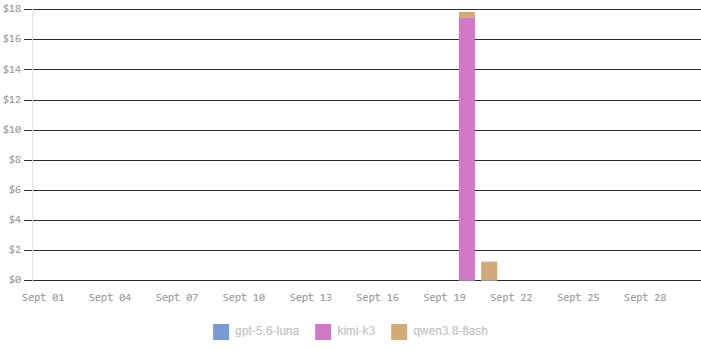
@jayhemz wrote (16 likes, 7 replies, 595 views) that a complex OpenCode deployment made Kimi K3 feel wasteful, while Qwen 3.8 Flash handled 234.1K tokens of follow-on work for about $0.54. His conclusion was practical rather than ideological: use expensive frontier models for scaffolding, then switch to a cheap model for maintenance if the foundation is already in place.
Discussion insight: Replies across these posts treated routing visibility and price estimation as product features in their own right. People were less interested in who "won" a leaderboard than in which model actually showed up, what it cost, and whether surprise substitutions stayed legible.
Comparison to prior day: September 20 already had strong runtime and model chatter, but much more of it was about harness engineering. September 21 shifted attention upward toward hidden model names, official model-picker changes, and price-per-task tradeoffs.
1.2 Copilot kept shipping, but the workflow skepticism got louder (🡕)
GitHub-related shipping velocity stayed high, yet the strongest user reactions were about fit, placement, and attention. Six items supported the theme: the shared Copilot runtime rewrite, editable diffs, Sentry canvas, two Rhys Sullivan complaint posts, and a smaller Copilot-versus-Cursor discussion that kept returning to workflow feel rather than raw capability.
@github said (7 likes, 3,572 views, 4 bookmarks) that one engineer and a team of agents had ported the shared Copilot agent runtime to Rust. The linked engineering post is what made the item matter: GitHub says the runtime now backs the CLI, app, SDK, cloud agent, and more, while one-turn startup fell from 5.25 seconds to 55.3 milliseconds, throughput rose from 7.55 to 120.0 sessions per second, and a ten-client memory batch dropped from 1,383 MB to 126 MB. This was a platform story, not just a coding-demo story.
@gimenete previewed (39 likes, 4 replies, 4,518 views, 3 bookmarks) editable diffs in the GitHub Copilot desktop app, and a reply clarified that the first version edits uncommitted changes in place without committing them yet. @pierceboggan showed (25 likes, 5 replies, 1,382 views, 4 bookmarks) a Sentry canvas inside the Copilot app that pulls in crash context and stack traces before the agent investigates the fix and prepares a pull request. The direction of travel was clear: smaller loops, closer to the work surface.
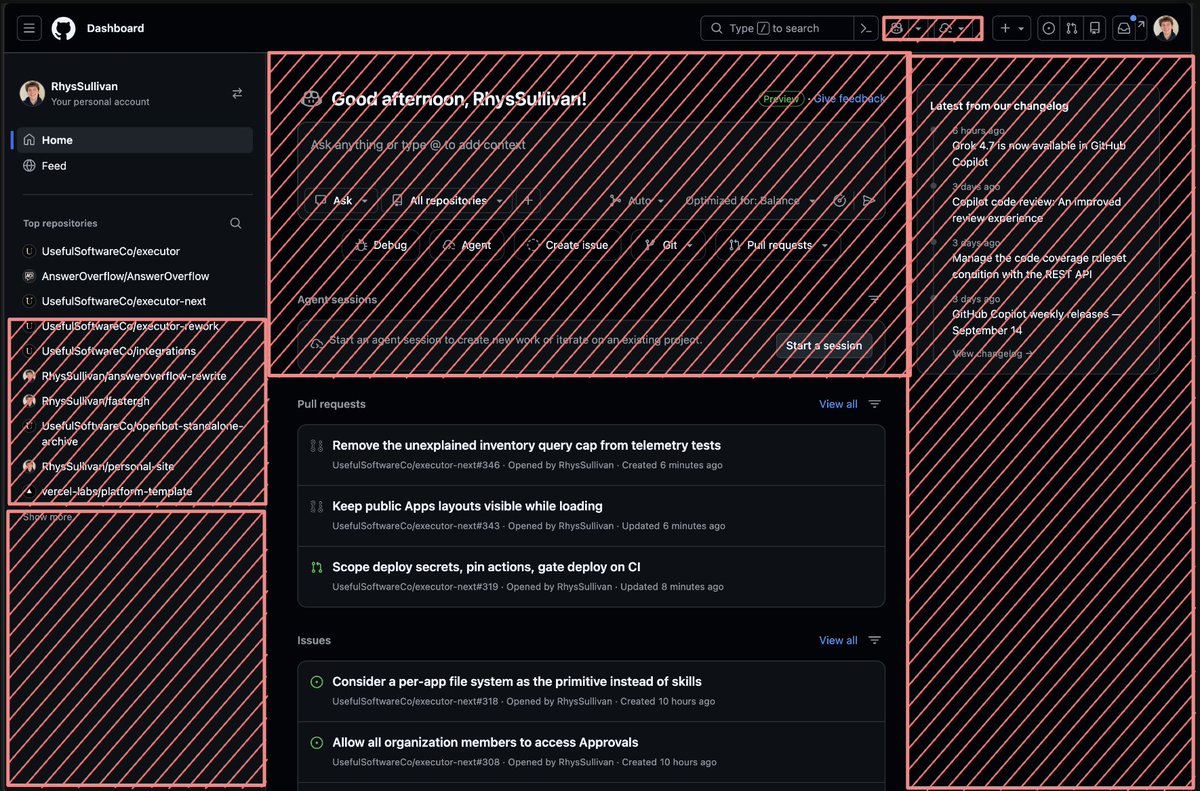
@RhysSullivan posted (70 likes, 11 replies, 2,620 views) that he had "never wanted to 'fix with copilot'" and attached the exact review UI where the button appears beside a code-review comment. That critique got sharper when he later added (60 likes, 5 replies, 2,065 views, 1 bookmark) that even with the new experience, too much GitHub screen space was still dedicated to Copilot instead of helping high-volume PR work move faster.

@uday_devops asked (13 likes, 7 replies, 368 views) why Cursor still feels more popular for AI coding even as Copilot adopts similar features. The most useful replies argued that Cursor still feels more AI-first because the editor flow and project context remain closer to the user’s normal work than a separate dashboard or side experience.
Discussion insight: The positive reactions went to features that tighten an existing loop, like diff editing or incident context. The negative reactions centered on AI being inserted into review surfaces or taking over space that heavy PR users want reserved for flow-critical work.
Comparison to prior day: September 20 mostly celebrated runtime leverage and broader platform reach. September 21 paired more Copilot shipping news with more direct user resistance to where Copilot appears and how much attention it consumes.
1.3 The extension layer kept beating the replace-your-editor story (🡒)
Instead of another round of "which IDE wins," much of the builder energy went into skills, plugins, MCP servers, and service layers that sit on top of existing agents and editors. Six items supported the theme: Antigravity inside VS Code, ARTEMIS through MCP, Hermes provider plugins, Claude skills lists, a shared skills-and-plugins repo, and an API-key layer that works across multiple coding agents.
@rammcodes wrote (104 likes, 9 replies, 23,134 views, 69 bookmarks) that Google had brought Antigravity back into VS Code as an extension with agentic coding, multi-step tasks, interactive plans, inline diffs, and a free multi-model plan. One reply made the broader point explicitly: vendors are no longer just shipping models, they are shipping harnesses, tools, and surfaces that keep people inside their stack.
@dr_cintas reported (45 likes, 24 replies, 4,995 views, 49 bookmarks) that Google open-sourced ARTEMIS, a system that lets agents control a real Android phone over MCP, return screenshots and traces, and verify outcomes. The public ARTEMIS repo adds the concrete details: Codex and Claude Code setup paths, 99%+ AndroidWorld task completion, a 3-5 second Flash execution loop, and a Python SDK for test pipelines.

@iamlukethedev summarized (50 likes, 16 replies, 6,442 views, 10 bookmarks) Hermes merging 419 PRs in one day, with the most notable changes around standalone provider plugins, background terminal work docks, and provider-driven setup catalogs. @Mohiniuni argued (20 likes, 7 replies, 440 views, 8 bookmarks) that Claude becomes more useful when people install reusable skills instead of writing another 50-line prompt, while @DanKornas shared (6 likes, 3 replies, 516 views, 1 bookmark) a cross-agent Agent Skills and Plugins repo for web search, URL extraction, cited research, and integration discovery. @weather_boss_ launched (32 likes, 4 replies, 948 views, 1 bookmark) Albedo Agent API as a named-key layer usable from Claude Code, Codex, Copilot, Cursor, and ACP, and @levithefirst reinforced (61 likes, 25 replies, 939 views, 24 bookmarks) the same bundling logic by grouping Antigravity, Jules, Stitch, NotebookLM, and AI Studio into one free Google stack.
Discussion insight: The repeated pitch was about repeatability: install paths, shared rules, named keys, provider catalogs, and reusable skills. That is a different maturity signal from simple prompt tips or benchmark screenshots.
Comparison to prior day: September 20 emphasized blackboards, message buses, and quota panes for multi-agent coordination. September 21 kept the same general direction but focused more on installable packages that drop into existing agents and editors.
2. What Frustrates People
Premium plans still fail cost and quota expectations
The clearest frustration was not that the models were weak. It was that people could not predict how long a paid plan would last or when they should route work elsewhere. @hiarun02 asked (35 likes, 8 replies, 1,397 views) OpenAI to make Codex limits "smarter too," while @b1ockbelle argued (19 likes, 9 replies, 304 views) that $200 plans across Claude and Codex now behave more like one-day or three-day passes than weekly allowances once normal agent runs begin. That complaint was practical, not theatrical: the post said the meter is already empty after ordinary use.
@jayhemz showed (16 likes, 7 replies, 595 views) the most concrete coping strategy of the day. He said Kimi K3 effectively burned through a $20 balance on OpenCode, then switched to Qwen 3.8 Flash and got a 234.1K-token maintenance run for about $0.54, concluding that expensive frontier models make more sense for scaffolding than for follow-on maintenance.
The workaround pattern was visible elsewhere too. @MTSlive quoted (18 likes, 3 replies, 2,857 views) replies saying people switch when the bill drops, and @weather_boss_ offered (32 likes, 4 replies, 948 views, 1 bookmark) a free daily-reset Albedo key layer as another route. Severity: High. Worth building for: High.
Copilot still loses goodwill when it interrupts review flow
The most pointed Copilot frustration was about placement, not intelligence. @RhysSullivan posted (70 likes, 11 replies, 2,620 views) that he had never wanted Fix with Copilot in his review flow, then followed up (60 likes, 5 replies, 2,065 views, 1 bookmark) by marking large parts of the GitHub dashboard as wasted space relative to the PR work he actually wants to push through. @uday_devops asked (13 likes, 7 replies, 368 views) why Cursor still feels more popular even as Copilot ships similar features, and the useful replies said Cursor still feels more AI-first because workflow and repo context stay closer to the editor.
The coping behavior here was not to reject AI entirely. It was to prefer narrower interventions like editable diffs and Sentry canvas, both of which keep the agent near the diff or incident instead of taking over a general-purpose dashboard. @gimenete previewed editable diffs for uncommitted changes, and @pierceboggan showed Sentry context inside the Copilot app, which read more like workflow repairs than feature expansion. Severity: Medium. Worth building for: High.
Sandboxes and plugin trust still break at the boundary
Security frustration stayed concrete. @viehgroup laid out (6 likes, 4 replies, 297 views) Plugin4Shell as a four-step exploit path: an agent installs a plugin pinned to a reviewed SHA, fails to verify the checked-out HEAD, and then background plugin updates can pull attacker-controlled code into the developer's environment. The post's core complaint was that install-time trust is meaningless if the client never verifies what actually got checked out.
@The_Cyber_News summarized (18 likes, 3 replies, 2,372 views) two OpenAI Codex flaws, and the linked article made the engineering implications sharper: Overpatch widened write permissions through attacker-controlled patch paths, while Heapjack recovered a trusted token from a shared V8 heap and used it to send unsandboxed requests. The article also named the fixed versions, which turned the thread into something operators can actually act on rather than vague anxiety.
The coping advice embedded in these posts was consistent: update aggressively, treat untrusted repositories as hostile, and move verification logic outside any path or context an attacker can control. The tone was not "AI is spooky"; it was "your boundary is only as good as the exact check you wrote." Severity: High. Worth building for: High.
3. What People Wish Existed
Smarter quota and routing controls
This was the day's clearest direct request. @hiarun02 asked (35 likes, 8 replies, 1,397 views) for smarter Codex limits, while @b1ockbelle said (19 likes, 9 replies, 304 views) that premium plans across Claude and Codex now feel more like short passes than reliable weekly subscriptions. The need is practical, not emotional: people want clearer exhaustion forecasts, route-aware budgeting, and guardrails that stop a long agent run from silently burning the entire allowance.
Today’s partial substitutes were manual. @jayhemz split scaffolding and maintenance across different models, and @weather_boss_ offered a daily-reset API key service that works across several agent clients. That is evidence of demand, but not a complete answer. Opportunity: Direct.
PR-first AI that stays inside the existing review workflow
The second need was for AI help that stays subordinate to the review flow instead of competing with it. @RhysSullivan showed (70 likes, 11 replies, 2,620 views) that he does not want Fix with Copilot placed into review surfaces by default, and then added (60 likes, 5 replies, 2,065 views, 1 bookmark) that GitHub still devotes too much space to Copilot rather than helping PR-heavy users move faster. The need is practical: less dashboard sprawl, more local edits where review already happens.
The day's positive product posts point to the shape of the answer. @gimenete previewed editable diffs, and @pierceboggan showed Sentry context flowing directly into fix preparation. Those features partially address the need, but the @uday_devops thread suggests users still think Cursor feels closer to the work. Opportunity: Competitive.
Reusable workflow packages with context already wired in
People repeatedly asked for less re-explanation and less integration glue. @Mohiniuni argued (20 likes, 7 replies, 440 views, 8 bookmarks) that Claude becomes more useful when skills are installed once and reused, rather than re-described prompt by prompt. @DanKornas put it more bluntly (6 likes, 3 replies, 516 views, 1 bookmark): getting current web context into an agent should not require wiring every integration from scratch.
The strongest partial solution was ARTEMIS, which ships MCP install paths and an explicit rules file so Codex, Claude Code, Antigravity, Windsurf, and others can all inherit the same mobile-testing behavior. That shows the need is already practical and actionable: people want domain context, rules, and tools to arrive as installable packages, not as another carefully worded giant prompt. Opportunity: Direct.
4. Tools and Methods in Use
| Tool | Category | Sentiment | Strengths | Limitations |
|---|---|---|---|---|
| GitHub Copilot | IDE/app/CLI | (+/-) | Fast official rollout of Grok 4.7, editable diffs preview, Sentry canvas, much faster shared Rust runtime | Review-surface backlash, dashboard sprawl, and recurring comparisons where Cursor still feels more natural |
| Claude Code | Coding agent | (+/-) | Strong skills/plugin ecosystem and still a common reference point for reusable workflows | Premium-cap exhaustion complaints and repeated claims that many users still treat it like a chatbot |
| Codex | Coding agent/CLI | (+/-) | Rapid backend changes, hidden model experiments, still useful for scaffolding and official integrations | Surprise routing, limit complaints, and recent sandbox/security failures hurt trust |
| Cursor | AI IDE | (+) | Seen as AI-first and strong on persistent repo/workflow feel | Today's evidence was mostly comparative rather than new-feature-driven |
| Google Antigravity | AI IDE/extension | (+/-) | Back inside VS Code, multi-step tasks, multi-model free plan, fits into Google's wider tool stack | The narrative shifted from replacing editors to living inside them, and concrete daily-work reports were still sparse |
| Grok 4.7 | Model | (+/-) | Same-price update, quick Copilot availability, framed as a cheaper everyday workhorse | Still not treated as the benchmark winner everywhere, and many claims came via secondary summaries |
| Qwen 3.8 Flash | Model | (+) | Extremely low maintenance cost in one real deployment story and praised for following instructions closely | Used mainly as a cheap second-stage model rather than a full replacement for harder frontier work |
| ARTEMIS | Testing/MCP | (+) | Real-phone control, screenshots and logcat, 99%+ AndroidWorld claim, 3-5 second Flash loop | Replies still wanted stronger assertions, dry runs, and more explicit wrong-state detection |
| Albedo Agent API | API/access layer | (+) | Named keys and wire-compatible access across Claude Code, Codex, Copilot, Cursor, and ACP | Still in live-feedback mode, with quota tiers rather than a settled production narrative |
| Vibetime | Tracking/observability | (+) | OpenCode support, better attribution, and visible stuck uploads for agent sessions | Best accuracy depends on login/email matching and it serves a narrower observability niche |
The satisfaction spectrum was wide, but it was no longer just about which model seems smartest in chat. People were mixing tools by job stage: frontier models for setup and scaffolding, cheaper flash models for maintenance, and separate layers for testing, routing, attribution, or current web context. The clearest migration pattern was cost-driven: @jayhemz moved follow-on work to Qwen 3.8 Flash after seeing the bill, while @b1ockbelle and @hiarun02 treated usage caps themselves as the product failure.
Competitive dynamics also looked different from earlier in the year. Copilot and Antigravity were both broadening their surfaces, but the comparison posts kept rewarding tools that feel close to the user's existing workflow rather than tools that merely add another agent surface. Around those primary tools, a secondary market of skills, plugins, MCP servers, and key-management layers kept growing: ARTEMIS, the Agent Skills and Plugins repo described by @DanKornas, @Mohiniuni's Claude skills list, and Albedo all tried to make existing agents more reusable instead of replacing them.
5. What People Are Building
| Project | Who built it | What it does | Problem it solves | Stack | Stage | Links |
|---|---|---|---|---|---|---|
| ARTEMIS | Lets coding agents control real Android devices, verify outcomes, and return traces/screenshots over MCP | Mobile QA, UI-debug, and app-testing workflows that normal code-only agents cannot reach | Python 3.12+, MCP, ADB, vision/OCR/accessibility, multimodal models | Shipped | tweet, repo | |
| Copilot agent runtime rewrite | GitHub | Rewrote the shared Copilot runtime in Rust for the CLI, app, SDK, cloud agent, and related surfaces | Startup latency, throughput, and memory overhead in a shared agent harness | Rust, Copilot SDK, CLI/app, C ABI, JSON-RPC | Shipped | tweet, blog |
| AI Website Cloner Template | JCodesMore | Recreates a website from a URL as a clean Next.js app via a /clone-website skill and parallel builder agents |
Rebuilding or migrating sites when the original source code is missing or legacy | Next.js 16, React 19, TypeScript, shadcn/ui, Tailwind v4, git worktrees | Shipped | tweet, repo |
| Vibetime v0.13.0 | @iamnotstatic | Tracks agent sessions more accurately, wraps OpenCode by default, and surfaces stuck uploads | Misattributed work and invisible telemetry failures in multi-agent session tracking | Session tracking CLI/service, Git identity matching, OpenCode wrapper | Shipped | tweet, release |
| Agent Skills and Plugins | You.com | Packages web search, URL extraction, cited research, finance research, and integration discovery for multiple coding agents | Rewiring current-web and research context into each agent from scratch | Shared skills, plugins, multi-platform install docs, MCP-style integration paths | Shipped | tweet, site |
| Albedo Agent API | Albedo | Provides named keys and reusable API access across Claude Code, Codex, Copilot, Cursor, and ACP | Multi-client access and quota sharing across agent tools | GitHub-authenticated keys, OpenAI/Anthropic/Responses wire formats | Beta | tweet, site |
ARTEMIS was the most substantial shipped project in the day's dataset because it extended coding agents into a real-device loop instead of just adding another code-generation surface. The public repo and README make the workflow specific: install MCP once, drive a phone, capture screenshots and logcat, and run the same flow from Codex, Claude Code, Antigravity, Windsurf, or a Python test pipeline. The replies immediately pushed on verification quality, which is exactly what made the project useful signal rather than another demo.
GitHub's runtime rewrite mattered for a different reason. The headline was "one engineer and a team of agents," but the durable part is that the same Rust runtime now underpins many Copilot surfaces, and GitHub published the performance numbers that justify the work. That is a classic platform build: less visible than a new model launch, but potentially more consequential for everyone sitting on top of the harness.
The community projects shared a common pattern: they wrapped existing agent clients with reusable workflow structure. AI Website Cloner Template turned site reconstruction into a five-stage skill with git-worktree parallelism and visual diff QA; Vibetime kept session accounting honest as more people spread work across agents; Agent Skills and Plugins and Albedo both packaged cross-agent context or access so the same capability can move across Claude Code, Codex, Copilot, Cursor, and related tools. The repeated build trigger was not "better chat." It was repeatability, portability, and observability.
6. New and Notable
Site reconstruction matured into an explicit agent workflow
@DanKornas shared (4 likes, 422 views, 3 bookmarks) AI Website Cloner Template as a reusable way to rebuild a site you own with a coding agent. The public repo is what made it notable: instead of a vague "clone this site" prompt, it documents reconnaissance, design-token extraction, component specs, parallel builders in git worktrees, and visual diff QA as separate stages. That means one narrow task already has its own agent-native framework, not just an impressive demo.
Security bugs stayed specific enough to hand to engineering teams
@viehgroup laid out (6 likes, 4 replies, 297 views) Plugin4Shell as a concrete four-step exploit path around Git SHA pinning and background plugin refresh. @The_Cyber_News summarized (18 likes, 3 replies, 2,372 views) OpenAI's Overpatch and Heapjack flaws, and the linked article adds the specific versions and failure modes teams need to patch. The notable part was not that these bugs exist; it was that the conversation has become specific enough to drive checklists around post-checkout verification, path handling, and shared-runtime isolation.
7. Where the Opportunities Are
[+++] Spend-aware routing and quota governors — Evidence ran through sections 1-4: Luna routing leaks, Grok 4.7 price talk, @hiarun02 asking for smarter limits, @b1ockbelle describing premium plans as day passes, and @jayhemz splitting scaffolding from maintenance to control spend. This is strong because the demand is explicit, the workaround behavior is already happening, and the savings are measurable.
[++] PR-native AI review surfaces — Evidence came from Rhys Sullivan's two complaint posts, the editable-diffs preview, Sentry canvas, and the Copilot-versus-Cursor discussion. The moderate opportunity is not "another agent chat"; it is AI that stays inside review, diff, and incident loops without stealing dashboard space or forcing a context switch.
[++] Post-checkout verification and sandbox-boundary enforcement — Plugin4Shell and Codex's Overpatch/Heapjack flaws point to the same need from different angles: do not trust path strings, commit pins, or shared heaps without independent verification. This is moderate rather than universal because the buyer may be platform or security teams, but the severity is real and the checklist is concrete.
[+] Cross-agent workflow packages — ARTEMIS, Agent Skills and Plugins, Claude skills lists, Vibetime, and Albedo all point to the same emerging market: portable workflow/context modules that can be installed once and reused across agents. The space is still fragmented, which is why the signal is emerging rather than dominant.
8. Takeaways
- Model chatter now has to explain routing and cost, not just capability. The Luna leak posts and GitHub's Grok 4.7 rollout only became high-signal because they changed what people thought they could route, buy, or save. (source)
- Copilot's pace of shipping is not the same as workflow acceptance. GitHub published a faster shared runtime and previewed tighter product loops, but Rhys Sullivan's screenshots still concentrated frustration on review placement and dashboard sprawl. (source)
- Mixed-model workflows are becoming normal. One of the clearest practitioner stories today used expensive models for setup and Qwen 3.8 Flash for maintenance after a 234.1K-token run cost about $0.54. (source)
- The packaging layer is where a lot of builder energy went. ARTEMIS, Hermes, Claude skills, Agent Skills and Plugins, Vibetime, and Albedo all wrapped existing agents with reusable rules, access, or workflow structure rather than replacing them. (source)
- Trust boundaries remain an engineering problem, not a solved product checkbox. Plugin4Shell and Codex's Overpatch/Heapjack flaws both came down to specific boundary mistakes that operators can name and patch. (source)