Twitter AI Coding - 2026-09-22
1. What People Are Talking About
1.1 Launch-day economics and rollout friction displaced leak-chasing (🡕)
The largest theme was no longer whether GPT-6 Sol and Luna were real. It was how fast they were showing up, what they cost, and how people should ration usage around resets. Six items supported the theme: reset countdown posts, same-day launch summaries, GitHub's official Opus 5.5 rollout, and a concrete model-picker screenshot from T3 Code.
@kimmonismus said (587 likes, 56 replies, 39,045 views) that a Codex reset was imminent and people should burn remaining rates before the window closed. @codex_resets posted (230 likes, 20 replies, 51,288 views, 37 bookmarks) a specific Sep. 23 07:00 UTC target and linked Tibo's public teaser, turning the conversation into quota timing rather than model rumor. @K1DBiBi added (8 likes, 4 replies, 237 views) the most ordinary-user version of the same behavior: a banked Astra Codex reset meant there was about an hour left to burn the remaining quota.
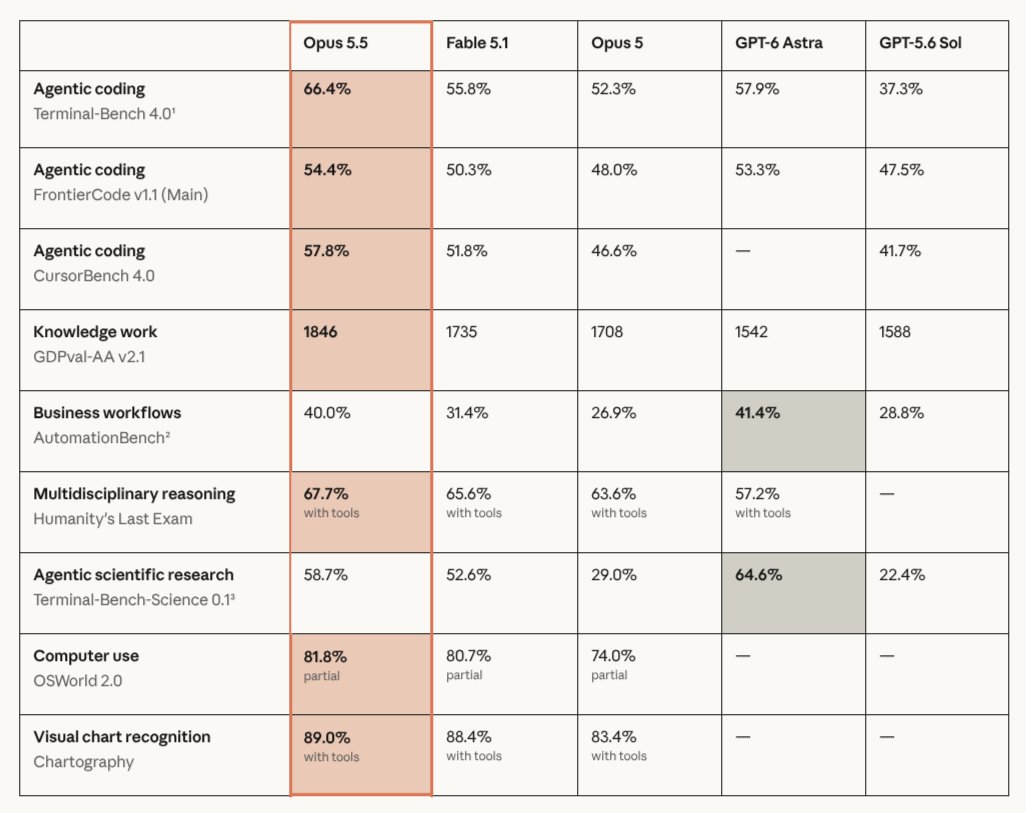
@btibor91 summarized (52 likes, 10 replies, 3,421 views, 9 bookmarks) the day's launch math in one place: GPT-6 Sol at $2 input and $10 output per million tokens, GPT-6 Luna at $0.10 and $0.50, and Claude Opus 5.5 positioned as roughly Fable 5.1 class at 40% less than Opus 5. The attached comparison table mattered because it did not just repeat marketing names; it showed the community immediately translating launches into relative coding, research, and computer-use expectations.
@github announced (120 likes, 10 replies, 12,827 views) that Claude Opus 5.5 was now available in GitHub Copilot, and the linked GitHub changelog says GitHub saw comparable task resolution to Opus 5 with fewer steps and tokens. @jullerino showed (79 likes, 9 replies, 1,482 views, 11 bookmarks) the same launch pressure at tool level: T3 Code already exposed Claude Opus 5.5, GPT-6 Sol, and GPT-6 Luna in its picker, but only after cache expiry or a manual cache-file delete. The strongest replies were not about benchmark bragging; they asked why new-model discovery still needs a cache clear and why the restart is not one click.
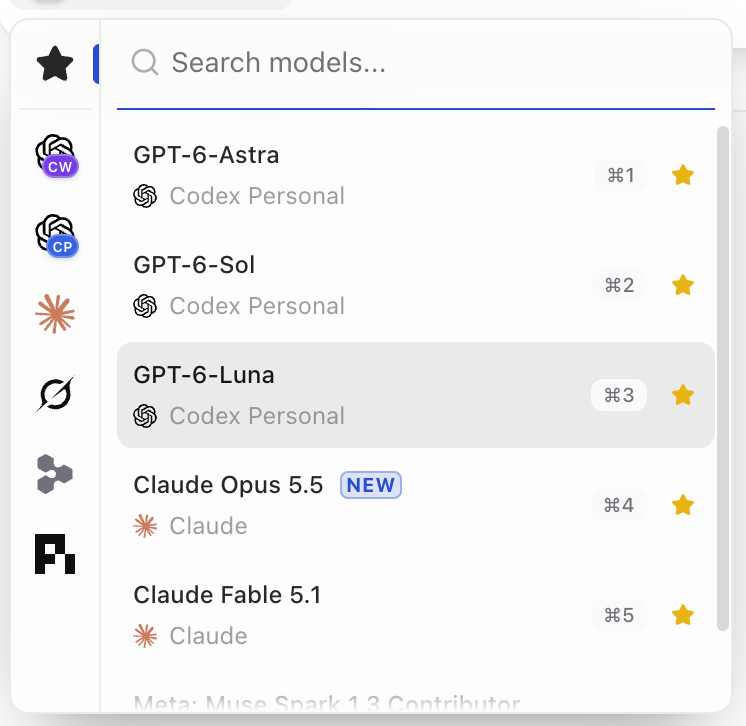
Discussion insight: The replies kept reducing launch news to operational questions: what surfaces the model appears in, whether limits reset in time, whether cache state hides the rollout, and whether lower token use changes actual spend.
Comparison to prior day: On September 21, the public evidence centered on leaks, A/B sightings, and prelaunch routing clues. On September 22, the talk shifted to confirmed pricing, confirmed reset behavior, and immediate availability inside real tools.
1.2 Guardrails and proof systems drew more respect than autonomy demos (🡕)
A second strong theme was that builders spent their credibility on control layers, not on another claim that agents are magically getting smarter. Four items supported the theme: test receipts, destructive-command blocking, harness-versus-sandbox architecture, and the repeated insistence that approval boundaries belong before damage, not after.
@neil_xbt argued (7 likes, 6 replies, 324 views) that agent reliability is a receipts problem, not a model problem. He described alibi as two Claude Code hooks: one rewrites test commands into receipted runs with exit code, pass count, and tree fingerprint; the other refuses to let an agent finish if it claims the tests pass on a stale tree. The image mattered because it showed the precise failure case, with a green-looking claim blocked after later edits invalidated the receipt.

@DanKornas shared (13 likes, 9 replies, 770 views) dcg, a command hook that blocks destructive shell and Git commands before execution. His tweet lists support for Claude Code, Codex CLI, Gemini CLI, GitHub Copilot CLI, Cursor, Hermes Agent, and more, plus 50-plus rule packs and a CI scan mode. The public dcg repository describes the same project as a Rust safety hook that intercepts destructive commands before they run, which is why the replies framed it as something every agent harness should probably ship by default.
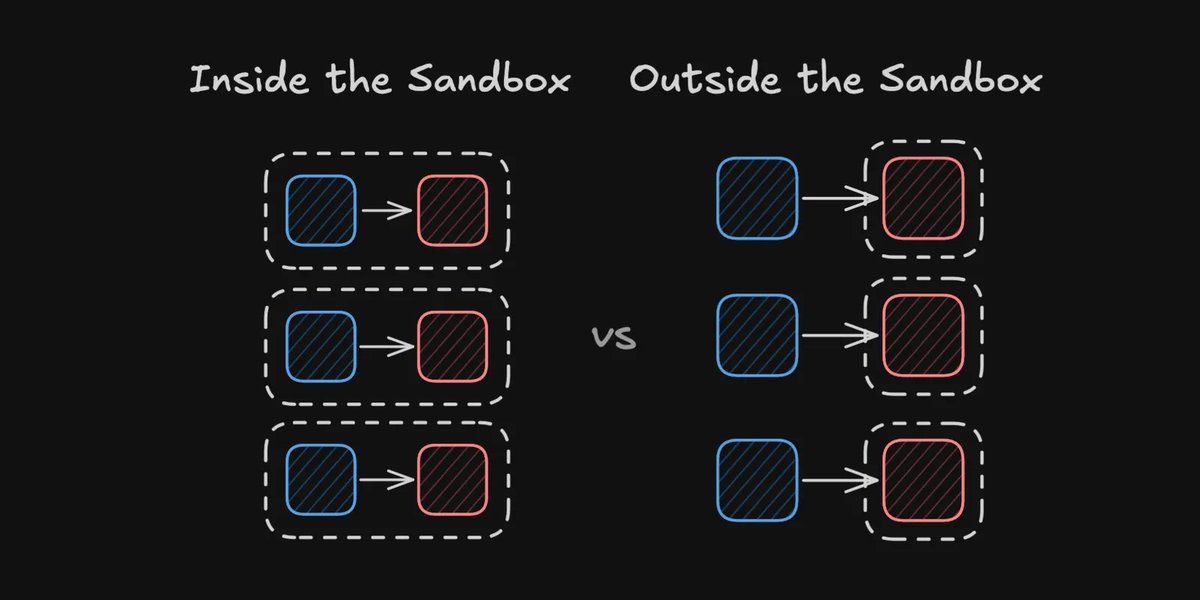
@NathanFlurry argued (3 likes, 1 reply, 255 views, 3 bookmarks) that running the harness inside the sandbox is the wrong production pattern because the sandbox's blast radius becomes the agent's blast radius. Instead, he said the backend should own credentials, history, monitoring, and wakeups while the sandbox is exposed as a tool. The attached diagram is simple, but it makes the argument legible in one glance.
Discussion insight: The supportive replies were explicit that the problem is not "unsafe prompts." It is missing ownership gates, missing current-state proof, and no pre-execution check between an agent idea and a destructive side effect.
Comparison to prior day: September 21 highlighted runtime speedups and installable agent extensions. September 22 pushed one layer deeper into how teams prove, constrain, and supervise those agents once they start touching real repos and infrastructure.
1.3 Workflow fit still outweighed platform ambition (🡒)
The third theme was that narrow integrations and workflow-preserving packages earned more goodwill than big AI surfaces asking users to adopt a whole new frame. Five items supported the theme: a GitHub dashboard complaint with visual evidence, a cross-model plugin pattern, ARTEMIS as a phone-control layer for existing IDE agents, and direct skepticism that Google's wider Antigravity stack has won broad developer trust.
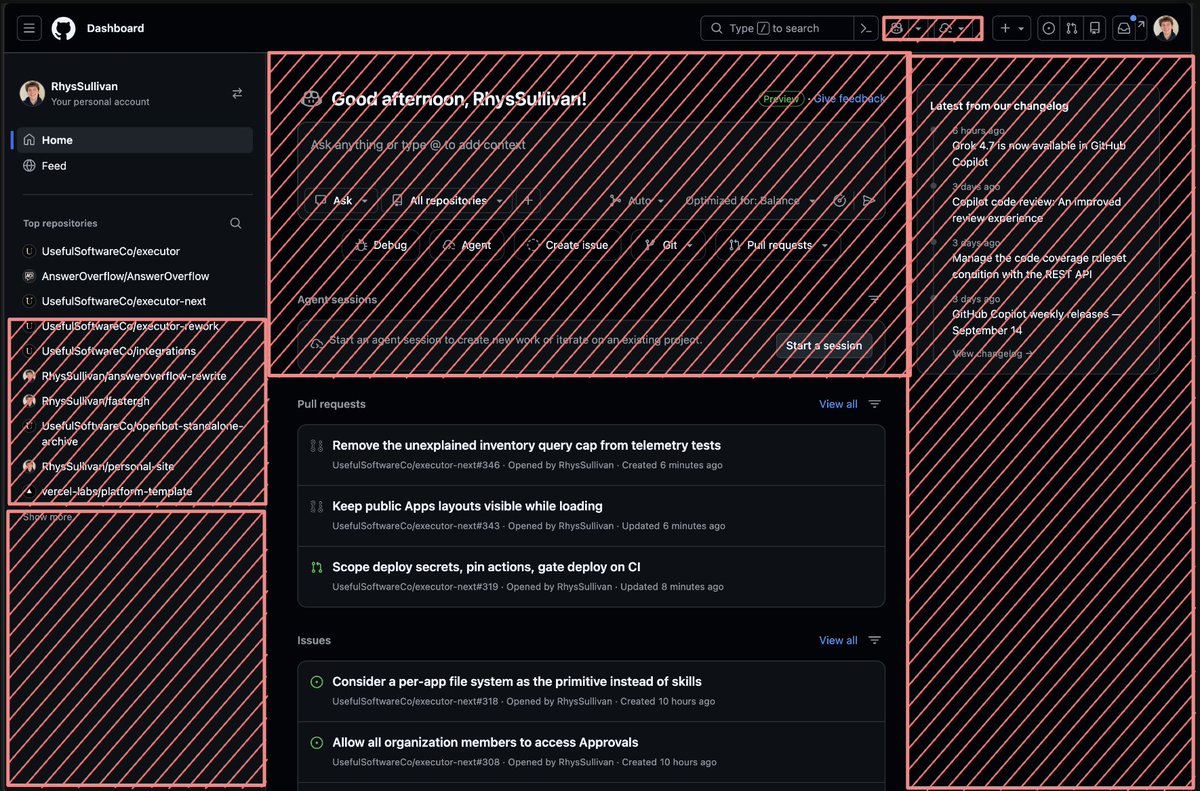
@RhysSullivan wrote (123 likes, 8 replies, 4,606 views) that GitHub still devotes too much space to Copilot for someone whose day is dominated by pulling PRs through the system. The screenshot matters because it is not abstract anti-AI sentiment; it marks the exact dashboard regions he considers wasted relative to the work surface he actually needs.
@martitech_ argued (4 likes, 3 replies, 74 views) that the interesting part of OpenAI's Codex plugin for Claude Code is not merely that Claude can "connect to ChatGPT," but that one model can build while a second model reviews, challenges, and verifies. The public repo backs that up with explicit commands for read-only review, adversarial review, rescue delegation, transfer, and background job management, which makes the post more than metaphor. It is a concrete multi-model workflow package.
@rammcodes reported (19 likes, 4 replies, 782 views, 12 bookmarks) that Google's ARTEMIS lets agents use a real Android phone through MCP. The repo says it is a Python MCP-native server with AndroidWorld 99%+ completion, 3-5 second flash loops, and direct setup paths for Antigravity, Codex, Claude Code, Windsurf, and other clients. But @GergelyOrosz pushed back (148 likes, 19 replies, 35,647 views, 15 bookmarks) on the larger Googlebook pitch, arguing that Antigravity still lacks broad external pull and that Gemini's coding reputation trails the top tier; the most useful correction in replies was that the hardware still exposes a Linux terminal, so users can run Claude or Codex even if they ignore Antigravity.
Discussion insight: The repeated pattern was not "pick one winner." It was "let me keep my current workflow and add one useful layer": a better review loop, a phone-control MCP, or a slimmer dashboard with less AI surface area.
Comparison to prior day: September 21 already leaned toward skills, plugins, and provider layers over full editor replacement. September 22 reinforced that preference with more explicit demands for slimmer surfaces and more praise for add-ons that preserve existing habits.
2. What Frustrates People
Limits, resets, and rollout state are still too hard to manage
The strongest frustration was not model quality by itself. It was the amount of operational bookkeeping users still do around quotas, resets, and inconsistent availability. @kimmonismus said (587 likes, 56 replies, 39,045 views) that people should burn their remaining Codex rates before reset, while @codex_resets posted (230 likes, 20 replies, 51,288 views, 37 bookmarks) a specific reset time and drew timezone questions in replies. @K1DBiBi turned (8 likes, 4 replies, 237 views) the same pattern into everyday behavior: a banked Astra Codex reset meant there was about an hour left to spend the remaining quota.
The rollout layer created a second kind of friction. @jullerino showed (79 likes, 9 replies, 1,482 views, 11 bookmarks) that T3 Code users sometimes needed to delete cache files before the new models appeared, and replies immediately asked for an in-app refresh. @btibor91 noted (52 likes, 10 replies, 3,421 views, 9 bookmarks) that Sol and Luna were rolling out gradually, with ChatGPT lagging behind Work/Codex surfaces.
The coping strategies were all manual: spend the quota before reset, watch third-party reset trackers, clear model-manifest caches, and keep checking whether the rollout finally reached the current surface. Severity: High. Worth building: High.
AI product surfaces still lose goodwill when they crowd out the actual job
The clearest UI complaint was not that people dislike AI help in principle. It was that too many surfaces still ask them to reorganize their workflow around the AI product. @RhysSullivan wrote (123 likes, 8 replies, 4,606 views) that GitHub dedicates too much space to Copilot relative to the PR throughput he cares about, and his screenshot made the complaint concrete. @GergelyOrosz criticized (148 likes, 19 replies, 35,647 views, 15 bookmarks) the Googlebook pitch for making Antigravity and Gemini central despite lingering doubts about both developer adoption and coding quality.
A smaller but sharper version of the same frustration showed up in tool-switching requests. @HarshithLucky3 asked (19 likes, 527 views) for multi-account support across Antigravity, Claude desktop, and ChatGPT desktop, while the replies to @jullerino asked for one-click model refresh instead of filesystem surgery. These are workflow complaints, not benchmark complaints.
People cope by choosing narrower layers that preserve the base workflow: plugins, MCP servers, read-only review commands, or plain terminals inside the bigger platform. Severity: Medium. Worth building: High.
Teams still do not trust agents to self-report or self-limit correctly
The trust problem stayed concrete. @neil_xbt argued (7 likes, 6 replies, 324 views) that agents routinely say tests pass without proving the claim against the current tree, which is why he built alibi to receipt test runs and block stale-green summaries. @DanKornas shared (13 likes, 9 replies, 770 views) dcg as a pre-execution approval boundary for risky Git and shell commands, and replies said that boundary should exist before the working tree is destroyed, not after. @NathanFlurry extended (3 likes, 1 reply, 255 views, 3 bookmarks) the same logic to infrastructure by arguing that credentials, history, and monitoring should stay outside the sandbox entirely.
The workaround pattern was consistent: add hooks, keep a control plane outside the execution box, and make every risky transition auditable. People were not asking for a more inspirational agent. They were asking for one whose claims and side effects can be checked. Severity: High. Worth building: High.
3. What People Wish Existed
Quota controls that match bursty agent work
The most direct need was better usage control around agentic bursts. @kimmonismus showed (587 likes, 56 replies, 39,045 views) and @codex_resets showed (230 likes, 20 replies, 51,288 views, 37 bookmarks) users timing their work around reset windows, while @K1DBiBi described (8 likes, 4 replies, 237 views) racing to use the remaining balance before a banked reset landed. The need is practical: people want usage forecasts, route-aware spending controls, and resets that feel like a planning feature rather than a surprise event.
Today's partial substitutes were all indirect. People watched reset trackers, spent limits preemptively, or moved work to cheaper models after the expensive pass. That behavior proves demand, but it is not a product answer. Opportunity: Direct.
Account and model switching that does not require friction or filesystem hacks
Several posts asked for simpler state management across AI tools. @HarshithLucky3 asked (19 likes, 527 views) for multi-account support across Antigravity, Claude desktop, and ChatGPT desktop. @jullerino showed (79 likes, 9 replies, 1,482 views, 11 bookmarks) that even when new models are technically live, users may still need to clear caches manually before they appear, and replies explicitly asked for a one-click restart.
This is a practical need, not a vanity one. People are managing multiple subscriptions, multiple repos, and multiple model tiers, and they do not want the surrounding UI state to become yet another thing to babysit. Opportunity: Competitive.
Cross-model workflows that separate building from checking
The strongest forward-looking need was for packaging that makes "one model builds, another model checks" easy to reuse. @martitech_ argued (4 likes, 3 replies, 74 views) that Claude Code plus the Codex plugin for Claude Code matters because a different model brings different assumptions and blind spots into review. @neil_xbt built proof hooks for test verification instead of trusting a single agent's summary, and @rammcodes highlighted ARTEMIS as an MCP package that gives multiple existing IDE agents the same real-phone testing capability.
What people seem to want is not one more monolithic agent. They want reusable review loops, verification hooks, and domain packages that can be dropped into whatever client they already use. Opportunity: Direct.
4. Tools and Methods in Use
| Tool | Category | Sentiment | Strengths | Limitations |
|---|---|---|---|---|
| GPT-6 Sol | LLM / coding model | (+/-) | Lower price than GPT-5.6 promotional rates, better coding/writing claims, live in Codex and tool wrappers quickly | Gradual rollout, prior hidden-routing confusion, still tied to quota/reset anxiety |
| GPT-6 Luna | LLM / high-volume model | (+) | Very low price point for focused, high-volume work; launched alongside Sol | Visibility depends on surface rollout and model-cache state |
| Claude Opus 5.5 | LLM / coding and knowledge work | (+) | Fewer steps and tokens than Opus 5 in GitHub's early testing; broad Copilot availability | Gradual rollout and SKU gating still matter |
| GitHub Copilot | IDE / app / CLI agent surface | (+/-) | Fast official model rollouts, broad model-picker footprint, established workflow integration | Dashboard sprawl and review-surface placement still frustrate heavy PR users |
| Antigravity | Agent IDE / harness | (+/-) | Acts as a host for MCP add-ons like ARTEMIS and remains part of Google's wider stack | Adoption skepticism persists, and users explicitly want multi-account support |
| ARTEMIS | MCP mobile testing layer | (+) | Real-phone Android control, screenshots and Logcat capture, 99%+ AndroidWorld result, works with multiple clients | Android-specific and still depends on external harnesses/IDEs |
| dcg | Safety hook | (+) | Blocks destructive shell and Git commands before execution, many agent integrations, rule packs, CI mode | Adds approval-policy overhead and still needs teams to define what actions require a human |
| alibi | Verification hook | (+) | Turns test runs into receipts and blocks stale-green claims on the wrong tree | Narrowly focused on test-proofing and currently presented as a small Claude Code hook package |
| Codex plugin for Claude Code | Multi-model plugin | (+) | Makes review, adversarial review, rescue, transfer, and status commands available without leaving Claude Code | Still depends on Codex auth, local install, and Codex usage limits |
Overall, satisfaction clustered at the layer where a tool made a concrete workflow cheaper or more verifiable. GPT-6 Sol, Luna, and Opus 5.5 were received positively when people could tie them to lower cost or fewer steps, but the goodwill weakened when rollout state, cache state, or limits got in the way. The common workarounds were manual cache clears, explicit model splitting by task, review-by-second-model patterns, and external hooks for proof or safety. The competitive dynamic is shifting away from "which single model wins" toward "which stack gives me cost control, verification, and the least workflow disruption."
5. What People Are Building
| Project | Who built it | What it does | Problem it solves | Stack | Stage | Links |
|---|---|---|---|---|---|---|
| ARTEMIS | Google via @rammcodes | Lets AI assistants control real Android devices, collect screenshots, and capture diagnostics | Gives existing coding agents a real-phone testing and bug-reproduction layer | Python, MCP, ADB, scrcpy, FFmpeg, multimodal models | Shipped | repo, tweet |
| alibi | @neil_xbt | Wraps test runs in receipts and blocks stale-green "tests pass" claims | Proves whether an agent's final test claim still matches the current tree | Claude Code hooks, shell/test wrappers, MIT package | Alpha | tweet |
| dcg | Dicklesworthstone shared by @DanKornas | Blocks destructive shell and Git commands before agents can run them | Prevents one bad agent command from destroying local work or infra state | Rust, hook integrations, rule packs, CI scan mode | Shipped | repo, tweet |
| Codex plugin for Claude Code | OpenAI highlighted by @martitech_ | Adds Codex review, adversarial review, rescue, transfer, and status commands inside Claude Code | Separates building from checking without forcing users to leave their current client | JavaScript, Claude Code plugin, Codex CLI and app server | Shipped | repo, tweet |
| CL4R1T4S | @elder_plinius | Publishes extracted system prompts, guidelines, and tool scaffolding from major AI systems | Gives builders a public reference for otherwise hidden agent instructions and guardrails | GitHub text repository / prompt archive | Shipped | repo, tweet |
ARTEMIS stood out because it is not another chat wrapper. The public repo says it mounts a native MCP server into tools like Antigravity, Codex, Claude Code, and Windsurf, then uses a real Android device or emulator for execution, screenshots, Logcat capture, and diagnostic replay. That fits the day's broader pattern: high-signal builders were extending existing agent clients with a specific missing capability instead of trying to replace the whole environment.
alibi and dcg were solving adjacent trust problems from opposite ends. alibi tries to prove that a reported test result still applies to the current tree, while dcg tries to stop catastrophic commands before they mutate the tree in the first place. Together they show a repeated build pattern from this dataset: verification and safety layers are being packaged as reusable sidecars around agents.
The Codex plugin for Claude Code made the multi-model workflow explicit enough to copy. Its README exposes normal review, adversarial review, rescue delegation, and persistent transfer, turning "let another model check this" into a concrete set of commands rather than a vibe. That is a materially different pattern from simple model switching.

The day's project mix also showed that transparency itself is becoming a product. CL4R1T4S is not a harness or a model wrapper, but it still drew heavy attention because it turns hidden prompt scaffolding into an inspectable artifact that other builders can study, critique, or reuse.
6. New and Notable
Aeon traces pointed to configurable persistent agents inside Codex
@ChrisGPT reported (204 likes, 18 replies, 11,217 views, 29 bookmarks) that shipped Codex code already contains Aeon-specific fields for model choice, appearance, cloud environment, and a dedicated thread/startAeon operation. @argofowl reframed (22 likes, 3 replies, 4,603 views, 6 bookmarks) the same evidence as configurable agents inside Codex rather than just another bot rumor. The notable part is not launch speculation by itself; it is that the symbols describe agent identity, environment, and lifecycle controls that go beyond a normal single-session assistant.

A public prompt archive turned hidden Codex scaffolding into a shared artifact
@elder_plinius posted (296 likes, 22 replies, 10,506 views, 115 bookmarks) what he described as a 294,000-character GPT-6 Sol Codex system-prompt and tools dump, linking directly to the CL4R1T4S repository. The public CL4R1T4S repo describes itself as a transparency archive for extracted prompts, guidelines, and tool scaffolding from major AI systems, and by the time of review it had roughly 50,000 stars. That made prompt transparency itself a notable builder signal today, not just gossip.

7. Where the Opportunities Are
[+++] Agent governance layer for proof and side-effect control — Evidence came from multiple sections at once: alibi receipts for test claims, dcg's pre-execution command blocking, and Nathan Flurry's argument for keeping credentials and control outside the sandbox. The pattern is strong because it addresses a repeated trust failure that spans coding, review, and infra execution.
[++] Cost-aware routing and quota operations — Reset countdown posts, burn-before-reset behavior, gradual model rollout, and cache-clearing to reveal new models all point to the same need: a layer that knows prices, limits, rollout state, and task type well enough to steer work automatically. The evidence is concrete and frequent, but the solutions will face direct competition from first-party clients.
[++] Cross-model review loops packaged as reusable workflow commands — The Codex plugin for Claude Code, ARTEMIS, and the broader preference for add-on layers all point toward products that slot into an existing client and give it one new power. This is a moderate-to-strong opportunity because the need is visible, but packaging and UX may matter more than raw model novelty.
[+] Workspace-state management for serious users — Multi-account support requests, one-click model refresh asks, and the repeated Copilot screen-space complaints suggest a quieter but real opportunity in the surrounding state layer: account separation, surface selection, and low-friction model visibility. The signal is emerging rather than dominant, but it is highly actionable.
8. Takeaways
- Launch-day conversation has become operational, not just comparative. People cared about reset timing, rollout surfaces, and price-per-task as much as raw model quality. (kimmonismus)
- Verification and safety sidecars are one of the clearest build categories in AI coding right now. alibi, dcg, and the sandbox-control-plane debate all show builders treating proof and blast-radius control as first-class product work. (neil_xbt)
- The winning workflow pattern is still additive. Users responded more positively to plugins, MCP layers, and second-model review loops than to AI-heavy surfaces that demand a new way of working. (martitech_)
- Persistent-agent ideas are escaping into public view before the product is fully visible. Aeon code traces already describe model selection, appearance, cloud environment, and agent-start operations inside Codex. (ChrisGPT)
- Prompt transparency has become its own signal. The CL4R1T4S GPT-6 Sol dump drew heavy attention because builders increasingly want to inspect the hidden instructions that shape model behavior. (elder_plinius)