Twitter AI Coding - 2026-09-23
1. What People Are Talking About
1.1 Local and hybrid agent runtimes became the day's clearest product shift (🡕)
The biggest shift was away from pure launch chatter and toward concrete local execution. At least five items supported the theme: Google's Antigravity SDK rollout for offline Gemma 4 work, Gemma's own backend list, Taylor Mullen's follow-on SDK examples, Potluck CLI's local-runtime packaging, and adjacent sandboxing posts that treated local control as a product surface rather than a side benefit.
@antigravity announced (2,134 likes, 79 replies, 110,326 views, 1,017 bookmarks) that Gemma 4 can now run completely offline inside the Antigravity SDK. The linked Google blog post says the LiteRT path is tuned for Gemma 4 26B A4B, recommends more than 24GB of VRAM or unified memory, and shows a hybrid audit run where Gemini 3.8 Flash planned from filenames while 97.2% of tokens ran locally. The replies immediately pushed beyond launch copy: people asked whether tool-calling loops stay local, whether the demo was fully offline or hybrid, and how much hardware the flow really needs.
@googlegemma added (212 likes, 11 replies, 9,097 views, 128 bookmarks) that the same local flow also works behind OpenAI-compatible endpoints like Ollama, llama.cpp, and vLLM. That mattered because it framed "local agents" as an orchestration layer that can sit on top of multiple serving stacks, not just a one-off Gemma demo.
@strakedev shipped (7 likes, 2 replies, 51 views) Potluck CLI as a separate proof that local-runtime management is becoming its own product layer. The public README says it can set up a local runtime, pin model weights in potluck.lock, enable a local gateway, and save or resume agent sessions inside a project.
Discussion insight: The replies were operational, not aspirational. People cared about VRAM floors, whether function-calling loops still work offline, and how much of the task could stay on-device without giving up stronger cloud models.
Comparison to prior day: On September 22, the biggest posts were about pricing, resets, and rollout surfaces. On September 23, the stronger signal was that local and hybrid runtimes were actually shipping.
1.2 The agent control plane kept expanding beyond code generation (🡕)
A second strong theme was that teams kept building around agents rather than only inside them. At least six items supported the theme: GitHub's local sandboxing launch, its huge-PR rendering deep dive, OpenChamber's no-restart release, OpenCode's protocol defense, CoCo's orchestration layer, and Jev-flavored decision routing.
@pierceboggan announced (42 likes, 2 replies, 2,167 views, 13 bookmarks) local sandboxing in the GitHub Copilot app. The linked changelog says the sandbox can restrict filesystem access, outbound network use, and Git or GitHub credentials per project, and that the shell fails rather than running unsandboxed if the operating system cannot enforce the requested policy.
@gimenete wrote (16 likes, 6 replies, 1,050 views, 8 bookmarks) that GitHub rebuilt the Copilot app's pull-request view to handle 2,200 files, more than a million changed lines, and 400-plus inline comments. The public engineering post says the trick was splitting deterministic code geometry from dynamic comment geometry so comment measurement stops wrecking scroll performance, which is a review-surface innovation rather than another generation benchmark.
@openchamber_dev shipped (57 likes, 4 replies, 8,956 views, 22 bookmarks) OpenChamber 2.0 so skills, agents, MCP servers, and plugins apply on save without restarts, and the companion blog post says Code Mode can collapse many tool calls into one short script. @thdxr argued (121 likes, 11 replies, 6,791 views, 20 bookmarks) that OpenCode's server protocol is what makes richer frontends like OpenChamber possible, although the replies also surfaced new friction around MCP auth and breaking endpoint changes.
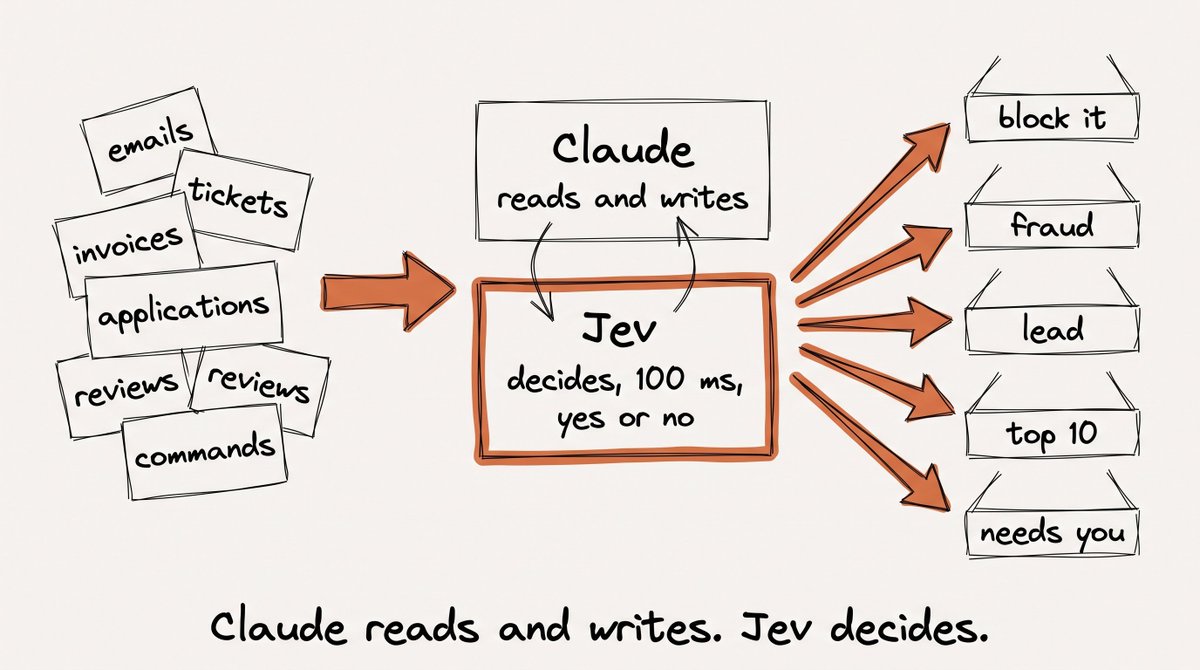
Smaller builder posts extended the same control-plane logic outward. @DanKornas shared (5 likes, 6 replies, 585 views) CoCo as an orchestration layer that installs into Claude Code, Cursor, or Codex instead of replacing them, while @PrajwalTomar_ claimed (3 likes, 1 reply, 379 views, 3 bookmarks) Jev works best as a fast yes-or-no decision layer in front of Claude Code for destructive commands, triage, and routing.
Discussion insight: The interesting questions were about policy surfaces and state transitions: which credentials survive, how comments get measured without scroll jumps, whether a frontend can reload live, and what layer is allowed to decide.
Comparison to prior day: On September 22 the control theme centered on test receipts and destructive-command blocking. September 23 pushed the same instinct deeper into first-party sandboxes, review-surface architecture, and orchestration layers that treat the harness itself as infrastructure.
1.3 Workflow-state friction still determined which harnesses felt usable (🡒)
The third theme was that invisible state kept deciding whether people trusted a tool. At least seven items supported it: repeated requests for newer Anthropic models in Antigravity, a direct ask for multi-account support, OpenChamber's no-restart pitch, Claude Code's AGENTS.md caveat, and hands-on examples where agents succeeded or failed because of hidden state in forms or configs.
@HarshithLucky3 asked (553 likes, 27 replies, 78,286 views, 20 bookmarks) for Opus 5.5 in Antigravity, @Soso_fun_yt said (328 likes, 19 replies, 18,874 views, 21 bookmarks) Opus 4.6 is not usable enough for complex coding tasks, and @ash_twtz showed (213 likes, 63 replies, 9,945 views, 6 bookmarks) a model selector still listing Claude Opus 4.6. The screenshot mattered because it turned a general complaint into a visible product-state problem rather than a vibes-only benchmark argument.

@HarshithLucky3 separately asked (23 likes, 786 views) for multi-account support across Antigravity, Claude desktop, and ChatGPT desktop, which is a narrow request but a very concrete one. At the same time, @steipete flagged (24 likes, 4 replies, 4,007 views, 10 bookmarks) that Claude Code's AGENTS.md support can silently disappear when telemetry or nonessential traffic is disabled, and his linked write-up says the workaround is a one-line CLAUDE.md import.
@thdxr showed (104 likes, 16 replies, 7,469 views, 5 bookmarks) OpenCode finding a hidden required field on a broken flight check-in form, then asking for the missing values before submitting. The image mattered because it shows the precise invisible UI state the agent surfaced, and replies said some teams now gate live submissions on hidden-field checks after similar silent failures.

Discussion insight: The most specific praise or frustration today was rarely about raw intelligence. It was about whether model menus were current, instruction files really loaded, accounts stayed separated, and the tool could see the hidden state behind a broken surface.
Comparison to prior day: September 22 already rewarded workflow-preserving add-ons. September 23 narrowed that broader preference into explicit demands around model freshness, account switching, instruction loading, and hidden-form debugging.
2. What Frustrates People
Model freshness and account state still lag behind the pace of model launches
The loudest frustration was not that people hated current tools. It was that harness state lagged the model market. @HarshithLucky3 asked (553 likes, 27 replies, 78,286 views, 20 bookmarks) for Opus 5.5 in Antigravity, @Soso_fun_yt said (328 likes, 19 replies, 18,874 views, 21 bookmarks) Opus 4.6 is not usable enough for complex coding tasks, and @ash_twtz showed (213 likes, 63 replies, 9,945 views, 6 bookmarks) a selector still pinned to Opus 4.6, with replies also complaining that Gemini 3.1 Pro High was missing. @HarshithLucky3 separately asked (23 likes, 786 views) for multi-account support across Antigravity, Claude desktop, and ChatGPT desktop.
The coping behavior was practical rather than ideological: use whichever surface updated first, stick with the cheaper built-in model if the preferred one is absent, or celebrate tools like OpenChamber whose main release message is simply "no restarts." The complaints were all about stale selectors, missing accounts, and too much session babysitting. Severity: High. Worth building: High.
Safe execution still depends on extra policy layers
The second frustration was that safe execution still feels bolted on. @pierceboggan announced (42 likes, 2 replies, 2,167 views, 13 bookmarks) GitHub Copilot app sandboxing with per-project filesystem, network, and credential controls, but the very same dataset also had @tweetpraveen listing (2 likes, 15 replies, 297 views) seven extra production requirements such as gVisor or microVMs, keys outside the box, blocked MCP egress, and external audit logs. @KitPloit highlighted (271 views, 1 bookmarks) cplt as a kernel-level sandbox with git and gh guards, while @beyourloverboy surfaced (1 like, 2 replies, 74 views) MAW, whose repo says payment requests still go through policy, approval, and signed receipts rather than directly through the agent.
The pattern is that teams do not want the model holding the final authority. They want externalized keys, allowlists, approvals, budgets, and logs owned by something other than the chat surface. Severity: High. Worth building: High.
Invisible product state still breaks otherwise-capable agents
A third frustration was that otherwise-capable agents still trip over state users cannot see. @thdxr showed (104 likes, 16 replies, 7,469 views, 5 bookmarks) OpenCode debugging a broken flight check-in page by finding hidden required fields that the UI never rendered, and a reply said another team now gates live submissions on hidden-field checks after four silent drops in one week. @steipete flagged (24 likes, 4 replies, 4,007 views, 10 bookmarks) that Claude Code can silently skip AGENTS.md when telemetry or nonessential traffic is disabled. The replies to @thdxr and @openchamber_dev added a smaller but telling pain point: MCP auth and protocol changes are still easy to break.
People cope with shims and checks: keep a fallback CLAUDE.md, ask the agent to expose hidden form state before it submits, or move to frontends that reload in place instead of restarting. That is effective, but it is still operator work. Severity: Medium-High. Worth building: High.
3. What People Wish Existed
Governed local agents that keep cost and code on-device
The clearest practical need was for local execution that does not give up agent workflow quality. @antigravity announced (2,134 likes, 79 replies, 110,326 views, 1,017 bookmarks) offline Gemma 4 support in the Antigravity SDK, @googlegemma added (212 likes, 11 replies, 9,097 views, 128 bookmarks) that local OpenAI-compatible endpoints such as Ollama, llama.cpp, and vLLM also fit the flow, and @strakedev shipped (7 likes, 2 replies, 51 views) Potluck CLI with local runtime setup, model locks, and session resume. The urgency is practical: privacy-restricted code, token-cost control, and predictable availability all showed up in the supporting posts and replies.
Today's substitutes are fragmented. Antigravity has the strongest official story, Potluck packages local runtime management separately, and cplt adds sandboxing around existing agents rather than solving runtime orchestration itself. The need is clearly real, but it is still being assembled from multiple layers. Opportunity: Direct.
Agent control planes that approve irreversible actions instead of merely logging them
People were not asking for broader autonomy in the abstract. They were asking for authority boundaries. @pierceboggan introduced (42 likes, 2 replies, 2,167 views, 13 bookmarks) project-level sandboxing in the GitHub Copilot app, @tweetpraveen listed (2 likes, 15 replies, 297 views) seven production controls that should sit outside the agent, @PrajwalTomar_ described (3 likes, 1 reply, 379 views, 3 bookmarks) Jev as a yes-or-no decision layer in front of Claude Code, and the MAW repo surfaced by @beyourloverboy adds policy, approvals, and signed receipts for agent-driven payments.
Some of this is already possible today, but users still have to stitch it together themselves across sandboxes, wrappers, wallets, and policy engines. That makes the need practical and urgent rather than aspirational. Opportunity: Direct.
Harness UX that survives restarts, account switches, and device changes
The third need was for tools whose state feels durable instead of fragile. @HarshithLucky3 asked (23 likes, 786 views) for multi-account support, @openchamber_dev shipped (57 likes, 4 replies, 8,956 views, 22 bookmarks) a release built around not restarting when skills, agents, MCP servers, or plugins change, and @emanueledpt promoted (16 likes, 4 replies, 436 views, 1 bookmarks) a Remodex update that lets an OpenCode session keep running on your own machine while you continue it from a phone. @steipete showed (24 likes, 4 replies, 4,007 views, 10 bookmarks) the opposite case: a feature that appears to exist until a telemetry setting quietly disables it.
This is a competitive need rather than a blank-space one. Multiple products are already trying to solve it, but the day's evidence says reliability of state and session continuity still decides which surface feels trustworthy. Opportunity: Competitive.
4. Tools and Methods in Use
| Tool | Category | Sentiment | Strengths | Limitations |
|---|---|---|---|---|
| Antigravity SDK | Agent framework / runtime | (+) | Offline Gemma 4 support, hybrid routing, multiple local backends | Needs more than 24GB VRAM for the flagship local path; adjacent Antigravity surfaces still draw model-freshness complaints |
| Gemma 4 26B + LiteRT | Local model / runtime | (+) | Zero token cost, privacy, offline reliability on local GPU | Hardware-heavy and still raises questions about local tool-loop latency |
| Potluck CLI | Local runtime manager | (+) | Runtime setup, model locks, local gateway, session save and resume | Very early release, narrow platform coverage, thin adoption evidence today |
| GitHub Copilot app | Agent IDE / review app | (+/-) | Official Opus 5.5 rollout, local sandboxing, huge-PR review engineering | Replies still mention rate limits, refresh bugs, and model auto-pick confusion |
| Claude Opus 5.5 | Frontier coding model | (+) | Copilot reports comparable resolution to Opus 5 with fewer steps and tokens; heavily requested in other harnesses | Availability is still uneven across clients and selectors |
| OpenCode | Open agent harness | (+/-) | Rich server protocol, customizable frontends, real-world debugging of broken forms | MCP auth and protocol changes still create usability friction |
| OpenChamber 2.0 | Agent frontend / workspace | (+) | Live reload of skills, agents, MCP servers, and plugins; Code Mode for batching tool calls | Depends on OpenCode behavior and inherits its moving interfaces |
| cplt | Sandbox | (+) | Kernel-level policy, git and gh guards, outbound filtering, per-repo config | Extra policy tuning and platform caveats add setup overhead |
| CoCo Super Intelligence | Orchestration layer | (+/-) | Persistent state, advisory-board workflows, large skills and commands library across existing harnesses | Large surface area and open-core split can add complexity |
| Jev | Decision / routing layer | (+) | Fast yes-no routing, command gating, cheap classification workflows | Evidence today comes from builder and operator posts rather than broad community benchmarks |
| GPT-Live-1 + GPT-5.6 Luna | Voice / delegated research split | (+) | Keeps conversation live while research and rendering happen asynchronously | Observed in one showcase build, with more architecture to manage |
| MAW | Payment / policy control plane | (+/-) | Policy-based spending, approvals, signed receipts, Copilot-ready actions | Very early social evidence and unclear real-world deployment scale |
Overall satisfaction was highest when the tool reduced operator burden without demanding a new model allegiance: keep work local, reload changes without restarting, or put a clear safety boundary around execution. Satisfaction turned mixed when a surface hid state or lagged the fastest model rollouts, which is why Antigravity generated both the strongest local-runtime excitement and the loudest model-menu complaints.
The common workarounds were explicit splits and wrappers: a cloud planner with local builders in Antigravity, GPT-Live-1 talking while Luna researches, Jev deciding while Claude writes, and OpenChamber, CoCo, cplt, or Potluck wrapping an existing harness instead of replacing it. The competitive dynamic was less about owning one exclusive model and more about who packaged continuity, safety, and review ergonomics best.
5. What People Are Building
| Project | Who built it | What it does | Problem it solves | Stack | Stage | Links |
|---|---|---|---|---|---|---|
| Local AI support in Antigravity SDK | Google Antigravity via @antigravity | Adds offline and hybrid local/cloud agent workflows | Lets teams keep source code local while still using agent workflows | Python, Gemma 4 26B A4B, LiteRT, Gemini 3.8 Flash, local OpenAI-compatible backends | Shipped | blog, repo, tweet |
| Voice-controlled LED wall assistant | Sid Rampally via @OpenAIDevs | Turns a Raspberry Pi and LED wall into a voice assistant that can show weather, trains, and scenes | Shows how Codex can wire hardware, research, and rendering into a usable side project | Raspberry Pi, GPT-Live-1, GPT-5.6 Luna, Responses API, WLED-MM, HUB75 panel | Alpha | blog, tweet |
| OpenChamber 2.0 | @openchamber_dev | Runs and reviews agent work with live-reloading skills, agents, MCP, plugins, and Code Mode | Removes restart-heavy friction from multi-tool agent workflows | OpenCode v2, TypeScript, plugins, MCP, web search | Shipped | blog, repo, tweet |
| Potluck CLI 0.1.1 | @strakedev via newtorob | Installs a local runtime, manages models, and runs or resumes terminal coding sessions | Packages local inference and session persistence into one CLI | Node.js, bundled Python runtime, local gateway, model locks | Beta | repo, tweet |
| cplt | navikt via @KitPloit | Runs coding agents inside a kernel-level sandbox with repo policy and git or gh guards | Shrinks the blast radius of prompt injection, bad commands, and secret access | Rust, Seatbelt or Landlock, repo policy, command guards | Shipped | repo, tweet |
| CoCo Super Intelligence | coco-research via @DanKornas | Installs expert-board workflows, persistent state, skills, and subagent orchestration into existing harnesses | Helps teams coordinate larger engineering work without abandoning Claude Code, Cursor, or Codex | Markdown and YAML orchestration layer, skills, commands, harness adapters | Beta | repo, tweet |
| MAW | rupeshexe via @beyourloverboy | Adds programmable payment policy, approvals, receipts, and audit logs for agent-triggered transactions | Keeps AI agents from holding raw spending authority | TypeScript, Next.js 14, PostgreSQL 16, Azure Bicep, Entra ID, stablecoin adapter | Alpha | repo, tweet |
| Remodex OpenCode mobile control | @emanueledpt | Lets an OpenCode or Codex session keep running on your own machine while you continue it from an iPhone | Extends long-running local agent sessions to a second surface | iOS app, OpenCode provider, Codex pairing | Beta | tweet |
The Antigravity and OpenAI examples were the two ends of the day's builder spectrum. Antigravity turned local and private execution into a reusable SDK path, while the LED wall post showed a one-off but fully described side project where GPT-Live-1, GPT-5.6 Luna, a Raspberry Pi, and a renderer were enough to build something that lives on a wall instead of in a browser.
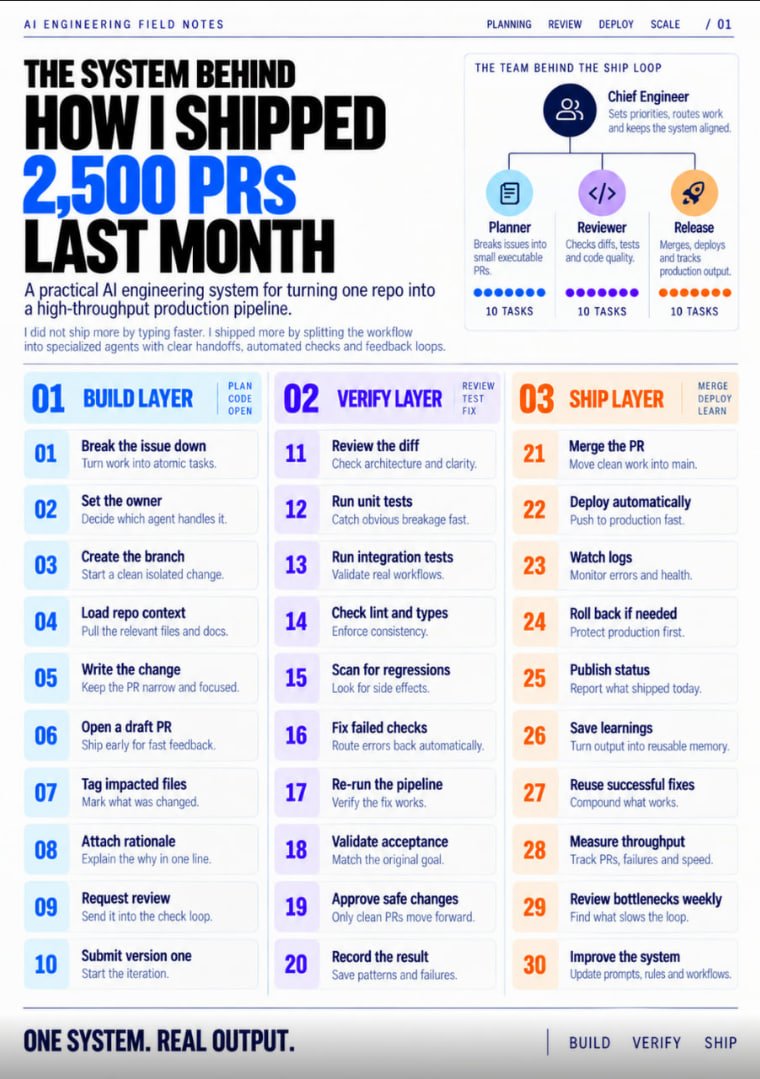
The repeated build pattern, though, was "wrap the harness" rather than "replace the harness." OpenChamber, Potluck, cplt, CoCo, and Remodex all assume the agent already exists and focus on reloads, runtime packaging, isolation, orchestration, or a second control surface. @0xMorlex mapped (7 likes, 2 replies, 55 views, 6 bookmarks) the org-chart version of that pattern into a planner→code→review→test→fix→merge loop he said handled 2,500 PRs last month, while @PrajwalTomar_ made (3 likes, 1 reply, 379 views, 3 bookmarks) the complementary point with Jev: let Claude read and write, but put a much cheaper yes-or-no layer in charge of routing and irreversible decisions.
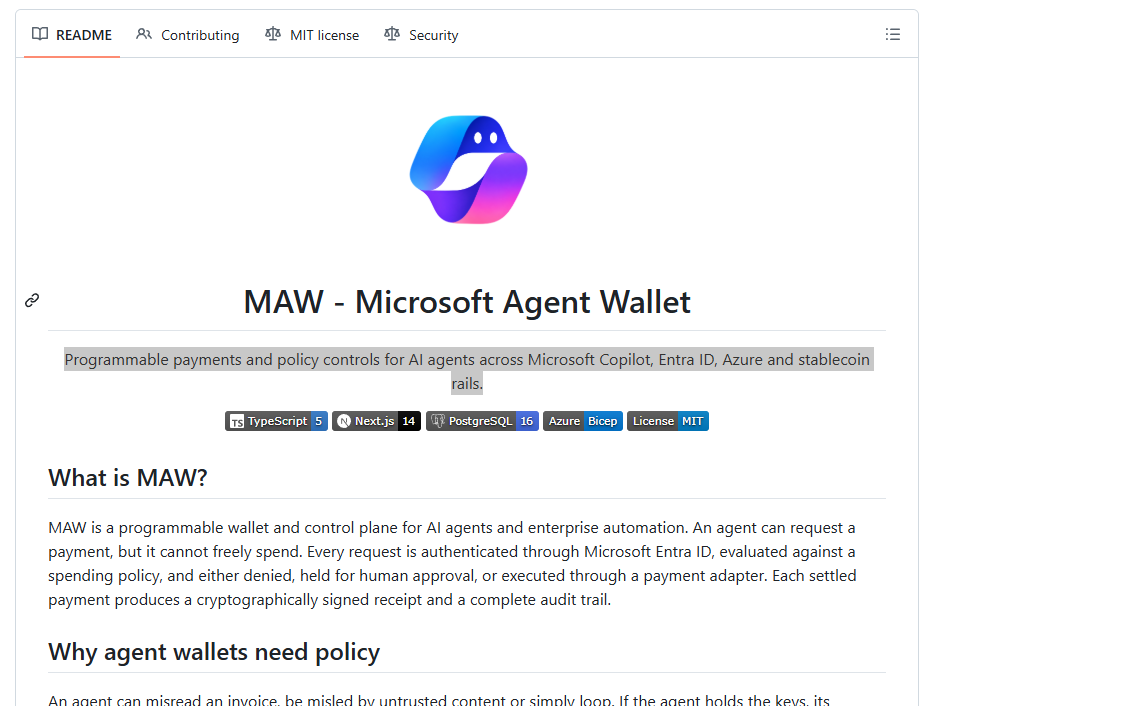
MAW pushed that control-plane logic furthest. The repo says every payment intent is authenticated through Entra ID, checked against programmable spending policy, optionally held for human approval, and then settled with a signed receipt. That is notable because it treats finance as another agent side effect to govern, not as something that must be handled entirely outside the stack.
Almost every meaningful build in this dataset was triggered by a concrete operational gap: keeping code local, surviving restarts, isolating dangerous actions, coordinating many agent steps, or extending sessions to a phone or a wall. Multiple builders are independently packaging those gaps as layers around existing tools rather than trying to invent a single new all-in-one agent shell.
6. New and Notable
Home MCP pushed agentic control into real household devices
@heyorvian posted (5 likes, 3 replies, 400 views, 2 bookmarks) that Google's early-access Home MCP server can let MCP-compatible agents read Google Home device state, inspect event history, and control supported devices. The screenshot shows the Google Developer Center setup for the OAuth client, and the tweet matters because it also keeps the warning attached: sensitive actions such as unlocking doors stay blocked, and unexpected behavior is still possible.

AGENTS.md support in Claude Code still had a telemetry-shaped footgun
@steipete flagged (24 likes, 4 replies, 4,007 views, 10 bookmarks) that there was a catch in Claude Code's new AGENTS.md support. The linked analysis says the built-in loader depends on a remote feature flag and can silently stop reading AGENTS.md when telemetry or nonessential traffic is disabled, with a one-line CLAUDE.md import acting as the current workaround. For teams trying to standardize shared instructions across agents, that is a more consequential caveat than a normal release-note bug.
7. Where the Opportunities Are
[+++] Governed local agent runtime stack — Evidence came from multiple sections at once: Antigravity's offline Gemma 4 path, Potluck's model locks and session resume, cplt's kernel sandbox, GitHub Copilot app sandboxing, and MAW's policy-controlled side effects. The opportunity is strong because first-party teams and independent builders are all converging on the same bundle of needs: local execution, predictable cost, credential isolation, and explicit approvals.
[++] Stateful harness UX across surfaces — The requests for Opus 5.5 in Antigravity, multi-account support, OpenChamber's no-restart release, Remodex's phone control, and the AGENTS.md telemetry caveat all point to the same gap: session state still feels brittle. This is a moderate opportunity because the pain is obvious and actionable, but competition from first-party clients will be intense.
[++] Review and orchestration infrastructure around agent work — GitHub's huge-PR rendering work, OpenChamber's Code Mode, CoCo's orchestration layer, Jev's decision routing, and 0xMorlex's planner→review→test loop all show builders treating review and coordination as products in their own right. The signal is strong enough to matter, but the winning offerings may look more like invisible infrastructure than flashy end-user apps.
[+] Agent authority extensions for payments and physical devices — MAW and Home MCP both push agents into higher-consequence environments while wrapping them in approvals, policies, or blocked actions. The signal is still emerging because the social evidence is thinner than for coding-harness tools, but the requirements are already explicit and unusually concrete.
8. Takeaways
- Local and private execution overtook pure pricing talk as the clearest new motion. Antigravity and Gemma did not just promise cheaper agent work; they shipped an offline Gemma 4 path plus a hybrid planner-builder split, while Potluck separately packaged local runtime management. (source)
- The harness is increasingly the product. GitHub's sandboxing and huge-PR rendering work, plus OpenChamber's no-restart release, show competition moving into review surfaces, policy, and session ergonomics rather than only base-model quality. (source)
- Invisible state is still one of the biggest trust breakers. The Opus 5.5-in-Antigravity complaints, multi-account request, AGENTS.md telemetry caveat, and hidden-form-field debugging example all came from state users could not easily see. (source)
- Most builders are wrapping existing agents, not replacing them. Potluck, cplt, CoCo, OpenChamber, and Remodex all sit around an existing harness, while 0xMorlex and PrajwalTomar described planner, review, or decision-side layers as the real leverage. (source)
- Higher-consequence agent actions are arriving with policy gates attached. MAW's approval-driven payments and Home MCP's blocked sensitive device actions show that the next frontier is not more autonomy alone but more governed autonomy. (source)