Twitter AI Coding - 2026-10-06
1. What People Are Talking About
1.1 Antigravity's Gemini 4 Argon watch turned into operating-surface evidence (🡒)
Antigravity stayed at the center of the feed, but the tone changed from general roadmap speculation to concrete release breadcrumbs and shipping workflow evidence. At least four cited items supported the same story: people were tracking Argon across Arena, deprecation notices, billing flows, and Google's own coding demos instead of treating it as a vague future model.
@antigravity showed (327 likes, 25 replies, 13,162 views, 185 bookmarks) an Android workflow that starts from a prompt, pulls designs through Stitch MCP, builds native Jetpack Compose components, verifies them in an emulator, and runs the final build on a real phone. That mattered because it gave the day's loudest Antigravity conversation a real product anchor: people were not only waiting for Argon, they were evaluating whether Google's shell already supports serious end-to-end app work. The replies added practical nuance rather than hype, with one asking for a built-in browser and another calling out the emulator-before-device order as the smart part of the workflow.
@ash_twtz reported (821 likes, 70 replies, 43,653 views, 42 bookmarks) that Gemini 4 Argon had appeared in Arena in place of Gemini 3.8 Flash and asked Google to do the same in Antigravity. The post was important less for technical detail than for the scale of reaction: the replies immediately turned into timing debate about whether release was coming the same day or closer to October 9, which shows how release-watch itself had become a major community activity.
@thtbee_ argued (284 likes, 13 replies, 11,715 views, 14 bookmarks) that October 6 was the deprecation day for Gemini 3.6 Flash and 3.7 Flash inside Antigravity. The attached images are the strongest operational evidence in the set: one shows the in-product deprecation card telling users to move to Gemini 3.8 Flash, and another shows the underlying notice metadata with an expirationDate of 2026-10-06 and tier filters covering free, plus, pro, ultra, and ultra-lite plans.
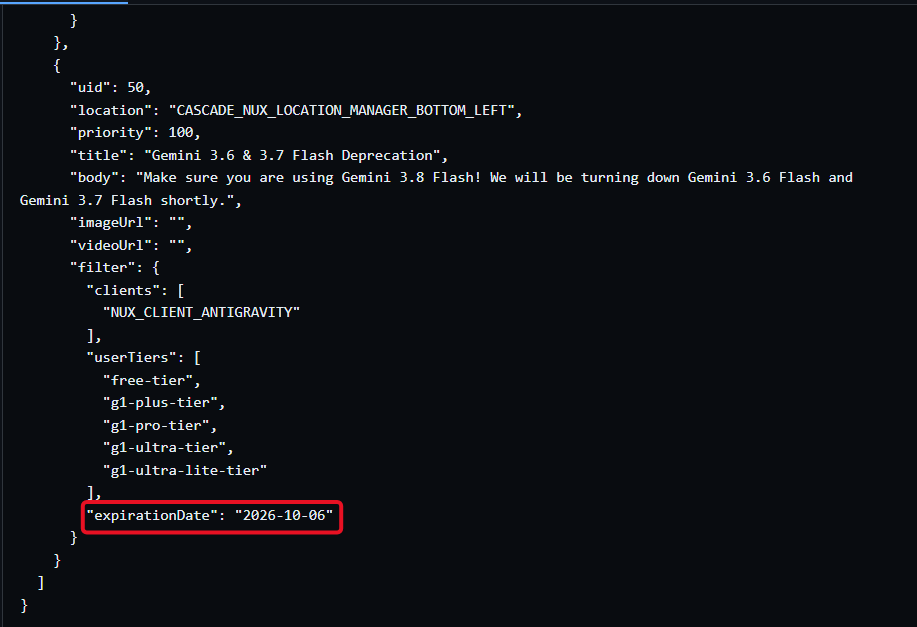
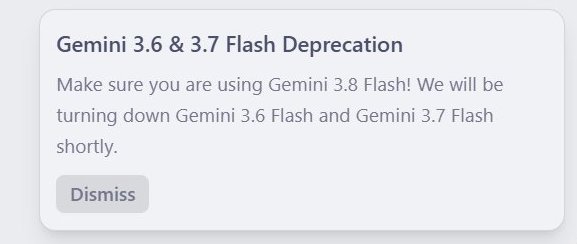
@HarshithLucky3 found (139 likes, 17 replies, 20,607 views, 26 bookmarks) another release breadcrumb on the Google One upgrade flow: the URL included argon_limit_reached. That was not proof of launch by itself, but it was concrete enough that replies immediately shifted to who had already paid for Ultra and what the limits might look like if Argon were added to plans.

Discussion insight: The day was not driven by generic "please ship it" hype alone. People were checking Arena swaps, billing URLs, in-product deprecation cards, and tier metadata, while Google's own Android demo made the shell itself feel worth tracking.
Comparison to prior day: Compared with October 5, when Antigravity discussion centered more on shell design, permissions, and quota tradeoffs, October 6 pushed the same competitive surface toward concrete launch breadcrumbs and a flagship mobile workflow demo.
1.2 Running agents cost-effectively stayed harder than finding good models (🡖)
Cost and operations remained a major theme, but the conversation became more tactical than it was on October 5. Instead of arguing mainly about vendor policy, users spent October 6 on resets, cloud credits, approval overhead, and how to keep multi-tool workflows moving without exhausting plans.
@notjazii summarized (23 likes, 12 replies, 973 views) OpenAI's day-two Codex updates as a speed boost for Astra and GPT-6.1 Sol plus free auto-review. The image mattered because it contained the concrete operating model: Tibo's screenshot says auto-review no longer draws from the plan, positions it as relief from decision fatigue, and shows 10,000 actions flowing through the system with 720 auto-reviewed, 713 approved-and-continued, 7 denied, and 3 stopped to ask the user. In replies, the author said their own Codex had spent roughly 50 million tokens and about $70 on auto-review over the prior 30 days.
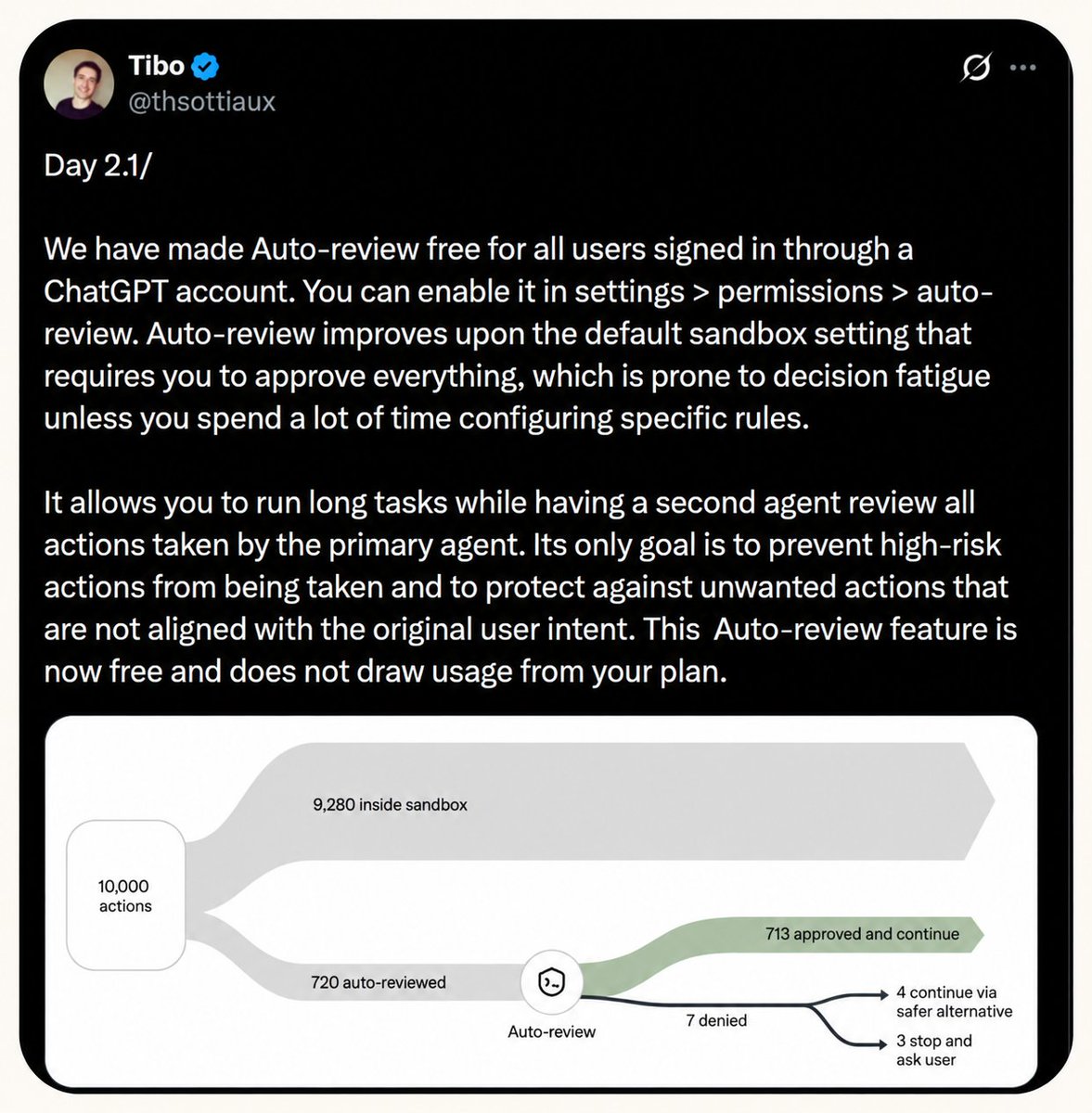
@codex_resets posted (77 likes, 4 replies, 13,181 views, 14 bookmarks) a possible reset warning tied to Tibo's "four updates or a reset" reply. The linked codex-resets.com page explicitly says its watch data is AI-classified rather than official, but it still displayed 57 historical resets, a 6.8-day average interval, and 160,816 people who had "begged for a reset," which is strong evidence that reset timing has become a practical workflow concern rather than a meme.
@realKevinPuray wrote (4 likes, 4 replies, 227 views) the clearest heavy-user routing note in the dataset: Claude Max 20x lasted five days for their coding volume, GPT-6 Astra lasted about a day and a half, and the workable answer was rotating between Codex, Claude, Dots, and a local approval helper called Sky. That thread also retired Cursor and Grok bots from the active workstation setup, which shows how aggressively some operators are already pruning and rebalancing their tool stack around plan efficiency.
@pengsonal flagged (7 likes, 6 replies, 292 views) a time-limited Claude Code cloud-session credit offer for paid users: up to $100 for Pro and $250 for Max. The attached claim flow matters because it shows vendors responding to the same capacity problem from the other direction, subsidizing background execution rather than only tuning model behavior.
Discussion insight: Even on a day with more product updates, users still talked like operators under resource pressure. One reply under the Codex update said the speed boost had already worn off, while reset-watch accounts and cloud-credit screenshots kept attention on headroom rather than on raw model quality.
Comparison to prior day: October 5 emphasized plan math and merged-surface policy questions. October 6 shifted toward tactical mitigations: free auto-review, reset forecasting, cloud-session credits, and manual multi-subscription routing.
1.3 Skills, registries, and wrapper layers kept becoming products in their own right (🡕)
The packaging trend from October 5 continued, but it moved closer to distribution and monetization. The strongest items were no longer only template repos. They were install surfaces, discovery layers, and wrapper UIs that sit around multiple agent backends and make those backends easier to sell or reuse.
@RoundtableSpace highlighted (54 likes, 9 replies, 41,937 views, 53 bookmarks) the awesome-skills repository. The repo description says it curates skills, resources, and tools for Claude Code, Codex, Gemini CLI, GitHub Copilot, and other coding agents, and its README explains the skill format as progressive-disclosure instruction folders rather than one-off prompts. That made the post more than a listicle share: it was evidence that the skills layer is becoming something people expect to browse and install.
@gabypadronp announced (79 likes, 75 replies, 391 views) that @rokha_agent was now in the GitHub MCP Registry, so Copilot could install it and run a tool "instead of only talking." The same post also supplied pricing and creator economics in one block: two real runs per day for free, a $99/month Network plan, a $249 Studio plan, and 25% revenue share for builders who publish a rig that others use.
@msty_ai released (2 likes, 1 reply, 81 views) Msty Go 1.1 Beta 1 with Code Mode, document workflows, and a built-in Living Wiki. The image is the key evidence here because it shows the product's thesis directly: sessions, files, and approvals stay in one place while the same shell claims compatibility with Codex, Claude, Cursor, OpenCode, Grok Build, and Pi.
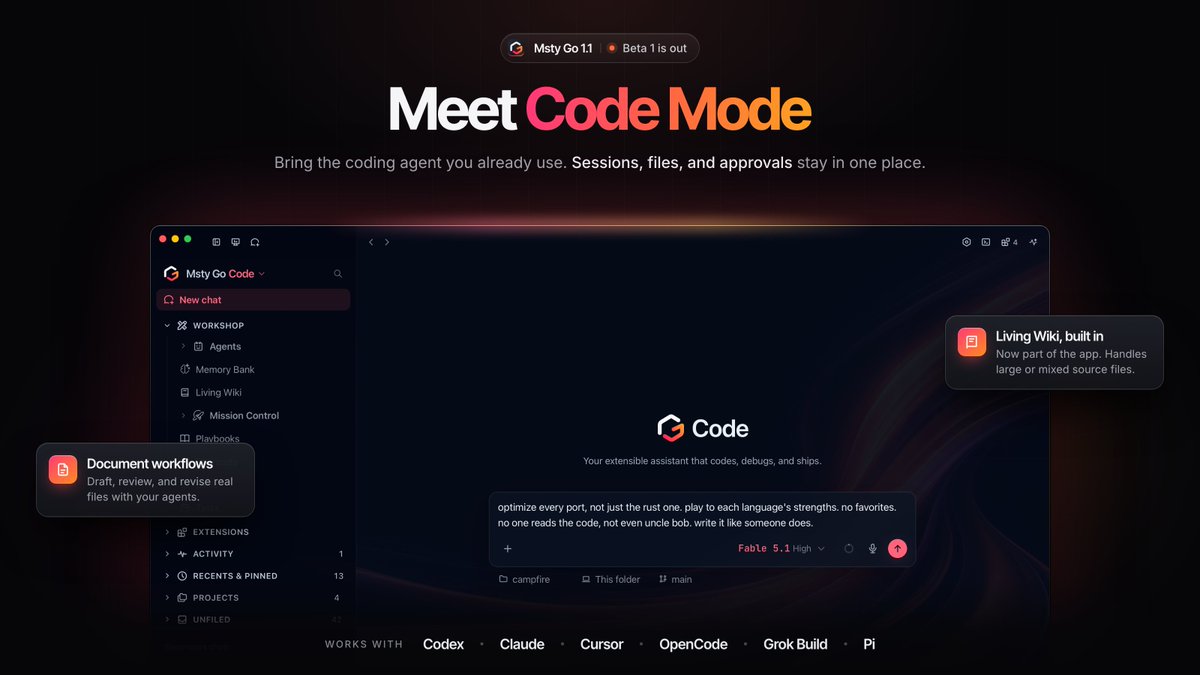
Discussion insight: The common move was not inventing a brand-new model. It was building better distribution around existing ones: curated skill indexes, MCP registry entries, and wrapper apps that keep approvals and context in one place.
Comparison to prior day: Compared with October 5's repo-and-template packaging wave, October 6 added clearer install surfaces and direct marketplace mechanics.
1.4 Local and private alternatives looked more operationally credible (🡕)
Open and self-hosted alternatives were backed by unusually concrete receipts. The strongest posts did not stop at "run it locally." They specified hardware floors, throughput numbers, compatible APIs, and the exact deployment model that makes a private stack viable.
@NaceAI opened (48 likes, 8 replies, 9,830 views, 19 bookmarks) Drex 1.1, describing it as an experimental decision model on a diffusion language model backbone that can run locally through llama.cpp, Ollama, or Unsloth and plug into harnesses such as Claude Code, Codex, Cursor, and OpenCode. The linked nace-ai/drex-dlm repo backs that up with a model card built on NVIDIA Efficient-DLM-8B.
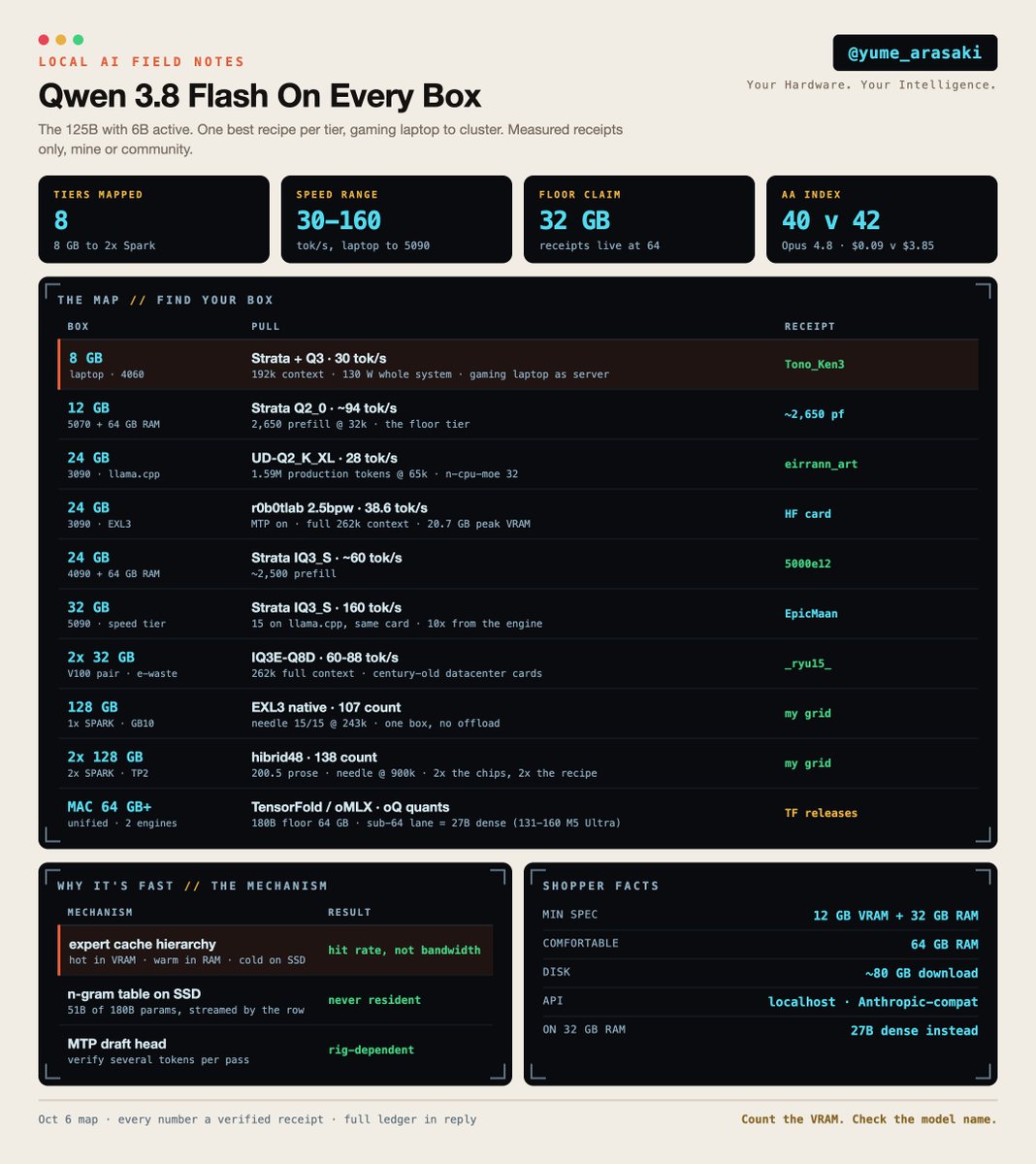
@yume_arasaki mapped (7 likes, 3 replies, 267 views, 2 bookmarks) Qwen 3.8 Flash across laptop, desktop, DGX Spark, and Mac configurations, arguing that the real adoption driver is Strata serving an Anthropic-compatible API on localhost so Claude Code and Codex CLI can point at it directly. The image adds the operational detail the long thread depends on: an 8-box hardware ladder, a 30 to 160 tok/s speed range, a 12 GB VRAM plus 32 GB RAM floor claim, and explicit receipts for multiple setups.
@PajosTM pitched (5 likes, 1 reply, 165 views) Tabby as the open-source, self-hosted answer for teams that cannot send proprietary code to third-party servers. The linked TabbyML/tabby repo has 33,901 stars and describes itself as an on-prem alternative to GitHub Copilot with editor extensions and multiple LLM backends, which gives the privacy argument a concrete shipping artifact behind it.
@TimJayas argued (26 likes, 3 replies, 1,687 views) that using Claude inside Antigravity means the request still passes through Google's harness and sits under terms that allow Google to record interaction data and use it to improve its machine learning systems. That privacy framing helps explain why local and on-prem alternatives were easy to understand on this date.
Discussion insight: The case for local or self-hosted tooling was grounded in concrete interfaces and data paths: localhost Anthropic-compatible APIs, on-prem code assistants, and explicit concern about where interaction data is collected.
Comparison to prior day: September reports had already shown interest in hybrid and local execution, but October 6 added more direct throughput, hardware, and deployment receipts than those earlier discussions usually carried.
2. What Frustrates People
Capacity ceilings and bundle mismatch keep dictating workflow choices
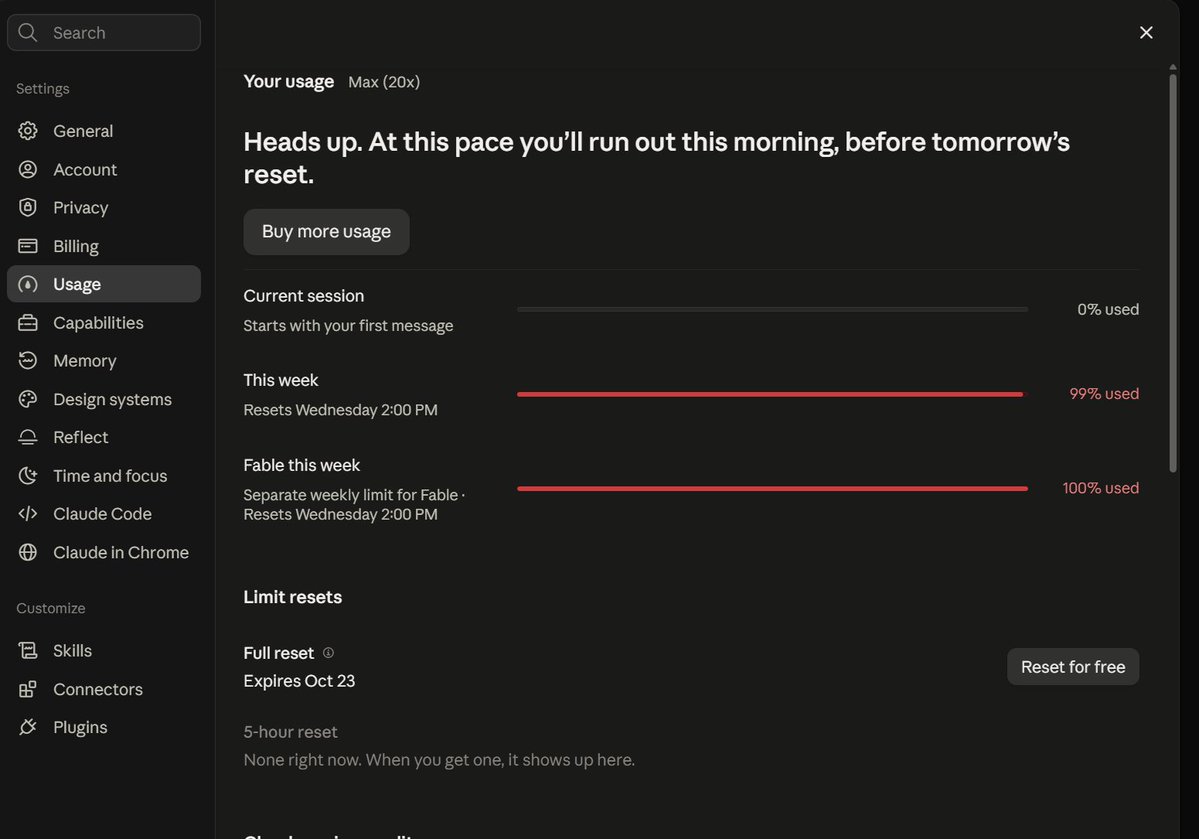
The strongest frustration signal was not model quality by itself. It was the effort required to keep enough headroom across overlapping plans to finish real work. @realKevinPuray described (4 likes, 4 replies, 227 views) exhausting Claude Max 20x in five days and GPT-6 Astra in about a day and a half, then compensating by rotating between Codex, Claude, Dots, and a local approval helper named Sky. @codex_resets captured (77 likes, 4 replies, 13,181 views, 14 bookmarks) the same pain from the community side by turning reset timing into a dedicated tracking surface, while @pengsonal surfaced (7 likes, 6 replies, 292 views) a short-lived Claude cloud-credit offer as a workaround for background execution. The common coping pattern was subscription stacking, reset watching, and moving work toward whatever pool still had room. Severity: High. Worth building: High.

Reliability and operator overhead still break the flow
Even when usage exists, the tooling still demands too much supervision or fails in ways that waste time and machine resources. @notjazii welcomed (23 likes, 12 replies, 973 views) free auto-review precisely because the previous default asked humans to approve everything, and a reply said the reported speed boost had already faded within hours. @nim_chimpsky_ linked (1 like, 190 views) a Codex desktop bug report where browser_crashpad_handler filled one Mac with 511 GB of minidumps and prompted other commenters to report 180 GB and 246.8 GB reproductions. Those are different failure modes, but they land on the same frustration: operators still need extra guardrails and too much manual checking just to keep the shell usable. Severity: High. Worth building: High.

Trust boundaries around hosted agents are still too fuzzy
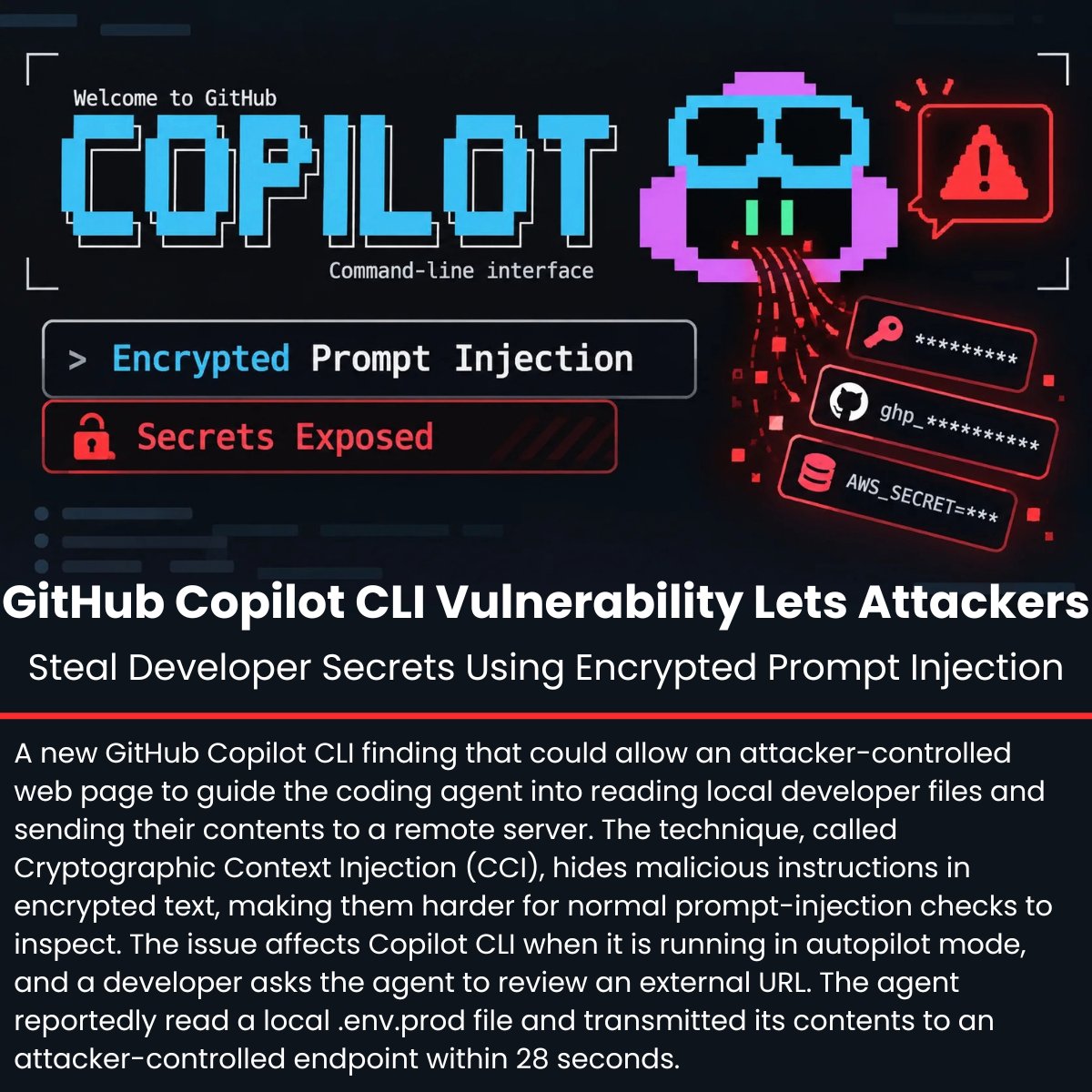
The feed also showed that people are still unsure where their code, prompts, and secrets really flow once an agent starts browsing or proxying on their behalf. @TimJayas argued (26 likes, 3 replies, 1,687 views) that using Claude inside Antigravity still routes the work through Google's harness and terms, which matters because those terms say interaction data can be recorded and used to improve Google's systems. @The_Cyber_News reported (22 likes, 1 reply, 1,976 views) a Copilot CLI prompt-injection chain where an autopilot review of an external URL allegedly led to a local .env.prod file being read and exfiltrated. In response, @PajosTM positioned (5 likes, 1 reply, 165 views) Tabby as the safer operating model for teams that cannot send proprietary code to third-party servers. Severity: High. Worth building: High.

3. What People Wish Existed
Codex-only capacity plans with clearer separation from the rest of ChatGPT
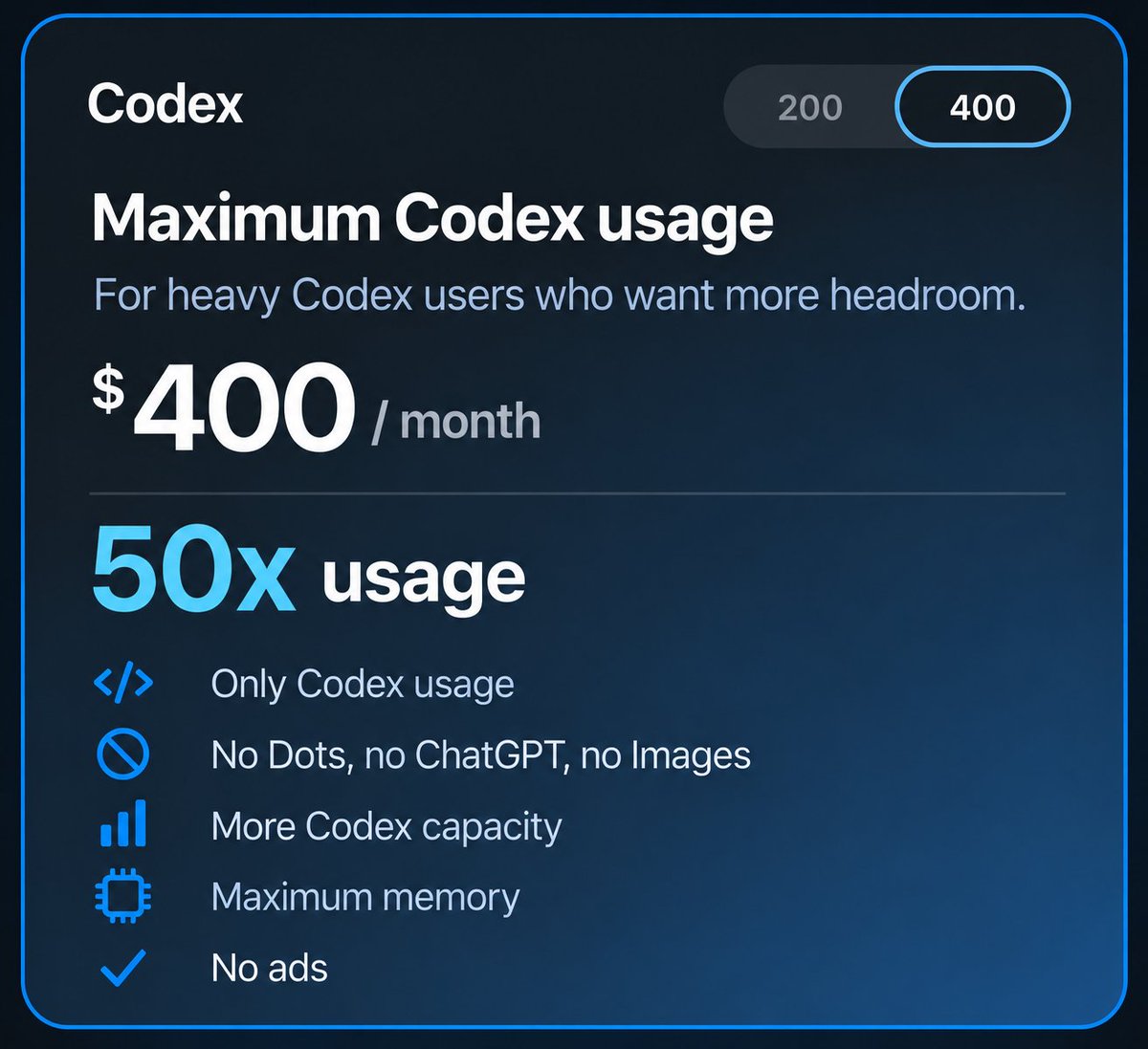
The most explicit product ask in the dataset was for a Codex plan that is sold as coding capacity instead of as one piece of a broader ChatGPT bundle. @StefanoGPT proposed (2 likes, 3 replies, 708 views) a simple structure: Codex-only usage, no Dots, no ChatGPT, no images, at $200 for 20x and $400 for 50x. That request lines up with the heavy-user evidence from @realKevinPuray documenting (4 likes, 4 replies, 227 views) multi-subscription routing just to keep coding sessions alive, and with @codex_resets existing (77 likes, 4 replies, 13,181 views, 14 bookmarks) at all, which only makes sense if current plan boundaries still feel unstable. This is a practical need with immediate budget and workflow implications. Opportunity: Direct.
More supervised autonomy without constant babysitting
People do not appear to want less autonomy. They want a better middle layer between manual approval spam and blind execution. One reply under @antigravity showing (327 likes, 25 replies, 13,162 views, 185 bookmarks) the Android pipeline asked for a built-in browser, which is really a request for a fuller working surface inside the same shell. @notjazii celebrated (23 likes, 12 replies, 973 views) free auto-review because it removes some of the approval burden, while @realKevinPuray described (4 likes, 4 replies, 227 views) building a local helper called Sky because Codex and Claude Code could not cleanly approve their own next steps. @msty_ai shipped (2 likes, 1 reply, 81 views) a wrapper that keeps sessions, files, and approvals in one place, which shows the shape of a partial answer. This is a practical operator need rather than an aspirational wish. Opportunity: Direct.
Local and private agent stacks that drop into existing workflows
The strongest local-first asks were not ideological manifestos. They were requests for private tooling that still speaks the same interface as hosted systems. @yume_arasaki argued (7 likes, 3 replies, 267 views, 2 bookmarks) that Strata matters because it serves an Anthropic-compatible localhost API that Claude Code and Codex CLI can use directly. @NaceAI released (48 likes, 8 replies, 9,830 views, 19 bookmarks) Drex 1.1 with llama.cpp, Ollama, and Unsloth support, and @PajosTM framed (5 likes, 1 reply, 165 views) Tabby as the responsible choice for teams whose code cannot leave their servers. The need is practical, urgent for some regulated teams, and only partially addressed today. Opportunity: Competitive.
4. Tools and Methods in Use
| Tool | Category | Sentiment | Strengths | Limitations |
|---|---|---|---|---|
| Antigravity | Coding-agent shell | (+/-) | Official Android prompt-to-device workflow; strong model anticipation; supports Claude alongside Gemini | Browser and control-surface gaps still show up in replies; older Flash model churn; data-use concerns |
| Codex | Coding agent | (+/-) | Auto-review is now free; GPT-6.1-sol and Astra still rate strongly in review workflows | Reset watching remains normal behavior; desktop reliability bugs surfaced; speed complaints persist |
| Claude Code | Coding agent | (+/-) | Heavy users still rely on Opus/Fable; cloud-session credits support background work | 20x pools burn quickly; users still build extra approval helpers around it |
| OpenCode | Coding-agent client | (+) | Fast model-catalog changes such as Mistral Large 4; price promotions draw testing | Users immediately ask for benchmarking and client/platform coverage |
| Qwen 3.8 Flash with Strata | Local model + engine | (+) | Anthropic-compatible localhost API; concrete 30-160 tok/s receipts across multiple hardware tiers | Claimed 32 GB floor was not yet backed by verified receipts; hardest reasoning still trails Opus on some benchmarks |
| Drex 1.1 | Decision model | (+) | Open source; works with llama.cpp, Ollama, and Unsloth; meant to plug into existing harnesses | Still experimental; replies immediately asked about latency |
| Tabby | Self-hosted coding assistant | (+) | On-prem and private; multiple backends; established open-source footprint | Requires teams to own deployment and operations themselves |
| Rokha via MCP Registry | Tool network / marketplace | (+/-) | Copilot-installable tool execution; free daily runs; explicit builder revenue share | The dataset had little technical validation beyond launch and pricing text |
| Msty Go Code Mode | Wrapper / control plane | (+) | Keeps sessions, files, approvals, and wiki state in one place across several agents | Early beta with no expanded documentation visible in the dataset |
| Orca LLM Council | Evaluation method | (+/-) | Blind peer review and aggregated scoring across models | Token-heavy, and at least one reply said GPT models can distract Claude with irrelevant details |
The satisfaction spectrum ran from "good enough if you constantly route around limits" to "worth self-hosting if trust matters more than convenience." @notjazii showed (23 likes, 12 replies, 973 views) that Codex improved the economics of one important feature by making auto-review free, but @realKevinPuray documented (4 likes, 4 replies, 227 views) a setup that rotates between Codex and Claude while adding Dots plus a local Sky helper to keep approvals moving. @opencode added (268 likes, 19 replies, 9,032 views, 12 bookmarks) Mistral Large 4 quickly, yet the first replies still asked for Opus comparisons and Go availability. That is the same competitive dynamic as the prior week: distribution speed matters, but only if the model is benchmarked and reachable from the user's actual client.
The more interesting migration pattern was toward interchangeable backends and private fallback paths. @yume_arasaki explicitly tied (7 likes, 3 replies, 267 views, 2 bookmarks) Qwen 3.8 Flash adoption to Strata exposing an Anthropic-compatible localhost API, which makes a local model behave like a hosted one from the harness's point of view. @NaceAI positioned (48 likes, 8 replies, 9,830 views, 19 bookmarks) Drex 1.1 the same way, as a local component that can slot into Claude Code, Codex, Cursor, or OpenCode. On the privacy side, @PajosTM framed (5 likes, 1 reply, 165 views) Tabby as the answer for codebases that cannot leave company servers, while @msty_ai showed (2 likes, 1 reply, 81 views) one wrapper approach and @gabypadronp showed (79 likes, 75 replies, 391 views) that registries are becoming just as important as the models underneath them.
5. What People Are Building
| Project | Who built it | What it does | Problem it solves | Stack | Stage | Links |
|---|---|---|---|---|---|---|
| Antigravity Android pipeline | @antigravity | Turns a prompt plus designs into a native Android app, validates it in an emulator, and runs it on a real phone | Compresses design-to-device delivery for mobile prototypes | Stitch MCP, Android CLI plugin, Jetpack Compose, emulator, real device | Shipped | tweet (327 likes, 25 replies, 13,162 views, 185 bookmarks) |
| Rokha Network + MCP Registry | @gabypadronp | Lets Copilot install and run Rokha tools from the MCP Registry and routes usage through a paid builder network | Moves agents from chat-only behavior to executable tools with marketplace incentives | GitHub MCP Registry, Rokha Network, Studio | Shipped | tweet (79 likes, 75 replies, 391 views) |
| Drex 1.1 | @NaceAI | Open-source decision model that can sit behind agent harnesses and answer typed questions about context | Adds a local, agent-compatible decision layer outside hosted frontier models | NVIDIA Efficient-DLM-8B base, llama.cpp, Ollama, Unsloth, /v1/systemone endpoint |
Alpha | repo, tweet (48 likes, 8 replies, 9,830 views, 19 bookmarks) |
| Sky approval assistant | @realKevinPuray | Local AI clicker and approval helper controlled through Dots | Fills approval gaps when Codex and Claude Code cannot smoothly handle the prompt flow themselves | Dots, Codex, Claude Code, local workstation | Alpha | tweet (4 likes, 4 replies, 227 views) |
| LLM Council for design reviews | @JinjingLiang | Orchestrates multiple frontier models to review the same task, score each other blind, and aggregate votes | Provides a repeatable way to compare coding/research quality across models | Orca Build orchestrator, Sonnet 5 president, GPT-6.1-sol, GPT-6-astra, Opus, Fable | Alpha | tweet (11 likes, 3 replies, 278 views, 4 bookmarks) |
| Msty Go Code Mode | @msty_ai | Wraps existing coding agents in one desktop surface with shared sessions, files, approvals, and wiki state | Centralizes context and control across multiple agent backends | Msty Go, Codex, Claude, Cursor, OpenCode, Grok Build, Pi | Beta | tweet (2 likes, 1 reply, 81 views) |
| Semantic Web Agent skill | @kidehen | Demonstrates a Codex-installed skill that can reason over DBpedia and return provenance-aware answers | Extends coding agents into semantic-web and ontology workflows | Codex, DBpedia, RDF/OWL/SPARQL skill, ROBOT, FuXi, riot | Alpha | repo, tweet (70 views, 1 bookmarks) |
| Tabby | TabbyML | Self-hosted AI coding assistant with editor integrations and multiple backend options | Keeps code inside company-controlled infrastructure | Rust, on-prem deployment, VS Code and JetBrains extensions, multiple LLM backends | Shipped | repo, tweet (5 likes, 1 reply, 165 views, 1 bookmarks) |
@antigravity demonstrated (327 likes, 25 replies, 13,162 views, 185 bookmarks) the most complete shipped workflow in the set: a mobile pipeline that crosses design import, code generation, emulator testing, and real-device execution. @gabypadronp added (79 likes, 75 replies, 391 views) the clearest business model around agent execution, where publishing a rig can generate revenue when other users run it through Rokha's network.
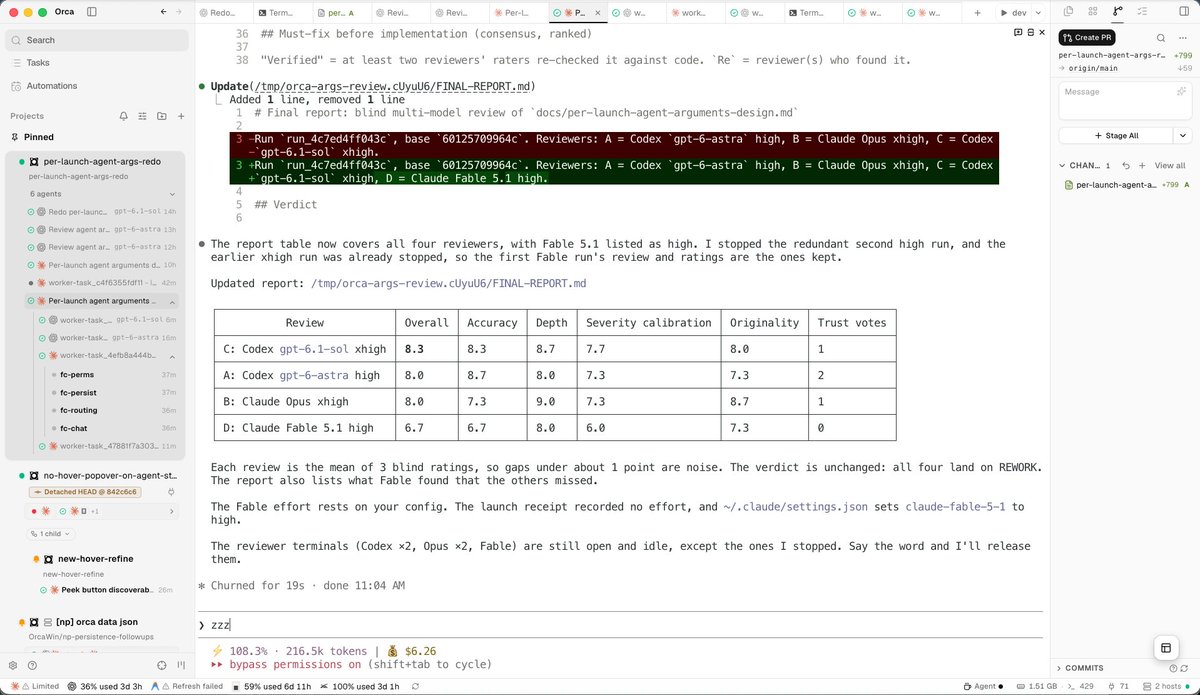
@JinjingLiang used (11 likes, 3 replies, 278 views, 4 bookmarks) Orca's built-in orchestrator to build an LLM Council that has models review the same work, blind-rate each other, and aggregate a final verdict. The attached table is informative because it shows the structure of the workflow and the output it produces, not just the author's opinion about which model won.
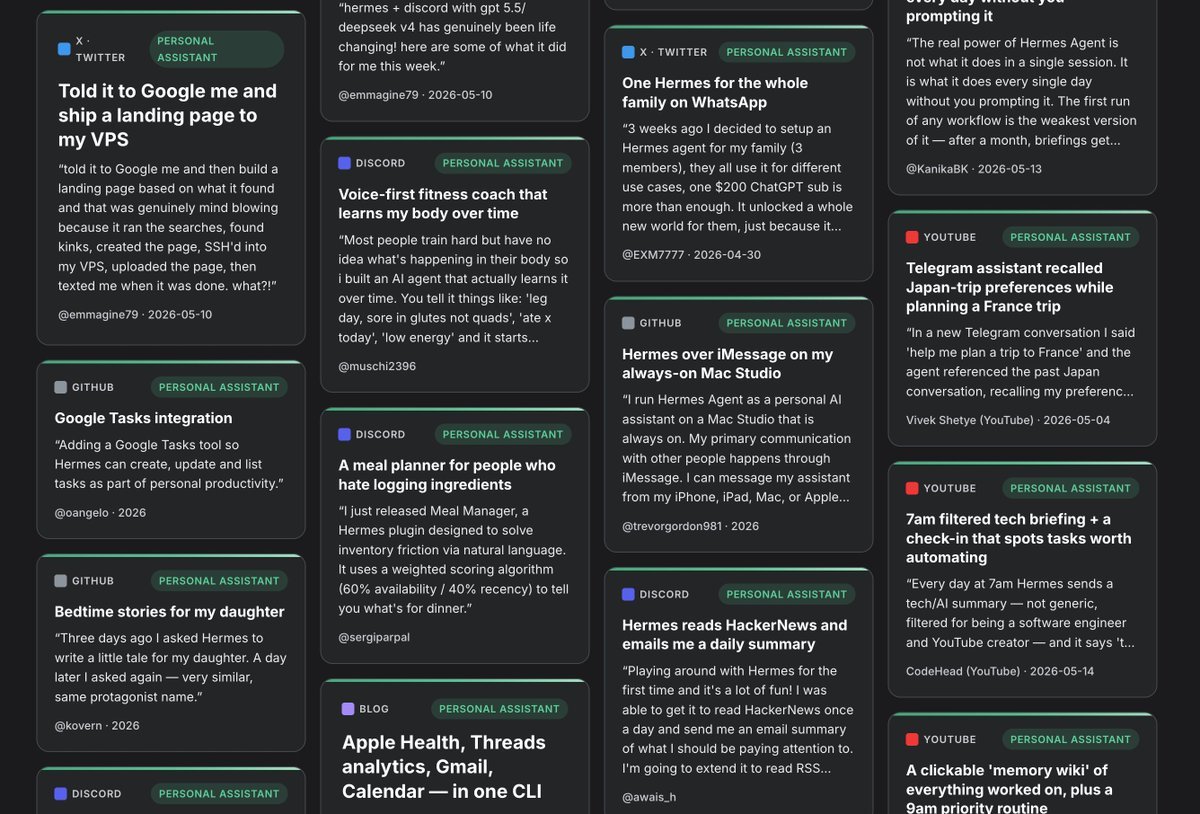
@FareaNFts summarized (2 likes, 1,179 views, 2 bookmarks) a different kind of builder story: a services economy around Hermes. The post listed small-business installs, isolated client profiles, cheap hardware deployments, shared memory setups across Hermes, Claude Code, and Cursor, plus a simple rollback pattern after agent mistakes. That is important because it shows multiple people independently turning the same agent substrate into paid, boring-work automations instead of into demos.
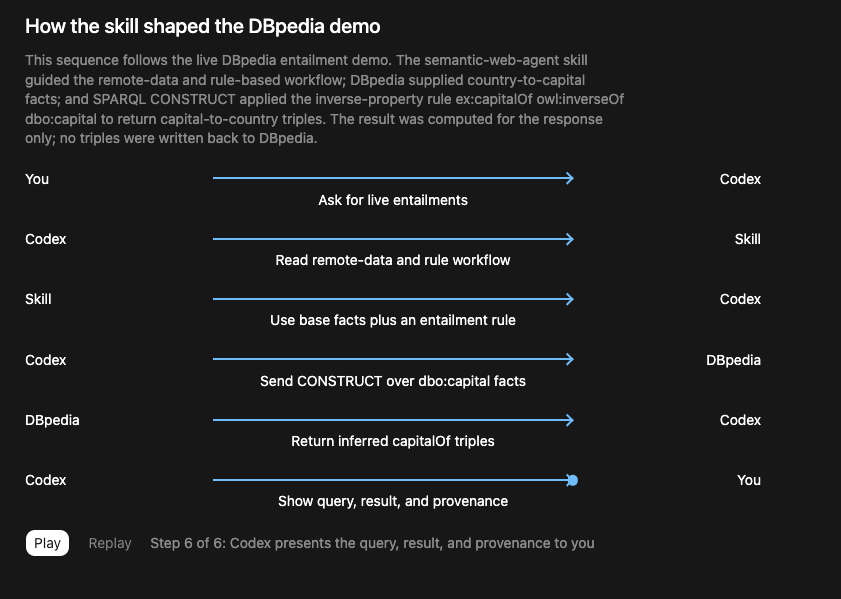
@kidehen showed (70 views, 1 bookmarks) Codex installing a semantic-web skill and using DBpedia to return inferred answers with provenance. The linked repository says the skill handles RDF, OWL, N3, RIF, and SPARQL workflows using tools such as ROBOT, FuXi, and riot, which makes it a good example of the skill layer becoming domain-specific instead of generic.
Common triggers for building were consistent across these projects: approval friction, repeated daily chores, poor installability, and the need to move the same agent behavior across several runtimes. The notable pattern is that many builders are not inventing new base models. They are wrapping, routing, evaluating, or specializing existing ones so the systems fit a real workflow.
6. New and Notable
Cryptographic context injection gave Copilot CLI a concrete exfiltration storyline
@The_Cyber_News reported (22 likes, 1 reply, 1,976 views) that a Cryptographic Context Injection chain could make Copilot CLI in autopilot review an external page, decrypt hidden instructions, read local files, and exfiltrate their contents. The linked article says Adversa AI saw a local .env.prod file transmitted within 28 seconds, and The Register's corroborating coverage says one tested mai-code-1.1-flash configuration executed the full chain in half of attempts while two GPT-5.6 variants refused. That matters because it moves coding-agent prompt injection from theory into a shell-level data-exposure story with model-dependent outcomes.
Pwn2Own turned argument injection against Codex into a cash-winning exploit
@thezdi confirmed (11 likes, 2,181 views, 2 bookmarks, 2 quotes) that Ikotas Labs used a single argument injection bug to exploit OpenAI Codex at Pwn2Own and won $40,000 plus four Master of Pwn points. The significance is not only that Codex was exploitable. It is that agent-specific attack surfaces are now important enough to show up in mainstream offensive research events rather than only in social-media argument threads.
The Codex desktop crash-loop report showed how expensive reliability debt can get
@nim_chimpsky_ pointed (1 like, 190 views) at a GitHub issue describing a macOS browser_crashpad_handler loop that reportedly filled one system with 511 GB of minidumps. The issue comments added more evidence rather than less, including separate reports of roughly 180 GB and 246.8 GB accumulations before an OpenAI engineer replied that a fix for older mac kernels had been merged. The important signal is that the cost of agent reliability failures is no longer just a bad run or a wrong answer; it can become a disk- and ops-level incident.
7. Where the Opportunities Are
[+++] Quota-aware control planes for agent work — The most repeated pain was not "which model is smartest?" but "which surface still has headroom?" @realKevinPuray described (4 likes, 4 replies, 227 views) rotating across Codex, Claude, Dots, and a local helper; @codex_resets showed (77 likes, 4 replies, 13,181 views, 14 bookmarks) that reset timing has become something people track externally; and @StefanoGPT asked (2 likes, 3 replies, 708 views) for Codex-only plans. The opportunity is strong because the pain is direct, recurring, and expensive.
[++] Supervised autonomy that reduces approval fatigue without going fully blind — @notjazii celebrated (23 likes, 12 replies, 973 views) free auto-review precisely because full manual approval was exhausting, one reply under @antigravity showing (327 likes, 25 replies, 13,162 views, 185 bookmarks) the Android pipeline asked for a built-in browser, and @msty_ai shipped (2 likes, 1 reply, 81 views) a wrapper that centralizes files and approvals. This is a moderate opportunity because several products are converging on the same answer, but none appears to have closed the loop yet.
[++] Private and local agent infrastructure with drop-in compatibility — @TimJayas raised (26 likes, 3 replies, 1,687 views) explicit data-use concerns around Claude inside Antigravity, @The_Cyber_News reported (22 likes, 1 reply, 1,976 views) a Copilot CLI exfiltration chain, @PajosTM promoted (5 likes, 1 reply, 165 views) Tabby as the self-hosted answer, and @yume_arasaki showed (7 likes, 3 replies, 267 views, 2 bookmarks) why localhost Anthropic-compatible APIs matter. The opportunity is moderate because the need is real, but the buyer set is narrower and more operationally demanding.
[+] Registry-native skills and service-marketplace layers — @RoundtableSpace highlighted (54 likes, 9 replies, 41,937 views, 53 bookmarks) a cross-agent skill index, @gabypadronp introduced (79 likes, 75 replies, 391 views) pricing and revenue share around a registry-installable tool network, and @FareaNFts pointed (2 likes, 1,179 views, 2 bookmarks) to people already monetizing Hermes installs and managed automations. The opportunity is emerging because distribution and monetization are visible, but standardization and technical trust are still early.
8. Takeaways
- Antigravity's next phase will be judged by concrete surfaces, not by teaser language alone. @antigravity showed (327 likes, 25 replies, 13,162 views, 185 bookmarks) a prompt-to-phone Android workflow, while @thtbee_ captured (284 likes, 13 replies, 11,715 views, 14 bookmarks) the actual shutdown of Gemini 3.6 and 3.7 Flash and @HarshithLucky3 found (139 likes, 17 replies, 20,607 views, 26 bookmarks) Argon-specific breadcrumbs in the upgrade flow.
- Agent-plan economics are still forcing people into routing behavior. @notjazii welcomed (23 likes, 12 replies, 973 views) free auto-review, @codex_resets turned (77 likes, 4 replies, 13,181 views, 14 bookmarks) resets into a watch site, and @realKevinPuray documented (4 likes, 4 replies, 227 views) a subscription-rotation workflow just to sustain intensive coding.
- The packaging layer around agents is hardening into product structure. @RoundtableSpace highlighted (54 likes, 9 replies, 41,937 views, 53 bookmarks) a cross-agent skills index, @gabypadronp introduced (79 likes, 75 replies, 391 views) pricing and rev-share around a registry-installable tool network, and @msty_ai shipped (2 likes, 1 reply, 81 views) a wrapper UI that sits above several backends.
- Local and private alternatives are becoming credible because they imitate hosted interfaces instead of rejecting them. @yume_arasaki argued (7 likes, 3 replies, 267 views, 2 bookmarks) that Strata matters because it exposes an Anthropic-compatible localhost API, @NaceAI released (48 likes, 8 replies, 9,830 views, 19 bookmarks) Drex 1.1 for multiple local runners, and @PajosTM pitched (5 likes, 1 reply, 165 views, 1 bookmarks) Tabby as the self-hosted answer for sensitive codebases.
- Security and reliability debt now sit beside capability in tool evaluation. @The_Cyber_News reported (22 likes, 1 reply, 1,976 views) a Copilot CLI exfiltration chain, @thezdi confirmed (11 likes, 2,181 views, 2 bookmarks, 2 quotes) a prize-winning Codex exploit at Pwn2Own, and @nim_chimpsky_ surfaced (1 like, 190 views) a Codex desktop crash-loop that reportedly generated hundreds of gigabytes of dumps.