Twitter AI - 2026-06-22
1. What People Are Talking About
1.1 Context capture and loop design are replacing prompt polish (🡕)
The highest-signal workflow conversation was no longer about writing cleaner prompts. It was about getting richer context into the system, keeping that context alive across steps, and designing loops that can recover from mistakes. Four separate items supported the same shift: voice dictation as a better way to externalize intent, explicit agent loops, warnings about long-chat context decay, and more adversarial review prompts for coding work.
@guinnesschen said (2,030 likes, 81 replies, 137,649 views, 610 bookmarks) that people should stop hand-editing prompts and instead ramble into a dictation button so the model can reconstruct “latent intent from language.” The replies made the point practical rather than theoretical: @alexanderbenz said the same approach worked better than typed show notes for podcast prep, and @SherbyJohn said ChatGPT's dictation model worked especially well in practice.
@neil_xbt argued (51 likes, 7 replies, 2,320 views, 16 bookmarks) that better prompts only optimize one component of a broken system, while unattended agents need a loop that observes, thinks, acts, and reflects. The attached diagram turned that advice into a concrete architecture rather than a slogan.

@S1TA10 warned (35 likes, 14 replies, 1,051 views, 15 bookmarks) that a 40,000-token Claude chat can ignore instructions from earlier turns because of “lost in the middle,” and recommended new chats per task, short carried-forward summaries, and more structured inputs instead of dumping full histories into one conversation. @rohit4verse shared (10 likes, 4 replies, 585 views, 15 bookmarks) a PR-review prompt that assumes at least one real bug exists and forces separate passes for correctness, security, concurrency, regression, and tests.
Discussion insight: The strongest replies did not praise prompting skill. They praised better input capture and context reinjection. The evidence pointed to a more operational mindset: capture messy human intent early, keep only the context that still matters, and force the model through a structured loop instead of hoping one prompt will hold.
Comparison to prior day: On 2026-06-21, the top workflow post was still mainly about voice dictation. On 2026-06-22, the conversation widened into loop design, context decay, and explicit review procedures. Relative to the prior week, agent skill talk kept moving away from prompt craft and toward systems design.
1.2 Orchestration is becoming a product layer, not just a research idea (🡕)
The clearest architecture theme of the day was that multi-model orchestration is being sold as a frontier capability in its own right. The conversation was not just “another model launch.” It was about whether the winning product becomes the model itself or the layer that knows how to route among models.
@testingcatalog reported (368 likes, 26 replies, 40,208 views, 136 bookmarks) Sakana AI's Fugu and Fugu Ultra as orchestration systems that perform on par with Claude Fable 5 and Mythos 5 across multiple benchmarks. The benchmark image mattered because it showed concrete numbers instead of vague frontier claims: Fugu Ultra at 93.2 on LiveCodeBench, 95.5 on GPQA-D, 73.7 on SWE-Bench Pro, and 82.1 on Terminal Bench 2.1.
@SakanaAILabs announced (118 likes, 4 replies, 10,575 views, 22 bookmarks) the original launch and linked a public product page describing Fugu as a single OpenAI-compatible API backed by a swappable agent pool. Sakana's launch page says the system can delegate, verify, and synthesize across expert models internally, and explicitly frames that architecture as a hedge against export controls and single-vendor dependence.

@amiruci said (254 likes, 24 replies, 25,191 views, 70 bookmarks) Together AI's inference business grew 20x in a year because companies increasingly want to own their intelligence layer, post-train open models for their own use cases, and keep control of continual learning rather than depend entirely on closed APIs.
Discussion insight: The pushback was not against orchestration itself. It was about how hard it is to optimize. A reply to the TestingCatalog post said people were already hearing about problems with other multi-model systems, and TestingCatalog answered that optimization would still take time. The interest is real, but so is the implementation debt.
Comparison to prior day: On 2026-06-21, open-model discussion focused more on accessible frontier models such as GLM-5.2. On 2026-06-22, the center of gravity moved one layer up: from “which model is strong?” to “which orchestration layer can keep working when vendors, pricing, or access rules change?”
1.3 Evaluation and adversarial review still look like scarce infrastructure (🡕)
Another recurring theme was that evaluation remains one of the hardest parts of practical AI work. The public artifacts were stronger than generic “evals matter” claims: one post argued that labs are buying eval expertise because it remains difficult to automate, one pointed to a broad new agent benchmark, and another translated that scarcity into a concrete code-review workflow.
@abhijaymrana argued (64 likes, 1 reply, 5,109 views, 43 bookmarks) that labs are acquiring teams for eval expertise precisely because long-tail eval writing is still hard and valuable. The quoted discussion named Harbor and HealthBench-style rubric work as rare open examples, reinforcing the idea that reusable eval assets are still scarce.
@tom_doerr pointed to (19 likes, 2,422 views, 25 bookmarks) Agents' Last Exam. The public repo describes it as an open evaluation framework with 150 reference tasks across 55 industries, hidden references, deterministic graders, and real Windows or Linux sandboxes for long-horizon agent work.

@rohit4verse shared (10 likes, 4 replies, 585 views, 15 bookmarks) a complete adversarial PR-review prompt that explicitly suppresses praise, assumes a real bug exists, and forces separate checks for logic, failure paths, security, concurrency, regressions, and test quality.
Discussion insight: The pattern was to replace generic judging with structured judging. Whether the task was a public benchmark or a one-off PR review, builders were trying to specify the failure modes they cared about instead of asking the model for a vague thumbs-up.
Comparison to prior day: 2026-06-21 already pushed evaluation upstream with Human-on-the-Bridge and Agents' Last Exam. On 2026-06-22, the theme persisted but looked even more operational: talent acquisition for evals, public benchmark frameworks, and adversarial review prompts for day-to-day engineering.
1.4 AI is moving deeper into applied workflows in shopping, art, and medicine (🡕)
Some of the most concrete posts were about AI embedded inside actual workflows rather than benchmark discourse. The evidence spanned retail discovery, visual production, and medical diagnosis, but the common thread was the same: AI had to act on structured evidence, not just chat about possibilities.
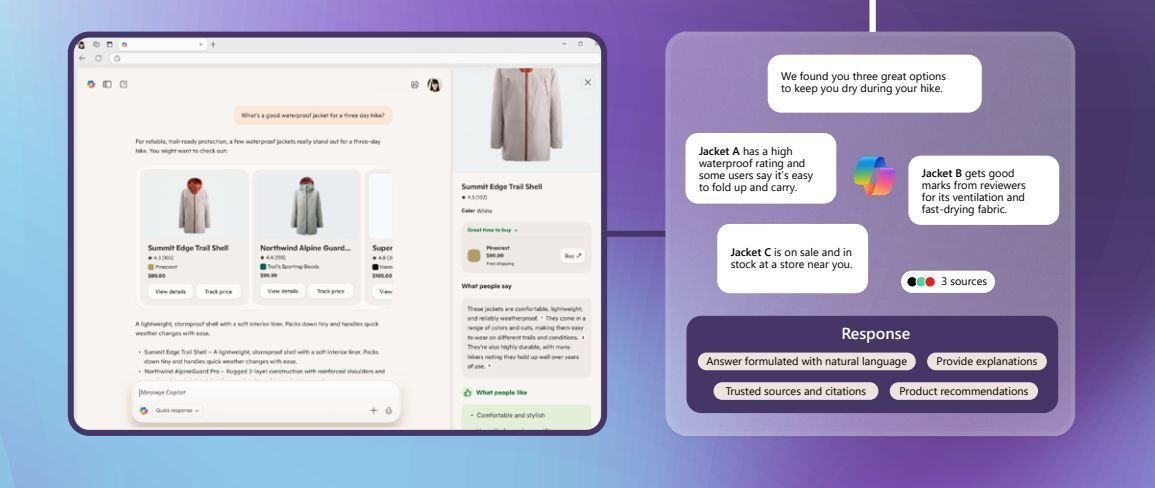
@alexgroberman summarized (38 likes, 37 retweets, 3,908 views) Microsoft's AEO/GEO retail guide as a shift from being found by search engines to being chosen by AI assistants and agents. The most useful images were not the promotional traffic charts; they were the workflow diagrams showing AI browsers, assistants, and agents comparing jackets and a ChatGPT purchase-complete screen, which made “AI shopping” feel operational rather than speculative.

@aimikoda showed (204 likes, 20 replies, 9,273 views, 217 bookmarks) a concrete visual-production workflow: Midjourney Draft Mode generates 24 low-resolution character variants, then GPT Image 2 turns a selected draft into a character identity board with front, profile, seated, crouched, top-down, and detail-study views. The images made the workflow unusually easy to verify.


@ABC reported (20 likes, 18 replies, 24,227 views) a study in which OpenAI and Boston Children's Hospital re-ran existing genetic data from 18 pediatric patients through a new AI model. ABC's write-up says the model helped specialists review each case in roughly six to 10 minutes, while final diagnoses still required human review and certified clinical-lab confirmation before families were notified.
Discussion insight: The common pattern was assistive, not fully autonomous, AI. The shopping examples depended on structured feeds and live site data, the character-board workflow depended on a human selecting a promising draft, and the diagnosis study preserved specialist and lab verification.
Comparison to prior day: Earlier reports in the week centered more on models, hardware, and orchestration skills. On 2026-06-22, more posts showed AI sitting inside specific transactional or professional workflows where data quality and human verification still mattered.
2. What Frustrates People
Context decay and prompt fragility
Severity: High. The workflow posts repeatedly described the same problem: one-shot prompting breaks down as soon as work becomes long-running. @S1TA10 said (35 likes, 14 replies, 1,051 views, 15 bookmarks) that long chats fall into “lost in the middle,” causing early instructions to be ignored, while @neil_xbt argued (51 likes, 7 replies, 2,320 views, 16 bookmarks) that better prompts only optimize one component of a broken system. Even the day’s most popular pro-AI workflow post from @guinnesschen implied (2,030 likes, 81 replies, 137,649 views, 610 bookmarks) that typed prompt polish is often the wrong interface for capturing intent.
The coping pattern is lightweight but revealing: start a new chat per task, carry only short summaries forward, use dictation for richer context capture, and force the model through an observe-think-act-reflect loop. This is worth building for because multiple posts converged on the same complaint from different angles.
Weak evaluation defaults and too many false-positive reviews
Severity: High. @abhijaymrana argued (64 likes, 1 reply, 5,109 views, 43 bookmarks) that long-tail eval work is valuable enough that labs still buy teams for it. @rohit4verse said (10 likes, 4 replies, 585 views, 15 bookmarks) existing AI reviewers kept telling him his PRs looked fine until an adversarial prompt surfaced a real bug. @tom_doerr pointed to (19 likes, 2,422 views, 25 bookmarks) ALE precisely because benchmark coverage, hidden references, and deterministic graders are still rare enough to matter.
The workaround today is to over-specify the judging process: adversarial prompts, hidden references, structured passes, and custom eval assets. This is worth building for because the evidence shows both pain and active budget around the missing layer.
Vendor dependence and machine-readable data debt
Severity: Medium to High. @SakanaAILabs framed (118 likes, 4 replies, 10,575 views, 22 bookmarks) orchestration as a hedge against export controls and single-vendor dependence, while @amiruci said (254 likes, 24 replies, 25,191 views, 70 bookmarks) customers increasingly want to own their intelligence layer instead of relying only on closed APIs. On the commerce side, @alexgroberman summarized (38 likes, 37 retweets, 3,908 views) Microsoft's argument that product data often exists but is not structured, synchronized, or trustworthy enough for AI assistants and agents to act on.
The workaround pattern is swappable model pools on one side and structured catalogs, feeds, and trust signals on the other. This is worth building for because the current pain is operational, not aspirational: people are trying to keep access continuity and make agents usable on real product data right now.
3. What People Wish Existed
Better ways to preserve intent across long tasks
The strongest workflow posts suggested that people want systems that keep the useful parts of their thinking without forcing them to micromanage prompts. @guinnesschen pushed (2,030 likes, 81 replies, 137,649 views, 610 bookmarks) voice dictation as a better way to capture nuance, and @S1TA10 argued (35 likes, 14 replies, 1,051 views, 15 bookmarks) that people should carry short summaries instead of endless chat history. This is a practical need with direct demand because the advice was framed as current coping behavior, not future speculation. Opportunity: direct.
Orchestration layers that keep working when model access changes
The Sakana and Together posts implied a concrete need for an intelligence layer that can switch providers, specialize models, and survive vendor or policy shocks. @SakanaAILabs positioned Fugu as a swappable orchestration system, and @amiruci said customers want to own their intelligence layer through post-trained open models. This is a practical need with direct demand, but it is becoming competitive fast. Opportunity: competitive.
Product data that AI assistants can actually trust and act on
The Microsoft guide summary highlighted a need that is less glamorous than model launches but highly concrete: better machine-readable catalogs, synchronized feeds, trustworthy reviews, and websites that agents can transact on. @alexgroberman summarized Microsoft's view that AI visibility now depends on whether assistants can understand, justify, and use your data in real time. This is a practical need, and the evidence points to gaps in existing retailer infrastructure rather than a lack of interest. Opportunity: direct.
Eval assets and adversarial review tools that do not require expert handcrafting
The eval posts pointed to a market for reusable judging assets that are more rigorous than generic model reviews. @abhijaymrana argued that eval expertise is still scarce enough to acquire for, while @rohit4verse showed one manual response: turning code review into an explicitly adversarial process. This is a practical need with direct demand, especially for teams shipping agents or AI-assisted engineering workflows. Opportunity: direct.
4. Tools and Methods in Use
| Tool | Category | Sentiment | Strengths | Limitations |
|---|---|---|---|---|
| Voice dictation for prompting | Input workflow | (+) | Captures caveats, examples, and latent intent faster than typed prompt polish | Depends on transcription quality and still needs later context management |
| Observe-Think-Act-Reflect loop | Agent method | (+) | Gives long-running systems an explicit recovery and learning cycle | Still abstract unless paired with concrete memory, tools, and escalation rules |
| Short-summary context carry-forward | Context management | (+) | Reduces long-chat noise and avoids “lost in the middle” failures | Requires disciplined task boundaries and summary quality |
| Sakana Fugu / Fugu Ultra | Orchestration API | (+/-) | Single API, learned delegation, strong benchmark framing, swappable agent pool | Replies and launch framing both imply significant optimization and reliability work remains |
| Post-training open models | Model-customization method | (+) | Lets teams own specialized behavior and continual learning for their use case | The Together post explicitly said post-training is still more art than science |
| Agents' Last Exam | Evaluation framework | (+) | Broad industry coverage, hidden references, deterministic graders, real sandboxes | Public task set is still a subset; running real sandboxes adds operational overhead |
| Adversarial PR review prompt | Engineering workflow | (+) | Forces structured passes over correctness, security, concurrency, regression, and tests | Evidence so far is practitioner anecdote, not broad benchmark data |
| Midjourney Draft Mode + GPT Image 2 | Creative workflow | (+) | Rapid concept exploration followed by consistent identity-board generation | Requires human selection and iterative correction; workflow evidence came from one practitioner example |
| AEO/GEO structured product data | Commerce method | (+) | Aligns feeds, trust signals, and live-site data so assistants can recommend and transact | Requires coordinated content, catalog, and site operations rather than a single-tool fix |
The overall satisfaction spectrum was practical rather than ideological. People were not looking for one magic model. They were combining richer inputs, stricter context discipline, orchestration layers, public eval frameworks, and domain-specific workflow tactics.
The common workaround pattern was structure. When prompts failed, people added loops and summaries. When model dependence felt risky, they added orchestration and post-training. When AI commerce looked unreliable, they emphasized feeds, schema, and live-site consistency. Migration pressure was therefore moving away from raw-model fascination and toward system layers that preserve context, evaluate outputs, and keep AI connected to real data.
5. What People Are Building
| Project | Who built it | What it does | Problem it solves | Stack | Stage | Links |
|---|---|---|---|---|---|---|
| Sakana Fugu / Fugu Ultra | @SakanaAILabs | Learned orchestration system that exposes a multi-agent model pool through one API | Reduces single-model limits and vendor-dependence for hard multi-step work | Orchestration LLM, swappable agent pool, OpenAI-compatible API | Shipped | tweet, launch page |
| Agents' Last Exam | Berkeley RDI and RDI Foundation, shared by @tom_doerr | Open evaluation framework for long-horizon agents on real professional tasks | Gives teams a broader way to benchmark agents with hidden references and deterministic grading | Python toolkit, cloud or local sandboxes, hidden references, deterministic graders | Beta | tweet, repo |
| Rare-disease diagnostic model | OpenAI + Boston Children's Hospital, shared by @ABC | Reviews existing genetic data to suggest diagnoses in previously unsolved cases | Helps specialists revisit rare-disease cases that stayed unresolved for years | AI model over genetic data, specialist review, certified clinical-lab confirmation | Alpha | tweet, article |
@SakanaAILabs presented (118 likes, 4 replies, 10,575 views, 22 bookmarks) the most explicit new product artifact of the day. The launch page describes a system that decides when to solve directly and when to assemble a team of expert models, while keeping that orchestration hidden behind one API. What distinguished it from a generic router pitch was the combination of benchmark claims, export-control framing, and explicit swappable-agent design.
@tom_doerr shared (19 likes, 2,422 views, 25 bookmarks) a different kind of build: measurement infrastructure. ALE's public repo says it evaluates agents on real machines with hidden references and deterministic graders, which makes it useful not just as a benchmark paper but as a reusable harness for teams comparing full agent systems.
@ABC reported (20 likes, 18 replies, 24,227 views) a research build rather than a startup launch. The linked article says OpenAI and Boston Children's Hospital reprocessed old pediatric genetic cases, surfaced candidate diagnoses in minutes, and still required specialist and lab confirmation before informing families.
The repeated build pattern was infrastructure around judgment, coordination, and execution. The strongest projects were not generic chat surfaces. They were orchestration layers, eval frameworks, and assistive systems built to operate on structured evidence in real workflows.
6. New and Notable
AI-assisted diagnosis with explicit human guardrails
@ABC reported (20 likes, 18 replies, 24,227 views) a study in which a new AI model helped revisit years-old rare-disease cases. The linked article says OpenAI and Boston Children's Hospital used the model on 18 pediatric cases, kept specialists in the loop, and required certified clinical-lab confirmation before giving families a diagnosis. That combination of speed and retained human oversight made it more notable than a generic “AI in healthcare” claim.
Character-board generation becomes a reproducible image workflow
@aimikoda showed (204 likes, 20 replies, 9,273 views, 217 bookmarks) a workflow that turns Midjourney Draft Mode into a production-style character pipeline by using a chosen draft as the seed for GPT Image 2 identity boards. The images demonstrated why the post resonated: the workflow preserved face, outfit, silhouette, and expression consistency across multiple views instead of just generating another one-off hero image.
AI shopping moved from recommendation rhetoric toward transaction evidence
@alexgroberman summarized (38 likes, 37 retweets, 3,908 views) Microsoft's AEO/GEO guide with diagrams that showed assistants comparing products and a completed ChatGPT purchase flow. The signal mattered because it treated AI shopping as a data-and-transaction problem, not just a content-marketing buzzword.
7. Where the Opportunities Are
[+++] Context-preserving agent infrastructure — Evidence came from the day's most-engaged workflow post on voice dictation, the observe-think-act-reflect loop diagram, and the long-chat “lost in the middle” warning. This is strong because the same pain showed up at input capture, memory management, and long-task execution.
[+++] Evaluation and adversarial review tooling — @abhijaymrana argued that eval expertise is still acquisition-worthy, ALE offered a public benchmarking framework, and @rohit4verse showed a manual workaround for weak code review. This is strong because it connects pain, budget, and active implementation.
[++] Provider-agnostic orchestration layers — Sakana Fugu and Together AI both framed the future around owning or routing the intelligence layer instead of depending on one vendor. This is moderate because the need is clear, but the space is quickly becoming crowded and technically demanding.
[+] AI-ready product data and transaction surfaces — The Microsoft AEO/GEO material showed that assistants and agents need structured catalogs, trustworthy reviews, synchronized feeds, and working checkout flows before they can recommend or buy. This is emerging because the operational need is real, but today's evidence came from a smaller cluster than the context and eval themes.
8. Takeaways
- The workflow conversation moved from prompt quality to context quality. Voice dictation, loop design, and long-chat failure warnings all pointed to the same conclusion: the bottleneck is preserving intent across steps, not polishing a single prompt. (source)
- Orchestration is now being pitched as a frontier capability on its own. Sakana Fugu framed learned delegation and swappable model pools as the product, while Together AI tied business growth to customers owning their intelligence layer. (source)
- Evaluation remains one of the least commoditized parts of the stack. Posts about talent acquisition for evals, ALE, and adversarial PR review all treated judging as specialized infrastructure rather than an afterthought. (source)
- The most credible applied AI examples kept humans and structured data in the loop. Whether the workflow was shopping, character design, or rare-disease diagnosis, the successful examples depended on structured evidence, human selection, or specialist verification instead of fully autonomous magic. (source)