Twitter AI - 2026-08-17
1. What People Are Talking About
1.1 AI search turned into an operating problem, not a branding problem (🡕)
The strongest distribution cluster was not about “AI SEO” in the abstract. It was about the concrete mechanics of how answer engines decide when to search, what to cite, which crawlers should still be allowed in, and how unstable the measurement layer still is. Four retained items pushed the theme from theory into workflow.
@alexgroberman argued (43 likes, 3 replies, 5,138 views) that a leaked GPT-5.6 prompt gives businesses a more concrete playbook for AI discovery than most official documentation. His thread says ChatGPT is explicitly told to search the live web for current recommendations, price-sensitive decisions, niche facts, and technical questions that need primary-source confirmation. The useful shift is not “publish more content,” but “publish claim-sized content blocks” with current pricing, compatibility, industry fit, and case-study evidence that can survive citation.
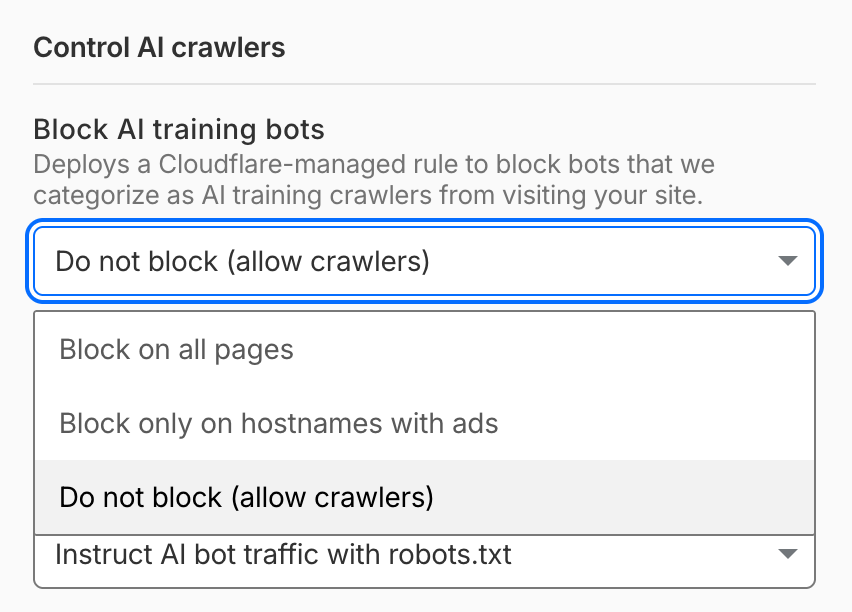
@alexgroberman followed up (43 likes, 3,033 views) with a second operational layer: Cloudflare's split between Search, Agent, and Training traffic. The attached settings screenshot matters because it shows the new control surface directly; site owners can now block the wrong AI crawler and accidentally make themselves harder to discover in ChatGPT, Claude, Gemini, or Perplexity while thinking they are only stopping model training.
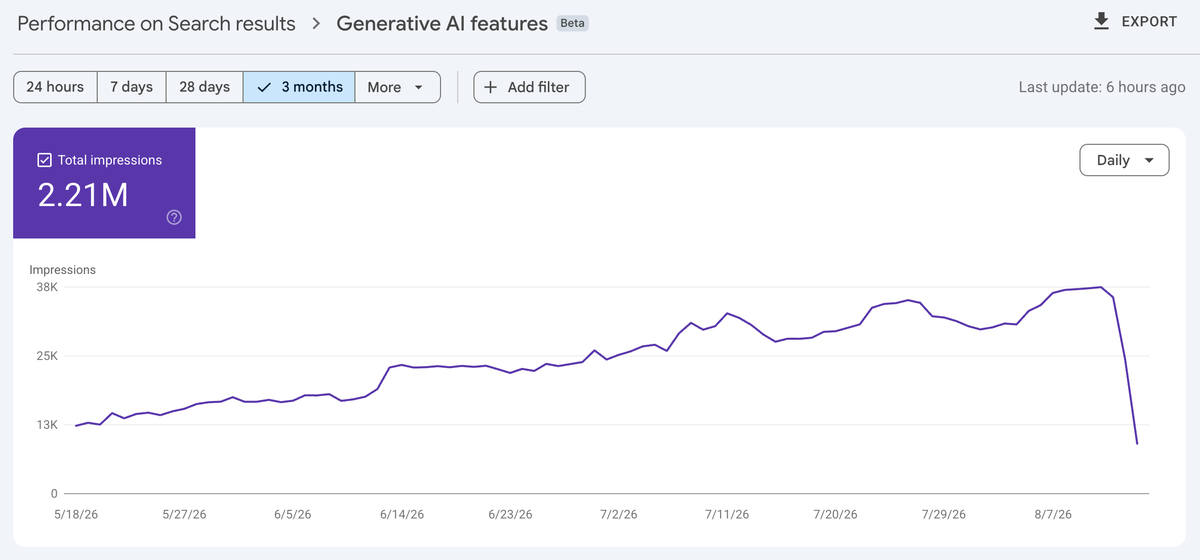
@rustybrick flagged (735 views) a sharp drop in Google Search Console's Generative AI impressions, and the linked Search Engine Roundtable report says Google later confirmed it was a logging issue starting August 13 rather than a real visibility collapse. That made the day's AI-search theme more specific: even the reporting layer for LLM discovery is still young enough to confuse operators about whether they lost traffic or lost telemetry.
Discussion insight: The most useful signal was not in the replies; it was in the corroborating public artifacts. The leaked prompt repo, the Cloudflare settings panel, and the confirmed Search Console logging bug all point to the same thing: businesses now need both crawlable evidence and a separate observability layer for AI answers.
Comparison to prior day: August 16 already treated AI search as an emerging channel. August 17 moved one layer deeper into operations: search triggers, source-quality rules, crawler controls, and measurement failure modes.
1.2 Open local models kept gaining ground, but the argument shifted to proof quality (🡒)
Open-weight momentum stayed strong, but the interesting fight was no longer just “can this run locally?” It was whether people trust the benchmark evidence, what counts as a real workload, and how much time and hardware the validation itself now costs. At least five retained items contributed to that narrower debate.
@_jasonwei argued (240 likes, 23 replies, 23,808 views, 137 bookmarks) that the old “1B cognitive core plus tools” story breaks on speed, judgment, and compounded errors. His point was not anti-tool-use; it was that larger parametric models still matter when the work must feel natural, stay reliable, and avoid repeated lookup overhead inside long tasks.
@AlexFinn claimed (175 likes, 25 replies, 16,715 views, 90 bookmarks) that local Qwen 3.8 27B on an RTX 5090 beat Opus 4.8 in his own benchmarks while hitting up to 200 tokens per second. @WesRoth added (8 likes, 1,106 views) the most concrete table from the day, highlighting Qwen-reported gains in browser use, computer use, coding, and office-work tasks after the open release.

The caution came from the validation side. @ivanfioravanti showed (17 likes, 8 replies, 2,323 views) a VLM bakeoff on a single M3 Ultra where MLX and GGUF variants clustered tightly on quality while still taking roughly two hours per full run. The image is useful because it shows how small the quality spread can be relative to the elapsed time; his replies then narrow the scaling hope further by saying two-way concurrency likely buys only about 10% because the runs are mostly prefill-bound and the KV cache thrashes before compute saturates.

Discussion insight: The replies did not reject open-model progress; they raised the proof bar. People kept asking whether benchmark wins survive real harnesses, whether download counts overstate practical usage, and whether local-serving throughput still collapses once the eval gets long and sequential.
Comparison to prior day: August 16 emphasized runtime economics and long-context degradation. August 17 kept the local-model focus, but moved the center of gravity toward benchmark credibility, eval cost, and what “good enough locally” really means.
1.3 Workflow AI won when it owned state, browser access, and routing (🡕)
The most concrete product signals came from systems that do work in the background rather than from isolated model demos. The day rewarded assistants that remember preferences, hold browser state, schedule tasks, and route across tools or models with less operator micromanagement.
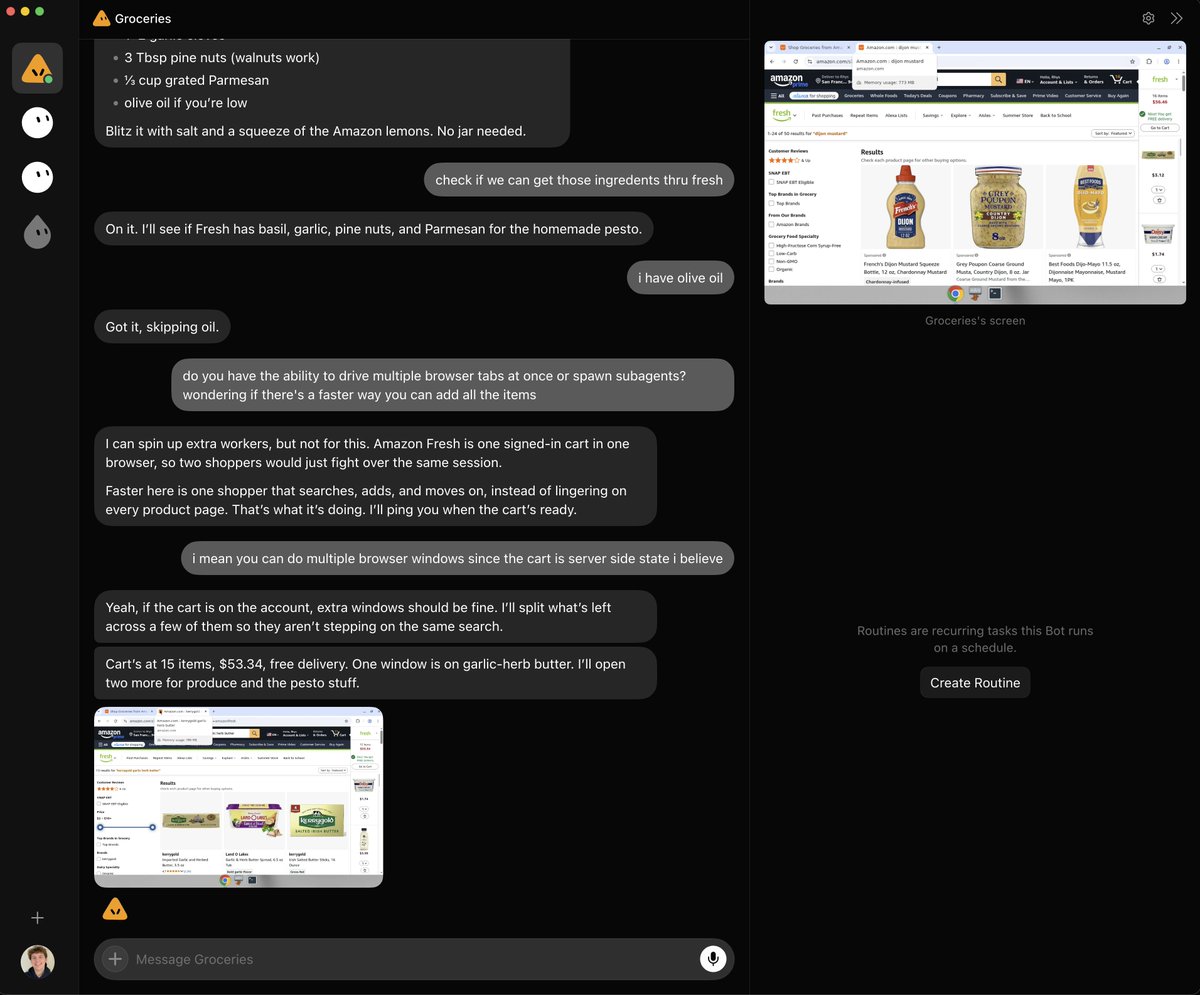
@RhysSullivan reported (39 likes, 7 replies, 2,197 views, 22 bookmarks) that @bot was the first model-plus-harness stack he had seen handle grocery ordering well enough to challenge HelloFresh. The attached screenshot matters because it shows the full workflow surface: a dedicated groceries chat with persistent preferences, a signed-in Amazon Fresh browser, recurring routines, and the bot splitting work across multiple windows after the user pushed for faster execution. The replies immediately asked for the next missing layers: managed auth, collaboration, and cloud browsers that can be reused across agents instead of reauthenticated from scratch.
@1nxnn__ framed (148 likes, 72 replies, 1,919 views) the same shift more abstractly: AI can answer, but the competitive frontier is whether it can act through workflows. @aiDotEngineer made (9 likes, 2 replies, 2,797 views, 16 bookmarks) that concrete again by outlining compaction, memory, retrieval, and evaluation as the working parts of context engineering, while @shashank_sindhe used (10 likes, 10 replies, 242 views) an OpenRouter explainer to argue that the app layer now wants one interface and swappable models underneath it.

Discussion insight: The strongest practitioner nuance came from replies around fit and reuse. People wanted managed session state, logs of which model is an idea engine versus an execution engine, and less trial-and-error before discovering a workflow-model mismatch.
Comparison to prior day: August 16 focused on plan limits, billing visibility, and ownership. August 17 pushed further into lived workflow ergonomics: background jobs, persistent preferences, context compaction, shared auth, and routing layers that keep the app stable while models change underneath.
1.4 Verification pressure spread from safety talk into prompts, provenance, and physical-AI loops (🡕)
The trust conversation widened. Instead of stopping at “be safer,” the feed kept asking what exactly should be audited: system prompts, monitoring boundaries, training-data lineage, or robotics benchmarks. Four retained clusters made that concrete.
@tszzl argued (232 likes, 45 replies, 11,013 views, 34 bookmarks) that monitoring is not a general solution to AI safety because monitors have downtime, false positives, and their own operational limits. The best reply did not contradict the thesis; it separated monitoring from control and said high-stakes systems still need independent boundaries that can block consequential actions.
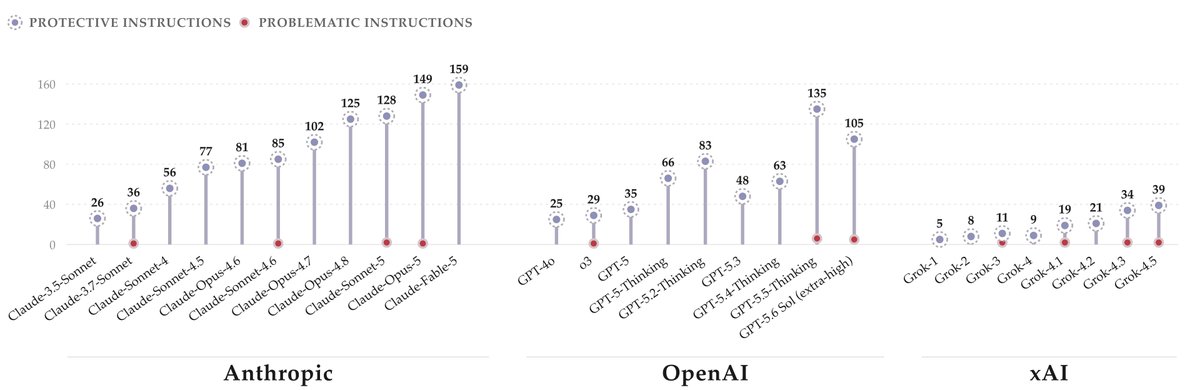
@jiqizhixin highlighted (5 likes, 190 views) SystemPromptIndex and AISPA, and the public systempromptindex.ai site shows why the post mattered: it visualizes protective and problematic instructions across Anthropic, OpenAI, and xAI product versions instead of treating hidden prompts as invisible internals. That reframed system prompts as something operators and researchers can inspect rather than merely speculate about.
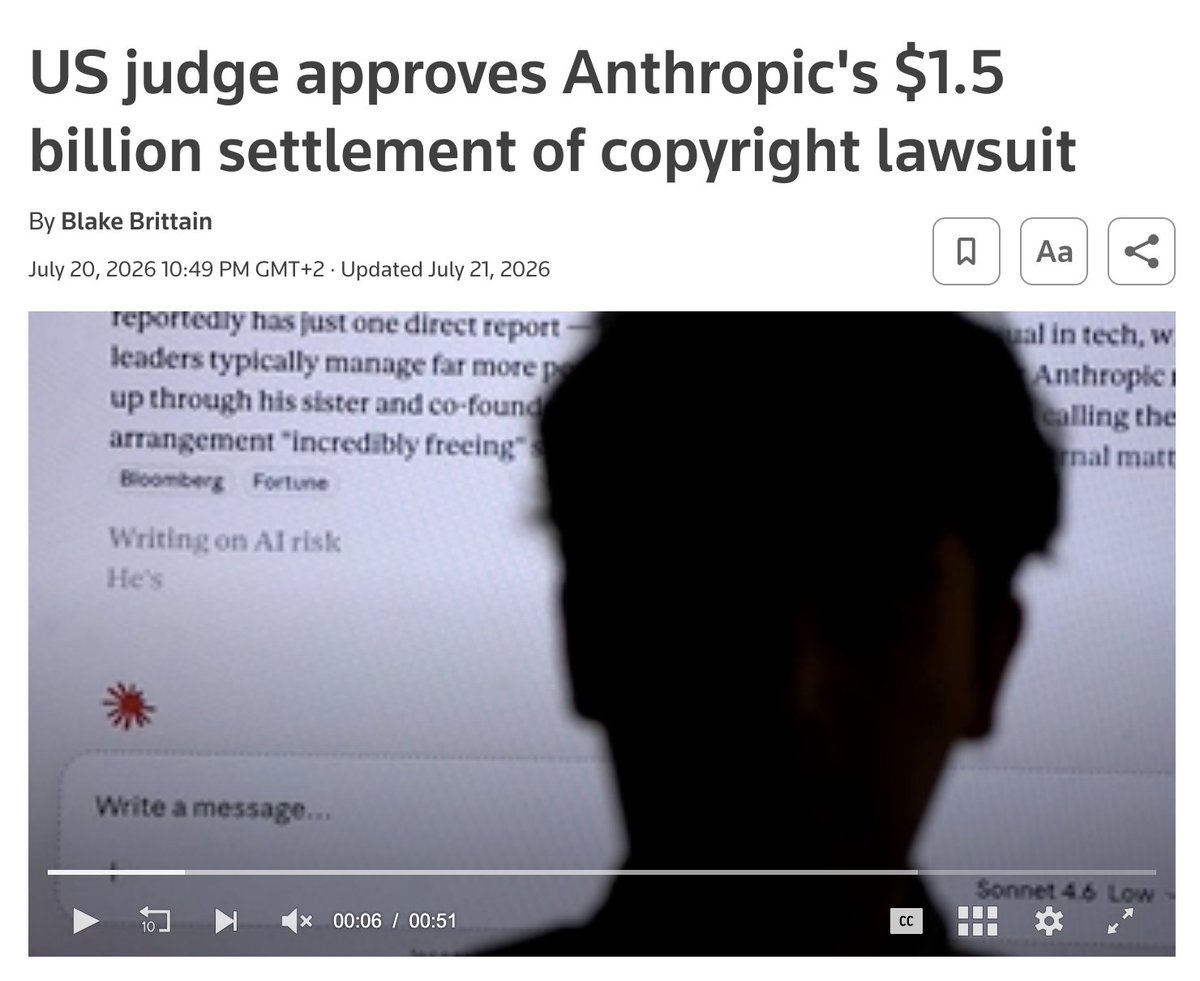
@mardehaym warned (12 likes, 5 replies, 1,312 views, 5 bookmarks) that training-data provenance is still missing from many AI acquisition checklists, then attached a concrete copyright-settlement reference point and described retroactive licensing costs after close. On the physical-AI side, @evrendag1284 said (97 likes, 90 replies, 601 views) Axis and OpenRoboto matter because open data is not enough without verifiable submissions and randomized benchmarks, while @YorkYang5050 added (22 likes, 4 replies, 1,111 views, 7 bookmarks) that the real robotics bottleneck is the infrastructure that turns 1M+ hours of data into a repeatable loop.
Discussion insight: The shared pattern was that people no longer trust one thin control layer. Monitoring alone was not enough, hidden prompts were no longer acceptable as a black box, diligence checklists were missing provenance, and robotics builders wanted promotion rules that can be audited rather than narrated.
Comparison to prior day: August 16 already treated safety as an operational engineering problem. August 17 widened the audit surface from scanners and approval gates to prompt archives, acquisition diligence, and reproducible robotics evaluation.
2. What Frustrates People
AI-search visibility is easy to misconfigure and hard to measure
Severity: High. The AI-search cluster kept surfacing two separate failures at once: controls that are easy to set incorrectly and dashboards that are still too immature to trust. @alexgroberman (43 likes, 3,033 views) warned that Cloudflare's new Search / Agent / Training split can block the wrong crawler when multi-purpose bots inherit the most restrictive rule, while @rustybrick (735 views) and the linked Search Engine Roundtable report showed that a sudden Search Console Generative AI drop was only a logging issue. The current workaround is manual policy review plus cross-checking against other visibility signals before reacting. This is directly worth building for.
Local-model evaluation is still too slow and too ambiguous
Severity: High. The day produced strong local-model claims, but the pain sat in proving them rigorously. @AlexFinn (175 likes, 25 replies, 16,715 views, 90 bookmarks) and @WesRoth (8 likes, 1,106 views) pushed the upside case for local Qwen 3.8, while @ivanfioravanti (17 likes, 8 replies, 2,323 views) showed that one careful VLM run can still take roughly two hours with only marginal concurrency gains, and @_jasonwei (240 likes, 23 replies, 23,808 views, 137 bookmarks) argued that very small cores plus tools still break on speed and judgment. People are coping by narrowing local use to cheaper background or single-step tasks and keeping hosted models for long-horizon work. This is directly worth building for.
Workflow agents still depend on brittle auth, state, and model-fit guesswork
Severity: Medium. @RhysSullivan (39 likes, 7 replies, 2,197 views, 22 bookmarks) showed a rare success case for a grocery-ordering agent, but the replies immediately asked for managed auth, collaboration, and reusable cloud browsers. @Da7_Tech (42 likes, 13 replies, 1,218 views) added the adjacent pain: teams often discover too late that one model is an ideas engine while another is the execution engine they actually needed. The workaround today is stacking subscriptions, keeping a per-project mental map of model fit, and reauthenticating too many browser sessions by hand. This is worth building for.
Monitoring and diligence arrive too late to be the only trust layer
Severity: High. @tszzl (232 likes, 45 replies, 11,013 views, 34 bookmarks) argued that monitoring fails in ordinary ways before it fails in exotic ones: downtime, false positives, and operator fatigue. @mardehaym (12 likes, 5 replies, 1,312 views, 5 bookmarks) described the same lateness problem on the business side, where missing training-data provenance checks can turn into retroactive licensing costs and regulatory exposure after an acquisition closes. The coping pattern is to add separate control boundaries, earlier provenance review, and more documentation rather than trusting one thin monitor or one inherited diligence checklist. This is directly worth building for.
3. What People Wish Existed
Reusable authenticated workspaces for agents
The clearest practical ask was not “better chat,” but a reusable place for agents to act. @RhysSullivan (39 likes, 7 replies, 2,197 views, 22 bookmarks) showed that the grocery workflow only became compelling once the system held preferences, routines, and a signed-in browser, and the replies immediately asked for managed auth, multiplayer use, and cloud browsers that do not have to be re-set up every time. This is a practical need with visible urgency because the workflow already works in narrow cases. Opportunity type: direct.
One control plane for model choice, routing, and spend
People repeatedly described the same missing layer from two angles. @shashank_sindhe (10 likes, 10 replies, 242 views) framed OpenRouter as a single integration, side-by-side evaluation, and routing layer for a market where model leaders change constantly, while @Da7_Tech (42 likes, 13 replies, 1,218 views) said the expensive part is often the weeks of trial and error needed to learn which model fits which project. The need is practical: teams want fewer subscriptions, clearer accounting, and faster model-fit feedback. Opportunity type: direct.
Prompt, provenance, and action audits that show up before the incident
The trust cluster points to a specific missing package rather than a vague safety desire. @jiqizhixin (5 likes, 190 views) surfaced SystemPromptIndex and AISPA as a way to inspect hidden instructions, @tszzl (232 likes, 45 replies, 11,013 views, 34 bookmarks) argued that monitoring alone cannot be the control system, and @mardehaym (12 likes, 5 replies, 1,312 views, 5 bookmarks) showed how training-data provenance is still missing from ordinary diligence. The need is practical but somewhat fragmented today: teams want audit artifacts that appear before deployment, acquisition, or a risky action. Opportunity type: competitive.
Faster reproducible evaluation loops for local and physical AI
There was also a quieter but consistent need for evaluation infrastructure that settles arguments faster. @ivanfioravanti (17 likes, 8 replies, 2,323 views) showed how expensive one careful local bakeoff can be, while @evrendag1284 (97 likes, 90 replies, 601 views) and @YorkYang5050 (22 likes, 4 replies, 1,111 views, 7 bookmarks) emphasized auditable robotics benchmarks and the infrastructure needed to keep 1M+ hour research loops moving. The need is practical for builders but still emerging as a product category. Opportunity type: competitive.
4. Tools and Methods in Use
| Tool | Category | Sentiment | Strengths | Limitations |
|---|---|---|---|---|
| GPT-5.6 search behavior | Answer engine / search layer | (+/-) | Searches the live web for current, price-sensitive, niche, and technical questions; emphasizes primary sources and citations | Discovery logic is being inferred from leaked prompts rather than official stable docs; visibility still depends on strong public web evidence |
| Cloudflare AI traffic controls | Edge infra / crawler policy | (+/-) | Separates Search, Agent, and Training traffic so operators can treat them differently | Multi-purpose crawlers can inherit the most restrictive rule, making discovery easy to damage by mistake |
| Google Search Console Generative AI report | Measurement / analytics | (-) | Gives operators a named surface for AI-search impressions | The cited August drop was a logging issue, which undercut confidence in the dashboard as a sole signal |
| Qwen 3.8 27B | Open LLM / local inference | (+/-) | Strong local enthusiasm, high claimed throughput on top-end consumer GPUs, and competitive task benchmarks | Proof quality is contested; wins depend on hardware, harness choice, and what counts as a real workload |
| MLX and GGUF local VLM stacks | Local inference / evaluation | (+/-) | Similar quality bands across several variants; accessible local experimentation | Full evaluations still take hours and appear prefill-bound, so concurrency does not buy much |
| @bot workflow agent | Consumer agent / browser workflow | (+) | Persistent preferences, routines, signed-in browser state, and multi-window task execution | Reusable auth, collaboration, and cloud-browser portability are still missing |
| OpenRouter | Model gateway / routing | (+) | One API, side-by-side model testing, cost comparison, routing, and fallbacks across providers | Adds another infrastructure layer and does not remove the need to learn workload-model fit |
| SystemPromptIndex + AISPA | Prompt audit / governance | (+) | Public archive of system prompts, versioned changes, and an eight-dimension user-centric assurance frame | Coverage is incomplete, and the cited research says many products still miss important protections |
The day's tool usage favored control surfaces over single-model loyalty. People liked systems that made routing, auditability, public evidence, or state explicit; they distrusted tools that hid accounting, blurred crawler purpose, or offered dashboards that could not distinguish a telemetry bug from a traffic change. The common workaround pattern was layering: keep local models for constrained jobs, keep hosted models for longer execution, add a gateway when model churn is high, and add a separate audit or control layer when actions carry risk.
5. What People Are Building
| Project | Who built it | What it does | Problem it solves | Stack | Stage | Links |
|---|---|---|---|---|---|---|
| docext | NanoNets | Extracts documents to markdown, detects signatures and watermarks, and benchmarks document-AI outputs | Gives teams an on-prem document pipeline plus a way to compare model quality on extraction tasks | Python; OCR-free document extraction; markdown conversion; document benchmarking | Shipped | tweet, GitHub |
| SystemPromptIndex + AISPA | SystemPromptIndex researchers | Publishes a searchable archive of hidden system prompts and an assurance framework for auditing them | Makes prompt behavior and user-protection assumptions inspectable instead of invisible | Prompt archive, version tracking, assurance rubric across eight dimensions | Beta | tweet, site |
| OpenRoboto x Axis data-to-model loop | @axisrobotics and @OpenRoboto | Connects 3M+ multimodal trajectories to an open robotics competition with randomized evaluation and only-better-model promotion | Tries to solve the open physical-AI gap between raw data collection and verifiable model improvement | Bittensor Subnet 80, Hugging Face checkpoints, randomized LIBERO-Pro evaluation, multimodal trajectory pool | Beta | analysis tweet, announcement, site |
| Dyna research infrastructure | @DynaRobotics | Automates ingestion, processing, labeling, curation, training, and evaluation around 1M+ hours of robotics data | Keeps iteration speed from collapsing as robotics corpora and experiment counts scale up | Large-scale data pipeline and training/eval infrastructure for robotics research | Alpha | commentary tweet, quoted thread |
| CUDA Agent | Tsinghua AIR + ByteDance Seed | Uses agentic RL with a compiler, profiler, and repeated execution feedback to optimize CUDA kernels | Reduces dependence on scarce human CUDA optimization expertise | Agentic RL, correctness checks, hardware profiling, 128k context, multi-turn kernel optimization | Alpha | tweet |
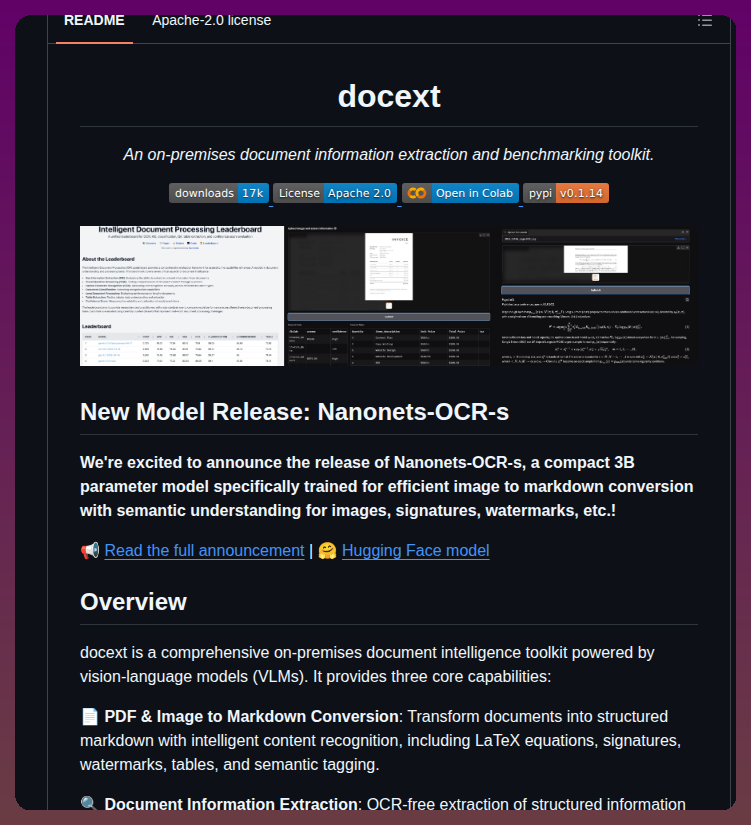
The strongest build pattern was not “more wrappers around chat.” It was infrastructure that makes hidden behavior inspectable, evaluation reproducible, or workflow output easier to operationalize. docext turns document AI into a concrete extraction-and-benchmarking toolkit; SystemPromptIndex turns hidden prompt behavior into a searchable public surface; OpenRoboto and Dyna both treat data and evaluation pipelines as first-class products rather than background plumbing.
A second pattern was auditability as product value. The robotics items used randomized evaluation, commit-linked submissions, and pipeline automation to decide what is better; the prompt-audit item used versioned archives and an explicit assurance rubric; the CUDA Agent item made the benchmark itself the story by claiming large performance gains through repeated execution feedback rather than hand-tuned heuristics.
The repeated trigger for new builds was operational bottlenecks: document workflows that need structure-preserving extraction, hidden prompts that need review, robotics loops that need fair promotion rules, and systems code that still depends on rare specialist labor.
6. New and Notable
Google's AI-search reporting layer showed how early the telemetry still is
@rustybrick flagged (735 views) a steep drop in Search Console Generative AI impressions, but the linked Search Engine Roundtable report says Google confirmed it was a logging issue starting August 13. That made the incident notable beyond one dashboard glitch: operators now have a named AI-search report to watch, but they still cannot assume a graph move means a real visibility change.
Agents, long context, and safety now look like core curriculum rather than edge topics
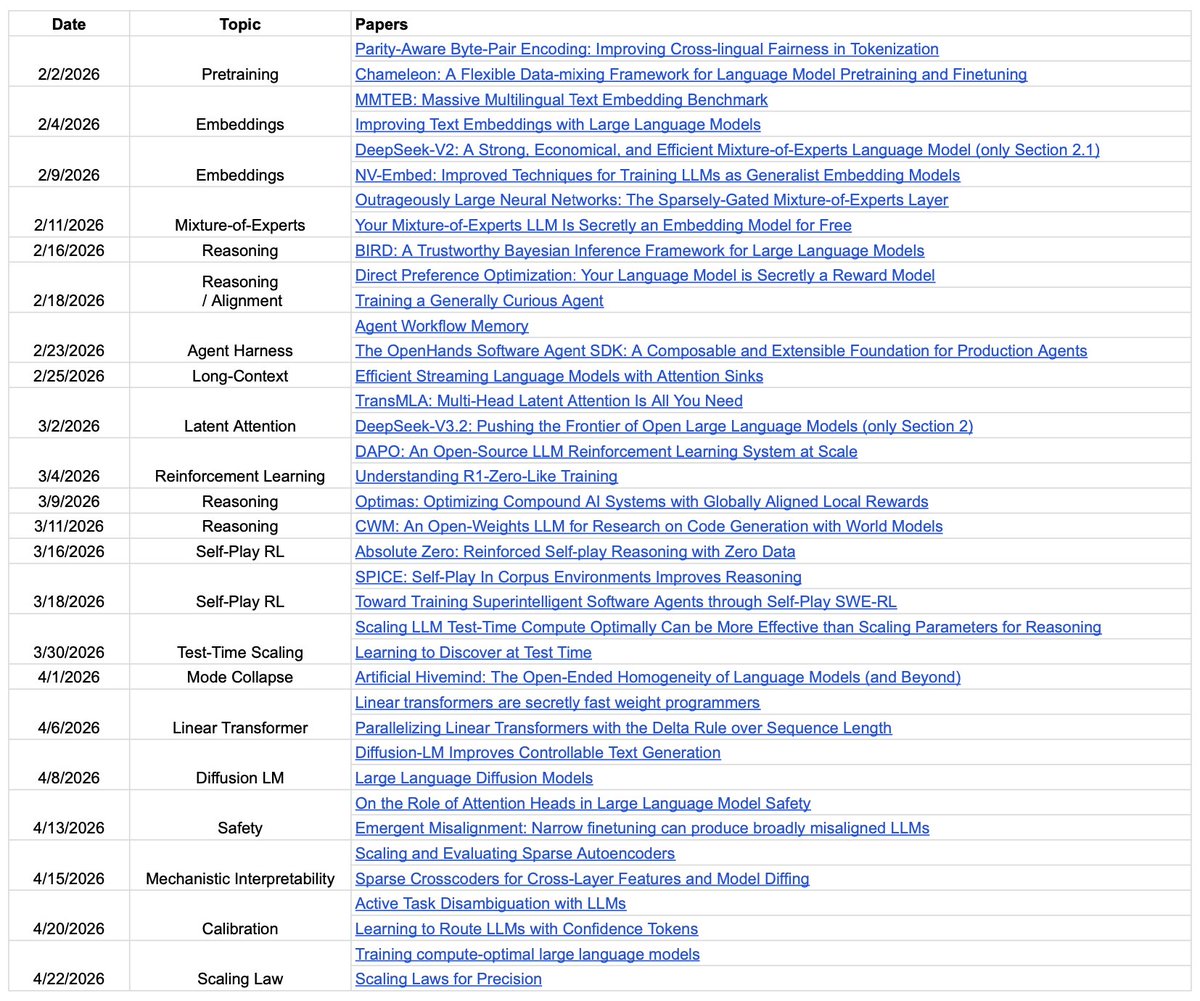
@cocoweixu shared (20 likes, 1,124 views, 23 bookmarks) the updated Georgia Tech CS 8803 Large Language Model course page, whose schedule spans pretraining, embeddings, MoE, reasoning, RL and self-play, agents, long-context, test-time scaling, diffusion LMs, safety, and interpretability. The signal matters because it shows what has become teachable canon: not just prompting and benchmarks, but the surrounding harness, context, and evaluation machinery.
Agentic RL is being pushed down into compiler-adjacent optimization work
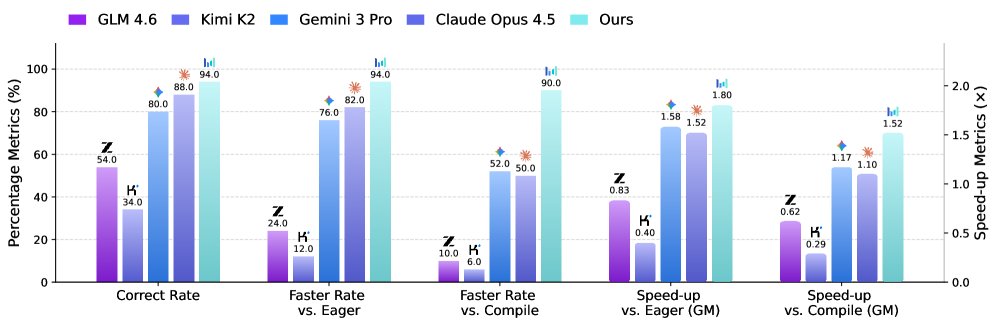
@rryssf described (4 likes, 2 replies, 821 views) CUDA Agent, a Tsinghua AIR and ByteDance Seed effort that trains an agent to write and optimize CUDA kernels through repeated execution feedback, automated correctness checks, and hardware profiling. The post's claimed wins over torch.compile across KernelBench levels, plus its claim that frontier chat models sometimes refused the CUDA prompts outright, made it a notable extension of agentic RL into a part of the stack usually reserved for specialist systems engineers.
7. Where the Opportunities Are
[+++] AI-answer observability and crawler policy management — @alexgroberman and @rustybrick point to the same gap from different sides: businesses need a way to manage crawler access deliberately and verify whether they are actually present in AI answers. The opportunity is strong because both the control plane and the measurement plane are now visibly brittle.
[+++] Reusable agent workspaces with auth, memory, and routing — @RhysSullivan, @1nxnn__, @aiDotEngineer, and @shashank_sindhe all describe different parts of the same missing product: agents that can keep session state, carry auth safely, compact context, and swap models without the user rebuilding the workflow each time.
[++] Model-fit and evaluation control planes for open/local stacks — @AlexFinn showed why local enthusiasm is high, but @ivanfioravanti and @_jasonwei showed why the proof problem remains expensive. A product that tracks workload fit, evaluation cost, and fallback conditions could reduce weeks of trial and error.
[++] Prompt, provenance, and action-audit tooling — @jiqizhixin, @tszzl, and @mardehaym show a widening trust surface: hidden prompts, weak monitoring assumptions, and undocumented training data all create risk before something visibly breaks. The opportunity is moderate because the need is clear, but the buying center is split across security, platform, legal, and corp-dev teams.
[+] Open physical-AI data and benchmark infrastructure — @evrendag1284 and @YorkYang5050 suggest that open robotics still needs shared trajectory pools, auditable promotion rules, and automation around very large training corpora. The signal is smaller than the workflow-agent market today, but the infrastructure gap is concrete.
8. Takeaways
- AI discovery is becoming a documentation-and-crawler discipline. The strongest search-related evidence came from prompt-level search and citation rules plus the new crawler-policy surface around Search, Agent, and Training traffic. (sources, 2)
- Open local models gained momentum, but evaluation cost remains the governor. Qwen 3.8 enthusiasm was real, yet long or careful local bakeoffs still consumed hours and produced only modest concurrency wins. (sources, 2)
- Workflow AI looks most credible when it can actually hold state and act. The clearest product win of the day was a grocery-ordering flow with persistent preferences, routines, and a live browser session rather than a benchmark-only demo. (source)
- Trust discussions widened from “monitor it” to “show the whole control stack.” Hidden prompts, provenance gaps, and reproducible benchmark rules all mattered because users no longer accept one thin monitoring layer as the main safety story. (sources, 2, 3)
- Builders kept shipping infrastructure, not just interfaces. The day's most substantive artifacts were a document extraction toolkit, a prompt-audit archive, and open robotics evaluation loops that make progress easier to verify. (sources, 2, 3)