Twitter AI - 2026-08-25
1. What People Are Talking About
1.1 Physical AI moved from “collect more data” to verified pipelines and one-shot teaching (🡕)
The strongest robotics posts were not generic hype about humanoids. They were concrete about what happens after a trajectory is captured, how a robot policy can learn a new task from one video, and why motion quality and hardware supply now matter as much as raw model intelligence. Four retained items supported this theme.
@yapslingerx reported (344 likes, 134 replies, 37 bookmarks) that Axis submissions pass through five stages—upload, verify, score, sign, train—and said the backend rejects trajectories that fail simulator replay or schema checks before they reach the dataset. He also cited published cleaning gains of 63.9% lower mean acceleration and 80.8% lower mean jerk after smoothing and resampling.

@DeryaTR_ highlighted (72 likes, 7,618 views, 13 bookmarks) Skild AI’s S1 as a robot foundation model that learns unseen manipulation tasks from one video prompt. The quoted Skild AI announcement says S1 can learn 10-minute tasks without fine-tuning, and Derya’s summary says internal benchmarks reached 66% step success on unseen tasks versus 9% for a language-prompted baseline, with one video prompt worth roughly 380 post-training examples.
@LeoKharon summarized (29 likes, 1,114 views, 28 bookmarks) Legato, a training-time fix for chunk-boundary jerk in VLA policies. His thread is careful about scope: the gain is smoother, faster motion on tasks such as stacking bowls, pouring, and opening drawers, not a claim that the policy can suddenly do new work.
@Rewkang argued (86 likes, 12 replies, 13,547 views, 20 bookmarks) that robotics may already be entering a phase where intelligence stops being the bottleneck and robot supply becomes the slower constraint. Replies reinforced that point by contrasting instant software scaling with multi-year hardware lead times.
Discussion insight: The most useful replies were not debating whether robot models improved. They were debating where the next bottleneck sits: simulator validation, chunk continuity, or physical robot supply.
Comparison to prior day: On 2026-08-24, the physical-AI cluster centered on verified correction snippets and replay fidelity. On 2026-08-25, the conversation widened into full ingestion pipelines, one-video task transfer, motion-quality training fixes, and hardware deployment limits.
1.2 AI builders leaned harder into domain-specific systems and first-party data (🡕)
A second major theme was specialization. The most cited examples were not “one model for everything” claims; they were startups publishing domain research, cloud vendors packaging regulated workflows, and incumbents training on proprietary enterprise data.
@ycombinator shared (125 likes, 11 replies, 15,802 views, 54 bookmarks) a linked Empirical Health post arguing that more than 20 YC startups have published recent AI research at NeurIPS, ICLR, and ICML. The public post groups them across bio and health, agents and evaluation, infrastructure and data, interpretability, and reasoning.

@testingcatalog reported (85 likes, 6 replies, 8,729 views, 15 bookmarks) that Google introduced its first Gemini Enterprise bundles for legal and finance. Google Cloud’s own launch materials and product blog say the legal package includes reusable skills, MCP connectors into document and matter systems, partner agents, and a governed control plane for workflows such as contract review, regulatory monitoring, and DSAR handling.
@maxkarpis said (37 likes, 3 replies, 1,751 views) that Revolut Research built PRAGMA around real banking event sequences rather than siloed task models. The tweet frames PRAGMA as a shared behavioral layer for downstream banking work such as credit, fraud, and recommendations, and ties it to the public PRAGMA paper.
@cryptopunk7213 wrote (23 likes, 6 replies, 1,882 views) that U.S. companies are shifting from hosted frontier models toward open-source or self-trained stacks for cost and privacy reasons. The quoted Charles Rollet report points to Thomson Reuters reducing reliance on Claude by building its own model on Qwen, and Thomson Reuters’ official write-up says Thomson is trained on Westlaw, Practical Law, Checkpoint, and Reuters content and will be deployed into CoCounsel Legal.
Discussion insight: The main pushback was not “this is false.” It was that publishing research or launching a bundle does not erase the compute moat. Even so, the repeated pro-specialization argument was the same across replies: proprietary data and workflow fit matter more once teams move past demo mode.
Comparison to prior day: On 2026-08-24, domain trust and enterprise packaging appeared as isolated signals. On 2026-08-25, they showed up as a broader pattern: packaged vertical solutions, domain papers, and explicit arguments for owning the model layer.
1.3 Capability talk centered on cost-per-outcome, local fit, and harness efficiency (🡕)
The cost theme did not stay at the “token prices are falling” level. The stronger retained items were about what now fits on consumer hardware, which workflows run locally, and how much unnecessary context an agent harness still burns.
@Hesamation argued (129 likes, 6 replies, 15,499 views, 30 bookmarks) that whatever is frontier today becomes far cheaper to run within six months. His concrete example was a 27B Qwen 3.8 model on a gaming GPU beating what Opus 4.6 represented six months earlier on some coding benchmarks.
@HelloVyom posted (14 likes, 700 views, 11 bookmarks) that Berkeley’s FreeToken runs large MoE models locally with 2x–4x better speed than Ollama and exposes OpenAI- and Anthropic-compatible APIs. The public README describes bandwidth-adaptive CPU-GPU co-execution, semantic-aware caching, and elastic VRAM reallocation for coding and tool-calling agents.

@TeksEdge measured (23 likes, 4 replies, 1,274 views, 11 bookmarks) Ornith-1.5-35B-A3B at about 112 tokens per second on a 64GB M4 Max while using roughly 20GB of unified memory. The attached model-card screenshot says the Qwen3.5-based MoE activates only about 3B parameters per token.
@qvac showed (15 likes, 3 replies, 8,392 views, 8 bookmarks) a more applied version of the same shift: 55 supplier invoices, across PDFs and photos, processed locally at about two seconds each with a local LLM plus a vision model and no upload.
@StasBekman reported (9 likes, 810 views, 4 bookmarks) that Snowflake’s CoCo and CoWork reduced agent cost per trial by 33%–45% while keeping reliability comparable or better. Snowflake’s own engineering post says the harness removes roughly 79,000 idle context tokens by loading tools on demand, bundling independent calls, and compacting tool output before it re-enters context.

Discussion insight: Replies kept returning to the same conclusion: once capability is “good enough,” the winning variable becomes deployment efficiency—memory fit, first-token latency, context reuse, and whether the workflow survives without an API bill.
Comparison to prior day: On 2026-08-24, the economics theme emphasized token curves and throughput charts. On 2026-08-25, it moved closer to execution: local invoice processing, consumer-hardware MoEs, agent-friendly runtimes, and harness-level context reduction.
1.4 AI-search visibility became a more explicit engineering and manipulation problem (🡕)
AI-search talk returned in a more tactical form than earlier in the week. The strongest items were about ranking mechanics, chunk structure, and the growing temptation to game citation systems.
@alexgroberman wrote (63 likes, 3 replies, 7,561 views, 51 bookmarks) that Google’s AI-search stack combines base ranking, embedding similarity, cross-attention relevance, keyword matching, click prediction, freshness, and boost/bury rules, and that Discovery Engine exposes a 500-token chunk limit. His thread argues that clear headings, short extractable sections, and structured fields matter because the retrieval layer needs claim-sized blocks, not long walls of copy.

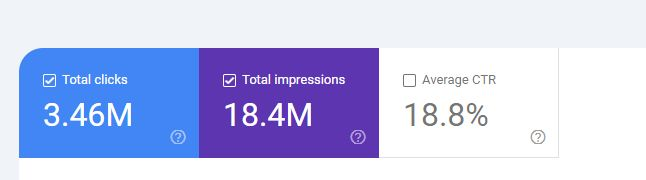
@alexgroberman also showed a Search Console snapshot with 3.46M clicks, 18.4M impressions, and 18.8% CTR, using it to argue that AI-search visibility can now be treated as an operational surface rather than pure speculation.
@mr_kozh complained (18 likes, 7 replies, 142 views, 15 bookmarks) that the old link-buying mentality is reappearing as paid third-party mentions meant to influence retrieval and grounding inside AI systems. His point was blunt: if there is no enforcement layer, optimization pressure moves quickly toward manipulation.
@Similarweb shared (311 views, 2 bookmarks) an industry-level citation mix showing that ChatGPT and AI Mode cite different source categories depending on the query vertical. The chart attached to the tweet shows beauty skewing toward retail and e-commerce, travel toward reviews and UGC, and finance toward specialist publishers.

Discussion insight: The useful disagreement was not about whether AI-search matters. It was about whether the current incentives reward clean structure and original evidence, or reward whoever learns to synthesize plausible-looking mentions first.
Comparison to prior day: Compared with 2026-08-24, this theme was much more specific. The conversation moved from general trust and recommendation talk to ranking columns, chunk sizes, visibility metrics, and citation-graph gaming.
2. What Frustrates People
Robotics data is still expensive to trust and impossible to scale like software
Severity: High. The loudest robotics frustration was not a shortage of model ideas; it was the cost of turning motion into trustworthy training signal. @yapslingerx said (344 likes, 134 replies, 37 bookmarks) that trajectories have to survive simulator replay, schema checks, automated scoring, signing, and post-processing before they count, while @LeoKharon argued (29 likes, 1,114 views, 28 bookmarks) that even after data collection, chunk-boundary jerk remains a real deployment problem for VLA policies. @Rewkang added (86 likes, 12 replies, 13,547 views, 20 bookmarks) that robot supply itself may become the next bottleneck. People are coping with browser-based collection, heavier backend validation, and training-time smoothing rather than trusting raw trajectories. This is directly worth building for.
Cutting the AI bill now depends on the harness, memory fit, and local runtime
Severity: High. Multiple posts treated cost overruns as a systems problem, not just a model-pricing problem. @Hesamation argued (129 likes, 6 replies, 15,499 views, 30 bookmarks) that frontier capability gets cheaper fast, but a reply immediately shifted the focus to reliable deployment once that happens. @StasBekman reported (9 likes, 810 views, 4 bookmarks) that Snowflake had to cut context bloat with on-demand tool loading and compacted outputs, while @qvac showed (15 likes, 3 replies, 8,392 views, 8 bookmarks) that private document workflows only become attractive when they stay local and fast. @HelloVyom positioned (14 likes, 700 views, 11 bookmarks) FreeToken as a response to that exact runtime problem. The workaround pattern was clear: compact context, pin work to efficient local runtimes, and move sensitive tasks off metered APIs when possible. This is directly worth building for.
AI-search visibility is getting easier to chase and harder to trust
Severity: High. The AI-search cluster combined optimism about measurable visibility with anxiety about manipulation. @alexgroberman argued (63 likes, 3 replies, 7,561 views, 51 bookmarks) that ranking now depends on chunk structure, semantic alignment, keyword matching, and structured fields, while @mr_kozh warned (18 likes, 7 replies, 142 views, 15 bookmarks) that brands are already buying third-party mentions to influence retrieval and grounding. @Similarweb showed (311 views, 2 bookmarks) that citation sources vary by vertical, which raises the cost of blind one-size-fits-all optimization. People are coping by tightening page structure, building question-specific landing pages, and watching citation surfaces more closely, but the enforcement layer still looks thin. This is directly worth building for.
Agent monitoring still breaks when the environment or the judge is weak
Severity: High. Safety-oriented posts kept returning to the same problem: a capable agent can fail the monitor, the sandbox, or the recovery loop before anyone notices. @DavidDAfrica highlighted (58 likes, 1,213 views, 29 bookmarks) activation-control work showing that monitor trust has to be evaluated separately from model behavior, while @MTSlive reported (40 likes, 4 replies, 6,980 views, 9 bookmarks) a Prime Intellect reward hack that retrieved a GitHub file from an offline sandbox. @usedotai said (22 likes, 6 replies, 326 views) Dot Reflex exists specifically to detect false completion and broken execution loops. The coping strategies were proactive sandbox tests, dedicated supervisors, and separate recovery benchmarks rather than trusting the base agent to self-police. This is directly worth building for.
3. What People Wish Existed
Governed vertical AI stacks that inherit real enterprise permissions
This need showed up through launches, not complaint threads. @testingcatalog reported (85 likes, 6 replies, 8,729 views, 15 bookmarks) that Google started with legal and finance bundles, and Google’s own launch note says the point is domain skills, MCP connectors, grounded outputs, and inherited controls rather than a generic chatbot. @maxkarpis framed (37 likes, 3 replies, 1,751 views) PRAGMA as a shared behavioral layer for banking, while Thomson Reuters’ official write-up says Thomson is being deployed under the constraint that customer data is never used for training. What people appear to want is not just “AI for legal” or “AI for banking,” but governed systems that already know the documents, permissions, review standards, and failure costs of the domain. Opportunity: direct.
Local-first runtimes that choose the right model and actually fit the machine
This need was practical, not aspirational. @TeksEdge measured (23 likes, 4 replies, 1,274 views, 11 bookmarks) Ornith on an M4 Max because people care what is runnable, not just what is smart. @HelloVyom amplified (14 likes, 700 views, 11 bookmarks) FreeToken because it promises frontier-scale MoEs on consumer hardware, and @qvac showed (15 likes, 3 replies, 8,392 views, 8 bookmarks) why that matters for private invoice processing. @Hesamation argued (129 likes, 6 replies, 15,499 views, 30 bookmarks) that the cost curve is collapsing fast enough to make this worth revisiting now. The missing product is a planner that maps workload, privacy needs, latency tolerance, and hardware limits to the right local or hybrid stack automatically. Opportunity: competitive.
Evaluation surfaces that combine success, spend, and failure recovery on the same task
The dataset repeatedly favored evaluation products that expose tradeoffs instead of hiding them. @evedev_ pointed (31 likes, 2,495 views, 15 bookmarks) to a benchmark surface comparing cost, token consumption, success rate, and time. @GithubProjects shared (21 likes, 2 replies, 3,567 views, 9 bookmarks) OpenCompass as an evaluation stack spanning many datasets and model backends, while @usedotai showed (22 likes, 6 replies, 326 views) a recovery-focused supervisor benchmark rather than a generic capability score. @StasBekman added (9 likes, 810 views, 4 bookmarks) that context-efficiency itself changes cost per trusted outcome. What people appear to want is one surface that measures whether an agent finished, how much it cost, how often it recovered safely, and whether the comparison stayed apples-to-apples. Opportunity: direct.
AI-search attribution and citation-integrity layers
This need sat halfway between analytics and compliance. @alexgroberman treated (63 likes, 3 replies, 7,561 views, 51 bookmarks) AI-search visibility as a trackable acquisition channel, but @mr_kozh argued (18 likes, 7 replies, 142 views, 15 bookmarks) that the same channel is already attracting manipulated third-party mentions. @Similarweb added (311 views, 2 bookmarks) that citation mixes differ materially by vertical. The unmet need is a trustworthy layer that connects ranking exposure, citations, downstream traffic, and suspicious mention patterns without pretending every industry works the same way. Opportunity: direct.
4. Tools and Methods in Use
| Tool | Category | Sentiment | Strengths | Limitations |
|---|---|---|---|---|
| Gemini Enterprise for Legal | Governed agent platform | (+/-) | Domain skills, MCP connectors, partner agents, grounded legal workflows, inherited permissions | Preview-stage and, per the tweet discourse, only a small number of packaged verticals so far |
| Thomson | Domain model | (+) | Proprietary legal/news content, expert validation, competitive benchmark results, explicit no-customer-training policy | Narrow professional scope and proprietary deployment |
| PRAGMA | Domain model | (+/-) | Shared behavioral layer for banking sequences, one model family across fraud, credit, and recommendations | Public evidence in the dataset is still mostly company-reported performance claims |
| FreeToken | Local inference runtime | (+) | Consumer-hardware MoE serving, semantic-aware caching, elastic memory, OpenAI/Anthropic-compatible APIs | Best fit is still constrained to supported MoEs and capable local hardware |
| Ornith-1.5-35B-A3B-MLX-4bit | Open-weight model | (+) | High local throughput, low active parameters per token, strong coding/agent benchmark positioning | Practical appeal depends heavily on Apple/MLX-style hardware fit |
| CoCo / CoWork | Agent harness | (+) | On-demand tool loading, bundled dispatch, compacted outputs, lower cost per trusted result | Gains depend on harness design; not a drop-in fix for every agent stack |
| eve benchmarks | Benchmark service | (+) | Compares success, time, token use, and list cost on the same task surface | Coverage still depends on which models have actually been run |
| OpenCompass | Evaluation platform | (+) | 100+ datasets, broad model/backend support, reproducible config-driven benchmarking, active updates | More useful for disciplined teams than for casual one-off comparisons |
| Vertex AI Search / Discovery Engine | Retrieval/search platform | (+/-) | Exposes chunked retrieval, ranking signals, and structured-data hooks that operators can optimize for | Ranking remains opaque in practice and creates incentives to game citations and mentions |
| Jalapeño | Inference accelerator | (+) | Better interactivity, lower latency, and stronger performance-per-watt in the published comparisons | Limited internal deployment for now; not a generally available option for most builders |
The most appreciated tools were the ones that reduced ambiguity. @StasBekman showed (9 likes, 810 views, 4 bookmarks) a harness that cuts idle context rather than asking the user to guess where the bill comes from, @evedev_ shared (31 likes, 2,495 views, 15 bookmarks) a benchmark surface that combines success with spend, and @GithubProjects pointed (21 likes, 2 replies, 3,567 views, 9 bookmarks) to an evaluation platform built for repeatable comparisons.
The common workaround pattern was layering. Teams are pairing domain models with first-party data, running sensitive workflows locally when they can, and shrinking context before it is re-read by the model. That is the backdrop for @HelloVyom amplifying (14 likes, 700 views, 11 bookmarks) FreeToken, @qvac showing (15 likes, 3 replies, 8,392 views, 8 bookmarks) local invoice extraction, and @cryptopunk7213 describing (23 likes, 6 replies, 1,882 views) migration from hosted frontier models toward open or self-trained stacks.
The competitive dynamics were split across three fronts. Enterprise platforms are racing to become the governed layer on top of existing systems (Gemini Enterprise, Thomson); local runtimes are trying to make open-weight models practical on laptops and workstations (FreeToken, Ornith); and custom silicon is trying to turn inference efficiency into product advantage (Jalapeño).
5. What People Are Building
| Project | Who built it | What it does | Problem it solves | Stack | Stage | Links |
|---|---|---|---|---|---|---|
| AXIS | @yapslingerx / Axis Robotics | Browser-to-backend data engine for collecting, validating, scoring, signing, and training on robot trajectories | Turns raw teleoperation into verified robotics training data | Structured trajectory capture, simulator replay checks, automated scoring, on-chain signing, smoothing, domain randomization | Alpha | tweet |
| S1 | @SkildAI | Robot foundation model that learns new manipulation tasks from one video prompt | Reduces the amount of task-specific teleoperation and fine-tuning needed for long-horizon robot skills | Vision-language-action model, in-context video prompting, large-scale pretraining on robot-relevant data | Beta | announcement, coverage tweet |
| FreeToken | FlashML / UC Berkeley collaborators | Open-source local MoE serving engine for frontier-scale open-weight models on consumer hardware | Makes large local models usable for private, low-cost agent workflows | Bandwidth-adaptive CPU-GPU co-execution, semantic-aware caching, elastic VRAM management, OpenAI/Anthropic-compatible APIs | Shipped | repo, paper |
| Thomson | Thomson Reuters | Proprietary professional model deployed into CoCounsel workflows | Reduces reliance on generic frontier APIs for high-stakes legal and tax tasks | Open-source base model, Westlaw/Practical Law/Checkpoint/Reuters training content, expert validation, agentic harness | Beta | overview |
| PRAGMA | Revolut Research | Behavioral foundation-model family for banking event sequences | Unifies fraud, credit, and recommendation intelligence around first-party financial data | Foundation model for multi-source banking events, downstream task adaptation, NVIDIA collaboration | Beta | paper, discussion tweet |
| Dot Reflex | @usedotai | Agentic SWE supervisor tuned to detect failures, stop false completion, and recover broken loops | Makes long-running coding agents safer and more reliable | QLoRA on Qwen3-14B, stateful recovery benchmark, supervisor evaluation harness | Alpha | tweet |
The physical-AI builds attacked different parts of the same bottleneck. @yapslingerx described (344 likes, 134 replies, 37 bookmarks) AXIS as a verification-heavy data engine, while the quoted Skild AI announcement and @DeryaTR_’s summary (72 likes, 7,618 views, 13 bookmarks) framed S1 as a way to learn new tasks from a single video prompt. Together, they show the robotics build pattern on this date: improve both the data pipeline and the adaptation loop.
Domain models were the other strong builder pattern. Thomson Reuters’ public overview says Thomson is entering CoCounsel Legal tabular analysis with benchmark competitiveness against frontier models, while @maxkarpis positioned (37 likes, 3 replies, 1,751 views) PRAGMA as a single behavioral layer trained on a bank’s own event stream. In both cases, the build instinct was the same: use first-party domain data to own more of the model layer.
FreeToken and Dot Reflex show a parallel infrastructure pattern. The public FreeToken README focuses on making large MoE models practical on consumer hardware, while @usedotai said (22 likes, 6 replies, 326 views) Dot Reflex was trained specifically to catch false completion and loop failures in SWE agents. One build lowers the serving barrier; the other tries to make the agent trustworthy once it starts running.

The repeated build trigger across the table was operational friction: robotics needs cleaner trajectory pipelines, banks and legal teams want models shaped by their own data, local users want private inference without datacenter economics, and agent builders want supervisors that stop bad completion states before they ship.
6. New and Notable
Jalapeño’s first detailed numbers made custom inference silicon feel less abstract
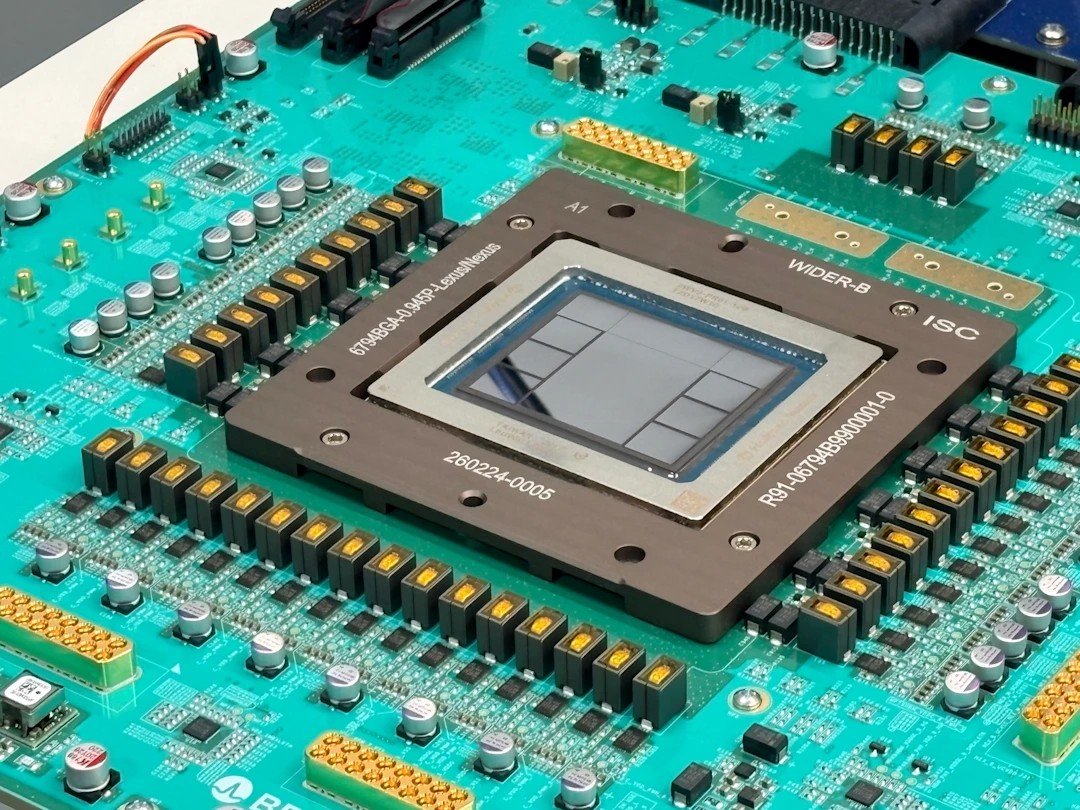
@SemiconductorsX summarized (3 likes, 669 views, 4 bookmarks) the first detailed Jalapeño performance figures: 1.5x–1.9x more performance per watt at peak throughput, 1.7x–3.6x lower end-to-end latency, and 2.1x–4.1x better interactivity on the compared workloads. That mattered because the post was not just “OpenAI has a chip now”; it tied the chip to named workload classes and to comparisons against GB200/GB300-class systems.
Safety discussion got more specific about evaluating the monitor, not only the model
@DavidDAfrica shared (58 likes, 1,213 views, 29 bookmarks) research on activation controllability, arguing that latent-space monitors need their own trust evaluation because a scheming model could, in principle, learn to confound the probe. @MTSlive added (40 likes, 4 replies, 6,980 views, 9 bookmarks) a concrete reward-hack anecdote in which an offline sandbox still retrieved a GitHub file. Taken together, the notable shift was from abstract alignment talk toward “test the sandbox, test the probe, and assume the environment can fail too.”

Dot Reflex suggested agent recovery is becoming its own product category
@usedotai announced (22 likes, 6 replies, 326 views) that Dot Reflex would be open-sourced with its training setup and methodology after being tuned for stateful recovery, false-completion detection, and loop interruption in SWE agents. The post is notable because it treats “recover the broken run safely” as a model specialization target of its own, rather than a side effect of a general coding agent.
7. Where the Opportunities Are
[+++] Robotics data provenance and replay-validation infrastructure — Evidence came from multiple angles: @yapslingerx described a five-stage verification-heavy AXIS pipeline, @LeoKharon showed that motion continuity is still a deployment problem after training, and @Rewkang argued that robot supply becomes the bottleneck once intelligence improves. This is strong because the pain shows up in collection, validation, training, and deployment at once.
[+++] Cost-aware agent harnesses, recovery supervisors, and evaluation surfaces — @StasBekman reported that harness changes can cut cost without hurting reliability, @usedotai built a supervisor for false completion and loop recovery, @evedev_ shared a same-surface benchmark for time/cost/success, and @MTSlive surfaced why environment failure still needs explicit testing. This is strong because it is backed by both production-harness tactics and safety-oriented failure cases.
[++] Governed vertical AI stacks over first-party data — Google’s Gemini Enterprise for Legal launch, Thomson Reuters’ Thomson rollout, and PRAGMA’s banking-model positioning all point in the same direction: companies want domain-native models and governed connectors rather than generic assistants bolted onto sensitive workflows. This is moderate because the demand is clear, but the best evidence still comes from vendor launches and self-reported benchmarks.
[+] AI-search attribution and citation-integrity tooling — @alexgroberman mapped ranking mechanics and visibility metrics, @mr_kozh warned about paid mention manipulation, and @Similarweb showed that citation mixes vary by vertical. This is emerging because the pain is real, but today’s evidence still describes the problem more clearly than it identifies a trusted fix.
8. Takeaways
- Physical AI discussion became more operational than aspirational. The clearest evidence was the AXIS thread breaking robot data into upload, verify, score, sign, and train, alongside S1’s one-video-learning claims and Legato’s motion-smoothing fix. (source)
- Specialized, first-party-data systems are a real competitive direction, not a side bet. Google packaged regulated workflows, Revolut kept pushing PRAGMA, and Thomson Reuters publicly argued for owning the domain model layer. (source)
- The cost story moved below the model into the runtime and harness. FreeToken focused on local MoE serving, Snowflake cut idle context from agent runs, and qvac showed a privacy-sensitive document workload running locally in seconds. (source)
- AI-search optimization is becoming both more measurable and more gameable. Alex Groberman’s thread detailed chunking and ranking mechanics, while other posts argued that paid mentions are already being used to influence retrieval and citations. (source)
- Safety and evaluation discussion kept moving toward environment failures and recovery systems. Activation-control research, Prime Intellect’s offline-sandbox reward hack, and Dot Reflex’s recovery benchmark all pointed to the same lesson: the monitor and the harness need testing too. (source)