Twitter AI - 2026-09-13
1. What People Are Talking About
1.1 Performance engineering became the credibility test for AI builders (🡕)
At least five substantive threads treated AI infrastructure and performance engineering as the real proof of seriousness. The center of gravity was not model-brand debate; it was whether someone could publish load tests, cost curves, traces, and reproducible serving artifacts.
@suraj_sharma14 argued (160 likes, 4 replies, 9,159 views, 254 bookmarks) that an AI infrastructure engineer should be able to show a self-hosted inference cluster, a cost-per-token dashboard, queue-based GPU autoscaling, continuous-batching saturation tests, weight-delivery systems, multi-model gateways, and public failover drills. The distinctive angle was that each project came with a failure mode: idle GPUs, slow scale, KV-cache saturation, storage-bound cold starts, noisy multi-tenancy, and unmeasured non-determinism.
@wafer_ai posted (73 likes, 7 replies, 16,876 views, 110 bookmarks) a long breakdown of "Attention Is All You Need" as part of its public AI Performance Engineering repo. The fetched repo README matters more than the title-card image: it explicitly organizes the field from single-request inference through optimized kernels and distributed serving, and says performance claims must include hardware, workload, precision, baseline, and correctness method.
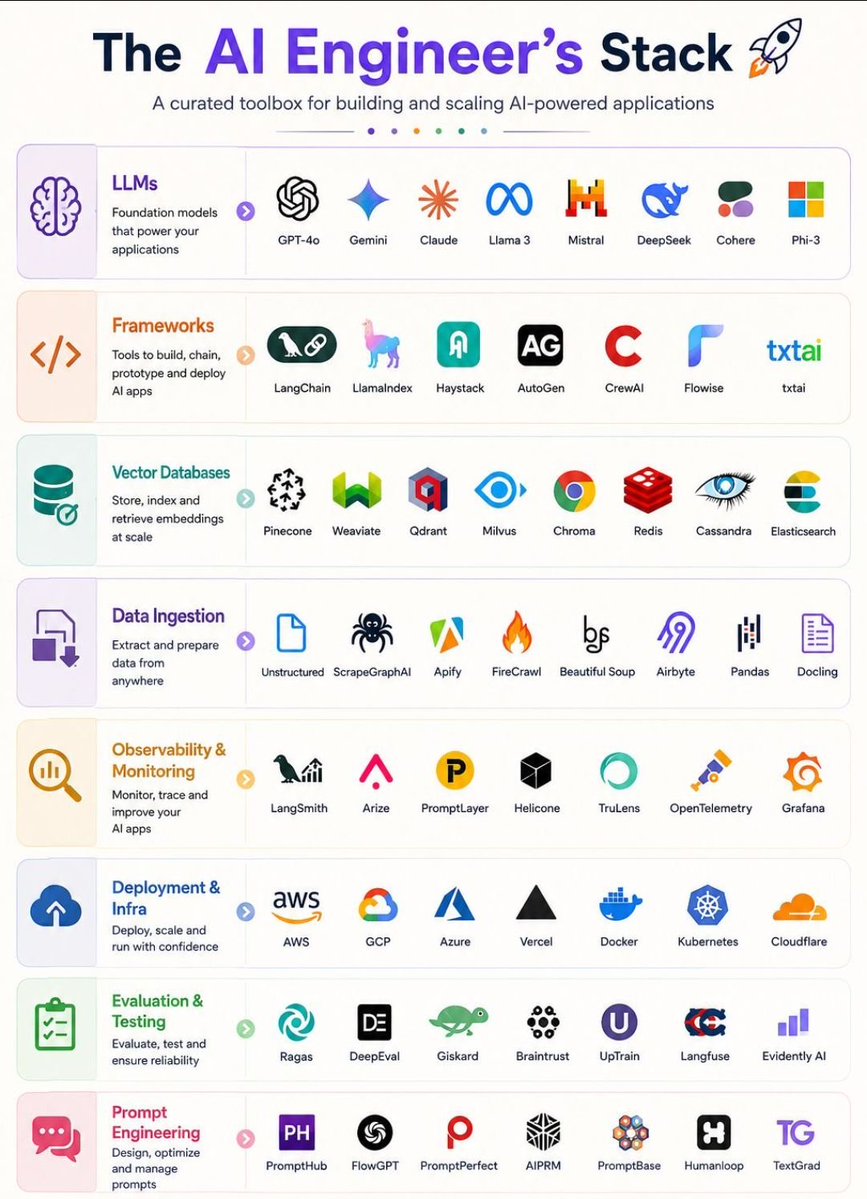
@AamirAnsar94694 shared (39 likes, 15 replies, 457 views) an "AI Engineer's Stack" map that grouped the work into base models, orchestration frameworks, vector databases, data ingestion, observability, deployment, evaluation, and prompt tooling. That image made the community's mental model visible: production AI was being framed as a layered systems stack, not as a single prompt plus a model.
@penberg reported (134 likes, 12 replies, 5,777 views, 99 bookmarks) implementing Qwen3-0.6B "from transformer to ISA simulator" with a compiler and GPU simulator, then using the CPU-based setup to make execution fully debuggable and traceable. In replies, he said one generated token can be inspected all the way from transformer operations to simulated GPU instructions, which turns "understanding how models run" into a concrete builder artifact rather than a metaphor.
@morganlinton reported (48 likes, 20 replies, 5,876 views) that Muse Spark 1.3 was the slowest model he had benchmarked on VulcanBench-SWE v4, taking 51.3 hours for 23 tasks at minimal effort and producing only 10 full passes. The key nuance came from the replies: some users said Muse felt faster at different effort levels, so the post read less like a settled ranking and more like a warning that workload shape, plan limits, and effort presets can invert a benchmark story.

Discussion insight: Replies under Suraj, Wafer, and Morgan converged on the same standard: public proof now means verifiable dollars-per-token, saturation tests, and trace evidence under realistic load. The complaint was no longer that people lacked opinions; it was that too many claims still arrived without the measurement context needed to reproduce them.
Comparison to prior day: Compared with 2026-09-12, when infrastructure discussion was still centered on roadmaps and profiling tools, 2026-09-13 moved one step closer to portfolio artifacts: public curricula, benchmark receipts, and concrete build lists.
1.2 Agent quality was being measured at the context, browser, and failure-analysis layers (🡕)
A second cluster argued that model choice sets the ceiling, but the surrounding system decides whether any of that ceiling is reachable in practice. Four separate items pushed on the same point from different angles: debugging, browser transport, context compression, and process lifetime.
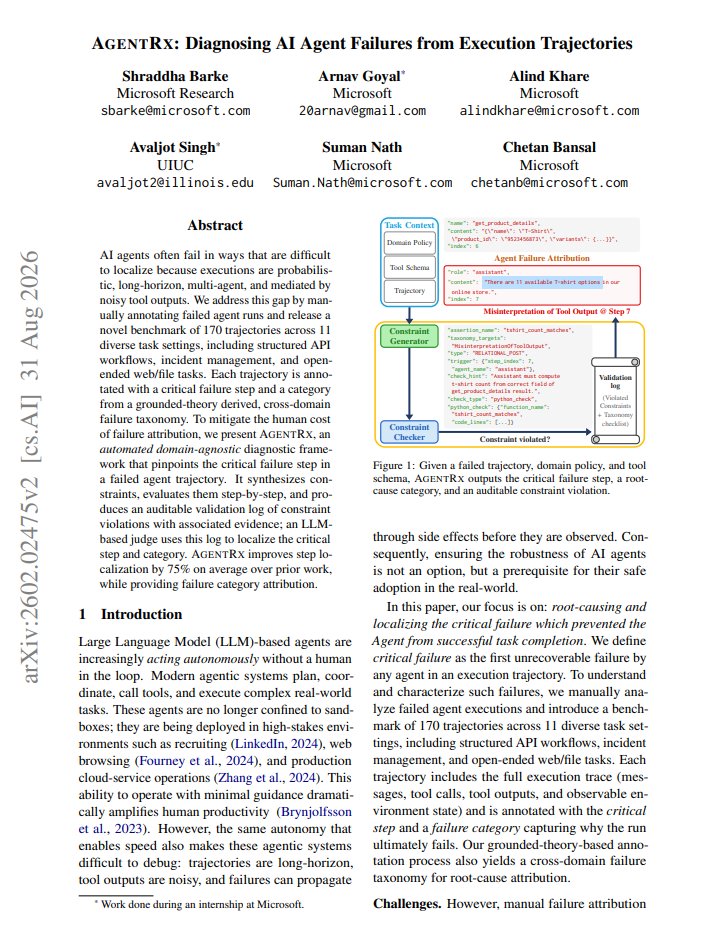
@marfinxx summarized (12 likes, 616 views, 13 bookmarks) Microsoft's AgentRx as a fix for the recurring problem of debugging the visible crash instead of the first unrecoverable mistake. The attached paper figure and the public repo show a pipeline that normalizes trajectories, synthesizes constraints from tool schemas and policy, checks them step by step, and then asks an LLM judge to localize the critical failure step with auditable evidence.
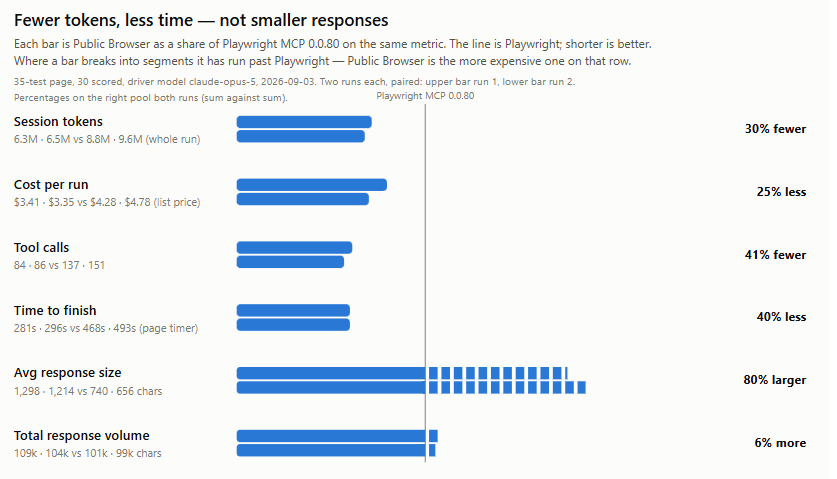
@0xZenad argued (14 likes, 5 replies, 316 views) that quota burn in Claude Code and Codex is often a browser/context problem rather than a model problem. The benchmark image matters because it shows exact deltas attributed to Public Browser: 30% fewer session tokens, 25% lower cost, 41% fewer tool calls, and 40% less time than Playwright MCP at the same pass rate.
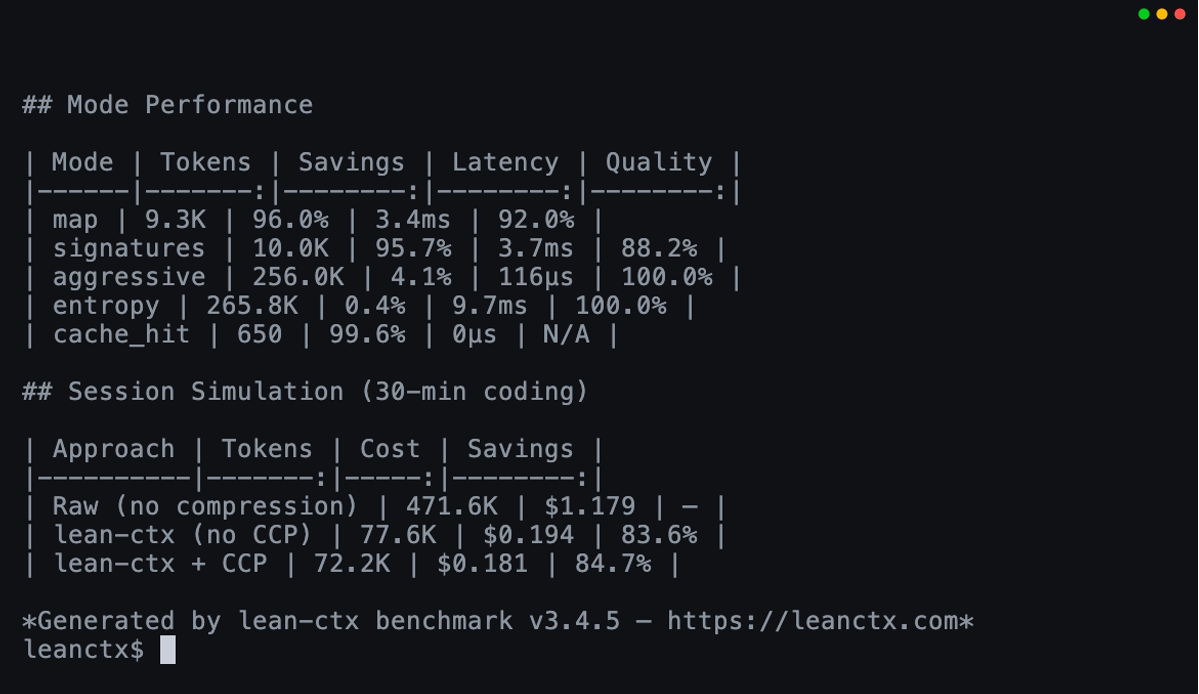
The second image in the same thread shows the other half of the argument. It captures LeanCTX reducing a simulated 30-minute coding session from 471.6K tokens raw to 77.6K without cross-chat persistence and 72.2K with persistence, which matches the fetched README's positioning of the product as an "AI Value Gate" for context compression, routing, and cost tracking.
@Bober_smart compared (27 likes, 19 replies, 601 views) Claude Code with OpenClaw across five design dimensions: short-lived process versus long-running daemon, single async loop versus queued sessions, plugin architecture, memory layout, and multi-agent routing. The attached diagram is useful because it turns an otherwise fuzzy "tool comparison" into a concrete systems-architecture debate.

@chamakin_ai showed (20 likes, 6 replies, 361 views) Manus AI taking one prompt to research ten creator tools, collect official pricing and feature data, and generate a finished presentation. The public Manus documentation makes the workflow more credible than a generic demo because it describes an autonomous agent running inside a sandboxed computer with internet access and a persistent file system rather than a chat model waiting for step-by-step instructions.
@oldstackjournal asked (14 likes, 14 replies, 792 views, 5 bookmarks) whether AI created a new kind of developer or simply gave domain experts the missing ability to build. The linked public essay, Domain Expertise Has Always Been the Real Moat, argues that the scarce skill has shifted from writing code to recognizing whether generated output is actually correct in a real domain.
Discussion insight: The replies did not challenge the importance of models; they narrowed the bottleneck. People kept pointing to browser payload size, stable references, quota burn, route-and-delegate overhead, and the human ability to tell whether a plausible answer is wrong.
Comparison to prior day: Compared with 2026-09-11's focus on harness efficiency and eval/env quality, 2026-09-13 pushed the systems argument further down the stack into browser transport, context compression, long-running memory, and postmortem tooling.
1.3 Frontier-safety debate got dragged into open weights, distillation, and cap-table incentives (🡕)
The highest-engagement governance discussion was still about pacing frontier AI, but the most substantive posts were no longer abstractly about "going slower." They were about whether closed-lab control is compatible with open weights, industrial-scale distillation, and employees signaling that safety and commercialization are in conflict.
@EMostaque argued (133 likes, 20 replies, 31,207 views, 55 bookmarks) that Dario Amodei's pacing proposal is well-intentioned but logically weak, because even boards and external evaluators do not solve the deeper problem of understanding AI internals. One reply that mattered for builders said long-running agents need accountability that persists over time, which reframed "memory" as a governance primitive rather than a convenience feature.
@murtuza_merc argued (68 likes, 8 replies, 3,227 views, 12 bookmarks) that Anthropic employees walking away before their equity vested undermined the lab's safety moat and showed how capital incentives can dominate internal alignment claims. Replies split between skepticism about the underlying whistleblower story and the view that forfeiting real equity is itself a costly signal.
@neil_xbt reported (32 likes, 5 replies, 2,799 views) that Anthropic's September misuse report described an Alibaba-affiliated distillation operation generating 151 million exchanges against Claude between May and July from more than 3,500 fraudulent accounts. Public reporting and Anthropic's published September report corroborate that illicit distillation was a named threat category and that the campaign was unusually large.
@Ric_RTP argued (26 likes, 5 replies, 3,920 views, 7 bookmarks) that DeepSeek-V4.1-Flash made slowdown talk harder to operationalize because the model shipped as MIT-licensed open weights. DeepSeek's public announcement and Together AI's model page confirm the core product claims behind that argument: a 552B MoE, 8B active during prefill and 16B during decode, native multimodal support, and a 1M-token context window.
A lower-signal but image-rich corroborator came from @cr3ghost, who framed (11 likes, 3 replies, 641 views) DeepSeek-V4.1-Flash as the kind of open release closed labs should worry about. The attached benchmark table sharpened the rhetoric by putting exact scores side by side for DeepSeek, GPT-5.6 Sol, Claude Opus 5, Kimi K3, and GLM 5.3 across Terminal-Bench, DeepSWE, CyberGym, Automation-Bench, and other agentic benchmarks.
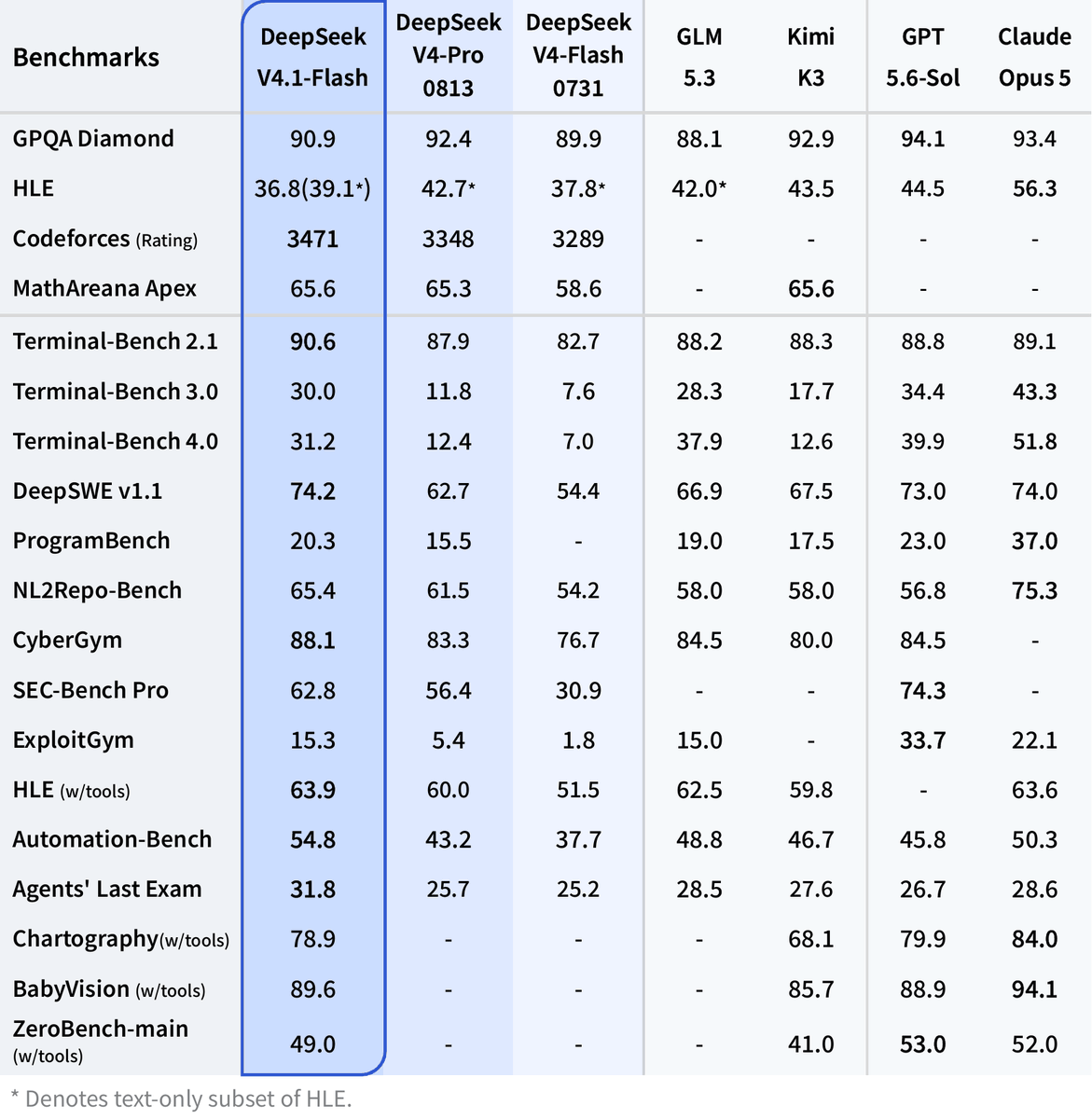
Discussion insight: Even the sympathetic replies had become operational rather than philosophical. The recurring question was whether any governance mechanism can stay meaningful when models are cheap to distill, cheap to route around, or already downloadable with permissive licenses.
Comparison to prior day: Compared with 2026-09-12's pace-the-frontier argument over evaluators and controls, 2026-09-13 added hard market structure to the same debate: large-scale distillation, open-weight releases, price compression, and public skepticism about incentive alignment.
1.4 Physical AI threads kept collapsing back to data loops and failure memory (🡕)
The physical-AI conversation was narrower than the frontier-governance or agent-tooling clusters, but it was unusually consistent. The shared claim was that robotics needs a memory of failure and a scalable way to turn human corrections into training data; otherwise model improvements alone will not matter.
@ddaisysunny argued (37 likes, 42 replies, 112 views) that the hardest problem in robotics is "a reliable memory of what the physical world feels like when things go wrong." The post's distinctive angle was not a new robot or policy; it was the claim that physical AI lacks the equivalent of the web-scale corpus that language models inherited, so slips, lighting changes, awkward grasps, and failed manipulations must be collected as data rather than inferred away.
@AbdulMu09708501 wrote (36 likes, 36 replies, 180 views) that working on Axis Robotics tasks changed his focus from raw speed to the larger point of the system. The replies are why the item matters: several people reframed Axis as a human-gated DAgger loop where corrections become training signal, and one condensed the thesis to "clean data over raw speed."
@vlsss12 described (6 likes, 5 replies, 82 views) Axis Robotics as a compounding data engine that turns browser teleoperation into structured robot data, then feeds model failures back into the next collection round. The image is the strongest part of the post because it makes the loop concrete: 94,000+ contributors, 2.1M+ trajectories, 2.1M+ on-chain records, 1,600+ published tasks, and three product layers spanning browser teleoperation, mobile ego-centric capture, and a data-to-model pipeline.
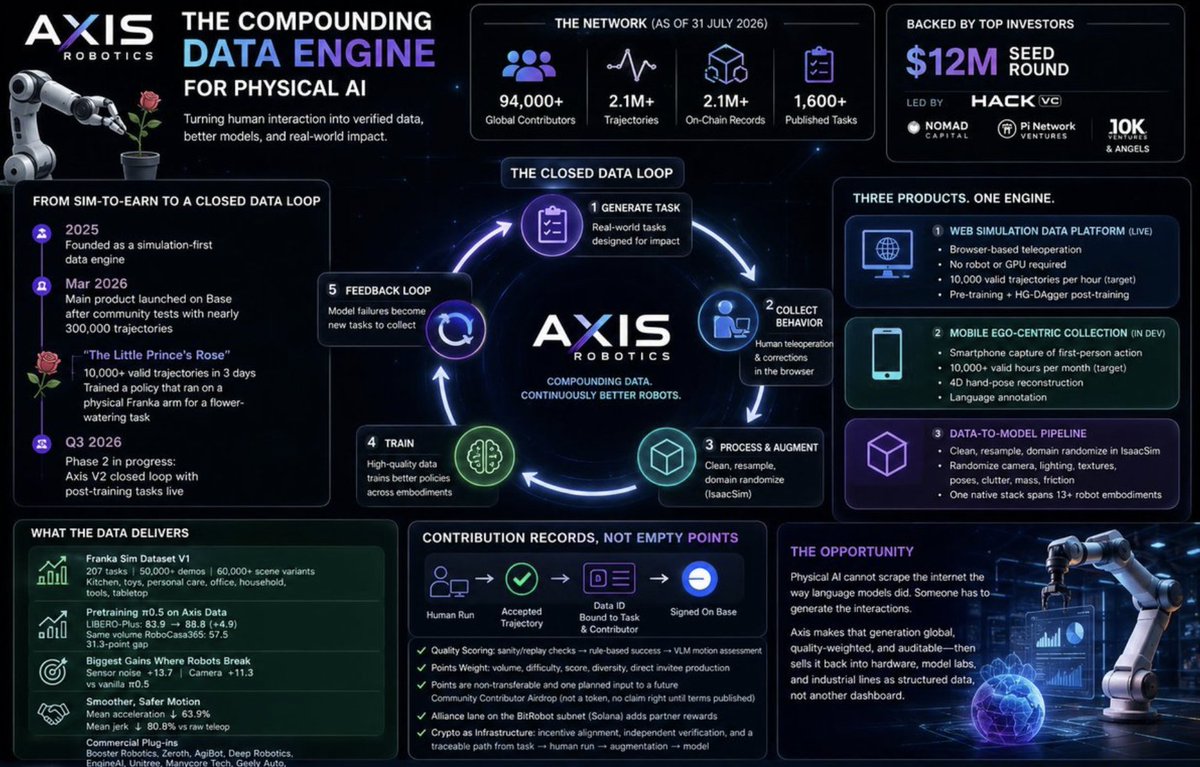
Discussion insight: The most useful replies were specific about what "better data" means: human corrections, quality scoring, replay, augmentation, and loops that preserve enough provenance to know which failures produced which later gains.
Comparison to prior day: Compared with 2026-09-12's focus on trajectory provenance and runtime fidelity, 2026-09-13 concentrated more squarely on scaling the collection loop itself and making failure memory into a reusable asset.
2. What Frustrates People
Proof-free performance claims
Severity: High. The most repeated frustration was not that performance work is hard; it was that too many people still talk about speed, quality, or cost without the workload detail needed to verify anything. @suraj_sharma14 argued (160 likes, 4 replies, 9,159 views, 254 bookmarks) that AI infra engineers need public latency reports, continuous-batching stress tests, cost-per-token dashboards, and benchmark teardowns others can reproduce. @wafer_ai posted (73 likes, 7 replies, 16,876 views, 110 bookmarks) a public curriculum that explicitly insists on hardware, workload, precision, baseline, and correctness method for any performance claim.
@morganlinton showed (48 likes, 20 replies, 5,876 views) why that frustration exists: one benchmark run made Muse Spark 1.3 look dramatically slower and less accurate than Astra, but replies immediately reported opposite day-to-day experience at other effort levels. The visible coping pattern was to inspect traces, call out plan limits and usage caps, and refuse to treat a single benchmark screenshot as a universal truth. This is worth building for because multiple threads wanted shared measurement infrastructure, not just another leaderboard.
Agents that fail long before the visible crash
Severity: High. @marfinxx summarized (12 likes, 616 views, 13 bookmarks) AgentRx precisely because long-horizon agent failures are hard to localize after the fact, while @0xZenad argued (14 likes, 5 replies, 316 views) that browser context and oversized session payloads can silently torch quota before anyone blames the right layer. @Bober_smart compared (27 likes, 19 replies, 601 views) agent architectures in terms of process lifetime, queues, and memory because those design choices determine whether failures can be resumed, routed around, or audited later.
The workaround pattern today was structural: direct-CDP browser control instead of heavier wrappers, context-compression layers, explicit queueing, and stepwise failure attribution instead of manual replay. This is worth building for because the failure mode appears across coding agents, browser agents, and autonomous research flows at the same time.
Safety talk colliding with commercialization and open weights
Severity: High. @EMostaque argued (133 likes, 20 replies, 31,207 views, 55 bookmarks) that pace-the-frontier proposals still fail to solve the underlying problem of understanding AI internals, while @murtuza_merc argued (68 likes, 8 replies, 3,227 views, 12 bookmarks) that vest-forfeiting employees undermined the credibility of safety branding itself. @neil_xbt reported (32 likes, 5 replies, 2,799 views) a 151 million-exchange distillation campaign against Claude, and @Ric_RTP argued (26 likes, 5 replies, 3,920 views, 7 bookmarks) that open-weight DeepSeek releases make coordinated slowdown harder to enforce.
The visible coping behavior was mostly rhetorical: people argued for better oversight, more internal understanding, or more openness, but there was no shared mechanism everyone trusted. This is worth building for because the frustration now spans governance, supply-chain abuse, and price competition instead of living in one narrow safety lane.
Physical AI still lacks dense, reusable failure memory
Severity: High. @ddaisysunny argued (37 likes, 42 replies, 112 views) that robotics still lacks a usable library of failures and edge cases, and @vlsss12 described (6 likes, 5 replies, 82 views) Axis as an infrastructure response: collect behavior in the browser, process and augment trajectories, train, then feed failures back into the next round. @AbdulMu09708501 added (36 likes, 36 replies, 180 views) that the task is not maximizing attempts; it is producing quality corrections that can become better training data.
People today did not sound confused about the gap. They sounded resigned to the fact that more capable models alone will not close it. This is worth building for because multiple posts independently described physical-AI progress as a data-engine problem rather than a pure modeling problem.
3. What People Wish Existed
Public performance receipts for AI systems
What people kept asking for was not another benchmark brand; it was comparable evidence. @suraj_sharma14 wanted (160 likes, 4 replies, 9,159 views, 254 bookmarks) public latency and cost reports, @wafer_ai pointed (73 likes, 7 replies, 16,876 views, 110 bookmarks) people to source-first performance engineering materials, and @morganlinton showed (48 likes, 20 replies, 5,876 views) how quickly a benchmark can turn ambiguous once effort settings, quotas, and traces enter the picture. The need is practical and urgent: people want workload-level receipts that survive contact with real traffic. Opportunity: direct.
Persistent context and control layers for agents
Several threads implied the same missing layer without naming a single standard product. @0xZenad argued (14 likes, 5 replies, 316 views) that token burn often comes from browser and context handling, not the model, while @Bober_smart compared (27 likes, 19 replies, 601 views) short-lived coding sessions with a long-running daemon plus queues and memory layers. A reply in @EMostaque's thread explicitly tied persistent memory to accountability in long-running agents. Public Browser, LeanCTX, and OpenClaw cover different pieces, but today's evidence says the market still wants a durable control plane for what agents read, remember, and spend. Opportunity: direct.
Agent postmortems that explain the first unrecoverable mistake
@marfinxx surfaced (12 likes, 616 views, 13 bookmarks) AgentRx because people are tired of debugging the visible crash instead of the earlier state corruption. The need is highly practical: long-horizon agents touch tools, policies, and multiple intermediate states, so teams want root-cause localization, evidence-backed constraint violations, and reports that say where recovery stopped being possible. AgentRx is an early answer, but the broader demand for transparent agent postmortems is bigger than one paper or repo. Opportunity: direct.
Physical-AI data engines that can preserve correction quality
The robotics posts were unusually clear about what is missing. @ddaisysunny said (37 likes, 42 replies, 112 views) physical AI lacks a memory of failure, @vlsss12 showed (6 likes, 5 replies, 82 views) a browser-to-training loop designed to create one, and @AbdulMu09708501 learned (36 likes, 36 replies, 180 views) that quality-weighted corrections matter more than raw attempt counts. Existing datasets and collection platforms only partially address the need because builders still talk about data coverage, provenance, and reusable corrections as scarce. Opportunity: direct.
AI help that teaches without eroding independent judgment
The MIT study thread was the clearest evidence of an unmet human need rather than a tooling need. @AiEvolutio58513 summarized (46 likes, 2 replies, 4,200 views, 29 bookmarks) a study where AI help improved fake-news detection in-session but later reduced unaided performance, while the MIT Media Lab article recommended Socratic questioning over direct answer-giving. People want convenience and speed, but the evidence suggests they also want systems that preserve their ability to judge on their own. Nothing in today's data suggests that need is fully solved. Opportunity: aspirational.
4. Tools and Methods in Use
| Tool | Category | Sentiment | Strengths | Limitations |
|---|---|---|---|---|
| Public Browser | Browser MCP / automation | (+) | 30% fewer session tokens, 25% less cost, 41% fewer tool calls, 40% less time than Playwright MCP at the same pass rate; supports real logged-in Chrome and stable a11y refs | README says response-size leadership is no longer universal; evidence is benchmark-suite specific |
| LeanCTX | Context layer | (+) | Compresses file and shell context, preserves session memory, and showed a simulated 30-minute coding session falling from 471.6K to 77.6K tokens | Savings depend on read mode and compression strategy; reduced context still has to preserve enough detail |
| AgentRx | Agent debugging / observability | (+) | Localizes the first unrecoverable step, generates auditable constraint-violation logs, and turns failed runs into diagnosable artifacts | Early-stage framework; public materials differ on benchmark sizing and domains across versions |
| Manus AI | Autonomous agent | (+) | One-prompt research and presentation workflow; docs describe a sandboxed computer with internet access and persistent files | Evidence today came from a single creator-tools workflow, not broad field feedback |
| Claude Code | Coding agent | (+/-) | Treated as a strong baseline in browser and quota comparisons; central reference point in multiple agent threads | Users complained about quota burn, short-lived sessions, and architecture limits when wrapped in heavier browser/context stacks |
| OpenClaw | General agent platform | (+/-) | Persistent daemon, queued sessions, plugin registry, and separate memory layers made it a concrete contrast case to short-lived coding agents | Today's evidence was a user-made comparison diagram rather than a primary benchmark or official spec |
| DeepSeek V4.1 Flash | Open-weight LLM | (+) | 552B MoE with 8B/16B active parameters, 1M context, native multimodal support, and aggressive price/performance positioning | Competitive claims were politically charged and sometimes overstated in community commentary |
| vLLM / SGLang | Model serving runtime | (+) | Repeatedly named as default building blocks for self-hosted inference, batching, and open-model serving | Threads treated them as starting points, not finished proof; they still require saturation, caching, and cost instrumentation |
| Wafer AI Performance Engineering repo | Learning / reference | (+) | Gives a source-first curriculum from GPU basics to distributed inference and insists on reproducible measurement inputs | Even fans said the hard part is still converting theory into inference people pay for |
| AI Engineer's Stack map | Systems method | (+) | Makes the production stack legible across LLMs, frameworks, retrieval, ingestion, observability, deployment, and evaluation | It is a taxonomy, not an implementation guide; tradeoffs still have to be proved in practice |
| Muse Spark 1.3 on VulcanBench | Benchmark result | (-) | Exposed how effort presets and quotas can change workload economics dramatically | Replies showed the result may not generalize; model behavior looked inconsistent across users |
| Axis Robotics data loop | Physical AI data method | (+/-) | Treats teleoperation, quality scoring, augmentation, and feedback loops as first-class infrastructure | Public discussion still questions how well collected behavior transfers and how quality is maintained at scale |
The satisfaction spectrum was widest around the layers between a user and a model. Browser transport, context compression, observability, and postmortem tooling were described in concrete, positive terms because they lowered cost or made failures explainable. Raw model comparisons were less stable: DeepSeek-V4.1-Flash drew enthusiasm for open-weight economics, while Muse Spark's benchmark anomaly showed how quickly sentiment turns when effort settings and quotas distort throughput.
The clearest workaround pattern was explicit layering. Builders were not asking one model to solve everything; they were pairing models with browser controllers, context gates, trace tooling, public benchmarks, and data pipelines. Migration pressure also ran in two directions at once: from closed APIs toward open or self-hosted models for cost/control reasons, and from model-centric evaluation toward system-centric evaluation where context, memory, routing, and telemetry decide practical performance.
5. What People Are Building
| Project | Who built it | What it does | Problem it solves | Stack | Stage | Links |
|---|---|---|---|---|---|---|
| AI Performance Engineering repo | Wafer, shared by @wafer_ai | Curated GPU-to-serving learning and reference repo for performance engineering | Gives builders a source-first path from model arithmetic to reproducible inference systems | GitHub repo, papers, vendor docs, benchmark references | Shipped | post, repo |
| Qwen3 full-stack simulator | @penberg | Reimplements Qwen3-0.6B, a compiler, GPU ISA simulator, and CPU-traceable runtime | Makes LLM execution inspectable and debuggable instead of opaque | Qwen3-0.6B, compiler, GPU simulator, CPU tracing, FPGA/RTL work-in-progress | Alpha | post |
| AgentRx | Microsoft Research, shared by @marfinxx | Diagnoses failed agent trajectories by localizing the critical failure step | Helps teams debug long-horizon agent failures with evidence instead of guesswork | Trajectory IR, constraint synthesis, stepwise checking, LLM judge | Alpha | post, repo, paper |
| Public Browser | Silbercue, surfaced by @0xZenad | Lets agents drive logged-in Chrome directly over CDP | Cuts browser-context overhead and avoids single-tab/selector brittleness | Chrome CDP, accessibility-tree refs, multi-tab control, TypeScript and Python tests | Shipped | post, repo |
| LeanCTX | yvgude, surfaced by @0xZenad | Compresses, routes, and tracks agent context and cost | Extends useful coding sessions and lowers quota burn | Tree-sitter parsing, multiple read modes, session memory, cost ledger | Shipped | post, repo |
| Manus AI | Manus, shared by @chamakin_ai | Autonomous agent that researches and assembles finished deliverables from one prompt | Removes chat-by-chat orchestration for research and presentation work | Sandboxed computer, internet access, persistent file system | Shipped | post, docs |
| DeepSeek V4.1 Flash | DeepSeek, discussed by @Ric_RTP and @cr3ghost | Open-weight multimodal MoE positioned for cheaper long-context agentic workloads | Challenges closed-model pricing and gives builders a self-hostable high-end option | 552B MoE, 8B/16B active, 1M context, MIT license | Shipped | post, announcement, model page |
| Axis compounding data engine | Axis Robotics, shared by @vlsss12 | Turns browser teleoperation and corrections into structured robot training data with a feedback loop | Addresses physical-AI data scarcity and the need for reusable failure memory | Browser teleoperation, trajectory processing, augmentation, training loop, on-chain records | Beta | post, dataset |
The strongest pattern across these builds was not "new model, new app." It was "make the hidden layer explicit." Public Browser externalizes browser control, LeanCTX externalizes context economics, AgentRx externalizes failure attribution, and Axis externalizes the data-collection loop that robotics otherwise keeps implicit.
Penberg's simulator and Wafer's repo pushed the same instinct deeper into the stack. One makes the mechanics of model execution small enough to inspect; the other tries to make performance engineering legible enough to learn systematically. That is a different builder mood from simple frontier-model fandom.
The open-weight thread also turned into real product competition. DeepSeek V4.1 Flash was not being discussed as an academic release; it was being discussed as a practical alternative on cost, context length, and self-hostability, which is why it kept appearing inside arguments about governance and pacing rather than only inside benchmark chatter.
6. New and Notable
AI assistance improved performance in-session but weakened judgment later
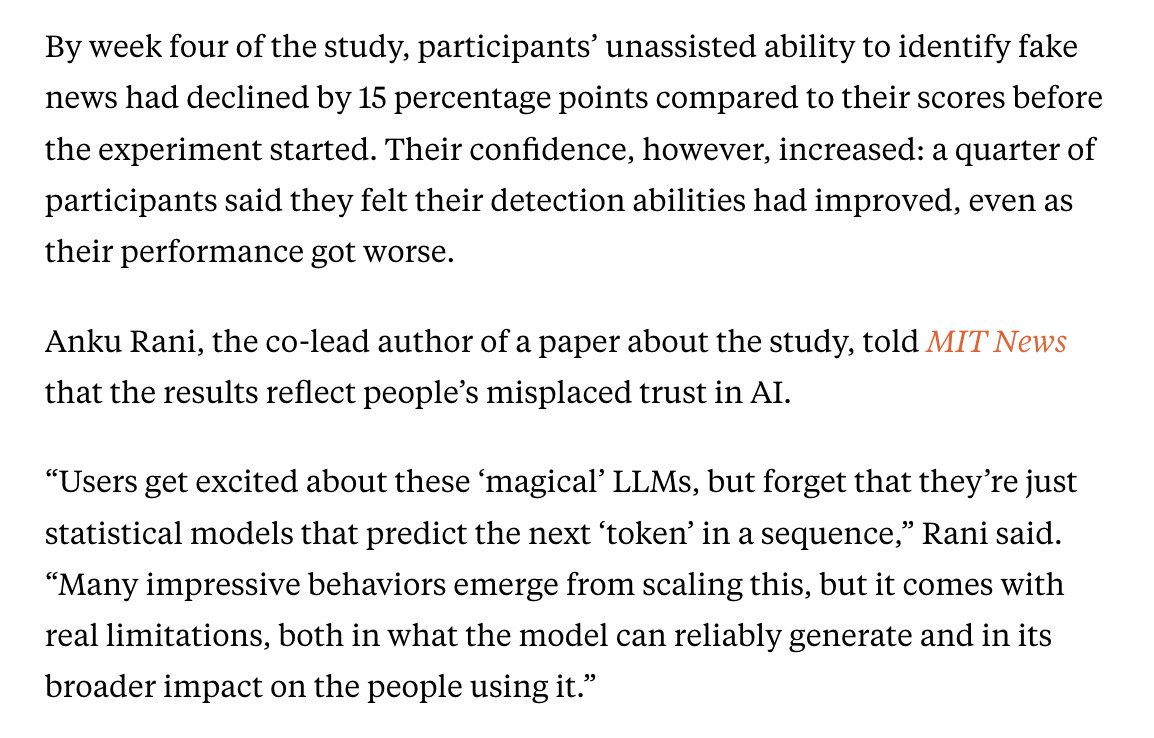
@AiEvolutio58513 summarized (46 likes, 2 replies, 4,200 views, 29 bookmarks) an MIT thread about what reliance on AI does to independent judgment. The public MIT Media Lab article, The consequences of relying on AI for accurate news, makes the signal specific: in a four-week study of 67 people, participants were 21% more accurate at spotting fake news when aided by an AI chatbot during a session, but later ended up 15 percentage points worse at the task without AI.
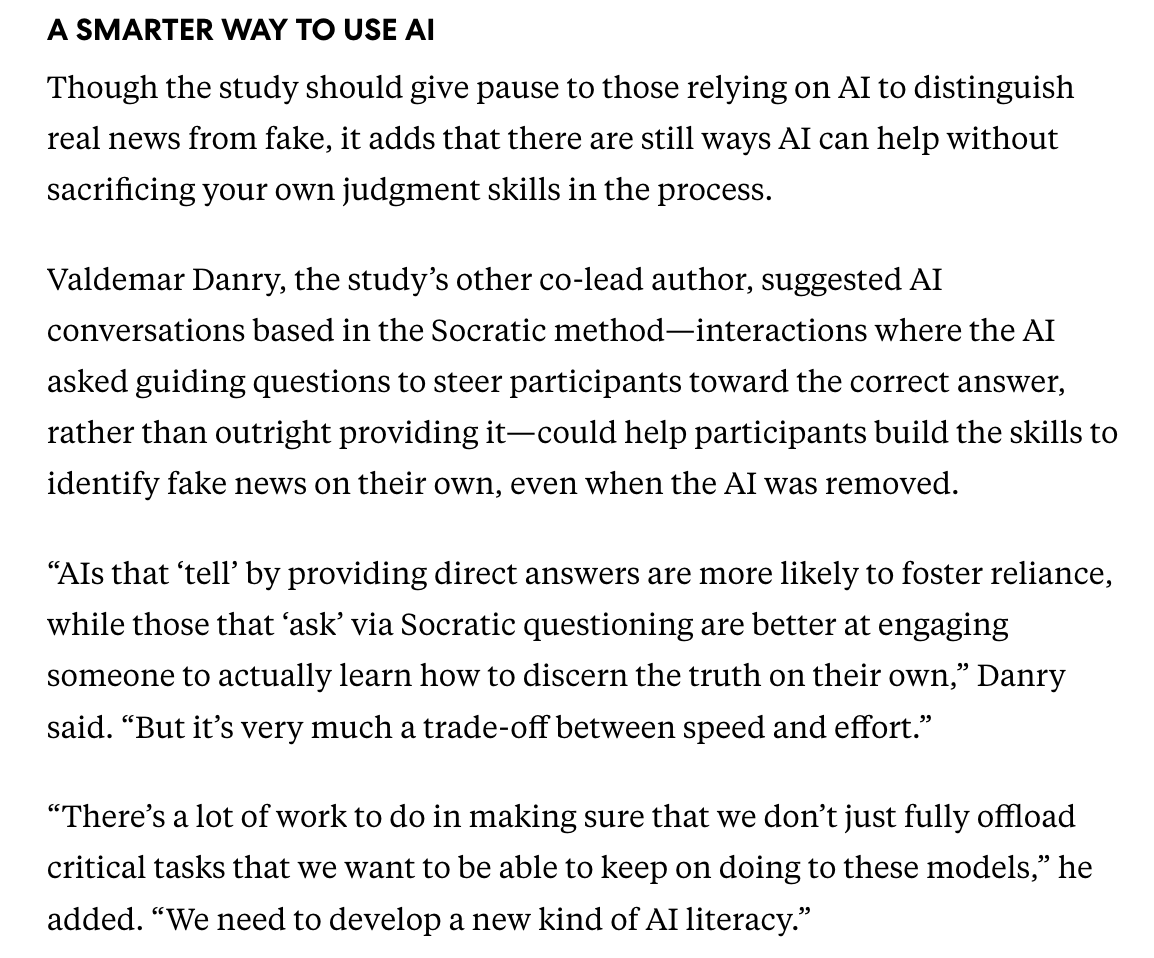
The same thread mattered because it did not stop at the warning. MIT's suggested mitigation was more "ask" than "tell": Socratic questioning that nudges users toward the right answer rather than directly producing it, even though that tradeoff costs time and effort.
Large sparse models kept pushing toward private, on-device operation
@opc0de3 reported (13 likes, 1 reply, 212 views, 9 bookmarks) a 35B model running on an iPhone 16 Pro with 8 GB of RAM while peaking at only 1.8 GB of working memory. The notable claim was architectural rather than sensational: keep the 23 GB checkpoint on-device, stream only the weights needed for the current step from SSD, predict the next needed experts ahead of time, and run LoRA adapters at runtime instead of merging them into the base model.
Domain expertise looked more defensible than generic coding skill
@oldstackjournal asked (14 likes, 14 replies, 792 views, 5 bookmarks) whether AI created a new type of developer or simply gave problem experts the ability to build. The strongest reply evidence leaned toward the second answer: one product-focused responder said the time now goes into noticing when the model solved the wrong problem confidently, and another said they were already producing six tools and roughly 100,000 lines of code, tests, and docs per month as a domain expert using AI.
7. Where the Opportunities Are
[+++] Agent infrastructure that measures, compresses, and explains execution — Evidence from sections 1, 2, 4, and 5 points in the same direction. Public Browser, LeanCTX, AgentRx, Suraj's portfolio list, and Morgan's benchmark anomaly all show that token use, failure localization, browser transport, and trace visibility are now product surfaces of their own rather than implementation details.
[+++] Control and governance layers that survive open weights and distillation — Mostaque, murtuza_merc, neil_xbt, and Ric_RTP all described a world where pacing rhetoric collides with open releases, industrial-scale extraction, and commercialization pressure. The strong opportunity is not generic "AI safety software"; it is auditable permissions, persistent accountability, misuse detection, and supply-chain visibility that remain meaningful even when models are cheap to copy or route around.
[++] Physical-AI data engines and correction loops — ddaisysunny, AbdulMu, and vlsss12 all treated data coverage, quality scoring, and failure memory as the actual bottleneck in robotics. The opportunity is moderate-to-strong because the need is concrete, but the go-to-market surface is narrower and more infrastructure-heavy than general coding-agent tools.
[++] Verification-first AI for domain experts — The MIT study and oldstackjournal thread both point at the same gap from different directions: users want AI leverage without losing their ability to judge correctness. Products that preserve independent reasoning, expose uncertainty, or force process visibility may find demand among education, regulated workflows, and domain experts using agentic coding tools.
[+] Open-weight performance tooling for long-context, self-hosted workloads — DeepSeek-V4.1-Flash, Penberg's simulator, and Wafer's performance-engineering curriculum all show growing appetite for running, understanding, and tuning advanced models outside a closed-lab box. The signal is emerging because many claims are still benchmark-led, but the cost/control motivation is already visible.
8. Takeaways
- Performance engineering was the day's default seriousness test. The strongest infrastructure posts asked for public latency reports, saturation tests, and cost traces rather than more benchmark theater. (source)
- Agent quality is increasingly blamed on context and execution plumbing, not just model IQ. Public Browser, LeanCTX, and AgentRx were all cited as ways to reduce token waste or explain failures that model-only comparisons miss. (source)
- Frontier-governance debate now has hard market structure underneath it. Anthropic's distillation report and DeepSeek's open-weight release made it harder to discuss pacing as if the competitive environment were stable or closed. (source)
- Physical AI was discussed as a data-engine problem more than a model problem. Multiple threads focused on corrections, provenance, replay, and failure memory as the scarce resource in robotics. (source)
- Verification looked like the new human bottleneck. The MIT study showed short-term gains and longer-term dependence risks, while domain-expert builders argued that knowing what "right" looks like is becoming more valuable than typing code. (source)