Twitter AI - 2026-09-16
1. What People Are Talking About
1.1 Evaluation trust shifted from leaderboard obsession to public evidence and release accountability 🡕
Across 321 original tweets from 301 authors, the evaluation conversation was still loud, but the center moved away from "which model won?" and toward "who can test, publish, and audit the evidence?" @ChrisPainterYup reintroduced METR's role (576 likes, 32 replies, 22,026 views, 100 bookmarks) as a donation-funded third-party evaluator that works with frontier labs without taking their money; the strongest replies immediately pushed back that voluntary access and NDA-shaped publication are not enough, and asked for reproducible methods, multiple adversarial evaluators, and public incident records. @suraj_sharma14 turned that trust problem into an engineering checklist (33 likes, 11 replies, 1,732 views, 48 bookmarks): regression suites, trajectory grading, judge calibration, tracing, fallback tests, cost guardrails, and public reliability reports. @rohanpaul_ai summarized (4 likes, 2 replies, 1,987 views) a Yale-led physics-benchmark audit where most reviewed failures came from bad questions, wrong reference answers, or brittle graders rather than model error, while @EdLudlow captured (14 likes, 1 reply, 1,396 views) Mark Zuckerberg's position that labs should use independent evaluators but delay unsafe models themselves instead of waiting for rivals to slow down first.
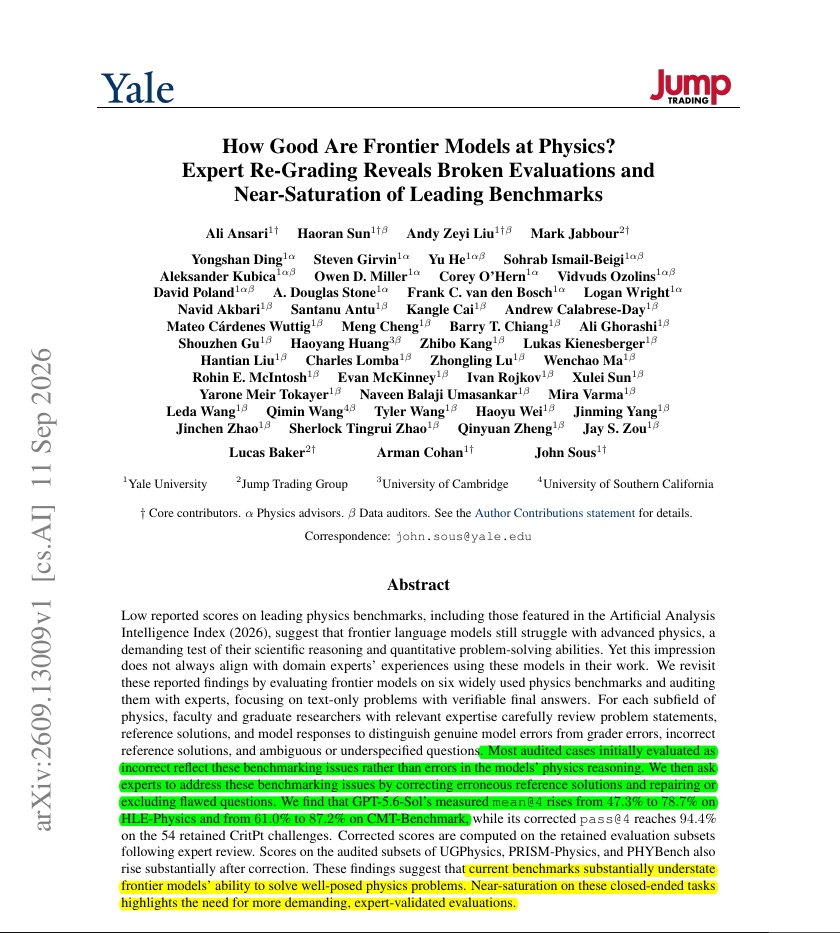
The common thread was that evaluation now has to survive release, deployment, and public scrutiny, not just a benchmark run. Even the coding-agent angle fit this: @mertcemri argued (8 likes, 2 replies, 432 views) that switching harnesses can move cost much more than success rate, so a model score without harness context is incomplete.
Discussion insight: Replies kept pressing for multiple evaluators, human-labeled holdouts, tolerance bands for non-deterministic CI gates, and public artifacts that make a claim inspectable without trusting one institution.
Comparison to prior day: Compared with 2026-09-15, benchmark talk was less about strange benchmark pathologies in the abstract and more about the institutions, traces, and disclosure rules required to make evaluation believable in production.
1.2 Security discussion paired defender optimism with the first concrete agentic-breach workflow 🡕
The security theme split into two camps: one arguing that AI can strengthen defense if teams formalize their systems properly, and another showing that autonomous attack chains are already plausible enough to force operational changes. @VitalikButerin argued (310 likes, 76 replies, 46,334 views, 85 bookmarks) that cybersecurity can still be defense-favoring if AI helps verify whole programs against explicit security definitions, but the strongest replies narrowed the optimism: specification gaps, UI tampering, and incomplete threat models can still sink a formally correct system. On the other side, @BleepinComputer reported (24 likes, 1 reply, 4,374 views) that Spain's AEPD was notified of an alleged AI-agent breach; the linked article says the agent allegedly searched for flaws, logged into systems, modified personal data, and accessed invoices. @DailyDarkWeb translated (16 likes, 2 replies, 2,073 views) the same case into a clearer autonomy ladder from login to billing-record access, which made the incident feel qualitatively different from "AI wrote some malicious code."

The accountability argument also got sharper. @Jason argued (113 likes, 18 replies, 6,217 views) that frontier model companies are shipping products, not running harmless labs, and therefore should monitor misuse and bear real-world liability. @binance claimed (122 likes, 70 replies, 109,749 views) that 100-plus AI models protected 8 million users and blocked $4.6 billion in scams before they reached a single user, but replies immediately asked for the number that matters operationally: false-positive rate, not just blocked-dollar headlines.
Discussion insight: The community wanted measurable error rates, stronger credential and token security, and explicit responsibility boundaries. The weakest claims were broad slogans; the strongest ones named specific attack stages, monitoring duties, or missing metrics.
Comparison to prior day: Security stayed prominent, but 2026-09-16 moved closer to operational evidence: a concrete breach workflow, product-liability language, and production anti-scam numbers rather than pure cyber-doom rhetoric.
1.3 Agentic software talk concentrated on typed decisions, router economics, and latency discipline 🡕
The biggest architecture shift was away from "one chat model everywhere" and toward narrow decision surfaces, model mixes, and workload-specific infrastructure. @JoshARosen said (44 likes, 4 replies, 2,468 views, 60 bookmarks) that TypeSafe AI's Jev made his team rethink its architecture; TypeSafe's public System One docs confirm the difference in kind, not just degree: Jev returns typed choices, scores, and probabilities that software can consume directly instead of free-form text. @N8Programs benchmarked (11 likes, 2 replies, 543 views) Jev against GPT-5.6 Terra on multiple-choice "System 1" tasks and found Jev roughly Terra-tier on that narrow setup. @testingcatalog highlighted (71 likes, 2 replies, 6,995 views, 12 bookmarks) Union Alpha as a free one-week coding-model preview with image input, tool calling, 262K context, and 131K max output, lowering the cost of trying a new agentic model quickly.
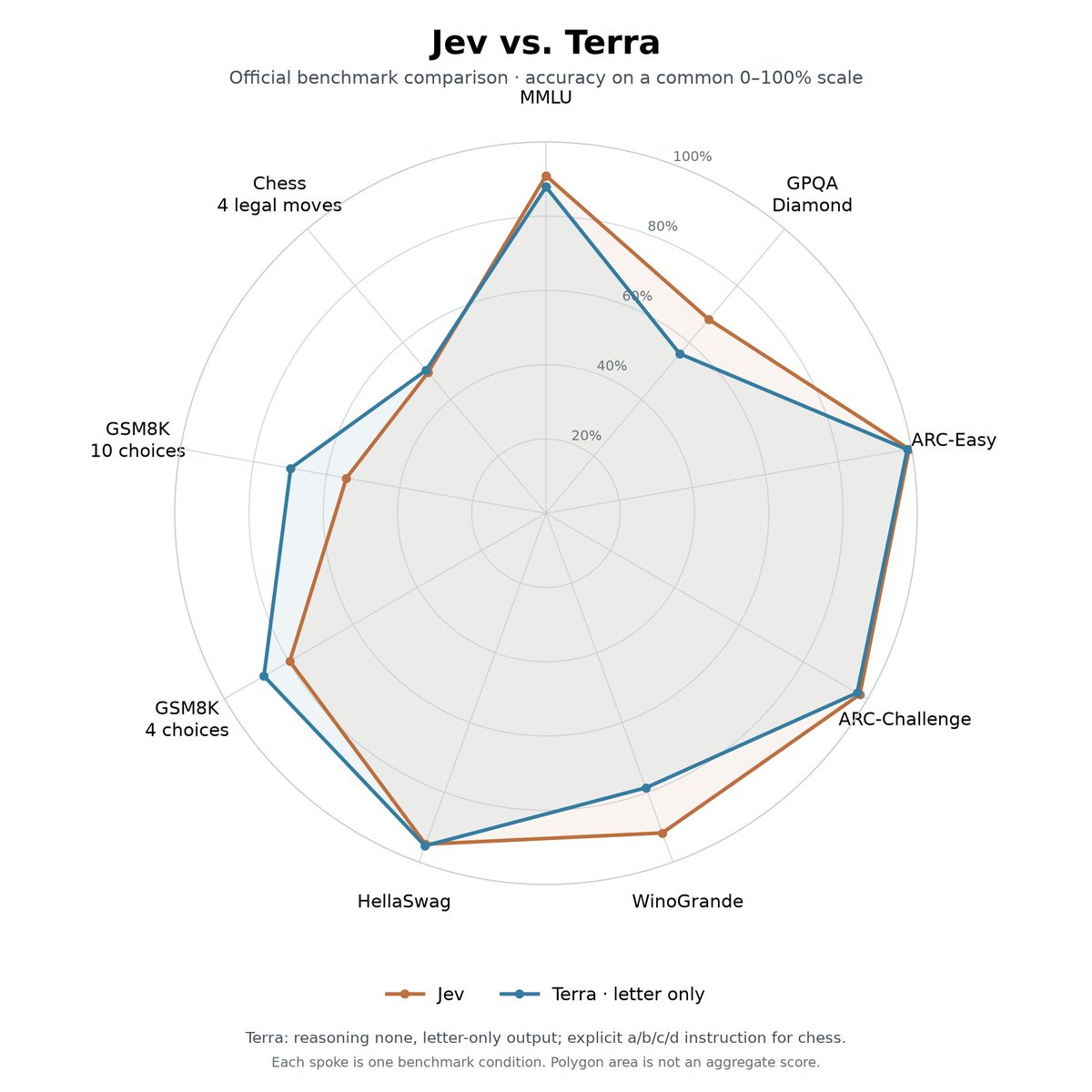

The rest of the theme was pure operations. @MTSlive quoted (23 likes, 6 replies, 4,585 views) Factory COO Francesca Lab saying the enterprise stack is becoming a model mix where the router must be tied to the harness, because a cheapest-model-first policy misses task quality. @KanikaBK showed (13 likes, 5 replies, 1,098 views) a concrete routing example where the expensive model is reserved for the hardest jobs because cheap retries can cost more than escalation. @gpuemi reported (8 likes, 6 replies, 379 views) that YC's Office Hour Simulator got 379 ms average LLM latency and 2.5 minutes longer conversations on a dedicated Wafer deployment than on the comparison setups, and the public case study confirms those numbers across 4,168 LLM turns. The routing conversation even fed back into evaluation: @mertcemri added (8 likes, 2 replies, 432 views) that harness choice often changes cost far more than success.
Discussion insight: Replies converged on the same missing layer: per-model telemetry, showback by workflow, kill switches, latency predictability, and control over where a task leaves chat and becomes a background job.
Comparison to prior day: Compared with 2026-09-15, routing and control-plane talk became more concrete. The 2026-09-16 set had visibly more discussion about typed-decision models, per-task routing, and latency as a product feature rather than a back-end detail.
1.4 Physical AI posts emphasized the missing data layer, not just the next robot model 🡒
Physical-AI discussion was still active, but it sounded less like generic model hype and more like upstream work on data capture and evaluation. @nguyenvann6_24 argued (5 likes, 4 replies, 23 views) that a physical-AI system can have a strong model and still fail because it lacks fresh spatial ground truth; the attached image makes that concrete by laying out a Vangrid-style pipeline from multi-view capture to edge processing, verification and provenance, spatial representation, and physical-AI applications. @EnactraAI introduced (15 likes, 3 replies, 1,869 views) BuildingBench as a benchmark for coding agents that reconstruct real buildings from four photos, while the public repo explains the blind 12-case setup, one glTF submission per building, and a leaderboard where price buys surprisingly little. @promiseeuler said (5 likes, 2 replies, 58 views) Ontos built a 3B-parameter model for physics and mathematics in robotics and is testing how much physical reasoning a much smaller model can retain.

The interesting shift was that even bullish posts kept coming back to coverage, freshness, privacy, and provenance. The challenge was no longer framed as "collect more robot data" in the abstract, but as "collect the right reality, verify where it came from, and measure what good spatial reasoning costs."
Discussion insight: The strongest replies were not asking for another humanoid demo. They were asking whether distributed capture can actually produce data with enough quality, freshness, and buyer value to become infrastructure.
Comparison to prior day: Compared with 2026-09-15, physical AI was still present but narrower, with more focus on capture pipelines and spatial evaluation and less on broad embodied-model positioning.
1.5 Narrow builders beat generic assistant talk 🡕
The builder energy was strongest where someone turned one painful workflow into a dedicated tool or tuned model. @Hilal_Crypt argued (38 likes, 21 replies, 897 views) that finance breaks general models on messy tasks like restated segments and changing reporting bases; the public Ling-3.0-flash-Fin model card backs that pitch with 124B total parameters, 5.1B active parameters, 256K context, and explicit positioning around source-grounded retrieval, valuation, spreadsheet work, and multi-document finance research. @thisguyknowsai shared (12 likes, 375 views) Open Notebook as a local NotebookLM alternative, and the public README plus site describe a self-hosted, privacy-focused workspace with 18-plus providers, podcast generation, and a REST API. @Rakib_Web3 introduced (21 likes, 14 replies, 352 views) VideoClaw as a local Mac video harness that tries to collapse editing, generation, voice, music, and B-roll into one app, while @gjsontake announced (24 likes, 1 reply, 1,111 views, 16 bookmarks) an AI UPSC answer grader with margin notes, marks, and detailed feedback.
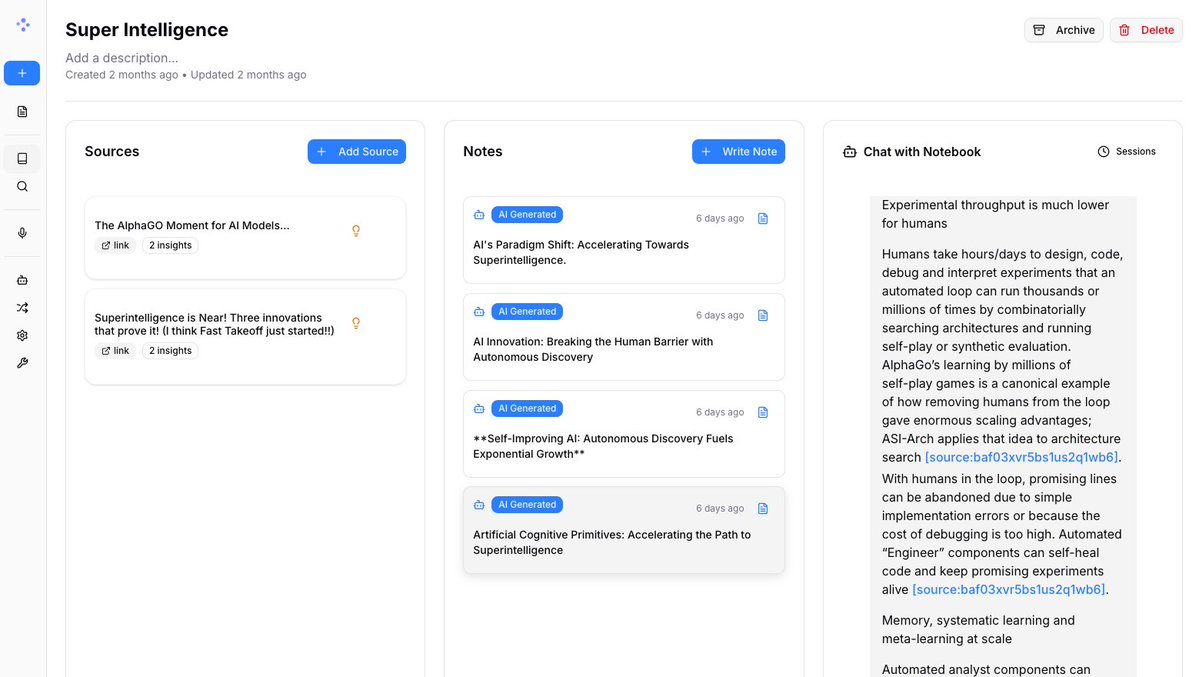

These were not generic assistant demos. They were targeted attempts to solve private research, financial analysis, creator-tool sprawl, and exam feedback with explicit workflow and control assumptions.
Discussion insight: Builder sentiment favored one explicit job, one explicit output, and one clear control story over another all-purpose chatbot.
Comparison to prior day: The 2026-09-16 set contained more narrow product and model launches than the previous two days, especially in finance, research, video, and exam-prep workflows.
2. What Frustrates People
Evaluation systems that still ask for trust before evidence
The loudest frustration was not a lack of benchmarks. It was the feeling that benchmark claims still arrive without enough public context to trust them. @ChrisPainterYup explained (576 likes, 32 replies, 22,026 views, 100 bookmarks) how third-party evaluation currently depends on voluntary model access and sometimes redactions, and his replies immediately demanded reproducible methods and public incident artifacts. @suraj_sharma14 argued (33 likes, 11 replies, 1,732 views, 48 bookmarks) that quality has to be measured, monitored, and versioned like software, while @rohanpaul_ai showed (4 likes, 2 replies, 1,987 views) why benchmark outputs alone can be misleading when graders are wrong. @mertcemri added (8 likes, 2 replies, 432 views) that even the harness can distort a leaderboard's meaning.
Severity: High. People are coping with CI evals, trajectory grading, human-labeled holdouts, and public write-ups, but the frustration persists because those practices are still optional rather than normal.
Security claims that stop at slogans or topline metrics
Security posts were strongest when they named the missing metric or missing responsibility. @binance claimed (122 likes, 70 replies, 109,749 views) that AI blocked $4.6 billion in scams, but replies wanted false-positive rate and accountability details. @Jason argued (113 likes, 18 replies, 6,217 views) for platform liability and monitoring, while @BleepinComputer reported (24 likes, 1 reply, 4,374 views) a concrete agentic-breach notification that forces defenders to think at machine speed. @VitalikButerin made (310 likes, 76 replies, 46,334 views, 85 bookmarks) the optimistic case for AI-aided formal security, but replies reminded everyone that bad definitions can still produce false confidence.
Severity: High. People are coping with human review, tighter credential security, red-team loops, and safer definitions, but the missing measurement layer remains obvious.
Routers that save money on paper but not necessarily in production
The routing conversation revealed a practical frustration: per-token price is the easy part; per-accepted-task cost is the hard part. @MTSlive reported (23 likes, 6 replies, 4,585 views) that enterprise stacks are becoming model mixes tied to a harness, not winner-take-all single-model deployments. @KanikaBK showed (13 likes, 5 replies, 1,098 views) that cheap routing only works when teams know which jobs justify the expensive model, and @gpuemi showed (8 likes, 6 replies, 379 views) that the practical result can be conversation length, not just a cloud bill. @mertcemri warned (8 likes, 2 replies, 432 views) that native harnesses are not always cost-optimal, which makes plug-and-play routing harder than it sounds.
Severity: High. Workarounds today are dedicated endpoints, showback by workflow, kill switches, and manual task splitting. This looks very worth building for.
Physical AI still lacks cheap, fresh, provenance-aware world data
The physical-AI frustration was upstream of the robot. @nguyenvann6_24 argued (5 likes, 4 replies, 23 views) that a good model still fails without current spatial ground truth, @EnactraAI introduced (15 likes, 3 replies, 1,869 views) a benchmark that makes spatial reconstruction measurable, and @promiseeuler described (5 likes, 2 replies, 58 views) a small model trying to claw back physical reasoning efficiency. The recurring pain is not just data quantity. It is coverage, freshness, provenance, and a way to ask for exactly the environment that matters.
Severity: Medium-high. People are coping with specialized benchmarks and experimental capture pipelines, but the infrastructure is still immature.
Knowledge and creator work still suffer from tool sprawl and cloud lock-in
The narrow builders made the frustration obvious by the shape of their products. @thisguyknowsai shared (12 likes, 375 views) a private NotebookLM alternative because researchers want provider choice and local control. @Rakib_Web3 pitched (21 likes, 14 replies, 352 views) VideoClaw as a response to too many separate video tools, cloud uploads, and surprise bills. @gjsontake built (24 likes, 1 reply, 1,111 views, 16 bookmarks) around one exam workflow instead of another general study bot.
Severity: Medium-high. People are coping by stacking multiple point tools or by building their own wrapper, which is a strong sign that the integrated products are still missing.
3. What People Wish Existed
Public reliability artifacts that make AI claims auditable
People clearly want more than screenshots of benchmark wins. They want public reliability reports, trajectory traces, calibrated judges, human-labeled holdouts, and incident write-ups that survive real scrutiny. @suraj_sharma14 asked for exactly that (33 likes, 11 replies, 1,732 views, 48 bookmarks), while replies to @ChrisPainterYup pressed (576 likes, 32 replies, 22,026 views, 100 bookmarks) for multiple evaluators and public artifacts. Opportunity: direct.
Typed-decision control planes that know when to escalate
The Jev, Factory, and routing posts all point to the same wish: a system that can make fast structured decisions, route the right jobs to the right model, and expose enough telemetry to justify those choices. @JoshARosen framed (44 likes, 4 replies, 2,468 views, 60 bookmarks) this as an architectural rethink, and @MTSlive framed (23 likes, 6 replies, 4,585 views) it as enterprise routing logic. Opportunity: direct.
Private, multi-provider workspaces for research and creation
Open Notebook and VideoClaw show a clear wish for software that keeps context local, works across providers, and reduces workflow switching. @thisguyknowsai surfaced (12 likes, 375 views) the research version of that need, while @Rakib_Web3 surfaced (21 likes, 14 replies, 352 views) the creator-tool version. Opportunity: competitive.
Domain-specific systems that handle messy source material instead of tidy demos
Finance and education both showed demand for systems that survive ugly real inputs. @Hilal_Crypt argued (38 likes, 21 replies, 897 views) that finance breaks on restated segments and reporting-basis changes, and @gjsontake built (24 likes, 1 reply, 1,111 views, 16 bookmarks) an exam-grading flow with visible margin feedback rather than a generic summary. Opportunity: direct.
A physical-world data supply chain with provenance and buyer intent built in
The Vangrid and BuildingBench posts imply a missing market layer around physical AI: who requests the data, who captures it, how privacy is preserved, how provenance is attached, and how the result gets verified. @nguyenvann6_24 described (5 likes, 4 replies, 23 views) the pipeline side, while @EnactraAI described (15 likes, 3 replies, 1,869 views) the benchmark side. Opportunity: direct.
4. Tools and Methods in Use
| Tool | Category | Sentiment | Strengths | Limitations |
|---|---|---|---|---|
| METR-style third-party evaluation | Evaluation organization | (+/-) | Public-facing independent assessments, conflict-of-interest disclosures, and a credible bridge between private model access and public reporting | Still depends on voluntary access, redactions, and institutional trust rather than fully public reproducibility |
| Regression and trajectory eval suites | Reliability method | (+) | CI gates, step-level grading, judge calibration, fallback tests, tracing, and public reliability reports turn evals into an operating discipline | Non-determinism, drift, and stale golden sets mean teams need tolerance bands and refreshed holdouts |
| TypeSafe System One / Jev | Decision model | (+/-) | Typed outputs, calibrated confidence, and direct software integration fit routing, triage, and automation loops | Narrower surface than a full LLM and still early enough that much evidence is first-party or benchmark-limited |
| Union Alpha | Coding model preview | (+/-) | Free preview, huge context window, multimodal input, and tool calling lowered the barrier to test a new coding model | Anonymous provider, unclear long-term pricing, and little operational history |
| Harness-aware routing | Agent deployment method | (+) | Lets teams use a model mix based on task difficulty, latency, and cost instead of a single default | Requires showback, kill switches, and clear definitions of which jobs deserve escalation |
| Dedicated GLM-5.2 on Wafer | Inference serving | (+) | Lower latency in a live spoken workflow and longer conversations in a public case study | Evidence is strong for one workload, but not a universal proof for every agent stack |
| Open Notebook | Research workspace | (+) | Self-hosted, multi-provider, multimodal, API-driven, and explicitly privacy-first | More setup and maintenance than a hosted consumer app; citations are still weaker than NotebookLM |
| Ling-3.0-flash-Fin | Domain model | (+/-) | Source-grounded retrieval, spreadsheet and valuation workflows, long context, and open availability | Still requires professional review on important financial outputs |
| BuildingBench | Benchmark | (+) | Public cases, public harness, and explicit cost-quality framing for spatial reconstruction | Full leaderboard and grader are not fully public |
| Vangrid-style spatial data pipeline | Physical-data infrastructure | (+/-) | Commodity capture devices, provenance, privacy, and machine-ready spatial outputs | Scale, coverage, and buyer-side demand are still open questions |
| Full-program AI-assisted formal verification | Security method | (+/-) | Offers a defense-favoring path when definitions are precise and comprehensive | Strongly limited by the quality and completeness of the security definition itself |
The tools earning the strongest positive sentiment were not necessarily the ones with the most raw model power. They were the ones that made behavior more legible: typed outputs, calibrated confidence, public cases, traces, regression gates, or local control. @JoshARosen pointed to (44 likes, 4 replies, 2,468 views, 60 bookmarks) the architectural appeal of typed decisions, @gpuemi pointed to (8 likes, 6 replies, 379 views) latency as a user-experience tool, and @thisguyknowsai pointed to (12 likes, 375 views) privacy and provider choice as product differentiators.
The clearest migration pattern ran from one-model defaults to layered systems. @MTSlive described (23 likes, 6 replies, 4,585 views) explicit routing by task, @KanikaBK put numbers on it (13 likes, 5 replies, 1,098 views), and @mertcemri reminded people (8 likes, 2 replies, 432 views) that even the harness can change the economics.
5. What People Are Building
| Project | Who built it | What it does | Problem it solves | Stack | Stage | Links |
|---|---|---|---|---|---|---|
| Jev / System One | TypeSafe AI | Typed-decision model for software automation | Replaces brittle text parsing inside routing, triage, and workflow logic with constrained machine-usable outputs | System One architecture, typed primitives, calibrated confidence, REST/SDK integration | Beta | post (44 likes, 4 replies, 2,468 views, 60 bookmarks); docs; site |
| BuildingBench | Enactra AI | Benchmark for turning four real photos into a reconstructed 3D building | Gives coding agents a spatial benchmark with cost and quality instead of only text-only coding scores | Python harness, Docker lane, blind 12-case eval, glTF output | Shipped | post (15 likes, 3 replies, 1,869 views); repo; leaderboard |
| Open Notebook | lfnovo | Self-hosted NotebookLM alternative | Gives researchers provider choice, local control, and private multimodal research workflows | Python, Next.js, React, SurrealDB, LangChain, Docker, REST API | Shipped | post (12 likes, 375 views); repo; site |
| Office Hour Simulator on Wafer | YC + Wafer | AI versions of YC partners for spoken startup Q&A | Makes advice conversations fast enough to feel like a real dialogue | GLM-5.2, dedicated inference endpoint, avatar/voice interface | Shipped | post (8 likes, 6 replies, 379 views); case study |
| Vangrid pipeline | Vangrid ecosystem | Commodity-device spatial capture and provenance pipeline | Creates fresher physical-world data without requiring a dedicated sensor fleet everywhere | Smartphone capture, multi-view ingestion, edge processing, verification/provenance, spatial representation | Beta | post (5 likes, 4 replies, 23 views) |
| Ling-3.0-flash-Fin | inclusionAI / Ant Group | Finance-enhanced long-context model | Handles messy multi-document financial research, valuation, and spreadsheet tasks better than a general model aimed at clean demos | 124B MoE, 5.1B active parameters, 256K context, SGLang/vLLM compatibility | Shipped | post (38 likes, 21 replies, 897 views); model card |
| VideoClaw | videoclawapp | Local Mac video harness that unifies multiple AI media tasks | Reduces switching between separate editing, voice, B-roll, and generation tools while keeping spend and files under user control | macOS desktop app, ChatGPT/Claude subscriptions, local media folders, integrated generation stack | Shipped | post (21 likes, 14 replies, 352 views) |
| UPSC answer evaluator | gjsontake | AI grading flow for UPSC Mains answers | Gives aspirants detailed marks and margin-note feedback faster than manual review | LLM-based answer analysis, screenshot-style review UI, Telegram intake | Alpha | post (24 likes, 1 reply, 1,111 views, 16 bookmarks) |
The strongest pattern was infrastructure around intelligence, not only new intelligence. Jev narrows the interface between software and a model, BuildingBench narrows how spatial reasoning is measured, Wafer narrows latency, and Vangrid narrows how physical-world evidence gets captured. That is a meaningful shift from "bigger model" narratives toward more controllable systems.
Open Notebook, VideoClaw, Ling-3.0-flash-Fin, and the UPSC grader show the complementary pattern: workflow compression. Instead of asking users to compose five tools, they wrap one vertical job with clear assumptions about privacy, budget, domain messiness, or output format.
6. New and Notable
BuildingBench made coding-agent spatial reasoning inspectable instead of hand-wavy
@EnactraAI introduced (15 likes, 3 replies, 1,869 views) a benchmark where agents reconstruct buildings from four photos, and the public repo spells out the blind 12-case setup, the single-glTF submission rule, and the current cost-quality frontier. That matters because it turns a vague "world-model" claim into something people can actually inspect and compare.
Union Alpha lowered the cost of trying a frontier-style coding model for a week
@testingcatalog highlighted (71 likes, 2 replies, 6,995 views, 12 bookmarks) a free preview for Union Alpha with tool calling, image input, and very large context. Even if the anonymous-provider setup makes it hard to depend on, the temporary free window mattered because it gave builders a cheap way to benchmark a new agentic model quickly.
Spain's AEPD breach notice made agentic cyber risk feel immediate
@BleepinComputer reported (24 likes, 1 reply, 4,374 views) the alleged AI-agent breach notification, while @DailyDarkWeb clarified (16 likes, 2 replies, 2,073 views) the step-by-step autonomy involved. That pairing turned a familiar AI-security talking point into a concrete operational sequence defenders can plan around.
7. Where the Opportunities Are
[+++] Auditable evaluation and reliability operating systems — Sections 1, 2, and 4 all point to the same gap: people want evaluation artifacts, judge calibration, traces, incident write-ups, and public reliability reports that survive scrutiny. This looks like a direct opportunity because the need is already operational, not hypothetical.
[+++] Harness-aware routing and typed-decision control planes — Jev, Factory's routing logic, Kanika's cost example, Wafer's latency case, and the harness-cost discussion all point to a missing control layer between users and models. The strongest products here will combine typed decisions, escalation rules, telemetry, and per-workflow economics.
[++] Defensive AI with measurable error budgets — The combination of Binance's production claims, the AEPD incident, Jason's liability framing, and Vitalik's verification argument suggests room for security products that can move at machine speed without hiding behind slogans. The catch is that measurement quality will matter as much as raw detection capability.
[++] Privacy-first vertical workspaces and copilots — Open Notebook, Ling-3.0-flash-Fin, VideoClaw, and the UPSC grader all show willingness to adopt narrow systems that preserve context, expose control, and fit a messy workflow. This is competitive, but the demand signal is real.
[++] Provenance-aware physical-world data infrastructure — Vangrid, BuildingBench, and Ontos together suggest that physical AI still needs better upstream evidence: capture, provenance, buyer intent, and measurement. That looks like durable infrastructure work rather than a short-lived feature.
8. Takeaways
- Trust in AI evaluation is moving from scoreboards to evidence plumbing. @ChrisPainterYup explained (576 likes, 32 replies, 22,026 views, 100 bookmarks) the current limits of voluntary third-party evaluation, while @suraj_sharma14 described (33 likes, 11 replies, 1,732 views, 48 bookmarks) the concrete systems teams now think they need around it.
- Security discussion got more real because it named both the missing spec work and a concrete autonomous intrusion chain. @VitalikButerin argued (310 likes, 76 replies, 46,334 views, 85 bookmarks) for a defense-favoring verification path, while @BleepinComputer reported (24 likes, 1 reply, 4,374 views) the alleged AEPD breach that shows what machine-speed offense could look like.
- Agentic-software architecture is becoming a routing and control problem, not just a prompt problem. @JoshARosen framed (44 likes, 4 replies, 2,468 views, 60 bookmarks) Jev as an architectural rethink, @MTSlive framed (23 likes, 6 replies, 4,585 views) the enterprise stack as a model mix, and @gpuemi showed (8 likes, 6 replies, 379 views) that latency changes conversation behavior.
- Physical AI talk stayed important, but it kept moving upstream into data and measurement. @nguyenvann6_24 argued (5 likes, 4 replies, 23 views) for the missing data layer, and @EnactraAI introduced (15 likes, 3 replies, 1,869 views) a benchmark that turns part of that problem into something measurable.
- The day's strongest builder signal came from narrow, opinionated products. @thisguyknowsai shared (12 likes, 375 views) a private research workspace, @Hilal_Crypt surfaced (38 likes, 21 replies, 897 views) a finance-tuned model, and @gjsontake built (24 likes, 1 reply, 1,111 views, 16 bookmarks) a targeted exam-feedback tool.