YouTube AI - 2026-04-30
1. What People Are Talking About
1.1 GPT Image 2.0 and AI Image Generation Wars 🡕
AI image generation dominated engagement this week, with three videos collectively drawing 353K views and 1,463 comments. ChatGPT Images 2.0 has dethroned previous leaders, while Baidu's open-source ERNIE-Image offers a self-hosted alternative.

Futurepedia tested ChatGPT Images 2.0 head-to-head against the previous top model, concluding that "Nano Banana" has been dethroned. The review covers photorealism, consistent characters, complex text generation, and style recreation (Nano Banana Finally Dethroned. GPT-Image 2.0 FULLY tested). 132K views, 3,836 likes.
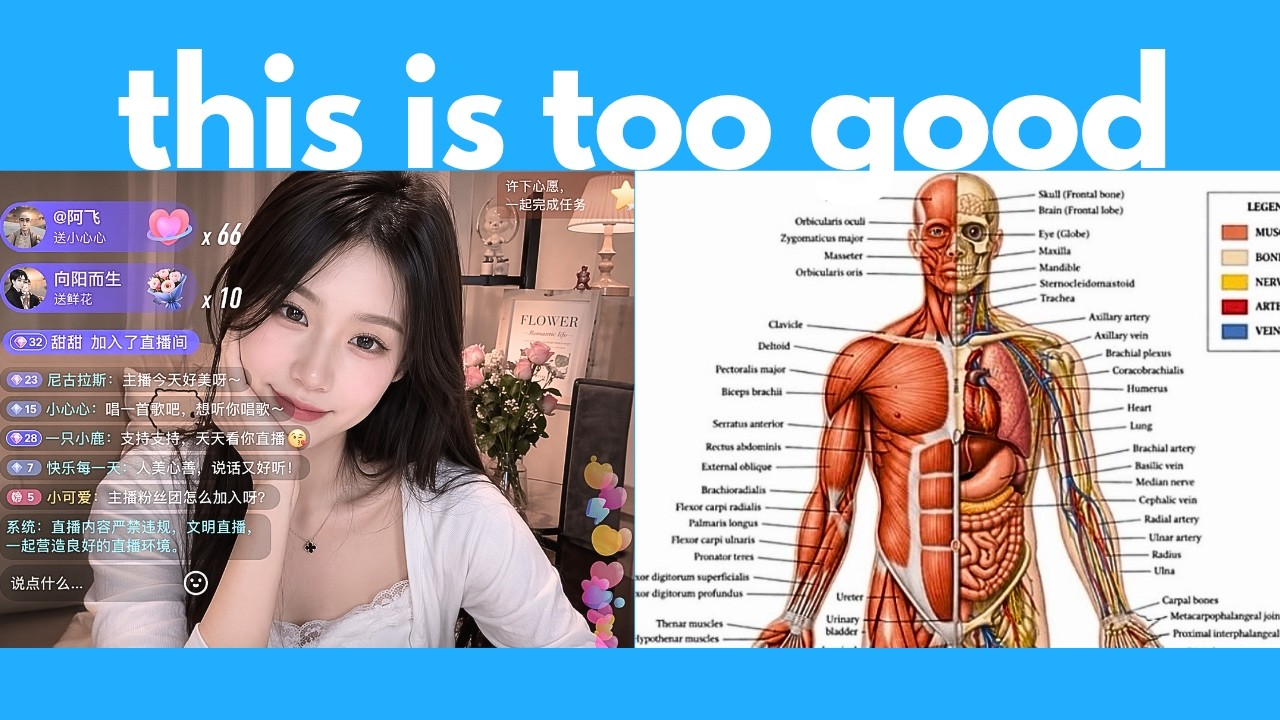
AI Search published the deepest evaluation in the dataset: a 35-minute review testing GPT Image 2.0 across 100 posters, desktop windows, sprites, data visualizations, manga, UI design, maps, chess boards, and spatial understanding. The video drew 700 comments -- the highest comment count in the dataset -- reflecting intense community discussion about capabilities and limitations (New AI image generator BEATS EVERYTHING). 103K views.

The same channel also covered Baidu's ERNIE-Image, an open-source 8B-parameter Diffusion Transformer model available on HuggingFace. The video includes a ComfyUI installation tutorial and positions ERNIE-Image as the state-of-the-art among open-weight text-to-image models, supporting text rendering, structured generation, and multi-panel layouts (New BEST local AI image generator is here!). 119K views, 544 comments.
The image generation space is splitting into two tiers: closed/commercial (GPT Image 2.0) versus open-weight/self-hosted (ERNIE-Image), mirroring the same dynamic in LLMs.
1.2 Software Fundamentals in the AI Coding Era 🡕
The week's top-performing video by engagement argues that engineering fundamentals matter more, not less, in the age of AI coding tools.

AI Engineer published Matt Pocock's conference talk, which drew 404K views and 16,770 likes -- the highest engagement in the entire dataset by a wide margin. Pocock, a well-known TypeScript educator, shares patterns from 18 months of teaching developers to build with AI agents: the developers who succeed are those who fall back on testing, types, and architecture. Process matters more than tools ("Software Fundamentals Matter More Than Ever").
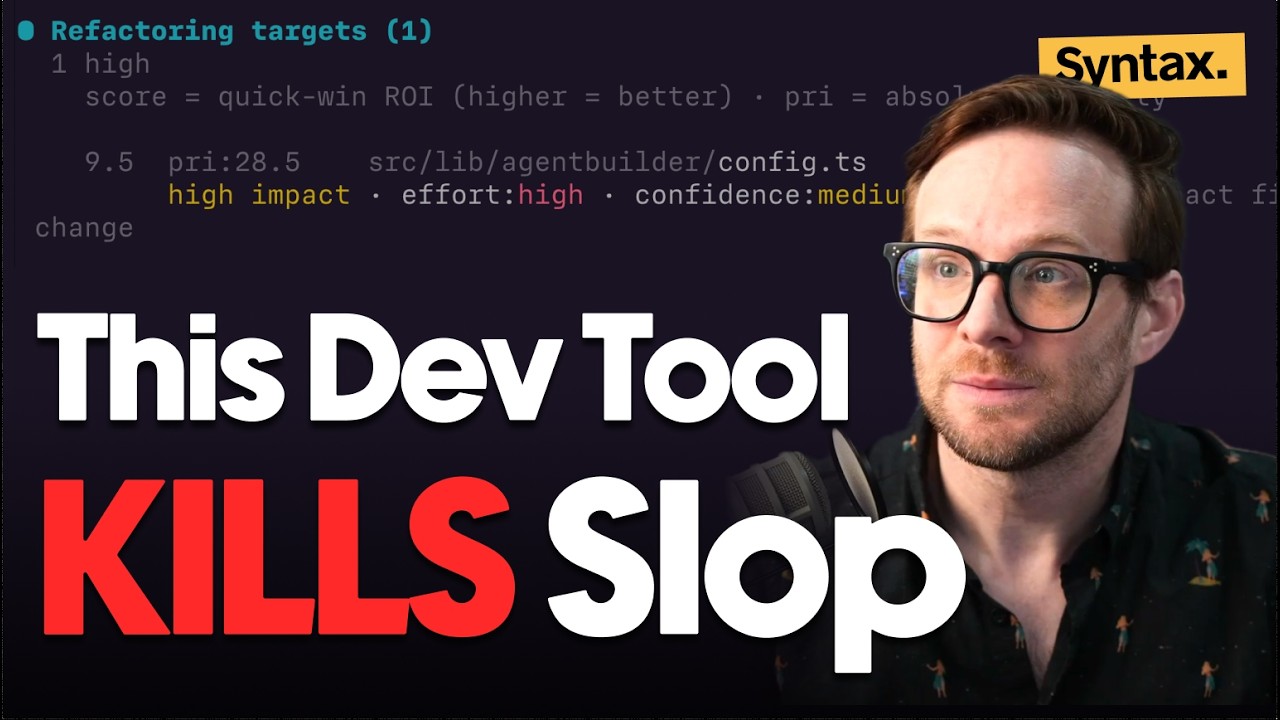
Syntax (Wes Bos and Scott Tolinski, 472K subscribers) presented a specific tool solution to the AI code quality problem: Fallow, a static analysis tool for TypeScript/JavaScript that finds code duplication, unused code, complexity hotspots, and architecture drift. The tool is explicitly positioned as a response to AI-generated code "slop" (This Coding Tool Kills AI Code Slop). 24K views, 101 comments.
This theme extends the prior report's "vibe coding" discussion (2026-04-22), which covered Syntax's earlier episode on fixing vibe coding reliability. The conversation has shifted from diagnosis to tooling solutions.
1.3 AI Agent Ecosystem Matures 🡕
Four videos spanning educational explainers, business economics, and hands-on courses show the AI agent ecosystem moving from concept to implementation.

IBM Technology continues to see strong engagement on its agent skills explainer. Martin Keen's video on how agent skills, LLMs, RAG, and MCP combine to help agents follow workflows has now reached 149K views and 4,627 likes -- up significantly from 65.6K views when it appeared in the 2026-04-22 report (What AI Agent Skills Are and How They Work).
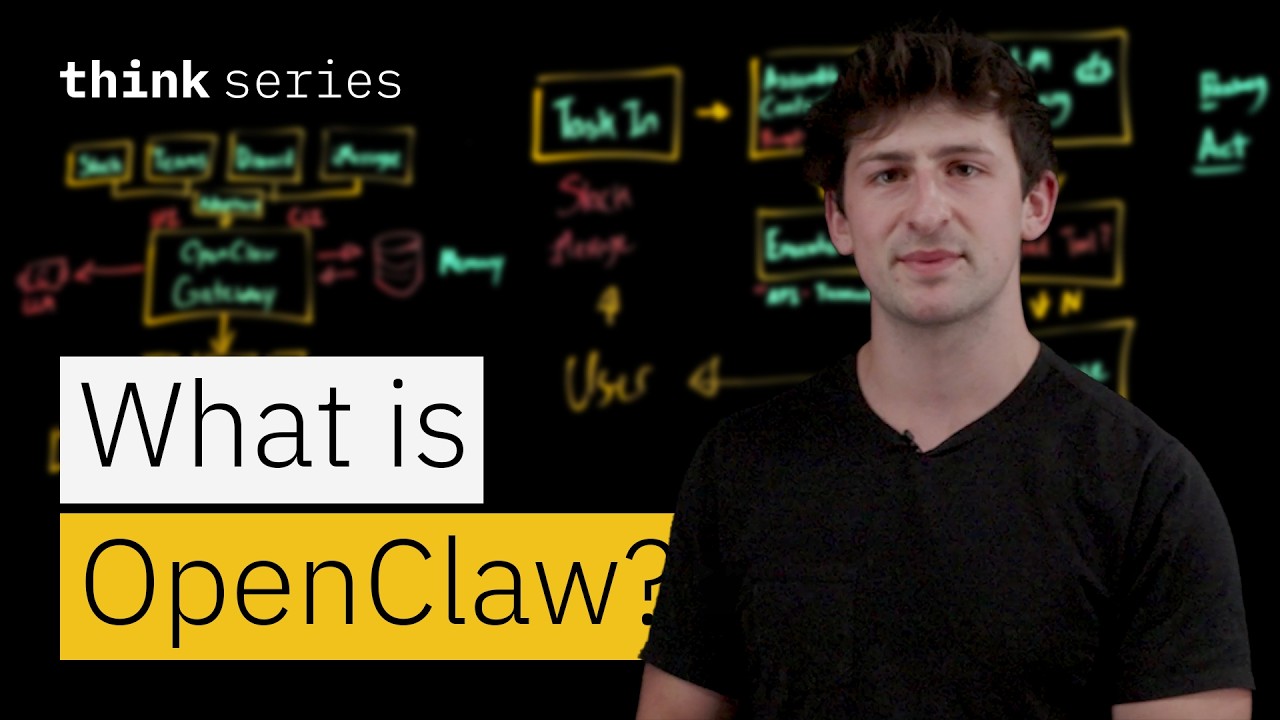
IBM followed up with a second video: Cedric Clyburn explaining OpenClaw, an IBM open-source agent framework, covering the agentic loop and autonomous workflows (What is OpenClaw?). 67K views.

Greg Isenberg interviewed Howie Liu, CEO of Airtable, about the agent economy and the HyperAgent launch. The discussion covers Sequoia charts on AI agent deployment, token-based work economics versus human labor, and how agent business models differ from SaaS (Making $$ with AI Agents). 24K views, 279 comments.

Riley Brown published a nearly 2-hour full course on OpenAI Codex, positioning it as superior to Claude Code. The video covers GPT 5.5, projects, chats, plugins, custom skills, and automations -- showing Codex evolving from a coding tool into a multi-purpose agent capable of iOS app design, landing pages, and investor decks (Codex Full Course 2026). 91K views.
The prior report (2026-04-22) covered Codex 2.0's launch and enterprise agent platform week (Google, Microsoft, IBM). This week, the conversation shifts from platform announcements to practical agent economics and education.
1.4 Humanoid Robotics Reality Check 🡕
Four videos cover humanoid robotics from investigation to product launches, with Bloomberg providing the most authoritative reality check.

Bloomberg Originals (5M subscribers) published a 24-minute investigative documentary examining whether humanoid robots using AI will deliver real-world value. The piece covers training data gaps, factory trials, global competition, and the billions invested -- concluding that the gap between viral demos and production deployment remains significant (Humanoid Robots and the Gap Between Hype and Reality). 139K views, 177 comments.
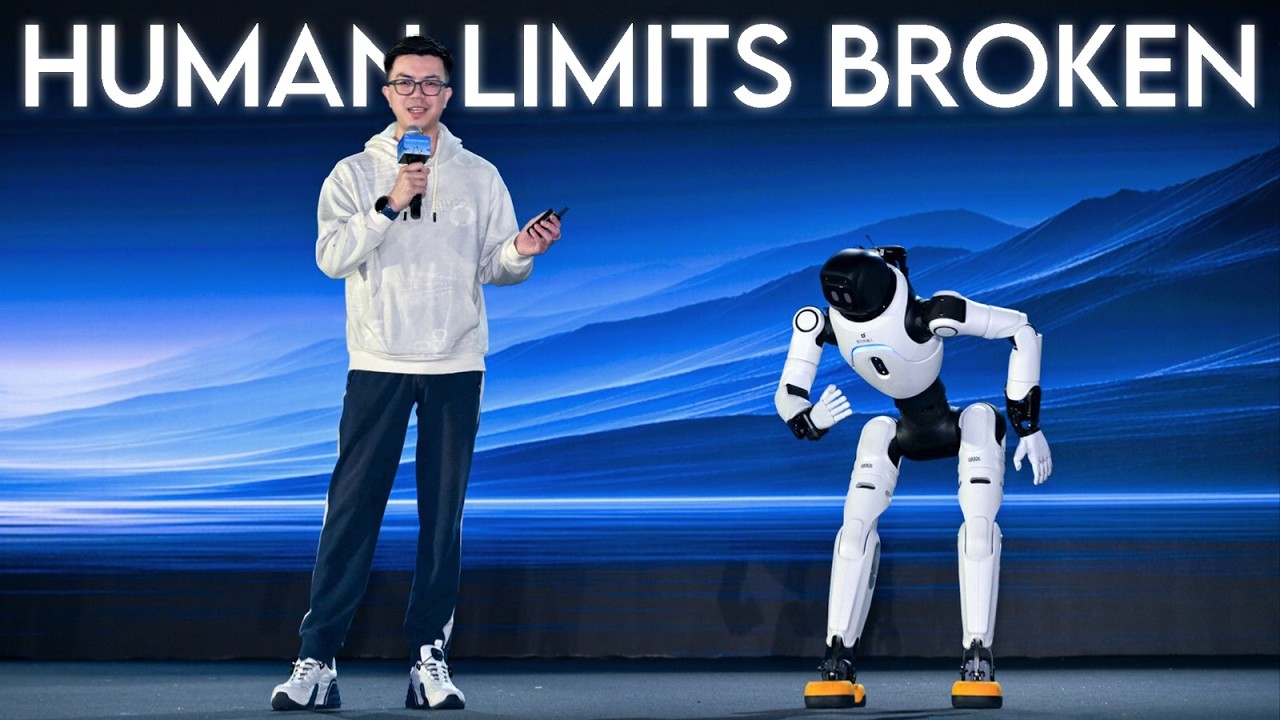
AI Revolution covered AGIBOT's new humanoid robots, South Korea's self-healing artificial muscle, the Beijing humanoid half-marathon (completed at superhuman pace), and Physical Intelligence's pi-0.7 (New AI Robot From China Breaks Human Limits). 41K views.
AI News published two complementary videos: NEURA Robotics partnering with Amazon to deploy the 4NE1 humanoid in logistics, alongside Agile Robots' Agile 1 (Amazon's GEN 3.5 AI Robot Launch); and Figure's 24x manufacturing scale-up at BotQ with their "System 0" perception system, priced at $24,760 (New GEN 3 AI Robot Beats Tesla Optimus?).
The robotics narrative is bifurcating: Bloomberg questions whether real-world value justifies the investment, while individual companies announce manufacturing scale-ups and enterprise partnerships.
1.5 AI Safety and Existential Risk 🡒
Two long-form discussions brought philosophical and safety concerns to a combined 212K views.

World Science Festival hosted Brian Greene and Nick Bostrom for an 82-minute discussion on AI creativity, consciousness, superintelligence, and the meaning of human existence in a post-AGI world. Bostrom, author of "Superintelligence" and "Deep Utopia," explored whether an AI-abundant future could be genuinely utopian (Artificial Utopia?). 103K views, 538 comments.

Silicon Valley Girl interviewed Roman Yampolskiy, who has spent 15 years studying AI control. His core position: AI cannot be controlled. The interview surfaced a concrete data point -- a 28% drop in co-op placements in his CS department -- connecting safety concerns to immediate workforce impact. Discussion also covered prediction markets and containment strategies (AI Safety Expert). 110K views, 424 comments.
1.6 New Releases and Emerging Disciplines 🡕
A weekly news roundup and a niche educational video captured the breadth of new releases and an emerging discipline.

AI Research covered the broadest set of releases: DeepSeek V4, Claude Design going open source, GPT-5.5, Happy Horse 1.0, Mimo 2.5 Pro, Vision Banana, World R1, EditCrafter, SenseNova U1, and more (HUGE AI NEWS). 3.1K views.

Ahrefs introduced AEO (AI Engine Optimization) as a new discipline alongside traditional SEO. The video explains how AI search engines (ChatGPT, Google AI Mode, Perplexity) find, evaluate, and cite content using RAG, training data, and real-time retrieval (How AI Search Engines Work). 1.9K views.
The Figure 03 video from AI News also mentioned Anthropic releasing Claude connectors for CAD tools (Autodesk Fusion, Blender), extending AI beyond text and code into 3D design workflows (New GEN 3 AI Robot Beats Tesla Optimus?).
2. What Frustrates People
AI-Generated Code Quality ("Slop")
Matt Pocock's 404K-view talk is built on the frustration that developers using AI coding tools without engineering discipline produce worse code faster. He describes a pattern where teams that "delegate everything" to AI bury themselves in spaghetti code. The Syntax/Fallow video reinforces this: AI tools generate unused code, duplicate logic, and architectural drift that accumulates invisibly ("Software Fundamentals Matter More Than Ever", This Coding Tool Kills AI Code Slop). Severity: High -- this is the most-discussed frustration in the dataset and drew the highest engagement.
AI Safety Concerns and Uncontrollability
Roman Yampolskiy states directly that AI cannot be controlled, based on 15 years of research. The frustration is not abstract: he cites a 28% drop in CS co-op placements in his own department as evidence that AI's workforce impact is already materializing before safety measures are in place (AI Safety Expert). Severity: High -- combines existential risk arguments with concrete employment data.
Gap Between Humanoid Robot Demos and Real Deployment
Bloomberg's investigative documentary frames the central frustration in robotics: companies produce impressive demo videos that attract billions in investment, but the gap between controlled demos and real-world factory deployment remains wide. Training data scarcity and the complexity of unstructured environments are key blockers (Humanoid Robots and the Gap Between Hype and Reality). Severity: Medium -- primarily an investor/industry concern rather than a consumer pain point.
3. What People Wish Existed
Deterministic Guardrails for AI-Generated Code
The Syntax episode positions Fallow as a partial answer, but the broader need remains: AI coding tools that natively integrate with static analysis, linting, and architecture rules so generated code meets quality standards before it reaches the developer. The wish is for AI tools that are aware of existing codebases -- their components, patterns, and constraints -- rather than generating in a vacuum (This Coding Tool Kills AI Code Slop, docs.fallow.tools). Opportunity: direct -- tools that bridge AI code generation and deterministic validation.
Affordable and Accessible AI Image and Video Tools
The strong engagement on both GPT Image 2.0 reviews and the ERNIE-Image open-source alternative reflects demand for high-quality image generation at different price points. ERNIE-Image's appeal is specifically that it can be run locally at no ongoing cost (New BEST local AI image generator is here!). Opportunity: competitive -- open-weight models are closing the gap with commercial offerings.
Reliable Humanoid Robots That Work Outside Controlled Settings
Bloomberg's documentary and the multiple robot launch videos together describe a wish for humanoid robots that can handle unstructured environments, not just choreographed demos. The training data gap -- robots need far more diverse real-world interaction data -- is the core blocker (Humanoid Robots and the Gap Between Hype and Reality). Opportunity: indirect -- data collection and simulation infrastructure for robotics training.
4. Tools and Methods in Use
| Tool | Category | Sentiment | Strengths | Limitations |
|---|---|---|---|---|
| GPT Image 2.0 | AI image generation (closed) | (+) | Photorealism, text rendering, consistent characters, spatial understanding | Closed/commercial, API pricing |
| ERNIE-Image | AI image generation (open) | (+) | Open-source, 8B params, local/self-hosted, multi-panel layouts | Requires local GPU, ComfyUI setup |
| Codex / GPT 5.5 | AI coding agent | (+) | Multi-purpose: code, design, decks; plugins, automations | Positioned vs Claude Code; ecosystem lock-in |
| Fallow | Static analysis (TS/JS) | (+) | Finds unused code, duplication, complexity, architecture drift | TypeScript/JavaScript only; new tool |
| MCP | Agent protocol | (+) | Cross-vendor: IBM, Anthropic, Codex use it | Fragmented implementations |
| ComfyUI | Image generation UI | (+) | Extensible, supports ERNIE-Image and other models | Complex setup for non-technical users |
| OpenClaw | Agent framework (IBM) | (+/-) | Open-source, agentic loop support | GitHub repo returned 404; early stage |
| HyperAgent | AI agent platform (Airtable) | (+) | Agent economics, token-based work, enterprise backing | New product, unproven |
| Claude CAD Connectors | AI-to-CAD bridge | (+) | Autodesk Fusion, Blender integration | Announced, adoption unclear |
| RAG | Retrieval architecture | (+) | Used across agent and search platforms | Implementation quality varies widely |
GPT Image 2.0 and ERNIE-Image represent the closed-vs-open split in image generation. In the agent space, MCP appears as the connective tissue across IBM, Anthropic, and OpenAI ecosystems. Fallow is the first tool explicitly marketed as a fix for AI-generated code quality.
5. What People Are Building
| Project | Who | What it does | Problem it solves | Stage | Links |
|---|---|---|---|---|---|
| Fallow | Syntax / fallow.tools | Static analysis for TS/JS: unused code, duplication, complexity, architecture drift | AI code slop accumulation | Shipped | docs.fallow.tools |
| ERNIE-Image | Baidu | Open-source 8B Diffusion Transformer for text-to-image | Closed-model dependency for image generation | Shipped | HuggingFace |
| HyperAgent | Airtable (Howie Liu) | AI agent platform with token-based work economics | Bridging agent capabilities to business workflows | Launched | hyperagent |
| BotQ / Figure 03 | Figure | 24x manufacturing scale-up for humanoid robots; System 0 perception | Scaling humanoid production beyond prototypes | Manufacturing | -- |
| AGIBOT Robots | AGIBOT | A2 Ultra, X1, G2, Genie series humanoid robots | Industrial and logistics automation | Production | -- |
Fallow is the most immediately actionable project for developers. It provides a free static analysis layer that directly addresses the code quality problem Matt Pocock describes -- giving teams a tool to detect the unused code, duplication, and drift that AI tools leave behind.
ERNIE-Image from Baidu is the standout open-source release. At 8B parameters with support for text rendering and structured generation, it offers the first credible open-weight competitor to GPT Image 2.0 for local deployment.
6. New and Notable
DeepSeek V4
Mentioned in AI Research's weekly roundup alongside GPT-5.5 and Claude Design open source. Details are thin in this dataset but the mention signals continued rapid iteration from Chinese AI labs (HUGE AI NEWS).
Claude CAD Connectors
Anthropic released Claude connectors for Autodesk Fusion and Blender, extending AI capabilities from text and code into 3D design and CAD workflows. This is a notable expansion of AI tool integration into creative/engineering domains (New GEN 3 AI Robot Beats Tesla Optimus?).
GPT-5.5
Referenced in the Riley Brown Codex course and the AI Research roundup. GPT-5.5 powers the latest Codex capabilities including multi-purpose agent workflows (Codex Full Course 2026, HUGE AI NEWS).
AEO (AI Engine Optimization) as a New Discipline
Ahrefs is building a course around AEO -- optimizing content for AI search engines (ChatGPT, Google AI Mode, Perplexity) rather than traditional search crawlers. This represents a potential parallel to SEO's evolution (How AI Search Engines Work).
AWS Trainium (Notable Mention)
SemiAnalysis, a respected semiconductor analysis firm, published a low-engagement (433 views) but high-signal discussion of Amazon's custom AI training chips (Trainium) and inference optimization (Inferentia). The custom silicon trend continues as hyperscalers reduce NVIDIA dependency.
7. Where the Opportunities Are
[+++] AI code quality tooling and enforcement -- Matt Pocock's 404K-view talk and Syntax's Fallow coverage together describe both the problem (AI-generated code slop) and the early solution space (static analysis, dead code detection, architecture drift monitoring). Tools that integrate AI code generation with deterministic quality enforcement -- lint-on-generate, component-aware scaffolding, CI-integrated feedback -- address a daily pain point for the growing AI coding audience. The prior report (2026-04-22) flagged this same opportunity; this week it has concrete tooling and 10x higher engagement.
[++] Open-weight image generation models and infrastructure -- ERNIE-Image's 119K views and 544 comments show strong demand for self-hosted, open-source alternatives to GPT Image 2.0. The opportunity extends beyond the models themselves to the infrastructure around them: simplified deployment, fine-tuning pipelines, ComfyUI integrations, and enterprise-ready hosting for open-weight image models.
[++] AI agent economics and monetization frameworks -- Greg Isenberg's interview with the Airtable CEO on HyperAgent and token-based work economics suggests agent platforms need new pricing models, ROI calculators, and deployment playbooks. As agents move from demos to production, the supporting business infrastructure is underdeveloped.
[+] AEO (AI Engine Optimization) tools and education -- Ahrefs' early move into AEO suggests a new discipline is forming around optimizing content for AI search engines. Tools that help content creators understand how ChatGPT, Perplexity, and Google AI Mode discover, evaluate, and cite content have a first-mover window.
8. Takeaways
-
Software fundamentals are the differentiator in the AI coding era, not AI tools themselves. Matt Pocock's talk drew 404K views and 16,770 likes -- the highest engagement in the dataset -- arguing that testing, types, and architecture matter more than ever when AI accelerates code production. Fallow emerged as the first tool explicitly positioned to combat AI code slop. ("Software Fundamentals Matter More Than Ever", This Coding Tool Kills AI Code Slop)
-
GPT Image 2.0 is the new benchmark for AI image generation, but open-source is closing the gap. Two independent deep-dive reviews (353K combined views, 919 combined comments) confirm GPT Image 2.0 as the leader, while Baidu's ERNIE-Image (8B open-weight model, 119K views) proves self-hosted alternatives are viable. (Nano Banana Finally Dethroned, New AI image generator BEATS EVERYTHING, New BEST local AI image generator)
-
The AI agent ecosystem is shifting from "what are agents" to "how do agents make money." IBM's continued educational content (149K+ views on agent skills, 67K on OpenClaw) provides the foundation, while Greg Isenberg's interview with Airtable CEO Howie Liu on HyperAgent and token-based economics represents the business maturation layer. (What AI Agent Skills Are, Making $$ with AI Agents)
-
Humanoid robotics faces a credibility gap between demos and deployment. Bloomberg's investigative documentary (139K views) provides the most authoritative reality check, while AGIBOT, NEURA+Amazon, and Figure's 24x manufacturing scale-up show companies racing to close the gap. The tension between investment hype and deployment reality is the defining narrative. (Humanoid Robots and the Gap Between Hype and Reality, New AI Robot From China Breaks Human Limits)
-
AI safety concerns now come with concrete workforce data. Yampolskiy's 28% CS co-op placement drop is the most tangible data point in the dataset, connecting abstract safety debates to measurable employment impact. Combined with Bostrom and Greene's philosophical discussion (103K views), the safety conversation is reaching broader audiences with specific evidence. (AI Safety Expert, Artificial Utopia?)