YouTube AI - 2026-05-02
1. What People Are Talking About
1.1 Humanoid Robotics Shifts from Documentary to Factory Floor 🡕
Five videos totaling 340K views cover humanoid robotics from investigative journalism to exclusive factory tours, making this the dominant theme by total reach and the fastest-growing by day-over-day metrics.

Bloomberg Originals (5M subscribers) continues to accelerate with its 24-minute investigative documentary, now at 217K views -- up 27,665 from the prior day's 190K, the largest absolute view gain in the dataset. The piece covers training data gaps, factory trials, global competition, and the billions invested, concluding that the gap between viral demos and production deployment remains wide (Humanoid Robots and the Gap Between Hype and Reality).

Sourcery with Molly O'Shea (39.5K subscribers) published the first-ever full campus tour of Figure's robotics headquarters with founder and CEO Brett Adcock. The 72-minute video walks through system integration labs, humanoid testing facilities, and the BotQ manufacturing floor (Figure's First Full HQ Tour). 75K views and 457 comments -- the second-highest comment count in the dataset and an exceptionally high engagement rate for a channel of this size. Uploaded 2026-05-01.
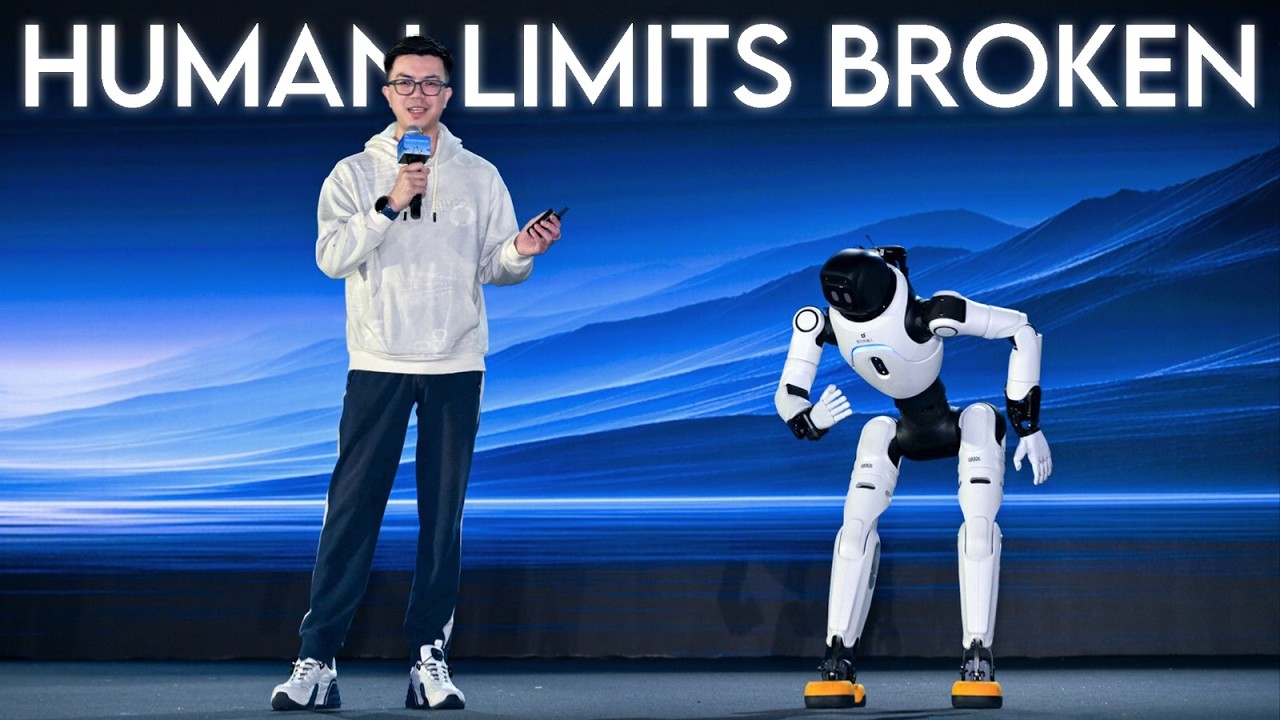
AI Revolution covered AGIBOT's new humanoid robot lineup, South Korea's self-healing artificial muscle (Seoul National University, published in Science Advances), the Beijing humanoid half-marathon, and Physical Intelligence's pi-0.7 -- a general-purpose robot model exhibiting compositional generalization, recombining skills from various tasks to solve problems never seen in training data (New AI Robot From China Breaks Human Limits). 41K views.
AI News covered Amazon's partnership with NEURA Robotics to deploy the 4NE1 humanoid into logistics environments using AWS, plus Agile Robots' 71-degree-of-freedom Agile 1 humanoid at Hannover Messe 2026 (Amazon's GEN 3.5 AI Robot Launch). PRO ROBOTS covered highlights from both Humanoid Robot EXPO Tokyo and Hannover Messe 2026 (Japan & Germany AI Robots).
Comparison to prior day: The 2026-05-01 report covered Bloomberg's documentary (then 190K views) and AI Revolution alongside Figure's manufacturing scale-up and Amazon/NEURA. This dataset adds the Figure HQ tour -- the first time a robotics company has opened its full campus to cameras -- shifting the narrative from hype-vs-reality framing toward concrete manufacturing evidence. Bloomberg's +27K daily growth also suggests the investigative documentary is reaching mainstream audiences beyond the AI niche.
1.2 AI Inference Infrastructure Gets Its Own Spotlight 🡕
A new technical deep dive on inference engineering enters the dataset as the fourth most-viewed video overall.

Caleb Writes Code (77K subscribers) published a 15-minute technical walkthrough of inference challenges: model loading methods (mmap, standard quantization), quantization formats (GGUF, AWQ, EXL2, FP8, NVFP4), and inference engines (llama.cpp, vLLM, SGLang, TensorRT-LLM, TGI). The video covers pre-fill, decoding, concurrency, and scheduling -- the full stack from model loading to serving (Why Inference is hard..). 118K views and 4,826 likes -- the second-highest like count in the dataset, behind only IBM's agent skills explainer.

IBM Technology published a new video with Martin Keen covering context engineering as a named discipline: how RAG, GraphRAG, and precision retrieval improve AI relevance, governance, and performance (How RAG, GraphRAG, and Context Engineering Improve AI Performance). 8.9K views, 560 likes. Uploaded 2026-05-02.
Comparison to prior day: The 2026-05-01 report had no dedicated inference or infrastructure theme. The appearance of Caleb's 118K-view video -- with a like-to-view ratio of 4.1%, among the highest in the dataset -- suggests strong latent demand for technical infrastructure content that prior datasets had not surfaced.
1.3 GPT Image 2.0 Reviews Plateau 🡒
Two reviews of GPT Image 2.0 persist in the dataset with combined 239K views and 920 comments, but growth has slowed markedly.

Futurepedia tested ChatGPT Images 2.0 head-to-head against the previous top model, concluding that "Nano Banana" has been dethroned. The review covers photorealism, consistent characters, complex text generation, and style recreation (Nano Banana Finally Dethroned. GPT-Image 2.0 FULLY tested). 134K views (+849 from prior day), 3,870 likes.
AI Search published a 35-minute deep evaluation testing GPT Image 2.0 across 100 posters, desktop windows, sprites, data visualizations, manga, UI design, maps, chess boards, and spatial understanding (New AI image generator BEATS EVERYTHING). 105K views (+1,001), 700 comments -- the highest comment count in the dataset.
Comparison to prior day: Both videos appeared in the 2026-05-01 report with nearly identical metrics. Growth rates have dropped to sub-1% daily, indicating these videos have largely saturated their audience. The prior report also included Baidu's ERNIE-Image open-source alternative, which has dropped out of this dataset.
1.4 AI Coding Tools Extend Into Content Creation 🡒
Two videos continue the AI coding narrative from prior days, but the use cases have expanded beyond code.

Riley Brown continues to grow with a nearly 2-hour full course on OpenAI Codex, now at 98K views (+3,591 from prior day). The video demonstrates Codex as a multi-purpose agent powered by GPT 5.5: iOS app design, landing pages, investor decks, and social media automation -- extending well beyond traditional coding (Codex Full Course 2026).

Jason Lee published a tutorial on using a Claude Code skill combined with Seedance 2.0 to automate UGC (user-generated content) video creation. The workflow clones competitor ads, generates scripts, and produces finished videos without manual editing or coding (This Claude Skill Creates UGC Videos on Autopilot). 12.6K views. Uploaded 2026-05-01.
Comparison to prior day: The 2026-05-01 report covered AI coding's impact on dev teams (Molist, 252K views), AI coding's employment implications (SimonDev, 64K views), and Codex. Those high-engagement discussion pieces -- focused on consequences -- have dropped from this dataset, replaced by practical tutorials. The conversation has shifted from "what AI coding breaks" to "what AI coding can build beyond code."
1.5 Small Models and Recursive Scaling Continue to Grow 🡕
Both videos from the prior report's small model theme continue to accelerate.
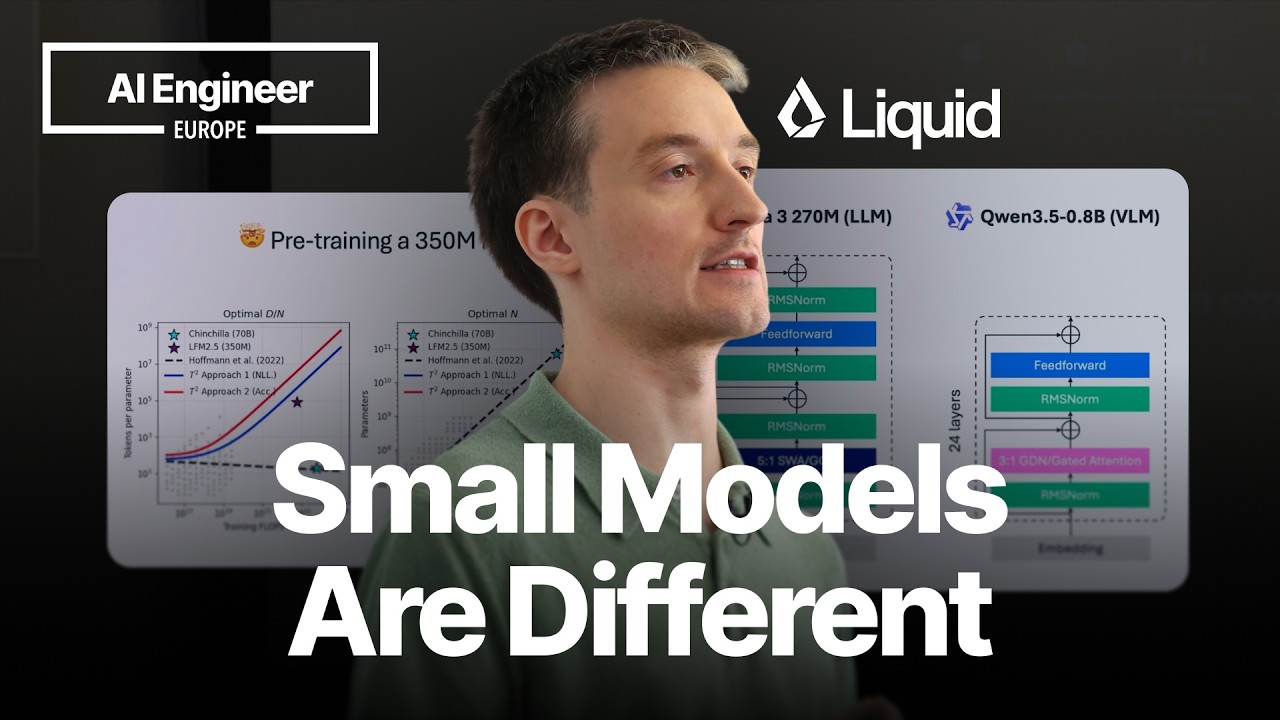
AI Engineer published Maxime Labonne's talk on post-training frontier small models at Liquid AI. Labonne, author of the LLM Course (>70K GitHub stars), shared the LFM2.5 recipe: on-policy preference alignment, agentic reinforcement learning, and curriculum training with iterative model merging. He addressed "doom loops" in reasoning models at the 1B parameter scale and their solutions (Everything I Learned Training Frontier Small Models). 28.7K views (+5,938 from prior day), 886 likes.

Y Combinator (2.2M subscribers) published a discussion of HRM (Hierarchical Recursive Models) and TRM (Transformer Recursive Models) where a 7-million parameter model outperforms models a thousand times its size on ARC Prize tasks through recursive inference-time compute (Recursion Is The Next Scaling Law In AI). 7.1K views (+3,080 from prior day, 76% growth rate -- the fastest percentage growth in the dataset).
Comparison to prior day: Both videos appeared in the 2026-05-01 report. Labonne's talk grew 26% and Y Combinator's grew 76%, indicating these technical discussions are finding and expanding their audience. The "small and efficient" counter-narrative to parameter-count scaling is gaining traction.
1.6 AI Agent Education Persists 🡒

IBM Technology continues to see steady growth on Martin Keen's agent skills explainer, now at 156K views and 4,789 likes -- up from 153K in the 2026-05-01 report. The video covers how agent skills, LLMs, RAG, and MCP combine to enable workflow automation (What AI Agent Skills Are and How They Work). This is the video's fourth appearance across reports, growing from 65.6K (2026-04-22) to 156K.
Comparison to prior day: The 2026-05-01 report included Hannah Fry's viral agent risk experiment (166K views, 16K likes) and IBM's OpenClaw framework video. Both dropped from this dataset. The agent conversation here narrows to educational content, with IBM's agent skills explainer as the sole high-engagement entry.
2. What Frustrates People
Humanoid Robot Hype Outpaces Deployment
Bloomberg's documentary (217K views, 250 comments) frames the central frustration: companies produce impressive demos that attract billions in investment, but real-world factory deployment remains limited by training data scarcity and unstructured environment complexity. The Figure HQ tour (75K views, 457 comments) provides a partial counterpoint -- showing actual manufacturing infrastructure -- but the gap between touring a factory and shipping robots at scale remains the core tension (Humanoid Robots and the Gap Between Hype and Reality). Severity: Medium -- primarily an investor and industry concern, but growing in mainstream visibility.
Inference Complexity Is Underappreciated
Caleb Writes Code's video (118K views, 4,826 likes) addresses a specific frustration: the gap between training a model and serving it efficiently. The sheer number of quantization formats (GGUF, AWQ, EXL2, FP8, NVFP4) and inference engines (llama.cpp, vLLM, SGLang, TensorRT-LLM, TGI) creates a fragmented landscape where practitioners must make complex tradeoffs between speed, quality, and memory without clear guidance (Why Inference is hard..). Severity: High for practitioners -- the 4,826 likes (4.1% like-to-view ratio) indicate strong resonance.
AI Image Generation Improvements Saturate Attention
The two GPT Image 2.0 reviews have a combined 239K views but sub-1% daily growth rates. This suggests the audience for image generation reviews has been served -- the initial excitement has passed and viewers are waiting for the next capability jump rather than more reviews of the same release. Severity: Low.
3. What People Wish Existed
Clear Guidance for Inference Engine Selection
Caleb's video walks through five inference engines and six quantization formats, but the underlying need is a decision framework: given a model size, hardware budget, and latency target, which combination of engine and quantization should a practitioner choose? The video's high engagement (4,826 likes) suggests practitioners are actively searching for this guidance (Why Inference is hard..). Opportunity: direct -- tooling or documentation that automates engine/quantization selection.
Small Models That Reliably Work On-Device
Labonne's talk describes the need for models under 1GB that can follow instructions and call tools without doom loops or capability interference. Current solutions require a multi-stage post-training recipe (SFT, preference alignment, agentic RL) that is not accessible to most practitioners (Everything I Learned Training Frontier Small Models). Opportunity: competitive -- Liquid AI, Apple, and others are actively pursuing this.
Humanoid Robot Benchmarks Beyond Demos
Bloomberg's documentary and the multiple robot announcement videos highlight a collective wish: standardized, reproducible benchmarks for humanoid robot capabilities in real-world environments. Current evidence consists of promotional demos and timed exhibitions like the Beijing half-marathon -- neither provides reliable performance comparisons (Humanoid Robots and the Gap Between Hype and Reality). Opportunity: aspirational -- requires industry coordination.
4. Tools and Methods in Use
| Tool | Category | Sentiment | Strengths | Limitations |
|---|---|---|---|---|
| Codex / GPT 5.5 | AI coding agent | (+) | Multi-purpose: code, design, decks, social automation; plugins | Ecosystem lock-in; no quality gate for generated output |
| Claude Code + Skills | AI coding agent | (+) | Skill system enables domain-specific automation (e.g. UGC video) | Requires skill authoring; newer ecosystem |
| Seedance 2.0 | AI video generation | (+) | Integrated with Claude for automated UGC production | Niche; quality unverified at scale |
| GPT Image 2.0 | AI image generation (closed) | (+) | Photorealism, text rendering, consistent characters, spatial understanding | Closed/commercial; API pricing |
| llama.cpp | Inference engine (local) | (+) | Broad format support; CPU and GPU | Performance tradeoffs vs vLLM/SGLang for concurrent serving |
| vLLM | Inference engine (serving) | (+) | High throughput for concurrent requests | More complex setup than llama.cpp |
| SGLang | Inference engine (serving) | (+) | Structured generation; competitive performance | Newer; smaller community |
| TensorRT-LLM | Inference engine (NVIDIA) | (+/-) | Optimized for NVIDIA GPUs | Vendor lock-in; complex configuration |
| GGUF / AWQ / EXL2 | Quantization formats | (+/-) | Enable running large models on smaller hardware | Fragmented ecosystem; quality-speed tradeoffs unclear |
| FP8 / NVFP4 | Quantization (NVIDIA) | (+) | Native hardware support on modern NVIDIA GPUs | NVIDIA-only |
| LFM2.5 | Small language model (Liquid AI) | (+) | Under 1GB, tool calling, instruction following | Requires multi-stage post-training; doom loops at 1B scale |
| MCP | Agent protocol | (+) | Cross-vendor: IBM, Anthropic, Codex | Fragmented implementations |
| RAG / GraphRAG | Retrieval architecture | (+) | Context engineering for improved AI performance | Implementation quality varies |
| pi-0.7 | Robot foundation model | (+) | Compositional generalization; tasks beyond training data | Research stage; limited robot platforms |
The inference tooling landscape is notably fragmented: five distinct engines and six quantization formats compete for practitioner attention, with no clear winner across all use cases. In the AI coding space, Codex and Claude Code are diverging -- Codex toward general-purpose agent (design, decks, automation) and Claude toward skill-based domain specialization (UGC video creation). The agent protocol layer (MCP, RAG, GraphRAG) continues as connective tissue across both coding and enterprise agent use cases.
5. What People Are Building
| Project | Who built it | What it does | Problem it solves | Stack | Stage | Links |
|---|---|---|---|---|---|---|
| LFM2.5 | Maxime Labonne / Liquid AI | Frontier small model (<1GB) with tool calling | On-device AI without cloud dependency | Gated short convolutions, preference alignment, agentic RL | Shipped | Liquid AI |
| HRM / TRM | Researchers (covered by YC) | Recursive reasoning models | Small models achieving SOTA on reasoning tasks | Recursive inference-time compute | Research | YC discussion |
| pi-0.7 | Physical Intelligence | General-purpose robot foundation model | Compositional task generalization without task-specific training | Vision-language-action model | Research | Blog post |
| Figure Humanoids / BotQ | Figure (Brett Adcock) | Humanoid robots with full in-house manufacturing | Scaling humanoid production from prototype to factory | System integration labs, BotQ manufacturing | Manufacturing | Figure HQ Tour |
| AGIBOT Humanoids | AGIBOT | A2 Ultra, A3, G2, Genie series robots | Industrial and logistics automation | Physical AI | Production | AGIBOT |
| 4NE1 / Neuraverse | NEURA Robotics + Amazon | Humanoid robot with AWS-powered shared intelligence | Logistics automation with cloud-connected learning | AWS, Neuraverse platform | Partnership | AI News coverage |
| Claude UGC Skill | Jason Lee | Automated UGC video creation from competitor ads | Eliminating manual video editing for ad creation | Claude Code, Seedance 2.0 | Shipped | Tutorial |
Figure's HQ tour is the most detailed manufacturing evidence in the dataset. Brett Adcock walked through every department -- system integration labs where robots are stress-tested, the humanoid testing floor, and BotQ, Figure's manufacturing facility. The tour shows actual production infrastructure, not renders or demos, which distinguishes it from other robotics announcements.
pi-0.7 from Physical Intelligence represents a qualitative shift in robot learning: the model exhibits compositional generalization, recombining skills from different training tasks to solve new problems it was never trained on, including enabling a new robot platform to fold laundry without laundry-specific training data.
6. New and Notable
Inference Engineering Emerges as Its Own Content Category
Caleb Writes Code's "Why Inference is hard.." (118K views, 4,826 likes) is the first high-engagement video in this dataset series focused specifically on inference infrastructure rather than model capabilities. The video's success -- with the second-highest like count in the dataset -- suggests that as more practitioners move from training to deployment, inference complexity is becoming a primary concern. The landscape of five engines and six quantization formats reflects an infrastructure layer still in active competition (Why Inference is hard..).
Figure Opens Its Factory to Cameras
Sourcery's 72-minute tour of Figure's full campus is the first time a humanoid robotics company has given complete media access to its manufacturing operations. The 457-comment response from a 39.5K-subscriber channel indicates strong engagement and curiosity about what robotics manufacturing actually looks like beyond promotional videos (Figure's First Full HQ Tour).
Context Engineering Named as a Discipline
IBM Technology's new video explicitly frames "context engineering" as a distinct practice -- how to structure RAG, GraphRAG, and retrieval pipelines for AI performance. While the underlying techniques are not new, naming and systematizing them as a discipline signals maturation of the AI infrastructure stack (How RAG, GraphRAG, and Context Engineering Improve AI Performance).
US-China AI Chip Restrictions Continue Expanding
Fox Business' coverage of US export controls on Hua Hong's AI chip technology grew +6,279 views (19.4K to 25.6K), the second-fastest growth rate in the dataset. The 190 comments indicate active political engagement beyond the typical AI audience (US blocks advanced AI chip tech to China's Hua Hong).
7. Where the Opportunities Are
[+++] Inference tooling and decision frameworks -- Caleb's 118K-view video on inference complexity, combined with the fragmented landscape of five engines and six quantization formats, points to a clear gap: practitioners need tools that recommend or automate engine and quantization selection based on hardware, model, and latency constraints. The 4,826 likes (4.1% like-to-view ratio) confirm strong demand. IBM's context engineering video adds a complementary infrastructure signal.
[+++] Humanoid robotics manufacturing infrastructure -- Bloomberg's documentary (217K views, +28K daily), Figure's factory tour (76K views, 457 comments), and five additional robotics videos show sustained momentum. The opportunity is not in building robots but in the supporting infrastructure: perception systems, training data pipelines, simulation environments, and manufacturing tooling.
[++] Efficient small models and recursive architectures -- Labonne's LFM2.5 recipe and Y Combinator's recursive reasoning coverage both grew significantly (+26% and +76% respectively). Tools, services, and infrastructure that help practitioners train, deploy, and optimize sub-1B parameter models have a growing and increasingly technical audience.
[++] AI coding tools for non-code creative work -- Riley Brown's Codex course (98K views) demonstrates the tool for design, presentations, and social automation. Jason Lee's Claude UGC skill demonstrates automated video ad creation. The pattern: AI coding tools are expanding into content creation, marketing, and business operations. Platforms that make this expansion accessible to non-developers have room to grow.
[+] AEO (AI Engine Optimization) -- Ahrefs' course (2.6K views, +281) continues to define AEO as a discipline. Small numbers but authoritative source and structural tailwind as AI search engines become primary content discovery channels.
8. Takeaways
-
Humanoid robotics is the dominant theme, driven by Bloomberg's surging documentary and Figure's unprecedented factory tour. Bloomberg grew +28K views in a single day to 217K; Figure's HQ tour drew 457 comments from a 39.5K-subscriber channel -- the highest engagement-to-subscriber ratio in the dataset. The narrative is shifting from hype-vs-reality to showing actual manufacturing infrastructure. (Humanoid Robots and the Gap Between Hype and Reality, Figure's First Full HQ Tour)
-
Inference infrastructure emerged as a high-engagement standalone topic for the first time. Caleb Writes Code's technical walkthrough of quantization formats and inference engines drew 118K views and 4,826 likes, revealing strong practitioner demand for guidance on deploying models, not just training them. (Why Inference is hard..)
-
The AI coding narrative shifted from consequences to capabilities. The prior day's dataset featured high-engagement discussion of AI coding's impact on teams and employment (Molist 252K views, SimonDev 64K). Those videos dropped from this dataset, replaced by practical tutorials showing Codex and Claude extending into content creation, marketing automation, and UGC video production. (Codex Full Course 2026, Claude + Seedance 2.0)
-
Small model and recursive scaling research continues accelerating. Y Combinator's recursive reasoning video grew 76% in a single day (fastest percentage growth), while Labonne's Liquid AI talk grew 26%. Both challenge the "bigger is better" paradigm with concrete evidence that architecture innovation can unlock capabilities at a fraction of the compute. (Everything I Learned Training Frontier Small Models, Recursion Is The Next Scaling Law In AI)
-
GPT Image 2.0 reviews have plateaued. Both Futurepedia and AI Search reviews show sub-1% daily growth despite combined 239K views, indicating audience saturation for this generation of image AI. The next wave of engagement will likely require a new capability release. (Nano Banana Finally Dethroned, New AI image generator BEATS EVERYTHING)