YouTube AI - 2026-05-03
1. What People Are Talking About
1.1 AI Coding Reckoning Returns With Force 🡕
SimonDev's critical perspective on AI coding re-enters the dataset as the fourth most-viewed video, triggering the highest comment count in the entire dataset.

SimonDev published a video arguing that AI coding's effectiveness is precisely what makes it dangerous -- not because it doesn't work, but because it works well enough to displace careful engineering while producing code that accumulates hidden technical debt. 75K views, 4,323 likes, and 1,300 comments -- the highest comment count in the dataset by a wide margin, nearly double the next highest. The 5.7% like-to-view ratio is also the highest in the dataset (AI Coding Works. That's the Problem).

Riley Brown continues accelerating with the Codex full course, now at 102K views (+3,701 from prior day, 3.8% growth). The video demonstrates Codex as a multi-purpose agent beyond traditional coding: iOS app design, landing pages, investor decks, and social media automation (Codex Full Course 2026).
Comparison to prior day: The 2026-05-02 report noted the AI coding narrative had shifted from "consequences" to "capabilities" after high-engagement discussion pieces dropped. SimonDev's video reverses that -- the consequences conversation has returned with even higher engagement (1,300 comments vs. the prior dataset's maximum of 700). The tension between Codex's expanding capabilities and SimonDev's structural critique frames a genuine debate playing out in real time.
1.2 AI Agent Monetization Gets Concrete 🡕
Three high-engagement videos form a new theme around AI agents as revenue generators, not just tools.

Greg Isenberg published a video focused on specific business models and revenue strategies using AI agents. 65K views and 407 comments indicate strong audience engagement with the monetization angle -- the third-highest comment count in the dataset (Making $$ with AI Agents).

IBM Technology published a second agent-focused video, this time covering multi-agent architectures: how to assign roles, implement feedback loops, and coordinate teamwork between agents. 38K views, 1,392 likes (Building a Team of AI Agents).

IBM Technology's agent skills explainer continues its steady climb, now at 159K views (+2,992, 1.9%). This is the video's fifth appearance across reports, growing from 65.6K (2026-04-22) to 159K -- a 142% increase over 11 days (What AI Agent Skills Are and How They Work).
Comparison to prior day: The 2026-05-02 report had only IBM's agent skills video as a standalone theme (section 1.6). This dataset adds Greg Isenberg's monetization focus and IBM's multi-agent architecture, shifting agents from an educational topic to a business-building topic. The appearance of two OpenClaw videos (see below) reinforces the trend.
1.3 Bloomberg Humanoid Documentary Surges Past 240K 🡕
Bloomberg's documentary remains the dominant video by total reach, growing faster in absolute terms than any other returning video.

Bloomberg Originals now at 240K views (+22,351 from prior day, 10.3% growth). The documentary has added +50K views across the last two days, showing sustained mainstream momentum for the hype-vs-reality framing around humanoid robots (Humanoid Robots and the Gap Between Hype and Reality).
AI Revolution persists with AGIBOT's humanoid lineup and Physical Intelligence's pi-0.7, growing modestly to 42K views (+349, 0.8%) (New AI Robot From China Breaks Human Limits). Amazon's GEN 3.5 AI Robot Launch from AI News flatlined at 5K views (+32).
Comparison to prior day: The 2026-05-02 report had five robotics videos including Figure's unprecedented factory tour (75K views, 457 comments) and PRO ROBOTS' expo coverage. Both dropped from this dataset, along with Sourcery's HQ tour. Bloomberg is now the sole high-growth robotics entry, suggesting the investigative journalism angle has broader staying power than factory tours or announcement compilations.
1.4 GPT Image 2.0 Reviews Continue to Plateau 🡒
Both reviews persist with combined 241K views but continue sub-1% daily growth.

Futurepedia at 135K views (+786, 0.6%) (Nano Banana Finally Dethroned). AI Search at 106K views (+1,012, 1.0%) (New AI image generator BEATS EVERYTHING).
Comparison to prior day: Virtually identical to the 2026-05-02 report. Daily growth remains below 1%, confirming audience saturation. These videos are now in long-tail distribution mode.
1.5 Recursive Scaling Continues to Accelerate 🡕

Y Combinator (2.2M subscribers) grew to 9.2K views (+2,091, 29.4% daily growth) -- the fastest percentage growth in the dataset for the second consecutive day. The discussion of HRM and TRM, where a 7-million parameter model outperforms models a thousand times its size through recursive inference-time compute, continues finding its audience (Recursion Is The Next Scaling Law In AI).
Comparison to prior day: The 2026-05-02 report paired this with Labonne's Liquid AI talk (29K views, 26% growth), but that video dropped from this dataset. The recursive scaling narrative persists on its own. Three-day trajectory: 4K → 7K → 9.2K, with growth rates of 76% and 29% -- decelerating but still strong.
1.6 Google DeepMind Healthcare AI Enters the Dataset 🆕
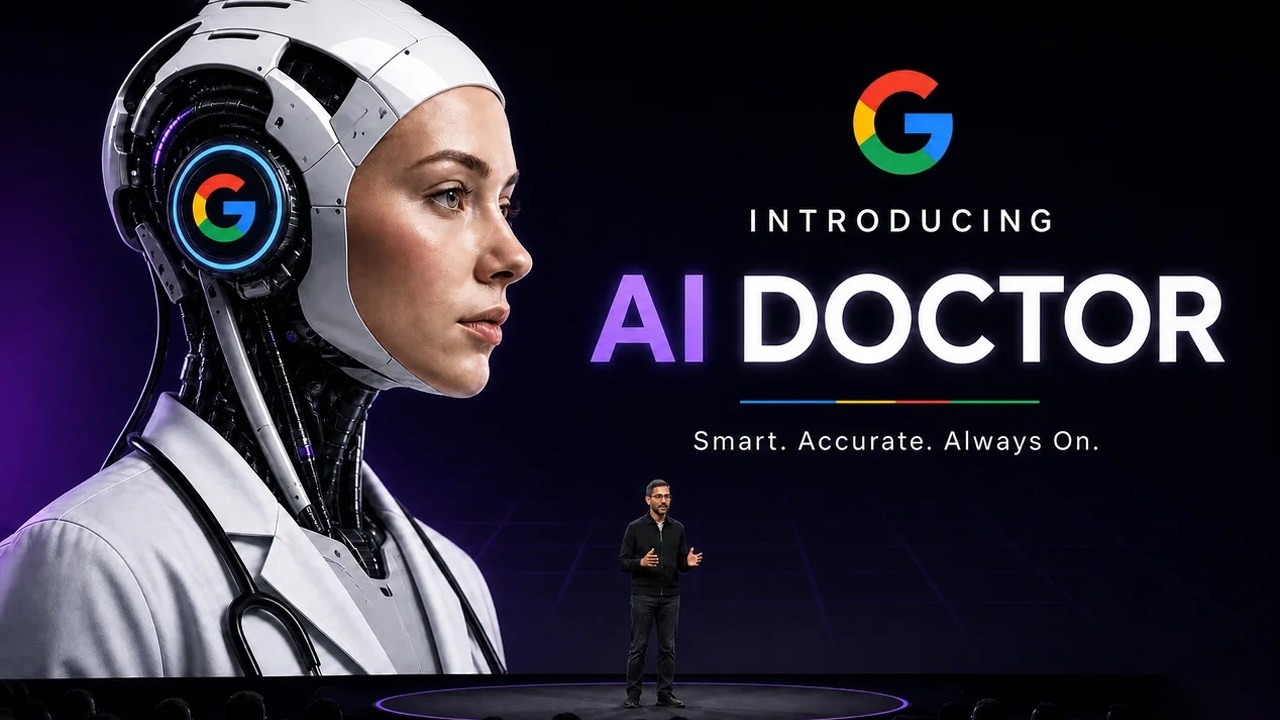
TheAIGRID covered Google DeepMind's AI co-clinician -- a system designed to work alongside doctors rather than replace them, with potential to transform diagnostic workflows. 11K views, 397 likes, 50 comments (Google's New AI Could Change Healthcare Forever). This is the first healthcare-specific AI application video to appear in this dataset series.
2. What Frustrates People
AI Coding Quality vs. Speed Tradeoff
SimonDev's video (75K views, 1,300 comments) articulates a frustration that has been building across the dataset series: AI coding tools work well enough to ship features quickly, but the resulting code may accumulate technical debt that becomes expensive to maintain. The 1,300 comments -- the highest in the dataset -- suggest this strikes a nerve across both pro-AI and cautious-AI audiences. Severity: High -- the engagement indicates widespread unresolved tension in the developer community.
Humanoid Robot Hype Persists Without New Evidence
Bloomberg's documentary continues growing (+22K daily) on the same message: billions invested, demos impressive, real-world deployment limited. With Figure's factory tour and the expo compilations dropping from the dataset, no new evidence has appeared to either confirm or challenge Bloomberg's hype-vs-reality framing. Severity: Medium -- the conversation is circling rather than advancing.
Agent Ecosystem Fragmentation
The dataset now contains two OpenClaw-focused videos (OpenClaw 5.2 Just Changed AI Agents Forever! at 9K views, OpenClaw FREE FOREVER with Local LLM at 3K views) alongside IBM's MCP-based agent framework. Practitioners must choose between competing agent protocols, frameworks, and deployment models without clear interoperability guarantees. Severity: Medium.
3. What People Wish Existed
Quality Gates for AI-Generated Code
SimonDev's central argument -- that AI coding works but produces fragile code -- implies a need for automated quality assessment specifically designed for AI-generated output. Not traditional linters, but tools that detect patterns unique to LLM-generated code: over-abstraction, redundant error handling, context-window-limited architecture decisions. The 1,300 comments suggest practitioners recognize this gap (AI Coding Works. That's the Problem). Opportunity: direct -- tooling gap with measurable demand.
Proven AI Agent Revenue Playbooks
Greg Isenberg's video (65K views, 407 comments) addresses the gap between "AI agents exist" and "AI agents make money." The audience wants specific, validated business models -- not conceptual overviews. The high comment count suggests viewers are actively seeking and sharing monetization strategies (Making $$ with AI Agents). Opportunity: direct -- course, template, or platform opportunity.
AI-Assisted Clinical Decision Support That Doctors Trust
TheAIGRID's coverage of DeepMind's co-clinician (11K views) surfaces the underlying wish: AI that augments rather than replaces medical judgment, with explainability and auditability that meets clinical standards. Opportunity: competitive -- Google, Microsoft, and startups are actively pursuing this.
4. Tools and Methods in Use
| Tool | Category | Sentiment | Strengths | Limitations |
|---|---|---|---|---|
| Codex / GPT 5.5 | AI coding agent | (+) | Multi-purpose: code, design, decks, social automation; 102K-view course | SimonDev critique raises quality concerns for production code |
| OpenClaw 5.2 | AI agent framework (open-source) | (+) | Free; local LLM support (Gemma4); no API key required | Ecosystem fragmentation; two competing tutorials in dataset |
| IBM Agent Skills + MCP | Agent protocol | (+) | Cross-vendor; 159K-view explainer indicates mainstream adoption | Competes with OpenClaw's approach |
| GPT Image 2.0 | AI image generation (closed) | (+/-) | Photorealism, text rendering; 241K combined review views | Growth plateaued; audience waiting for next capability jump |
| Google DeepMind Co-Clinician | Healthcare AI | (+) | Doctor-augmenting rather than replacing; clinical workflow integration | Early stage; trust and regulatory barriers |
| HRM / TRM | Recursive reasoning models | (+) | 7M params outperforming 1000x larger models on ARC tasks | Research stage; narrow benchmark evidence |
| Gemma4 | Local LLM | (+) | Used with OpenClaw for free, API-key-free agent setup | Performance vs. cloud models unclear |
The AI coding tool landscape is now explicitly split between capability advocates (Riley Brown's Codex course, 102K views) and quality skeptics (SimonDev, 75K views). The agent framework space is similarly bifurcating: IBM's enterprise-grade MCP approach vs. OpenClaw's open-source, local-first approach. Neither split has resolved.
5. What People Are Building
| Project | Who built it | What it does | Problem it solves | Stack | Stage | Links |
|---|---|---|---|---|---|---|
| OpenClaw 5.2 | OpenClaw community | AI agent framework with local LLM support | Free agent deployment without API keys or cloud dependency | Gemma4, local inference | Shipped | OpenClaw 5.2, Local Setup |
| DeepMind AI Co-Clinician | Google DeepMind | AI system that works alongside doctors for diagnostics | Clinical decision support without replacing physician judgment | DeepMind models | Research/Pilot | TheAIGRID coverage |
| HRM / TRM | Researchers (covered by YC) | Recursive reasoning models at 7M parameters | SOTA reasoning at fraction of compute | Recursive inference-time compute | Research | YC discussion |
| Multi-agent teams | IBM Technology | Coordinated AI agents with roles, feedback, and teamwork | Moving from single agents to collaborative agent systems | MCP, agent skills | Educational | IBM Tutorial |
| AI agent businesses | Various (Greg Isenberg audience) | Revenue-generating AI agent deployments | Monetizing AI agent capabilities | Various agent frameworks | Active building | Making $$ with AI Agents |
OpenClaw's dual appearance is notable: one video covers the 5.2 release's capabilities, while a separate tutorial shows how to run it entirely locally with Gemma4 and no API key. This mirrors the broader trend toward local-first, free-tier AI tooling that reduces dependency on cloud providers.
IBM's multi-agent architecture video represents a conceptual step beyond single-agent tutorials -- moving from "what one agent can do" to "how agents coordinate." The 38K views and 1,392 likes suggest the audience is ready for this complexity increase.
6. New and Notable
The AI Coding Debate Has a Voice
SimonDev's "AI Coding Works. That's the Problem" (75K views, 1,300 comments, 4,323 likes) is the most engagement-dense video in the dataset by every metric except raw views. Its return to the dataset after dropping from the 2026-05-02 snapshot suggests the video is finding new audiences through recommendation algorithms, not just initial subscriber distribution. The title itself -- framing success as the problem -- is a rhetorical structure that drives engagement because both sides of the debate can find validation in it (AI Coding Works. That's the Problem).
AI Existential Risk Gets a Long-Form Treatment
The New Culture Forum published a long-form interview with Dr. Robert Epstein on AI as an existential threat, garnering 4K views but 133 comments -- a comment-to-view ratio of 3.2%, the highest in the dataset. This suggests the existential risk conversation generates disproportionate engagement even at small scale (Artificial Intelligence: A Threat to Humanity?).
Free AI Video Tools Reach a Compilation Threshold
Malva AI published a roundup of 10 free and unlimited AI video generation tools, drawing 3.5K views and 69 comments. The emergence of "best of" compilations signals that the AI video generation market has enough players that curation content has become viable (10 Free & Unlimited AI Video Tools in 2026).
7. Where the Opportunities Are
[+++] AI code quality and review tooling -- SimonDev's 75K-view, 1,300-comment critique and Riley Brown's 102K-view Codex tutorial represent two sides of the same gap. AI coding tools are clearly being adopted (Codex growing 3.8% daily), but no widely-adopted quality gate exists for the output. Tools that specifically detect and remediate LLM-generated code patterns have a measurable, engaged audience waiting for them.
[+++] AI agent monetization infrastructure -- Greg Isenberg's 65K-view video on making money with AI agents, combined with IBM's two agent videos (197K combined views) and OpenClaw's local-first tooling, point to a maturing market that needs billing, metering, marketplace, and deployment infrastructure specifically designed for agent-based services.
[++] Local-first AI agent deployment -- OpenClaw's two videos demonstrate running agents entirely locally with Gemma4 and no API key. As cloud AI costs remain a concern, tools and frameworks that enable production-quality agent deployment on local hardware have growing appeal.
[++] AI in healthcare -- Google DeepMind's co-clinician (11K views) is the first healthcare AI entry in this dataset series. The "augment, don't replace" framing suggests opportunity for specialized AI tools in clinical workflows -- diagnostic support, patient triage, and documentation assistance.
[+] AEO (AI Engine Optimization) -- Ahrefs' course continues growing steadily (2.8K views, +191, 7.2% daily growth). Small numbers but consistent upward trajectory and authoritative source in the SEO industry (How AI Search Engines Work).
8. Takeaways
-
The AI coding debate intensified, not resolved. SimonDev's "AI Coding Works. That's the Problem" drew 75K views and 1,300 comments -- the highest comment count in the dataset -- while Riley Brown's Codex course grew to 102K views. The audience is simultaneously adopting AI coding tools and worrying about what that adoption means for code quality. (AI Coding Works. That's the Problem, Codex Full Course 2026)
-
AI agents crossed from education to monetization. Greg Isenberg's "Making $$ with AI Agents" (65K views, 407 comments) and IBM's multi-agent team tutorial (38K views) signal the agent conversation has moved from "what are agents" to "how do agents make money and work together." IBM's agent skills explainer at 159K views provides the foundational layer. (Making $$ with AI Agents, Building a Team of AI Agents)
-
Bloomberg's humanoid documentary is the breakout video of the week. Now at 240K views with +22K daily growth (10.3%), it has become the dominant frame through which YouTube audiences understand humanoid robotics. Meanwhile, the factory tour, expo compilations, and technical deep dives that accompanied it in prior days have all dropped. Mainstream narrative beats niche technical content in sustained reach. (Humanoid Robots and the Gap Between Hype and Reality)
-
Recursive scaling maintains the fastest growth rate for the third straight day. Y Combinator's video on 7-million-parameter models outperforming vastly larger ones grew 29.4% daily (4K → 7K → 9.2K over three days). While absolute numbers are small, the consistent acceleration suggests the "small models, recursive inference" narrative is becoming a durable counter-trend to scaling maximalism. (Recursion Is The Next Scaling Law In AI)
-
Healthcare AI made its first dataset appearance. Google DeepMind's co-clinician (11K views) opens a new vertical in the dataset. The "AI alongside doctors" framing -- rather than AI replacing doctors -- may reflect a broader pattern as AI applications move from general-purpose tools into regulated, trust-sensitive domains. (Google's New AI Could Change Healthcare Forever)