YouTube AI - 2026-05-07
1. What People Are Talking About
1.1 Hannah Fry's AI Agent Experiment Surpasses 870K Views 🡒

Hannah Fry (1.07M subscribers) grew from 820,873 to 870,319 views (+49,446, 6.0% daily growth). 48,415 likes and 4,300 comments remain the dataset highs. The agent experiment -- where an AI agent autonomously opened a mug shop, emailed a journalist, and leaked passwords -- continues its run as the dominant item by every engagement metric (Why AI Agents are either the best or worst thing we've ever built).
Comparison to prior day: Growth rate decelerated from 8.5% to 6.0%, continuing the long-tail trajectory. The video remains dominant but is firmly in sustained-reach mode rather than accelerating.
1.2 Vibe Coding and AI-Assisted Development Hold Mainstream Attention 🡒

Bloomberg Television (3.14M subscribers) grew from 255,883 to 268,453 views (+12,570, 4.9% daily growth). A Google Cloud AI director argues vibe coding does not mean the end of serious engineering, while junior developer hiring is visibly falling. 5,126 likes and 799 comments (The Vibe Coding Era: Why AI Won't Replace Software Engineers).
Burke Holland (108K subscribers) grew from 28,708 to 32,591 views (+3,883, 13.5% daily growth). Benchmarked five open-source models (Kimi K2.6, MiniMax M2.7, GLM 5.1, DeepSeek V4 Pro, Qwen 27B) against Claude Opus using the Copilot CLI to build a link-sharing app from a PRD. 978 likes, 236 comments (Can Open Source Models Beat Opus at a Fraction of the Cost?).

Riley Brown (232K subscribers) entered at 1,944 views with a 55-minute comprehensive tutorial building a web app, desktop app, and iOS app using Codex and GPT-5.5 with Firebase -- entirely for non-coders. 174 likes, 20 comments (The Ultimate Beginner's Guide to AI Coding).
Comparison to prior day: Burke Holland's growth rate decelerated from 214.8% to 13.5%, transitioning from viral surge to steady long tail. Bloomberg's vibe coding segment remains stable at 4.9% growth. Riley Brown's tutorial adds a hands-on dimension to the vibe coding narrative, with a practical non-coder audience in mind.
1.3 AI Agent Infrastructure and Tooling Emerge 🡕
AI News & Strategy Daily | Nate B Jones (284K subscribers) entered at 27,507 views on upload day with coverage of OpenClaw's agent runtime, which enables model swapping and persistent agent memory via OpenBrain. Argues the real shift is not Anthropic-vs-OpenAI model comparisons but that the agent runtime itself changed shape. 1,002 likes, 105 comments (Your AI Agent Is Locked To One Model. OpenClaw Just Killed That.).

Julian Goldie SEO (386K subscribers) entered at 8,299 views covering OpenSwarm, a free open-source multi-agent framework. 316 likes, 23 comments (New OpenSwarm AI Agent is Insane (FREE!)).
Comparison to prior day: The prior day focused on agent use cases (Hannah Fry's experiment, Anthropic enterprise agents, codebasics agent fundamentals). Today the conversation shifts to agent infrastructure -- runtimes, model-agnostic architectures, and multi-agent orchestration -- signaling a maturing ecosystem moving from "what agents can do" to "how to build agent systems."
1.4 Humanoid Robotics in Stable Long Tail 🡒

Bloomberg Originals (5.01M subscribers) grew from 281,123 to 292,297 views (+11,174, 4.0% daily growth). Nine-day trajectory shows consistent deceleration: 139K to 190K to 217K to 240K to 257K to 269K to 281K to 292K (Humanoid Robots and the Gap Between Hype and Reality).
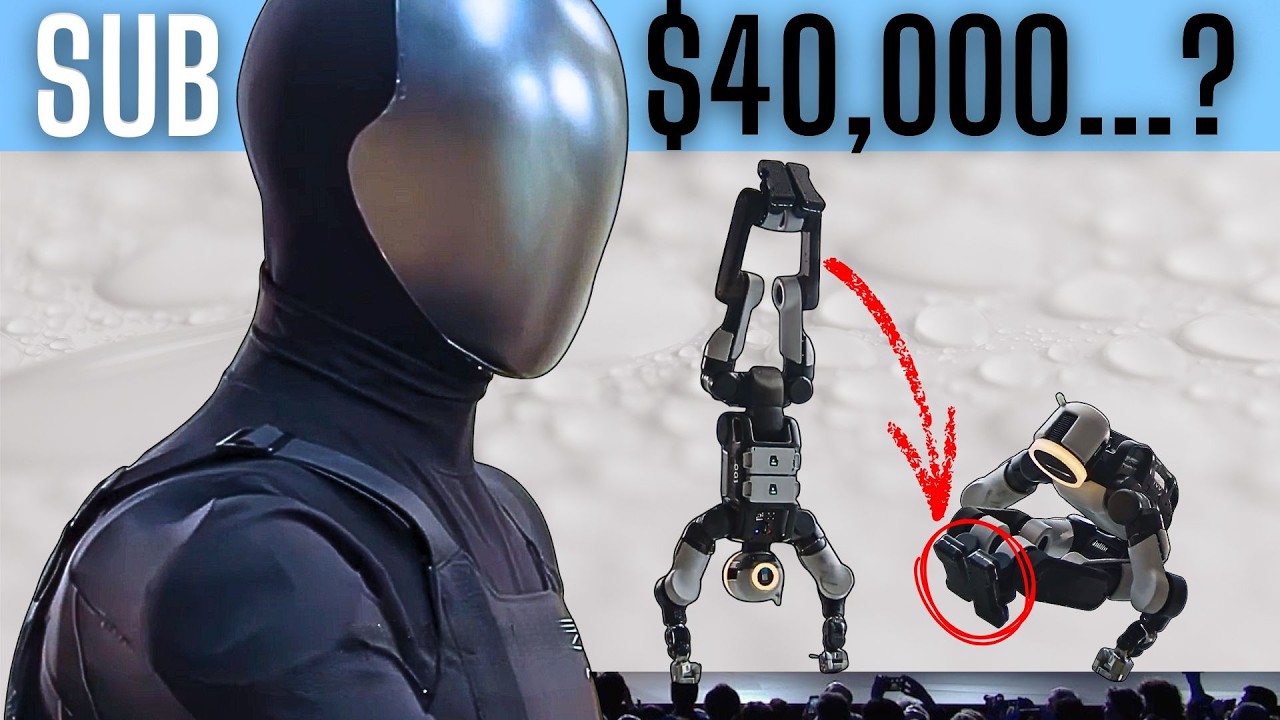
AI News (92.4K subscribers) entered at 1,915 views ranking the most capable humanoid robots of 2026: Genesis with biomimetic hands for cooking and lab automation, Boston Dynamics Atlas, and KAI. 82 likes, 9 comments (First Ready AI Robot: ATLAS vs KAI vs GENE 26.5).
Comparison to prior day: Bloomberg's growth rate is nearly unchanged (4.0% vs 4.6%). The theme continues in stable long-tail mode. AI News adds a robot-readiness comparison angle, shifting from "hype vs reality" to "which is actually ready."
1.5 AI Safety and Regulation: Opposing Perspectives 🡕

Roman Yampolskiy interviewed Connor Leahy, US Director of ControlAI and founder of EleutherAI (the community behind the first open-source LLMs). The hour-long conversation argues for banning superintelligence development. 16,146 views, 815 likes, and 234 comments -- the highest comment-to-view ratio in the dataset at 1.4%, indicating intense audience debate (AI Safety Expert: Ban Superintelligence!).
CNBC Television (3.36M subscribers) continues with Joe Lonsdale (Palantir co-founder, 8VC) at 11,294 views (+720, 6.8% growth) arguing the opposite: national AI review should be "as limited and targeted as possible." Covers AI regulation, defense spending, the global AI race, and Musk vs Altman (Joe Lonsdale on AI regulation).
Comparison to prior day: Yesterday had Lonsdale alone and the Amodei-Dimon conversation. Today adds the Yampolskiy-Leahy "ban superintelligence" position, creating a clear spectrum: from "ban it" (ControlAI) through "regulate carefully" (Amodei) to "minimal oversight" (Lonsdale). The policy conversation has become a three-way debate.
1.6 AI in Healthcare: Google DeepMind Co-Clinician 🡕
TheAIGRID (393K subscribers) at 16,913 views covering Google DeepMind's AI co-clinician research initiative. The DeepMind blog post details a "triadic care" model where AI agents assist patients under clinical supervision. The system was evaluated using the NOHARM framework for errors of commission and omission. In blind evaluations of 98 primary care queries, physicians consistently preferred the AI co-clinician's responses over existing evidence synthesis tools. 512 likes, 59 comments (Google's New AI Could Change Healthcare Forever).
Comparison to prior day: Healthcare AI was not a theme in the 2026-05-06 dataset. This represents a new vertical application signal backed by peer-reviewed research methodology.
1.7 GPT Image Generation and AI Video Tools in Long Tail 🡖
AI Samson at 31,935 views (+1,070, 3.5% from prior day's 30,865). The 50+ GPT image tricks video continues its slow decline (GPT Images 2.0 GOD MODE).
Multiple new entries cover free AI video generation: Malva AI at 3,065 views using Claude with Higgsfield MCP for free AI video workflows (Generate FREE & UNLIMITED AI Videos With Claude). Sleepy Owl at 3,827 views with free unlimited AI video generators (Generate Unlimited AI Videos for FREE). Lucy the AI Girl at 1,311 views covering 5 free unlimited AI tools (5 FREE AI Tools With NO LIMITS).
Comparison to prior day: AI Samson's growth rate continued its decline (3.5% vs 5.7%). The free AI video generator cluster is new to the dataset and primarily SEO-optimized content targeting users seeking no-cost alternatives.
2. What Frustrates People
Agent Lock-In to Single Models
Nate B Jones frames a concrete frustration: AI agents are locked to one model provider, making it impossible to swap models without rebuilding the agent. OpenClaw's runtime model-swapping capability is positioned as the solution to this vendor lock-in. The 105 comments suggest practitioners recognize this as a real constraint in production agent deployments.
Cost of High-Quality AI Coding Tools
Burke Holland's continued strong engagement (13.5% growth, 236 comments) testing open-source models against Claude Opus reflects ongoing frustration with the cost of proprietary AI coding assistants. The core question -- whether free models can match expensive ones -- remains unresolved, and practitioners are actively benchmarking alternatives.
Junior Developer Career Uncertainty
Bloomberg's vibe coding segment (268K views, 799 comments) explicitly states junior developer hiring is falling. The tension between "anyone can code with AI" and "serious engineering still matters" creates anxiety for early-career developers who see their entry path narrowing.
AI Safety vs Innovation Speed
The Yampolskiy-Leahy "ban superintelligence" position (234 comments on 16K views -- a 1.4% comment rate, the highest in the dataset) and Lonsdale's "minimal regulation" stance represent opposing frustrations: safety advocates frustrated by unchecked development speed, and builders frustrated by regulatory threats to innovation.
3. What People Wish Existed
Model-Agnostic Agent Runtimes
OpenClaw and OpenSwarm both address the same implicit need: agent frameworks that are not locked to a single model provider. Practitioners want to build agents once and swap models freely -- for cost, capability, or compliance reasons. Opportunity: direct.
Opus-Quality Open-Source Coding Models
Burke Holland's benchmark shows demand for open-source models that match Claude Opus quality in coding tasks at minimal cost. The audience wants to self-host or use free inference endpoints without sacrificing output quality. Opportunity: competitive.
Trustworthy AI for Healthcare Decisions
The DeepMind AI co-clinician research (NOHARM framework, physician preference studies) responds to a need for AI that clinicians can trust in medical decision-making. The "triadic care" model -- AI + patient + supervising physician -- addresses both the global clinician shortage and the trust gap. Opportunity: direct, but regulatory barriers are high.
Clear AI Regulation Framework
The three-way debate (ban superintelligence / regulate carefully / minimize oversight) reveals that no one is satisfied with the current regulatory landscape. Builders want certainty about what is allowed; safety advocates want enforceable limits. Opportunity: aspirational.
4. Tools and Methods in Use
| Tool | Category | Sentiment | Strengths | Limitations |
|---|---|---|---|---|
| Claude Opus | LLM | (+) | Benchmark reference for coding quality | Expensive proprietary access |
| GitHub Copilot CLI | Coding assistant | (+) | Model-agnostic; supports open-source models | Requires configuration for non-default models |
| OpenClaw | Agent runtime | (+) | Model swapping, agent memory via OpenBrain | New; limited adoption data |
| OpenSwarm | Agent framework | (+) | Free, open-source multi-agent orchestration | Early stage; limited documentation |
| Kimi K2.6 | Open-source LLM | (+/-) | Free; tested against Opus | Quality gap vs proprietary models |
| DeepSeek V4 Pro | Open-source LLM | (+/-) | Free; competitive in benchmarks | Unclear production readiness |
| GPT-5.5 | LLM | (+) | Used for beginner-friendly app building | Proprietary |
| Codex | Coding agent | (+) | Full app building from prompts; now in Chrome | OpenAI-locked ecosystem |
| GPT-Realtime-2 | Voice model | (+) | GPT-5-class reasoning in real-time voice | Just announced; limited evaluation |
| Higgsfield MCP | Video generation | (+) | Free AI video via Claude integration | Quality and reliability untested |
| Firebase | Backend | (+) | Easy auth, storage, database for AI-built apps | Google ecosystem dependency |
| RAG | Architecture pattern | (+) | Standard for grounding LLMs in enterprise data | Implementation complexity for beginners |
| Gemini 3.1 Flash-Lite | LLM | (+) | Google's lightweight model release | Just announced; limited evaluation |
The dataset shows a clear split: practitioners are actively evaluating open-source alternatives (Kimi, DeepSeek, Qwen, MiniMax, GLM) against Claude Opus as the quality benchmark. The migration pattern is cost-driven -- people want to move from expensive proprietary APIs to free or self-hosted models without losing capability. Agent tooling is fragmenting into specialized runtimes (OpenClaw) and multi-agent frameworks (OpenSwarm), moving beyond the single-model-single-agent pattern.
5. What People Are Building
| Project | Who built it | What it does | Problem it solves | Stack | Stage | Links |
|---|---|---|---|---|---|---|
| Urlist benchmark app | Burke Holland | Link-sharing app used to benchmark open-source models vs Opus | Evaluates whether free models can replace expensive ones | Copilot CLI, multiple LLMs | Shipped | PRD |
| AI Agent mug shop | Hannah Fry | Autonomous AI agent that designed and sold novelty mugs | Demonstrates agent autonomy capabilities and risks | Custom AI agent, bank card | Shipped | Mug shop |
| AI co-clinician | Google DeepMind | AI agent for triadic healthcare (AI + patient + physician) | Global clinician shortage, evidence synthesis quality | AMIE, MedPaLM, NOHARM framework | Alpha | Blog |
| Claude video workflow | Malva AI | Free AI video generation using Claude + Higgsfield MCP | Cost of AI video generation tools | Claude, Higgsfield MCP | Beta | Video |
| Beginner AI apps | Riley Brown | Web, desktop, and iOS apps built with Codex | Non-coders wanting to build functional apps | Codex, GPT-5.5, Firebase | Shipped | Video |
Burke Holland's benchmark project is notable for its methodology: using a full PRD (Product Requirements Document) as the prompt, then comparing model outputs on the same task. This creates a reproducible framework others can adopt for their own model evaluations. Riley Brown's tutorial demonstrates the vibe coding pattern end-to-end, building three complete apps across platforms in a single session.
6. New and Notable
OpenClaw Runtime Model Swapping
OpenClaw's agent runtime now supports model swapping and persistent memory via OpenBrain. Nate B Jones frames this as the real infrastructure shift happening in April-May 2026: the conversation about agents is no longer about which model to use, but about runtime architecture that makes the model layer interchangeable. 27,507 views on upload day with 105 comments suggest practitioner interest is strong (Your AI Agent Is Locked To One Model. OpenClaw Just Killed That.).
GPT-Realtime-2 Voice Model
OpenAI released GPT-Realtime-2 with GPT-5-class reasoning that processes speech mid-conversation. Simultaneously, Codex is now available directly in Chrome, and Google released Gemini 3.1 Flash-Lite. Three major product announcements in a single day indicate accelerating release cadence across providers (GPT-Realtime-2: OpenAI's MOST Intelligent Voice Model Yet!).
Connor Leahy Calls for Superintelligence Ban
Connor Leahy (ControlAI US Director, EleutherAI founder) argues for a ban on superintelligence development in a long-form interview with Roman Yampolskiy. Notable because Leahy founded the community that built the first open-source LLMs -- his shift to calling for bans signals a deepening split within the AI development community between builders and safety advocates (AI Safety Expert: Ban Superintelligence!).
RAG as Standard Job Requirement
codebasics (1.51M subscribers) notes that RAG is now a common skill listed in Gen AI engineer job postings, framing it as an essential component rather than a niche technique. The video covers fundamentals including hybrid RAG and hands-on telecom project implementation (RAG Explained).
7. Where the Opportunities Are
[+++] Model-agnostic agent infrastructure -- OpenClaw's runtime model swapping (27.5K views, 105 comments on upload day) and OpenSwarm's multi-agent framework (8.3K views) both address the same gap: agents are locked to single providers. Burke Holland's open-source benchmarking (32.6K views, 236 comments) validates demand for model flexibility. The agent ecosystem is shifting from "which model" to "which runtime," creating an infrastructure opportunity.
[++] Affordable AI coding alternatives -- Burke Holland's benchmark (13.5% daily growth), Riley Brown's beginner tutorial (Codex + GPT-5.5), and Bloomberg's vibe coding coverage (268K views) collectively show demand for capable AI coding at lower price points. Open-source models are closing the gap but not yet matching proprietary quality, leaving room for better-than-free, cheaper-than-Opus options.
[++] Healthcare AI with clinical trust -- DeepMind's AI co-clinician research demonstrates physician preference over existing evidence synthesis tools. The WHO projects 10M+ health worker shortfall by 2030. The "triadic care" model (AI + patient + physician supervision) addresses both the trust and capacity gaps. Regulatory barriers exist, but the clinical validation methodology (NOHARM framework) is advancing.
[+] Edge AI and on-device inference -- Qualcomm's EDEG chip positioning against Nvidia at the edge, combined with power grid constraints driving compute away from data centers, signals growing demand for efficient on-device AI. The semiconductor supply chain coverage (Bloomberg, TechButMakeItReal) provides context for why edge compute matters geopolitically.
[+] AI regulation consulting and compliance -- The three-way regulatory debate (ban / regulate / minimize) creates uncertainty that enterprises must navigate. No clear framework exists. Practitioners expressing frustration from both sides indicates demand for guidance on what is allowed and how to comply.
8. Takeaways
-
Agent infrastructure is the new battleground. OpenClaw's model-swapping runtime and OpenSwarm's multi-agent framework shift the conversation from model comparison to runtime architecture, reflecting ecosystem maturation. (Your AI Agent Is Locked To One Model. OpenClaw Just Killed That.)
-
Open-source vs proprietary cost pressure is intensifying. Burke Holland's benchmark testing five free models against Claude Opus grew 13.5% daily, confirming sustained practitioner interest in replacing expensive APIs with free alternatives. (Can Open Source Models Beat Opus at a Fraction of the Cost?)
-
AI safety debate has crystallized into three distinct positions. Yampolskiy-Leahy's "ban superintelligence" (234 comments/16K views), Amodei-Dimon's "regulate carefully," and Lonsdale's "minimal oversight" define a clear policy spectrum that enterprises and builders must now navigate. (AI Safety Expert: Ban Superintelligence!)
-
Healthcare AI crossed a validation threshold. Google DeepMind's AI co-clinician was preferred by physicians over existing evidence synthesis tools in blind evaluation, moving medical AI from capability demos to clinical preference data. (Google's New AI Could Change Healthcare Forever)
-
Hannah Fry's agent experiment continues decelerating but dominates. At 870K views with 6.0% daily growth (down from 8.5%), the video is transitioning to sustained long-tail reach while remaining the dataset's top item by every metric. (Why AI Agents are either the best or worst thing we've ever built)
-
Vibe coding is normalizing as mainstream content. Bloomberg (268K views), Burke Holland (32.6K), and Riley Brown (55-minute beginner tutorial) collectively show AI-assisted coding content spanning news, benchmarks, and tutorials -- no longer a niche developer topic. (The Vibe Coding Era)