YouTube AI - 2026-05-18
1. What People Are Talking About
1.1 AI infrastructure is being narrated as sovereignty, bottlenecks, and stock selection 🡕
The infrastructure theme strengthens again on 2026-05-18, but today's change is that the same buildout story is now being translated into regional sovereignty and investor discipline. Multiple items frame AI less as a pure model race and more as a question of fabs, datacenters, power electronics, financing, and who captures the upside.

Bloomberg Originals anchors the theme at 637,353 views. Its chapter list keeps ASML lithography, AMD design, AI demand, TSMC's global supply chain, China's reshoring push, and new US fabs at the center, so the AI boom is still being told first as a constrained hardware-and-manufacturing story rather than as a software-only one (video).

House of El pushes that same logic into regional politics. The description says Arthur Mensch warned Europe has two years to build sovereign AI infrastructure, while ASML's 1.3 billion euro investment in Mistral, European-backed datacenters, sovereign cloud, and AI gigafactories are presented as the beginnings of a full European stack (video).
Rick Orford - Trading Stocks and Options For All converts the same bottlenecks into public-market diligence. The description compares POET and Navitas on revenue momentum, customer validation, and whether AI datacenter demand has already outrun proof, which shows how quickly infrastructure talk is being financialized into stock-selection frameworks (video).
Discussion insight: Koh Kim's CapEx Payback Test for the Mag 7 and Bloomberg Podcasts' interview on the China chip market point in the same direction: AI infrastructure is now being judged through backlog, margins, trade access, and capital efficiency, not just technical prestige (video, video).
Comparison to prior day: On 2026-05-17 the strongest power story emphasized governance and political control. On 2026-05-18 the hardware frame stays intact, but more of the evidence shifts toward sovereign-stack building and investor validation.
1.2 Trust in AI still depends on whether claims can be checked 🡒
The trust theme remains steady. The most credible items in the set still ask whether AI outputs, benchmark claims, and safety assurances deserve belief at all, and they do so from three different angles: product marketing, reasoning theory, and organized public pressure.

Coding with Lewis keeps the Meta/Llama trust problem alive at 96,362 views. The linked Decoder summary says Yann LeCun described Llama 4 benchmark results as "fudged a little bit," while Meta's launch post still presents Scout and Maverick as best-in-class multimodal models with strong benchmark wins. That makes auditability part of the product story itself rather than something that can be deferred until later (video, The Decoder, Meta).

World Science Festival broadens that gap beyond one launch controversy. Gary Marcus frames current systems as imitating reasoning rather than genuinely reasoning, and the chapter list keeps returning to hallucinations, abstraction failures, world models, and neurosymbolic alternatives. The implication is that stronger output fluency still does not settle the question of actual understanding (video).

Roman Yampolskiy shows that distrust is also becoming organized action. The description routes viewers to ControlAI, and the linked page is literally a "Contact Your Representatives" call to action, which means frontier-model anxiety is being translated into public mobilization rather than staying inside lab discourse (video, ControlAI).
Discussion insight: The common demand is not simply for better AI. It is for evidence, legible failure modes, and governance levers before high-stakes trust is granted.
Comparison to prior day: Compared with 2026-05-17, this theme is steady. The difference is that today's set leans a bit more toward institutional responses and durable skepticism than toward new release-week controversy.
1.3 AI agents are being judged less by demo magic and more by workflow discipline 🡕
The agent cluster gets more operational on 2026-05-18. Instead of treating agents as open-ended magic, the strongest items frame them as a problem to be managed through lifecycle, memory, review, handoff, and narrow task design.

Low Level provides the clearest signal simply through reach. A same-day 108,733-view video titled "The problem with AI agents.." shows that critique of agent behavior is now mainstream enough to outrank most instructional content in the set (video).
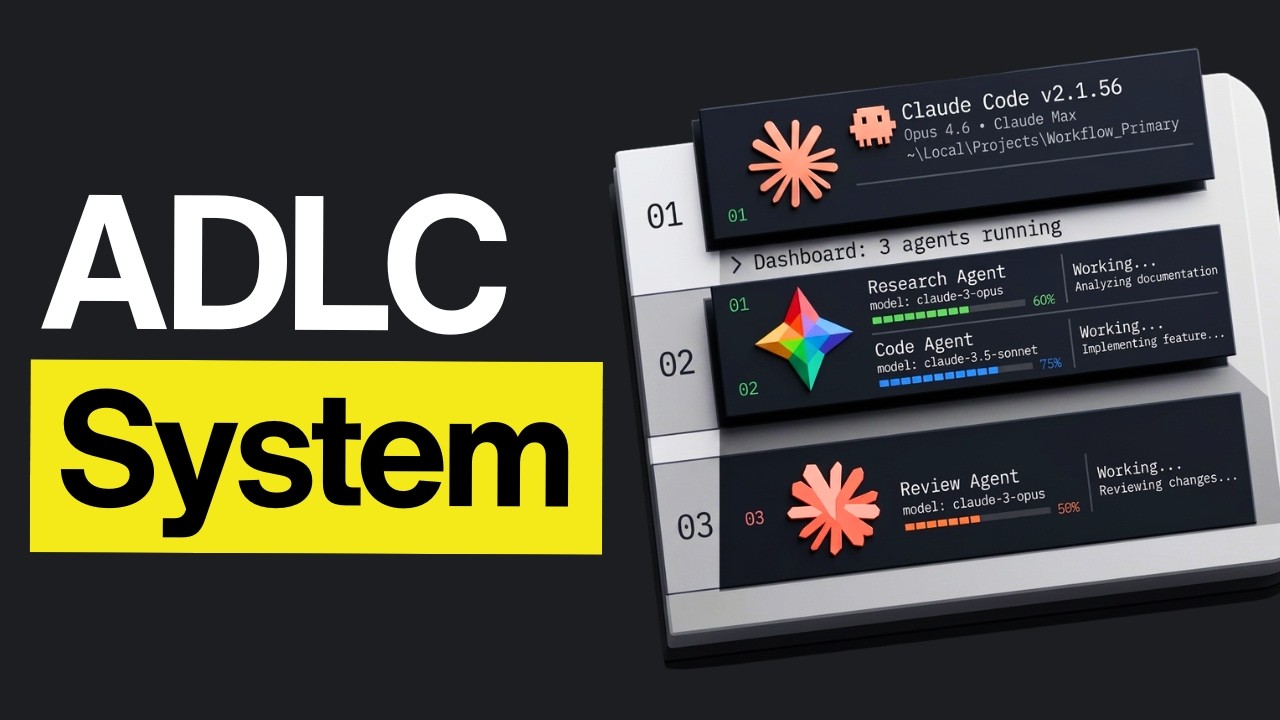
AI LABS turns that discomfort into methodology. The ADLC video says agentic coding does not fit the old SDLC and needs a new lifecycle built for non-determinism, context drift, and continuous evaluation, with seven phases spanning planning, design, validation, implementation, testing, deployment, and maintenance (video).
Tech With Tim makes the same point through tooling. The Devin tutorial centers terminal workflows, cloud handoff, memory, Agents.MD, subagents, PR review, and scheduled tasks, while Devin's own site markets delegated large-scale refactors as the kind of repetitive work that can be split across an "army of Devins" in parallel (video, Devin, docs).
Discussion insight: AI Master's agent guide lands in the same place from the training side: agents need prompt contracts, memory files, and explicit tool loops, which means the value is moving from generic prompting toward operating discipline (video).
Comparison to prior day: On 2026-05-17 agent advice leaned on ARR, OODA, and workflow maps. On 2026-05-18 the story goes deeper into coding-team operations, cloud delegation, and failure prevention.
1.4 Creator-side AI is turning into a discovery and orchestration market 🡕
The creator-tool theme is stronger than yesterday, but it is less about local execution and more about staying on top of a tool explosion. The most useful creator items now behave like discovery layers, workflow bundles, or free-tool maps rather than like endorsements of a single model.

AI Search is the strongest example at 81,593 views. The description links an unusually broad stack including JUST-DUB-IT, Pixal3D, SANA-WM, Krea 2, Codex on phone, TrackCraft3R, Scenema, and DramaBox, so one roundup now functions like a release calendar for media and multimodal builder tooling (video, JUST-DUB-IT, Pixal3D, TrackCraft3R).

Curious Refuge packages creator AI the same way: a leaked Google omni model, Krea comparisons, emotion prompting, clip stitching, Runway agents, and a long list of links and community destinations. The product value is curation across changing tools, not just access to one more generator (video).

Brain Project adds the cost-and-access layer. The video tests Seedance 2.0, Grok 3, and other generators with zero credits used and treats free or unlimited access as a core differentiator, which shows that creator demand is being shaped as much by economics and workflow fit as by raw output quality (video).
Discussion insight: Malva AI and Higgsfield push the same logic further by selling image-first workflows, model aggregation, virality scoring, memory, and automation. In creator AI, orchestration is increasingly the product (video, Higgsfield, Krea 2).
Comparison to prior day: On 2026-05-17 creator momentum leaned toward local/open tools and on-device control. On 2026-05-18 it pivots toward leaks, free tiers, discovery, and multi-model orchestration.
2. What Frustrates People
Infrastructure buildout is still a bottleneck and a valuation problem
This is High severity because the same AI expansion keeps surfacing as a constraint story from multiple angles. Bloomberg keeps fabs, lithography, and supply chains central; House of El recasts the problem as sovereign European compute; Rick Orford looks for customer validation in bottleneck suppliers; and Koh Kim asks whether AI capex is generating real payback yet (How AI Is Pushing the Semiconductor Supply Chain to the Limit | Bloomberg Primer, Mistral CEO: Europe Has 2 Years Left - Meanwhile €3B Infrastructure, ASML €1.3B Investment Built, Navitas vs. POET: Why One AI Infrastructure Stock Has the Better Setup, Which Mag7 Giant Will Dominate AI Infrastructure Returns?). The visible coping strategy is more diligence, more financing, and more regional stack-building rather than simplification. This is worth building for, but the buyers are likely to be enterprises, operators, and investors.
Trust fails when performance, reasoning, and safety stories diverge
This is High severity because the evidence is blunt and public. Lewis ties Meta's credibility problem to benchmark reporting, Gary Marcus argues fluent systems still do not reason in the way marketing implies, and ControlAI turns safety concern into direct lawmaker outreach (How Meta Went From Open Source Hero to AI's Biggest Villain, The Decoder, Llama 4 Multimodal Intelligence, The Uncomfortable Truth About AI “Reasoning” | World Science Festival, AI Safety Expert: Ban Superintelligence!, ControlAI). The coping strategies are skepticism, calls for provenance, and organized governance pressure rather than a restored baseline of trust. This is directly worth building for.
Agents still need lifecycle, memory, and human checkpoints
This is High severity because even the pro-agent material assumes structure around the model. Low Level's high-reach critique shows how visible the failure narrative has become, AI LABS says non-determinism and context drift require a new lifecycle, AI Master adds prompt contracts and memory files, and Devin coverage keeps centering review, subagents, handoff, and scheduled management (The problem with AI agents.., ADLC: Claude Code's New Lifecycle for AI Coding, AI Agents Explained: How to Create and Use AI Agents in 2026, Devin AI Is the Future of Coding… Full Tutorial, Devin for Terminal docs). The coping strategy is to surround agents with process rather than trust raw autonomy. This is directly worth building for.
Creator AI stacks are fragmented and growth-driven
This is Medium severity because the frustration appears as tool sprawl and workflow juggling rather than direct complaint, but it is everywhere in the creator coverage. AI Search links a whole moving market of research and products, Curious Refuge curates leaked and emerging video workflows, Brain Project emphasizes free and unlimited access, and Malva AI adds directories and virality scoring on top (Real gundams, top 3D generator, open-source world models, ChatGPT updates, new TTS: AI NEWS, Google just leaked an Insane New AI Video Tool, Seedance 2.0 & Grok Are FREE !! 4 New AI Video Generators That Are Actually UNLIMITED, The New BEST 3 FREE AI Video Generators You NEED in 2026, Higgsfield, Krea 2). The coping strategy is to follow roundups, communities, and aggregators instead of mastering one stable stack. This is worth building for, but the market is already crowded.
Model choice and retrieval literacy still have to be taught explicitly
This is Medium severity because the demand shows up as education and packaging rather than overt frustration, but it is clearly durable. Codist says people should stop choosing models "by vibes," codebasics says RAG is common in GenAI job posts and real projects, and Simplilearn frames open-source LLMs as a response to API cost, privacy, and control issues (Every Large Language Model Explained in 17 Minutes!, RAG Explained | All about RAG - Retrieval Augmented Generation, RAG Basics, Top 10 Open Source LLMs In 2026 | Best Open Source LLM Models Explained | AI Models | Simplilearn). The coping strategies are courses, taxonomies, and reusable resource packs. This is worth building for, but it is a competitive category.
3. What People Wish Existed
Checkable AI systems
The strongest unmet need in the set is for systems that can show what was tested, what evidence supports a claim, and what failure modes remain before the output is trusted. The Lewis/Meta controversy, Marcus' reasoning critique, and ControlAI's public organizing all point to the same missing layer: AI that is auditable enough to deserve belief in the first place (How Meta Went From Open Source Hero to AI's Biggest Villain, The Decoder, The Uncomfortable Truth About AI “Reasoning” | World Science Festival, ControlAI). This is an urgent practical need. Opportunity: direct.
Agent operating systems with explicit handoffs
Today's agent material makes the desired product shape unusually clear: planning, responsibility mapping, prompt contracts, memory, scheduled work, review, and cloud handoff. ADLC, AI Master, and Devin are all different versions of the same request for agents that do real work without becoming opaque or chaotic (ADLC: Claude Code's New Lifecycle for AI Coding, AI Agents Explained: How to Create and Use AI Agents in 2026, Devin AI Is the Future of Coding… Full Tutorial, Devin, docs). This is a direct workflow need rather than an aspirational wish. Opportunity: direct.
Creator orchestration layers
The creator side wants fewer disconnected tools and more opinionated systems for deciding what to use, in what order, and for what output format. AI Search, Curious Refuge, Brain Project, Malva AI, Higgsfield, and Krea 2 all imply demand for a layer that unifies generation, curation, scoring, and publishing across image, video, audio, and 3D workflows (Real gundams, top 3D generator, open-source world models, ChatGPT updates, new TTS: AI NEWS, Google just leaked an Insane New AI Video Tool, Seedance 2.0 & Grok Are FREE !! 4 New AI Video Generators That Are Actually UNLIMITED, The New BEST 3 FREE AI Video Generators You NEED in 2026, Higgsfield, Krea 2). This is a real need, but creator software is already crowded and fast-moving. Opportunity: competitive.
Model-selection and retrieval copilots
There is still a clear practical need for products that tell teams which model to use for which job, when open-source control outweighs hosted convenience, and how retrieval should be designed in practice. Codist, codebasics, and Simplilearn are all monetizing or packaging that judgment layer in different ways (Every Large Language Model Explained in 17 Minutes!, RAG Explained | All about RAG - Retrieval Augmented Generation, RAG Basics, Top 10 Open Source LLMs In 2026 | Best Open Source LLM Models Explained | AI Models | Simplilearn). This is a practical need, but the market is competitive and easy to imitate. Opportunity: competitive.
Infrastructure intelligence for sovereign AI and capital allocation
The infrastructure coverage suggests demand for software that tracks which suppliers are real bottlenecks, which regions are building durable sovereign capacity, and which spending programs are turning into measurable returns. Bloomberg, House of El, Rick Orford, and Koh Kim each attack a different slice of that same missing dashboard (How AI Is Pushing the Semiconductor Supply Chain to the Limit | Bloomberg Primer, Mistral CEO: Europe Has 2 Years Left - Meanwhile €3B Infrastructure, ASML €1.3B Investment Built, Navitas vs. POET: Why One AI Infrastructure Stock Has the Better Setup, Which Mag7 Giant Will Dominate AI Infrastructure Returns?). This is a practical enterprise need more than a consumer wish. Opportunity: direct.
4. Tools and Methods in Use
| Tool | Category | Sentiment | Strengths | Limitations |
|---|---|---|---|---|
| Llama 4 | LLM | (+/-) | Open-weight multimodal positioning, long-context claims, strong published benchmark framing | Credibility damaged by benchmark controversy and auditability concerns |
| ADLC / Claude Code-style workflows | Coding method | (+) | Planning, role mapping, continuous evaluation, context management | Extra process overhead; built around non-determinism rather than eliminating it |
| Devin | Coding agent | (+/-) | Cloud delegation, review, memory, PR workflows, enterprise refactors | Requires management, handoff, and separate local/cloud modes |
| RAG | Retrieval method | (+) | Common in job posts, useful in real projects, supported by reusable materials | Still requires explicit design and retrieval literacy |
| Higgsfield SUPERCOMPUTER | Creator automation | (+/-) | Skills, memory, 24/7 automations, model aggregation | Another layer in an already fragmented stack |
| Krea 2 | Image model | (+) | Aesthetics-first outputs, style references, fast generation | Only one piece of a broader creator workflow |
| Seedance 2.0 | Video model | (+) | Prompt accuracy, realistic action scenes, multi-shot consistency, free-access attention | Access terms and rankings are volatile; still needs workflow tuning |
| Pixal3D | 3D generation | (+) | Higher-fidelity image-to-3D via pixel alignment | Research-stage and setup-heavy |
| SANA-WM | World model | (+) | Minute-scale camera-controlled 720p video generation | Research preview, not turnkey |
| ControlAI | Governance action layer | (+/-) | Channels concern into concrete political action | Activism, not a day-to-day workflow tool |
Positive sentiment clusters around tools or methods that add structure or compress tool sprawl: RAG, Devin, ADLC, Pixal3D, Krea 2, and Higgsfield all sell clarity, control, or orchestration. Mixed sentiment appears where proof is contested or process load remains high, such as Llama 4's benchmark story and coding-agent systems that need explicit review loops. The common workaround is to wrap models with memory, retrieval, lifecycle stages, and multi-tool pipelines rather than trust any single agent or generator end-to-end (How Meta Went From Open Source Hero to AI's Biggest Villain, ADLC: Claude Code's New Lifecycle for AI Coding, AI Agents Explained: How to Create and Use AI Agents in 2026, Devin AI Is the Future of Coding… Full Tutorial, RAG Explained | All about RAG - Retrieval Augmented Generation, Real gundams, top 3D generator, open-source world models, ChatGPT updates, new TTS: AI NEWS, The New BEST 3 FREE AI Video Generators You NEED in 2026).
5. What People Are Building
| Project | Who built it | What it does | Problem it solves | Stack | Stage | Links |
|---|---|---|---|---|---|---|
| JUST-DUB-IT | Anthony Chen et al. | Dubs video with translated audio and synchronized facial motion | Lip-synced multilingual dubbing without brittle multi-tool pipelines | Joint audio-visual diffusion + lightweight LoRA | Alpha | project |
| Pixal3D | Dong-Yang Li et al. | Generates pixel-aligned 3D assets from images | Low fidelity and ambiguous 2D-to-3D correspondence in image-to-3D | Pixel back-projection conditioning, VAE, sparse 3D latents | Alpha | project |
| SANA-WM | NVIDIA / NVLabs | Generates minute-scale camera-controlled 720p video worlds | Longer, controllable world modeling for video generation | Efficient world-model pipeline | Alpha | project |
| TrackCraft3R | Jisu Nam et al. | Performs dense 3D tracking from monocular video in a single forward pass | Robust motion tracking and dynamic-scene understanding | Wan2.1-T2V-1.3B video diffusion transformer, dual latents, temporal RoPE | Alpha | project |
| Devin | Cognition | Provides a cloud software engineer plus terminal workflow | Large repetitive refactors and delegated coding subtasks | Cloud agent, local terminal agent, review tool, integrations | Shipped | site, docs |
The AI Search roundup is notable because it concentrates a full substrate layer of media R&D into one place: dubbing, 3D fidelity, longer world models, and trackable motion. These are builder projects aimed at hard production gaps, not generic chatbot wrappers (Real gundams, top 3D generator, open-source world models, ChatGPT updates, new TTS: AI NEWS, JUST-DUB-IT, Pixal3D, TrackCraft3R).
On the coding side, Devin and ADLC point to the same build pattern: teams are pairing raw agent capability with workflow control, handoff, and evaluation. The repeated trigger is tedious but high-variance engineering work that is too discretionary for scripts and too repetitive for humans to want to repeat manually (Devin AI Is the Future of Coding… Full Tutorial, Devin, docs, ADLC: Claude Code's New Lifecycle for AI Coding).
6. New and Notable
A same-day anti-agent video outranked most agent how-to content
Low Level published one of the day's biggest new videos, and its critique of agents outperformed the more instructional agent uploads from AI Master, AI LABS, and Tech With Tim. That is a useful signal that agent skepticism itself is now a mainstream audience category.
One roundup now behaves like infrastructure for creator discovery
AI Search is not just a news video. By bundling JUST-DUB-IT, Pixal3D, SANA-WM, TrackCraft3R, Krea 2, Scenema, and more into one artifact, it functions like a high-velocity discovery feed for creator and multimodal builder tooling.
The chip story picked up both European sovereignty and China-market access
House of El framed Europe's AI future around Mistral, ASML, datacenters, and sovereign cloud, while Bloomberg Podcasts centered Jensen Huang and Michael Dell on agentic AI, memory demand, and the China market. Together they show that the infrastructure narrative is widening in geography, not narrowing.
Coding agents are being productized as coordinated local-plus-cloud systems
Tech With Tim treats Devin as a stack of terminal, cloud, review, and integration surfaces, and the Devin docs explicitly distinguish local terminal use from the cloud product. That split matters because it suggests agent vendors are now packaging deployment modes and workflow boundaries as core product choices.
7. Where the Opportunities Are
[+++] Agent lifecycle, review, and handoff systems - This is the strongest direct opportunity in the set. Low Level's critique, AI LABS' ADLC framework, AI Master's prompt contracts, and Devin's managed workflows all converge on the same gap: agents need operating structure before teams will trust them.
[+++] Audit, provenance, and governance layers for AI - Lewis, Gary Marcus, and ControlAI all point to the same demand from different angles: people want systems whose claims can be checked, whose failures are legible, and whose escalation paths are clear before adoption.
[++] Creator-stack orchestration across video, audio, and 3D - AI Search, Curious Refuge, Brain Project, Malva AI, Higgsfield, and Krea 2 all suggest room for products that unify discovery, generation, scoring, and workflow order across modern creator pipelines.
[++] Infrastructure-readiness and sovereign-AI intelligence - Bloomberg, House of El, Rick Orford, and Koh Kim show room for software that tracks bottlenecks, supplier validation, sovereign-capacity progress, and whether AI spending is turning into durable returns.
[+] Model-selection and RAG enablement products - Codist, codebasics, and Simplilearn show that teams still need help deciding which model to use, when to choose open source, and how to operationalize retrieval. The demand is real, but the space is crowded.
8. Takeaways
- AI infrastructure coverage is now about sovereign capacity and capital discipline, not just chip scarcity. Bloomberg, House of El, Rick Orford, and Koh Kim all translate the same buildout into fabs, financing, payback tests, and stock validation. (source, source, source, source)
- Trust remains the main fault line in AI adoption. The Meta/Llama benchmark dispute, Gary Marcus' reasoning critique, and ControlAI's lawmaker outreach show that fluent outputs and launch claims still do not buy automatic credibility. (source, source, source, source)
- Agent adoption is becoming a workflow-discipline problem. Low Level's critique, ADLC's lifecycle, AI Master's prompt contracts, and Devin's handoff-heavy setup all say the same thing: useful agents need process around them. (source, source, source, source)
- Creator AI is turning into an orchestration business. AI Search, Curious Refuge, Brain Project, and Malva AI all compete by helping users navigate bundles of fast-moving tools rather than by championing one stable model. (source, source, source, source)
- Structured AI education is still a durable product category. Codist, codebasics, and Simplilearn all assume that model choice, retrieval, privacy, and open-source trade-offs still need explicit teaching. (source, source, source, source)
- The strongest builder activity is in substrate tools for media production and delegated coding. JUST-DUB-IT, Pixal3D, SANA-WM, TrackCraft3R, and Devin are all focused on missing workflow infrastructure rather than on another general chatbot surface. (source, source, source, source, source)