YouTube AI - 2026-05-19
1. What People Are Talking About
1.1 AI power is being discussed as infrastructure plus who gets to steer it 🡕
The strongest throughline on 2026-05-19 is that AI is no longer being narrated as a clean sequence of model launches. The highest-reach items instead frame it as a struggle over fabs, supply chains, founder motives, and who gets enough legitimacy to direct deployment. Three retained items support the theme, and together they move the conversation from abstract "AI race" language toward industrial and political control.

Bloomberg Originals is still the anchor at 648,414 views. Its chapter list keeps ASML lithography, AMD design, TSMC's supply chain, China's reshoring effort, and new US fabs at the center, so the AI boom is still being described first as a constrained hardware-and-manufacturing system rather than a software-only market (video).

Bloomberg Television makes the same power story more personal. Sebastian Mallaby frames AI leaders through scientific curiosity, commercial ambition, and political power, which shifts the question from who ships next to who captures the upside and sets the terms of deployment (video).

Roman Yampolskiy pushes the control question into direct organizing. The description routes viewers to ControlAI's representative-contact page while presenting Connor Leahy as both an open-source LLM founder and safety organizer, so governance anxiety is not staying inside lab discourse (video, ControlAI).
Discussion insight: Lewis' Meta retrospective shows why the control theme has become a legitimacy theme too: once benchmark claims are questioned, governance and trust stop being separable problems (video, The Decoder, Meta).
Comparison to prior day: On 2026-05-18 the infrastructure story leaned on sovereignty and investor discipline. On 2026-05-19 it becomes more explicitly about the people and institutions trying to steer AI's direction.
1.2 AI credibility is still bottlenecked by verification, not fluency 🡒
The trust theme holds steady, but today's evidence is more diagnostic than dramatic. The strongest items ask whether leading models can be believed when benchmark stories wobble and when fluent output still fails the deeper test of reasoning.

Coding with Lewis gives the cleanest case study at 110,188 views. The linked Decoder summary says Yann LeCun described Llama 4 benchmark results as "fudged a little bit," while Meta's own launch post still markets Scout and Maverick as best-in-class multimodal models with broad benchmark wins, so the credibility gap is visible directly in the cited sources (video, The Decoder, Meta).

World Science Festival zooms out from one company to the whole paradigm. Gary Marcus and Brian Greene keep returning to hallucinations, abstraction failures, world models, and neurosymbolic alternatives, making the point that persuasive output is not the same thing as robust reasoning (video).
Discussion insight: The same skepticism is showing up as practical education. theMITmonk says agents amplify vague thinking and bad process, which is another version of the same demand for systems whose limits are legible before people depend on them (video).
Comparison to prior day: Compared with 2026-05-18, the theme is steady. The emphasis shifts slightly away from release-week controversy and toward a more durable argument about what counts as trustworthy AI at all.
1.3 Practical AI adoption is being packaged as operating procedure, not prompting magic 🡕
Today's biggest practical cluster is tutorial-heavy and unusually operational. Instead of generic "use AI better" advice, the evidence centers on agent roles, tool loops, prompt contracts, memory files, and full-stack implementation. Four items support the pattern, and the audience numbers suggest this is now mainstream educational demand rather than niche builder chatter.

theMITmonk drives the theme with 386,952 views. The description says the shift is from prompts to agents that decide the next action, and it ties that shift to ARR, four roles, OODA loops, and a warning that agents magnify vague thinking and bad process (video).

AI Master turns that advice into a concrete stack comparison. Claude Code, OpenAI Codex, OpenClaw, Google Antigravity, prompt contracts, and memory files are all presented as parts of an operating model, which shows how quickly agent education is becoming tool-and-procedure selection (video).
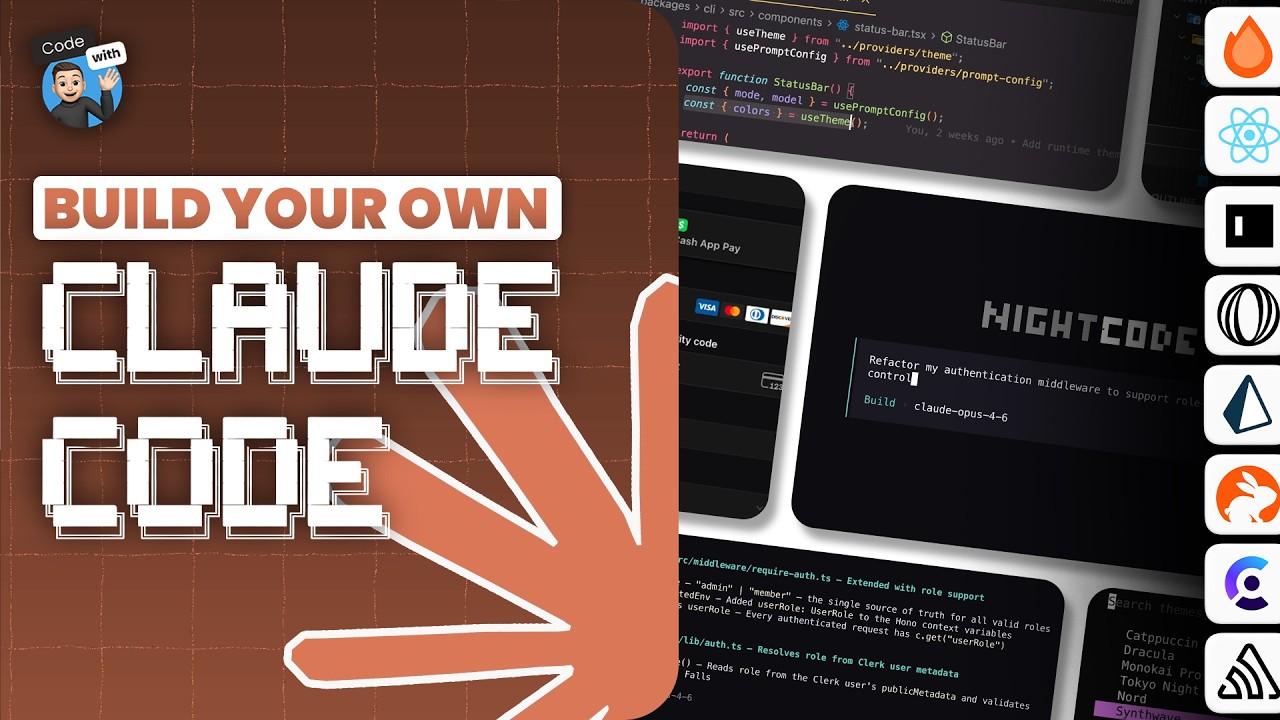
Code With Antonio pushes the same shift from the builder side. An almost 12-hour tutorial that walks through routing, shared packages, database, monitoring, chat streaming, session management, tool calling, billing, and client-side execution is evidence that the audience is now willing to sit through full-stack agent construction, not just productivity tips (video).
Discussion insight: Codist's LLM explainer lands in the same place from the selection layer: if teams need to stop picking models "by vibes," then choosing the right model has become part of operating an agent system, not a separate background concern (video).
Comparison to prior day: On 2026-05-18 the agent story was about lifecycle and workflow discipline. On 2026-05-19 it deepens into named tool comparisons, memory patterns, and build-your-own agent stacks.
1.4 AI comparison culture now spans creator tools and humanoid robots 🡕
A second strong pattern is that more of AI coverage now behaves like shopping content. The same comparison frame is being applied to video models, workflow bundles, robot speed tests, and warehouse payback math. That makes "which setup wins?" as central as "what can the model do?"

Curious Refuge treats creator AI as a rolling comparison board. The description jumps from a leaked Google omni model to Krea comparisons, prompting for emotion, Runway agents, and workflow stitching, so the value is less a single claim than an ongoing curation surface for filmmaker decisions (video).

Malva AI packages the same behavior more explicitly. The description argues that bad AI video comes from using the wrong tools in the wrong order, and the linked Higgsfield page markets an "agent with skills, memory, and 24/7 automations," which shows how creator tooling is being sold as orchestration plus scoring, not just generation (video, Higgsfield).
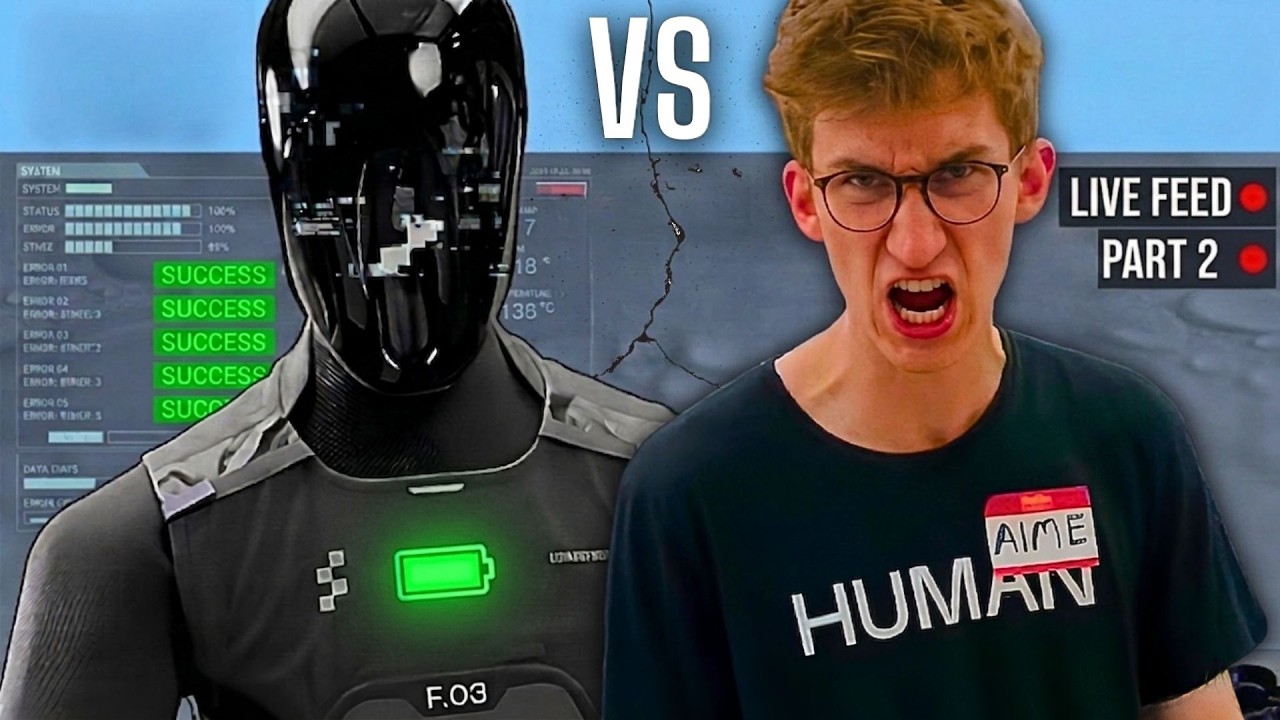
AI News brings that shopping logic into humanoids. The Figure 3 video frames the contest around battery life, degrees of freedom, autonomous handoffs, a projected $24,000 price point, and a six-month payback argument, so the conversation becomes robot unit economics rather than only spectacle (video).
Discussion insight: The companion Atlas video bundles reinforcement learning, domain randomization, open-source robotics models, and leaked Google Gemini Omni testing into one short update, which suggests creator AI and embodied AI are increasingly consumed through the same rapid-fire comparison lens (video).
Comparison to prior day: On 2026-05-18 creator momentum centered on discovery and orchestration. On 2026-05-19 that same logic expands into robot performance and labor-cost arithmetic.
2. What Frustrates People
Control is concentrating faster than accountability
This is High severity because the biggest power stories are about chokepoints and control, not convenience. Bloomberg Originals keeps fabs, lithography, and supply chains at the center, Bloomberg Television frames lab leaders through profit and political power, and Roman Yampolskiy turns AI fear into a literal representative-contact workflow through ControlAI (How AI Is Pushing the Semiconductor Supply Chain to the Limit | Bloomberg Primer, ‘The Oppenheimer’ of the AI Era, AI Safety Expert: Ban Superintelligence!, ControlAI). The visible coping strategies are public pressure, closer scrutiny of infrastructure chokepoints, and attempts to pull deployment questions into policy. This is directly worth building for in governance, compliance, and enterprise oversight.
Trust collapses when claims are hard to verify
This is High severity because the evidence is specific and public. Coding with Lewis points to a case where Meta's benchmark presentation was later described by Yann LeCun as "fudged a little bit," while World Science Festival argues that fluent systems still fail deeper reasoning tests around abstraction, hallucination, and world modeling (How Meta Went From Open Source Hero to AI's Biggest Villain, The Decoder, Llama 4 Multimodal Intelligence, The Uncomfortable Truth About AI “Reasoning” | World Science Festival). The coping strategies are skepticism, demands for provenance, and renewed interest in architectures that make failure modes easier to reason about. This is directly worth building for.
Agent systems inherit every flaw in the process around them
This is High severity because the instructional material keeps circling the same operational weakness. theMITmonk says agents amplify vague thinking and bad process, AI Master adds prompt contracts and memory files to stop systems from drifting, and Code With Antonio's nearly 12-hour build shows how much routing, monitoring, session state, tool execution, and billing logic sits around the model in a real product (You're Not Behind (Yet): Learn AI Agents in 13 Minutes, AI Agents Explained: How to Create and Use AI Agents in 2026, Build Your Own Claude Code | Full AI Coding Agent Tutorial). The coping strategy is not more prompting; it is more structure, memory, review, and instrumentation. This is directly worth building for.
Comparison overload is becoming part of the workflow
This is Medium severity because the tone is often educational or promotional rather than openly frustrated, but the need is obvious. Codist is teaching people how to choose among LLM trade-offs, Curious Refuge curates rolling creator-tool decisions, Malva packages tool ordering and virality scoring into a single workflow, and AI News translates humanoid robots into battery, throughput, and payback comparisons (Every Large Language Model Explained in 17 Minutes!, Google just leaked an Insane New AI Video Tool, The New BEST 3 FREE AI Video Generators You NEED in 2026, Higgsfield, Tesla Robot RIVAL vs Human FACEOFF 2026 (AI, SPEED TEST, PRICE, VALUE)). The coping strategies are roundups, directories, sponsored bundles, and ROI math instead of a stable long-term stack. This is worth building for, but it is already a competitive category.
3. What People Wish Existed
Verifiable AI systems with legible evidence
The clearest unmet need is for AI that can show what was tested, what evidence supports the claim, and where trust should stop. Lewis' Meta retrospective, Gary Marcus' reasoning critique, and ControlAI's public action layer all point to the same missing substrate: systems that are auditable enough to deserve adoption in the first place (How Meta Went From Open Source Hero to AI's Biggest Villain, The Decoder, The Uncomfortable Truth About AI “Reasoning” | World Science Festival, ControlAI). This is an urgent practical need. Opportunity: direct.
Agent workbenches with explicit memory, contracts, and handoffs
People want agents that do real work without hiding their operating logic. theMITmonk's ARR and OODA framing, AI Master's prompt contracts and memory files, and Code With Antonio's long-form build all point toward the same desired product shape: a system where tasks, tools, session state, review, and failure boundaries are explicit rather than magical (You're Not Behind (Yet): Learn AI Agents in 13 Minutes, AI Agents Explained: How to Create and Use AI Agents in 2026, Build Your Own Claude Code | Full AI Coding Agent Tutorial). This is a direct workflow need with clear builder demand. Opportunity: direct.
Decision layers for model and tool selection
The set keeps implying that users do not only need better models; they need help choosing among them. Codist turns model trade-offs into a lesson, Curious Refuge behaves like a filmmaker's decision feed, Malva wraps ordering and scoring into one creator workflow, and AI News turns robots into throughput-versus-cost comparisons (Every Large Language Model Explained in 17 Minutes!, Google just leaked an Insane New AI Video Tool, The New BEST 3 FREE AI Video Generators You NEED in 2026, Tesla Robot RIVAL vs Human FACEOFF 2026 (AI, SPEED TEST, PRICE, VALUE)). This is a practical need, but it is likely to stay crowded because curation and comparison are easy to imitate. Opportunity: competitive.
Deployment-grade AI pipelines for media and robotics
Another missing layer is the software that turns flashy demos into repeatable systems. Malva's image-first creator workflow, Curious Refuge's stitching and continuity focus, Figure's warehouse ROI argument, and the Atlas roundup's emphasis on sim-to-real methods all point toward one deeper request: dependable pipelines that bridge experimentation, economics, and real-world execution (The New BEST 3 FREE AI Video Generators You NEED in 2026, Google just leaked an Insane New AI Video Tool, Tesla Robot RIVAL vs Human FACEOFF 2026 (AI, SPEED TEST, PRICE, VALUE), Boston Dynamics ATLAS Reveals 5 New SUPERHUMAN Upgrades (AI UNLOCK)). This is a practical and emerging need because the current evidence still leans on demos, tutorials, and estimated payback rather than stable operating systems. Opportunity: direct.
4. Tools and Methods in Use
| Tool | Category | Sentiment | Strengths | Limitations |
|---|---|---|---|---|
| Llama 4 | LLM | (+/-) | Open-weight multimodal positioning, long context claims, strong published benchmark framing | Credibility damaged by benchmark controversy and competing accounts of how results were presented |
| Claude Code-style custom agents | Coding agent | (+) | Tool calling, session state, transparent full-stack build path, room for custom UX and billing | Requires routing, monitoring, permissions, and human review around the model |
| OpenAI Codex | Coding agent | (+/-) | Low-friction option inside current agent tutorials | Only one part of a broader operating model; still depends on contracts, memory, and review |
| Prompt contracts and memory files | Agent method | (+) | Clarify goals, reduce drift, preserve reusable operating context | Adds process overhead and depends on disciplined maintenance |
| LLM model-comparison playbooks | Decision method | (+) | Helps teams choose on speed, openness, context length, and price instead of vibes | Gets stale quickly as the model landscape changes |
| Higgsfield SUPERCOMPUTER | Creator automation | (+/-) | Skills, memory, 24/7 automations, multi-model access | Marketed through sponsored creator content; another layer in an already crowded stack |
| Figure 3 | Humanoid robot | (+/-) | Autonomous handoffs, battery/runtime framing, explicit ROI story for warehouse work | Human still took the final lead, and the cost case is still estimate-driven |
| RLDX-1 / Atlas sim-to-real stack | Robotics method | (+) | Reinforcement learning, domain randomization, dexterity claims, open-source robotics momentum | Evidence is arriving through roundup videos rather than primary technical artifacts in this set |
Overall sentiment is strongest for tools and methods that make work legible: prompt contracts, memory files, custom agent stacks, and model-routing heuristics all promise more control than raw prompting. Mixed sentiment appears when proof depends on marketing, benchmark framing, or estimated ROI, which is why Llama 4, creator-automation bundles, and humanoid robot economics all stay contested. The visible workaround is to wrap models in explicit process and comparison layers rather than trust any single agent, generator, or robot end to end. A clear migration pattern is emerging from chatbot use toward tool-using agents with memory, and from single creator tools toward bundled orchestration surfaces (You're Not Behind (Yet): Learn AI Agents in 13 Minutes, AI Agents Explained: How to Create and Use AI Agents in 2026, Build Your Own Claude Code | Full AI Coding Agent Tutorial, Every Large Language Model Explained in 17 Minutes!, The New BEST 3 FREE AI Video Generators You NEED in 2026, Tesla Robot RIVAL vs Human FACEOFF 2026 (AI, SPEED TEST, PRICE, VALUE)).
5. What People Are Building
| Project | Who built it | What it does | Problem it solves | Stack | Stage | Links |
|---|---|---|---|---|---|---|
| Nightcode-style custom coding agent | Code With Antonio | Walks through building a Claude Code-inspired coding agent from scratch | Gives teams a transparent, ownable coding-agent stack instead of a black-box assistant | Chat streaming, tool calling, session management, usage billing, Sentry, Clerk, Neon, Railway, Polar | Alpha | video, nightcode |
| Higgsfield SUPERCOMPUTER | Higgsfield | Provides a creator automation layer with skills, memory, and 24/7 automations | Reduces model and workflow sprawl across image, video, and audio creation | Multi-model creator automation platform | Shipped | site |
| ControlAI | ControlAI / Connor Leahy | Turns AI concern into a representative-contact workflow and newsletter funnel | Gives worried users a practical way to act on governance concerns | Public action pages and campaign/newsletter layer | Shipped | site, video |
| RLDX-1 / WIRobotics ALLEX | RLWRLD / WIRobotics | Positions a robotics foundation-model stack for dexterous humanoid control | Tackles sim-to-real transfer and five-finger manipulation in humanoids | Foundation model plus humanoid robotics stack | Alpha | video |
Nightcode is the clearest builder signal in the set because it treats AI coding agents as a full product architecture problem, not a prompt trick. Routing, shared packages, monitoring, billing, and client-side tool execution all appear in the same build, which suggests the next wave of coding-agent products will compete on workflow design as much as on model quality (Build Your Own Claude Code | Full AI Coding Agent Tutorial).
The other projects show that builders are spreading into two adjacent directions: orchestration layers and action layers. Higgsfield packages creator workflows into an always-on automation surface, while ControlAI converts governance anxiety into a concrete civic workflow. The robotics coverage adds a third pattern, where the "project" is increasingly a system-level claim about dexterity, autonomy, and labor economics rather than a standalone app (The New BEST 3 FREE AI Video Generators You NEED in 2026, AI Safety Expert: Ban Superintelligence!, Boston Dynamics ATLAS Reveals 5 New SUPERHUMAN Upgrades (AI UNLOCK), Tesla Robot RIVAL vs Human FACEOFF 2026 (AI, SPEED TEST, PRICE, VALUE)).
6. New and Notable
A 13-minute agent explainer almost matched the entire infrastructure-and-trust tier
theMITmonk reached 386,952 views with a video that treats agents as workflow design rather than magic. That makes mainstream educational demand for ARR roles, OODA loops, and process discipline one of the clearest audience signals in today's set.
A nearly 12-hour coding-agent build still found a high-intent audience
Code With Antonio posted an 11:59:37 tutorial and still drew 11,451 views with 1,124 likes. That is notable because it suggests the current builder audience is willing to invest in deep implementation detail, not just short demos or prompt tricks.
Humanoid robot content is being packaged around operating math
AI News frames Figure 3 around runtime, degrees of freedom, and six-month payback claims, while the companion Atlas update emphasizes sim-to-real methods and dexterity benchmarks. Together they show that robot coverage is shifting toward cost, throughput, and deployment credibility.
Creator AI roundups are functioning like buying guides
Curious Refuge and Malva AI are not just announcing tools. They are packaging leaked models, workflow ordering, community access, automation layers, and scoring logic into a continuous decision surface for creators.
7. Where the Opportunities Are
[+++] Agent operating systems with explicit roles, memory, and observability - This is the strongest direct opportunity in the set. theMITmonk, AI Master, and Code With Antonio all converge on the same missing layer: agents need contracts, state, tooling boundaries, and operational visibility before they become dependable work systems.
[+++] Audit, provenance, and governance layers for high-stakes AI - Lewis, Gary Marcus, and ControlAI all point to the same demand from different angles: people want claims they can verify, failure modes they can inspect, and escalation paths they can actually use.
[++] Cross-model and cross-tool routing for creators and teams - Codist, Curious Refuge, and Malva AI show that choosing the right model or workflow has become part of the work itself. Products that make those choices legible and context-specific have real demand, even if the category is already crowded.
[++] Deployment software for humanoid robots and embodied-AI economics - The Figure 3 and Atlas videos suggest room for software that tracks throughput, handoffs, runtime, sim-to-real readiness, and payback instead of leaving evaluation to demos and rough spreadsheet logic.
[+] Infrastructure intelligence for AI power and supply-chain control - Bloomberg's two high-reach items show continued room for tools that map bottlenecks, capital concentration, and the organizations steering advanced AI. The need is real, but it is more enterprise and policy-facing than immediate consumer demand.
8. Takeaways
- YouTube's AI conversation is still anchored in power, not just products. Bloomberg's semiconductor primer, Sebastian Mallaby's founder-power framing, and ControlAI's lawmaker-contact call all point to control of infrastructure and deployment as the live question behind the AI race. (source, source, source)
- Trust remains the main bottleneck for frontier AI claims. The Llama 4 benchmark dispute and Gary Marcus' reasoning critique both show that fluent outputs and launch copy still do not buy automatic credibility. (source, source, source, source)
- Agent adoption is being operationalized into process, memory, and tooling boundaries. theMITmonk, AI Master, and Code With Antonio all treat useful agents as systems that need roles, contracts, session state, and review rather than better prompts alone. (source, source, source)
- Comparison itself is becoming a valuable product layer. Codist on LLM trade-offs, Curious Refuge on creator tooling, Malva on workflow ordering, and AI News on robot payback all show that users increasingly need help choosing among systems, not just accessing them. (source, source, source, source)
- The strongest builder signal is toward transparent, ownable systems. A nearly 12-hour custom coding-agent build, a creator automation layer with memory, and a governance action portal all suggest appetite for products where the workflow is visible and steerable. (source, source, source)
- Humanoid robotics is being absorbed into mainstream AI comparison culture. Figure 3 and Atlas are presented less as isolated moonshots and more as systems to compare on runtime, dexterity, sim-to-real performance, and labor economics. (source, source)