YouTube AI - 2026-05-20
1. What People Are Talking About
1.1 AI economics are now being told through chips, energy, and eroding moats 🡕
Today's strongest cluster treats AI less as a sequence of model demos and more as an economic system with physical bottlenecks and pricing pressure. Three high-signal items support the theme, and together they move the conversation from "who has the smartest model?" toward who controls supply, cost, and deployment power.

Bloomberg Originals makes the physical bottlenecks explicit at 657,604 views. Its chapter list runs through ASML lithography, AMD design, TSMC's global supply chain, China's reshoring effort, and new US fabs, so the AI boom is still being narrated as manufacturing, geopolitics, and power capacity rather than software alone (video).
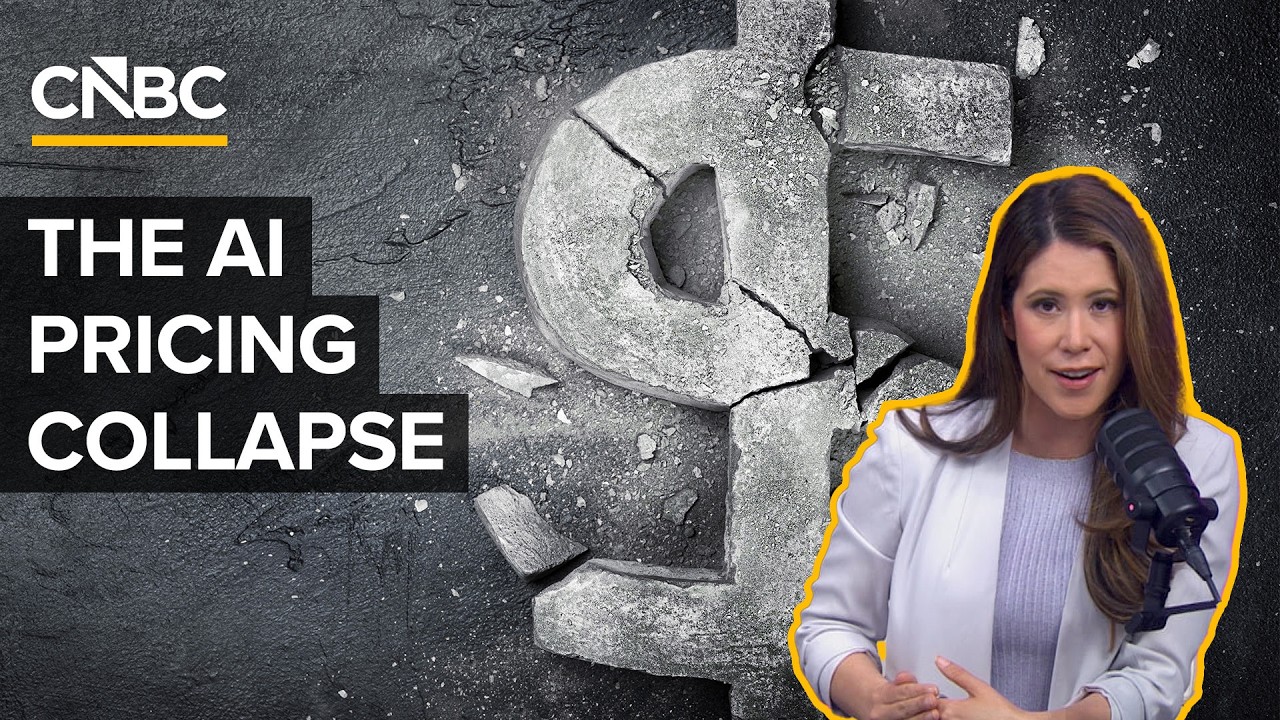
CNBC adds the pricing side. Deirdre Bosa's description says Chinese labs like DeepSeek and a wave of US and European challengers are pushing capability toward a lower price point and already taking enterprise traffic, framing cheaper AI as a direct threat to OpenAI and Anthropic's premium moat and IPO story (video).
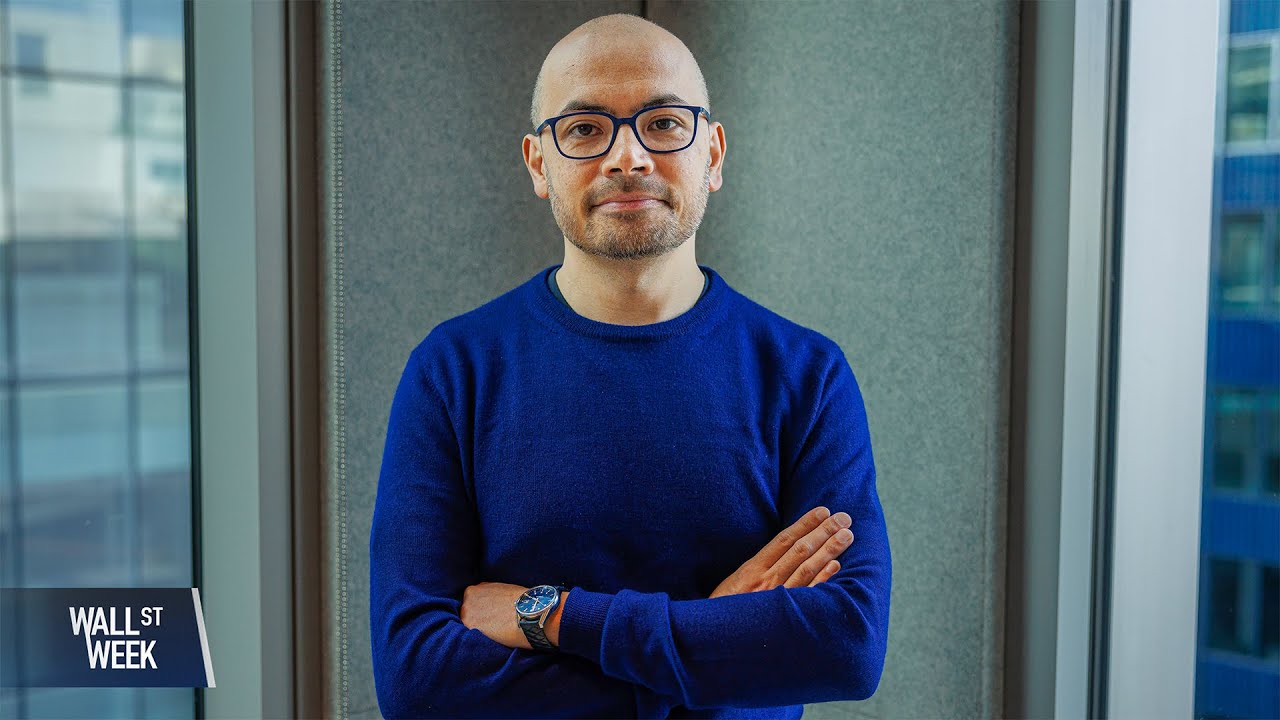
Bloomberg Television turns the same story into a map of people rather than parts. Sebastian Mallaby frames AI leaders through scientific curiosity, profit, and political power, which makes deployment control and capital allocation as central as research prowess (video).
Discussion insight: The economic pressure is coming from two directions at once: infrastructure remains scarce and physical, while premium business narratives are getting attacked by cheaper alternatives. That combination makes AI power look more like a contested industrial market than a clean frontier-tech ladder.
Comparison to prior day: Compared with 2026-05-19, the infrastructure theme becomes less about abstract strategic control and more about cost compression, enterprise share, and the motives of the people steering the race.
1.2 Trust in AI is being tested at the levels of benchmarks, reasoning, and the public web 🡕
Skepticism remains one of the day's clearest throughlines, but it is no longer limited to one model launch or one company. Three strong items show trust breaking at different layers: benchmark presentation, reasoning claims, and the quality of the internet itself.

Coding with Lewis provides the most concrete benchmark case. The linked Decoder summary says Yann LeCun described Llama 4 results as "fudged a little bit," while Meta's own launch post still markets Scout and Maverick as benchmark leaders, so the credibility gap is visible directly in public sources (video, The Decoder, Meta).

World Science Festival broadens that skepticism from one launch to the whole paradigm. Gary Marcus and Brian Greene keep returning to abstraction failures, hallucinations, world models, and neurosymbolic alternatives, making the point that persuasive output is not the same as robust reasoning (video).

DW Documentary pushes the trust question into the information ecosystem. Its description centers on AI-generated junk, cloned creators, self-help books and news videos made from thin prompts, and search engines losing their bearings, so the skepticism is now about whether the surrounding web remains usable for people at all (video).
Discussion insight: Roman Yampolskiy shows what happens when that trust gap becomes a workflow: viewers are sent straight to ControlAI to contact representatives rather than just consume another argument about safety (video).
Comparison to prior day: Compared with 2026-05-19, the skepticism theme spreads outward from model-launch credibility into broader questions about reasoning quality and the health of the public web.
1.3 Agents are being packaged as operating models, not just smarter chatbots 🡕
The agent cluster is still strong, but the framing has shifted from novelty to operating procedure. Three items support the pattern, and each emphasizes roles, memory, tooling boundaries, or labor implications rather than generic "AI productivity."

theMITmonk is the clearest high-reach example at 454,808 views. The description defines agents through ARR, four roles, and OODA loops, then argues that agents fail when they amplify vague thinking and bad process, which turns "agent adoption" into an operations problem rather than a prompting trick (video).

Sky News adds labor-market stakes through Boris Cherny, the creator of Claude Code. Cherny frames coding tools as potentially making software as common as reading and writing, while also discussing the demand behind the AI boom and the risks he worries about most, so the coverage is no longer only about productivity and starts to look like a literacy and jobs question (video).

AI Master makes the stack concrete. Claude Code, OpenAI Codex, OpenClaw, Google Antigravity, prompt contracts, and memory files are all presented as parts of one operating model, which shows how fast the category is moving toward explicit system design rather than one-model fandom (video).
Discussion insight: Across all three items, the common promise is not broad intelligence. It is that agents can handle repeated, hated work if goals, memory, review, and tool boundaries are explicit enough.
Comparison to prior day: Yesterday's agent coverage leaned more on deep build stacks and tool choice. Today's evidence adds clearer labor-market language and more explicit operational doctrine.
1.4 Choosing the right model and workflow is becoming its own product layer 🡕
Selection itself is becoming a product. Three items support the pattern: one teaches model choice as a practical skill, one turns creator work into a tightly ordered tool stack, and one sells the whole workflow as a single agent product.
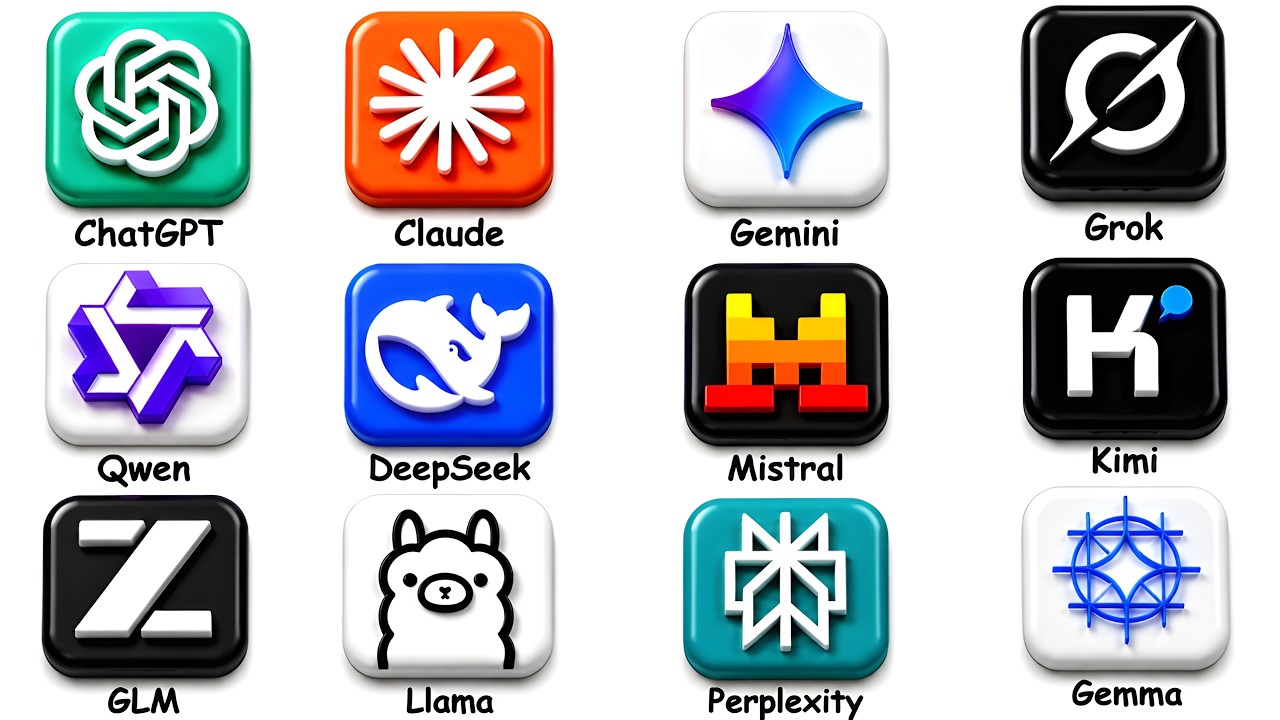
Codist treats model choice as a real operating decision. GPT, Claude, Gemini, Llama, Mistral, Grok, DeepSeek, Qwen, Kimi, and others are compared by intelligence, speed, openness, context length, and price, with an explicit promise to stop choosing "by vibes" and start choosing by task fit (video).

Malva AI applies the same logic to creator workflows. The video says bad AI video usually comes from using the wrong tools in the wrong order, then pushes an image-first workflow, a three-tool stack, and Higgsfield's "skills, memory, and 24/7 automations" framing for creator automation (video, Higgsfield).
Techvid Ai shows what the bundled endpoint looks like. The tutorial pairs GPT Image 2 and Seedance 2.0 inside TopView, while TopView's own site sells an AI Video Agent that can clone a reference video's style, generate ads from a product URL, and localize output across languages (video, TopView).
Discussion insight: Across both model selection and creator tooling, the winning promise is not maximal capability. It is reducing how much judgment users need to supply on every run.
Comparison to prior day: On 2026-05-19 the comparison culture behaved more like a set of buying guides. On 2026-05-20 it looks more explicitly productized into agents, directories, and one-stop workflows.
2. What Frustrates People
Costs are falling while infrastructure remains stubbornly physical
This is High severity because the set shows pressure on both sides of the AI business at once. Bloomberg Originals keeps AI tied to lithography, fabs, and supply chains, while CNBC says cheaper challengers are already undermining the premium enterprise moat that OpenAI and Anthropic need to defend. Bloomberg Television adds that the people steering deployment are also navigating profit and political power, so the frustration is not just technical complexity but unstable economics. The visible coping strategy is to track cost, infrastructure, and power concentration together instead of evaluating models in isolation. This is directly worth building for in cost intelligence, capacity planning, and competitive monitoring.
Trust breaks when claims are easier to publish than to verify
This is High severity because the evidence runs from one model family to the broader web. Coding with Lewis and The Decoder surface a concrete benchmark-credibility dispute around Llama 4, World Science Festival argues that fluent systems still fail deeper reasoning tests, and DW Documentary shows what happens when synthetic junk floods the surrounding information environment. The coping strategy is skepticism, source-checking, and heavier reliance on public evidence instead of launch claims. This is directly worth building for.
Agents still inherit every weakness in the process around them
This is High severity because the operational advice keeps repeating the same warning. theMITmonk says agents amplify vague thinking and bad process, AI Master adds prompt contracts and memory files to keep systems from drifting, and Sky News frames coding tools as a shift in literacy and labor expectations rather than a simple productivity boost. The coping strategy is narrower task scope, explicit constraints, memory, and review checkpoints. This is directly worth building for.
Governance pressure is rising faster than the action layers around it
This is High severity because anxiety about AI is turning into demands for intervention without much institutional machinery in view. Bloomberg Television frames the race around political power, World Science Festival includes military applications in its critique of current systems, and Roman Yampolskiy routes viewers straight to ControlAI to contact representatives. The visible coping move is public pressure rather than a mature operational governance stack. This is directly worth building for in oversight, compliance, and public-sector workflows.
Creator AI quality still depends on too much tool ordering and stack assembly
This is Medium severity because the tone is mostly educational or promotional, but the workflow pain is obvious. Malva AI says most bad AI video comes from using the wrong tools in the wrong order, TopView sells a workflow that collapses style cloning, scripting, editing, and localization into one system, and Codist shows the same overload at the model-selection layer. The coping strategy is directories, templates, and bundled products instead of stable long-term craft. This is worth building for, but it is already a competitive category.
3. What People Wish Existed
Audit-ready AI with legible evidence
The strongest unmet need is for systems that can show what was tested, what failed, and why anyone should trust the claim. Coding with Lewis, The Decoder, and World Science Festival all point to the same gap: benchmark stories and fluent answers are not enough if the reasoning and evaluation chain stay opaque. This is an urgent practical need. Opportunity: direct.
Agent workbenches with explicit memory, contracts, and review
People want agents that do real work without hiding their operating logic. theMITmonk stresses roles and OODA loops, AI Master adds prompt contracts and memory files, and Sky News frames the shift as a literacy and jobs question rather than just a feature release. This is a direct workflow need with clear urgency because the current alternative is ad hoc automation plus human cleanup. Opportunity: direct.
Decision layers for choosing models, prices, and workflows
The dataset keeps implying that users do not only need stronger models; they need help deciding which model or workflow fits the job. Codist makes model trade-offs explicit, CNBC shows why price pressure matters to enterprise buyers, and Malva AI turns tool ordering into a creator problem in its own right. This is a practical need, but it is likely to stay crowded because comparison products are easy to clone. Opportunity: competitive.
Governance rails for public knowledge and high-stakes deployment
Another clear need is for institutions and products that can slow, inspect, or redirect AI deployment when stakes are high. DW Documentary focuses on the web being flooded with machine-made junk, Roman Yampolskiy directs people to ControlAI, and Bloomberg Television keeps returning to the concentration of political and commercial power. This is both a practical and institutional need, with stronger urgency than product maturity today. Opportunity: direct.
4. Tools and Methods in Use
| Tool | Category | Sentiment | Strengths | Limitations |
|---|---|---|---|---|
| Llama 4 | LLM | (+/-) | Open-weight multimodal positioning, long context claims, strong benchmark marketing | Credibility weakened by manipulated-benchmark allegations and rising low-cost competition |
| DeepSeek-style low-cost challengers | LLM | (+) | Lower price pressure and growing enterprise appeal in the CNBC framing | Evaluated here mostly through incumbent anxiety rather than hands-on testing |
| Claude Code-style agents | Coding agent | (+/-) | Strong reasoning reputation, useful for real work, supports the "coding as literacy" frame | Raises job-boundary anxiety and still depends on surrounding process quality |
| Prompt contracts and memory files | Agent method | (+) | Reduce drift, preserve reusable context, make agent behavior more legible | Add process overhead and require disciplined maintenance |
| Model-comparison playbooks | Decision method | (+) | Help choose by intelligence, speed, openness, context, and price instead of vibes | Go stale quickly as the model market shifts |
| Higgsfield SUPERCOMPUTER | Creator automation | (+/-) | Skills, memory, 24/7 automations, and multi-tool workflow bundling | Introduced through sponsored creator content and another layer in a crowded stack |
| TopView AI Video Agent | Creator automation | (+/-) | Style cloning, product-URL-to-video generation, multilingual output, Seedance 2.0 stack | Optimized for content and ecommerce workflows rather than general creative work |
Overall sentiment is strongest for tools and methods that make work more legible: prompt contracts, memory files, comparison playbooks, and agent workflows with explicit roles all promise more control than raw prompting. Mixed sentiment appears when trust depends on benchmark marketing, premium pricing, or sponsored workflow claims, which is why Llama 4, incumbent frontier moats, and some creator-automation surfaces stay contested (How Meta Went From Open Source Hero to AI's Biggest Villain, How Cheap AI Could Derail OpenAI And Anthropic's IPOs, The New BEST 3 FREE AI Video Generators You NEED in 2026). The visible workaround is to compare multiple models, add memory and explicit constraints, and wrap media generation in ordered multi-tool flows rather than trusting any one system end to end. A clear migration pattern is emerging from chatbots toward agents with memory and from single creator tools toward workflow bundles, while the CNBC item suggests a second migration pressure from premium frontier providers toward cheaper alternatives (You're Not Behind (Yet): Learn AI Agents in 13 Minutes, AI Agents Explained: How to Create and Use AI Agents in 2026, Every Large Language Model Explained in 17 Minutes!, How To Create Full Cinematic AI Videos with Topview Agent V2 (Step-by-Step Tutorial)).
5. What People Are Building
| Project | Who built it | What it does | Problem it solves | Stack | Stage | Links |
|---|---|---|---|---|---|---|
| ControlAI | ControlAI / Connor Leahy | Converts AI concern into a representative-contact workflow and newsletter funnel | Gives worried users a concrete way to act on governance and safety anxiety | Public action page plus campaign and newsletter layer | Shipped | site, video |
| Higgsfield SUPERCOMPUTER | Higgsfield | Offers a creator automation agent with skills, memory, and 24/7 automations | Reduces workflow sprawl across image, video, and creator production tasks | Multi-model creator automation platform | Shipped | site, video |
| TopView AI Video Agent | TopView | Turns reference videos or product URLs into ads and short-form clips with style cloning and localization | Collapses scripting, editing, style transfer, and localization into one creator flow | Seedance 2.0, AI avatar, multilingual video generation | Shipped | site, video |
The common builder pattern is not raw model access but action layers and workflow bundlers. ControlAI turns AI anxiety into a civic action surface, while Higgsfield and TopView both package multi-step creator work into reusable agent or workflow products instead of leaving users to stitch the stack together themselves (AI Safety Expert: Ban Superintelligence!, The New BEST 3 FREE AI Video Generators You NEED in 2026, How To Create Full Cinematic AI Videos with Topview Agent V2 (Step-by-Step Tutorial)).
A second builder signal sits behind the tutorial cluster. theMITmonk, AI Master, and Sky News all describe agents as systems with roles, memory, task boundaries, or literacy implications, which suggests the next wave of products will compete on operational design and task fit more than on raw model access alone.
6. New and Notable
A Claude Code interview pushed AI coding into mainstream literacy language
Sky News had Boris Cherny react to charts about jobs, demand, and risk rather than demoing features. That is notable because it frames AI coding tools as a societal capability shift, not just another developer product.
Cheap-model pressure is now being narrated as an IPO problem
CNBC does not treat low-cost challengers as a niche model-ranking issue. It treats them as a direct threat to how OpenAI and Anthropic justify premium valuation and enterprise dominance.
AI slop has become a long-form documentary subject
DW Documentary packages synthetic junk, cloned creators, and degraded search quality into a full editorial investigation. That is notable because it turns "dead internet" anxiety into a mainstream public-knowledge story.
Governance anxiety is being productized into an action flow
Roman Yampolskiy sends viewers directly to ControlAI to contact representatives. That is notable because it treats AI concern as something that should be operationalized immediately, not just debated.
Creator bundles are being sold as full agents rather than isolated tools
Malva AI and Techvid Ai both point toward the same endpoint: creator users are being offered workflow products with memory, style cloning, multi-model orchestration, and localization instead of one-off generators.
7. Where the Opportunities Are
[+++] Provenance, benchmark-audit, and web-integrity layers - This is the strongest opportunity in the set. Coding with Lewis, The Decoder, World Science Festival, and DW Documentary all point to the same missing layer: systems that can prove what was tested, trace where content came from, and preserve trust once synthetic output becomes ambient.
[+++] Agent operating systems with explicit memory, contracts, and review - theMITmonk, AI Master, and Sky News converge on the same need from different angles. Agents need task boundaries, reusable context, and human checkpoints before they become dependable work systems.
[++] Cost-aware routing and enterprise AI market intelligence - Bloomberg Originals, Bloomberg Television, and CNBC show that buyers and builders need better visibility into supply chains, power constraints, price compression, and where premium moats are actually holding.
[++] Workflow bundlers for creator AI - Malva AI, TopView, and Codist show that users increasingly need help choosing tools, ordering steps, and keeping output quality consistent. The demand is real, but the space is already crowded and easy to imitate.
[+] Governance and civic action tooling for high-stakes AI - Roman Yampolskiy, ControlAI, and Bloomberg Television show demand for products that translate AI concern into oversight, escalation, and public action. The need is visible, but the product surface is still early and institution-dependent.
8. Takeaways
- YouTube's AI conversation is increasingly about economics and control, not just capabilities. Bloomberg's semiconductor primer, CNBC's cheap-AI IPO warning, and Sebastian Mallaby's founder-power framing all point to supply chains, pricing, and deployment power as the live questions behind the AI race. (source, source, source)
- Trust problems now span benchmark marketing, reasoning quality, and the public web. The Llama 4 benchmark dispute, Gary Marcus' reasoning critique, and DW's "death of the internet" documentary show the same breakdown at different layers of the stack. (source, source, source, source)
- Agent adoption is being operationalized into roles, memory, and explicit task boundaries. theMITmonk, AI Master, and Boris Cherny all describe useful agents as systems that need contracts, reusable context, and workflow discipline rather than better prompts alone. (source, source, source)
- Choosing the right model or workflow has become part of the work itself. Codist on LLM trade-offs, Malva on tool ordering, and TopView on bundled creator flows all show that selection and orchestration are becoming product categories of their own. (source, source, source)
- The clearest builder signal is toward action layers and workflow bundles. ControlAI turns concern into a civic workflow, while Higgsfield and TopView package creator work into agent-like systems with memory, automation, and reusable defaults. (source, source, source)
- Governance pressure is visible, but the tooling around it is still early. Public anxiety is strong enough to drive representative-contact flows and mainstream coverage of political power, yet the dataset shows more calls to act than mature oversight infrastructure. (source, source, source)