YouTube AI - 2026-05-21
1. What People Are Talking About
1.1 Google wants search to behave more like an always-on agent surface 🡕
Google dominated the day, and the strongest pattern was not a single model launch but a redefinition of Search itself. Three high-signal items converge on the same shift: Gemini 3.5 Flash becomes the default AI Mode model, the Search box turns into an AI-first interface, background agents monitor the web for you, and Antigravity-style generative UI starts turning search results into mini apps.

Vaibhav Sisinty compresses Google's I/O story into 22 updates in 24 hours, bundling Gemini 3.5 Flash, Gemini Omni, Search Agents, Ask YouTube, smart glasses, and TPU 8 into one "biggest AI day" frame. The distinctive angle is that Google is no longer presenting these as separate releases; they are being sold as one connected agentic surface spanning search, media, devices, and daily workflow (video).
AI Search provides the most concrete product evidence by linking directly to Gemini Omni, Gemini 3.5 Flash, Antigravity, and AI Studio from the description. Google's own Search post says this is the biggest Search upgrade in over 25 years, with 3.5 Flash as the default AI Mode model, background information agents, and Antigravity-powered generative UI and mini apps inside Search (video, Google Search, Gemini 3.5, Antigravity).

SomeOrdinaryGamers captures the backlash side of the same story. The thesis is that AI answers and automated browsing do not feel like a feature extension; they feel like Google damaging the product people already trusted, and the video's heavy engagement shows how emotionally loaded that shift has become (video).
Discussion insight: The disagreement is not about whether Search is changing. It is about whether that change feels like new agency for users or like the loss of the link-first product they already trusted.
Comparison to prior day: Compared with 2026-05-20, Google moves from being one participant in broader tool comparisons to the center of the day's narrative, with Search itself becoming the agent surface.
1.2 Agents are being taught as managed systems with memory, gates, and parallel work 🡕
The agent discourse keeps moving away from "what model do you use?" toward "what operating structure keeps the system from drifting?" Three strong items support the pattern, and the most useful ones keep returning to roles, memory, review, and async coordination rather than raw autonomy.

theMITmonk remains the highest-reach articulation of the new framing. The video defines agents through ARR, four roles, and OODA loops, then argues that the systems fail when they amplify vague thinking and bad process, which turns agent adoption into an operating-discipline problem rather than a prompt trick (video).

AI Master makes the stack explicit: Claude Code, OpenAI Codex, OpenClaw, Google Antigravity, prompt contracts, and memory files are presented as one practical workflow. That matters because the winning pattern here is not "more agent" in the abstract; it is reusable context plus explicit failure handling and tool boundaries (video).

Better Stack pushes the theme closest to software delivery. Its Routa walkthrough centers on a local-first Kanban board, specialist agents, review gates, evidence, traces, and fitness functions, while the public docs describe Routa as a workspace-first multi-agent coordination platform built around sessions, boards, specialists, and codebases rather than one long chat (video, Routa).
Discussion insight: Across all three items, the promise is not that agents eliminate management. It is that they can absorb repeated work only when goals, memory, artifacts, and review gates are explicit.
Comparison to prior day: Compared with 2026-05-20, the theme becomes more engineering-specific: manager surfaces, Kanban lanes, evidence, and delivery workflows replace looser talk about agents as a concept.
1.3 Trust in AI now depends on who can verify the claim, not just who can launch it 🡕
Trust remains one of the day's clearest throughlines, but the emphasis shifts from vague skepticism to verification mechanisms. Three strong items show the same problem from different angles: benchmark marketing that needs auditing, reasoning claims that still look fragile, and a rare breakthrough claim whose main selling point is external mathematical validation.

Coding with Lewis gives the most concrete benchmark case. The linked Decoder summary says Yann LeCun described Llama 4 benchmark results as "fudged a little bit," while Meta's own launch post still markets Scout and Maverick as class-leading benchmark performers, making the credibility gap visible across public sources rather than rumor alone (video, The Decoder, Meta).

World Science Festival broadens the skepticism beyond one launch. Gary Marcus and Brian Greene keep returning to hallucinations, abstraction failures, and the need for stronger world models or neurosymbolic methods, so the challenge is not just one benchmark dispute but the reliability of current reasoning claims as a whole (video).

Universe of AI provides the counterexample that proves the rule. Its summary of OpenAI's discrete-geometry result emphasizes not just that a model produced a surprising proof, but that external mathematicians verified it, and TechCrunch highlights the same companion validation as the reason the claim is being taken seriously this time. The same video also pairs that proof story with Cursor Composer 2.5's lower-cost coding push, which shows how quickly even trust-heavy breakthroughs get folded back into practical tooling competition (video, TechCrunch, Cursor).
Discussion insight: Verification itself has become part of the story. Extraordinary claims now travel with proof-checkers, companion remarks, or benchmark disputes attached.
Comparison to prior day: Compared with 2026-05-20, the trust theme is less about the web being flooded with junk and more about which claims can survive scrutiny.
1.4 Beneath the demos, AI is still constrained by memory, power, and physical build-out 🡒
Beneath the agent demos, the most grounded items still sound like infrastructure and systems design. Three supporting items keep pointing to the same reality: AI adoption is constrained by compute and power, shaped by memory architecture choices, and paid for through physical build-outs.

Matthew Berman turns the Google story into an operations story. Sundar Pichai's interview is framed around trusted agents and open-source strategy, but the most concrete details are bottlenecks in compute, power, chips, memory, and data centers, plus the question of how much of the raw internet agents might replace (video).

IBM Technology makes the resource trade-offs more technical and more immediate. The video contrasts long context, CAG, KV cache, and prompt caching as different ways to make models use external knowledge efficiently, which turns memory architecture into an explicit product decision rather than a buried implementation detail (video).
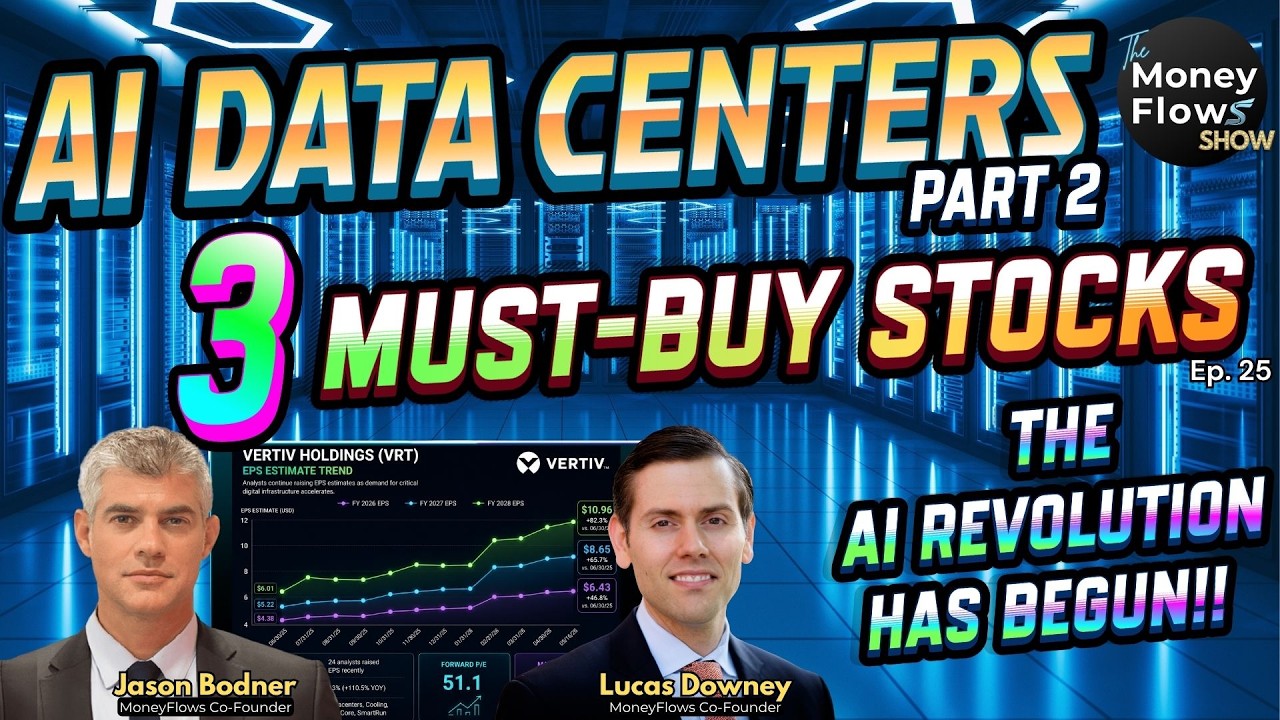
MoneyFlows pushes the same point down to land, electrification, and cooling. Its breakdown of AI data-center layers highlights city-scale power demand, liquid-cooling water use, and the construction and utility systems needed before any model can serve a single prompt (video).
Discussion insight: Even the flashiest agent and search announcements rest on slower-moving layers: power, memory, cooling, and deployment economics.
Comparison to prior day: Compared with 2026-05-20, the infrastructure story moves one layer closer to implementation, from semiconductor geopolitics toward workload architecture and data-center plumbing.
2. What Frustrates People
Search gets more capable while its source legibility gets worse
This is High severity because the day's biggest Google items frame AI-first search as a loss of clarity, not a clean upgrade. SomeOrdinaryGamers and Deep Humor both treat AI answers and automated browsing as damage to the product people already relied on, while Google's own Search post confirms background information agents, synthesized updates, and Antigravity-powered mini apps are the direction of travel. The coping move is to keep hunting for direct links and supporting articles, but the interface is increasingly optimized to sit between the user and the source. This is directly worth building for in source-legible search, browsing controls, and citation-first agent layers.
Agents still create rework unless someone manages context, roles, and review
This is High severity because even the optimistic agent videos keep describing failure modes. theMITmonk says agents amplify vague thinking and bad process, AI Master adds prompt contracts and memory files to stop drift, Better Stack emphasizes review gates and evidence, and Zen van Riel still needs worktrees and context management for real-team use. The visible coping strategy is narrower task scope, artifacts, memory files, parallel lanes, and human review instead of blind autonomy. This is directly worth building for.
Verification debt is growing faster than model claims
This is High severity because the dataset shows trust stress from benchmarks to reasoning to scientific breakthroughs. Coding with Lewis and The Decoder surface manipulated-benchmark allegations around Llama 4, World Science Festival argues current systems still imitate reasoning more than they understand, and Universe of AI plus TechCrunch show that even a positive breakthrough now has to travel with outside validators. The coping strategy is public evidence, companion remarks, and external reviewers instead of trusting launch language. This is directly worth building for.
AI deployment keeps hitting physical and architectural ceilings
This is High severity because the same limits show up at every layer of the stack. Matthew Berman has Sundar Pichai talking about bottlenecks in compute, power, chips, memory, and data centers, IBM Technology turns long context versus CAG into an explicit architecture choice, and MoneyFlows breaks the build-out down into land, electrification, and cooling. The coping strategy is to optimize memory methods, plan infrastructure early, and treat power and cooling as product constraints rather than background assumptions. This is directly worth building for in capacity planning, retrieval routing, and infrastructure visibility.
Creator and workflow automation still demand too much stack assembly
This is Medium severity because the tone is often promotional, but the underlying pain is repeated across the set. AI Master, Tech With Tim, and Malva AI all assume users still need help choosing tools, locking character consistency, preserving memory, and deciding when a hosted agent should replace a manual workflow. The coping move is bundling: ready-made pipelines, super-agents, and tutorial stacks that reduce judgment on each run. This is worth building for, but it is already a competitive category.
3. What People Wish Existed
AI search that preserves sources, control, and user intent
The clearest unmet need is not "more AI in search" but search that keeps citations, links, and user control legible while still using agents in the background. SomeOrdinaryGamers and AI Search show the tension from opposite directions, while Google's own Search post confirms the product is moving toward synthesis, automation, and mini apps. This is an urgent practical need because users want help without feeling disintermediated by the answer layer. Opportunity: direct.
Agent workbenches that make review, memory, and delegation first-class
People want agents that can do long-horizon work without collapsing into chat chaos. theMITmonk, AI Master, Better Stack, and Zen van Riel all point to the same missing layer: explicit goals, memory, review gates, artifacts, and parallel work surfaces that make automation inspectable. This is a direct workflow need with clear urgency because the alternative is faster rework. Opportunity: direct.
Verification layers for benchmarks, scientific claims, and model behavior
The day's evidence shows demand for systems that can prove what happened, who checked it, and why a claim should be believed. Coding with Lewis and World Science Festival show the downside when that layer is missing, while Universe of AI and TechCrunch show how quickly confidence rises when external review is built into the story. This is an urgent practical need, not just a philosophical one. Opportunity: direct.
Routing layers that choose between long context, CAG, caching, and cheaper coding models
Users do not only need stronger models; they need help selecting the right memory strategy or cost-performance tier for the job. IBM Technology, Cursor Composer 2.5, and the Gemini 3.5 rollout all imply that routing, caching, and price-sensitive model choice are becoming part of the product itself. This is a concrete practical need, but it will likely stay competitive because the interface can look simple while the implementation is complex. Opportunity: competitive.
Domain-specific AI platforms that plug into existing businesses
Google for Developers shows AI moving into smart-home security bundles and hardware programs, while Google's Search agents promise ongoing monitoring and action-taking for repeated tasks. The unmet need is for agents that plug into existing domains without a full custom integration project each time. This is practical and commercially relevant, but adoption depends on ecosystem access and trust. Opportunity: competitive.
4. Tools and Methods in Use
| Tool | Category | Sentiment | Strengths | Limitations |
|---|---|---|---|---|
| Gemini 3.5 Flash | LLM | (+/-) | Frontier speed for agents and coding, default in Search AI Mode, strong long-horizon workflow pitch | Bundled into a Google-controlled surface that also triggers source-legibility concerns |
| Google Search agents | Consumer agent | (+/-) | Background monitoring, synthesized updates, booking and calling actions, mini apps in Search | High user distrust that classic search is being degraded or hidden |
| Google Antigravity | Dev platform | (+) | Manager surface, async agents across editor, terminal, and browser, artifacts for review | Still public preview and mostly presented inside one ecosystem story |
| Gemini Omni | Multimodal model | (+) | Strong video and image editing demos, world understanding, SynthID and C2PA content credentials | Evidence here is still mostly demo-led rather than operational |
| Claude Code | Coding agent | (+/-) | Strong reasoning reputation, useful in parallel workflows, credible real-team usage | Needs worktrees, context management, and human review to stay reliable |
| Routa | Multi-agent coordination | (+) | Sessions, Kanban, specialists, review gates, evidence, local-first workflow | More workflow overhead than chat-first tools and still early-stage |
| CAG and prompt caching | Memory method | (+) | Cuts repeated context cost and speeds document-heavy workloads | Requires architecture decisions many users still do not know how to make |
| Cursor Composer 2.5 | Coding model | (+) | Better sustained work on long tasks, improved collaboration behavior, strong low-cost competitive framing | Lands in a crowded and fast-moving benchmark environment |
| Gemini for Home | Domain platform | (+) | Integrates AI into Home APIs, service-provider bundles, and Gemini Built-In devices | Narrow ecosystem access and domain-specific rollout constraints |
| Higgsfield SUPERCOMPUTER | Creator automation | (+/-) | Skills, memory, 24/7 automations, and consistent-character workflow support | Creator tooling remains crowded and still needs multiple creative decisions |
Overall sentiment is strongest for tools and methods that reduce judgment burden with explicit surfaces: Antigravity's manager view, Routa's boards and gates, and IBM's memory-method framing all promise more control than raw prompting. Mixed sentiment appears when the tool hides sources or oversells autonomy, which is why Search agents, AI-first search, and some coding and creator products stay contested despite clear interest.
The visible workarounds are prompt contracts, memory files, worktrees, artifacts, and comparing multiple platforms before committing to one workflow. Migration is moving from chat to multi-agent work surfaces, from repeated prompting to reusable memory, and from premium frontier branding toward cheaper or more task-specific coding alternatives. Competitive dynamics are increasingly bundle-driven: Google is combining model, search, agent, and app surfaces, while smaller tools differentiate with local control, workflow structure, or creator-specific memory.
5. What People Are Building
| Project | Who built it | What it does | Problem it solves | Stack | Stage | Links |
|---|---|---|---|---|---|---|
| Google Search agents | Monitors the web in the background, sends synthesized updates, and can take booking or calling actions | Replaces repeated searching and manual monitoring for ongoing tasks | Gemini 3.5 Flash, Search, Antigravity-powered generative UI | Beta | blog, video | |
| Google Antigravity | Agentic development platform with an editor view, manager surface, and artifacts | Offloads multi-tool software tasks and background maintenance work | Editor, terminal, browser orchestration; artifacts; Gemini, Claude, GPT-OSS support | Beta | blog, video | |
| Routa | Phodal / Routa | Workspace-first multi-agent coordination with sessions, Kanban, and team modes | Replaces chat chaos with explicit stages, specialists, and review gates | Local-first board, traces, evidence, harnesses, fitness functions | Beta | docs, video |
| Gemini for Home | Google for Developers | Adds AI-driven Home API features and Gemini Built-In device support for service providers | Brings AI into smart-home security and bundled home-service workflows | Home APIs, Google Home Premium, Gemini Built-In hardware program | Beta | video |
| Higgsfield SUPERCOMPUTER | Higgsfield | Creator agent with skills, memory, and 24/7 automations | Reduces AI-video workflow sprawl and character-consistency pain | Higgsfield creator stack plus image and video workflow tools | Shipped | site, video |
| Cursor Composer 2.5 | Cursor | Improved coding model for sustained, long-running software tasks | Offers lower-cost competitive coding assistance for extended development work | Kimi K2.5 base plus RL and synthetic-task training improvements | Shipped | blog, video |
The common builder pattern is explicit control surfaces. Google productizes agents through Search and Antigravity, while Routa does the same through boards, specialists, traces, and review gates. In all three cases, the build is not "a smarter chatbot"; it is a managed environment for delegation.
A second pattern is domain bundling. Gemini for Home ties AI to service-provider and hardware ecosystems, while Higgsfield packages creator memory and automation into a reusable workflow product. The repeated trigger is not curiosity alone but repeated work that becomes annoying when done manually: searching, monitoring, coding, or keeping creative output consistent.
6. New and Notable
Search itself became the product announcement
Google says Search is getting its biggest upgrade in over 25 years, and multiple creators treated that as more consequential than any single model release. That matters because AI is no longer only a layer on top of search; Search is being recast as the agent interface (Google Search, AI Search, Vaibhav Sisinty).
External mathematician review became the headline of an AI breakthrough
Universe of AI and TechCrunch both foreground the external verification of OpenAI's geometry proof. That is notable because credibility is being won through outside review, not just frontier branding.
Agentic coding is moving from chat windows into manager surfaces and boards
Google Antigravity, Routa, and Better Stack all emphasize artifacts, async coordination, boards, and specialists rather than a single assistant pane. That is notable because it redefines AI coding as workflow orchestration instead of autocomplete plus chat.
Google pushed AI into smart-home provider workflows
Gemini for Home is notable because it turns AI into an integration surface for service providers and devices, not just consumers typing into a model.
Creator AI products are now marketed as memory-bearing agents
Higgsfield SUPERCOMPUTER is sold as an agent with skills, memory, and 24/7 automations, while Malva AI frames consistent-character video generation as a workflow problem rather than a single-model problem.
7. Where the Opportunities Are
[+++] Source-legible agentic search and browsing controls - This is the strongest opportunity in the set. SomeOrdinaryGamers, Deep Humor, AI Search, and Google's own Search roadmap all point to the same gap: users want agent help without losing sight of links, sources, and intent.
[+++] Review-gated agent workbenches for real teams - theMITmonk, AI Master, Routa, and Zen van Riel converge on the same need. Agents need memory, artifacts, task boundaries, and human checkpoints before they become dependable work systems.
[++] Verification and benchmark-audit layers - Coding with Lewis, The Decoder, World Science Festival, and Universe of AI all show that trust is being won or lost on the evidence chain around a claim, not just on model branding.
[++] Memory-routing and cost orchestration for long-horizon AI work - IBM Technology, Gemini 3.5 Flash, and Cursor Composer 2.5 show a live need for systems that choose the right memory strategy, model tier, and cost-performance tradeoff for the job.
[++] Domain-specific monitoring and action platforms - Google's Search agents and Gemini for Home both move toward agents that live inside a real domain and keep working over time. The opportunity is strongest where repeated monitoring, alerting, and action already exist as manual work.
[+] Creator workflow bundlers with persistent style and memory - Higgsfield SUPERCOMPUTER, Malva AI, and Tech With Tim show real demand for tools that reduce stack assembly and keep outputs consistent. The demand is visible, but the space is already crowded and easy to copy at the surface layer.
8. Takeaways
- Google turned YouTube's AI conversation from model launches into interface control. The strongest Google items treat Search, not a single model, as the main battleground, with AI Mode, background agents, and Antigravity-powered UI now at the center of the story. (source, source, source)
- Agent adoption is being operationalized into roles, memory, artifacts, and review. theMITmonk, AI Master, Routa, and Zen van Riel all describe useful agents as managed systems, not magic assistants. (source, source, source, source)
- Trust now depends on the evidence chain around a claim. Benchmark disputes, reasoning critiques, and the externally checked OpenAI geometry result all show that verification is now part of the product narrative. (source, source, source, source)
- Infrastructure remains the hard floor under every agent demo. Sundar's bottleneck comments, IBM's memory-method explainer, and the data-center power and cooling breakdown all point to the same constraint layer beneath the hype. (source, source, source)
- Builder activity is converging on coordination layers and domain bundles. Search agents, Antigravity, Routa, Gemini for Home, and Higgsfield all package AI as an environment that keeps working across time, tools, or devices. (source, source, source, source, source)
- Cost-sensitive coding competition is sharpening even as trust questions grow. Universe of AI pairs OpenAI's proof claim with Cursor Composer 2.5's lower-cost coding pitch, showing how quickly practical software tooling competition is intensifying around price, stamina, and verification. (source, source)