YouTube AI - 2026-05-22
1. What People Are Talking About
1.1 Search backlash is turning into an alternatives market 🡕
Google is still the center of YouTube's AI conversation, but today's cluster is less about watching I/O clips and more about deciding whether to stay inside Google's new search surface. Three strong items support the shift: two high-engagement videos frame AI search as Google breaking a product people already trusted, while a third turns that dissatisfaction into a concrete exit guide. Google's own Search post and Gemini Spark page explain why the reaction is so strong: Search is becoming an AI-first box with background information agents, booking and calling actions, and custom mini apps.

SomeOrdinaryGamers frames the change as Google "doubling down on the most controversial technology of our time" inside its most trusted product. The distinctive angle is not just that AI answers exist; it is that an existing user habit is being rewritten into an agentic workflow people did not ask for (video).

Techlore turns the same backlash into practical migration behavior. Instead of only criticizing AI search, the video walks through six privacy-respecting search engines and shows how bang-style shortcuts make switching feel less costly, which is a stronger signal than complaint alone (video).

Craig Hewitt groups Gemini Spark, Gemini 3.5 Flash, Search agents, Android XR, and Google's new chips into one coordinated agent push. That matters because the official product pages confirm the same convergence: background tasks in Spark, 24/7 monitoring in Search, and agentic experiences that keep working after the query is over (video, Gemini Spark, Google Search).
Discussion insight: The tension is no longer only "is AI search good?" It is whether people can keep sources, control, and browsing intent legible while Google keeps moving repeated tasks into background agents.
Comparison to prior day: Compared with 2026-05-21, the story moves from Search as Google's headline announcement to search replacement behavior and personal-agent workflows that sit on top of it.
1.2 Agent workflows are splitting between disciplined operating systems and work spam 🡕
Agent coverage is still one of the day's largest clusters, but the tone is more polarized than yesterday. The strongest tutorials now emphasize roles, worktrees, review gates, and task boundaries, while negative coverage argues that autonomous agents are simply creating more work for white-collar teams. The result is that "agentic AI" on YouTube looks less like one category and more like a fight between managed workflows and unmanaged noise.

theMITmonk is the clearest high-reach articulation of the structured side. The video explains agents through ARR, four roles, and an OODA loop, then argues that they fail when they amplify vague thinking and bad process, which turns adoption into an operating-discipline problem rather than a prompting trick (video).

Zen van Riel makes the practitioner case more concrete: four parallel Claude Code windows, mixed effort levels, git worktrees, and explicit MCP-versus-Bash decisions inside real-team review workflows. The distinctive angle is that agentic coding is presented as an engineering operating system with human checkpoints, not a toy demo (video).

Better Stack pushes the category further toward software-delivery structure. Its Routa walkthrough centers on a local-first Kanban board, specialist agents, review gates, traces, and evidence, while the public docs describe Routa as workspace-first multi-agent coordination around sessions, boards, specialists, and codebases (video, Routa).
Discussion insight: BusinessCringe gives the counterweight, arguing that autonomous agents are increasing workloads, while Lewis Jackson uses the same agent language to ship a self-improving trading system. The split is not between people who believe in agents and people who do not; it is between people who trust managed agent workflows and people who see unmanaged agent work as new overhead.
Comparison to prior day: Compared with 2026-05-21, the theme becomes more implementation-heavy and more polarized: real-team workflows, boards, and vertical systems are rising alongside explicit worker backlash.
1.3 Verification pressure is still defining the AI narrative 🡒
Trust remains one of the day's clearest throughlines, but today's evidence is less about one isolated claim and more about how much public proof AI creators and labs now need to carry with them. Three strong items support the pattern: benchmark credibility attacks around Llama 4, broader skepticism that current models truly reason, and executive discussion that points beyond LLMs toward physical-world intelligence and new infrastructure. The common thread is that branding alone no longer closes the argument.

Coding with Lewis gives the sharpest benchmark example. The video pairs Meta's own Llama 4 launch language with a linked Decoder writeup in which Yann LeCun says results were "fudged a little bit," making the credibility gap visible across public sources rather than rumor alone (video, The Decoder, Meta).

World Science Festival broadens the skepticism beyond one launch. Gary Marcus and Brian Greene keep returning to hallucinations, abstraction failures, and the need for stronger world models or neurosymbolic approaches, so the problem is not just one benchmark scandal but the reliability of the current reasoning paradigm itself (video).

Bloomberg Television adds the executive angle by centering Yann LeCun and JP Vert on how AI might translate into the physical world and what new infrastructure that would require. That makes the verification story bigger than benchmark auditing: it becomes a question of whether current LLM approaches are even the right long-term substrate (video).
Discussion insight: The dataset keeps rewarding claims that arrive with evidence, public disagreement, or a visibly different research direction. It punishes launch-style certainty that has to be defended after the fact.
Comparison to prior day: Compared with 2026-05-21, the trust theme holds steady but becomes more institutional: LeCun, JP Vert, and research-world skepticism replace yesterday's narrower focus on whether a single breakthrough claim could be externally checked.
1.4 Compute bottlenecks are narrowing attention to power, chips, and system-level workarounds 🡒
A lower-ranked but still important cluster keeps the physical AI stack in view. The items here point to the same constraint from different angles: chip design is still foundational, data-center expansion is running into grid and component limits, and labs are actively looking for alternatives to a single dominant supplier. The shared message is that the software narrative keeps running into power, supply, and systems design.

Dwarkesh Patel gives the cleanest fundamentals pass. Reiner Pope starts with logic gates and climbs up through GPUs, TPUs, and FPGAs, which makes AI infrastructure feel less like an abstract shortage story and more like an engineering stack with hard design tradeoffs (video).
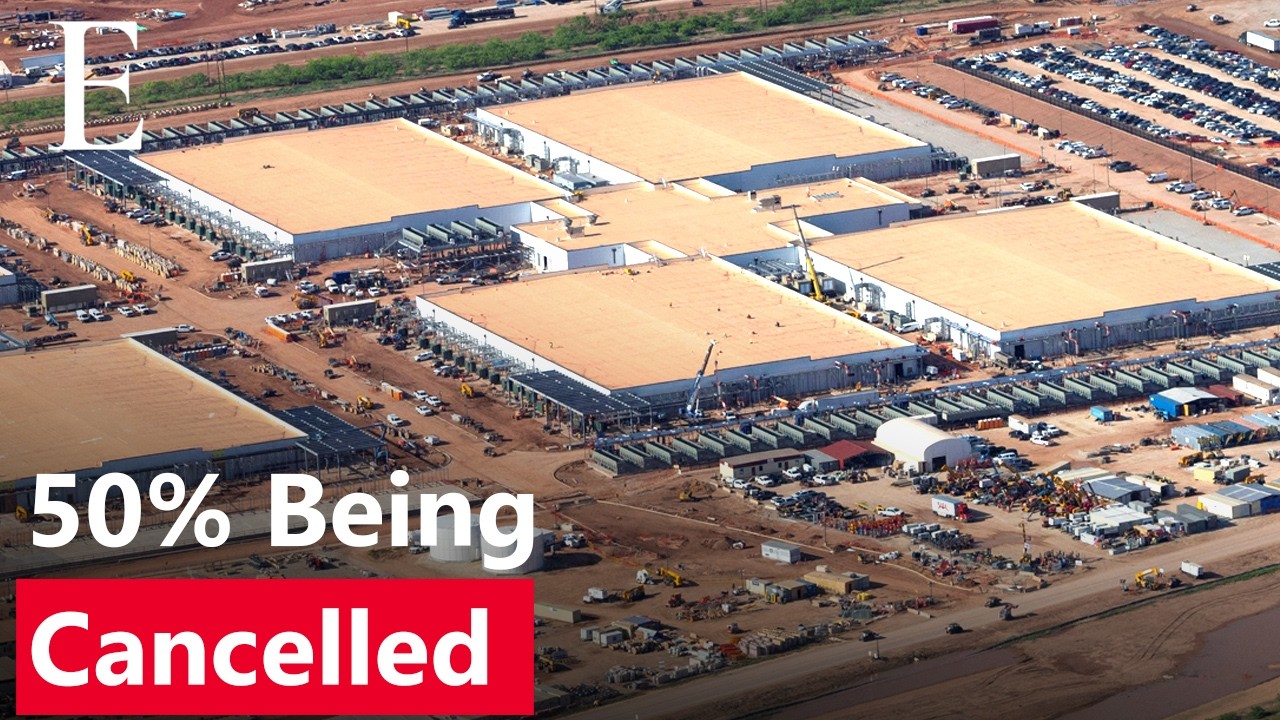
Economy Media pushes the constraints into deployment economics. Its description argues that grid bottlenecks, rising energy costs, shortages of electrical components, and possible GPU oversupply are already delaying or canceling projects that were supposed to absorb the AI boom (video).
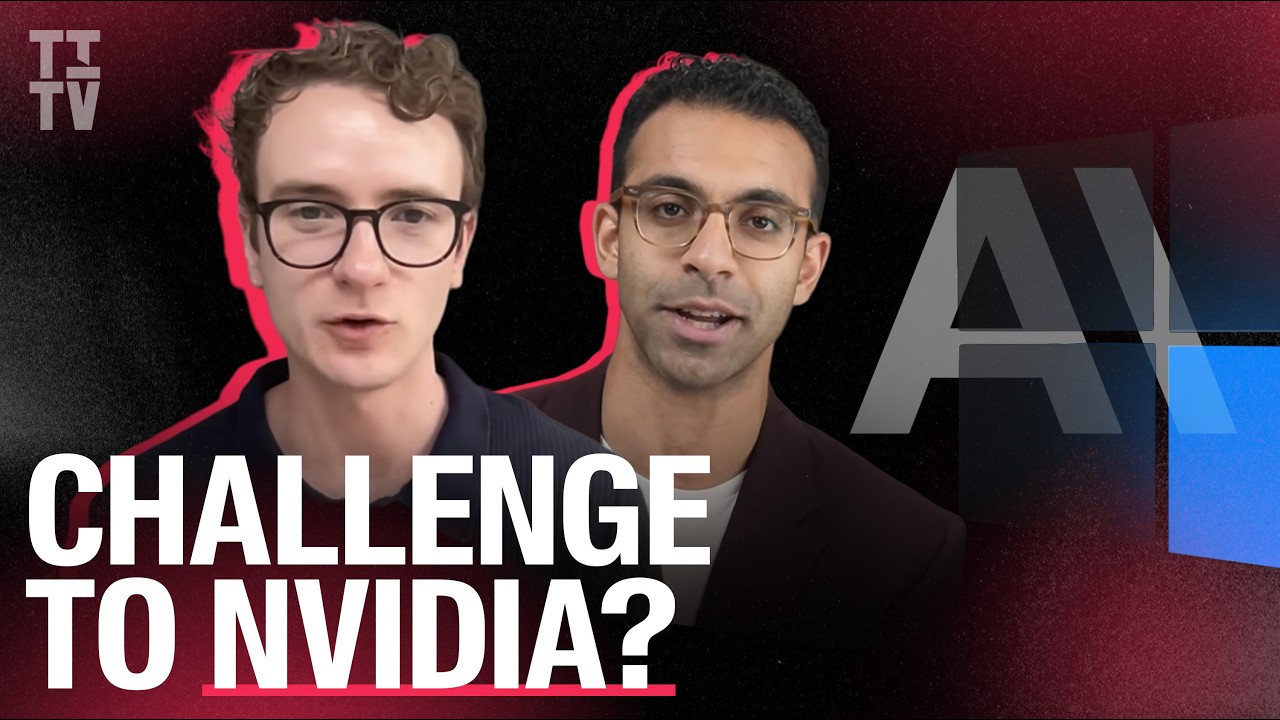
The Information adds the vendor-strategy angle. Aaron Holmes says Anthropic explored Microsoft's Maya 200 custom silicon for inference, which frames alternative chip sourcing as a live product and platform decision rather than a distant lab curiosity (video).
Discussion insight: SinoShift Media pushes the same logic from another direction, arguing Huawei's Cloud Matrix 384 wins through system-level engineering and many coordinated processors rather than one dominant chip. Attention is shifting from "best GPU" to "what stack can actually be deployed."
Comparison to prior day: Compared with 2026-05-21, infrastructure coverage narrows from general memory and power bottlenecks to specific alternatives: canceled data centers, custom inference silicon, and coordinated non-Nvidia compute stacks.
2. What Frustrates People
Search automation is getting more capable while source control gets worse
This is High severity because the most visible Search videos frame Google's product direction as a loss of user agency, not a clean upgrade. SomeOrdinaryGamers treats AI search as Google damaging something that already worked, Techlore responds with six privacy-respecting alternatives, and Google's own Search roadmap confirms more background agents, booking and calling actions, and custom mini apps inside Search. The visible coping strategy is partial exit: alternative engines, bangs, and more deliberate switching rather than full trust in one answer layer. This is directly worth building for in source-legible search, browsing controls, and migration tools.
Agents still create rework unless memory, scope, and review are explicit
This is High severity because even the positive agent videos keep describing failure modes. theMITmonk says agents amplify vague thinking and bad process, Zen van Riel needs worktrees and disciplined context management for real teams, Better Stack emphasizes review gates and evidence, and BusinessCringe argues autonomous agents are increasing workloads rather than decreasing them. The coping move is narrower task scope, artifacts, explicit roles, and human checkpoints instead of blind autonomy. This is directly worth building for.
Trust breaks when benchmark marketing outruns evidence
This is High severity because the dataset keeps pairing bold claims with public skepticism. Coding with Lewis, The Decoder, and Meta's own Llama 4 post put manipulated-benchmark accusations next to class-leading benchmark marketing, while World Science Festival argues fluent output still falls short of genuine reasoning. The coping strategy is slower trust, heavier source-checking, and more reliance on public evidence than on launch framing. This is directly worth building for.
AI deployment keeps running into power, chip, and grid ceilings
This is High severity because today's infrastructure items all point to hard physical limits. Economy Media describes delayed or canceled data centers, Dwarkesh Patel shows how much architectural complexity sits underneath modern accelerators, The Information highlights Anthropic's interest in Microsoft's Maya 200 chips, and SinoShift Media argues Huawei is compensating with system-level engineering. The coping strategy is vendor diversification, custom silicon, and more explicit infrastructure planning rather than assuming capacity will simply appear. This is directly worth building for in capacity planning, vendor routing, and infrastructure visibility.
Coding-tool sprawl still forces users to assemble their own stack
This is Medium severity because the tone is often promotional, but the underlying overload is obvious. Vaibhav Sisinty positions Antigravity against Claude Code and Codex on price and convenience, Ankita Kulkarni pitches open coding models and local/Ollama setups to avoid hosted limits, and Lewis Jackson still has to wire Hermes Agent, Claude Code, and Railway into a working loop. The coping move is bundling, one-shot setup prompts, and local models, but the workflow remains fragmented. This is worth building for, though it is already a competitive category.
3. What People Wish Existed
Search that keeps sources, control, and switching flexibility
The clearest unmet need is not "more AI in search" but search that preserves links, source visibility, and user control while still helping with repeated tasks. SomeOrdinaryGamers and Techlore show the tension from opposite directions, while Google's own Search roadmap confirms the product is moving toward synthesis, background monitoring, and custom mini apps. This is an urgent practical need because users want help without feeling displaced by the answer layer. Opportunity: direct.
Agent workbenches with explicit memory, review, and parallel lanes
People want agents that can do long-horizon work without collapsing into chat chaos. theMITmonk stresses roles and OODA loops, Zen van Riel adds worktrees and mixed-effort windows, Better Stack emphasizes boards and review gates, and Lewis Jackson shows how quickly vertical agent stacks become multi-tool systems. This is a direct workflow need with clear urgency because the alternative is faster rework. Opportunity: direct.
Audit-ready AI claims with benchmark lineage and outside review
The dataset keeps pointing to a missing layer that can show what was tested, who checked it, and why a claim should be believed. Coding with Lewis, The Decoder, and World Science Festival all point to the same gap: fluent demos and benchmark tables do not close the trust problem when evaluation stays opaque. This is an urgent practical need, not just a philosophical one. Opportunity: direct.
Compute routing that can choose chips, vendors, and deployment surfaces intelligently
Users and labs do not only need more compute; they need help deciding where inference should run and which supplier or architecture makes sense under real constraints. Economy Media, Dwarkesh Patel, The Information, and SinoShift Media all imply that routing across grids, chips, and vendors is becoming part of the product itself. This is a practical need with real urgency, though solving it well requires deep technical integration. Opportunity: direct.
Open and local coding stacks with frontier-like ergonomics
Another clear need is for coding systems that keep the price and control advantages of open or local models without forcing users to become infrastructure hobbyists. Ankita Kulkarni pushes open coding models and Ollama-style local workflows, Vaibhav Sisinty sells a free bundled alternative to Claude Code and Codex, and Zen van Riel shows how much workflow expertise premium stacks still require. This is a concrete practical need, but it will stay crowded because the interface can look simple even when the orchestration underneath is hard. Opportunity: competitive.
4. Tools and Methods in Use
| Tool | Category | Sentiment | Strengths | Limitations |
|---|---|---|---|---|
| Google Search agents | Consumer agent | (+/-) | Background monitoring, booking/calling actions, custom mini apps and trackers | Triggers source-legibility and control concerns |
| Gemini Spark | Personal agent | (+/-) | 24/7 task execution across Gmail, Calendar, Drive, Docs, Sheets, Slides, YouTube, and Maps; skills and schedules | Limited rollout and a high trust burden for background automation |
| Google Antigravity | Dev platform | (+) | Manager surface, async agents across editor, terminal, and browser, plus artifacts for review | Still public preview and mostly presented inside one ecosystem bundle |
| Claude Code multi-window workflow | Coding agent | (+/-) | Strong reasoning, parallel effort tiers, worktrees, and explicit review habits | Requires careful context management and human review to stay reliable |
| Routa | Multi-agent coordination | (+) | Kanban lanes, specialists, traces, and review gates in a workspace-first model | More workflow overhead than chat-first tools and still early-stage |
| Hermes Agent + Claude Code | Vertical agent stack | (+/-) | Self-improving loop, real-money automation, and deployable stack tied to Railway | High operational risk and limited evidence outside one creator implementation |
| Open coding models via Ollama-style local setups | Local LLM | (+) | Free or cheap local use, large context framing, and lower dependence on hosted limits | Model choice and local setup complexity stay high |
| Microsoft Maya 200 | AI chip | (+/-) | Potential inference alternative to Nvidia and tighter Azure integration | Early-stage/negotiation evidence only, with vendor dependence still high |
| Privacy-first search engines plus bangs | Search method | (+) | Clearer incentives, stronger user control, and lower switching cost | Smaller ecosystems and less mainstream convenience than Google |
Overall sentiment is strongest for tools and methods that make control explicit: Antigravity's manager surface, Routa's boards, and Zen van Riel's worktree-heavy Claude Code workflow all promise more inspectability than raw prompting. Mixed sentiment appears when the tool hides sources or acts in the background, which is why Search agents and Spark stay contested despite obvious interest.
The visible workarounds are alternative search engines, bangs, worktrees, review gates, one-shot setup prompts, and local models. Migration is moving from classic search to privacy-first alternatives, from single chat panes to review-gated workbenches, and from Nvidia-only assumptions toward custom-silicon curiosity. Competitive dynamics are increasingly bundle-driven: Google combines Search, Spark, and Antigravity, while open/local creators compete on price and autonomy and infrastructure vendors compete on where inference should run.
5. What People Are Building
| Project | Who built it | What it does | Problem it solves | Stack | Stage | Links |
|---|---|---|---|---|---|---|
| Gemini Spark | Personal AI agent that runs background tasks across Google apps | Removes repeated coordination work across inbox, files, schedules, and docs | Gemini 3.5 Flash, Personal Intelligence, Gmail/Calendar/Drive/Docs/Sheets/Slides/YouTube/Maps connections | Beta | page, video | |
| Google Search agents | Monitors the web in the background, sends synthesized updates, and can book or call on the user's behalf | Replaces repeated search, monitoring, and coordination tasks | Gemini 3.5 Flash, Search, Antigravity-powered generative UI | Beta | blog, video | |
| Google Antigravity | Agentic development platform with editor and manager surfaces for async software work | Offloads multi-tool software tasks and long-running maintenance work | Editor, terminal, browser orchestration; artifacts; Gemini, Claude, GPT-OSS support | Beta | blog, video | |
| Routa | Phodal / Routa | Workspace-first multi-agent coordination with sessions, boards, specialists, and review gates | Replaces chat chaos with explicit stages, artifacts, and ownership | Local-first board, traces, evidence, specialists, codebase-aware sessions | Beta | docs, repo, video |
| Self-improving AI trading agent | Lewis Jackson | 24/7 trading agent that learns from each trade and updates itself | Automates a vertical workflow that normally needs constant human tuning | Hermes Agent, Claude Code, Railway | Alpha | app, video |
Builder activity clusters around two patterns. Google is productizing background agents across personal work, Search, and development, while smaller builders are creating tighter control surfaces or narrower vertical loops. Routa turns agent coordination into boards and gates, and Lewis Jackson's trading system ties self-improving automation to one economic workflow rather than generic assistant behavior.
The repeated trigger is repeated work: monitoring, inbox triage, search, code delivery, or trade execution. The distinguishing move is persistence. These projects are not trying to answer one prompt well; they are trying to keep state, take action over time, and stay inspectable enough that a user can trust the result.
6. New and Notable
Search backlash turned into a switching guide
Techlore is notable because it does not stop at complaining about Google's new search direction; it gives people a migration path with privacy-respecting engines and bangs. That matters because it shows the conversation moving from reaction to replacement behavior, not just outrage (source, source).
Google pitched Spark as a true background personal agent
Gemini Spark is notable because it is explicitly framed as a 24/7 background agent with tasks, skills, schedules, and app connections across a user's workspace. Craig Hewitt groups it with Search agents and Gemini 3.5 Flash, which makes Spark look like a core part of Google's broader agent story rather than a side experiment.
Agentic coding is moving from chat windows into boards, worktrees, and manager surfaces
Google Antigravity, Routa, and Zen van Riel all emphasize artifacts, async coordination, worktrees, review gates, and explicit interfaces for delegation. That is notable because the credible form of AI coding is starting to look like workflow orchestration instead of one long assistant conversation.
Open and local coding stacks are being sold as a price-and-control counterweight
Vaibhav Sisinty positions Antigravity against Claude Code and Codex on price and convenience, while Ankita Kulkarni argues that open coding models and local setups can avoid hosted limits. That is notable because the coding-agent story is now visibly competing on price, local control, and setup overhead, not just on benchmark quality.
Custom silicon is becoming a mainstream AI narrative, not just an infrastructure memo
The Information puts Microsoft's Maya 200 into the daily creator/news cycle, SinoShift Media argues Huawei's Cloud Matrix 384 matters because of system-level engineering, and Economy Media links data-center delays to power and component bottlenecks. That is notable because chip-routing and supply constraints are no longer background context; they are becoming part of the surface AI story.
7. Where the Opportunities Are
[+++] Source-legible agentic search and switching layers - This is the strongest opportunity in the set. SomeOrdinaryGamers, Techlore, Craig Hewitt, Google's own Search roadmap, and Gemini Spark all point to the same gap: users want agents that help with repeated work without hiding links, sources, or the option to switch away.
[+++] Review-gated agent workbenches for real teams - theMITmonk, Zen van Riel, Routa, Better Stack, and BusinessCringe converge on the same lesson. Agents need memory, task boundaries, artifacts, and review checkpoints before they become dependable work systems.
[++] Benchmark-audit and trust-explanation layers - Coding with Lewis, The Decoder, World Science Festival, and Bloomberg Television all show that trust is being won or lost on the evidence chain around a claim, not just on a model name.
[++] Compute and vendor-routing intelligence - Economy Media, Dwarkesh Patel, The Information, and SinoShift Media show a live need for products that can surface chip options, infrastructure bottlenecks, and deployment tradeoffs before teams overcommit.
[++] Open/local coding stacks with governed setup - Ankita Kulkarni, Vaibhav Sisinty, Zen van Riel, and Lewis Jackson show clear demand for cheaper or more controllable coding systems that still preserve usable defaults, review, and deployment discipline.
[+] Vertical autonomous operators with explicit human overrides - Gemini Spark, Google Search agents, and Lewis Jackson all move toward agents that keep working over time in one domain. The opportunity is strongest where repeated monitoring or execution already exists and users need oversight, not full surrender.
8. Takeaways
- Google's search shift is now producing replacement behavior, not just reaction. Search backlash on YouTube is strong enough that creators are already publishing concrete escape routes with alternative engines and bangs, while Google's own product pages keep expanding background agent behavior. (source, source, source)
- Useful agent adoption is increasingly about workflow structure, not model choice. The highest-signal agent videos focus on roles, worktrees, review gates, boards, and explicit operating discipline rather than on one model beating another. (source, source, source)
- Agent enthusiasm and agent backlash are rising together. The same dataset that celebrates self-improving trading systems and review-gated engineering flows also contains direct claims that autonomous agents are making white-collar work worse. (source, source)
- Trust now depends on the public evidence chain around a claim. Benchmark disputes, reasoning critiques, and research-world skepticism all show that branding is no longer enough if the sources, evaluators, or substrate stay unclear. (source, source, source, source)
- Compute scarcity is being reframed as a routing and systems-design problem. Today's infrastructure videos focus less on abstract shortage and more on concrete choices around custom silicon, power limits, vendor dependence, and coordinated clusters. (source, source, source, source)
- Builder activity is converging on persistent agents and coordination surfaces. Spark, Search agents, Antigravity, Routa, and vertical systems like Lewis Jackson's trading agent all package AI as something that keeps state, acts over time, and needs inspection rather than as a one-off chatbot response. (source, source, source, source, source)