YouTube AI - 2026-05-23
1. What People Are Talking About
1.1 Agent adoption is turning into workflow design, not prompt craft 🡕
Agent content is still the single biggest cluster by engagement, but the dominant tone has shifted from "what is an agent?" to "what operating discipline keeps agents from creating bad work." At least five strong items support the theme: the day's biggest video is a 638K-view primer on ARR, roles, and OODA loops; Google Antigravity demo content turns multi-agent coding into a productized workflow; and smaller practitioner videos keep insisting on worktrees, effort tiers, and review gates. The category is growing, but the growth is tied to process design more than to blind autonomy.

theMITmonk gives the cleanest mainstream framing. The video says most people still use AI like a better search box, then explains agents through ARR, four roles, and an OODA loop that adapts when workflows break. The distinctive angle is that agent failure is treated as an operating-discipline problem - vague thinking and bad process get amplified - rather than as a simple model-quality problem (video).
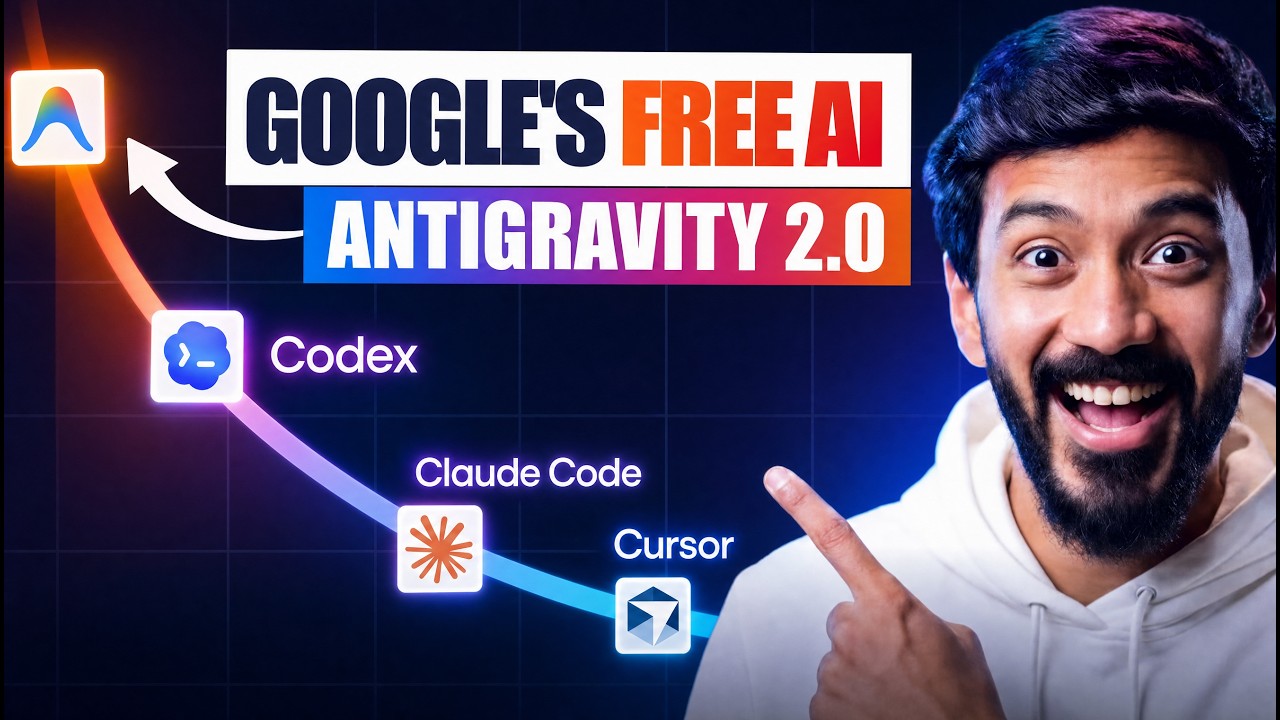
Vaibhav Sisinty pushes the same theme into hands-on product usage. He compares Antigravity against Claude Code and Codex by building a brand site with multiple agents in parallel, while Google's own Antigravity post confirms the manager surface, async agents across editor, terminal, and browser, and artifact-based review flow that make the demo more than marketing language (video, Google Antigravity).

Zen van Riel makes the practitioner case more specific. The video walks through four parallel Claude Code windows, context-window management, git worktrees, and explicit MCP-versus-Bash choices, so the distinctive angle is not "agents can code" but "agents need lane discipline to survive a real team's review process" (video).
Discussion insight: BusinessCringe supplies the counterweight by arguing that autonomous agents increase workloads because unfinished work still has to be repaired by humans. The split is no longer between people who do and do not believe in agents; it is between people who trust governed workflows and people who see unmanaged agents as supervision debt.
Comparison to prior day: Compared with 2026-05-22, this theme becomes more mainstream and more productized. Yesterday's discussion centered on review-gated systems and backlash; today's version adds mass-reach education and a live Google product surface on top of the same governance debate.
1.2 Google's AI push is expanding across search, workspace, and creator tools all at once 🡕
Google is still the central company in the dataset, but today's signal is broader than simple I/O recap coverage. At least six items support the cluster: mainstream news packages the keynote as a new phase of AI, search-reaction videos argue Google is breaking a trusted surface, privacy creators publish alternatives, and creator-focused channels dig into video and media tools that sat outside the keynote headline. The result is a platform story: Google is trying to turn search, personal assistance, coding, and media generation into one connected AI layer.

ABC News frames Google I/O as a bundle of launches rather than a single feature: Gemini Spark, smart glasses, Gemini Omni, Flow Music, Fitbits, and a broader next phase of AI. That packaging matters because it turns Google's announcements into a mainstream consumer narrative about an ecosystem shift, not just a developer conference update (video).
SomeOrdinaryGamers represents the resistance side of the same story. The video frames Google as rewriting its most trusted product around the most controversial technology in the market, and the distinctive angle is loss of user agency rather than disbelief that the features work at all (video).
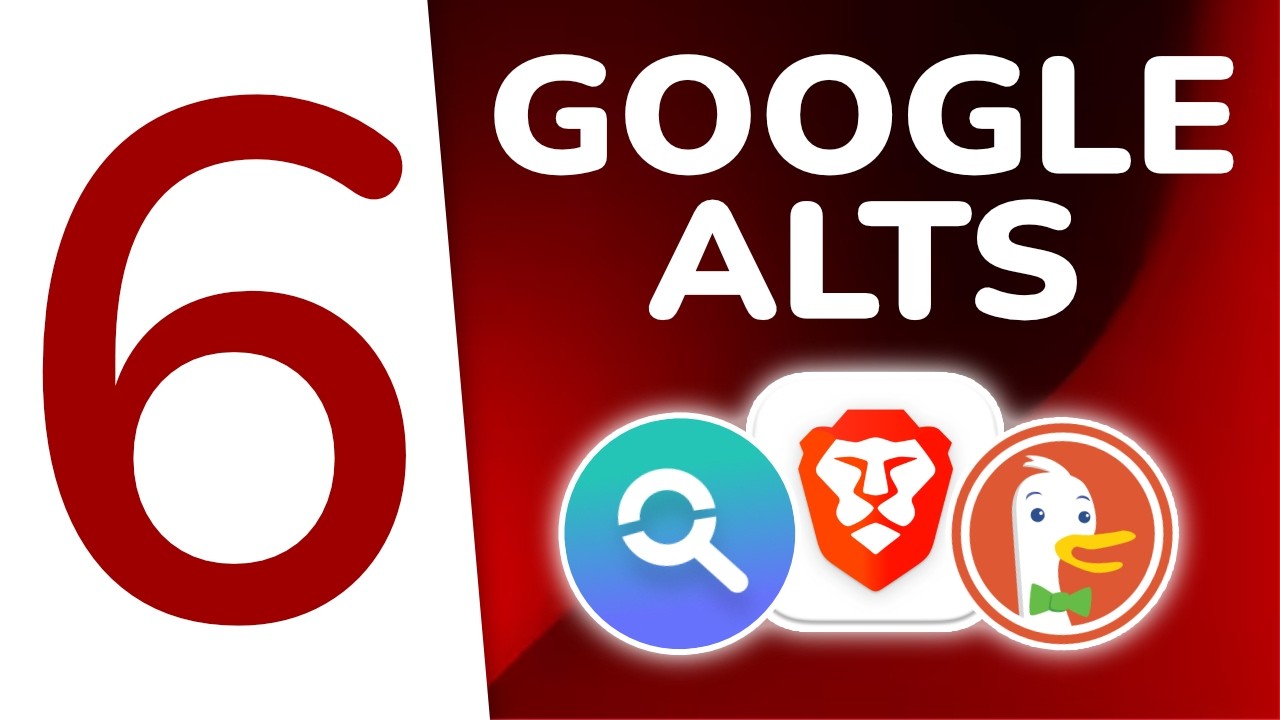
Techlore turns the backlash into migration behavior. Instead of only criticizing AI search, the video walks through privacy-respecting alternatives and bang shortcuts so that switching away from Google feels practical rather than ideological (video).

Theoretically Media adds a creator-workflow angle that the search debate misses. The video argues the most interesting Google announcements were around Omni, Flow, Genie, editing, remixing, compositing, and audio tooling buried outside the keynote headline, which makes the broader Google push look like a media-production stack as much as a search story (video).
Discussion insight: Google's own Search post and Gemini Spark page confirm the same pattern from the platform side: a new AI Search box, 24/7 information agents, custom mini apps, and a background personal agent across Gmail, Drive, Maps, YouTube, and other apps. Creator reaction splits between mapping that stack and publishing ways to escape it.
Comparison to prior day: Compared with 2026-05-22, the Google story widens from search backlash and Spark hype into a fuller platform push spanning Search, workspace, coding, and creator tooling.
1.3 Credibility fights are widening from benchmark disputes to whole AI roadmaps 🡒
Today's trust cluster is less about one scandal and more about competing stories of what frontier AI is, what counts as proof, and which labs have momentum. Strong items span Meta's benchmark credibility problems, Gary Marcus's argument that current systems still do not genuinely reason, and Anthropic coverage that ties belief in a lab to research speed, capital efficiency, and compute access. The audience signal is that AI narratives now need receipts or a clearly different thesis; branding alone is not enough.

Coding with Lewis gives the sharpest credibility case study. The video pairs Meta's open-source success story with later Llama 4 benchmark blowback, while Meta's own launch post still claims class-leading multimodal performance and The Decoder summarizes Yann LeCun saying some results were "fudged a little bit." The distinctive angle is the gap between launch narrative and post-launch trust (video, Meta, The Decoder).

World Science Festival broadens the argument beyond Meta. Gary Marcus and Brian Greene keep returning to hallucinations, abstraction failures, and the need for stronger world models, so the problem is not just one benchmark dispute but whether the current reasoning story is pointed at the right substrate at all (video).

The AI Daily Brief: Artificial Intelligence News adds the market-structure version of the same fight. The video argues Anthropic's week reset expectations because of recursive-research potential, profitability signals, and SpaceX-backed compute, so the persuasive story is not "best demo wins" but "which lab has the research and infrastructure flywheel that markets believe" (video).
Discussion insight: Mainstream interviews with Demis Hassabis and Yann LeCun keep feeding the same pattern from different angles: future-facing optimism is still strong, but it increasingly has to coexist with public doubt about whether current LLMs, current benchmarks, and current governance are enough.
Comparison to prior day: Compared with 2026-05-22, the trust theme broadens from mainly Llama benchmark credibility into a larger contest between benchmark launches, reasoning skepticism, and compute-backed lab narratives.
1.4 Physical-world AI is pulling jobs, defense, and infrastructure into the same frame 🡕
A fourth cluster pushes AI conversation out of pure software and into real-world systems. At least five items support it: layoffs are being narrated as the cost of AI investment, mainstream TV is now covering military adoption speed and humanoid-robot surveillance risk, and infrastructure videos keep pointing back to power, components, and chip architecture. The common thread is that once AI touches the physical world, the discussion quickly becomes about labor, control, and hard constraints.

CBS News makes the labor consequence explicit. The segment says Meta is cutting thousands of jobs as it invests in AI, so AI is not being presented only as product upside or model progress - it is also a corporate cost and workforce story in mainstream business coverage (video).

CBS Mornings pushes the same shift into defense. The video says the Defense Department wants to be "AI-first" while service members are uneasy about how fast the technology is moving, which brings deployment speed and human oversight into the center of the conversation (video).
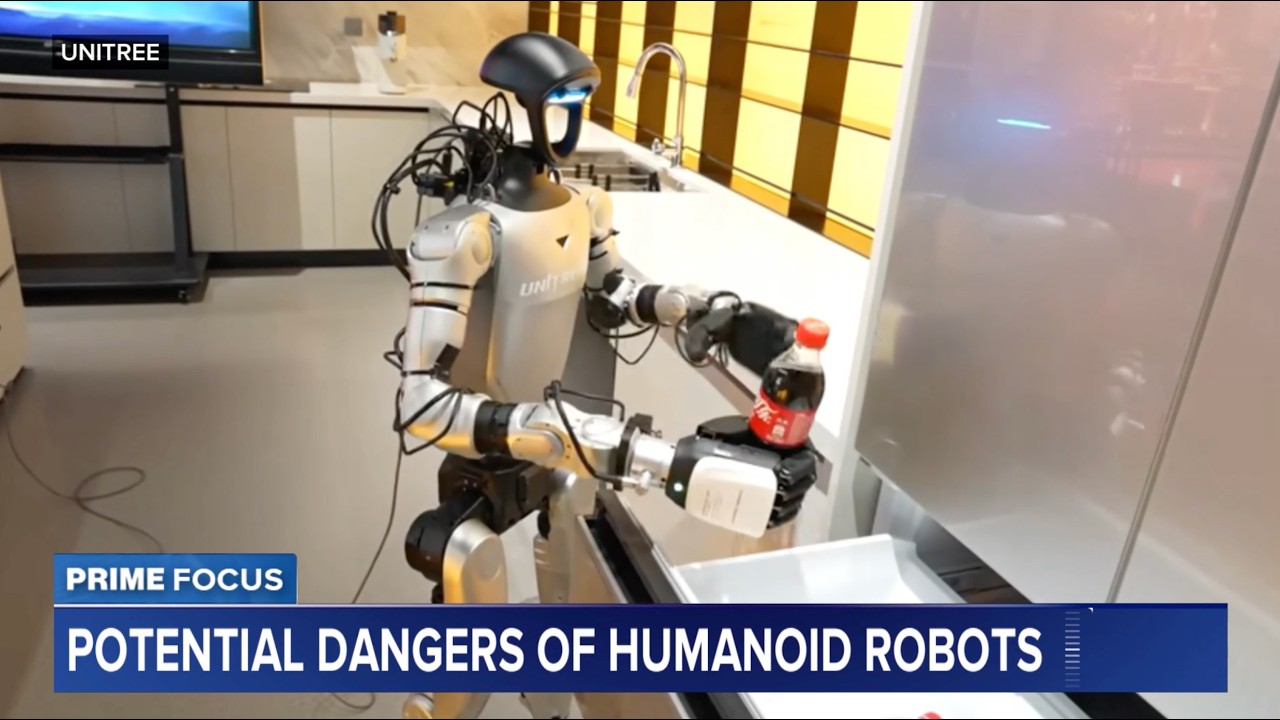
ABC News adds a surveillance angle by asking whether humanoid robots that could improve daily life might also be used for monitoring and control. That matters because it shifts physical AI from speculative robotics fascination into a concrete civil-liberties concern (video).
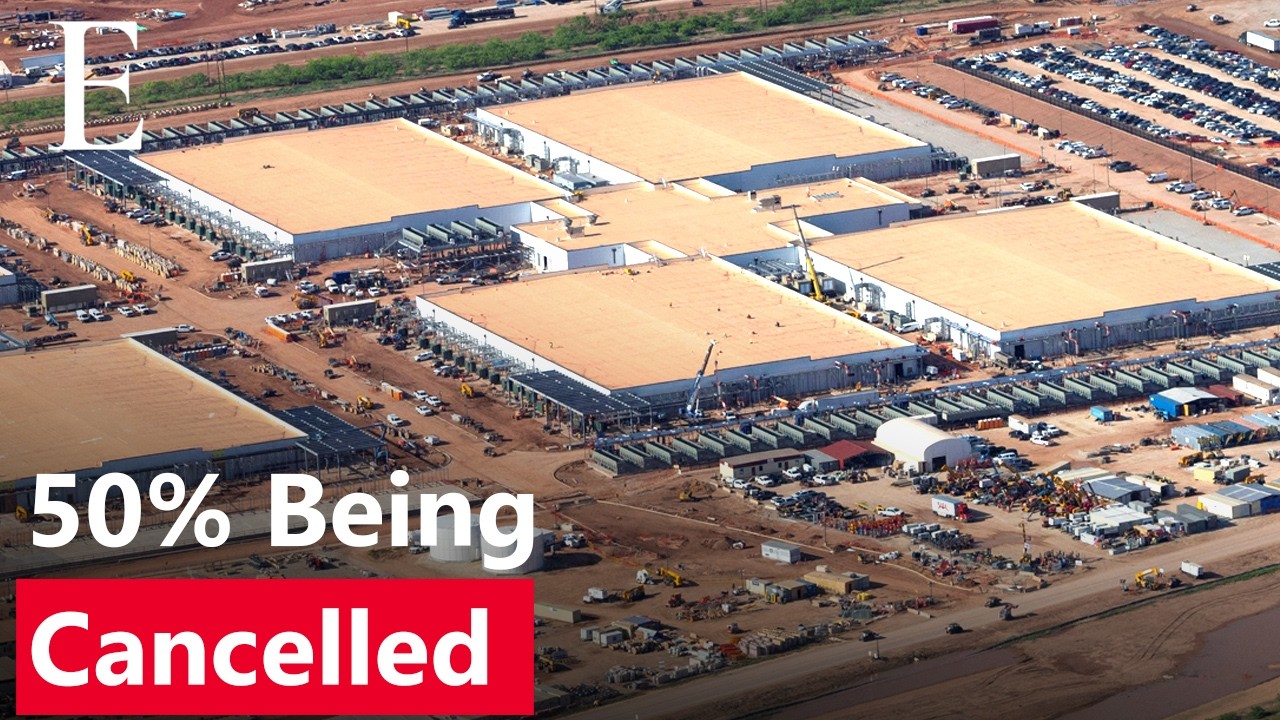
Economy Media grounds the cluster in infrastructure economics. The description argues that grid limits, rising energy costs, shortages of electrical components, and the risk of GPU oversupply are already delaying or canceling projects that were supposed to absorb the AI boom (video).
Discussion insight: Dwarkesh Patel pushes the same theme deeper into engineering fundamentals by walking from logic gates to GPUs, TPUs, FPGAs, and data movement. The physical-AI conversation is not only about spending more money; it is about hard design and deployment constraints that do not disappear when the hype cycle speeds up.
Comparison to prior day: Compared with 2026-05-22, the physical-AI theme stops being mostly about custom silicon and data-center alternatives and starts absorbing labor, military, surveillance, and public-infrastructure consequences.
2. What Frustrates People
Agents still create supervision debt when scope and review are weak
This is High severity because the positive and negative agent videos are describing the same failure mode from opposite angles. theMITmonk says agents amplify vague thinking and bad process, Zen van Riel needs four Claude Code lanes plus worktrees and explicit MCP-versus-Bash choices, Vaibhav Sisinty leans on Antigravity's manager surface and artifacts, and BusinessCringe argues autonomous agents create unfinished work that humans still have to repair. The visible coping strategy is more structure: narrower task decomposition, review artifacts, worktrees, and human checkpoints. This is directly worth building for.
Search automation is getting more capable while user control gets harder to see
This is High severity because the strongest search videos frame the problem as a loss of agency, not a lack of intelligence. SomeOrdinaryGamers treats AI-heavy Search as Google damaging a product people already trusted, Techlore responds with privacy-respecting alternatives and bang shortcuts, and Google's own Search roadmap confirms 24/7 information agents, booking and calling actions, and custom mini apps inside Search. The Gemini Spark page tries to answer the trust problem by saying Spark works under user direction and checks before major actions, which shows how central the control issue already is. The coping strategy is partial exit, more deliberate opt-in, and stronger preference for source-legible tools. This is directly worth building for.
Trust breaks when AI launches and strategy narratives outrun clear evidence
This is High severity because the dataset keeps pairing ambitious claims with credibility challenges. Coding with Lewis, Meta's Llama 4 launch post, and The Decoder put class-leading benchmark claims next to explicit criticism that some results were "fudged a little bit," while World Science Festival argues current systems still fall short of genuine reasoning. The AI Daily Brief shows the same trust problem from another angle by treating compute access, research speed, and profitability signals as the new proof points. The coping strategy is heavier source-checking and more skepticism toward launch framing on its own. This is directly worth building for.
Physical-world AI is raising human-cost questions that current tooling does not answer
This is High severity because the real-world consequences are now explicit in mainstream coverage. CBS News ties AI investment to layoffs at Meta, CBS Mornings says the Defense Department wants to be "AI-first" while service members worry about how fast deployment is moving, ABC News raises surveillance concerns around humanoid robots, and Economy Media says grid limits and component shortages are already canceling data-center projects. The visible coping response is slower deployment, more oversight, and more explicit infrastructure planning, but none of those are yet presented as mature tooling layers. This is directly worth building for in workforce impact tracking, deployment approvals, and infrastructure visibility.
3. What People Wish Existed
Team-safe agent operating systems with memory, review, and lane discipline
People want agents that can do long-running work without turning into chat chaos or correction debt. theMITmonk frames the core problem as bad process getting amplified, Zen van Riel adds worktrees and role separation, Vaibhav Sisinty sells a manager-driven surface for parallel software work, and BusinessCringe shows what happens when that governance layer is missing. This is an urgent practical need because today's alternative is faster rework rather than reliable leverage. Opportunity: direct.
Consumer AI that stays source-visible, opt-in, and interruptible
The search cluster shows a clear unmet need for AI help that does not hide links, remove user choice, or keep acting in the background after trust breaks. SomeOrdinaryGamers and Techlore show the frustration from opposite ends, while Google's own Search roadmap and Gemini Spark page confirm that the market is moving toward background agents, custom mini apps, and more autonomous execution. This is an urgent practical need because people want assistance without surrendering control. Opportunity: direct.
Trust infrastructure for AI claims, evaluations, and strategy shifts
The dataset keeps pointing to a missing layer that can show what was tested, who checked it, and why a strategic story should be believed. Coding with Lewis, Meta's Llama 4 post, and The Decoder expose the evaluation gap directly, while World Science Festival and The AI Daily Brief show that even broader claims about reasoning or lab momentum now need stronger public grounding. This is an urgent practical need, not just a research-philosophy issue. Opportunity: direct.
Deployment governance for labor, defense, and physical-world automation
People are not only asking what AI can do; they are increasingly worried about what happens when it is deployed into jobs, weapons, robots, and public infrastructure too quickly. CBS News, CBS Mornings, and ABC News together imply a need for approvals, audit trails, and human override mechanisms that are legible to workers, operators, and the public. This is both a practical and institutional need, and the urgency is rising as these stories move into mainstream daily coverage. Opportunity: direct.
Compute planning that turns chip and power limits into product choices
Teams do not only need more compute; they need help deciding where inference should run, which infrastructure assumptions are brittle, and when expansion plans are not realistic. Economy Media points to grid and component bottlenecks, Dwarkesh Patel explains why chip and data-movement tradeoffs are inherently complex, and The AI Daily Brief treats SpaceX-backed compute as a strategic advantage in the lab race. This is a practical need with real urgency because infrastructure decisions are now part of the product story itself. Opportunity: direct.
4. Tools and Methods in Use
| Tool | Category | Sentiment | Strengths | Limitations |
|---|---|---|---|---|
| Google Search agents | Consumer agent | (+/-) | 24/7 monitoring, booking/calling actions, and custom mini apps inside Search | Triggers strong source-legibility and control concerns |
| Gemini Spark | Personal agent | (+/-) | Background tasks across Gmail, Drive, Docs, Sheets, Slides, YouTube, Maps, and schedules under user direction | Limited rollout, subscription gating, and a high trust burden for autonomous action |
| Google Antigravity | Dev platform | (+) | Manager surface, async agents across editor/terminal/browser, and artifacts for review | Still in public preview and asks users to adopt a new workflow layer |
| Claude Code multi-window workflow | Coding agent method | (+/-) | Strong reasoning plus explicit worktrees, effort tiers, and MCP/Bash boundaries | Requires heavy context management and ongoing human review |
| Privacy-first search engines plus bangs | Search method | (+) | Clearer incentives, source visibility, and lower switching cost away from Google | Smaller ecosystem and less default convenience than mainstream Search |
| Gemini 3.5 Flash | LLM | (+/-) | Default model in AI Mode with sustained agentic and coding positioning across Google's stack | Value is judged through the products around it, which remain contested on trust and control |
| Llama 4 | Open-weight model | (+/-) | Multimodal open weights, long context, and strong deployment claims on H100-class hardware | Benchmark credibility damage is weighing on trust in the launch story |
| GPU/TPU/FPGA tradeoff literacy | Infrastructure method | (+/-) | Makes chip design, data movement, and compute bottlenecks more legible to practitioners | Hard to turn into immediate product decisions when power and component constraints stay tight |
Overall sentiment is strongest for tools and methods that make control explicit: Antigravity's manager surface, Zen van Riel's worktree-heavy Claude Code workflow, and privacy-first search alternatives all promise more inspectability than raw automation. Mixed sentiment appears when tools act in the background or when product positioning outruns evidence, which is why Search agents, Spark, Gemini 3.5 Flash, and Llama 4 all attract both interest and distrust.
The visible workarounds are alternative search engines, bang shortcuts, worktrees, artifacts, and tighter human checkpoints. Migration is moving from single chat panes to manager surfaces and lane discipline, from default Google Search toward privacy-first alternatives, and from abstract compute talk toward more chip- and power-aware planning. Competitive dynamics are bundle-driven: Google is combining Search, Spark, Antigravity, and Gemini 3.5 into one ecosystem push, while open-weight and infrastructure players still have to win back trust or clarify deployment tradeoffs.
5. What People Are Building
| Project | Who built it | What it does | Problem it solves | Stack | Stage | Links |
|---|---|---|---|---|---|---|
| Gemini Spark | Background personal agent that executes tasks, schedules, and reusable skills across a user's workspace | Offloads repeated inbox, planning, filing, and coordination work | Gemini 3.5 Flash, Antigravity, Gmail/Calendar/Drive/Docs/Sheets/Slides/YouTube/Maps connections | Beta | page, video | |
| Google Search agents and mini apps | Monitors the web in the background, sends synthesized updates, and builds custom dashboards or trackers inside Search | Replaces repeated search, monitoring, and coordination tasks | Gemini 3.5 Flash, Search, Antigravity-generated UI, Personal Intelligence connections | Beta | blog, video | |
| Google Antigravity | Agentic development platform with editor and manager surfaces for async software work | Offloads multi-tool coding, testing, UI iteration, and maintenance tasks | Editor, terminal, browser orchestration; artifacts; Gemini, Claude, GPT-OSS support | Beta | blog, video |
Builder activity is concentrated inside Google's own launches rather than independent shipping. Spark, Search agents, and Antigravity all package AI as something persistent that keeps state, runs over time, and asks users to manage or supervise background execution rather than submit one-off prompts.
Independent signals are weaker than on 2026-05-22. Most non-Google creator videos are tutorials about how to use agents, critiques of automation at work, or coverage of infrastructure and policy fallout rather than launches of new public products. That makes today's builder pattern less about many small experiments and more about one large platform push.
6. New and Notable
Demis Hassabis pushed AI back into mainstream leadership coverage
ABC News is notable because it centers Google DeepMind CEO Demis Hassabis on breakthroughs, regulation, and what skills people should learn now. That matters because it turns AI strategy into a mainstream executive and career conversation, not just a lab or developer one.
Google's creator AI stack is becoming a story of its own
Theoretically Media is notable because it argues Google's most interesting launches were around Omni, Flow, Genie, editing, remixing, compositing, and audio tooling that sat outside the main keynote narrative. Together with ABC News' I/O recap, it suggests Google's AI push is no longer just search and chat - it is also a creator-production stack.
Anthropic momentum is being narrated as a market reset, not just a product update
The AI Daily Brief is notable because it frames Anthropic's week around profitability signals, Karpathy joining, recursive research, and SpaceX compute rather than around a single model release. That matters because it shows the daily AI narrative shifting toward research velocity and infrastructure positioning.
Physical-AI risk is back in the mainstream daily feed
CBS Mornings on combat AI and ABC News on humanoid-robot surveillance are notable because they bring military and civil-liberties concerns back into regular consumer news coverage. The AI story on YouTube is not staying inside software categories.
7. Where the Opportunities Are
[+++] Governance-first agent workbenches for teams - theMITmonk, Zen van Riel, Vaibhav Sisinty, Google's Antigravity post, and BusinessCringe all point to the same gap: agents need explicit task boundaries, artifacts, worktrees, and review gates before they become dependable work systems.
[+++] User-control layers for consumer agents and search - SomeOrdinaryGamers, Techlore, Google's Search roadmap, and the Gemini Spark page converge on a strong need for AI that can help with repeated tasks without hiding sources, taking too much initiative, or locking users into one surface.
[++] AI credibility and benchmark-audit products - Coding with Lewis, The Decoder, Meta's Llama 4 post, World Science Festival, and The AI Daily Brief all show that people need clearer lineage for claims, evaluations, and strategic narratives before trust will stabilize.
[++] Workforce and deployment governance for physical-world AI - CBS News, CBS Mornings, and ABC News show growing demand for human-override, approval, and accountability systems once AI touches layoffs, military workflows, or surveillance-capable robotics.
[++] Compute planning and vendor-routing intelligence - Economy Media, Dwarkesh Patel, and The AI Daily Brief point to a live need for products that can turn chip constraints, data movement, power limits, and supply assumptions into actionable deployment choices.
[+] Creator-workflow agents with reviewable outputs - Theoretically Media and ABC News suggest an emerging opening around AI video and media workflows that can edit, remix, and compose while still keeping the process inspectable for creators.
8. Takeaways
- Agents are being sold as workflow systems, and the winning pattern is more governance, not more autonomy. The highest-signal videos emphasize roles, worktrees, manager surfaces, artifacts, and review discipline rather than raw prompting power. (source, source, source)
- Google's AI story is no longer one product launch; it is a coordinated push across search, workspace, coding, and media. The same day includes Search agents, Spark, Antigravity positioning, and creator-tooling coverage around Omni, Flow, and Genie. (source, source, source, source)
- Search backlash is strong enough to produce switching behavior, not just complaint videos. Creators are already publishing concrete exit paths with privacy-first engines and bang shortcuts rather than only arguing that Google Search has worsened. (source, source)
- AI credibility now depends on the evidence chain around a claim and on the plausibility of the broader roadmap. Benchmark disputes, reasoning skepticism, and compute-backed lab narratives all show that branding is no longer enough by itself. (source, source, source, source)
- Physical-world AI is pulling the conversation toward jobs, defense, surveillance, and power constraints. The daily YouTube feed now treats AI investment, military use, humanoid robots, and data-center bottlenecks as one connected story about real-world deployment. (source, source, source, source)
- Builder activity on this date is concentrated in big-platform launches rather than many small public builds. The strongest product evidence comes from Spark, Search agents, and Antigravity, while most other creator videos teach workflows or critique AI adoption instead of launching new tools. (source, source, source)