YouTube AI - 2026-05-25
1. What People Are Talking About
1.1 Agents are being taught as operating systems, not chat tricks 🡕
On 2026-05-25, the agent cluster is less about vague "AI will help you" rhetoric and more about how an agent system should be structured and supervised. At least six items support the theme: theMITmonk explains ARR, four roles, and an OODA loop; Tech With Tim demos an agent that researches, builds, and deploys a landing page; AI Master pitches multi-task browser agents; Craig Hewitt packages Gemini Spark and Search as Google's consumer-agent push; and BusinessCringe argues the human review burden is getting worse, not better.

theMITmonk provides the clearest conceptual frame. The video says most people still use AI like a better search box, then explains agents as systems that decide the next action, not just the next word, with ARR, four roles, and an OODA loop for when workflows break. The distinctive angle is that vague thinking and messy process design get amplified rather than repaired, so the real product surface is workflow structure, not prompt cleverness (video).
Tech With Tim turns that framing into a practical demo. He says most users are still stuck at "ask a question, copy an answer," then walks through higher levels of AI usage and shows an agent that researches, builds, and deploys a landing page on its own. The distinctive angle is that agent value is being demonstrated as end-to-end execution, not as a nicer chat window (video).

Craig Hewitt packages Google I/O as a consumer-agent land grab. The video links directly to Gemini Spark, the Gemini 3.5 launch, and Google's Search roadmap; Google says Spark runs tasks, skills, and schedules in the background, while Search is entering the era of information agents and custom trackers. The distinctive angle is that background execution is moving from tutorial channels into Google's default consumer surfaces (video, Gemini Spark, Search roadmap).
Discussion insight: BusinessCringe supplies the counterweight by arguing autonomous agents increase workloads because humans still repair unfinished work. Google's own Spark page keeps emphasizing that app connections are off by default and major actions should be checked with the user, which shows how central interruption and review already are to the agent pitch.
Comparison to prior day: Compared with 2026-05-24, the theme becomes more tutorial-heavy and consumer-facing. The one-person-company sales pitch fades, while practical demos and Google's own rollout pages take over.
1.2 Consumer AI convenience is colliding with privacy and source visibility, pushing people to exit 🡕
At least five items support this cluster: Deep Humor publishes two anti-Google Search videos, Techlore turns backlash into a search-alternatives guide, Craig's Tech Talk exits Alexa after reviewing privacy settings, and Google's Search roadmap confirms that more of the product is moving toward background agents, booking flows, and mini apps. The common thread is not "AI does not work"; it is that users do not want core consumer tools to become less legible and harder to control.

Deep Humor gives the bluntest backlash version. The video says Google Search is abandoning traditional results for AI-generated answers and automated browsing, and frames that shift as the death of the product people trusted before AI Mode. The distinctive angle is not model weakness but the feeling that Google is removing a familiar, source-visible workflow (video).
Techlore turns that frustration into migration behavior. The video covers six privacy-respecting search engines, explains why their business models work differently, and shows how bangs reduce the pain of switching away from Google. The distinctive angle is that the response is operational, not ideological: users get a practical exit path instead of a rant (video).

Craig's Tech Talk extends the same trust problem into home assistants. After reviewing Alexa privacy history and data-retention settings, the channel says the household unplugged every Echo and moved toward HomePod and Apple Home instead. The distinctive angle is that consumer-AI distrust is now causing exits in voice assistants too, not only in Search (video).
Discussion insight: Google's Search roadmap says information agents will monitor the web in the background, booking and calling flows are expanding, and Search will build custom trackers and mini apps. The backlash is reacting to a real product shift from links toward delegated action, not to a hypothetical future.
Comparison to prior day: Compared with 2026-05-24, the backlash becomes more behavioral. Yesterday centered on criticism of Google's direction; today adds alternative-engine guides, bangs, and adjacent assistant exits.
1.3 AI governance is becoming a mainstream public-institutions story 🡕
At least six items support this theme: Oprah gives Anthropic's founders a long-form mainstream interview, CNN frames AI as a labor-market question for new graduates, MS NOW covers Pope Leo XIV's call for regulation, World Science Festival keeps the reasoning critique alive, ABC interviews Demis Hassabis about regulation and future skills, and Coding with Lewis keeps the Llama trust controversy visible. The debate is no longer staying inside labs and benchmark discourse.

Oprah turns Anthropic's safety narrative into a mainstream cultural conversation. The interview description and chapter list cover ethical responsibility, underage users, the refusal to remove Claude guardrails for the Pentagon, regulation, harms, benefits, and what AI means for ordinary life. The distinctive angle is that frontier-model governance is being discussed in a mass-audience format, not only in technical media (video).
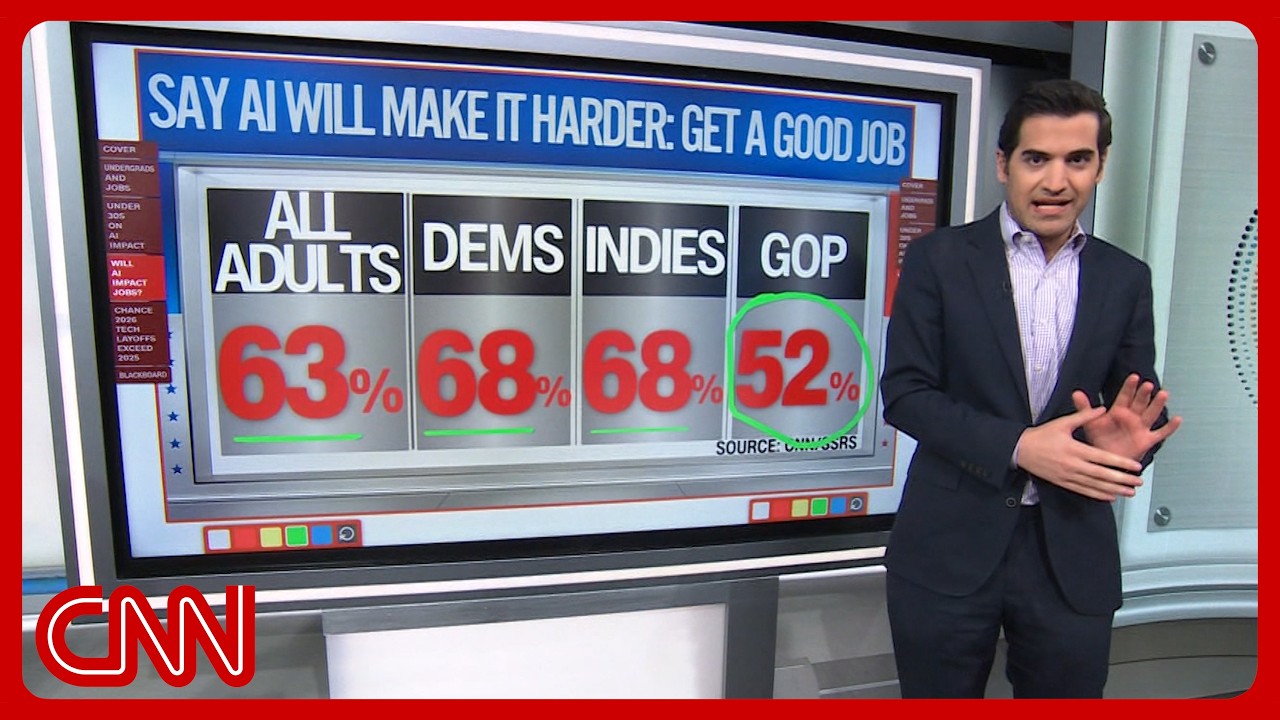
CNN adds the labor-market version of the same concern. The segment asks whether Americans are worried about AI replacing jobs and specifically frames the issue around college graduates entering the workforce now. The distinctive angle is that AI risk is being narrated as a near-term employment question rather than as an abstract future scenario (video).

MS NOW contributes the clearest institutional escalation. The segment says Pope Leo XIV used his first encyclical to call for robust AI regulation and to frame AI risk in terms of humanity's future. The distinctive angle is that AI oversight is now being argued through a major religious and moral institution, not just through corporate policy or government hearings (video).
Discussion insight: World Science Festival gives the technical counterpart, with Gary Marcus arguing that scaling and "reasoning" claims still do not resolve abstraction failures, hallucinations, or world-model gaps. The policy and culture story is widening at the same time the technical skepticism remains active.
Comparison to prior day: Compared with 2026-05-24, the trust story widens beyond benchmark drama and hallucination documentaries into jobs, guardrails, child safety, and regulation across mainstream institutions.
1.4 Compute strategy is becoming the real AI story, from grid limits to local models and domestic chips 🡕
At least five items support this theme: Economy Media says data-center projects are being delayed or canceled, Nate B Jones argues platform teams become the bottleneck when agents scale, Awesome reframes local models around Apple Silicon and quantization, Bloomberg/LeCun says future AI needs new techniques and infrastructure for the physical world, and Huawei's Ascend 910C story turns export controls into a domestic system-build question. The daily feed keeps forcing AI back down from model marketing to compute, platform, and deployment reality.
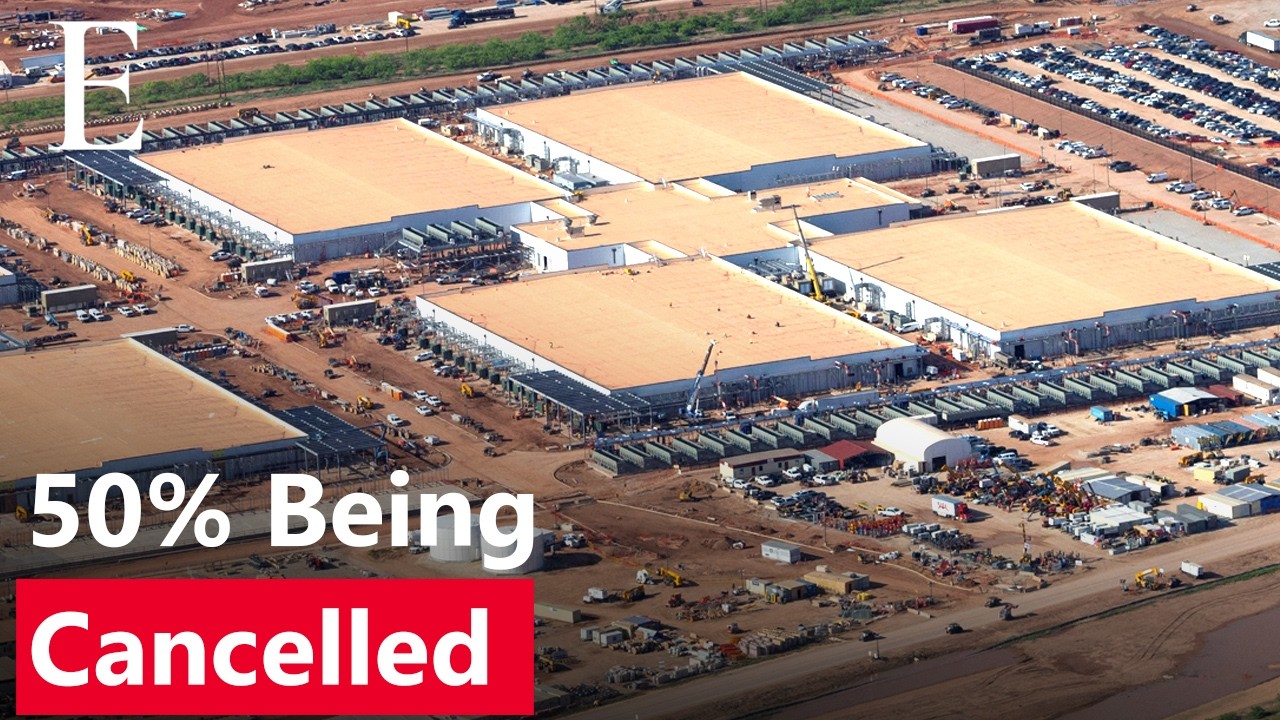
Economy Media gives the clearest bottleneck framing. The video says that after huge post-ChatGPT investment, many AI data-center plans are now being delayed or canceled because of grid limits, rising energy costs, component shortages, and weaker-than-expected chip-demand assumptions. The distinctive angle is that AI scale is being constrained by physical and economic infrastructure, not only by model ambition (video).
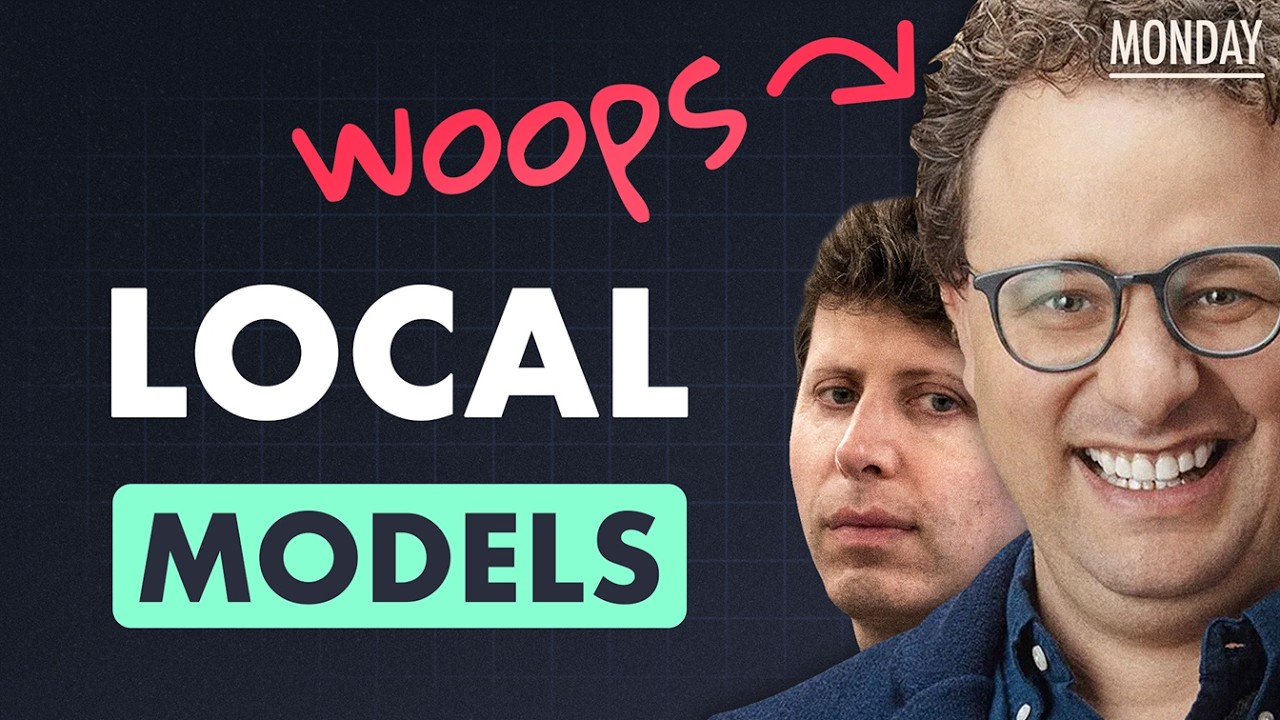
Awesome adds the local-compute counterweight. The video says local models are getting serious, explains why Apple Silicon matters, and frames llama.cpp, quantization, and local-versus-cloud tradeoffs as a response to collapsing token economics. The distinctive angle is that local AI is being sold as an operating-cost and hardware-fit decision, not as a hobbyist niche (video).

Evolving AI widens the compute story into geopolitics. The video says Huawei did not try to beat Nvidia chip-for-chip after export controls; instead it built a domestic accelerator and scaled that into a larger CloudMatrix 384 system play. The distinctive angle is that AI compute is being narrated as stack design and supply resilience, not just benchmark speed (video).
Discussion insight: Nate B Jones says platform teams become the bottleneck when agents start doing more work inside a company, while Bloomberg Television gives Yann LeCun room to argue that future AI depends on new techniques and infrastructure for the physical world. Together they make the same point from inside teams and from research strategy: operations are becoming the hard part.
Comparison to prior day: Compared with 2026-05-24, the hardware story becomes more operational. Yesterday emphasized foundries, power, and deployment environments; today adds local-compute economics and internal platform bottlenecks, making the infrastructure layer more concrete.
2. What Frustrates People
Agents still create correction debt when roles, permissions, and review steps are vague
This is High severity because the positive and negative agent videos describe the same failure mode from opposite directions. theMITmonk says agents amplify vague thinking and bad processes, Tech With Tim only gets leverage by moving from chat into staged execution, Google's Spark page says major actions should be checked with the user, and BusinessCringe argues autonomous agents can increase workloads because humans still repair unfinished work. The coping strategy is narrower scopes, clearer roles, and visible checkpoints. This is directly worth building for.
Search and assistant AI is eroding trust when it hides sources or acts too aggressively
This is High severity because the strongest consumer-AI videos frame the problem as loss of control, not poor model quality. Deep Humor says Google is replacing trusted Search behavior with AI answers and automated browsing, Techlore responds with privacy-respecting engines and bangs, Craig's Tech Talk leaves Alexa after inspecting privacy settings, and Google's Search roadmap confirms background monitoring agents, booking or calling flows, and custom trackers. The coping strategy is partial exit, source-visible alternatives, and more explicit opt-in. This is directly worth building for.
Public concern is outrunning reassurance on jobs, guardrails, and regulation
This is High severity because the debate has escaped the lab and moved into mainstream institutions without producing much visible reassurance. Oprah and Anthropic's founders discuss ethical responsibility, guardrails, and children, CNN frames AI as a labor-market issue for graduates, MS NOW centers Pope Leo XIV's call for regulation, and World Science Festival keeps the reasoning and hallucination critique active. The coping response is skepticism, calls for clearer rules, and heavier emphasis on explicit safeguards. This is directly worth building for.
AI deployment still runs into hard compute and platform bottlenecks
This is High severity because the infrastructure videos are about constraints, not hype. Economy Media says data-center projects are being delayed or canceled by grid limits, energy costs, and component shortages, Nate B Jones says platform teams become the bottleneck when agents scale, Bloomberg Television frames the next phase of AI around new techniques and infrastructure, and Evolving AI shows domestic compute stacks being built under export-control pressure. The coping strategy is more compute planning, slower rollout, and stronger local or domestic alternatives. This is directly worth building for.
Creator AI still requires too many handoffs between models and tools
This is Medium severity because the creator videos are still about workarounds and orchestration, not one clean end-to-end surface. Jack Vs. AI uses GPT Image 2 or Nano Banana Pro, Claude, Seedance 2.0, and Higgsfield to avoid shot-by-shot generation and endless manual tweaks, while AI Master sells Gemini Omni around avatar cloning, conversational editing, and pricing or export limits. The coping strategy is storyboard-first planning, prompt libraries, and workflow hubs. This is directly worth building for.
3. What People Wish Existed
Reviewable agent systems that can be interrupted, scoped, and audited
People want agents that can do long-running work without turning into hidden review debt. theMITmonk, Tech With Tim, Google's Spark page, Google's Search roadmap, and BusinessCringe all point to the same missing layer: explicit roles, permissions, checkpoints, and interruption controls that stay visible while the agent works. This is an urgent practical need because the current alternatives are either passive chat or opaque background automation. Opportunity: direct.
Search and assistant tools that keep sources visible and consent explicit
The consumer-AI cluster shows a clear need for help that does not hide links, make bookings too aggressively, or keep acting after trust breaks. Deep Humor, Techlore, Craig's Tech Talk, and Google's Search roadmap all point toward assistants that preserve legibility and ask for permission at the right moments. This is an urgent practical need because users want help without surrendering visibility into what the tool is doing. Opportunity: direct.
Local-first AI stacks that are easy to run on consumer hardware and small teams
The local-model and compute videos show demand for a simpler path to AI that does not depend on fragile token economics or always-on cloud billing. Awesome centers Apple Silicon, llama.cpp, quantization, and local-versus-cloud tradeoffs, while Evolving AI shows the same control instinct at the larger-stack level through domestic compute. This is a practical need because people want predictable cost, privacy, and hardware fit, but the current setup still feels specialist. Opportunity: direct.
Trust infrastructure for public AI claims, guardrails, and labor impact
The dataset keeps pointing to a missing layer that can show what was tested, where a claim came from, which guardrails are active, and why a benchmark, safety claim, or jobs forecast should be believed. Oprah, CNN, MS NOW, World Science Festival, Coding with Lewis, Meta's Llama 4 post, and The Decoder all expose a trust gap from different angles. This is an urgent practical need because the public debate has moved faster than the evidence layer behind it. Opportunity: direct.
Compute-planning tools for teams whose agentic workloads outpace their platform layer
Teams do not only need more compute; they need help deciding where workloads should run, which bottlenecks will break first, and how agent speed changes infrastructure demand. Economy Media, Nate B Jones, Bloomberg Television, and Evolving AI all imply a need for tools that connect product ambition to grids, energy, chips, local hardware, and platform-team capacity. This is a practical need with rising urgency because infrastructure is becoming the real constraint story. Opportunity: direct.
A creator workbench that unifies storyboards, generation, editing, and cost control
The remaining creator videos still show people asking for one surface where references, prompts, storyboards, generation, edits, and pricing limits all fit together. Jack Vs. AI and AI Master describe partial answers, but creators still hop among GPT Image 2, Nano Banana Pro, Claude, Seedance 2.0, Higgsfield, and Gemini Omni to get predictable output. This is an urgent practical need because the bottleneck is workflow overhead rather than lack of models. Opportunity: direct.
4. Tools and Methods in Use
| Tool | Category | Sentiment | Strengths | Limitations |
|---|---|---|---|---|
| Gemini Spark | Personal agent | (+/-) | Tasks, skills, schedules, and cross-app background execution under user direction | Limited rollout, subscription gating, and a high trust burden |
| Search agents and mini apps | Search agent | (+/-) | 24/7 monitoring, booking or calling flows, custom trackers, and generative UI inside Search | Triggers source-visibility and consent concerns |
| ARR + OODA agent scaffolds | Agent design method | (+) | Explicit roles, next-action logic, and recovery loops for broken workflows | Still depends on clear human process design |
| Genspark-style build agents | Builder agent | (+/-) | Can research, build, and deploy a landing page end-to-end in a demo workflow | Demo-heavy, sponsor-heavy, and still needs supervision |
| Local models + Apple Silicon + llama.cpp + quantization | Local inference stack | (+) | Better privacy, hardware fit, and cost control than cloud-only usage | Setup complexity and quality tradeoffs remain high |
| Privacy-first search plus bangs | Search method | (+) | Preserves links and lowers the switching cost away from Google | Smaller ecosystem and less default convenience than mainstream Search |
| Alexa to HomePod / Apple Home migration | Assistant migration method | (+/-) | Restores a narrower, device-control-first assistant setup after privacy frustration | Gives up some of the broader AI-agent ambition |
| GPT Image 2 / Nano Banana / Claude / Seedance 2.0 / Higgsfield | Creator workflow | (+) | Produces consistent storyboard-to-video pipelines and reduces shot-by-shot work | Still requires multiple tools and manual orchestration |
| Gemini Omni | Video model | (+/-) | Avatar cloning, conversational video edits, and physics-aware generation | Pricing, export, and feature limits are still visible |
| Llama 4 | Open-weight model | (+/-) | Multimodal open weights, long context, and strong deployability claims | Benchmark credibility damage is weighing on trust |
| Ascend 910C / CloudMatrix 384 | AI hardware stack | (+/-) | Domestic compute path under export controls and system-level scaling strategy | Ecosystem maturity and geopolitical constraints remain significant |
Overall sentiment is strongest for methods that keep control explicit: ARR and OODA scaffolds, privacy-first search, local inference, and storyboard-first creator workflows. Mixed sentiment appears when products promise invisible background action or sweeping performance without equally legible controls or evidence. The visible workarounds are bangs, manual review gates, HomePod migration, local models on Apple Silicon, and multi-model creator pipelines. Migration is moving from generic chat toward staged agents, from default Google Search and Alexa toward more source-visible or privacy-first setups, and from cloud-only AI toward local or domestic compute strategies.
5. What People Are Building
| Project | Who built it | What it does | Problem it solves | Stack | Stage | Links |
|---|---|---|---|---|---|---|
| Gemini Spark | 24/7 personal agent for inbox, schedules, file organization, and reusable skills | Handles recurring multi-app admin work and background follow-through | Gemini 3.5 Flash, Antigravity, Gmail, Drive, Docs, Sheets, Slides, YouTube, Maps | Beta | page, video | |
| Search agents and custom trackers | Information agents, booking or calling flows, and mini apps built inside Search | Offloads repeated monitoring, planning, and coordination tasks | Search, Gemini 3.5 Flash, Antigravity, Personal Intelligence connections | Beta | blog, video | |
| Gemini Omni | Multimodal video generation and conversational editing with avatars and physics-aware behavior | Reduces the number of separate tools needed to make and revise AI video clips | Google video model, chat editing, avatar cloning, multimodal inputs | Beta | video | |
| Storyboard-to-video workflow | Jack Vs. AI | Turns storyboards into full AI video sequences without shot-by-shot generation | Speeds prototyping for short films, ads, and visual concepts while improving consistency | GPT Image 2 or Nano Banana Pro, Claude, Seedance 2.0, Higgsfield | Shipped | video, Higgsfield |
| Ascend 910C / CloudMatrix 384 | Huawei | Domestic AI accelerator plus larger cluster strategy under export controls | Keeps high-end AI compute moving without direct reliance on blocked Nvidia exports | Ascend 910C, CloudMatrix 384, domestic AI compute stack | Beta | video |
Google's strongest build pattern is persistence across surfaces. Gemini Spark keeps tasks running across apps, Search agents keep monitoring and coordinating in the background, and Gemini Omni keeps creator edits conversational instead of forcing a new workflow for every revision. The shared distinction is not just model quality but continuity: these products try to stay active between prompts.
Independent creator energy is still more about assembling workflows than inventing new frontier models. Jack Vs. AI combines storyboards, Claude-authored prompts, Seedance 2.0, and Higgsfield into a usable video-production pipeline, while AI Master frames Gemini Omni as one more step toward collapsing those handoffs into a single surface. The trigger is familiar: creators want fewer transitions, fewer manual tweaks, and less credit waste.
The infrastructure side is also turning into a build story. Huawei's 910C and CloudMatrix 384 show that compute itself is now a productized response to geopolitical pressure, while Awesome reflects the same instinct at the smaller scale by pushing local models, Apple Silicon, and quantization as practical alternatives to cloud dependence.
6. New and Notable
Anthropic's safety story reached Oprah's audience
Oprah is notable because it moves frontier-model governance into a mainstream cultural format. That matters because guardrails, regulation, child safety, and AI's effect on ordinary life are now being discussed in a venue far outside developer or policy circles.
Local-model economics became a first-class topic instead of a niche hobbyist topic
Awesome is notable because the frame is not "look what I can run locally" but "Apple Silicon matters, llama.cpp and quantization matter, and token economics are breaking." That matters because local AI is being narrated as a cost and control strategy.
The regulation signal reached a major religious institution
MS NOW is notable because it says Pope Leo XIV used his first encyclical to call for AI regulation. That matters because AI oversight is now being argued through moral authority and social doctrine, not only through tech policy or vendor self-governance.
Platform teams were named as the hidden bottleneck in agent adoption
Nate B Jones is notable because it describes the uneven speed of agent adoption inside companies and says someone underneath has to absorb the complexity when app teams accelerate first. That matters because the story shifts from "agents make teams faster" to "agents change where the operational pain lands."
7. Where the Opportunities Are
[+++] Reviewable agent operating layers - theMITmonk, Tech With Tim, BusinessCringe, Google's Spark page, and Google's Search roadmap all point to the same gap: agents need visible roles, permissions, interruption points, and review states before they become dependable work systems.
[+++] Source-visible consumer AI control layers - Deep Humor, Techlore, Craig's Tech Talk, and Google's Search roadmap converge on a need for AI that can help with repeated tasks without hiding links, overstepping consent, or making background action feel invisible.
[++] Local-first AI operations for prosumers and small teams - Awesome and Evolving AI both show demand for AI stacks that are cheaper to run, easier to reason about, and less exposed to cloud or export dependence. The opportunity is moderate because the demand is real, but the product surface is still technically demanding.
[++] Platform-team tooling for agentic infrastructure bottlenecks - Economy Media, Nate B Jones, Bloomberg Television, and Evolving AI all point to a need for systems that translate product ambition into grid, chip, and platform-capacity decisions before teams hit invisible walls.
[++] Trust and evidence layers for public AI claims - Oprah, CNN, MS NOW, World Science Festival, Coding with Lewis, Meta's Llama 4 post, and The Decoder all show that safety claims, benchmark claims, and labor-impact claims now need a clearer public evidence chain.
[+] Creator-workflow consolidation - Jack Vs. AI and AI Master show that creators still stitch together storyboards, prompt engineering, generation, edits, and pricing decisions by hand. The opportunity is emerging because the pain is real, but the creator theme is weaker than the control, trust, and infrastructure themes today.
8. Takeaways
- The agent story is now about workflow design, not prompt cleverness. theMITmonk, Tech With Tim, Google Spark, and BusinessCringe all point to roles, permissions, checkpoints, and supervision as the real product surface. (source, source, source, source)
- Consumer-AI backlash is producing real migration behavior. Deep Humor attacks Google's new Search direction, Techlore publishes alternative engines and bangs, and Craig's Tech Talk leaves Alexa after reviewing privacy settings. (source, source, source)
- AI governance is now a mainstream public-institution topic. Anthropic's founders are explaining guardrails on Oprah, CNN is framing AI through job anxiety, and Pope Leo XIV is being cited for calling for regulation. (source, source, source)
- Trust debates now mix benchmark credibility with deeper skepticism about reasoning itself. The Llama 4 controversy keeps the benchmark problem alive, while Gary Marcus's World Science Festival conversation keeps the reasoning and hallucination critique active. (source, source, source, source)
- Compute strategy is becoming the real bottleneck story. Data-center limits, platform-team pressure, local-model economics, and Huawei's domestic stack all point to operations as the hard part of AI deployment. (source, source, source, source)
- Creator AI remains a workflow-composition problem. Jack Vs. AI and AI Master still rely on storyboards, prompt engineering, generation tools, and conversational editing surfaces in combination rather than on one settled end-to-end stack. (source, source)