YouTube AI - 2026-05-26
1. What People Are Talking About
1.1 Agents are being framed as operating environments, and the hidden cost is supervision 🡕
On 2026-05-26, agent coverage keeps moving away from chat tips and toward operating models, task systems, and review loops. At least seven items support the theme: theMITmonk explains ARR, four roles, and OODA loops; Tech With Tim pitches four levels of AI usage and an end-to-end build workflow; AI Search bundles Gemini Spark, Gemini 3.5, and Search agents; BusinessCringe argues the burden shifts back onto humans; and even local vibe-coding coverage starts talking about shared task boards and agent orchestration instead of one assistant window. The common question is not whether agents can act, but how visible their roles, checkpoints, and failure states are while they act.

theMITmonk gives the clearest conceptual frame. The video says most people still use AI like a better search box, then explains agents as systems that decide the next action rather than the next word, with ARR, four roles, and an OODA loop for when workflows break. The distinctive angle is that agents magnify vague process design instead of fixing it, so the product surface becomes workflow structure and review state, not prompt cleverness (video).
Tech With Tim translates that framing into adoption advice. The video says most people are still stuck at level-one chat usage, then shows a Genspark-style agent doing research, site building, and deployment as one continuous workflow. The distinctive angle is that the value claim is end-to-end execution, not just better answers in a chat box (video).

BusinessCringe supplies the strongest negative counterexample. The video argues autonomous agents increase workloads because unfinished work still has to be repaired by people, which turns "automation" into supervision debt when review loops are weak. The distinctive angle is that the failure mode is not a one-off hallucination but a work-design problem (video).
Discussion insight: Google's Gemini Spark page says Spark runs in the background, but only under user direction and with checks before major actions; the Search roadmap makes the same point at larger scale with information agents, booking flows, and custom trackers. The product pages are already emphasizing interruption, app-connection controls, and staged execution, which matches the tutorials and critiques more than the "fully autonomous" marketing language.
Comparison to prior day: Compared with 2026-05-25, the agent theme gets more operational. Yesterday emphasized conceptual framing and broad demos; today adds more explicit setup, multi-step workflow examples, and stronger warnings that hidden rework is the real cost center.
1.2 Google's AI-heavy search push is turning backlash into migration behavior 🡕
Search remains one of the strongest recurring clusters in the feed, but the 2026-05-26 version is less about keynote recap and more about what users do after the recap. At least six items support the theme: SomeOrdinaryGamers and Deep Humor argue Google is damaging a trusted default, Techlore publishes a practical escape route, AI Search packages Search agents and Gemini updates into one rollout, and Google's own roadmap confirms that Search is moving toward background monitoring, booking flows, and custom trackers. The interesting movement is not whether Google can add more AI to Search, but how quickly that move is producing exit behavior and alternative-tool education.
SomeOrdinaryGamers represents the sharpest mainstream backlash. The video frames Google's direction as the company damaging its most trusted consumer surface by forcing AI deeper into search. The distinctive angle is not disbelief that the models work, but frustration that the familiar source-visible workflow is being replaced (video).

Deep Humor pushes the same complaint into harder language. The description says alternatives are gaining users because AI overviews have become unavoidable and automated browsing is expanding. The distinctive angle is that the backlash is no longer just "I dislike this direction"; it is "Google Search is over, so here is what comes next" (video).
Techlore turns the backlash into migration behavior. The video covers six privacy-respecting search engines, explains why their business models matter, and shows how bangs reduce the switching cost away from Google. The distinctive angle is operational: viewers get an exit path, not just a rant (video).
Discussion insight: Google's Search roadmap says information agents will monitor the web 24/7, booking and calling flows are expanding, and Search will build custom trackers and mini apps. AI Search packages the same shift through Gemini Omni, Gemini 3.5, and Antigravity. The backlash is responding to a real product move from link retrieval toward delegated action, not to a hypothetical future.
Comparison to prior day: Compared with 2026-05-25, the search backlash sharpens from source-visibility complaints into stronger replacement language and more explicit migration advice. The coping behavior is becoming easier to observe: alternative engines, bangs, and partial exit plans.
1.3 Trust and governance debates now span benchmark credibility, jobs, healthcare, robots, and the Vatican 🡕
The trust cluster is no longer confined to lab rivalry or benchmark screenshots. At least seven items support this theme: World Science Festival questions whether current systems genuinely reason, Coding with Lewis turns Llama 4 into a benchmark-trust case study, ABC interviews Demis Hassabis on regulation and future skills, MS NOW and other outlets cover Pope Leo XIV's encyclical, ABC News frames humanoid robots through surveillance risk, and healthcare commentary warns that AI can degrade care rather than improve it. The common thread is that trust questions are now being argued across public institutions, regulated domains, and everyday work, not just inside model-launch discourse.

World Science Festival gives the broadest technical critique. Gary Marcus and Brian Greene keep returning to hallucinations, abstraction failures, the limits of pure scaling, and the question of what it would take to build something that genuinely reasons like a human. The distinctive angle is that the critique is about substrate and world models, not just about one bad product launch (video).

Coding with Lewis turns benchmark-trust anxiety into a concrete vendor case study. The video traces Meta's path from open-source goodwill to Llama 4 blowback, while Meta's own Llama 4 post still claims class-leading multimodal performance and The Decoder reports Yann LeCun saying some results were "fudged a little bit." The distinctive angle is the gap between launch narrative and post-launch confidence (video, Meta, The Decoder).

MS NOW pushes the governance story into formal public doctrine. The segment says Pope Leo XIV used his first encyclical to call for AI regulation, and related AP coverage says the document demands robust legal frameworks, independent oversight, and developers working for the common good rather than profit. The distinctive angle is that AI oversight is now being argued through one of the strongest moral and institutional voices in public life (video, AP coverage).
Discussion insight: ABC News frames humanoid robots as a surveillance problem, Doctors of Ojais argues AI in healthcare can degrade care and labor quality, and ABC News gives Demis Hassabis room to talk about regulation and future skills. The trust story now spans religious authority, mainstream media, medical anxiety, and lab leadership at once.
Comparison to prior day: Compared with 2026-05-25, the governance theme is less abstract. Yesterday concentrated on jobs, guardrails, and regulation as a mainstream debate; today adds benchmark integrity, healthcare delivery, and surveillance-specific risk.
1.4 AI deployment is getting narrated as an infrastructure and compute allocation problem 🡕
The compute story keeps getting wider and more concrete. At least seven items support this cluster: Economy Media argues data-center projects are being delayed or cancelled, Nate B Jones says platform teams absorb the uneven speed of agent adoption, Awesome reframes local models around Apple Silicon and quantization, BridgeMind stress-tests local vibe coding on premium Mac hardware, Bloomberg gives Yann LeCun room to argue that future AI needs new techniques and infrastructure, Huawei coverage turns export controls into a domestic system-build story, and ARK Invest adds an investor-version infrastructure thesis. The shared question is no longer "Which model is smartest?" but "Where does this actually run, who supports it, and what budget still works?"
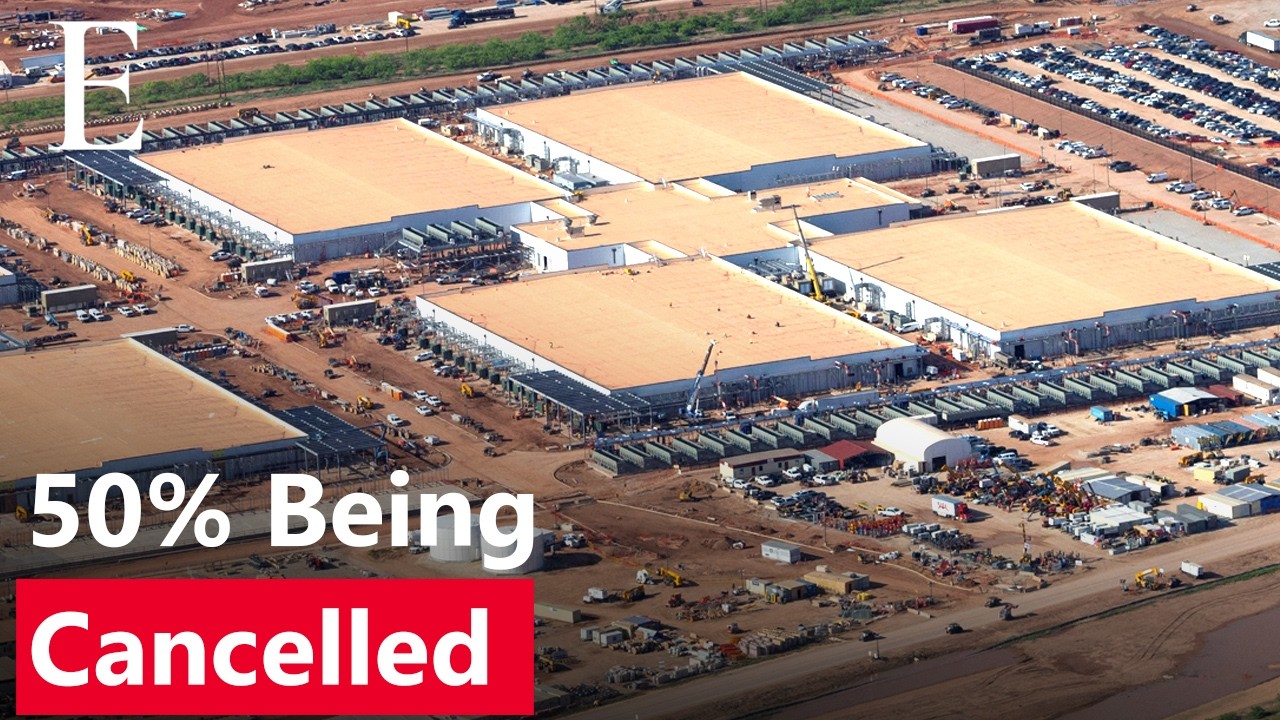
Economy Media gives the clearest macro bottleneck framing. The video says that after huge post-ChatGPT investment, many AI data-center plans are now being delayed or cancelled because of grid limits, rising energy costs, and shortages of key electrical components. The distinctive angle is that AI scale is being constrained by physical and economic infrastructure, not only by model ambition (video).

AI News & Strategy Daily | Nate B Jones moves the same pressure inside the company. The description says AI makes teams faster unevenly and that someone underneath has to absorb the complexity when agents start doing the work. The distinctive angle is that the bottleneck is no longer only chips or power, but the platform teams asked to keep the whole system stable while product layers accelerate (video).
Awesome adds the local-compute counterweight. The video says local models are getting serious, explains why Apple Silicon matters, and frames llama.cpp, quantization, and local-versus-cloud tradeoffs as a response to collapsing token economics. The distinctive angle is that local AI is being sold as an operating-cost and hardware-fit decision, not as a hobbyist identity (video).
Discussion insight: Bloomberg Television gives Yann LeCun room to argue that future AI depends on new techniques and infrastructure for the physical world, while Evolving AI reframes Huawei's Ascend 910C and CloudMatrix 384 as a domestic system-building response to export controls. The infrastructure story is now being told at three layers at once: research direction, enterprise operations, and geopolitical supply resilience.
Comparison to prior day: Compared with 2026-05-25, the infrastructure theme gets more specific about where the pressure lands. Yesterday focused on grids, domestic chips, and local-model economics; today adds platform-team bottlenecks and sharper cost-and-hardware tradeoffs for local AI.
1.5 Creator video workflows are shifting toward cheaper, more local, and more composable stacks 🡕
Creator AI is still a meaningful cluster, but the 2026-05-26 signal is less about one flagship model and more about how many handoffs or subscriptions a creator can avoid. At least four items support the theme: Jack Vs. AI chains storyboards, Claude, Seedance 2.0, and Higgsfield; AI Master positions Gemini Omni as a chat-based video editor; AI Research shows LTX 2.3 running locally without a high-end GPU; and smaller workflow coverage keeps asking how much video generation can be pushed onto free or lower-cost infrastructure. The recurring optimization target is not only quality, but cost, continuity, and keeping more of the workflow under the creator's control.
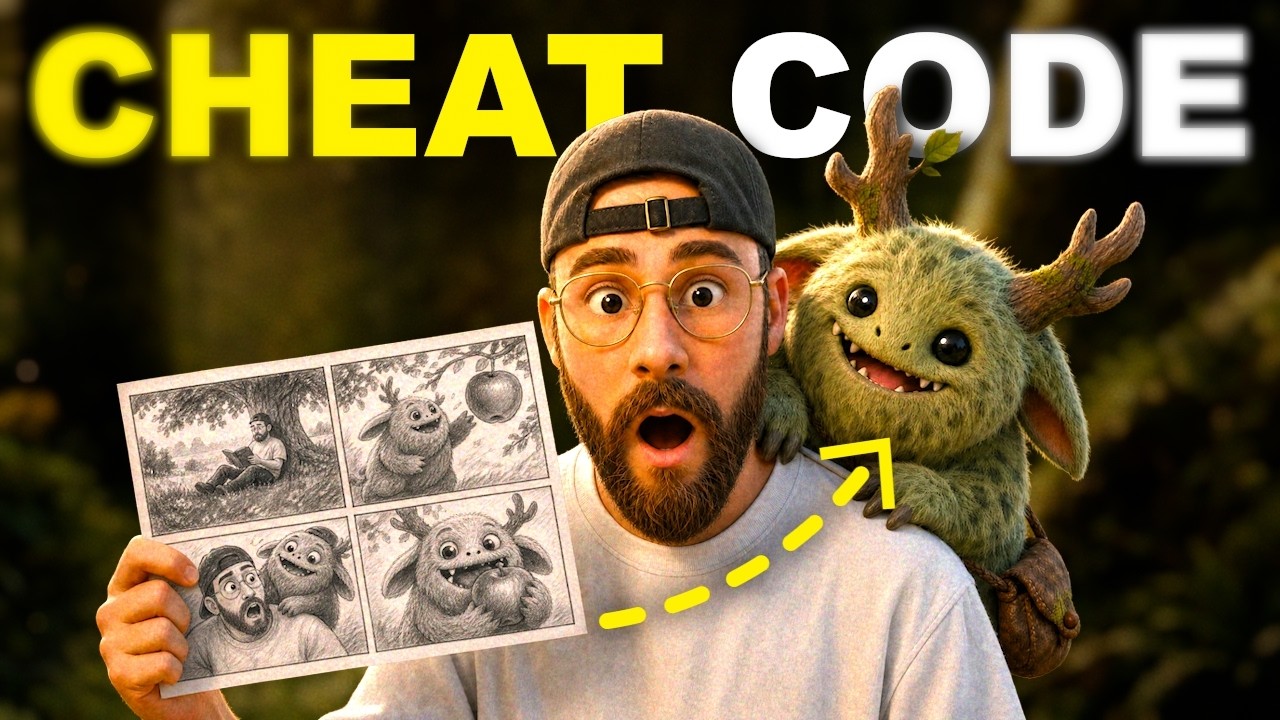
Jack Vs. AI shows what the composable creator stack looks like when one model is not enough. The workflow uses Nano Banana Pro or GPT Image 2 for storyboards, Claude for prompt engineering, Seedance 2.0 for sequence generation, and Higgsfield as the working surface. The distinctive angle is that consistency comes from choreography across tools rather than from any single model's raw output (video).

AI Master pushes the creator stack in the opposite direction: fewer tools, more managed capability. The video frames Gemini Omni as a video generator that understands physics, clones avatars from short clips, and edits through chat, while Google's own Gemini Omni page emphasizes multimodal editing, world understanding, and transparency tooling such as SynthID and C2PA credentials. The distinctive angle is that Google is trying to turn creator work into a conversational editing surface instead of a model-routing exercise (video, Gemini Omni).

AI Research supplies the clearest low-cost counterpoint. The video says LTX 2.3 can generate unlimited videos locally without a powerful GPU, and the linked free-aistudio repository describes an end-to-end workflow that runs a 22B LTX-Video 2.3 model on Kaggle's free Tesla T4 tier, with synced audio and sub-6-minute generation. The distinctive angle is that creator AI is being optimized around free or near-free capacity, not just around premium model access (video, repo).
Discussion insight: Google's Gemini Omni page and the free-aistudio repo now describe opposite poles of the creator market: one managed, multimodal editor with built-in transparency tooling, and one DIY Kaggle workflow optimized for free capacity. The gap between those poles is where most creators are still stitching together their real pipelines.
Comparison to prior day: Compared with 2026-05-25, the creator story shifts from premium workflow polish toward clearer cost arbitrage. Free tiers, local runs, and lower hardware requirements get more attention alongside flagship model features.
2. What Frustrates People
Agent systems still create correction debt when scopes and review steps are vague
This is High severity because the positive and negative agent videos describe the same failure mode from opposite directions. theMITmonk says agents amplify vague thinking and bad processes, Tech With Tim only gets leverage by moving from chat into staged execution, Google's Gemini Spark page says major actions should be checked with the user, and BusinessCringe argues autonomous agents increase workloads because humans still repair unfinished work. The coping behavior is clearer scoping, explicit roles, narrower permissions, and visible checkpoints. This is directly worth building for.
Search AI gets harder to trust when source visibility and consent become optional
This is High severity because the strongest search videos frame the problem as loss of control, not weak model quality. SomeOrdinaryGamers argues Google is damaging a trusted product, Deep Humor says alternatives are gaining users because AI-heavy search is becoming unavoidable, Techlore responds with private search alternatives and bangs, and Google's Search roadmap confirms background monitoring agents, booking or calling flows, and custom trackers. The coping behavior is partial exit, source-visible tools, and more deliberate opt-in. This is directly worth building for.
Public trust breaks when AI claims outrun evidence in benchmarks, healthcare, and safety
This is High severity because the dataset keeps pairing ambitious AI claims with concrete reasons to doubt them. World Science Festival questions whether current systems genuinely reason, Coding with Lewis pairs Meta's Llama 4 launch claims with LeCun's later criticism, Doctors of Ojais frames AI as a healthcare-quality risk, and ABC News raises surveillance concerns around humanoid robots. MS NOW and related AP coverage add the same complaint in institutional form: robust legal frameworks and independent oversight are still missing. The coping behavior is heavier skepticism, more source-checking, and louder calls for external accountability. This is directly worth building for.
AI rollouts still run into hard infrastructure limits before product ambition runs out
This is High severity because the infrastructure videos are about constraints, not possibility. Economy Media says data-center plans are being delayed or cancelled by grid limits, energy costs, and component shortages, AI News & Strategy Daily | Nate B Jones says infrastructure teams absorb the uneven speed of agent adoption, Awesome treats Apple Silicon, llama.cpp, and quantization as cost-control tools, and Evolving AI shows domestic compute stacks being built under export-control pressure. The coping behavior is slower rollout, more local inference, stronger platform investment, and domestic or self-hosted alternatives. This is directly worth building for.
Creator video pipelines are still fragmented across models, plans, and compute tiers
This is Medium severity because even the strongest creator videos rely on model routing and workflow assembly. Jack Vs. AI combines storyboards, Claude, Seedance 2.0, and Higgsfield, AI Master presents Gemini Omni as a promising but managed and access-limited editor, and AI Research reaches for a free local path through the free-aistudio repo. The coping behavior is storyboard-first planning, multi-model routing, and shifting work onto local or free capacity where possible. This is directly worth building for.
3. What People Wish Existed
Reviewable agent operating layers with explicit scopes, permissions, and interruption points
People want agents that can do multi-step work without turning into hidden review debt. theMITmonk, Tech With Tim, Google's Gemini Spark page, Google's Search roadmap, and BusinessCringe all point to the same missing layer: visible roles, checkpoints, app permissions, and interruption controls that stay legible while the agent works. This is an urgent practical need because the current alternatives are either passive chat or opaque background automation. Opportunity: direct.
Search and assistant tools that keep links visible and consent explicit
The search cluster shows a clear need for help that does not hide sources, make bookings too aggressively, or keep acting after trust breaks. SomeOrdinaryGamers, Deep Humor, Techlore, and Google's Search roadmap all point toward assistants that preserve legibility and ask for permission at the right moments. This is an urgent practical need because users want automation without losing visibility into what the system is doing. Opportunity: direct.
Evidence chains and oversight layers for AI claims in regulated or public settings
The trust cluster keeps asking for a clearer way to see what was tested, where a claim came from, which safeguards are actually active, and who is accountable when the claim fails. Coding with Lewis, World Science Festival, Doctors of Ojais, ABC News, and MS NOW all expose a trust gap from different angles: benchmark credibility, reasoning claims, healthcare quality, surveillance risk, and public regulation. This is both a practical and moral need because people do not just want stronger models; they want clearer proof, traceability, and outside review. Opportunity: direct.
Deployment planners that connect workload growth to platform-team capacity, local hardware, and supply limits
Teams do not only need more compute; they need help deciding where workloads should run, which bottlenecks will break first, and what mix of cloud, local, or domestic infrastructure still makes economic sense. Economy Media, AI News & Strategy Daily | Nate B Jones, Awesome, Evolving AI, and BridgeMind all imply that somebody needs to translate agent ambition into platform staffing, local hardware choices, and supply resilience. This is an urgent practical need because infrastructure is becoming the visible rate limiter. Opportunity: direct.
Creator workbenches that unify storyboards, generation, editing, and cost control across cloud and local stacks
Creators keep asking for one surface where references, prompts, storyboards, edits, rendering, and budget controls all live together. Jack Vs. AI, AI Master, and AI Research show partial answers, but the workflow still gets split across premium editors, local notebooks, and model-specific tools. This is an urgent practical need because the main cost is still workflow overhead rather than a total lack of model capability. Opportunity: competitive.
4. Tools and Methods in Use
| Tool | Category | Sentiment | Strengths | Limitations |
|---|---|---|---|---|
| Gemini Spark | Personal agent | (+/-) | Tasks, schedules, skills, and cross-app background execution under user direction | Limited rollout, subscription gating, and a high trust burden |
| Search agents and mini apps | Search agent | (+/-) | 24/7 monitoring, booking flows, custom trackers, and generative UI inside Search | Raises source-visibility and consent concerns |
| ARR + OODA agent scaffolds | Agent design method | (+) | Explicit roles, recovery loops, and clearer workflow structure | Still depends on strong human process design |
| Genspark-style end-to-end agents | Agent platform | (+/-) | Research, build, and deploy flows in one tool | Demo-heavy and still supervision-dependent |
| Privacy-first search plus bangs | Search method | (+) | Keeps links visible and lowers the switching cost away from Google | Smaller ecosystem and less default convenience |
| Llama 4 | Open-weight model | (+/-) | Multimodal open weights, long-context claims, and broad deployability appeal | Benchmark trust damage is weighing on confidence |
| Local models + Apple Silicon + llama.cpp + quantization | Local inference stack | (+) | Better privacy, hardware fit, and cost control than cloud-only usage | Setup complexity and model tradeoffs remain high |
| BridgeSpace + BridgeMCP | Agentic coding workspace | (+/-) | Parallel agents, shared context, task boards, and visible terminal workflows | Requires workflow discipline and meaningful hardware budget |
| Ascend 910C / CloudMatrix 384 | AI hardware stack | (+/-) | Domestic compute path and system-level scaling under export controls | Ecosystem maturity and geopolitical constraints remain significant |
| Gemini Omni | Video model/editor | (+/-) | Multimodal editing, avatar cloning, chat-based revisions, and transparency tooling | Availability, pricing, and pipeline gaps are still visible |
| Storyboard + Seedance + Higgsfield + Claude | Creator workflow | (+) | Better consistency and faster prototyping than single-model prompting | Still requires multiple tools and manual routing |
| LTX-Video 2.3 on free-aistudio | Local video workflow | (+) | Free Kaggle/T4 execution, synced audio, and low-cost experimentation | Notebook setup and free-tier limits reduce convenience |
Overall satisfaction is strongest for methods that keep control explicit: ARR and OODA scaffolds, privacy-first search, local inference, and storyboard-first creator workflows. Mixed sentiment appears when products promise invisible background action or sweeping benchmark leadership without equally visible control or evidence, which is why Spark, Search agents, Llama 4, and Gemini Omni all attract both interest and skepticism. The workarounds are now easy to name: bangs, manual review gates, Apple Silicon local models, BridgeMCP-style shared context, and Kaggle-based video generation. Migration keeps moving from generic chat toward staged agents, from default Google Search toward alternative engines, from cloud-only inference toward local hardware, and from monolithic creator tools toward composable or free/local pipelines.
5. What People Are Building
| Project | Who built it | What it does | Problem it solves | Stack | Stage | Links |
|---|---|---|---|---|---|---|
| Gemini Spark | Personal AI agent for inbox, schedules, file organization, and reusable skills | Handles recurring multi-app admin work and background follow-through | Gemini 3.5 Flash, Antigravity, Gmail, Drive, Docs, Sheets, Slides, YouTube, Maps | Beta | page, video | |
| Search agents and custom trackers | Information agents, booking or calling flows, and mini apps built inside Search | Offloads repeated monitoring, planning, and coordination tasks | Search, Gemini 3.5 Flash, Antigravity, Personal Intelligence connections | Beta | blog, video | |
| Gemini Omni | Multimodal video generation and chat-based editing with avatars and reference control | Reduces model switching and manual edits in creator workflows | Gemini Omni, multimodal inputs, avatars, SynthID, C2PA | Beta | page, video | |
| BridgeSpace 3 + BridgeMCP | BridgeMind | Agentic coding workspace with parallel agents, shared context, and visible terminal/task flows | Coordinates multi-agent vibe coding without losing task state and review visibility | BridgeSpace, BridgeMCP, shared memory, multi-pane terminals, task board | Shipped | BridgeSpace, BridgeMCP, video |
| free-aistudio | AI Research | Kaggle notebook and UI for running LTX-Video 2.3 on free GPU capacity | Low-cost AI video generation without premium hardware budgets | Python, Gradio, stable-diffusion.cpp, Kaggle T4, LTX-Video 2.3 | Shipped | repo, video |
| Storyboard-to-video workflow | Jack Vs. AI | Turns storyboards into full AI video sequences without shot-by-shot generation | Speeds prototyping for short films, ads, and visual concepts while improving consistency | GPT Image 2 or Nano Banana Pro, Claude, Seedance 2.0, Higgsfield | Shipped | video, Higgsfield |
| Ascend 910C / CloudMatrix 384 | Huawei | Domestic accelerator plus cluster strategy built around export-control constraints | Keeps advanced AI compute moving without direct reliance on blocked Nvidia exports | Ascend 910C, CloudMatrix 384, domestic AI compute stack | Beta | video |
Google's strongest build pattern is persistence across surfaces. Gemini Spark keeps tasks running across apps, Search agents keep monitoring and coordination alive inside Search, and Gemini Omni tries to keep creator edits conversational instead of forcing a new workflow at every step. The shared distinction is continuity between prompts, not just model quality in a single response.
Independent builder energy is splitting two ways. BridgeMind is turning vibe coding into a full workroom with shared context, task boards, and multiple agents, while Jack Vs. AI is assembling a pragmatic creator pipeline from existing tools rather than waiting for one perfect model. In both cases, the trigger is the same: people want fewer hidden handoffs and more control over how work moves.
The low-cost and resilience flank is also maturing. free-aistudio shows that creator tooling can be packaged around free Kaggle capacity, while Huawei's Ascend 910C / CloudMatrix 384 shows compute itself becoming the product response to geopolitical constraint. The repeated pattern is building for control over scarce resources, whether the scarce resource is GPU budget, human attention, or export-eligible chips.
6. New and Notable
Pope Leo XIV's AI encyclical is turning into a reference document for regulation
MS NOW and related AP coverage are notable because they move AI oversight into a formal, named document that calls for robust legal frameworks, independent oversight, and work for the common good rather than profit. That matters because the signal is no longer just "people want regulation"; it is "a major institution has now published a benchmark text for the debate."
Platform teams were named as the hidden bottleneck in agent adoption
AI News & Strategy Daily | Nate B Jones is notable because it describes the uneven speed of AI adoption inside companies and says someone underneath has to absorb the complexity when app teams accelerate first. That matters because the story shifts from "agents make teams faster" to "agents change where the operational pain lands."
Free AI video on Kaggle moved from aspiration to packaged workflow
AI Research is notable because it does not just claim local video generation is possible; it points to a concrete free-aistudio repository that packages LTX-Video 2.3 for Kaggle's free T4 tier with synced audio and sub-6-minute output. That matters because the creator market now has a public, low-cost reference workflow instead of only premium product demos.
BridgeMind turned local vibe coding into a visible multi-agent workspace story
BridgeMind is notable because the video ties local-model benchmarking to a broader product surface, while the BridgeSpace page describes up to 16 parallel agents and the BridgeMCP page describes shared context across coding tools. That matters because local AI is being pitched as a full production environment, not only as a cheaper substitute for cloud chat.
7. Where the Opportunities Are
[+++] Reviewable agent operating layers - theMITmonk, Tech With Tim, BusinessCringe, Google's Gemini Spark page, and Google's Search roadmap all point to the same gap: agents need visible roles, permissions, interruption points, and review states before they become dependable work systems.
[+++] Source-visible consumer AI control layers - SomeOrdinaryGamers, Deep Humor, Techlore, and Google's Search roadmap converge on a need for AI that can help with repeated tasks without hiding links, overstepping consent, or making background action feel invisible.
[++] Evidence and oversight infrastructure for public AI claims - World Science Festival, Coding with Lewis, Doctors of Ojais, ABC News, and MS NOW show that benchmark claims, healthcare use, surveillance-adjacent robotics, and public regulation all need a clearer evidence chain and accountability layer.
[++] Deployment planning for agentic infrastructure - Economy Media, AI News & Strategy Daily | Nate B Jones, Awesome, Bloomberg Television, and Evolving AI all point to a need for tooling that translates product ambition into grid, chip, platform-team, and local-hardware decisions before teams hit invisible walls.
[++] Shared-context local coding workrooms - BridgeMind, the BridgeSpace page, and the BridgeMCP page show that people want agentic coding environments where tasks, memory, terminals, and handoffs stay visible. The opportunity is moderate because the need is clear, but the category is already starting to form around a few early products.
[+] Creator workflow consolidation across premium and local video stacks - Jack Vs. AI, AI Master, and AI Research show that creators still stitch together storyboards, prompt engineering, managed editors, and free/local rendering paths by hand. The opportunity is emerging because the pain is real, but the market already has multiple partial solutions competing on different tradeoffs.
8. Takeaways
- Agent adoption is turning into a workflow-design problem, not a prompt problem. theMITmonk, Tech With Tim, Google's Spark page, and BusinessCringe all point to roles, checkpoints, permissions, and supervision as the real product surface. (source, source, source, source)
- Search backlash is now producing practical migration behavior. SomeOrdinaryGamers and Deep Humor argue Google is damaging a trusted workflow, while Techlore publishes alternative engines and bang shortcuts that make partial exit easier. (source, source, source)
- Trust debates now combine reasoning skepticism, benchmark credibility, and public regulation. World Science Festival questions the substrate behind current AI claims, Coding with Lewis ties Meta's Llama 4 story to benchmark-trust damage, and Pope Leo XIV's encyclical adds a formal call for robust legal frameworks and independent oversight. (source, source, source)
- Infrastructure constraints are becoming easier to name and harder to ignore. Data-center delays, platform-team bottlenecks, Apple Silicon local inference, and Huawei's domestic stack all point to operations as the hard part of AI deployment. (source, source, source, source)
- Local and free workflows are getting more concrete, not less. BridgeMind turns local models into a visible agentic coding workspace story, while free-aistudio packages LTX-Video 2.3 into a public Kaggle workflow. (source, source, source)
- Creator AI still has no single winning surface. Jack Vs. AI, Gemini Omni, and free-aistudio point to three different answers - composable workflow, managed multimodal editor, and low-cost local notebook - which means creators are still choosing between polish, control, and cost. (source, source, source)