YouTube AI - 2026-05-27
1. What People Are Talking About
1.1 Google's AI-first search push is turning backlash into exit behavior and open-web anxiety 🡕
On 2026-05-27, the search cluster gets sharper and more adversarial. At least six items support it: SomeOrdinaryGamers says Google is killing its core product, Deep Humor turns removal instructions into a video format, Techlore publishes an alternatives guide, WPTuts asks what AI-mediated browsing does to creator traffic and revenue, and Google's own Search roadmap confirms information agents, booking flows, and custom mini apps. The important shift is that the backlash is no longer only about aesthetics or privacy; it is about whether Google's new AI layer breaks the source-visible economics of the open web.
SomeOrdinaryGamers gives the bluntest mainstream version of the complaint. Mutahar frames the move as Google eating into its most trusted product by doubling down on controversial AI. The distinctive angle is not that AI fails outright; it is that a working, familiar search workflow is being replaced on purpose (video).

Deep Humor turns the backlash into explicit opt-out behavior. The description says DuckDuckGo, Brave, and Bing are gaining users because Google's new AI updates make traditional search results harder to reach, and it explicitly frames "Google Search WITHOUT AI" as a practical goal rather than a rhetorical complaint. The distinctive angle is that anti-AI-search sentiment is now packaged as a tutorial (video).

Techlore gives viewers an exit path. The video covers six privacy-respecting engines, explains why their business models work differently from Google's, and makes bangs part of the migration story so switching does not feel like losing utility. The distinctive angle is operational: it treats the backlash as something readers can act on immediately (video).
Discussion insight: Google's Search roadmap says information agents will run in the background 24/7, booking and calling flows are expanding, and custom dashboards or mini apps are coming directly into Search. WPTuts makes the missing economic argument explicit: if AI systems keep users inside the platform while summarizing the web, creators lose traffic, ad revenue, affiliate income, and leverage over discovery.
Comparison to prior day: Compared with 2026-05-26, the backlash hardens from "here are alternatives" into "remove AI from Search" and "this may be the end of the open-web traffic model." The creator-economy argument is much clearer today.
1.2 AI deployment is being framed as a power, silicon, and cost-allocation problem rather than a model race 🡕
The infrastructure story is no longer just "more GPUs." At least seven items support this theme: Economy Media on delayed or cancelled data centers, Hefty LLM on open chips, Awesome on Apple Silicon and quantization, Bloomberg Television on future AI infrastructure, CNBC Television on electricity demand, and NVIDIA's DSX digital-twin push. The recurring question is where AI workloads can actually run, what they cost in power and networking, and which design tools or hardware stacks can keep them economical.
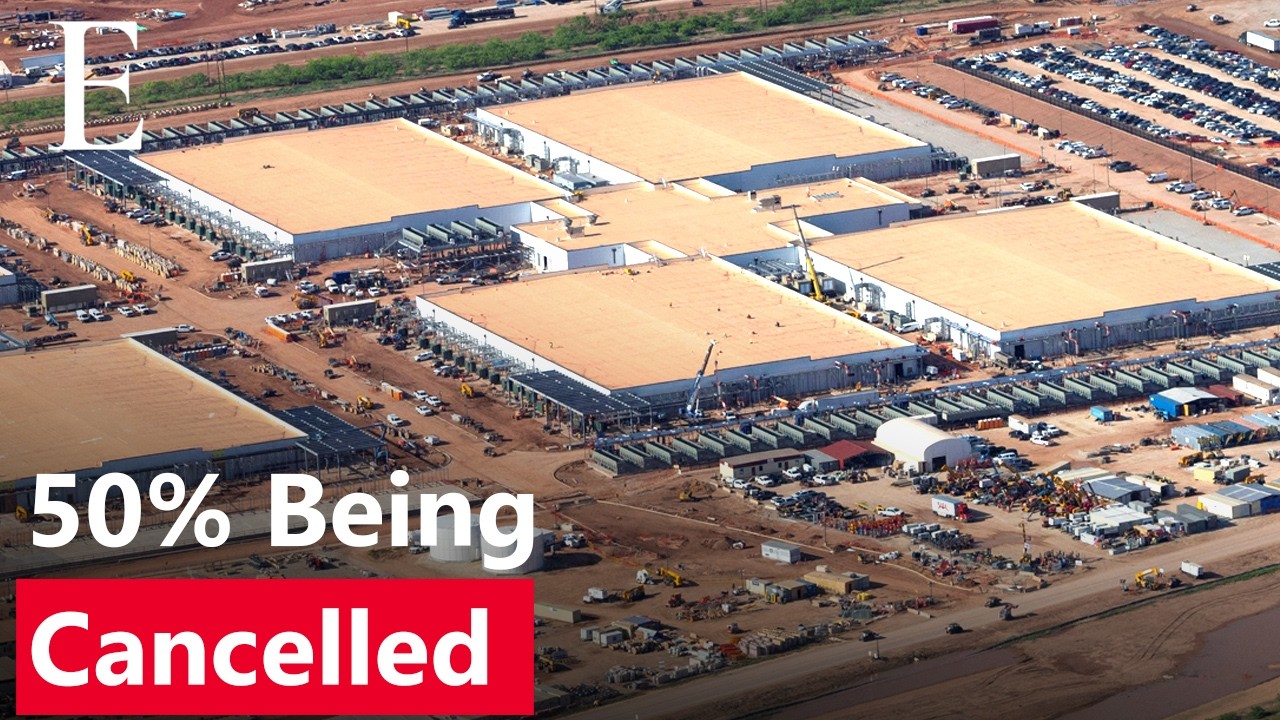
Economy Media gives the clearest top-down bottleneck view. The video says many AI data-center plans are being delayed or cancelled by grid limitations, rising energy costs, component shortages, and signs that GPU demand may have been overestimated. The distinctive angle is that AI scale is being constrained by physical and financial infrastructure before model ambition runs out (video).

Hefty LLM supplies the strongest anti-Nvidia thesis in the feed. The description claims Tenstorrent's architecture shifts scheduling and data movement into software, uses GDDR6 and integrated Ethernet, and can push inference costs far below Nvidia's stack on complex workloads. The distinctive angle is that hardware competition is being narrated as a software-and-networking redesign, not only as a faster chip (video).
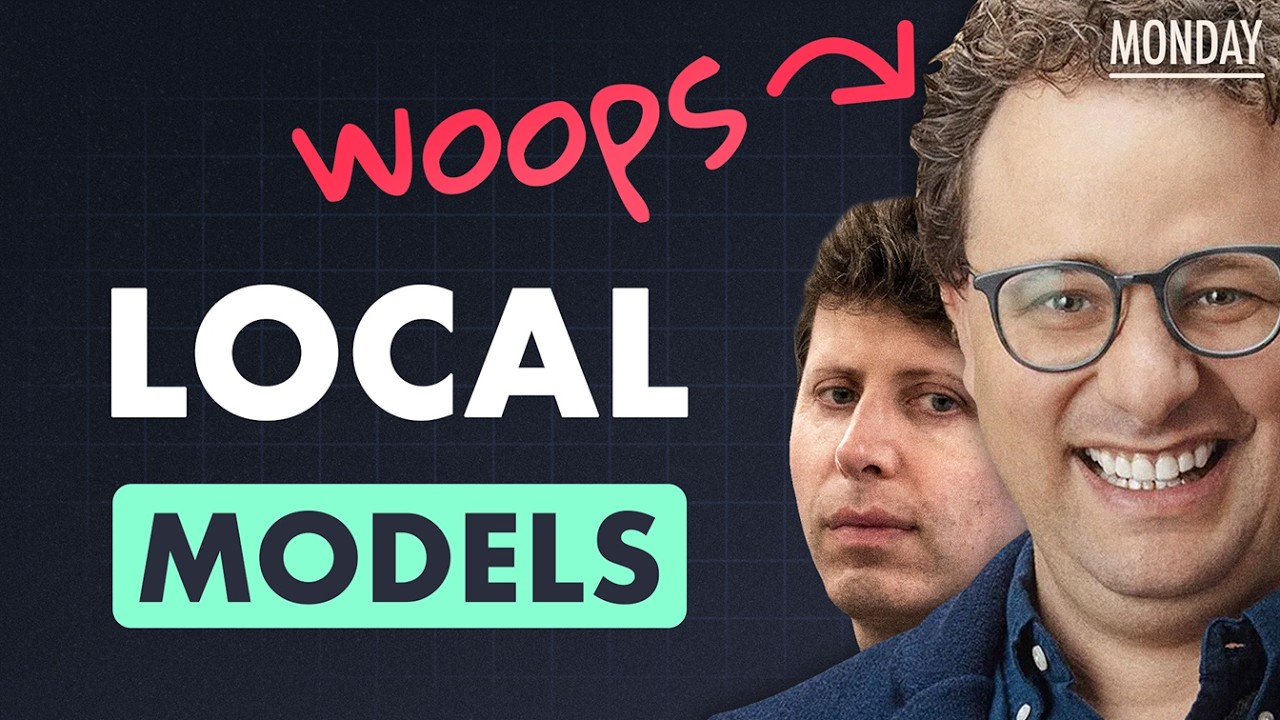
Awesome turns the same story back down to the laptop. The video frames Apple Silicon, llama.cpp, quantization, and local-versus-cloud tradeoffs as a response to collapsing token economics. The distinctive angle is that local AI is being pitched as cost control and hardware fit rather than as a hobbyist identity (video).
Discussion insight: NVIDIA's DSX release and Omniverse DSX Blueprint package AI-factory digital twins around power, cooling, and tokens-per-watt optimization before ground is broken. Bloomberg Television gives Yann LeCun room to argue that future AI needs new techniques and new infrastructure for the physical world, while CNBC Television highlights electricity demand as the operational choke point.
Comparison to prior day: Compared with 2026-05-26, the infrastructure story gets more operational. Yesterday already had grid limits and local models; today adds open-chip competition and digital-twin planning for AI factories.
1.3 Agent coverage has moved from philosophy to install flows, memory, and filesystem abstractions 🡕
Agent talk is becoming much more operational. At least six items support this theme: BusinessCringe says agents create correction debt, Rob Braxman Tech simplifies OpenClaw installation, AI LABS argues Mirage replaces tool calls with a virtual filesystem, Julia McCoy frames Hermes as a learning agent that overtook OpenClaw, and the rest of the tutorial-heavy coverage keeps focusing on onboarding, memory, and reusable workflows instead of abstract "what is an agent?" talk. The center of gravity is shifting toward how agents access context, stay installed, and keep improving over time.

AI LABS presents the most distinctive abstraction change. Mirage is described as mounting Gmail, Notion, Google Drive, Slack, and Telegram as local folders so agents can use ordinary bash commands such as grep, cat, cp, and ls instead of bespoke tools and repeated context-loading. The distinctive angle is that agent progress is being framed as a filesystem and Unix-tools story, not a prompt-engineering story (video).

Julia McCoy shifts the agent conversation toward product differentiation. The video description says Hermes processed 224 billion tokens in a day, knocked OpenClaw off the top spot, and wins because it learns rather than only connects. The distinctive angle is that persistent memory and reusable skills are being sold as the next competitive surface for agents (video).

Rob Braxman Tech makes the adoption bottleneck concrete. The video says OpenClaw setup used to be too complex and unclear for most users, then reframes the product around one simpler installation script with Ollama on Linux or Linux VMs. The distinctive angle is that demand now exists far enough down-market that onboarding itself becomes content (video).
Discussion insight: Mirage's docs confirm the one-filesystem model across GitHub, Slack, Gmail, Drive, and other services with ordinary Unix-like tools. The OpenClaw README still centers onboarding and daemon setup, while the public Hermes FAQ emphasizes persistent memory and reusable skills. BusinessCringe supplies the counterweight by arguing that unfinished agent work still turns into supervision debt.
Comparison to prior day: Compared with 2026-05-26, the agent story becomes more tool-specific. Yesterday supplied the conceptual frame; today adds file mounts, leaderboard churn, and install simplification.
1.4 Embodied AI is being narrated as open hardware plus manufacturing cadence, not just flashy demos 🡕
Embodied AI coverage is getting less cinematic and more operational. At least five items support this cluster: Technology with Tyler surveys real robots instead of generic future-tech montage, NVIDIA's Seeed Studio episode pushes an open-source robot-arm stack, The AI Nexus frames factory throughput as the new race, and the broader feed keeps linking physical AI back to simulation and deployability. The notable change is that robotics talk now revolves around parts, training loops, factories, and real deployment surfaces.

Technology with Tyler positions the robot story as an honest market scan rather than another haunted-mannequin compilation. The description explicitly promises a critical look at what the market actually offers in 2026. The distinctive angle is that robotics is being covered as a category with real products and tradeoffs, not just as spectacle (video).
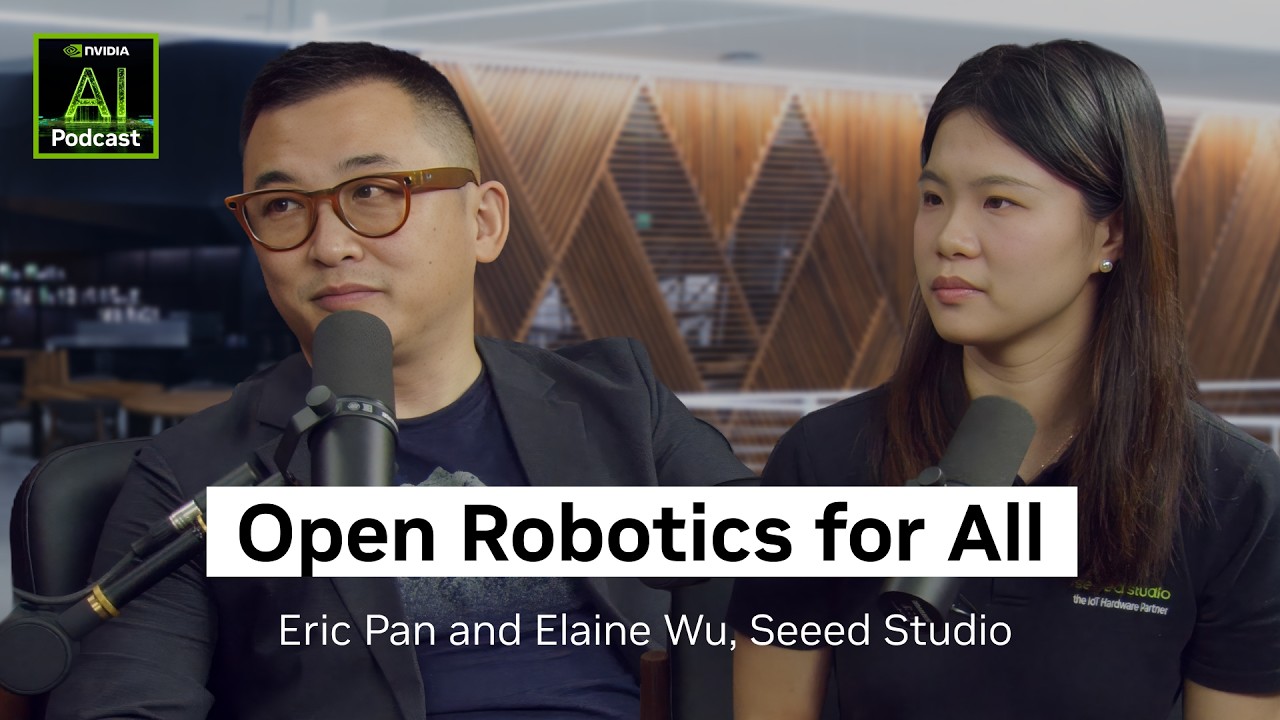
NVIDIA and Seeed Studio give the clearest builder-oriented robotics story. The episode describes affordable Jetson-powered robot arms, a $200 SOR arm, OpenClaw on Jetson, Isaac Sim, and hand-guided learning that turns robot arms into teachable agents. The distinctive angle is that embodied AI is being productized through open hardware and modular parts instead of through one monolithic humanoid vision (video).

The AI Nexus pushes the factory-schedule version of the story. The description claims a real-life T800 is rolling off a Shenzhen line every 15 minutes and puts EngineAI, Tesla, Figure, Unitree, UBTECH, and Boston Dynamics into one manufacturing race. The distinctive angle is throughput: humanoid robots are being discussed as products with unit targets and delivery cadence, not as trade-show demos (video).
Discussion insight: The Seeed Studio episode keeps returning to modular robot parts and to digital twins as the bridge from simulation to deployment. That lines up with Bloomberg Television's framing that future AI has to translate into the physical world through new infrastructure, not just better chat behavior.
Comparison to prior day: Compared with 2026-05-26, the robot story is less about surveillance danger and more about productization, open hardware, and manufacturing cadence.
1.5 Trust and governance coverage is shifting from broad regulation talk to rollback, benchmark distrust, and doomer warnings 🡕
Trust coverage did not cool down after yesterday's institutional-regulation burst; it mutated. At least four items support this theme: MS NOW on the scrapped AI executive order, World Science Festival on reasoning limits, Coding with Lewis on Meta's benchmark trust collapse, and Neural Nutshell on catastrophe rhetoric. The common thread is instability: policy signals can reverse, benchmark claims can unravel, and the underlying intelligence story still looks unresolved to many viewers.

MS NOW gives the clearest governance rollback signal. The segment says a long-awaited executive order on AI safety vetting was pulled late after calls with major tech leaders, and the political story is framed immediately as backlash. The distinctive angle is that the governance question is no longer only "how strong should the rules be?" but also "how quickly can those rules disappear?" (video).

World Science Festival supplies the broadest intellectual critique. Gary Marcus and Brian Greene keep returning to abstraction failures, hallucinations, world models, and the question of whether scaling can ever produce something that genuinely understands reality. The distinctive angle is that the skepticism is aimed at the substrate of current AI, not at one vendor's product mistake (video).

Coding with Lewis turns the trust problem into a concrete vendor case study. The video traces how Meta moved from open-source goodwill to a Llama 4 credibility crisis, while Meta's own Llama 4 launch post still claims class-leading multimodal results and The Decoder reports LeCun saying some results were "fudged a little bit." The distinctive angle is the gap between launch narrative and post-launch confidence (video, Meta, The Decoder).
Discussion insight: Neural Nutshell packages Eliezer Yudkowsky and Geoffrey Hinton into a full catastrophe-warning format, showing that existential-risk rhetoric is still highly marketable alongside benchmark skepticism and policy rollback. The trust story now stretches from White House process to lab credibility to civilizational warning language in one feed.
Comparison to prior day: Compared with 2026-05-26, the trust story shifts away from one big institutional-regulation signal and toward rollback, benchmark distrust, and more adversarial warning language.
2. What Frustrates People
Search becomes harder to trust when AI layers hide links and weaken publisher economics
This is High severity because the strongest search items frame the problem as loss of legibility, not just annoyance. SomeOrdinaryGamers says Google is damaging its core product, Deep Humor turns "remove AI from Search" into a how-to, Techlore responds with private alternatives and bangs, WPTuts raises direct traffic and revenue concerns for creators, and Google's Search roadmap confirms background agents, booking flows, and custom mini apps inside Search. The visible coping behavior is partial exit: alternative engines, bangs, and more deliberate opt-out. This is directly worth building for.
Agent systems still create both setup debt and supervision debt
This is High severity because the agent cluster keeps describing friction at both ends of the lifecycle. Rob Braxman Tech says OpenClaw installation used to be too complex for ordinary users, AI LABS presents Mirage specifically as a fix for manual context loading and tool-call overhead, Julia McCoy sells Hermes around reusable skills and persistent memory, and BusinessCringe argues unfinished agent work still comes back as human correction work. The coping behavior is narrower scopes, simpler onboarding, filesystem-style context access, and more explicit memory or skill layers. This is directly worth building for.
AI rollout plans still break on power, cooling, and silicon economics
This is High severity because the infrastructure videos are about constraints, not optional optimizations. Economy Media says buildouts are being delayed or cancelled by grid limits, energy costs, and component shortages, CNBC Television highlights electricity demand, Hefty LLM frames alternative silicon as a cost response to Nvidia dependence, Awesome treats local models as an economics decision, and NVIDIA's DSX release exists because AI factories are too complex to plan without simulation. The coping behavior is simulation, local inference, and hardware diversification. This is directly worth building for.
Credibility breaks when policy signals, benchmark claims, and reasoning claims all move at once
This is High severity because the trust cluster keeps pairing ambitious AI narratives with concrete reasons to doubt them. MS NOW shows a proposed safety-vetting order disappearing at the last minute, World Science Festival questions whether current systems genuinely reason, Coding with Lewis pairs Meta's Llama 4 post with LeCun's later criticism, and Neural Nutshell packages catastrophe warnings as a full narrative. The coping behavior is heavier source-checking, slower trust, and louder demand for outside verification. This is directly worth building for.
Cost-aware AI use still pushes people toward local and free-tier workarounds
This is Medium severity because the workaround energy is real even when the complaints are implicit. Awesome frames local models around collapsing token economics, AI Research sells a no-GPU-needed free local video workflow, and Coding Shiksha points directly to freellmapi, which aggregates free model tiers behind one endpoint. The coping behavior is clear: use Apple Silicon, Kaggle, quantization, and stacked free tiers before committing to premium platforms. This is worth building for, but the demand looks more opportunistic than desperate.
3. What People Wish Existed
Search tools that keep links visible, consent explicit, and publisher incentives intact
The search cluster points to a very specific missing layer: AI help that does not hide source links, trap users inside the platform, or quietly strip traffic from the sites that produced the underlying information. Deep Humor, Techlore, WPTuts, and Google's Search roadmap all point to this need from different angles. This is an urgent practical need because users want convenience without losing visibility and creators want discovery without becoming raw material for zero-click answers. Opportunity: direct.
Agent context layers that make files, memory, and setup portable instead of fragile
The agent videos keep circling the same gap: too much value is still trapped behind setup friction, manual context loading, or stateless execution. AI LABS, the public Mirage docs, Rob Braxman Tech, Julia McCoy, the Hermes FAQ, and the OpenClaw README all point toward the same practical need: portable context, reusable skills, and onboarding that does not scare ordinary users away. Opportunity: direct.
Planning tools that connect AI ambition to power, cooling, chips, and local hardware
Teams do not only need more compute; they need help deciding what should run in the cloud, what should run locally, and where the next bottleneck will appear. Economy Media, Hefty LLM, Awesome, NVIDIA's DSX release, and Bloomberg Television all imply a need for software that translates model appetite into facility design, hardware choices, and operating cost. This is a practical need with rising urgency because infrastructure is becoming the visible rate limiter. Opportunity: direct.
Modular embodied-AI kits that are affordable, teachable, and safe to deploy
The robotics videos suggest that people do not only want humanoid headlines; they want physical AI they can actually buy, teach, and trust. Technology with Tyler, NVIDIA's Seeed Studio episode, and The AI Nexus point toward embodied systems that are modular, open, and cheaper than full humanoid bets while still being useful in real settings. This is both a practical and trust-related need because deployment friction, training cost, and safety concerns all sit between demo and adoption. Opportunity: competitive.
Low-cost creator and developer workbenches that route between free, local, and premium AI surfaces
The workaround cluster shows people asking for one surface that can choose the cheapest workable path without forcing them to hunt for credits, local installs, and niche repos by hand. AI Research, Coding Shiksha, Awesome, the free-aistudio repo, and the freellmapi repo all show the same instinct: squeeze as much useful work as possible out of free or local capacity before paying for premium access. This is an urgent practical need because the friction is not lack of models; it is stitching together the cheapest reliable route. Opportunity: direct.
4. Tools and Methods in Use
| Tool | Category | Sentiment | Strengths | Limitations |
|---|---|---|---|---|
| Search agents and mini apps | Search agent | (+/-) | Background monitoring, booking flows, custom trackers, and generative UI inside Search | Raises source-visibility, platform-control, and publisher-economics concerns |
| Gemini Spark | Personal agent | (+/-) | Tasks, schedules, skills, and cross-app background execution under user direction | Coming-soon availability, subscription gating, and a high trust burden |
| Mirage | Agent filesystem | (+) | One filesystem across Gmail, Drive, GitHub, Slack, and more using familiar bash tools | Requires per-service auth, daemon/workspace setup, and new infrastructure discipline |
| OpenClaw | Personal agent platform | (+/-) | Own-device assistant, wide channel coverage, and official onboarding flow | Installation friction is still large enough to drive third-party simplification tutorials |
| Hermes | Autonomous agent | (+/-) | Persistent memory, reusable skills, and multi-step execution across sessions | Paid tier, sponsor-heavy framing, and leaderboard claims outrun independent evidence |
| Local models + Apple Silicon + llama.cpp + quantization | Local inference stack | (+) | Better privacy, predictable cost, and good hardware fit for individual users | Setup complexity and quality tradeoffs remain real |
| Tenstorrent/open-source chip architecture | AI chip stack | (+/-) | Lower-cost inference narrative, software-managed data movement, and vendor diversification | Ecosystem maturity and enterprise confidence are still open questions |
| NVIDIA DSX + Omniverse DSX Blueprint | AI factory design stack | (+) | Digital twins, power/cooling simulation, predictive agents, and tokens-per-watt optimization | Mostly relevant at large scale and operationally complex to adopt |
| Privacy-first search plus bangs | Search method | (+) | Keeps links visible and lowers the switching cost away from Google | Smaller ecosystem and less default convenience than mainstream Search |
| free-aistudio | Local video workflow | (+) | Kaggle T4 execution, synced audio, and low-cost experimentation with LTX-Video 2.3 | Notebook setup and free-tier constraints reduce convenience |
| freellmapi | API proxy | (+/-) | One OpenAI-compatible endpoint with automatic failover across 12 free providers | Free-tier reliability varies, and the project is explicitly for experimentation |
Overall sentiment is strongest for methods that keep control explicit and cost legible: private search, Mirage's filesystem model, local inference, and free-aistudio's Kaggle workflow. Mixed sentiment shows up whenever a product promises invisible background action or huge performance gains without equally visible control and verification, which is why Search agents, Spark, Hermes, and open-chip claims all attract both excitement and skepticism. The migration patterns are easy to see: from default Google Search toward alternative engines, from cloud-only usage toward local or free compute, from raw tool calls toward filesystem abstractions, and from pure Nvidia dependence toward open silicon and more deliberate infrastructure planning.
5. What People Are Building
| Project | Who built it | What it does | Problem it solves | Stack | Stage | Links |
|---|---|---|---|---|---|---|
| Gemini Spark | Personal AI agent for inbox, schedules, files, and reusable skills | Handles recurring multi-app admin work and background follow-through | Gemini 3.5 Flash, Antigravity, Gmail, Calendar, Drive, Docs, Sheets, Slides, Maps, YouTube | Beta | page | |
| Search agents and custom trackers | Information agents, booking flows, and mini apps built directly into Search | Offloads repeated monitoring, planning, and coordination tasks | Search, Gemini 3.5 Flash, Antigravity, Personal Intelligence connections | Beta | blog | |
| Mirage | Strukto | Unified virtual filesystem for agents across Gmail, Drive, GitHub, Slack, Notion, and more | Removes tool-call overhead and manual context loading across many services | Python, TypeScript, bash-style commands, mounted connectors, persistent workspaces | Shipped | repo, docs, video |
| OpenClaw | OpenClaw | Own-device personal AI assistant that runs across many chat and voice surfaces | Gives users a persistent personal assistant without depending on one proprietary surface | Node, channel connectors, gateway daemon, local or self-hosted setup | Shipped | repo, docs, video |
| Hermes | Abacus.AI | Self-evolving autonomous agent with persistent memory and reusable skills | Handles long-running multi-step tasks that benefit from learned procedures | Persistent memory, reusable skills, multi-step execution, account-linked context | Shipped | faq, video |
| NVIDIA DSX + Omniverse DSX Blueprint | NVIDIA | AI-factory digital-twin stack for design, simulation, and operations | Plans power, cooling, networking, and facility behavior before infrastructure is built | Omniverse, DSX, digital twins, predictive agents, tokens-per-watt optimization | Shipped | news, blueprint, video |
| Seeed Studio embodied-AI stack | Seeed Studio | Affordable Jetson-powered robot arms paired with OpenClaw and Isaac Sim | Lowers the barrier to embodied AI for makers, students, and small businesses | Jetson, OpenClaw, Isaac Sim, open hardware, modular robot parts | Beta | video |
| free-aistudio | airesearch-official | Kaggle notebook and UI for running LTX-Video 2.3 on free GPU capacity | Low-cost AI video generation without premium hardware budgets | Python, stable-diffusion.cpp, Kaggle T4, Gradio, quantized LTX-Video 2.3 | Shipped | repo, video |
| freellmapi | tashfeenahmed | OpenAI-compatible proxy that aggregates free LLM tiers behind one endpoint | Lets developers stack many free providers instead of wiring each one separately | TypeScript, SQLite, encrypted keys, fallback routing, OpenAI-compatible API | Shipped | repo, video |
Google's strongest build pattern is persistence across surfaces. Gemini Spark keeps tasks running across apps, while Search agents keep monitoring and coordination alive inside Search itself. The shared distinction is continuity between prompts, not just better one-shot answers.
Independent agent builders are solving context and onboarding from different sides. Mirage turns many apps into one filesystem so agents can use Unix tools they already understand, while OpenClaw and Hermes package always-on assistance around onboarding, memory, and learned skills. The repeated trigger is the same: people want less manual setup and less repeated context.
The cost-control flank is also active. free-aistudio packages free Kaggle GPU capacity into a usable creator workflow, while freellmapi turns scattered free model tiers into one reusable developer surface. These are not frontier-model launches; they are packaging plays built around spare or low-cost capacity.
Physical AI builders are converging on modularity and simulation. The Seeed Studio stack uses low-cost robot arms, OpenClaw, and Isaac Sim to make embodied AI teachable, while NVIDIA's DSX Blueprint applies the same digital-twin instinct to AI factories. In both cases, the real build pattern is not "make AI smarter" but "make deployment more controllable."
6. New and Notable
A proposed U.S. AI safety-vetting order disappeared at the last minute
MS NOW is notable because it turns AI governance into a rollback story rather than a new-rules story. That matters because the signal is not just that AI regulation is contested; it is that even late-stage policy plans can still collapse under pressure.
Mirage made cross-service agent context look like ordinary files
AI LABS is notable because it packages a genuinely different agent interface. The linked Mirage docs show Gmail, Drive, GitHub, Slack, and more behind one filesystem with bash-style tools, which is a stronger abstraction shift than yet another wrapper around tool calls.
NVIDIA turned AI-factory digital twins into a named product surface
NVIDIA is notable because the DSX release and blueprint move AI infrastructure planning from generic "we need more power" talk into a concrete design-and-simulation workflow. That matters because infrastructure is becoming a software and operations product category in its own right.
Free capacity is getting packaged into reusable creator and developer products
AI Research and Coding Shiksha are notable because they both point to public products that wrap cheap capacity into something reusable: free-aistudio for Kaggle-based AI video, and freellmapi for stacked free model tiers behind one endpoint. That matters because the market is not only shipping better models; it is shipping better arbitrage.
Open-source embodied AI got a clearer maker-access narrative
NVIDIA's Seeed Studio episode is notable because it ties open hardware, a $200 SOR arm, OpenClaw, and Isaac Sim into one embodied-AI story for makers, students, and small businesses. That matters because the robotics conversation moved a step closer to accessible kits instead of staying at the level of humanoid spectacle.
7. Where the Opportunities Are
[+++] Source-visible AI search and publisher-respecting browsing layers - Deep Humor, Techlore, WPTuts, and Google's Search roadmap all point to the same gap: AI can help with discovery and action, but users still want visible links and creators still need a sustainable traffic model.
[+++] Agent context and onboarding layers - Mirage, OpenClaw, Hermes, and BusinessCringe converge on a need for agents that are easier to install, easier to supervise, and better at carrying context and learned procedures forward.
[++] AI workload planning across power, cooling, silicon, and local hardware - Economy Media, Hefty LLM, Awesome, and NVIDIA's DSX release all show that teams need better software for choosing where workloads run before they hit invisible operational walls.
[++] Modular embodied-AI kits for makers and small businesses - Technology with Tyler, NVIDIA's Seeed Studio episode, and The AI Nexus all point to a market that wants cheaper, teachable, and more modular physical AI rather than only premium humanoid showcases.
[++] Cost-aware routing across free, local, and premium AI surfaces - AI Research, Coding Shiksha, and Awesome show repeated demand for products that automatically find the cheapest workable path across Kaggle, Apple Silicon, free tiers, and paid services.
8. Takeaways
- The Google search backlash is now about economics and control, not just taste. The strongest videos do not merely say "AI search feels bad"; they say users are looking for opt-out paths and creators may lose the traffic model that sustained the open web. (source, source, source, source, source)
- Infrastructure is becoming the real AI bottleneck story. Grid limits, energy demand, open-chip alternatives, local inference, and AI-factory digital twins all point to operations, not raw model hype, as the place where the next fights will happen. (source, source, source, source)
- Agent competition is shifting toward onboarding, context access, and learned behavior. Mirage, OpenClaw, Hermes, and even the negative BusinessCringe framing all point to the same product surface: agents only feel valuable when setup, memory, and supervision are manageable. (source, source, source, source)
- Embodied AI is moving closer to deployable products. The robot coverage emphasizes modular parts, teachable arms, and factory throughput, which is a different signal from pure humanoid spectacle. (source, source, source)
- Trust is not stabilizing around the current AI wave. A scrapped executive-order plan, reasoning skepticism, and benchmark credibility damage all reinforce the idea that governance and technical confidence are still moving targets. (source, source, source, source)
- Builders are productizing cheap capacity as aggressively as they are productizing new intelligence. Free Kaggle video pipelines, stacked free LLM tiers, and local-model workflows all show a market that cares deeply about price discipline and reusable arbitrage. (source, source, source, source, source)