YouTube AI - 2026-05-28
1. What People Are Talking About
1.1 AI-native development is shifting from agent demos to disciplined engineering systems 🡕
On 2026-05-28, the agent cluster is less about generic autonomy and more about how AI work gets structured, verified, and deployed. At least five items support it: theMITmonk, Theo - t3.gg, IBM Technology, Tech With Tim, and AI BrainBox. The center of gravity is moving toward scaffolding: explicit roles, inspectable toolchains, multi-agent coordination, and model-routing layers that make AI-native development less brittle.

theMITmonk gives the clearest conceptual frame. The description says most people still use AI like a better search box, then defines agents as systems that decide the next action rather than the next word, using ARR, four roles, and OODA loops when workflows break. The distinctive angle is that agent failures are framed as amplified process ambiguity, not isolated hallucinations (video).
Theo - t3.gg turns that framing into a developer workflow story. Theo says his models, harnesses, and coding setup changed completely in a few months, and the linked Lakebed gist describes an early toolchain meant to let agents build and deploy full-stack apps with full autonomy. The distinctive angle is that AI coding is being redesigned around what agents need to inspect and operate, not around what humans want to click through (video, Lakebed gist).
IBM Technology adds the verification layer. The video says multi-agent systems matter when one AI brain is not enough, and IBM's multi-agent systems guide explicitly frames MAS as a way to improve trust, specialization, and large-scale problem solving through cooperating agents. The distinctive angle is that reliability is being sold as coordination architecture, not as one stronger base model (video, IBM guide).
Discussion insight: The linked Lakebed gist is explicit that the project is still early and only has a local capsule loop today, which is a useful correction to the bigger "full autonomy" pitch. IBM's MAS guide adds the other constraint: multi-agent systems gain accuracy and scalability, but they do it by adding communication, hierarchy, and coordination overhead.
Comparison to prior day: Compared with 2026-05-27, the agent story shifts from memory, install flow, and filesystem abstractions into AI-native software engineering, verification, and production deployment.
1.2 AI infrastructure is being discussed as a full-stack systems problem, from chip design to facility operations 🡕
Infrastructure coverage gets more technical and more organizational. At least five items support it: Economy Media on delayed or canceled AI data centers, Dwarkesh Patel on chip design and data movement, AI News & Strategy Daily | Nate B Jones on platform teams absorbing uneven agent adoption, CNBC Television on electricity demand, and NVIDIA on DSX digital twins. The common question is no longer just where to buy more GPUs; it is how compute, power, cooling, networks, and internal engineering teams stay in sync.
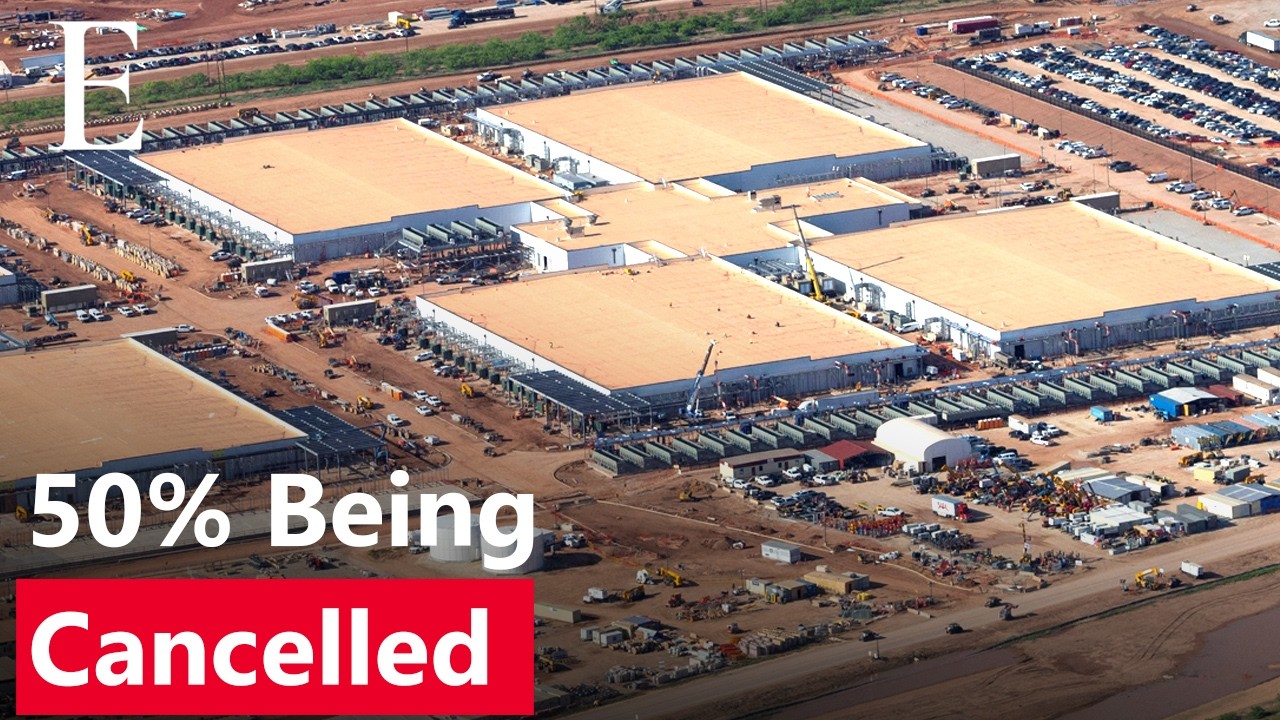
Economy Media gives the clearest macro bottleneck framing. The description says AI infrastructure projects are being delayed or canceled by electrical-grid limits, rising energy costs, and shortages of key components, with the added suggestion that demand forecasts may have overshot reality. The distinctive angle is that AI scale is being constrained by physical and financial systems before model ambition runs out (video).

Dwarkesh Patel adds the most concrete hardware explanation in the feed. The linked transcript walks through multiply-accumulate, systolic arrays, cache versus scratchpad, and why data movement costs shape chip design as much as raw compute. The distinctive angle is that the infrastructure conversation is getting pushed down to architecture primitives, not just spending totals (video, transcript).

AI News & Strategy Daily | Nate B Jones moves the same problem inside the company. The description says AI makes teams faster unevenly and that infrastructure teams underneath have to absorb the complexity as agents spread, turning platform work into the hidden rate limiter. The distinctive angle is that the bottleneck is not only chips or power; it is also the internal systems and people asked to keep accelerated teams stable (video).
Discussion insight: NVIDIA's DSX release says the reference design spans compute, networking, storage, power, cooling, and control systems, while the Omniverse DSX Blueprint is positioned as a digital-twin layer for simulating whole facilities before construction. CNBC Television adds the bluntest short-form version of the same issue: electricity demand is becoming an explicit executive concern.
Comparison to prior day: Compared with 2026-05-27, the infrastructure story gets more systems-level and more organizational. Yesterday emphasized grid limits, local models, and open chips; today adds chip pedagogy, platform-team bottlenecks, and a stronger facility-design workflow.
1.3 The Google search backlash is holding steady as a migration and opt-out story 🡒
One of the feed's most durable clusters is still backlash to Google's AI-first search shift. At least three items support it: SomeOrdinaryGamers says Google is damaging a product that already worked, Deep Humor turns removal instructions into a how-to, and Techlore packages alternative engines and bangs as an exit path. The practical market signal is clear: the backlash now has tutorials, replacement guides, and a privacy story attached to it.
SomeOrdinaryGamers gives the bluntest mainstream version of the complaint. Mutahar frames the move as Google eating into its most trusted product by doubling down on AI, and the complaint is not that AI never works; it is that a familiar, source-visible search workflow is being replaced anyway. The distinctive angle is mainstream frustration with deliberate product substitution, not only with model quality (video).

Deep Humor turns that backlash into an explicit opt-out workflow. The description says DuckDuckGo, Brave, and Bing are gaining users because Google's new AI updates make traditional results harder to reach, and it packages "Google Search WITHOUT AI" as a practical goal rather than a rant. The distinctive angle is that anti-AI-search sentiment is now productized as a tutorial (video).

Techlore gives viewers the most operational alternative. The video covers privacy-respecting engines, explains why their business models matter, and makes bangs part of the migration story so switching does not feel like losing utility. The distinctive angle is not only criticism of Google, but a credible replacement path (video).
Discussion insight: Google's Search roadmap says information agents will operate in the background, booking and calling flows are expanding, and custom mini apps or trackers are coming directly into Search. The backlash is responding to a real move from link retrieval toward delegated action, not to a hypothetical future.
Comparison to prior day: Compared with 2026-05-27, the search signal stays strong rather than intensifying. Today's set reinforces migration and opt-out behavior, but it does not add as much creator-economy framing as yesterday's coverage.
1.4 Creator AI is shifting toward video-native editing surfaces and composable pipelines 🡕
Creator coverage is broader and more workflow-centric than yesterday. At least three items support it: Jack Vs. AI chains storyboard generation into Seedance and Higgsfield, Theoretically Media argues Google's most interesting creator tools were buried outside the keynote, and AI Master frames Gemini Omni as a conversational video editor with avatar and physics-aware features. The notable change is that the competition is less about one model name and more about who owns the full generation-to-edit loop.

Jack Vs. AI shows what the composable creator stack looks like in practice. The workflow uses Nano Banana Pro or GPT Image 2 for storyboards, Seedance 2.0 for turning them into a sequence, and Higgsfield as the working surface for fast prototyping. The distinctive angle is that speed and character continuity come from choreography across tools rather than from one model doing everything alone (video).

Theoretically Media broadens the story beyond one release. The video says the most interesting pieces around Google I/O were Omni, Flow, Genie, video editing, world models, audio tools, and remix/compositing workflows that sat outside the clean keynote headline. The distinctive angle is that Google appears to be building a creator layer, not just shipping one more model (video).

AI Master supplies the clearest feature-level breakdown. The description says Gemini Omni can handle physics-aware generation, clone an avatar from a short clip, and edit video through chat, while Google's own Gemini Omni page emphasizes world understanding, multimodality, editing, and content credentials through SynthID and C2PA. The distinctive angle is that creator AI is becoming a conversational editing surface rather than a prompt-only generator (video, Gemini Omni).
Discussion insight: Google's Gemini Omni page says content made with Omni in Gemini, Flow, or YouTube carries SynthID and C2PA credentials. That makes Google's creator strategy look like a broader media surface with generation, editing, and provenance layers, not just another text-to-video endpoint.
Comparison to prior day: Compared with 2026-05-27, creator tooling takes noticeably more share of voice and becomes more Google-centered, while robotics recedes.
1.5 Trust questions are narrowing onto reasoning claims and benchmark credibility 🡒
Trust coverage is still strong, but it is less about policy rollback than about whether current AI claims deserve confidence at all. At least two strong videos and a corroborating public paper trail support it: World Science Festival questions whether scaling yields genuine reasoning, while Coding with Lewis turns Llama 4 into a benchmark-credibility case study that can be checked against Meta's own launch material and later reporting. The common thread is epistemic: viewers are being asked whether the systems reason, whether the benchmarks are honest, and whether the surrounding narrative can be trusted.

World Science Festival gives the broadest technical critique. Gary Marcus and Brian Greene keep returning to hallucinations, abstraction failures, world models, and the question of what it would take to build something that genuinely reasons like a human being. The distinctive angle is that the skepticism is aimed at the substrate of current AI, not just at one vendor's launch stumble (video).

Coding with Lewis turns the trust problem into a concrete vendor case study. The video traces how Meta moved from open-source goodwill to a Llama 4 credibility crisis, while Meta's own Llama 4 post makes aggressive benchmark claims and The Decoder reports Yann LeCun saying some results were "fudged a little bit." The distinctive angle is the gap between launch narrative and post-launch confidence (video, Meta, The Decoder).
Discussion insight: Meta's Llama 4 post still claims Scout and Maverick beat major peers across widely reported benchmarks, which is exactly why the later Decoder summary lands so hard. The trust issue here is not only capability; it is whether benchmark narratives can survive contact with scrutiny.
Comparison to prior day: Compared with 2026-05-27, the trust story narrows. Yesterday included White House rollback and catastrophe language; today concentrates on whether present-day systems reason and whether model claims deserve belief.
2. What Frustrates People
AI-native development still breaks when orchestration outruns verification
This is High severity because the strongest agent videos describe the same failure mode from different angles. theMITmonk says agents amplify vague processes, IBM Technology frames multi-agent systems as a trust and verification response, Tech With Tim draws a hard line between vibe-coded demos and production apps, and Theo's linked Lakebed gist exists because today's toolchain still involves too much glue. The coping behavior is more explicit roles, inspectable runtimes, multi-agent coordination, and routing layers like FreeLLMAPI. This is directly worth building for.
AI rollout plans still break on power, cooling, and platform bottlenecks
This is High severity because the infrastructure videos are about constraints, not optional optimizations. Economy Media says buildouts are being delayed or canceled by grid limits and component shortages, AI News & Strategy Daily | Nate B Jones says platform teams become the hidden rate limiter as agent adoption spreads unevenly, CNBC Television highlights electricity demand, and NVIDIA's DSX release exists because AI factories are too complex to plan without simulation. The coping behavior is digital twins, earlier systems planning, and tighter workload placement decisions. This is directly worth building for.
Search AI keeps feeling hostile when it hides links and acts on the user's behalf
This is High severity because the backlash is now behavioral, not just rhetorical. SomeOrdinaryGamers says Google is damaging its core product, Deep Humor turns "remove AI from Search" into a tutorial, Techlore responds with alternative engines and bangs, and Google's Search roadmap confirms information agents, booking flows, and custom trackers inside Search. The coping behavior is partial exit: alternative engines, opt-out instructions, and more intentional routing of search queries. This is directly worth building for.
Creator AI workflows are still fragmented across too many tools and too many gates
This is Medium severity because the creator videos are optimistic, but the workflow burden is obvious. Jack Vs. AI needs multiple tools to get from storyboard to finished sequence, Theoretically Media describes Google's media stack as sprawling and unevenly surfaced, and AI Master calls out generation limits, avatar setup, and pricing constraints around Gemini Omni. The coping behavior is manual model chaining and surface-hopping between image, video, and editing tools. This is worth building for, but the market already looks competitive.
Confidence breaks when benchmark claims and reasoning claims diverge
This is Medium severity because the trust cluster is now anchored in evidence gaps rather than broad fear alone. World Science Festival questions whether current systems genuinely reason, Coding with Lewis shows how quickly benchmark goodwill can collapse, and The Decoder documents the post-launch credibility hit around Llama 4. The coping behavior is heavier source-checking, slower trust, and more demand for outside verification. This is directly worth building for.
3. What People Wish Existed
AI-native development stacks with explicit roles, evals, and deployable surfaces
The agent videos point to a missing layer between demo and production. theMITmonk, IBM Technology, Tech With Tim, Theo - t3.gg, and the Lakebed gist all point toward the same practical need: agent systems with visible roles, routing, verification, and deployment surfaces instead of hidden glue. This is an urgent practical need because people want outputs they can ship and supervise, not just impressive demos. Opportunity: direct.
Workload-planning software that connects chips, facilities, and internal platform teams
Economy Media, Dwarkesh Patel, AI News & Strategy Daily | Nate B Jones, and NVIDIA's DSX release all imply a need for software that translates model ambition into chip choices, power budgets, cooling plans, network design, and human operations. This is a practical need with rising urgency because the visible bottleneck is moving from "which model?" to "what can the system actually sustain?" Opportunity: direct.
Search assistants that keep links visible and user control explicit
The search cluster points to a specific missing layer: AI help that preserves source visibility and does not quietly turn search into delegated action. SomeOrdinaryGamers, Deep Humor, Techlore, and Google's Search roadmap all point to this need from different angles. This is an urgent practical need because users want convenience without losing navigational control. Opportunity: direct.
Creator workbenches that unify generation, editing, avatars, and export
The creator videos keep pointing at the same workflow gap: too many interesting surfaces still live in separate tools. Jack Vs. AI, Theoretically Media, AI Master, and Google's Gemini Omni page all suggest demand for one surface that can move from storyboard to generation to conversational editing to delivery. This is both a practical and creative need because the friction is not lack of models; it is the handoff cost between them. Opportunity: competitive.
One surface for local, free, and premium AI capacity
The workaround cluster shows people asking for a single control plane that can choose between local inference, stacked free tiers, and paid APIs without rebuilding their workflow every time. AI BrainBox, the FreeLLMAPI repo, David Ondrej, and the Unsloth Studio docs all point toward the same practical need: price discipline and local control without turning setup into its own hobby. This is an urgent practical need because the fragmentation is economic as much as technical. Opportunity: direct.
4. Tools and Methods in Use
| Tool | Category | Sentiment | Strengths | Limitations |
|---|---|---|---|---|
| Lakebed | AI-native dev platform | (+/-) | End-to-end agent toolchain, inspectable CLI/runtime, and an explicit full-stack autonomy target | Very early, local-only capsule loop today, and no cloud portion yet |
| Multi-agent systems | Agent architecture | (+) | Verification, specialization, shared resources, and better fit for complex tasks | Communication, hierarchy, and coordination overhead rise with the system |
| FreeLLMAPI | Model router | (+) | One OpenAI-compatible endpoint, automatic fallover across free providers, encrypted keys | Free-tier reliability varies, setup is still local/self-hosted, and scope is text-chat centric today |
| Gemini Omni | Video model/editor | (+/-) | World understanding, conversational editing, avatar features, and built-in content credentials | Subscription and geography gating, plus generation and pricing limits called out in videos |
| Higgsfield + Seedance 2.0 workflow | Creator workflow | (+) | Fast storyboard-to-video prototyping and better continuity through tool chaining | Multiple handoffs and manual orchestration across tools |
| Search agents and custom trackers | Search agent | (+/-) | Background monitoring, booking flows, and mini apps inside Search | Raises source-visibility and user-control concerns |
| Privacy-first search plus bangs | Search method | (+) | Keeps links visible and lowers the switching cost away from Google | Smaller ecosystem and less default convenience than mainstream Search |
| NVIDIA DSX + Omniverse DSX Blueprint | AI factory design stack | (+) | Digital twins, power/cooling/network simulation, and tokens-per-watt planning | Primarily useful at large scale and operationally complex to adopt |
| Unsloth Studio | Local model studio | (+) | Local run/train/export workflow, offline operation, and built-in Bash/Python tool use | Still Beta and performance depends on hardware and enabled features |
| Llama 4 | Open-weight multimodal model | (+/-) | Strong multimodal and long-context claims, efficient deployment story for Scout | Benchmark credibility is now part of the product narrative, not a side issue |
Overall sentiment is strongest for tools that keep control and cost legible: privacy-first search methods, FreeLLMAPI's routing layer, Unsloth Studio's local workflow, and Lakebed's insistence on inspectable primitives. Mixed sentiment shows up whenever a product promises invisible background action or frontier performance without equally visible trust boundaries, which is why Search agents, Gemini Omni, and Llama 4 all carry more caveats. The migration patterns are clear: from vibe-coded demos toward AI-native stacks, from default Google Search toward alternative engines, from single-provider dependence toward routed local/free capacity, and from generic data-center planning toward digital-twin infrastructure workflows.
5. What People Are Building
| Project | Who built it | What it does | Problem it solves | Stack | Stage | Links |
|---|---|---|---|---|---|---|
| Lakebed | Theo - t3.gg | End-to-end toolchain for agents to build and deploy full-stack apps with full autonomy | Removes dashboard glue and gives agents inspectable full-stack primitives | SDK, bundling, runtime, CLI inspection, guest auth, local capsule loop | Alpha | gist, video |
| FreeLLMAPI | tashfeenahmed | OpenAI-compatible proxy that stacks free provider tiers behind one endpoint | Cuts subscription sprawl and provider-by-provider wiring | Node.js, Express, React, Vite, SQLite, encrypted key storage, fallback router | Shipped | repo, video |
| Unsloth Studio | Unsloth | Local UI for running, training, and exporting open models | Makes local fine-tuning and inference usable without hand-built scripts | GGUF/safetensors, llama.cpp, Docker, local Bash/Python tools, offline workflow | Beta | docs, repo, video |
| Gemini Omni | Video generation and conversational editing surface tied to Gemini, Flow, and YouTube | Reduces generation-to-edit friction for creators | Multimodal model, chat editing, avatar features, SynthID, C2PA | Beta | page, video, video | |
| NVIDIA DSX + Omniverse DSX Blueprint | NVIDIA | AI-factory digital-twin stack for design and operations | Simulates power, cooling, networking, and facility behavior before buildout | DSX, Omniverse, digital twins, SimReady assets, predictive optimization | Shipped | release, blueprint, video |
| Generalist GEN-1 | Generalist | Embodied foundation-model effort for dexterous robot work | Tackles robotics data scarcity and task generalization instead of only improving hardware | Embodied foundation models, dexterity data, multimodal robotics stack | Alpha | site, video |
Lakebed and FreeLLMAPI are solving agent-setup sprawl from opposite ends. Lakebed tries to rebuild the full-stack toolchain around agent assumptions, while FreeLLMAPI rebuilds model access around one endpoint, failover, and cost stacking. The repeated trigger is the same: too much glue still lives outside the agent's working surface.
Unsloth Studio and Gemini Omni attack different parts of the creator and developer workflow, but both are trying to collapse handoffs. Unsloth packages local run/train/export flows into one interface, while Gemini Omni packages generation and editing into one conversational surface. The shared pattern is workflow compression, not just raw capability.
NVIDIA DSX and Generalist show physical-world AI becoming more product-like. One treats AI factories as simulated infrastructure systems, the other treats dexterous robotics as an embodied-foundation-model problem. In both cases, the build pattern is to turn messy real-world deployment constraints into reusable software and data layers.
6. New and Notable
Lakebed made "agents as primary developers" explicit
Theo - t3.gg is notable because the linked Lakebed gist does not just describe a better AI coding workflow. It describes a project being built for agents first, with inspectable runtimes, capsule abstractions, and fewer human dashboards in the loop.
FreeLLMAPI turned free-tier arbitrage into a real developer surface
AI BrainBox is notable because the linked FreeLLMAPI repo packages roughly 1.3B tokens/month of combined free-tier capacity behind one OpenAI-compatible endpoint. That matters because the market is not only shipping smarter models; it is shipping better economic routing.
Unsloth Studio made local run, train, and export workflows feel like one product
David Ondrej is notable because the linked Unsloth Studio docs position local inference, fine-tuning, export, and even Bash/Python tool use inside one offline interface. That matters because local AI becomes much easier to adopt when the workflow stops looking like a pile of scripts.
Generalist pushed robotics talk toward embodied foundation models and dexterity data
Forbes is notable because the Generalist site frames the company around embodied foundation models and dexterity rather than another humanoid hardware reveal. That matters because it shifts the robotics conversation toward data, models, and manipulation as the real scaling surface.
NVIDIA made AI-factory digital twins a named product category
NVIDIA is notable because the DSX release and blueprint move AI infrastructure planning from generic "we need more power" talk into a defined design-and-simulation workflow. That matters because infrastructure is becoming a software category in its own right.
7. Where the Opportunities Are
[+++] Agent engineering layers with explicit coordination, verification, and deployment - theMITmonk, IBM Technology, Tech With Tim, and Theo - t3.gg all point to the same gap: agents need better structure, clearer review loops, and more inspectable runtimes before they can be trusted as production workers.
[+++] Source-visible AI search and migration layers - SomeOrdinaryGamers, Deep Humor, Techlore, and Google's Search roadmap all show durable demand for AI help that does not hide links or quietly turn browsing into delegated action.
[++] Unified creator workbenches across generation, editing, and provenance - Jack Vs. AI, Theoretically Media, AI Master, and Google's Gemini Omni page all point toward products that can own the whole media workflow instead of one step in it.
[++] Cost-aware routing across local, free, and premium AI capacity - AI BrainBox, the FreeLLMAPI repo, David Ondrej, and the Unsloth Studio docs all show strong demand for products that can trade off price, privacy, and convenience automatically.
[++] AI workload planning across chips, power, cooling, and platform ops - Economy Media, Dwarkesh Patel, AI News & Strategy Daily | Nate B Jones, and NVIDIA's DSX release all point to software opportunities above the raw hardware layer.
[+] Embodied intelligence tooling for dexterity data and robot deployment - Forbes and Generalist suggest an emerging market for products that help teams collect, model, and deploy dexterous robot behavior without starting from scratch on every task.
8. Takeaways
- Agent coverage is becoming an engineering-systems story, not just an autonomy story. The strongest videos are about roles, coordination, inspectable runtimes, and production discipline rather than generic agent hype. (source, source, source, source)
- AI infrastructure talk now spans chips, facilities, and internal platform teams at the same time. Grid limits, chip-design tradeoffs, electricity demand, digital twins, and platform bottlenecks are all being discussed as parts of one operating problem. (source, source, source, source, source)
- The Google search backlash is still durable and still producing migration behavior. The key evidence is not just complaint videos, but tutorials for removing AI from Search and practical guides to alternative engines and bangs. (source, source, source, source)
- Creator AI competition is moving from isolated model launches toward editing surfaces and composable pipelines. Storyboard-to-video chains, Google's broader Omni/Flow media layer, and conversational editing all point in the same direction. (source, source, source, source)
- Trust is being fought on reasoning claims and benchmark credibility, not only on policy. The strongest trust items ask whether current systems genuinely reason and whether flagship benchmark narratives can survive scrutiny. (source, source, source, source)
- Builders are productizing cheaper capacity, local control, and physical-world deployment. Free routing, local training surfaces, AI-factory digital twins, and embodied foundation models all show that packaging and deployment are as important as new raw intelligence. (source, source, source, source, source, source, source)