YouTube AI - 2026-05-29
1. What People Are Talking About
1.1 Trust in frontier AI is being challenged on both reasoning and benchmark credibility 🡕
On 2026-05-29, skepticism stops being a side note and becomes the biggest audience cluster in the feed. Two high-reach items dominate it: World Science Festival questions whether today's systems reason at all, and Coding with Lewis argues Meta burned through open-source goodwill by overselling Llama 4. The important shift is that trust is being attacked from two angles at once: capability claims look overstated, and the scoreboards used to prove them no longer feel neutral.

World Science Festival supplies the most detailed reasoning critique in the dataset. Gary Marcus and Brian Greene frame current AI as prediction and imitation rather than genuine understanding, and the chapter list keeps returning to abstract thinking failures, hallucinations, world models, and the limits of pure scaling. The distinctive angle is that this is not just anti-hype commentary; it is a structured case that the dominant paradigm still lacks the substrate for reliable reasoning (video).

Coding with Lewis turns that abstract trust problem into a concrete vendor story. The video walks from Llama's open release history into the April 2025 Llama 4 launch, the LM Arena controversy, and the resulting credibility hit inside Meta's AI organization. The distinctive angle is that the loss of trust is framed as reputational debt in the open-weight ecosystem, not just as one bad benchmark day (video).
Discussion insight: Meta's Llama 4 launch post claims Maverick beats GPT-4o and Gemini 2.0 Flash across widely reported benchmarks and fits efficient H100-scale deployment, but TechCrunch says the vanilla Maverick model fell below GPT-4o, Claude 3.5 Sonnet, and Gemini 1.5 Pro after LM Arena adjusted its policies. The Decoder adds the sharpest internal quote, reporting Yann LeCun saying results were "fudged a little bit."
Comparison to prior day: Compared with 2026-05-28, the trust story is stronger and more central. Yesterday's skepticism sat alongside other large themes; today the two biggest videos by reach both live inside the credibility debate.
1.2 Creator AI video coverage is shifting toward full workflow compression and cost control 🡕
The creator cluster is getting less interested in one model at a time and more interested in owning the entire generation-to-edit loop. At least three items support it: Jack Vs. AI chains storyboard creation into video generation, Malva AI optimizes around free access and model-routing tricks, and Theoretically Media reframes Google's video push as a sprawling editing and compositing layer. The center of gravity is workflow compression: fewer handoffs, fewer wasted credits, and faster iteration from idea to finished clip.

Jack Vs. AI gives the clearest creator workflow. The video describes generating storyboards with Nano Banana Pro or GPT Image 2, using Claude to sharpen prompts, and sending the result into Seedance 2.0 so creators can build a sequence instead of hand-authoring every shot. The distinctive angle is that the selling point is not raw model quality; it is getting from concept to usable prototype quickly enough for short films and product ads (video).

Malva AI adds the economic layer missing from pure workflow demos. The video says it tested more than 30 models and kept only the free or generous options that are actually usable across text-to-video, image-to-video, avatars, Shorts, and higher-quality output paths. The distinctive angle is that creator demand is no longer only about quality; it is about how to explore the tool landscape without burning money on bad generations (video).

Theoretically Media broadens the story from one workflow to one platform stack. The video argues Google's real AI video play is not a single model launch but a layer spanning Omni, Flow, Genie, audio tooling, world-model-adjacent features, and build-your-own surfaces inside Flow. The distinctive angle is platform strategy: Google's creator stack looks messy, but it may matter because it tries to collapse editing, remixing, compositing, and tool creation into one ecosystem (video).
Discussion insight: The fetched Higgsfield page markets Seedance 2.0, Nano Banana Pro, AI canvas, marketing studio, presets, and a "Supercomputer" orchestration layer in one place. The creator videos keep pointing to the same gap from different sides: creators want one surface that handles model choice, editing flow, and credit efficiency without forcing them to stitch together half a dozen products by hand.
Comparison to prior day: Compared with 2026-05-28, creator AI looks less like a parade of new editing features and more like a race to own the whole generation pipeline, including pricing, routing, and iteration speed.
1.3 Physical AI is being narrated through real deployment surfaces instead of generic robot spectacle 🡕
The physical-world cluster is broadening beyond "look at this humanoid" coverage. At least three items support it: CBS News covers Army exercises using AI and a robot in the field, Forbes says robotics progress depends on dexterous data more than prettier hardware, and AIM Network treats India's first production-ready edge AI chip as a regional capability milestone. The common thread is deployment: AI has to run in deserts, factories, and edge devices, not only in browser tabs.

CBS News gives the strongest real-world deployment signal. The description says the Army used AI tools to help zero in on targets during exercises in Morocco and even put a robot in front of forces during a mock battle. The distinctive angle is that the story is not speculative defense futurism; it is AI showing up inside a present-day military training loop (video).
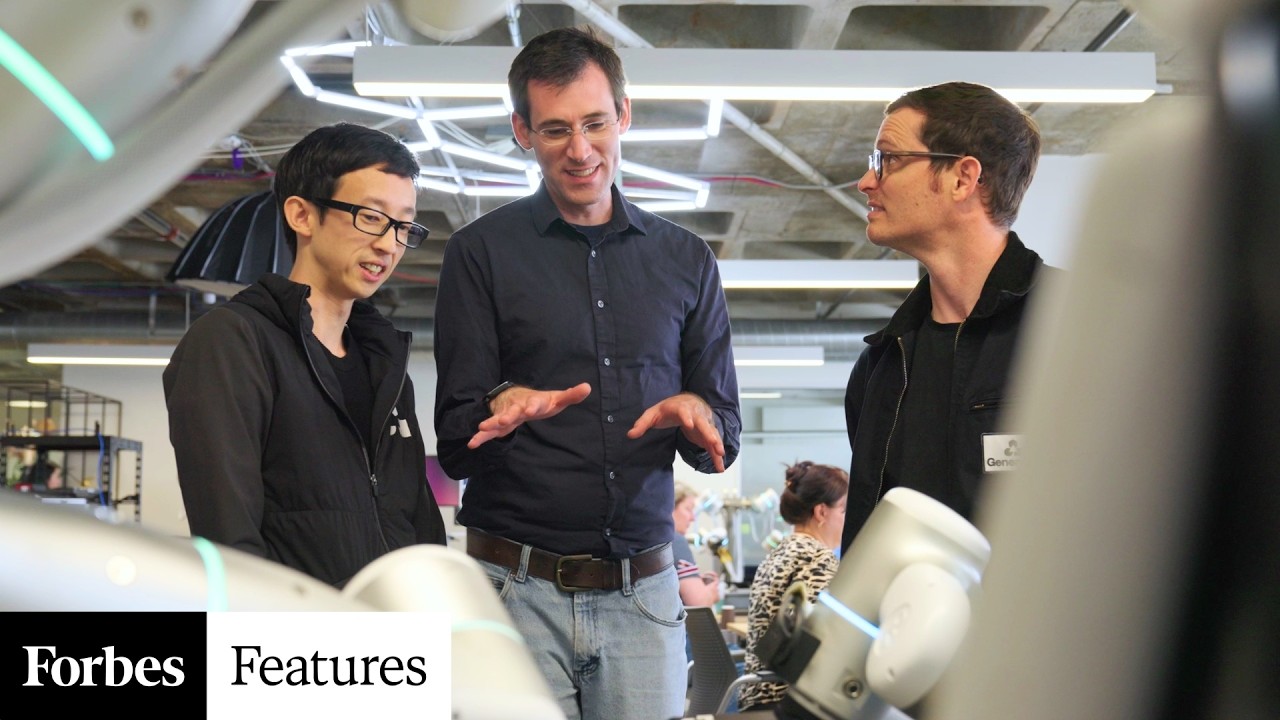
Forbes shifts the robotics story toward data and training. The video says Generalist's thesis is that robotics enters a pre-training era when companies stop obsessing over nicer humanoid shells and start turning messy real-world tasks into reusable dexterous datasets. The distinctive angle is that physical AI is being reframed as a data and intelligence-layer problem, not simply a hardware race (video).

AIM Network adds the regional hardware angle. The report says Zoho-backed NetraSemi launched the A2000 as one of the first production-ready AI and ML chips designed in India, with customer trials already underway. The distinctive angle is that edge AI hardware is being covered as industrial capacity and strategic autonomy, not just as another chip benchmark (video).
Discussion insight: The long World Science Festival discussion also includes chapters on military applications and accidental conflict, which reinforces how tightly capability debates and deployment fears are now linked. Physical AI is no longer a separate topic from model quality; it is where the consequences land.
Comparison to prior day: Compared with 2026-05-28, the physical-AI theme widens from open hardware and robotics productization into defense drills and national chip-building capacity.
1.4 The Google search backlash is still active, but today's evidence is narrower and more tutorial-driven 🡖
The anti-Google-search signal is still loud, but it is not broadening today. Two high-comment uploads from the same creator support the theme: Google Search WITHOUT AI! and Google Search is LOSING!. The key signal is not a multi-sided debate about search economics; it is repeated, practical advice on how to get away from AI answers and back to visible links.

Deep Humor packages search frustration as an opt-out guide. The description says DuckDuckGo, Brave, and Bing are gaining users because Google's AI updates make traditional search results harder to reach and frames "remove AI from Google Search" as an actionable task. The distinctive angle is that dissatisfaction is no longer only complaint content; it is conversion content aimed at behavior change (video).
Deep Humor reinforces the point with a second high-comment variant. This version foregrounds the claim that Google Search is losing users, repeats the alternative-engine migration story, and ties the break with old search behavior to automated browsing and Gemini 3.5 Flash. The distinctive angle is repetition itself: one creator found this complaint durable enough to publish twice in two days (video).
Discussion insight: Across both descriptions, DuckDuckGo, Brave, and Bing are the immediate substitutes, and the breaking point is the feeling that Google is moving away from traditional results into AI-first and automated-search behavior. The backlash is still about control and legibility more than about model quality.
Comparison to prior day: Compared with 2026-05-28, the search story loses breadth but sharpens into a more explicit opt-out and migration message.
1.5 Agent coverage has cooled into platform bottlenecks and easier access, not bigger autonomy claims 🡖
The agent theme is still present, but it is smaller and more operational than yesterday. Two items support it: AI News & Strategy Daily | Nate B Jones says platform teams become the hidden bottleneck when agents spread through a company, and Julia McCoy sells Hermes as the no-install leader by emphasizing learning and convenience. The common question is no longer "can agents do more?" but "who absorbs the load when they do?"

AI News & Strategy Daily | Nate B Jones gives the most operational version of the problem. The description says app teams and platform teams accelerate at different rates, agents can feel unintentionally adversarial, and private eval suites become necessary to survive constant model upgrades. The distinctive angle is that agent adoption is framed as an organizational load-management problem, not just a model problem (video).

Julia McCoy supplies the distribution-side answer. The video says Hermes processed 224 billion tokens in a day, overtook OpenClaw, and wins because it learns rather than only connects, while the linked Abacus AI page turns that narrative into a hosted surface for building apps, generating documents, automating tasks, and using a coding agent or desktop assistant. The distinctive angle is that agent competition is increasingly about packaging and access, not only about raw capability (video, Abacus AI).
Discussion insight: Nate's description keeps returning to platform-specific primitives, triaging inbound requests, and "janky" eval suites that still work, while Abacus markets apps, docs, video generation, tasks and triggers, research, coding, and agentic browsing as one hosted product. Together they show the same pressure from opposite directions: someone has to make agents manageable.
Comparison to prior day: Compared with 2026-05-28's heavier agent-engineering coverage, today's agent signal is smaller and more focused on operations, onboarding, and hosted distribution.
2. What Frustrates People
Trust collapses when reasoning claims and benchmark claims stop lining up
This is High severity because the biggest trust videos are not complaining about tone or policy; they are saying the evidence base itself is unstable. World Science Festival questions whether current systems genuinely reason, Coding with Lewis says Meta burned trust in a single weekend, TechCrunch reports the vanilla Maverick model ranking far below the experimental LM Arena version, and The Decoder says even Yann LeCun described the results as "fudged a little bit." The coping behavior is slower trust, heavier source-checking, and more appetite for alternative approaches such as world models or neurosymbolic reasoning. This is directly worth building for.
Creator AI still means too many tool handoffs and too much credit arbitrage
This is High severity because the optimistic creator videos are all built around workarounds. Jack Vs. AI still needs GPT Image 2, Claude, and Seedance 2.0 to reach a finished sequence, Malva AI spends most of its time on free-access paths and model selection, Theoretically Media describes Google's creator stack as sprawling and unevenly surfaced, and the fetched Higgsfield page exists precisely because orchestration has become a product category. The coping behavior is manual chaining, sponsor-led discovery, and constant switching between free tiers, specialty models, and editing surfaces. This is worth building for, but the market is already competitive.
Platform teams absorb the pain when agents speed up the rest of the company
This is High severity because the strongest agent item is really an infrastructure warning. AI News & Strategy Daily | Nate B Jones says app teams and platform teams accelerate at different rates, agents start to feel unintentionally adversarial, and private eval suites become necessary to survive constant model upgrades. Julia McCoy and the linked Abacus AI page show the coping response from the other side: hosted, no-install agent surfaces that hide setup burden from users. The gap in the middle is clear: somebody still has to instrument the load, triage inbound chaos, and keep the system legible. This is directly worth building for.
AI-first search feels hostile when it hides results and pushes users toward exit behavior
This is High severity because the search backlash has turned into migration advice rather than abstract criticism. Google Search WITHOUT AI! and Google Search is LOSING! both say Google's AI answers and automated browsing behavior are degrading the traditional search experience enough to push people toward DuckDuckGo, Brave, and Bing. The coping behavior is blunt: switch engines, find opt-out tricks, and avoid the AI surface entirely. This is directly worth building for.
Physical AI still runs into data scarcity and local hardware gaps
This is Medium severity because the physical-AI videos are more builder-oriented than emotional, but the pain point is concrete. Forbes says robotics progress still depends on turning messy physical tasks into usable dexterous datasets, AIM Network frames NetraSemi's A2000 as a meaningful milestone because production-ready local chips are still rare, and CBS News shows how quickly deployment pressure appears once AI leaves the lab. The coping behavior is proprietary hardware, customer trials, and vertical integration around data collection. This is worth building for, but it is capital-intensive and operationally hard.
3. What People Wish Existed
Evaluation layers that make model claims auditable before teams commit to them
World Science Festival, Coding with Lewis, TechCrunch, and The Decoder all imply the same missing layer: model evaluation surfaces that make reasoning quality, benchmark provenance, and release-versus-experimental variants legible. This is an urgent practical need because people no longer trust polished launch narratives by default. Opportunity: direct.
Creator workbenches that unify generation, editing, routing, and credit management
Jack Vs. AI, Malva AI, Theoretically Media, and the linked Higgsfield page all point to the same practical need: one surface that can move from storyboard to generation to editing to export without making creators babysit model choice and pricing. The desire is both practical and creative because the friction is not lack of raw model capability; it is the tax on experimenting across too many disconnected tools. Opportunity: competitive.
Platform-ops software for agent rollouts, inbound control, and private evals
AI News & Strategy Daily | Nate B Jones makes the need explicit: teams want private eval suites, better triage, and platform-specific primitives before agent adoption overwhelms the people underneath the stack. Julia McCoy and Abacus AI show the user-facing half of the same gap by emphasizing no-install access and broad workflow coverage. This is an urgent practical need because agent adoption creates load asymmetry before it creates clean organizational leverage. Opportunity: direct.
AI search experiences that keep links visible and user control explicit
Google Search WITHOUT AI! and Google Search is LOSING! show people asking for something simple: AI help that does not quietly replace search with hidden sources and delegated action. This is a practical need with emotional weight because the complaint is not only "the answers are bad"; it is "I can no longer trust the browsing experience." Opportunity: direct.
Physical-AI infrastructure that makes dexterous data and local inference easier to acquire
Forbes, AIM Network, and CBS News together point to a deeper need: better ways to collect physical-world training data, deploy models on local hardware, and stand up regionally available AI compute. This is a practical need, but it is harder and slower-moving than software-only gaps because the missing pieces include hardware, trials, and real-world operations. Opportunity: aspirational.
4. Tools and Methods in Use
| Tool | Category | Sentiment | Strengths | Limitations |
|---|---|---|---|---|
| Llama 4 | Open-weight multimodal model | (+/-) | MoE architecture, multimodal support, long-context claims, and efficient H100 deployment story | Benchmark credibility is now part of the product story, and release-versus-experimental confusion damaged trust |
| Aider leaderboard | Public eval benchmark | (+/-) | Gives developers a visible comparison surface for coding models and benchmark discourse | Easy to misread or overfit to, and benchmark gaming can undermine confidence fast |
| Higgsfield + Seedance 2.0 workflow | Creator workflow | (+) | Storyboard-to-video flow, orchestration, presets, and fast prototyping for ads or shorts | Still depends on chaining several tools and on pricing/availability that can change |
| Google Omni / Flow / Genie stack | Creator platform | (+/-) | Editing, remixing, compositing, audio, and build-your-own tooling inside one broader media stack | Product story is sprawling, some features feel buried, and pricing surprises remain |
| Free-tier AI video routing | Creator method | (+/-) | Lets creators test text-to-video, image-to-video, avatars, and Shorts workflows cheaply | Free credits, access rules, and commercial-use limits shift constantly |
| Private eval suite | Platform ops method | (+) | Buys back time during model churn and makes agent load easier to instrument | Often internal and improvised, and still requires platform-specific engineering work |
| Hermes / Abacus AI Agent | Hosted agent | (+/-) | No-install access, app and document generation, tasks and triggers, coding help, and agentic browsing | Vendor packaging and sponsor framing make independent validation harder |
| DuckDuckGo / Brave / Bing migration path | Search method | (+) | Keeps links visible and gives users an immediate exit from AI-first search behavior | Fragmented compared with a single dominant search surface and still mostly reactive |
| Generalist's dexterous-data approach | Robotics training stack | (+) | Treats robotics as a data and pre-training problem rather than just a hardware contest | Data collection and real-world deployment are still expensive and slow |
| NetraSemi A2000 | Edge AI chip | (+) | Local AI/ML deployment signal and regional semiconductor capability for India | Early in customer trials and still building ecosystem credibility |
Overall sentiment is strongest for tools and methods that keep control visible: private eval suites, creator orchestrators, and alternative search paths all promise legibility where the default stack feels opaque. Mixed sentiment shows up whenever vendors ask users to trust a large, bundled story without equally visible proof, which is why Llama 4, Google's creator stack, and hosted agents all carry caveats. The clearest migration patterns are from isolated creator tools toward workflow workbenches, from benchmark faith toward verification layers, from default Google Search toward link-visible alternatives, and from generic robot hype toward data and edge-hardware primitives.
5. What People Are Building
| Project | Who built it | What it does | Problem it solves | Stack | Stage | Links |
|---|---|---|---|---|---|---|
| Higgsfield creator workflow stack | Jack Vs. AI via Higgsfield | Turns storyboard ideas into generated video sequences and packages orchestration around multiple media tools | Cuts shot-by-shot generation and lowers the coordination burden across creator tools | Nano Banana Pro, GPT Image 2, Claude, Seedance 2.0, Higgsfield orchestration | Beta | page, video |
| Google Omni / Flow / Genie media stack | Broader AI media surface for editing, remixing, compositing, audio, and tool-building around AI video | Reduces handoff cost between generation, editing, and creator-facing AI workflows | Omni, Flow, Genie, Lyria 3, AI media tooling | Beta | video | |
| Hermes on Abacus | Julia McCoy via Abacus AI | Hosted agent surface for building apps, generating docs, automating tasks, and coding without local setup | Makes high-end agent workflows easier to access and removes onboarding friction | Hosted agent, tasks and triggers, coding agent/CLI, desktop assistant, agentic browsing | Beta | page, video |
| Generalist GEN-1 | Generalist | Embodied AI effort built around dexterous data and an intelligence layer for physical work | Attacks the robotics data bottleneck rather than only upgrading humanoid hardware | Proprietary hardware, dexterous data, embodied pre-training, robotics intelligence layer | Alpha | video |
| NetraSemi A2000 | NetraSemi | Production-ready AI and ML chip aimed at edge deployment in India | Gives local customers a regional edge-inference option and expands domestic AI hardware capacity | Custom AI/ML semiconductor, edge inference hardware | Beta | video |
Higgsfield creator workflows and Google's Omni/Flow/Genie stack are solving the same creator problem from different directions. Higgsfield turns orchestration into a visible product with presets and routing, while Google is trying to absorb more of the editing and compositing layer inside a much broader media ecosystem. The repeated trigger is workflow sprawl: creators want one surface that can keep an idea intact as it moves from storyboard to finished media.
Hermes on Abacus shows the same pattern on the agent side. The product pitch is less "our agent thinks harder" and more "you can use it immediately across apps, docs, coding, browsing, and automation without wrestling with setup first." That makes distribution and packaging part of the product thesis, not just an afterthought.
Generalist GEN-1 and NetraSemi A2000 show physical AI moving toward deployable primitives. One says the scarce asset is dexterous data for embodied learning, the other says the scarce asset is locally available AI compute at the edge. In both cases, the build pattern is to turn a missing physical dependency into a reusable product surface.
6. New and Notable
Reasoning skepticism became the day's biggest audience signal
World Science Festival is notable because the largest video in the dataset is not a hype recap or a tool tutorial. It is a long-form argument that current AI systems imitate reasoning without actually possessing it, and it backs that argument with detailed chapters on abstraction, hallucinations, world models, and future-of-work consequences.
Meta's open-weight credibility problem stayed alive after launch day
Coding with Lewis is notable because it turns a benchmark controversy into a full ecosystem trust story. The linked Meta post, TechCrunch report, and The Decoder summary together show the gap between official performance claims and the post-release credibility hit.
Private eval suites and platform bottlenecks finally became mainstream video material
AI News & Strategy Daily | Nate B Jones is notable because it treats platform engineering, uneven acceleration, and "janky" private eval suites as the real future of agent adoption. That matters because the next wave of AI friction inside companies may come less from model quality than from internal teams failing at different speeds.
Creator orchestration is starting to look like the product, not just the workflow
Jack Vs. AI and Malva AI are notable because both sell the same underlying idea: creators want an orchestration layer that routes across models, preserves credits, and gets them to finished media faster than manual model-hopping. The linked Higgsfield page makes that packaging explicit.
Regional edge hardware showed up as a real AI signal
AIM Network is notable because NetraSemi's A2000 is framed as a production-ready Indian AI and ML chip already entering customer trials. That matters because the hardware story is no longer only about frontier GPU vendors; it is also about where local inference capacity gets built.
7. Where the Opportunities Are
[+++] Trust and evaluation layers for frontier-model claims - World Science Festival, Coding with Lewis, TechCrunch, and The Decoder all point to the same need: products that expose benchmark provenance, release variants, and real failure modes before teams make platform decisions.
[+++] Unified creator workbenches for storyboarding, routing, editing, and export - Jack Vs. AI, Malva AI, Theoretically Media, and the linked Higgsfield page all show durable demand for tools that can own the whole media workflow instead of one isolated generation step.
[++] Platform-ops software for agent rollouts, private evals, and inbound control - AI News & Strategy Daily | Nate B Jones, Julia McCoy, and Abacus AI all point toward the same gap: agents need operational scaffolding, not just better models, if companies want adoption without overwhelming platform teams.
[++] Source-visible AI search and migration layers - Google Search WITHOUT AI! and Google Search is LOSING! show continuing demand for AI help that keeps links visible, preserves user control, and makes it easier to leave AI-first search surfaces when they become hostile.
[+] Physical-AI data and edge-deployment primitives - Forbes, AIM Network, and CBS News suggest an emerging market for products that package dexterous datasets, local inference hardware, and deployment tooling for AI that has to operate in the physical world.
8. Takeaways
- Credibility is now the main battleground for frontier AI on YouTube. The highest-reach videos are not launch celebrations; they are arguments that today's systems do not really reason and that flagship benchmark stories are no longer trustworthy. (source, source, source, source, source)
- Creator AI competition is moving from isolated model demos to workflow ownership and cost control. The strongest creator items are about storyboards, routing, orchestration, free tiers, and editing stacks that reduce handoffs from idea to final clip. (source, source, source, source)
- Physical AI is being discussed as deployment, data, and hardware capacity rather than generic robot spectacle. Army exercises, dexterous-data startups, and regional edge chips all show AI leaving the purely digital frame. (source, source, source)
- The Google search backlash remains real, but today's signal is narrower and more tutorial-led. The evidence is not a broad ecosystem debate; it is repeated guidance on how to escape AI-first search behavior and get back to visible links. (source, source)
- Inside companies, agents are becoming a platform-operations problem before they become a pure productivity win. The most concrete agent coverage is about uneven team acceleration, private eval suites, and easier hosted access, not about bigger autonomy claims alone. (source, source, source)
- The winning product pattern today is coordination, not just capability. Higgsfield coordinates creator models, Abacus coordinates agent use cases, Google's media stack coordinates multiple creator surfaces, and private eval suites coordinate trust under constant model churn. (source, source, source, source)