YouTube AI - 2026-05-30
1. What People Are Talking About
1.1 The Google search backlash moved from niche complaint to mainstream consensus 🡕
Search dissatisfaction is the clearest cluster in the 2026-05-30 YouTube AI feed. Four of the top six ranked videos all argue that Google's AI-first search changes are degrading the product: TechLinked, SomeOrdinaryGamers, Deep Humor, and Techlore. The important change is breadth: this is no longer one creator farming an anti-Google headline, but a cross-channel pattern spanning tech news, commentary, and privacy-oriented tutorials.
TechLinked gives the theme its biggest reach. The video elevates Google's search updates into the lead segment of a broader tech-news roundup and tags the story directly as google search dead, google ai search, and agentic search. The distinctive angle is not privacy or power-user frustration; it is that a mainstream tech-news channel treats the AI search shift as a product failure big enough to anchor the episode (video).
SomeOrdinaryGamers broadens the backlash into larger commentary culture. Mutahar frames Google as "deciding to eat into their biggest product" by doubling down on AI and asks why the company cannot leave something that works alone. The distinctive angle is audience shift: the search complaint is now strong enough to travel well outside specialist AI or privacy niches (video).

Techlore turns the complaint into a migration guide. The video says Google's new AI agents can buy things, read Gmail, and choose vendors on a user's behalf, then walks through DuckDuckGo, Brave, Startpage, Kagi, SearXNG, and Mojeek as viable exits. The distinctive angle is that the channel treats escape routes and usability tactics like bangs as the real product now, not just criticism of Google (video).
Discussion insight: Deep Humor sharpens the specific breaking point: Google's AI answers plus automated browsing make the old link-first experience feel gone. Across the search items, the core complaint is control and visibility, not only model quality.
Comparison to prior day: Compared with 2026-05-29, the search story is much larger and more mainstream. Yesterday the backlash leaned tutorial-driven; today it is reinforced by big-reach tech-news and commentary channels.
1.2 AI progress is being narrated through bottlenecks instead of breakthroughs 🡕
The second major cluster is about hidden limits. At least three strong items support it: Economy Media says AI data-center plans are being delayed or canceled, AI News & Strategy Daily | Nate B Jones says platform teams become the bottleneck as agents scale, and AI Engineer argues agents fail when engineers leave too much context implicit. The common thread is that the next constraint is less about one model beating another and more about what breaks underneath adoption.
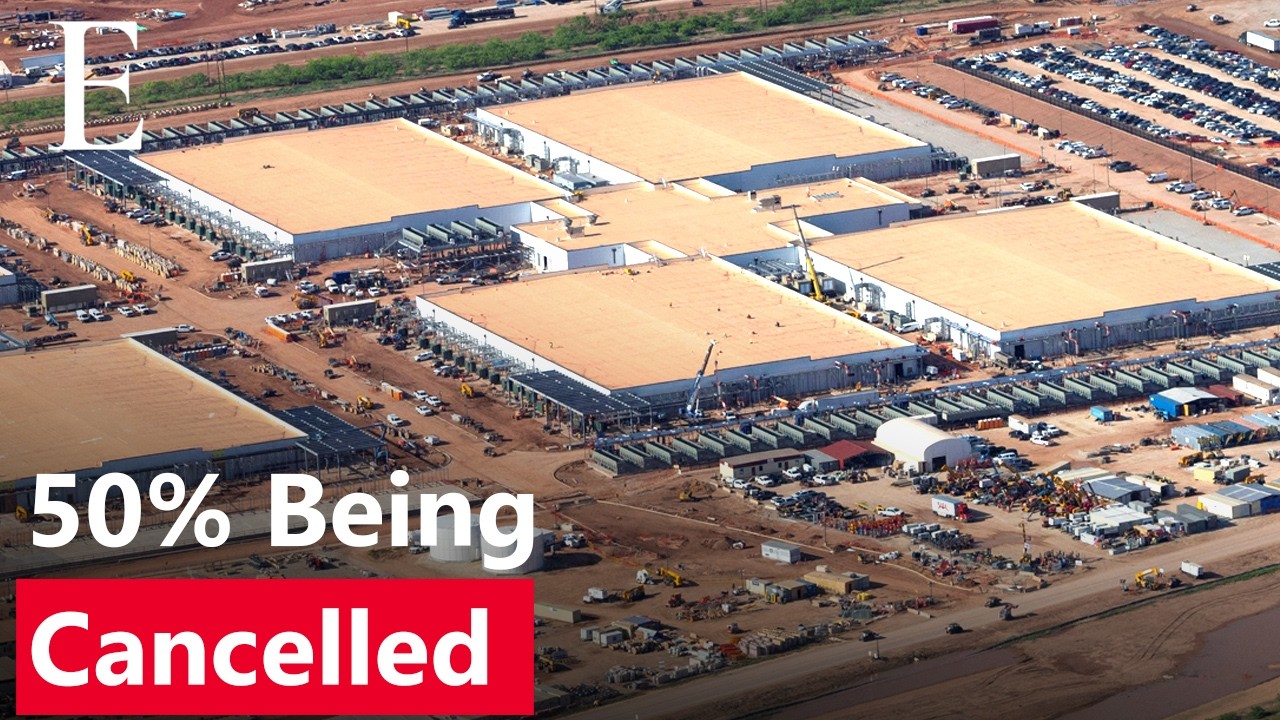
Economy Media gives the strongest physical-capacity version of the story. The video says hundreds of billions have gone into AI infrastructure, but data-center projects are running into electrical-grid limits, rising energy costs, shortages of key electrical components, and the possibility that Nvidia demand has been overestimated. The distinctive angle is that AI slowdown is framed as an infrastructure-planning problem, not a model-quality problem (video).

AI News & Strategy Daily | Nate B Jones shifts the bottleneck story inside the company. The description says app teams and platform teams accelerate at different rates, agents can start to feel adversarial, and private eval suites become necessary to survive constant model upgrades. The distinctive angle is organizational load: agents may increase output at the edges while overwhelming the teams responsible for keeping the platform stable (video).
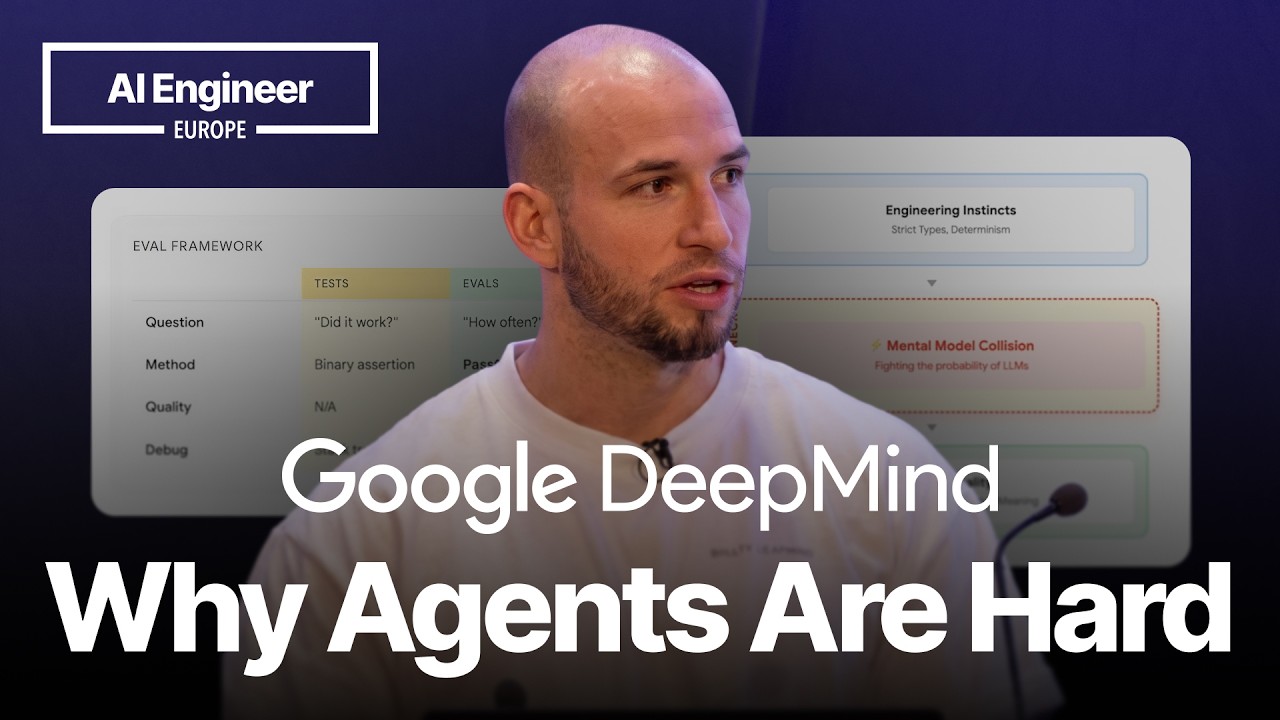
AI Engineer brings the same idea down to interface design. Philipp Schmid argues that agents only see schemas and docstrings, not the developer's implicit knowledge, and adds that evals replace unit tests while errors become inputs instead of restart conditions. The distinctive angle is that the bottleneck is also conceptual: agent systems fail when teams do not externalize enough context for them to act safely and consistently (video).
Discussion insight: The three items point to limits at different layers of the stack: data centers hit power and component ceilings, platform teams hit operational ceilings, and agent builders hit context ceilings. The pattern is consistent even though the videos target very different audiences.
Comparison to prior day: Compared with 2026-05-29's heavier focus on trust and benchmark credibility, today's "AI has limits" theme is more operational and concrete. The story moved from who to trust toward what actually blocks deployment.
1.3 Agent coverage is splitting between beginner-friendly packaging and hard implementation reality 🡕
Agent content is still active, but the center of gravity has widened. Thomas Adams publishes a complete guide for newcomers, Julia McCoy sells Hermes on ease of access, and AI Engineer keeps stressing that agent systems fail without explicit context and evaluation. What matters is the split itself: one side is trying to make agents feel easy, while the other side keeps documenting why they are not.

Thomas Adams represents the onboarding side. The video is structured around what agents are, why memory matters, how to install them, and which prompt structure makes them useful. The distinctive angle is that the feed is no longer only speaking to builders already deep in the stack; it is also training a broader audience on how to get started (video).

Julia McCoy gives the strongest packaging story. The video says Hermes overtook the previous top agent quickly, emphasizes one-click no-install access through Abacus, and frames the advantage as an agent that learns rather than only connects tools. The distinctive angle is distribution: agent competition is being sold through convenience, breadth, and onboarding speed as much as through raw performance (video).
Discussion insight: The linked Abacus page expands that packaging thesis into product scope: app hosting, docs/slides/videos, tasks and triggers, research, coding agent/CLI, desktop assistant, and agentic browsing all live in one surface. At the same time, AI Engineer keeps the cautionary counterpoint alive by arguing that agents still need explicit schemas, recovery patterns, and evals.
Comparison to prior day: Compared with 2026-05-29, the agent theme is broader. Yesterday it leaned toward platform-ops pain and hosted access; today it also includes full beginner onboarding and more explicit engineering advice.
1.4 Creator AI video coverage narrowed toward workflow bundling and cheaper experimentation 🡖
Creator AI is still present, but it is less dominant than it was on 2026-05-29 and more specific about cost and bundling. Theoretically Media argues Google's video move is really a broader media stack, while Malva AI focuses on how to use Seedance cheaply across BytePlus and Higgsfield. The shared goal is not one magical generator; it is a workable route from idea to output without wasting too many credits.

Theoretically Media makes the strongest platform-level case. The video says Google's creator push is less about one headline model and more about a layer spanning Omni, Flow, Genie, audio tooling, world-model-adjacent features, and build-your-own creator workflows. The distinctive angle is that the interesting part is compositing and workflow breadth, not only raw generation quality (video).

Malva AI adds the cost-control angle. The video focuses on free access, draft mode, sound generation, image-to-video control, and when to move into Higgsfield for higher-quality shots. The distinctive angle is that creator demand is explicitly framed around credit efficiency and usable workflows, not just "best model" rankings (video).
Discussion insight: The fetched Higgsfield page makes the bundling trend concrete: Seedance 2.0 sits alongside plugins for Premiere and After Effects, Supercomputer orchestration, marketing studio, canvas, and preset libraries. The creator product is increasingly the stack around the model.
Comparison to prior day: Compared with 2026-05-29, creator AI is less central and more cost-sensitive. The story is still workflow compression, but today's evidence is narrower and more about access plus bundling than about the whole end-to-end pipeline.
1.5 Physical AI still earns attention when it points to deployable data or visible public proof 🡖
Physical AI remains in the feed, but the theme is narrower than on 2026-05-29. Forbes says robotics progress depends on dexterous data and pre-training for physical work, while The AI Nexus packages humanoid milestones as a set of visible public proofs. The shared message is that physical AI still needs audiences to believe both the hidden data layer and the visible deployment layer.
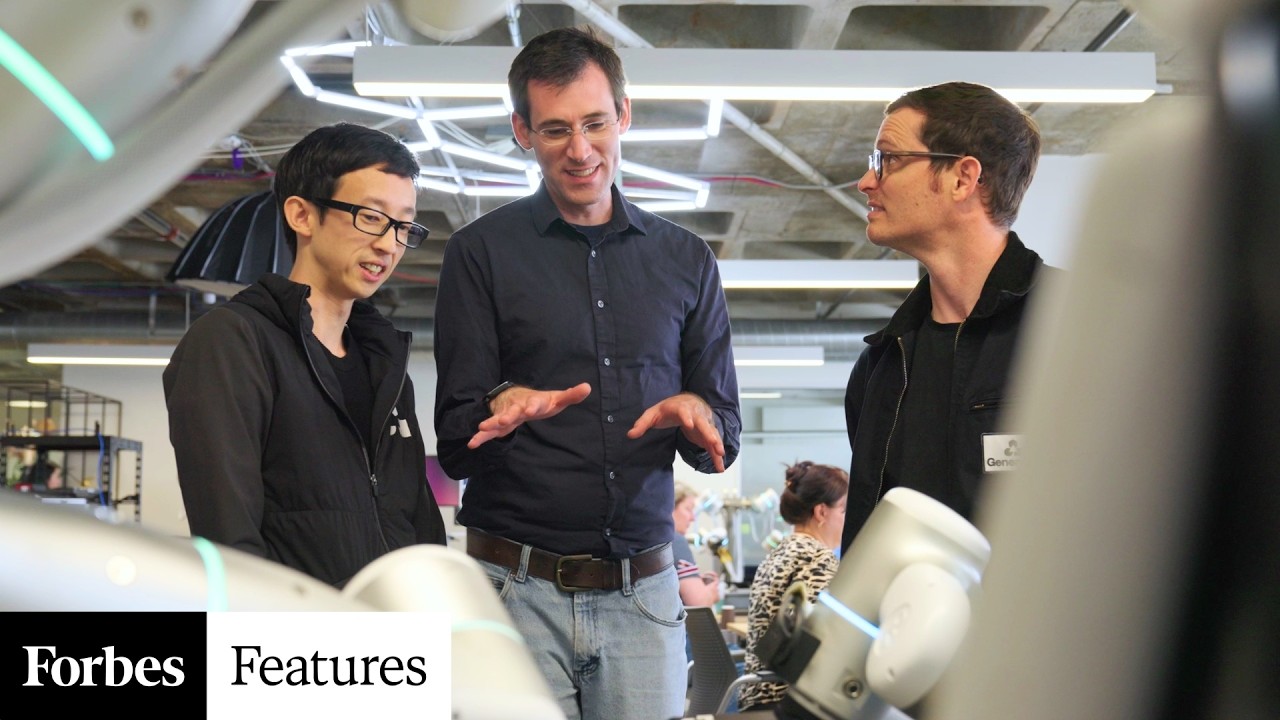
Forbes gives the more substantive side of the theme. The video says Generalist's bet is that robotics enters a pre-training era when companies stop obsessing over nicer humanoid shells and start building reusable dexterous datasets plus an intelligence layer for physical work. The distinctive angle is that robotics is framed as a data problem before it is a hardware-beauty contest (video).

The AI Nexus represents the public-proof side. The video runs through a Figure retail deal, LimX runway footage, Atlas football training, and Unitree cleanup behavior, then frames the U.S.-China humanoid race as intensifying. The distinctive angle is that humanoid AI still gets attention by accumulating named demos and rollout claims that feel closer to deployment than to lab theater (video).
Discussion insight: One item says the scarce asset is dexterous training data; the other says the scarce asset is visible proof that these systems can do anything outside a demo booth. Together they show why physical AI coverage keeps oscillating between infrastructure and spectacle.
Comparison to prior day: Compared with 2026-05-29, physical AI is less broad and less geopolitically varied. The emphasis shifted away from defense drills and regional chips toward robotics data plus humanoid public milestones.
2. What Frustrates People
Search that hides links and delegates action feels like a product betrayal
This is High severity because the backlash is repeated across mainstream and specialist channels. TechLinked, SomeOrdinaryGamers, Deep Humor, and Techlore all argue that Google's AI-first search changes are replacing the visible, controllable search experience with AI answers, delegated action, and harder-to-see sources. The coping behavior is immediate migration to DuckDuckGo, Brave, Startpage, Kagi, SearXNG, and Mojeek plus power-user tactics like bangs. This is directly worth building for.
AI rollout plans keep colliding with physical and organizational capacity limits
This is High severity because the most-viewed infrastructure item in the dataset says the buildout itself is wobbling. Economy Media says AI data-center projects are being delayed or canceled because of grid constraints, energy cost, component shortages, and possible GPU overbuying, while AI News & Strategy Daily | Nate B Jones says platform teams become the bottleneck once agents spread through a company. The coping behavior is delay, overprovisioning, manual triage, and private eval suites to buy back time. This is directly worth building for.
Agents still break when teams assume context and skip evaluation discipline
This is High severity because multiple agent videos keep circling the same reliability problem from different angles. AI Engineer says agents only see schemas and docstrings, not the builder's tacit knowledge; Thomas Adams centers memory and prompt structure in his beginner guide; and AI News & Strategy Daily | Nate B Jones says private eval suites are necessary once model churn becomes constant. The coping behavior is explicit prompt scaffolding, manual retries, more memory, and homemade eval layers. This is directly worth building for.
Creator AI still means credit arbitrage and too many moving parts
This is High severity because even the optimistic creator videos are framed around workarounds. Malva AI focuses on draft mode, free credit pools, and when to jump between BytePlus and Higgsfield, while Theoretically Media describes Google's video stack as broad but sprawling. The coping behavior is model routing, sponsor-led discovery, and constant switching between tools, presets, and payment surfaces. This is worth building for, but it is already competitive.
Robotics progress is still bottlenecked by data scarcity and deployment proof
This is Medium severity because the physical-AI coverage is more builder-oriented than emotional, but the gap is concrete. Forbes says robotics needs dexterous data and a pre-training layer for physical work, while The AI Nexus shows how much attention still depends on public demos, retail rollout claims, and visible proof that humanoids can handle messy environments. The coping behavior is proprietary data collection, vertical integration, and hype-heavy demo packaging. This is worth building for, but it is capital-intensive and operationally hard.
3. What People Wish Existed
Search products that keep links visible and user choice explicit
TechLinked, Deep Humor, and Techlore all point to the same practical need: AI help that does not quietly replace the browsing experience with hidden sources and delegated action. The urgency is high because users are already changing engines, not merely complaining. Existing alternatives cover part of the gap, but they are fragmented. Opportunity: direct.
Capacity-planning and load-instrumentation layers for AI rollouts
Economy Media and AI News & Strategy Daily | Nate B Jones imply the same missing layer at two scales: better ways to plan physical capacity, plus better ways to understand platform-team load before agent adoption overwhelms operations. This is an urgent practical need because the failure modes are expensive and slow to reverse once buildouts or internal rollouts are underway. Opportunity: direct.
Agent-building surfaces that make context, memory, evals, and recovery explicit
AI Engineer, Thomas Adams, and AI News & Strategy Daily | Nate B Jones all show the same need from different angles: tools that help teams expose context, choose memory patterns, evaluate behavior, and recover from long-running failures without rebuilding everything by hand. This is a practical need with immediate builder value, and today's workarounds are mostly homemade. Opportunity: direct.
Creator workbenches that unify routing, editing, and credit management
Theoretically Media, Malva AI, and the linked Higgsfield page all point toward one clear wish: a creator surface that can route across models, preserve credits, handle edits, and keep the workflow legible from prompt to export. This is both practical and creative because the pain is less about raw capability than about fragmented process. Opportunity: competitive.
Physical-AI infrastructure for dexterous data and real deployment pilots
Forbes and The AI Nexus suggest a need for services and products that make embodied-data collection, evaluation, and field deployment easier to stand up. The demand is practical, but the path is slower and more operational than software-only opportunities because it depends on hardware, real-world testing, and deployment partners. Opportunity: aspirational.
Safety and governance layers that make catastrophic-risk arguments auditable
Neural Nutshell and the linked Future of Life Institute page point to a weaker but still clear need: more legible ways to translate AI-risk arguments into evidence, institutions, and concrete governance choices before capability jumps again. This is partly a practical need and partly an emotional one, because the concern is not only "what tool should I use?" but "how do we know this race is still under control?" Opportunity: aspirational.
4. Tools and Methods in Use
| Tool | Category | Sentiment | Strengths | Limitations |
|---|---|---|---|---|
| Google AI-first search / automated browsing | Search surface | (-) | Keeps Google at the center of shopping, browsing, and answer generation | Multiple creators say it hides links, removes legibility, and makes users want to leave |
| DuckDuckGo / Brave / Startpage / Kagi / SearXNG / Mojeek switching playbook | Search method | (+) | Restores visible links, privacy-oriented options, and power-user tricks like bangs | More fragmented than a single default surface and requires deliberate switching |
| Capacity-first AI planning | Infrastructure method | (+/-) | Forces teams to think about grid limits, energy cost, and component supply before committing | Mostly cautionary and does not remove the underlying hardware bottlenecks |
| Private eval suite | Platform ops method | (+) | Helps teams survive constant model churn and instrument agent load earlier | Often internal, improvised, and expensive to maintain |
| Context-rich tool schemas + eval-driven agent development | Agent engineering method | (+) | Makes agent behavior more legible by replacing implicit context with explicit interfaces and evals | Slower than ordinary API design and still fragile when long tasks fail mid-run |
| Memory-first agent setup | Agent onboarding method | (+/-) | Gives newcomers a practical frame for what agents are, why memory matters, and how prompts change results | Simplifies setup more than reliability, governance, or platform burden |
| Hermes / Abacus AI Agent | Hosted agent | (+/-) | No-install access, app hosting, docs/slides/videos, tasks and triggers, coding agent/CLI, desktop assistant, and agentic browsing | Vendor packaging and sponsor framing make independent validation harder |
| Seedance 2.0 + Higgsfield workflow | Creator workflow | (+) | Cheap experimentation, presets, plugins, orchestration, and multiple video-generation paths in one stack | Credits, pricing, and access can change, and creators still juggle several surfaces |
| Google Omni / Flow / Genie media stack | Creator platform | (+/-) | Broad media workflow covering editing, remixing, audio, and build-your-own tooling | The product story is sprawling and some important features feel buried |
| Generalist's dexterous-data approach | Robotics training stack | (+) | Treats robotics as a data and pre-training problem instead of a pure hardware race | Real-world data collection and deployment remain slow and expensive |
Overall sentiment is strongest for methods that restore legibility: alternative search paths, private eval suites, explicit agent interfaces, and creator orchestration all promise more control than the default stack. The clearest negative sentiment is reserved for Google search's AI-first behavior, where creators repeatedly describe the loss of visible results as the real failure. Migration patterns are also clear: from default Google search toward specialist engines, from ad hoc agent building toward eval and memory scaffolding, and from isolated AI video tools toward bundled workflow stacks that route across multiple models and pricing tiers.
5. What People Are Building
| Project | Who built it | What it does | Problem it solves | Stack | Stage | Links |
|---|---|---|---|---|---|---|
| Higgsfield creator stack | Higgsfield | Creator surface for Seedance video generation, presets, plugins, orchestration, and related AI media tooling | Reduces the coordination burden and credit waste in AI video workflows | Seedance 2.0, Supercomputer orchestration, Premiere/After Effects plugins, presets, canvas, marketing studio | Beta | page, video |
| Google Omni / Flow / Genie media stack | Broader AI media layer for editing, remixing, compositing, audio, and build-your-own creator workflows | Cuts handoff cost between isolated generation tools and editing surfaces | Omni, Flow, Genie, audio tooling, creator workflow features | Beta | video | |
| Abacus AI Agent / Desktop | Abacus AI | Hosted agent surface for apps, documents, slides, videos, tasks, coding, and desktop assistance | Makes advanced agent workflows accessible without local setup | Hosted agent, tasks and triggers, coding agent/CLI, desktop assistant, agentic browsing | Beta | page, video |
| Generalist GEN-1 | Generalist | Embodied-AI effort built around dexterous data and an intelligence layer for physical work | Attacks the robotics data bottleneck rather than only improving humanoid shells | Proprietary hardware, dexterous data, embodied pre-training, robotics intelligence layer | Alpha | video |
| Figure 03 retail rollout | Figure AI | Humanoid-robot deployment framed around a large Catalyst Brands retail deal | Pushes humanoids from staged demos toward repeatable commercial work | Figure 03 humanoid robot, retail deployment workflow | Beta | video |
Higgsfield creator tooling and Google's Omni / Flow / Genie stack are solving the same problem from different directions. Higgsfield packages routing, presets, plugins, and orchestration into a visible creator product, while Google is absorbing more of the editing and compositing layer into a broader AI media ecosystem. The repeated trigger is workflow sprawl: creators want one surface that can preserve creative intent while reducing cost and tool-switching.
Abacus AI Agent / Desktop shows the same bundling pattern on the agent side. The product promise is not only "better agent quality" but "use it immediately across apps, docs, coding, browsing, and automation without wrestling with setup first." That makes packaging, distribution, and breadth part of the product thesis.
Generalist GEN-1 and Figure 03 point to the two halves of physical-AI building. One says the scarce asset is better data and pre-training for physical tasks, while the other says the scarce asset is visible commercial proof that humanoids can leave the demo stage. Together they show why physical AI builders keep pairing hidden infrastructure with public rollout signals.
6. New and Notable
Search backlash moved from niche complaint to headline argument
Both Linus Tech Tips and Techlore treated Google search quality as a primary story rather than a side complaint. That matters because the evidence was concrete: screenshots of AI-heavy search behavior, specific missing-link complaints, and a detailed migration menu of alternative engines instead of a vague "search is worse now" sentiment.
AI discussion centered on bottlenecks instead of just model capability
Economy Media argued that data centers had become the real constraint on the AI race, while Theo described shipping pressure, eval debt, and team-level operational load around agents. The notable change is that both stories treat infrastructure and execution friction as first-class evidence, not background conditions.
Creator AI is becoming a workflow market, not a single-model market
Malva AI sold Higgsfield as a routed creator stack, and Future Tech Pilot described Google releasing a broader family of editing and generation surfaces. The notable point is not only new features but the stronger packaging battle over where creators spend time, credits, and attention.
Physical AI stories emphasized deployable proof and training data
AI Nexus highlighted Figure's reported retail expansion, while Generalist argued that dexterous data and embodied pre-training are the actual unlocks for robotics progress. Together, those videos made public deployment evidence and hidden data infrastructure feel equally important.
7. Where the Opportunities Are
[+++] Source-visible search and research navigation — Evidence came from both the direct backlash against Google search's AI-first behavior and the detailed migration advice toward DuckDuckGo, Brave, Startpage, Kagi, SearXNG, and Mojeek. This is strong because the pain is concrete, user language is urgent, and people already describe active switching behavior instead of passive dissatisfaction.
[+++] Agent reliability, memory, and eval tooling — The combination of Theo's private eval and capacity-planning narrative, ThePrimeTime's context-rich agent design lessons, and Thomas Adams's memory-first setup guidance shows repeated demand for infrastructure that makes agents measurable, recoverable, and easier to steer. This is strong because the need spans both beginners and advanced teams, and the workaround today is still mostly custom glue.
[+++] Creator workflow routing and cost-control layers — Higgsfield's bundled stack, Google's Omni / Flow / Genie push, and the negative example of creators feeling squeezed by platform economics in Nate B Jones's critique all point to the same gap: creators want better orchestration, clearer pricing, and fewer broken handoffs across tools. This is strong because spend, time, and workflow fragmentation are all visible in the evidence.
[++] Physical-AI data operations and deployment middleware — Generalist made the case for dexterous data and embodied pre-training, while AI Nexus centered commercial rollout evidence around Figure's retail story. This is moderate because the demand signal is real, but it still depends on expensive hardware programs and slower enterprise adoption cycles.
[+] Governance evidence and scenario-auditing tools — Neural Nutshell amplified the Future of Life Institute's superintelligence framing, showing ongoing demand for tools that make risk arguments easier to inspect and compare. This is emerging rather than strong because the need is visible, but the discussion stays broad and does not yet converge on a specific product shape.
8. Takeaways
- Search trust became a mainstream AI topic on YouTube, not just a power-user complaint. The strongest evidence came from Linus Tech Tips and Techlore, which both centered Google's search behavior and concrete alternatives rather than treating the issue as a side note. (source)
- The tone around AI progress shifted toward operational bottlenecks. Economy Media focused on data-center and energy limits, while Theo focused on eval debt, load, and execution burden inside product teams. (source)
- Agent coverage split between "how to start" and "why production is still hard." Thomas Adams offered a memory-first setup guide, but ThePrimeTime and Theo both emphasized context design, evals, and failure recovery. (source)
- Creator AI competition is increasingly about bundled workflows rather than isolated model quality. Malva AI's Higgsfield walkthrough and Future Tech Pilot's Google roundup both highlighted orchestration, editing, and multi-tool routing as the main differentiators. (source)
- Physical AI stories now need both hidden infrastructure and visible rollout proof. Generalist argued that dexterous data is the constraint, while AI Nexus framed Figure's retail deal as the proof point that humanoid robotics can move beyond demos. (source)