YouTube AI - 2026-05-31
1. What People Are Talking About
1.1 Search backlash stayed the most crowded AI story on YouTube 🡒
Search dissatisfaction is still the clearest cluster in the 2026-05-31 YouTube AI feed. Four strong items support it: TechLinked, SomeOrdinaryGamers, Deep Humor, and Techlore. The important signal is persistence: after dominating 2026-05-30, the complaint did not cool off on the next day.

TechLinked turns the topic into mainstream tech-news coverage rather than a niche privacy complaint. The video makes "Google Search Updates" the first timestamped segment of the episode and tags the story directly as google search dead, google ai search, and agentic search, showing that the backlash is large enough to anchor a general-interest roundup (video).
SomeOrdinaryGamers broadens the complaint into mass commentary culture. Mutahar frames Google as "deciding to eat into their biggest product" by doubling down on AI, which matters because the theme is clearly spreading beyond AI-builder and privacy circles into mainstream creator criticism (video).

Deep Humor adds the clearest migration language. The description says DuckDuckGo, Brave, and Bing are gaining users because Google's new AI updates and automated browsing experience are replacing traditional search results, and it explicitly calls out Gemini 3.5 Flash as the engine behind the shift (video).

Techlore turns the backlash into a concrete switching guide. The video says Google's agents can buy things, read Gmail, and choose vendors on a user's behalf, then walks through DuckDuckGo, Brave, Startpage, Kagi, SearXNG, and Mojeek plus bangs so leaving does not feel like a downgrade (video).
Discussion insight: Across the four search items, the complaint is no longer only "results are worse." The sharper concern is that AI-first search hides sources, delegates actions, and makes the user feel less in charge of the browsing process.
Comparison to prior day: Compared with 2026-05-30, the search backlash stayed dominant rather than fading. The difference is that today's evidence is even more explicit about migration behavior and alternative-engine playbooks.
1.2 AI adoption stories turned from bottlenecks into accountability tests 🡕
The second strong cluster asks whether AI claims survive cost and reality. Two especially strong items support it: Silicon Money turns the story into an ROI critique, while Theo - t3.gg attacks benchmark credibility directly. The mood matters because it is harsher than a generic "AI is hard" narrative; the feed is increasingly asking for proof.

Silicon Money makes the business-case version of the critique explicit. The description says Microsoft is pulling back on infrastructure, Starbucks killed an AI inventory system after it could not count milk, Uber burned through a year of AI budget in four months, and one company spent $500 million on AI tools in a single month. The distinctive angle is that the failure case is not model quality alone, but the economics of deployment (video).

Theo - t3.gg makes the measurement critique concrete. Theo points viewers to DeepSWE, whose site says today's public coding benchmarks are saturating and positions itself as a longer-horizon alternative with contamination-free tasks, 91 repositories across five languages, and behavior-based verification. The distinctive angle is that credibility itself has become the product gap (video).
Discussion insight: The high-view Low Level title The problem with AI agents.. adds a useful ambient signal even though the description is thin: generalized agent skepticism now has large-audience reach, not just niche builder frustration.
Comparison to prior day: Compared with 2026-05-30's heavier focus on bottlenecks and scaling strain, 2026-05-31 sounds more adversarial. The question is less "what is slowing AI down?" and more "which claims survive realistic evaluation and cost accounting?"
1.3 Hardware coverage shifted from simple capacity talk to alternative scaling architectures 🡕
Hardware remained prominent, but the emphasis changed. Three strong items support this theme: Two Bit da Vinci and Cyrus Janssen both center Huawei's tau-scaling and LogicFolding story, while Dell Technologies keeps the enterprise focus on AI factories and accelerated infrastructure. The common thread is that AI growth is being narrated through the chip and system stack, not only through new models.
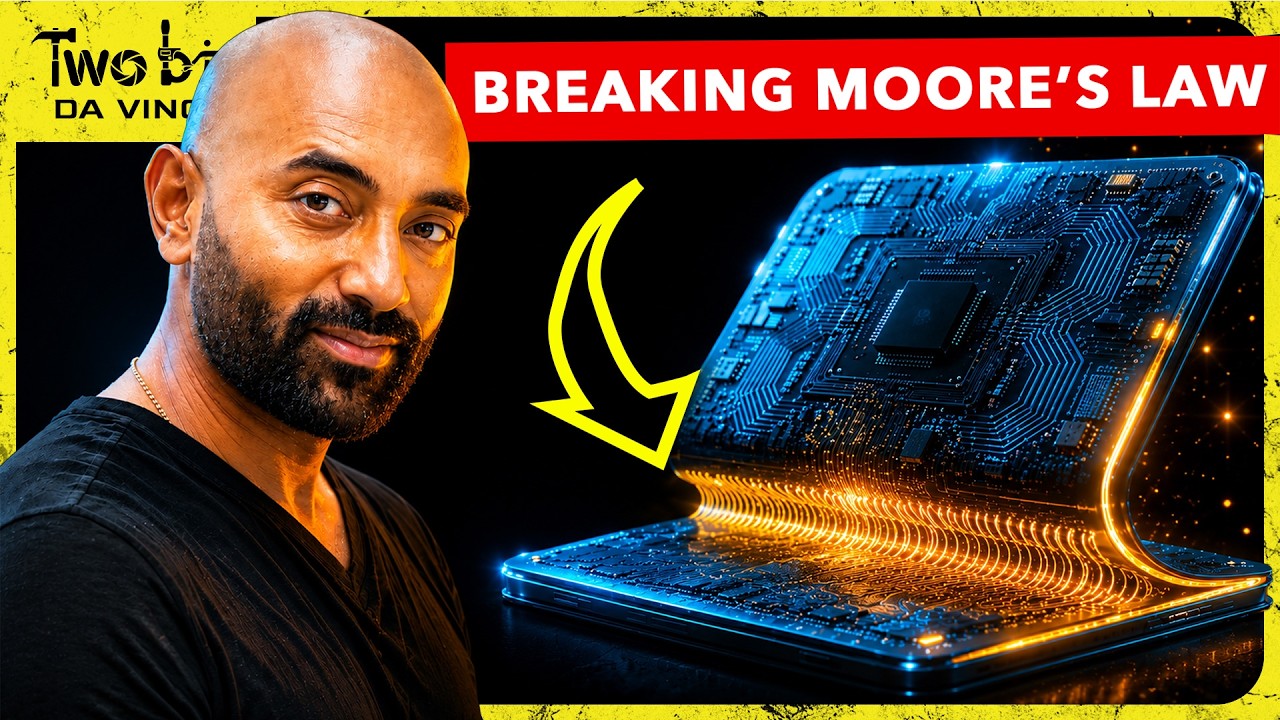
Two Bit da Vinci gives the most technical explainer in the set. The video says Moore's Law is running out of room and frames Huawei's answer as folding circuits, shrinking signal delay, and turning more of the stack into a co-optimization problem. The linked Huawei announcement adds that tau-scaling replaces pure geometric scaling with time scaling, spans device-to-system optimization, and targets fall-2026 Kirin chips as the first LogicFolding deployment (video).
Cyrus Janssen adds the geopolitical version of the same theme. His description frames tau-scaling and LogicFolding as a sanctions-driven alternative path for China, links out to Huawei, Chinaxiv, Bloomberg, SCMP, Reuters, and CNBC coverage, and treats the announcement as important enough that global media followed it closely (video).

Dell Technologies keeps the hardware story tied to enterprise demand. The description summarizes Jensen Huang's view around AI factories, accelerated infrastructure, and the architecture of computing being reinvented in real time, which makes the chip story feel like a whole-platform buildout rather than a single vendor novelty (video).
Discussion insight: The Huawei page says high-end chips based on tau-scaling are expected to reach 14 A-equivalent transistor density by 2031, while Dell's framing keeps the immediate business implication clear: if AI factories are the new default, system architecture and compute plumbing become first-order strategic decisions.
Comparison to prior day: Compared with 2026-05-30's emphasis on delays, power strain, and infrastructure bottlenecks, today's hardware story is more concrete. The feed now pairs those constraints with a proposed post-Moore architectural answer.
1.4 Creator AI narrowed into repeatable faceless-video production systems 🡖
Creator AI is still visible, but it is less about broad platform tours and more about production-line playbooks. Three items support the theme: Malva AI focuses on free and cheap video generation routes, Money Degree turns AI video into a faceless-channel operating system, and Unseen Tech promises 100 videos in minutes. The important shift is from experimentation to repeatable volume.

Malva AI makes cost control the center of the creator stack. The video covers free Seedance access, draft mode, sound generation, image-to-video, start/end frame animation, and a workflow that uses separate free credit pools before moving into Higgsfield for premium shots. The linked Higgsfield page extends that workflow into Seedance 2.0, Adobe plugins, presets, canvas, and automation layers (video).

Money Degree pushes the strongest "faceless business" framing. The description walks through channel naming, setup, idea generation, one-prompt video creation, editing, SEO, thumbnail generation, and upload optimization, while explicitly listing SJinn, ChatGPT, and Google Flow as the core stack (video).

Unseen Tech strips the workflow down to bulk-generation components. The description points viewers to a prompt doc, a Chrome extension, a custom GPT, and ElevenLabs voiceover, then packages the whole method around the claim that 100 AI videos can be produced in minutes (video).
Discussion insight: The creator stack is increasingly about orchestration, not one model winning outright. Google Flow now markets Omni, Veo 3.1, Nano Banana, an agent, and reusable tools inside one creative studio, while SJinn positions itself as a single surface for image, video, audio, and 3D generation.
Comparison to prior day: Compared with 2026-05-30, creator AI moved one step further away from "interesting new tools" and closer to an explicit faceless-channel production system. The theme is still present, but it is more tactical and lower in the ranking.
2. What Frustrates People
Search that hides links and delegates action feels untrustworthy
This is High severity because four different channels are still centering it. TechLinked, SomeOrdinaryGamers, Deep Humor, and Techlore all argue that Google's AI-first search changes reduce visibility and user control, while Techlore responds with alternative engines and bangs instead of trying to salvage the default experience. The coping behavior is immediate engine switching and privacy-search playbooks. This is directly worth building for.
AI economics and benchmark claims keep failing reality checks
This is High severity because the evidence is both financial and methodological. Silicon Money says companies are cancelling data centers, rehiring humans, and watching AI budgets spiral, while Theo - t3.gg says benchmark claims were misleading until DeepSWE offered contamination-free tasks and behavior-based verification. The coping behavior is skepticism, manual audit, and demand for more realistic evaluation before teams trust the headline numbers. This is directly worth building for.
Chip progress still runs into physics, power, and architecture limits
This is High severity because even optimistic hardware videos start by acknowledging the wall. Two Bit da Vinci says transistor shrinking is running out of room and frames LogicFolding as a response, Cyrus Janssen says sanctions forced a different semiconductor path, and Dell Technologies keeps the enterprise story anchored on AI factories and accelerated infrastructure. The coping behavior is architectural redesign, co-optimization, and more infrastructure spending rather than easy linear scaling. This is worth building for, but it is capital-intensive.
Creator AI still means credit arbitrage and stitched-together production stacks
This is High severity for creator businesses because the optimistic videos are all workaround-heavy. Malva AI walks viewers through free credit pools, draft mode, and model hopping, Money Degree compresses channel setup, prompting, editing, SEO, and thumbnail generation into one faceless-video workflow, and Unseen Tech adds a prompt doc, Chrome extension, custom GPT, and ElevenLabs voiceover to mass-produce outputs. The coping behavior is constant routing across tools, prompts, and pricing loopholes. This is worth building for, but it is already competitive.
Agent products still hide complexity behind easy setup
This is Medium severity because the pain is visible, but today's evidence is thinner than the search or creator clusters. Thomas Adams says memory and prompt structure matter even in a beginner guide, while Julia McCoy sells Hermes primarily through one-click access and instant productivity. Low Level adds a high-view blunt complaint title without much operational detail, which itself suggests that frustration is broad but still poorly instrumented. This is worth building for, especially around observability and guardrails.
3. What People Wish Existed
Search assistants that keep sources visible and user intent explicit
TechLinked, Deep Humor, and Techlore all point to the same practical need: AI help that does not replace link discovery with opaque delegation. The urgency is high because users are already moving toward DuckDuckGo, Brave, Bing, Startpage, Kagi, SearXNG, and Mojeek instead of merely complaining. Existing alternatives cover part of the gap, but the switching experience is still fragmented. Opportunity: direct.
Benchmarking and spend-control layers for AI rollouts
Silicon Money and Theo - t3.gg imply the same missing layer: tools that show whether AI systems are actually saving money and whether benchmark wins transfer to real work. DeepSWE highlights the appetite for more credible evaluation, while Silicon Money shows how expensive it is when teams trust hype first. Opportunity: direct.
Post-Moore chip and infrastructure planning tools
Two Bit da Vinci, Cyrus Janssen, and Dell Technologies all point toward better ways to model architecture tradeoffs, power demand, and system co-optimization as AI growth hits physical limits. This is a practical need for large builders, but it is slower and more capital-intensive than the software-only opportunities elsewhere in the report. Opportunity: aspirational.
Creator workbenches that unify prompting, editing, and distribution
Malva AI, Money Degree, and Unseen Tech all point toward one clear wish: a surface that can manage prompts, credits, generation, voice, editing, SEO, and export without forcing creators to juggle several disconnected tools. This is an immediate practical need because today's workarounds already look like production routines. Opportunity: competitive.
Agent surfaces that combine one-click onboarding with measurable reliability
Thomas Adams, Julia McCoy, and Low Level indicate that users want agents to be both easy to start and easier to trust. The current surfaces solve installation faster than observability, recovery, and evaluation. Opportunity: direct.
Data-centric robotics platforms for physical AI
Forbes suggests a need for tools and services that make dexterous data collection, embodied pre-training, and evaluation easier to stand up. The need is real, but the path is slower and more operational than the software opportunities above because it depends on hardware, field testing, and deployment partners. Opportunity: aspirational.
4. Tools and Methods in Use
| Tool | Category | Sentiment | Strengths | Limitations |
|---|---|---|---|---|
| Google AI-first search / automated browsing | Search surface | (-) | Keeps AI answers and delegated actions inside one default flow | Multiple creators say it hides links, reduces control, and pushes users away |
| DuckDuckGo / Brave / Startpage / Kagi / SearXNG / Mojeek switching playbook | Search method | (+) | Restores visible links, privacy-oriented options, and tactics like bangs | Fragmented across engines and still requires deliberate switching |
| DeepSWE | Coding benchmark | (+) | Contamination-free tasks and behavior-based verification feel closer to real work | Still a benchmark, so teams must map results back to their own codebases and cost tolerance |
| Tau Scaling / LogicFolding | Semiconductor architecture | (+/-) | Offers a concrete post-Moore scaling story across device, circuit, chip, and system levels | Early, hardware-heavy, and difficult for outsiders to validate independently |
| AI factories / accelerated infrastructure | Infrastructure strategy | (+/-) | Treats compute, networking, and system design as one coordinated platform problem | Keeps capex, power demand, and operational complexity high |
| Hermes / Abacus AI Agent | Hosted agent | (+/-) | No-install access, app hosting, docs/slides/videos, tasks, desktop assistant, and CLI | Product breadth is high, but reliability evidence is thinner than the convenience pitch |
| Seedance 2.0 + Higgsfield | Creator video workflow | (+) | Cheap experimentation, sound, image-to-video control, presets, plugins, and premium cinematic paths | Credits, sponsorship, and platform terms can change quickly |
| Google Flow / Omni | Creator platform | (+/-) | Mixes Omni, Veo 3.1, Nano Banana, agent support, editing, and reusable tools in one studio | Broad surface area makes the workflow harder to reason about cleanly |
| SJinn + ChatGPT + Flow one-prompt workflow | Faceless-channel method | (+/-) | Compresses ideation, generation, editing, and optimization into a repeatable playbook | Optimized for speed and distribution more than originality or defensibility |
| Custom GPT + Chrome extension + ElevenLabs bulk-video workflow | Bulk video pipeline | (+/-) | Fast batch output with clear modular components for script, generation, and voice | Tool chaining increases fragility and platform-compliance risk |
| Generalist's dexterous-data approach | Robotics training stack | (+) | Treats robotics as a data and pre-training problem instead of a hardware beauty contest | Data collection, hardware, and deployment remain slow and expensive |
Overall sentiment is strongest for methods that restore legibility or lower unit cost: alternative search paths, more realistic benchmarks, and creator-routing stacks all promise more control than the default surfaces. The clearest negative sentiment is reserved for Google's AI-first search behavior and for hype-heavy AI spending claims that do not survive operational scrutiny. Migration patterns are also clear: from default search toward specialist engines, from isolated creator tools toward bundled workflow stacks, and from leaderboard talk toward behavior-based evaluation.
5. What People Are Building
| Project | Who built it | What it does | Problem it solves | Stack | Stage | Links |
|---|---|---|---|---|---|---|
| DeepSWE | DataCurve | Long-horizon software-engineering benchmark with public leaderboard | Addresses saturated or contaminated coding benchmarks that overstate real-world performance | 113 tasks, 91 repos, 5 languages, behavior verifiers, mini-swe-agent harness | Beta | site, video |
| Huawei Tau Scaling / LogicFolding | Huawei | Semiconductor roadmap that replaces pure geometric shrinking with time-scaling and multi-level co-optimization | Tackles post-Moore performance and density limits for AI chips | Tau Scaling, LogicFolding, UnifiedBus, device-to-system co-optimization | Alpha | site, video |
| Abacus AI Agent / Desktop | Abacus AI | Hosted general-purpose agent and desktop assistant | Removes local setup friction for agent workflows across coding, documents, browsing, and automation | Hosted agent, tasks and triggers, desktop assistant, coding CLI, agentic browsing | Beta | page, video |
| Google Flow creative studio | AI creative studio for video and image generation plus natural-language editing | Reduces handoff between idea, generation, editing, and reusable creator tools | Gemini Omni, Veo 3.1, Nano Banana, agent support, tool builder | Beta | site, video | |
| Higgsfield creator stack | Higgsfield | AI video and image platform with generation, plugins, presets, and orchestration | Lowers the cost and coordination burden of AI video production | Seedance 2.0, Adobe plugins, Supercomputer, presets, canvas, marketing studio | Beta | page, video |
| SJinn faceless-video workflow | SJinn | AI content-creation surface used alongside ChatGPT and Flow for faceless history channels | Speeds up channel production from idea through publish-ready assets | SJinn, ChatGPT, Google Flow | Beta | site, video |
| Generalist GEN-1 | Generalist | Embodied-AI system built around dexterous data and an intelligence layer for physical work | Attacks the robotics data bottleneck rather than only improving humanoid hardware | Proprietary hardware, dexterous data, embodied pre-training, intelligence layer | Alpha | video |
DeepSWE and Huawei Tau Scaling show that some of the most interesting building activity is not another app wrapper, but infrastructure for measurement and infrastructure for post-Moore hardware. One is trying to separate coding agents with harder public tasks; the other is trying to keep chip progress moving when transistor shrinking alone no longer carries the whole load.
Higgsfield, Google Flow, and SJinn are solving the same creator problem from different angles. Higgsfield emphasizes orchestration and plugins, Flow emphasizes an integrated creative studio with multiple Google models plus tool building, and SJinn is being used as one component in a faceless-channel operating system. The repeated trigger is workflow sprawl: creators want one surface that preserves speed without forcing them to stitch together half a dozen products by hand.
Abacus AI Agent / Desktop and Generalist GEN-1 sit at opposite ends of the current AI market. One packages digital-agent convenience across many desktop and web tasks; the other attacks embodied-AI progress through data and training infrastructure. Together they show how much builder energy is going into packaging, measurement, and foundational bottlenecks rather than only new end-user chat surfaces.
6. New and Notable
Search backlash proved sticky beyond the initial announcement window
The notable part is not that YouTube complained about Google search once, but that the same complaint stayed the top cluster for a second consecutive report day. TechLinked, Deep Humor, and Techlore all treated the issue as a primary story instead of a side complaint, and Techlore converted the backlash into a concrete switching menu.
Benchmark realism became a visible creator and developer-media topic
Theo - t3.gg did not just complain about evals in the abstract; he pointed viewers to DeepSWE as a benchmark built around longer-horizon software tasks and behavior-based verification. That matters because benchmark criticism is no longer trapped inside research circles or benchmark-release threads.
Huawei gave the hardware conversation a concrete post-Moore narrative
Two Bit da Vinci and Cyrus Janssen both framed Huawei's tau-scaling announcement as a meaningful semiconductor turning point, and the linked Huawei page added specific deployment claims around LogicFolding and future transistor density targets. The signal is notable because it moves hardware discussion from generic shortage talk toward an actual alternative scaling thesis.
Creator AI tutorials converged on production-line language
Malva AI, Money Degree, and Unseen Tech all sold AI video through throughput, cost control, and repeatability rather than only creative novelty. The notable shift is that "one prompt," "free and unlimited," and "100 videos in minutes" are now core product messages.
Agent coverage got more product-led than engineering-led
Thomas Adams and Julia McCoy still show strong interest in agents, but today's detailed public evidence is about memory, onboarding, and no-install access rather than about deep production lessons. That is notable because the center of gravity shifted from operational discipline to packaging and distribution.
7. Where the Opportunities Are
[+++] Source-visible search and research navigation — Evidence came from the repeated backlash against Google's AI-first search behavior, the explicit switching advice in Techlore's migration guide, and the user-flight language in Deep Humor's recap. This is strong because the pain is concrete, the user language is urgent, and people are already describing active switching instead of passive dissatisfaction.
[+++] AI rollout accountability: cost, eval, and ROI instrumentation — Silicon Money supplies the cost and failure stories, while Theo - t3.gg and DeepSWE show demand for more realistic measurement. This is strong because the need spans both finance and engineering, and the current workaround is mostly skepticism plus manual checking.
[++] Creator workflow orchestration for faceless-video businesses — Malva AI, Money Degree, Unseen Tech, Higgsfield, Google Flow, and SJinn all point to the same gap: creators want a legible surface that can handle prompting, generation, editing, voice, credits, and distribution. This is moderate rather than strong because the category is already crowded, but the demand is obvious.
[++] Agent onboarding with observability and guardrails — Thomas Adams emphasizes memory and prompt structure, Julia McCoy emphasizes no-install convenience, and Low Level shows that frustration is still broad. This is moderate because the need is clear, but today's evidence says more about demand shape than about a single winning implementation.
[+] Post-Moore chip and power-planning tooling — Huawei's tau-scaling announcement, Two Bit da Vinci's explainer, and Dell Technologies' AI-factory framing suggest demand for tools that help model architecture, latency, power, and infrastructure tradeoffs. This is emerging because the need is real, but it is expensive, specialized, and concentrated among a smaller builder set.
[+] Embodied-AI data infrastructure — Forbes' Generalist profile argues that dexterous data and embodied pre-training are the real bottlenecks in robotics progress. This is emerging rather than strong because the signal is clear but still concentrated in a smaller number of high-effort, capital-heavy projects.
8. Takeaways
- Search trust stayed the largest recurring AI topic on YouTube. The strongest evidence came from TechLinked, Deep Humor, and Techlore, which all treated Google's search behavior as a primary story and not a side complaint. (source)
- AI discussion got harsher about ROI and benchmark credibility. Silicon Money focused on cancelled projects and runaway spend, while Theo - t3.gg argued that coding benchmarks only became useful again when DeepSWE started emphasizing contamination-free, behavior-verified tasks. (source)
- Hardware coverage became more concrete than "buy more GPUs." Two Bit da Vinci and Cyrus Janssen centered Huawei's tau-scaling and LogicFolding story, while Dell Technologies kept the enterprise focus on AI factories and accelerated infrastructure. (source)
- Creator AI is being operationalized into faceless-channel systems. Malva AI, Money Degree, and Unseen Tech all sold AI video through cost control, throughput, and reusable workflows instead of pure creative novelty. (source)
- Agent interest remains high, but today's detailed public evidence leaned toward easy access over deep engineering. Thomas Adams focused on setup and memory, while Julia McCoy framed Hermes through one-click Abacus access and quick productization. (source)