YouTube AI - 2026-06-01
1. What People Are Talking About
1.1 Search backlash widened from niche complaint to mass-audience distrust 🡕
Search distrust stayed the clearest current-day cluster, and the reach got larger. Four strong items support it: The Infographics Show, SomeOrdinaryGamers, Deep Humor, and Techlore. The key shift is that the complaint is no longer just "results got worse." The stronger claim is that AI Overviews, automated browsing, and delegated actions are hiding sources and replacing the user's role in search.

The Infographics Show gives the highest-reach version of the backlash. The description says Google's AI is replacing the open web with an AI-generated layer, burying human-made websites under bot traffic, hijacked domains, fake content, and zero-click AI Overviews that keep users on Google instead of sending them to original sources (video).
SomeOrdinaryGamers broadens the complaint into general creator culture. Mutahar frames Google as "eating into" its biggest product by doubling down on AI, which matters because it shows the backlash has escaped privacy circles and is now legible to a much larger mainstream audience (video).

Deep Humor adds the clearest migration language. The description says DuckDuckGo, Brave, and Bing are gaining users because Google's AI updates and automated browsing experience are replacing traditional search results, and it explicitly names Gemini 3.5 Flash as part of that shift (video).

Techlore turns the criticism into a practical alternative stack. The video walks through DuckDuckGo, Brave Search, Startpage, Kagi, SearXNG, and Mojeek, plus search bangs, so the audience leaves with a switching plan instead of just a complaint (video).
Discussion insight: Across all four videos, the sharper complaint is about losing source visibility and control. The audience is not only saying that search quality fell; it is saying that AI-first search changes the relationship between the user, the source, and the browser itself.
Comparison to prior day: Compared with 2026-05-31, search backlash did not fade after the initial announcement cycle. It got a much larger flagship explainer and a stronger migration-to-alternatives narrative.
1.2 Model value was judged through cost, context, and compute routing 🡕
The second cluster is less about which model is smartest and more about where the compute should live, what it costs, and how much work it takes to extract good results. Four items support it: Economy Media on data-center cancellations, WorldofAI on MiniMax M3, Awesome on local models, and IBM Technology on test-time compute. The common thread is that AI performance is increasingly being priced against power, latency, and token budgets.
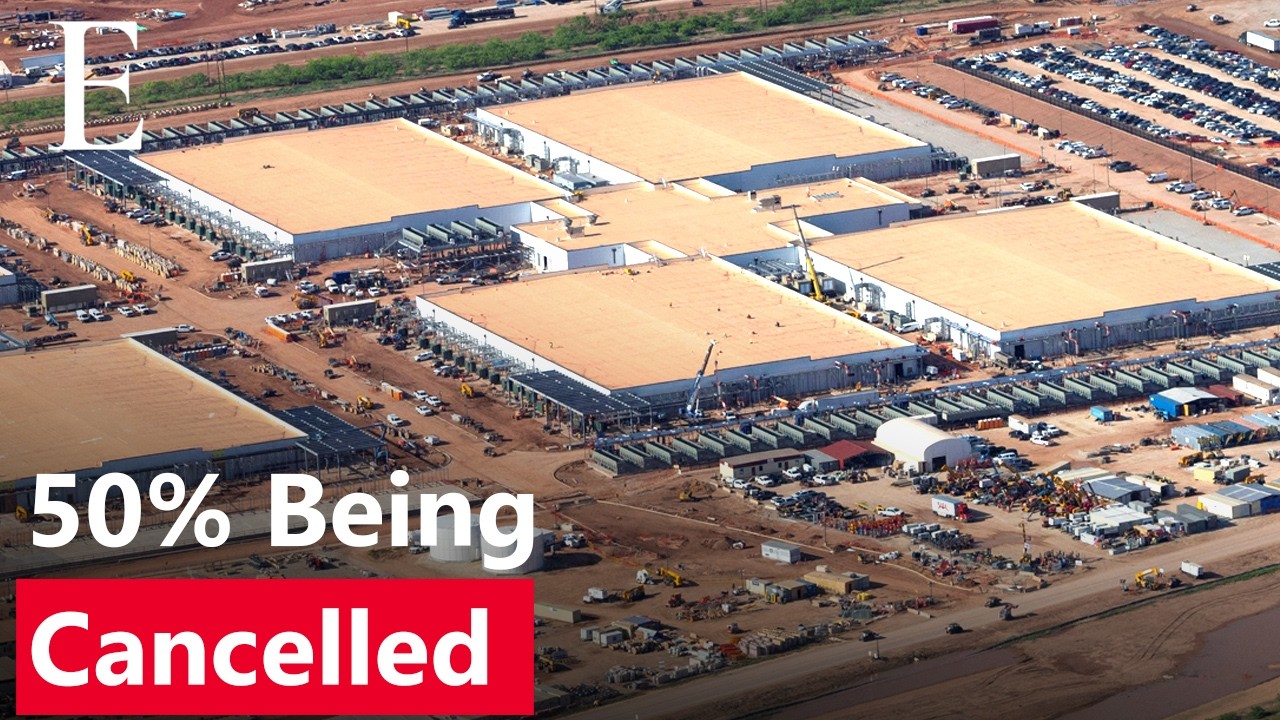
Economy Media supplies the clearest macro version of the theme. The description says AI data-center projects are being delayed or canceled by grid limits, rising energy costs, electrical-component shortages, and possible GPU oversupply after heavy buying by companies such as Google, OpenAI, and Oracle (video).

WorldofAI gives the most product-level answer to that cost pressure. The video and MiniMax's M3 page position M3 as an open-weight frontier coding model with native multimodality, up to 1M context, BrowseComp 83.5, and much cheaper access than flagship closed models, which makes price-performance a core part of the pitch rather than an afterthought (video).
Awesome translates the same question into day-to-day developer routing. The topic list is unusually direct: local models are getting serious, Apple Silicon matters, llama.cpp and quantization matter, local versus cloud is now a real tradeoff, and "the tokens economics collapse" is part of the story (video).
IBM Technology adds the method nuance. Martin Keen explains the visible "thinking" pause in chatbots as test-time compute and deliberate reasoning, which matters because the tradeoff is no longer hidden: better answers increasingly mean extra inference work, more time, and more cost (video).
Discussion insight: This is not just anti-spend skepticism. The feed is actively comparing four routes: giant data-center buildouts, cheaper frontier APIs, local Apple Silicon inference, and slower reasoning-heavy model behavior.
Comparison to prior day: Compared with 2026-05-31, the skepticism became more operational. The discussion moved away from generic benchmark and ROI complaints and toward concrete routing decisions about local, open-weight, and reasoning-heavy compute.
1.3 Physical AI got broader: chips, robots, warfare, and China fused into one story 🡕
Physical AI remained prominent, but the framing widened. Four strong items support it: CBS News on military exercises, Cyrus Janssen on Huawei's semiconductor path, NBC News on China's robotics and AI push, and NVIDIA Developer on Cosmos 3. The story is no longer just better chips or better robots. It is increasingly a combined narrative about defense, industrial policy, simulation, and geopolitical advantage.

CBS News makes the deployment angle explicit. The description says U.S. forces used AI tools to help identify targets during exercises in Morocco and showed a robot leading forces into a mock battle, which shifts the physical-AI discussion from lab demos to field practice (video).
Cyrus Janssen gives the most detailed semiconductor version of the same theme. His video says U.S. sanctions pushed Huawei toward tau scaling and LogicFolding, and Huawei's own announcement adds concrete claims around UnifiedBus, 381 chips already mass-produced under the law, fall-2026 Kirin adoption, and a 14 A-equivalent density target by 2031 (video).
NBC News adds the broad geopolitical frame. Even with lower engagement, the description is revealing because it packages AI, humanoid robots, EVs, and export strategy into one mainstream story about China's push for global dominance (video).
NVIDIA Developer shows the builder-side counterpart. The video and the Cosmos repository position Cosmos 3 as an open omnimodal platform for world understanding, simulation, synthetic data generation, action modeling, and robot training across robotics and autonomous vehicles (video).
Discussion insight: Physical AI is increasingly discussed as a platform race rather than a gadget race. The key assets are semiconductors, simulation stacks, training data, defense use cases, and national industrial capacity.
Comparison to prior day: Compared with 2026-05-31, the story widened from chip-architecture and robotics-bottleneck talk into more explicit defense and geopolitical framing.
1.4 Creator AI shifted from one-off demos to integrated workbenches 🡒
Creator AI stayed visible, but the emphasis changed. Two strong items support it: Theoretically Media on Google's Flow stack and Malva AI on Seedance plus Higgsfield. The shift matters because the pitch is no longer just "look at this new model." It is increasingly about keeping ideation, generation, editing, and reuse inside a single controllable workspace.

Theoretically Media argues that Google's real I/O story was not a single hero model but a workflow layer around Omni, Flow, Genie, editing, world models, and audio tools. The Flow page backs that up with Gemini Omni, Nano Banana, Veo 3.1, an agent, and natural-language tool building for storyboards, resizing, overlays, image edits, and reusable creator tools (video).

Malva AI gives the clearest operator playbook. The video walks through free Seedance routes, image-to-video, sound generation, draft mode, and start/end frame animation, while Higgsfield expands that into plugins, viral presets, canvas tools, marketing workflows, and automation surfaces for creators who want more control without burning credits on every iteration (video).
Discussion insight: The repeated creator message is orchestration. People want fewer handoffs between prompt, shot generation, editing, and publishing, and they want cost controls built into the workflow rather than layered on later.
Comparison to prior day: Compared with 2026-05-31's heavier faceless-channel and bulk-output playbooks, 2026-06-01 sounds more focused on integrated studios, editing layers, and credit-efficient control surfaces.
2. What Frustrates People
Search that hides links and delegates action feels untrustworthy
This is High severity because four strong current-day videos center the same complaint. The Infographics Show, SomeOrdinaryGamers, Deep Humor, and Techlore all argue that AI-first search reduces user control, hides sources, or turns browsing into opaque delegation. The coping behavior is immediate switching to DuckDuckGo, Brave, Startpage, Kagi, SearXNG, Mojeek, and search bangs instead of waiting for Google to improve. This is directly worth building for.
AI infrastructure plans keep colliding with power, component, and budget limits
This is High severity because the failure modes are concrete. Economy Media cites grid constraints, rising energy costs, electrical-component shortages, and possible GPU oversupply, while Dell Technologies still frames the upside through AI factories and accelerated infrastructure. Awesome adds the practical workaround of local routing and token-economics discipline. This is directly worth building for because current coping behavior is a patchwork of overspending less, routing locally more often, and questioning every big capex plan.
Better reasoning still comes with visible latency and compute tradeoffs
This is Medium severity because the issue is not failure so much as friction. IBM Technology explains that "thinking" models use extra test-time compute to solve harder problems, and WorldofAI sells MiniMax M3 partly on the idea that frontier-level reasoning and coding can be made cheaper. The coping behavior is to trade time, money, or quality depending on the job. This is worth building for, especially around routing, observability, and cost-aware defaults.
Physical AI remains capital-heavy, safety-heavy, and geopolitically entangled
This is High severity for serious builders even though the audience size is smaller than the search backlash. CBS News shows AI-assisted targeting and robots in military exercises, Cyrus Janssen centers sanctions-driven semiconductor redesign, NBC News frames AI as part of China's industrial push, and NVIDIA Developer positions Cosmos 3 as a foundation for simulation and robot training. The coping behavior is heavier investment in custom stacks, simulation, and national supply-chain strategies rather than easy off-the-shelf adoption. This is worth building for, but it is harder and slower than the software-only gaps above.
Creator AI still means juggling credits, models, and editing surfaces
This is Medium severity because the current videos are optimistic but workaround-heavy. Theoretically Media describes Flow as a broad editing and tool-building layer, while Malva AI teaches a workflow that mixes free Seedance access, draft mode, image-to-video control, and Higgsfield for premium shots. The coping behavior is constant routing between models, plans, and editing surfaces instead of staying inside one stable workspace. This is worth building for, but it is already competitive.
3. What People Wish Existed
Search assistants that keep sources visible and user agency explicit
The Infographics Show, Deep Humor, and Techlore all point to the same need: help with search that does not replace link discovery with opaque delegation. The urgency is high because users are already naming alternative engines and tactics instead of merely complaining. Existing search alternatives cover part of the gap, but they still require manual switching and fragmented habits. Opportunity: direct.
Compute-planning layers that route work across cloud, local, and reasoning-heavy models
Economy Media, Awesome, and IBM Technology imply the same missing layer: software that shows when to spend on cloud inference, when to run locally, and when extra reasoning tokens are actually worth the latency. The need is practical and immediate because the current workaround is manual judgment plus ad hoc experimentation. Opportunity: direct.
Open frontier coding models with cheap long-context access
WorldofAI shows strong appetite for models that combine frontier coding, agentic behavior, long context, and better economics. The current demand is not just for "another LLM" but for a usable alternative to expensive flagship APIs. Existing products partly address the gap, but the market still feels unsettled between closed leaders, open-weight challengers, and local deployment routes. Opportunity: competitive.
Creator studios that unify generation, editing, reuse, and budget control
Theoretically Media and Malva AI both point toward one clear wish: a surface that can handle ideation, generation, editing, tool reuse, and cost discipline without forcing creators to stitch together several disconnected products. The need is practical because today's tutorials already look like operations guides rather than isolated demos. Opportunity: competitive.
Physical-AI platforms that make simulation, data, and deployment legible
CBS News, Cyrus Janssen, NBC News, and NVIDIA Developer all point toward a harder but important need: better ways to model physical environments, train safely, and understand hardware or policy constraints before real-world deployment. The need is real, but the path is slower and more capital-intensive than the software opportunities above. Opportunity: aspirational.
4. Tools and Methods in Use
| Tool | Category | Sentiment | Strengths | Limitations |
|---|---|---|---|---|
| Google AI-first search / automated browsing | Search surface | (-) | Keeps answers and actions inside one default flow | Multiple creators say it hides links, weakens source visibility, and reduces control |
| DuckDuckGo / Brave / Startpage / Kagi / SearXNG / Mojeek switching playbook | Search method | (+) | Restores visible links, privacy options, and tactics like bangs | Still fragmented across engines and requires deliberate switching |
| MiniMax M3 | Coding / agentic model | (+) | 1M context, multimodality, strong coding and browsing claims, cheaper frontier positioning | Access still runs through platform surfaces; local/open deployment is not fully the default path yet |
| Local Apple Silicon + llama.cpp + quantization | Local inference method | (+/-) | Improves control and can reduce token spend | Hardware constraints and setup complexity still matter |
| Test time compute / reasoning models | Inference method | (+/-) | Better answers on harder tasks through deliberate reasoning | Adds latency and extra compute cost |
| AI factories / accelerated infrastructure | Infrastructure strategy | (+/-) | Treats compute, networking, and systems design as one coordinated stack | Keeps capex, power demand, and operational complexity high |
| Tau Scaling / LogicFolding | Semiconductor architecture | (+/-) | Offers a concrete post-Moore roadmap across device, chip, and system levels | Early and difficult for outsiders to validate independently |
| Cosmos 3 | Physical AI platform | (+) | Open world-model stack for simulation, reasoning, action generation, and robot training | Specialized, GPU-heavy, and still early in ecosystem maturity |
| Google Flow | Creator studio | (+/-) | Combines Omni, Nano Banana, Veo 3.1, an agent, and natural-language tool building | Broad surface area and subscription gating can make it harder to reason about cleanly |
| Seedance 2.0 + Higgsfield | Creator video workflow | (+/-) | Cheap experimentation, plugins, presets, and more controllable video workflows | Still involves plan, credit, and workflow management across changing product surfaces |
Overall sentiment is strongest for tools that restore user control or improve price-performance: search alternatives, local routing, and cheaper frontier-model access all land as practical relief valves. The clearest negative sentiment is reserved for Google's AI-first search behavior and for infrastructure strategies that look too capital-intensive or power-intensive to scale cleanly. Migration patterns are also visible: from default search to specialist engines, from expensive cloud dependence toward local or open-weight alternatives, and from one-off creator demos toward integrated studio surfaces.
5. What People Are Building
| Project | Who built it | What it does | Problem it solves | Stack | Stage | Links |
|---|---|---|---|---|---|---|
| MiniMax M3 | MiniMax | Frontier coding and agentic model with long context and multimodality | Gives teams a cheaper frontier-level coding and agent option than flagship closed APIs | MSA architecture, multimodality, 1M context, API, MiniMax Code | Beta | site, video |
| Huawei Tau Scaling / LogicFolding | Huawei | Semiconductor roadmap that replaces pure geometric shrink with time-scaling and multi-level co-optimization | Tackles post-Moore scaling limits for AI chips under manufacturing constraints | Tau Scaling, LogicFolding, UnifiedBus, device-to-system co-optimization | Alpha | site, video |
| Cosmos 3 | NVIDIA | Open world-model platform for robotics, autonomous vehicles, simulation, and synthetic data | Reduces the gap between perception, simulation, action generation, and robot training | Mixture-of-Transformers, Reasoner, Generator, multimodal inputs, action modeling | Beta | repo, video |
| Google Flow creative studio | AI creative studio for video/image generation, editing, and reusable creator tools | Reduces handoff between ideation, generation, editing, and remixing | Gemini Omni, Nano Banana, Veo 3.1, agent, tool builder | Beta | site, video | |
| Higgsfield creator stack | Higgsfield | Video and image workflow platform with plugins, presets, and automation surfaces | Lowers the coordination and cost burden of AI video production | Seedance 2.0, plugins, presets, canvas, marketing studio, automation | Beta | site, video |
MiniMax M3 stands out because the current feed is asking for frontier capability with a better cost curve, not just better benchmark screenshots. The model is being sold on long context, coding strength, agentic behavior, and pricing at the same time, which makes it feel closer to a deployment decision than a research curiosity.
Google Flow and Higgsfield are solving the same creator problem from different angles. Flow emphasizes a native studio with multiple Google models plus natural-language tools, while Higgsfield emphasizes controllable workflows, presets, plugins, and budget-aware production tactics. The repeated trigger is workflow sprawl: creators want one surface that reduces handoffs and makes iteration cheaper.
Huawei Tau Scaling and Cosmos 3 show that some of the most interesting builder energy is going into foundational bottlenecks rather than another end-user chat surface. One attacks the chip roadmap beneath AI systems; the other attacks the simulation and world-model stack needed for robots and autonomous systems.
6. New and Notable
A million-view anti-Google search explainer became the top AI video of the day
The notable part is not just that creators are still criticizing Google search, but that The Infographics Show pushed the theme above one million views while SomeOrdinaryGamers, Deep Humor, and Techlore reinforced it from different angles. That scale suggests the issue is no longer a niche product gripe.
Open or open-weight coding models moved back into the daily conversation
WorldofAI did not just hype a new release in the abstract; it tied MiniMax M3 to coding, agentic workflows, 1M context, and a more aggressive price-performance story. That matters because the current feed is visibly rewarding products that combine capability with lower operating cost.
Physical AI was treated as one connected story across defense, chips, and open world models
CBS News, Cyrus Janssen, NBC News, and NVIDIA Developer all describe different pieces of the same shift: AI systems that sense, simulate, plan, and act in physical environments. The signal is notable because it ties deployment, national competition, and builder infrastructure together in one day.
Mainstream television still packages AI as a whole-society story
60 Minutes bundles Anthropic, Character AI, humanoid robots, AI art, laser defense, rare-earth supply, and robotaxis into one long-form package. That matters because it shows AI remains a broad public issue spanning software, hardware, defense, supply chains, and transportation rather than a topic confined to creator and builder channels.
7. Where the Opportunities Are
[+++] Source-visible search and research navigation — The strongest evidence comes from the repeated backlash against Google's AI-first search behavior, the migration language in Deep Humor, and the explicit switching guide in Techlore. This is strong because the pain is concrete, high-volume, and already changing user behavior.
[+++] Compute routing and rollout accountability — Economy Media, Awesome, and IBM Technology all point to the same gap: teams need better ways to decide when to spend on cloud compute, when to run locally, and when extra reasoning cost is justified. This is strong because the workaround today is manual judgment.
[++] Open frontier coding with a better cost curve — WorldofAI and MiniMax M3 make it clear that there is demand for models that combine long context, coding strength, and better economics. This is moderate because the category is already competitive, but the user appetite is obvious.
[++] Creator workflow orchestration with editing and budget controls — Theoretically Media, Google Flow, Malva AI, and Higgsfield all point to the same operational gap: creators want fewer handoffs, more reusable tools, and lower iteration cost. This is moderate rather than strong because the category is already crowded.
[+] Physical-AI data, simulation, and deployment infrastructure — CBS News, Cyrus Janssen, NBC News, and Cosmos 3 suggest demand for better simulation, training, and deployment layers for systems that act in the real world. This is emerging because the need is clear but expensive, specialized, and slower-moving than the software gaps above.
8. Takeaways
- Search trust stayed the largest AI story on YouTube and grew in reach. The clearest evidence is the million-view Infographics Show explainer plus reinforcement from SomeOrdinaryGamers, Deep Humor, and Techlore. (source)
- Cost, power, and routing constraints are shaping AI discussion as much as raw capability. Economy Media, Awesome, and IBM Technology all frame AI choices through energy limits, token budgets, local versus cloud tradeoffs, or test-time compute. (source)
- Open or open-weight coding models are getting serious attention when they pair frontier behavior with better economics. WorldofAI and MiniMax M3 show that long context, coding strength, and cheaper access are now being sold together. (source)
- Physical AI is being narrated as one connected race across defense, semiconductors, simulation, and national strategy. CBS News, Cyrus Janssen, NBC News, and NVIDIA Developer all push that combined frame. (source)
- Creator AI discussion is consolidating around integrated workbenches rather than isolated model demos. Theoretically Media and Malva AI both focus on studio surfaces, tool reuse, editing layers, and budget-aware workflows. (source)