YouTube AI - 2026-06-02
1. What People Are Talking About
1.1 Search backlash stayed dominant, but the tone turned more creator-commentary driven 🡒
Search distrust remained the clearest current-day cluster, supported by three strong items: SomeOrdinaryGamers, Scroll Deep, and Techlore. The important shift is that the story is no longer carried only by one giant explainer. On 2026-06-02, the complaint is being retold through creator commentary, internet-culture framing, and practical switching guides.

SomeOrdinaryGamers supplies the highest-reach version of the theme. Mutahar frames Google as "eating into" its own biggest product by doubling down on AI, which matters because it shows the backlash landing far beyond privacy or search-specialist audiences (video).

Scroll Deep pushes the same complaint through internet-culture commentary. The description calls Google's AI-first shift one of the most significant moments in internet history and argues people are not reacting strongly enough, which shows the search story spreading into broader creator-economy and social-media discourse (video).

Techlore turns the distrust into a migration playbook. The video covers DuckDuckGo, Brave, Startpage, Kagi, SearXNG, and Mojeek, and it argues that business-model differences plus features like bangs make leaving Google more practical than it used to be (video).
Discussion insight: Across all three videos, the sharper complaint is about visibility and agency. People are not only saying search results got worse; they are saying AI-first search hides sources and changes who gets to decide what happens next.
Comparison to prior day: Compared with 2026-06-01, the distrust did not fade, but the mix changed. The feed leaned less on one flagship explainer and more on creator commentary plus concrete alternative-search playbooks.
1.2 Infrastructure coverage fused Nvidia roadmaps with industrial-competition framing 🡕
System-level AI buildout became the second clear theme, supported by four strong items: CNET, Dell Technologies, Reuters, and NBC News. The cluster is broader than "more GPUs." It treats AI as a stack spanning data-center platforms, AI PCs, supply chains, memory expansion, and national industrial strategy.

CNET packages Nvidia's current platform story into a concise mainstream summary. The recap highlights the Vera Rubin AI computing platform, the Vera CPU, Microsoft's promised PC collaboration, and new open source AI models, which makes the infrastructure story feel concrete rather than abstract (video).

Dell Technologies keeps the enterprise framing explicit. Jensen Huang's talk is summarized around AI factories, accelerated infrastructure, and the architecture of computing being reinvented in real time, which reinforces that the industry still sees AI as a large coordinated systems buildout rather than a single-model race (video).

Reuters adds the supply-chain and distribution angle. Its description ties Jensen Huang's Taipei appearance to AI chips for personal computers, SK Hynix expansion, and fast export growth in South Korea, showing how quickly the AI story moves from keynote claims into manufacturing and market consequences (video).

NBC News widens the frame beyond Nvidia. The description packages AI, humanoid robots, EVs, and export strategy into one story about China's push for global economic dominance, which shows that mainstream coverage increasingly treats AI infrastructure as part of national industrial competition (video).
Discussion insight: The common thread is that AI coverage is becoming more operational and more geopolitical at the same time. The questions are no longer only about who has the best model, but which platform ships, who supplies the memory and compute, and which countries control the surrounding industrial stack.
Comparison to prior day: Compared with 2026-06-01's broader cost-and-routing discussion, 2026-06-02 focused more tightly on named platforms, specific suppliers, and industrial competition.
1.3 Builders wanted AI outputs they could trust, inspect, and clean up 🡕
The third cluster is about making model output usable in real workflows, not just watching benchmark races. Three strong items support it: WorldofAI on MiniMax M3, Web Dev Simplified on Fallow, and IBM Technology on test-time compute. The shared concern is operational: if AI is going to write code or solve harder tasks, teams need more control over quality, context, and reasoning cost.

WorldofAI makes MiniMax M3 the clearest capability-plus-economics pitch in the current feed. The video and MiniMax's M3 page position M3 as a frontier coding and agentic model with native multimodality, up to 1M context, BrowseComp 83.5, and a much cheaper access story than top closed models, which keeps price-performance central to the argument rather than secondary (video).

Web Dev Simplified shifts the coding conversation from "which model wins" to "how do you keep the codebase usable." Kyle Cook says AI is bad at producing clean, maintainable code and recommends Fallow, whose site describes codebase intelligence for TypeScript and JavaScript with free open source static analysis plus optional runtime intelligence for hot and cold paths (video).
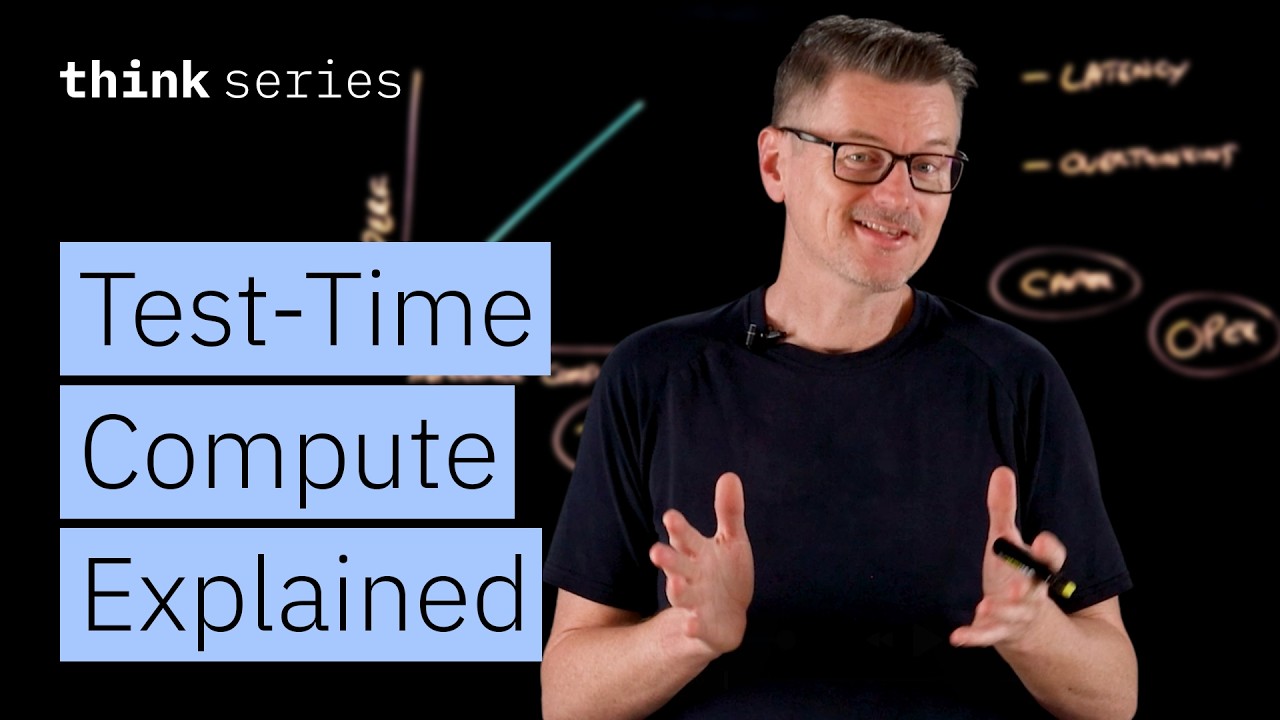
IBM Technology adds the inference-side explanation. Martin Keen describes how test-time compute, chain of thought, and reasoning models use deliberate thinking to improve accuracy, which matters because better answers are explicitly being framed as slower and more expensive rather than magically free (video).
Discussion insight: The feed is putting more weight on scaffolding than on raw model spectacle. Long context, cleaner code, and visible reasoning cost all matter because people are trying to decide whether these systems can be trusted inside real projects.
Comparison to prior day: Compared with 2026-06-01, the emphasis shifted away from generic model comparisons and toward the post-generation layer: cleanup, observability, and the real cost of getting useful work out of AI.
1.4 Creator AI stayed active, but the winning pitch was quality per dollar 🡖
Creator tooling remained visible, supported by three items: AI Search, Malva AI, and Ai Lockup. The difference from the prior day is that the pitch sounds less like "one integrated studio changes everything" and more like "here is the cheapest route to acceptable quality." Open workflows, free tiers, and selective premium upgrades keep recurring.

AI Search makes high-resolution image quality the main selling point. The video describes Nvidia's PiD Pixel Diffusion as free and open source, and the linked ComfyUI pull request says it adds PixelDiT and PiD support with new pixel- and patch-level transformer modules plus Gemma2-2B-based text encoding, which turns the story into a practical open-workflow upgrade rather than just another demo (video).

Malva AI keeps the cost-control theme explicit. The workflow uses free Seedance access through BytePlus, draft mode, image-to-video, start/end frame animation, and then Higgsfield as an upgrade path for more cinematic shots, while Higgsfield's own site emphasizes plugins, presets, automation surfaces, and Seedance 2.0 access inside a larger creator stack (video).

Ai Lockup offers the lower-reach but still revealing operator version of the same idea. The tutorial chains together Google Gemini, Google Flow, text-to-image, image-to-video, and free editing steps to show how creators are still stitching together multiple surfaces instead of trusting one end-to-end platform (video).
Discussion insight: The repeated creator message is not just "better generation." It is that people still need a stack that protects quality while managing credits, free-tier limits, and workflow handoffs.
Comparison to prior day: Compared with 2026-06-01's stronger integrated-studio framing, 2026-06-02 sounded more budget-conscious. The current feed puts more emphasis on open workflows, free tiers, and selective premium finishing tools.
2. What Frustrates People
Search that hides sources and substitutes its own choices
This is High severity because the current feed still treats it as the most emotionally charged AI story. SomeOrdinaryGamers, Scroll Deep, and Techlore all frame Google's AI-first search changes as a loss of control, visibility, or trust rather than a simple ranking-quality dip. The coping behavior is immediate migration to DuckDuckGo, Brave, Startpage, Kagi, SearXNG, Mojeek, and bangs. This is directly worth building for.
AI infrastructure still looks expensive, coordinated, and supply-chain fragile
This is High severity for serious builders even though it is described in strategic rather than emotional language. CNET, Dell Technologies, and Reuters all point to the same problem: AI progress depends on coordinated platform launches, memory suppliers, PC rollouts, and accelerated infrastructure, while NBC News shows how quickly that story becomes geopolitical. The coping behavior is larger strategic partnerships and deeper hardware commitments rather than lightweight software fixes. This is worth building for, but it is harder and slower than the software-layer gaps in the rest of the report.
AI-generated code still needs maintainability and codebase context
This is High severity for developers because the complaint is concrete and repeated. Web Dev Simplified says AI is bad at writing clean, easy-to-maintain code and recommends Fallow specifically to manage that problem, while WorldofAI argues that MiniMax M3's coding, agentic behavior, and long context change how software gets built. The coping behavior is adding codebase-intelligence and review layers on top of the model instead of trusting raw output. This is directly worth building for.
Better reasoning still arrives with visible latency and compute cost
This is Medium severity because the issue is friction more than outright failure. IBM Technology explains that "thinking" behavior comes from extra test-time compute, while WorldofAI sells MiniMax M3 partly on the idea that stronger coding and browsing performance can be made cheaper. The coping behavior is still manual routing between slower-reasoning modes and cheaper default modes. This is worth building for, especially around observability and routing.
Creator AI still means credit arbitrage and stitched-together workflows
This is Medium severity because the tone is optimistic, but the workarounds are explicit. AI Search, Malva AI, and Ai Lockup all teach viewers how to mix open source image tools, free Seedance access, Google Flow, Gemini, and selective premium upgrades rather than relying on one stable end-to-end product. This is worth building for, but it is already competitive.
3. What People Wish Existed
Search assistants that keep sources visible and user intent explicit
SomeOrdinaryGamers, Scroll Deep, and Techlore all point toward the same practical need: AI help that does not replace link discovery with opaque delegation. The urgency is high because viewers are already moving toward alternative engines and tactical workarounds instead of waiting for Google's default experience to improve. Existing alternatives cover part of the gap, but the experience is still fragmented. Opportunity: direct.
Codebase-intelligence layers that make AI-written code maintainable
Web Dev Simplified makes the need explicit by saying AI-generated code still needs cleanup and codebase intelligence, while Fallow positions itself around static and runtime-backed understanding of JavaScript and TypeScript projects. The demand is practical and immediate because developers are already using AI, but they do not trust the output to stay readable and maintainable on its own. Opportunity: direct.
Open or open-weight coding models with long context and workable pricing
WorldofAI shows clear appetite for models that combine frontier coding, multimodality, agentic behavior, and better economics. MiniMax M3 partially answers that need, but the market still feels unsettled between expensive closed leaders and cheaper challengers promising similar breadth. Opportunity: competitive.
Creator stacks that unify image quality, video quality, and budget control
AI Search, Malva AI, and Ai Lockup all point to one operational wish: a surface that can manage high-resolution images, text-to-video, image-to-video, editing, and credit discipline without forcing creators to chain together multiple tools. The need is practical because the current best practices already look like routing guides. Opportunity: competitive.
Planning layers for AI infrastructure, from data centers to AI PCs
CNET, Dell Technologies, and Reuters all imply the same missing layer: better ways to understand how platform launches, PC inference, memory supply, and accelerated infrastructure fit together before teams commit capital or product direction. The need is real, but the path is slower and more enterprise-heavy than the software opportunities above. Opportunity: aspirational.
Agent-readable websites, docs, and transaction rails
Greg Isenberg presents a concrete wish rather than a vague future bet. His description argues that AI agents will need identity, tools, inboxes, memory, wallets, receipts, structured docs, schemas, MCP tools, and executable actions, which makes the missing surface less about chat and more about infrastructure for machine customers. The need is emerging rather than fully mainstream, but it is specific. Opportunity: direct.
4. Tools and Methods in Use
| Tool | Category | Sentiment | Strengths | Limitations |
|---|---|---|---|---|
| Google AI-first search / delegated actions | Search surface | (-) | Keeps answers and actions inside one default flow | Multiple creators say it hides links, weakens source visibility, and reduces user control |
| DuckDuckGo / Brave / Startpage / Kagi / SearXNG / Mojeek playbook | Search method | (+) | Restores visible links, privacy options, and tactics like bangs | Still fragmented across engines and requires deliberate switching |
| Vera Rubin / Nvidia AI PC push | Compute platform | (+/-) | Gives the market a concrete platform roadmap spanning data center and PC surfaces | Depends on hardware cycles, supplier capacity, and concentrated platform power |
| MiniMax M3 | Coding / agentic model | (+) | 1M context, native multimodality, strong coding and browsing claims, better price-performance pitch | Still requires teams to validate whether benchmark and pricing claims hold in their own workloads |
| Fallow | Codebase intelligence | (+) | Adds static analysis and runtime-backed context to AI-assisted coding decisions | Focused on JavaScript and TypeScript, and it adds another layer teams must learn and adopt |
| Test time compute / reasoning models | Inference method | (+/-) | Improves accuracy on harder tasks through deliberate reasoning | Adds latency and extra compute cost |
| PixelDiT / PiD in ComfyUI | Image generation workflow | (+) | Open high-resolution image workflow with ComfyUI integration and fine-grained control | Setup complexity and workflow assembly still matter |
| Seedance 2.0 + Higgsfield | Creator video workflow | (+/-) | Combines cheap experimentation, presets, plugins, and premium finishing paths | Still depends on credits, routing, and multiple product surfaces |
Overall satisfaction is strongest for tools that restore control: alternative search engines, codebase-intelligence layers, open creator workflows, and cheaper frontier-model access all land as relief valves. Mixed sentiment concentrates around infrastructure platforms and reasoning-heavy inference because those routes are powerful but visibly costly. Migration patterns are also clear: from default search toward specialist engines, from raw AI coding toward AI plus cleanup/context tools, and from one-tool creator promises toward stacked pipelines that mix free tiers, open workflows, and paid finishing surfaces.
5. What People Are Building
| Project | Who built it | What it does | Problem it solves | Stack | Stage | Links |
|---|---|---|---|---|---|---|
| MiniMax M3 | MiniMax | Frontier coding and agentic model with long context and multimodality | Gives teams a cheaper frontier-style option for coding, browsing, and long-horizon tasks | MSA architecture, multimodality, 1M context, API, agent tooling | Shipped | site, video |
| Fallow | Fallow | Codebase-intelligence layer for JavaScript and TypeScript projects | Helps teams clean up and reason about AI-generated code inside real codebases | Static analysis, runtime intelligence, JS/TS focus | Shipped | site, video |
| PixelDiT / PiD support in ComfyUI | Comfy-Org | Adds pixel-space multimodal diffusion support to a widely used open image workflow | Gives creators a controllable open path to high-resolution image generation | ComfyUI, PixelDiT, PiD, Gemma2-2B, Hugging Face weights | Alpha | PR, video |
| Higgsfield creator stack | Higgsfield | Video and image workflow platform with presets, plugins, automation, and Seedance access | Reduces the coordination and cost burden of AI video production | Seedance 2.0, presets, plugins, automation, canvas, marketing studio | Shipped | site, video |
| Vera Rubin AI platform | NVIDIA | Next-generation AI computing platform spanning accelerated infrastructure and PC surfaces | Extends AI compute into more deployable product tiers beyond the data center alone | Vera Rubin, Vera CPU, AI PC collaboration, open model push | Alpha | video, Reuters context |
MiniMax M3 and Fallow solve opposite ends of the same workflow. MiniMax pushes the "more capable and cheaper" frontier-model story, while Fallow addresses the cleanup and maintainability problem that shows up after the model has already written code. That pairing is one of the clearest builder patterns in the current feed.
PixelDiT / PiD and Higgsfield show that creator tooling is still consolidating around workflow orchestration rather than one model winning outright. One side of the market emphasizes open, controllable image pipelines; the other emphasizes presets, plugins, automation, and premium finishing.
A smaller but important build pattern appears in Greg Isenberg's agent-first thesis. The repeated needs are not consumer-chat features, but agent-readable docs, schemas, wallets, receipts, memory, and executable actions, which suggests that a machine-facing web stack is starting to become a concrete product category.
6. New and Notable
Nvidia's platform story became a general-interest AI recap, not just a builder niche
CNET turned the Vera Rubin, Vera CPU, Microsoft-PC, and open-model story into one of the highest-reach videos in the feed, while Reuters pushed the same cycle into AI PCs and supplier consequences. That matters because it shows infrastructure coverage becoming legible to a much wider audience than enterprise or chip specialists alone.
AI coding skepticism sharpened into a maintainability wedge
Web Dev Simplified does not attack AI coding by saying models are useless. Instead, it argues that teams need codebase intelligence after generation, and it points directly to Fallow as that layer. The notable part is the shift from benchmark bragging to code health and cleanup.
Open high-resolution image generation looked production-relevant, not just experimental
AI Search framed PiD Pixel Diffusion as the best free AI for 4K images, and the linked ComfyUI pull request shows real workflow support landing around PixelDiT and PiD. That matters because the creator feed is rewarding open and controllable quality improvements, not only flashy closed-model demos.
Selling to AI agents appeared as an explicit startup thesis
Greg Isenberg did more than predict more agents. He described a concrete machine-customer stack around identity, inboxes, memory, wallets, receipts, schemas, MCP tools, and executable actions. That is notable because it turns "agent-first internet" into a product roadmap rather than a vague slogan.
7. Where the Opportunities Are
[+++] Source-visible search and research navigation — The strongest evidence comes from the repeated backlash in SomeOrdinaryGamers, Scroll Deep, and Techlore. This is strong because the pain is high-volume, emotionally clear, and already changing user behavior.
[+++] AI code cleanup and codebase intelligence — Web Dev Simplified, Fallow, and IBM Technology all point to the same gap: teams need more help understanding, cleaning, and governing AI output after generation. This is strong because the workaround today is manual review plus extra tools layered on later.
[++] Open multimodal coding with a better cost curve — WorldofAI and MiniMax M3 show visible demand for frontier-style coding, browsing, and long-context behavior without flagship-model pricing. This is moderate because the market is active and competitive, but the appetite is obvious.
[++] Creator workflow orchestration with quality and budget controls — AI Search, Malva AI, Ai Lockup, and Higgsfield all point to the same operational gap: creators want fewer handoffs, more control, and predictable cost. This is moderate because the category is busy, but the workflow pain is repeated and concrete.
[++] AI infrastructure planning and supplier-risk intelligence — CNET, Dell Technologies, Reuters, and NBC News show that compute-platform decisions now spill into PC roadmaps, supply chains, and industrial competition. This is moderate because the need is real, but the buyer is more enterprise-heavy and slower-moving.
[+] Agent-readable commerce and documentation surfaces — Greg Isenberg makes the emerging need concrete with identity, wallets, receipts, schemas, and executable actions for AI agents. This is emerging because the demand is specific but still concentrated in forward-looking builder discourse rather than mass adoption.
8. Takeaways
- Search trust was still the biggest AI story on YouTube, but the delivery shifted toward commentary and switching guides. SomeOrdinaryGamers, Scroll Deep, and Techlore kept the backlash alive without needing a brand-new flagship explainer. (source)
- The infrastructure conversation became more concrete and more geopolitical. CNET, Dell Technologies, Reuters, and NBC News tied AI to named platforms, AI PCs, supply chains, and national industrial competition. (source)
- AI coding discussion is moving from model hype toward maintainability and governance. Web Dev Simplified, Fallow, and IBM Technology show that codebase context and reasoning cost are now central concerns. (source)
- Creator AI is still active, but the winning playbook is quality-per-dollar rather than all-in-one magic. AI Search, Malva AI, and Ai Lockup all teach stacked workflows that mix open tools, free tiers, and selective premium upgrades. (source)
- A smaller but meaningful builder signal is the machine-customer web. Greg Isenberg frames agent-readable docs, wallets, receipts, schemas, and executable actions as the next infrastructure layer for online businesses. (source)