YouTube AI - 2026-06-03
1. What People Are Talking About
1.1 Search backlash reached full mainstream saturation, and the migration rhetoric got louder 🡕
Search distrust remained the clearest theme in the current feed, supported by four strong items: SAMTIME, Scroll Deep, Deep Humor, and Techlore. The shift is not just that creators still think Google search is getting worse. The stronger current-day signal is that “leave Google” rhetoric is now being packaged as mainstream commentary, comedy, and migration advice.

SAMTIME provides the highest-reach version of the backlash. The video frames Google’s search decline through reaction-comedy, but the description also points to TechCrunch and PC Gamer coverage of DuckDuckGo gains after Google’s AI-search push, which shows that the complaint is no longer confined to privacy specialists or search obsessives (video).

Scroll Deep pushes the same story through internet-culture framing. Benedict Townsend describes Google’s AI-first shift as one of the most significant internet moments in years, which matters because it shows the search story spreading through creator commentary rather than staying inside product-news circles (video).

Deep Humor makes the migration behavior explicit. The description says DuckDuckGo, Brave, and Bing are gaining users because Google’s AI updates and automated browsing features are replacing traditional search results, which turns the theme from generic frustration into a concrete switching narrative (video).

Techlore gives the most practical answer to the backlash. Instead of just criticizing Google’s agent-driven search direction, the video walks through DuckDuckGo, Brave Search, Startpage, Kagi, SearXNG, Mojeek, and search bangs, which makes the current feed feel more action-oriented than yesterday’s (video).
Discussion insight: The repeated complaint is about agency and source visibility. Creators are not only saying that search results got worse; they are saying AI-first search replaces open-web navigation with opaque delegation and makes switching away from Google feel newly urgent.
Comparison to prior day: Compared with 2026-06-02, search distrust did not cool. It became more mainstream and more explicitly migration-focused, with higher-reach commentary and clearer “use something else” guidance.
1.2 Builders cared less about benchmark winners than about routing, context, and usable output 🡕
The second cluster is builder-operational rather than hype-driven, supported by four strong items: Awesome, WorldofAI, Web Dev Simplified, and IBM Technology. The shared question is no longer “which model is smartest?” It is “where should the work run, how much context is worth paying for, and what keeps the output usable after generation?”
Awesome makes routing the story directly. The topic list calls out local models, Apple Silicon, llama.cpp, quantization, local-versus-cloud tradeoffs, and “the tokens economics collapse,” which shows builders evaluating AI as a deployment and cost problem, not just a capability race (video).

WorldofAI supplies the strongest price-performance answer to that concern. The video and MiniMax’s M3 page position M3 as an open-weight coding and agentic model with native multimodality, 1M context, and BrowseComp 83.5, which keeps long-context capability and cheaper access tightly linked in the current conversation (video).

Web Dev Simplified shifts the coding discussion toward governance and cleanup. Kyle Cook says AI is bad at producing clean, maintainable code and points to Fallow as a codebase-intelligence layer for JavaScript and TypeScript, which shows that post-generation code health is becoming its own product category (video).
IBM Technology adds the cost-of-reasoning layer. Martin Keen explains that visible “thinking” behavior comes from test-time compute and deliberate reasoning, which matters because better answers are being framed as slower and more expensive rather than magically free (video).
Discussion insight: The builder feed is increasingly about scaffolding around the model. Local inference, long-context access, codebase intelligence, and reasoning-cost tradeoffs are all control mechanisms that sit around model output rather than inside a leaderboard.
Comparison to prior day: Compared with 2026-06-02’s broader trust-and-cleanup framing, 2026-06-03 pushed further into operational choices: local routing, codebase intelligence, and explicit latency-versus-quality tradeoffs.
1.3 Agents moved closer to product and business infrastructure, not just demos 🡕
The third cluster is about agents becoming an operating model, supported by four strong items: Tech With Tim, Greg Isenberg, Microsoft, and CNBC Television. The important change is that the feed is spending less time on “agents are cool” and more time on the surrounding stack: model families, permissions, workflows, vertical deployment, and machine-readable business surfaces.
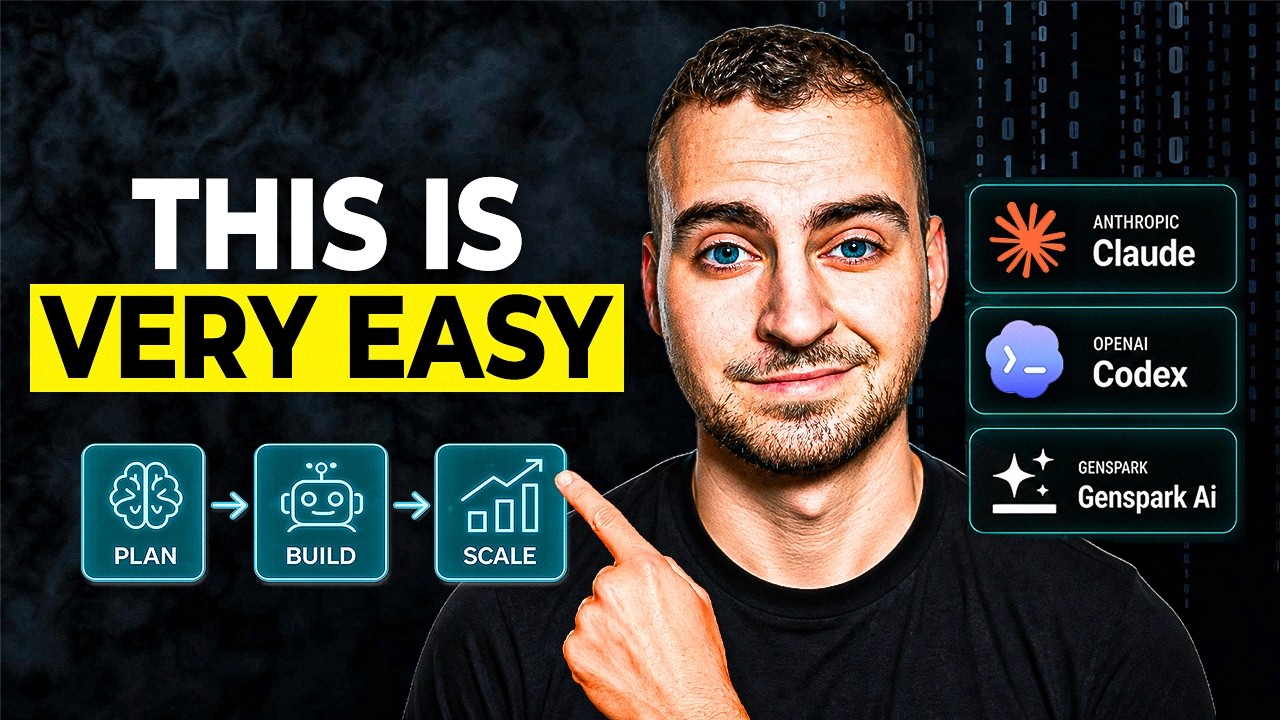
Tech With Tim treats agents as a mainstream workflow upgrade. Tim argues that most users are still operating at a 2023 chat-only level and describes a four-level ladder toward more autonomous agent use, which shows the agent conversation becoming a how-to adoption story rather than a novelty demo (video).

Greg Isenberg pushes the market-design version of the same theme. He describes AI agents as customers that discover, evaluate, pay, and recommend, then lays out the required stack: identity, tools, inboxes, memory, wallets, receipts, structured docs, schemas, MCP tools, and executable actions (video).
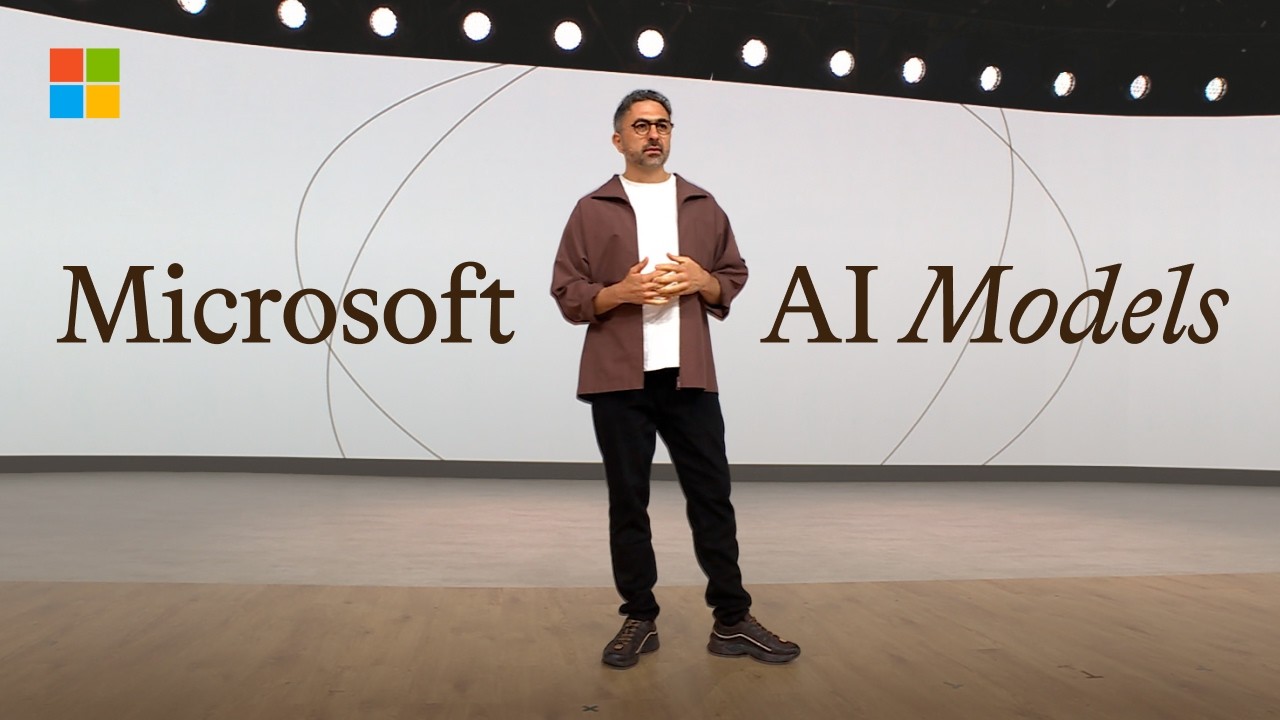
Microsoft turns the agent conversation into platform ownership. Mustafa Suleyman’s Build talk introduces seven MAI models, and Microsoft’s own announcement expands that into Frontier Tuning, developer distribution, and a Mayo Clinic collaboration, which makes the story about owning tuned model surfaces and deployment paths rather than only shipping one more frontier model (video).

CNBC Television adds the vertical-market emphasis at the headline level. The clip pairs Mustafa Suleyman with Mayo Clinic CEO Gianrico Farrugia, and Microsoft’s MAI post says the companies are co-creating a frontier healthcare model for clinical reasoning and healthcare use cases, which makes healthcare the clearest high-sensitivity deployment signal in the current feed (video).
Discussion insight: The common question is shifting from “can an agent do something impressive?” to “what models, permissions, schemas, and domain data let agents operate safely and continuously inside real organizations and businesses?”
Comparison to prior day: Compared with 2026-06-02’s more infrastructure-heavy coverage, 2026-06-03 leaned more on owned platforms, agent-ready business surfaces, and enterprise-specific deployment.
1.4 Creator AI kept converging on workbenches that combine generation, editing, identity, and cost control 🡕
Creator tooling remained active, supported by four strong items: Theoretically Media, Malva AI, PixelArtistry, and How I AI. The key shift is that creator AI now looks less like a single-model showcase and more like a reusable workbench spanning video, editing, avatars, and local 3D assets.

Theoretically Media argues that Google’s real I/O story was not one hero video model, but a workflow layer around Omni, Flow, Genie, editing, world models, and audio. Google’s own Flow page backs that up with Omni, Nano Banana, Veo 3.1, a built-in agent, and natural-language tool building for storyboards, resizing, overlays, and image edits (video).

Malva AI keeps the cost-control layer explicit. The workflow mixes free Seedance access, image-to-video, start/end frame animation, sound generation, and Higgsfield for more premium presets and automation, which shows creators still routing between free experimentation and paid finishing rather than relying on one fixed stack (video).
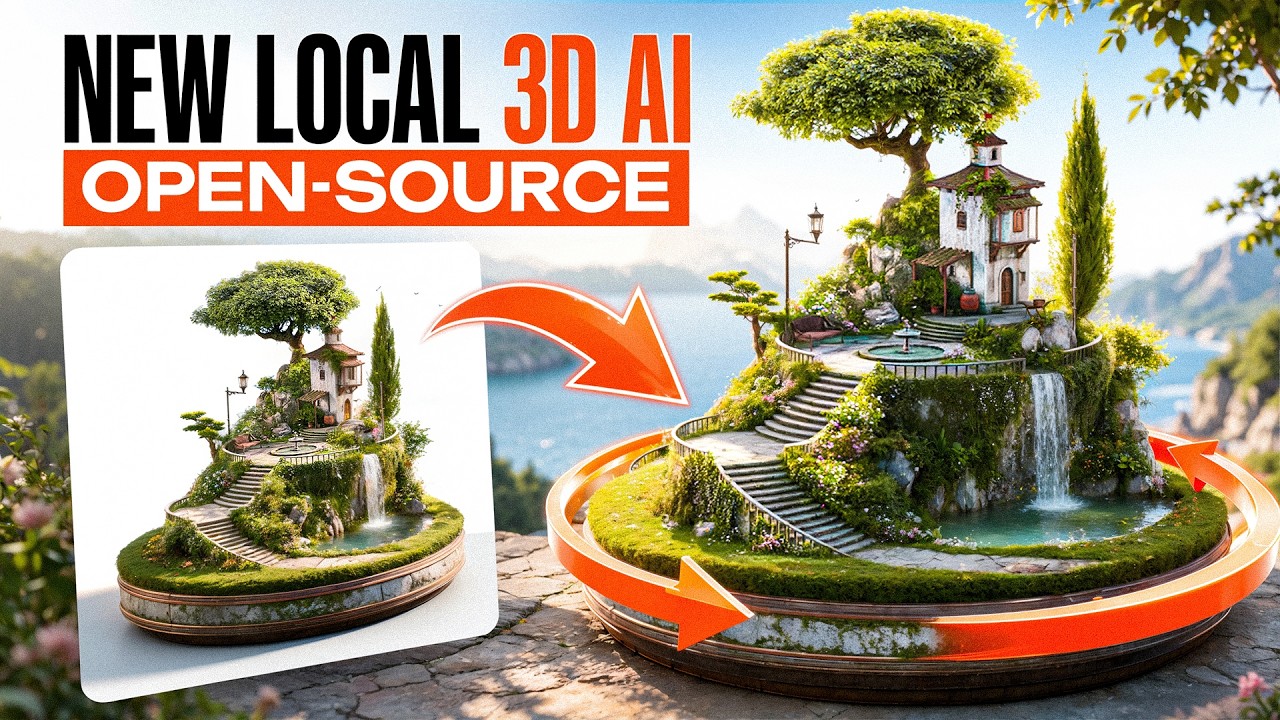
PixelArtistry expands the creator story into local 3D. The video presents TripoSplat as an open-source single-image 3D Gaussian generator with official ComfyUI support and an MIT license, while Tripo’s research page emphasizes controllable rendering budgets and production uses across AR/VR, games, and simulation (video).

How I AI gives the clearest user-facing example of the same workbench direction. The video turns Google Flow and Gemini Omni into an avatar-creation and hype-video workflow that moves from face scan to storyboard to edited promo in about fifteen minutes, showing how identity-consistent video generation is becoming a practical tutorial topic rather than a lab trick (video).
Discussion insight: The repeated creator message is orchestration. People want one surface that can handle ideation, generation, editing, consistent identity, 3D assets, and budget discipline without forcing constant tool handoffs.
Comparison to prior day: Compared with 2026-06-02’s quality-per-dollar framing, 2026-06-03 broadened creator AI into fuller workbenches that cover avatars and local 3D alongside video generation.
2. What Frustrates People
Search that hides sources and delegates the next step
This is High severity because four of the strongest current-feed videos frame the same loss of control. SAMTIME, Scroll Deep, Deep Humor, and Techlore all describe Google’s AI-first search shift as something that hides links, replaces traditional browsing, or actively pushes users toward delegated actions. The coping behavior is immediate migration to DuckDuckGo, Brave, Bing, Startpage, Kagi, SearXNG, Mojeek, and search bangs rather than waiting for Google to restore trust. This is directly worth building for.
AI-generated work still needs routing, cleanup, and codebase context
This is High severity for builders because the complaints are concrete and repeated. Awesome frames local-versus-cloud use, Apple Silicon, llama.cpp, and token economics as live tradeoffs, while Web Dev Simplified says AI still produces code slop that needs Fallow-style cleanup and codebase intelligence. WorldofAI adds the opposite pressure, which is demand for cheaper frontier-grade coding and long-context capability through MiniMax M3. The workaround today is layered routing plus post-generation tooling instead of trusting one model call. This is directly worth building for.
Better reasoning and richer agents still arrive with more scaffolding
This is Medium severity because the issue is friction rather than outright rejection. IBM Technology explains that “thinking” behavior comes from extra test-time compute, Tech With Tim treats agent use as a multi-step maturity jump beyond ordinary chat, and Greg Isenberg says the agent-first web needs identity, memory, wallets, receipts, schemas, MCP tools, and executable actions. The coping behavior is to assemble more stack around the model: routing, permissions, machine-readable docs, and workflow infrastructure. This is directly worth building for.
Creator AI still means juggling tools, formats, and credits
This is Medium severity because the tone is optimistic, but the workflows are still pieced together. Theoretically Media frames Google’s real creator push as Flow plus Omni plus editing layers, Malva AI relies on Seedance plus Higgsfield, How I AI turns Flow into an avatar-production stack, and PixelArtistry extends the problem into local 3D assets with TripoSplat. The coping behavior is still constant tool routing across video, editing, avatars, and 3D. This is worth building for, but it is already competitive.
High-sensitivity AI still demands ownership and domain control
This is Medium severity because the opportunity is strong but the trust burden is explicit. Microsoft frames its new MAI family around “Humanist Superintelligence,” and Microsoft’s MAI announcement says Mayo Clinic will own the frontier healthcare model created with Microsoft. CNBC Television reinforces healthcare as the most important application area. The coping behavior is tighter governance, tuned models, and domain ownership rather than deploying generic assistants unchanged. This is worth building for, but the sales and safety burden is higher than the software-only categories above.
3. What People Wish Existed
Search assistants that keep links visible and user intent explicit
SAMTIME, Deep Humor, and Techlore all point toward the same practical need: AI help that does not replace source discovery with opaque delegation. The urgency is high because the current feed is already full of migration behavior, not just complaints. Existing alternatives partly solve the problem, but the experience is still fragmented across several engines and habits. Opportunity: direct.
Codebase-intelligence and cleanup layers for AI-generated work
Web Dev Simplified makes the need explicit by saying AI still produces messy code, while Fallow positions itself as codebase intelligence for JavaScript and TypeScript. WorldofAI and MiniMax M3 show the other side of the same need: stronger models are arriving faster than the governance layers around them. The demand is practical and immediate because developers are already using these tools, but do not trust raw output to stay maintainable on its own. Opportunity: direct.
Routing layers that decide when work should run local, cloud, or reasoning-heavy
Awesome centers local models, Apple Silicon, llama.cpp, quantization, and token economics, while IBM Technology explains why better answers cost more time and compute. The shared wish is a layer that can decide when local inference is good enough, when long context is worth paying for, and when a reasoning-heavy mode should be triggered. The need is practical because current routing is manual judgment plus experimentation. Opportunity: direct.
Agent-readable business surfaces with identity, memory, and transaction rails
Greg Isenberg states this need in unusually concrete terms by listing identity, tools, inboxes, memory, wallets, receipts, structured docs, schemas, MCP tools, and executable actions as the stack for machine customers. Tech With Tim reinforces that agents are becoming a mainstream workflow surface rather than a niche experiment. The need is emerging rather than fully saturated, but it is specific and operational. Opportunity: direct.
Creator studios that unify video, avatars, editing, and 3D assets
Theoretically Media, How I AI, Malva AI, and PixelArtistry all point to one operational wish: a single creator surface that can handle ideation, storyboard generation, avatar consistency, video edits, and even local 3D assets without constant tool hopping. Existing products cover pieces of the workflow, but the current best practice is still a routed stack. Opportunity: competitive.
Healthcare-specific frontier models with clear ownership and governance
CNBC Television makes healthcare the headline application area, and Microsoft’s MAI announcement says the Mayo Clinic collaboration is designed for clinical reasoning and that the resulting model will be owned by Mayo Clinic. The need is real because high-sensitivity domains want better performance without surrendering governance. The market is promising, but slower and more trust-heavy than the developer and creator opportunities above. Opportunity: aspirational.
4. Tools and Methods in Use
| Tool | Category | Sentiment | Strengths | Limitations |
|---|---|---|---|---|
| Google AI-first search / automated browsing | Search surface | (-) | Keeps answers and next-step actions inside one default flow | Repeatedly criticized for hiding links, reducing agency, and making the open web harder to navigate |
| DuckDuckGo / Brave / Startpage / Kagi / SearXNG / Mojeek / bangs | Search method | (+) | Restores visible sources, privacy options, and more deliberate search control | Still fragmented across engines and requires manual switching habits |
| Local AI on Apple Silicon with llama.cpp and quantization | Inference method | (+/-) | Gives builders more cost control and deployment flexibility | Requires hardware-aware setup choices and does not remove the routing burden |
| MiniMax M3 | Coding / agentic model | (+) | 1M context, native multimodality, strong coding and browsing claims, open-weight positioning | Teams still need to validate price-performance claims and govern long-context use |
| Fallow | Codebase intelligence | (+) | Adds static analysis and runtime-backed context to AI-assisted coding decisions | Focused on JavaScript and TypeScript, and adds another layer teams must adopt |
| Test-time compute / reasoning models | Inference method | (+/-) | Improves accuracy on harder tasks through deliberate reasoning | Adds latency and extra compute cost |
| Microsoft MAI model family | Model platform | (+/-) | Broadens Microsoft’s owned stack across code, voice, image, transcription, tuning, and vertical deployment | New platform surfaces still need trust, distribution, and enterprise adoption work |
| Google Flow with Gemini Omni and Veo 3.1 | Creator workbench | (+) | Combines generation, editing, storyboards, tool building, and an agent inside one surface | Still one part of a larger creator stack rather than a complete replacement for every workflow |
| Seedance + Higgsfield | Creator video workflow | (+/-) | Supports cost-aware experimentation, presets, plugins, and more polished finishing paths | Still depends on routing between free and paid surfaces and repeated workflow decisions |
| TripoSplat | 3D generation | (+) | Open-source single-image 3D Gaussian generation with official ComfyUI support and controllable budgets | Early-stage workflow that still requires creator setup and downstream tooling |
Overall satisfaction is strongest for tools that restore control: alternative search engines, local inference options, codebase intelligence, and open creator tooling all land as relief valves. Mixed sentiment concentrates around reasoning-heavy inference, new enterprise model platforms, and creator suites because better capability still comes with more routing, governance, or spend decisions. Migration patterns are clear: from Google search toward specialist alternatives, from raw AI coding toward models plus cleanup/context layers, from generic chat toward agent workflows, and from one-shot creator demos toward multi-surface workbenches spanning video, avatars, and 3D.
5. What People Are Building
| Project | Who built it | What it does | Problem it solves | Stack | Stage | Links |
|---|---|---|---|---|---|---|
| MiniMax M3 | MiniMax | Open-weight coding and agentic model with long context and multimodality | Gives builders a cheaper frontier-style option for coding, browsing, and long-horizon tasks | MSA architecture, multimodality, 1M context, API | Shipped | site, video |
| Fallow | Fallow | Codebase-intelligence layer for JavaScript and TypeScript projects | Helps teams clean up and reason about AI-generated code inside real codebases | Static analysis, runtime intelligence, JS/TS focus | Shipped | site, video |
| MAI model family | Microsoft | Suite of code, reasoning, voice, image, and transcription models with tuning paths for enterprises | Gives Microsoft and its customers more owned and tunable AI surfaces instead of relying only on third-party frontier models | MAI Code-1-Flash, MAI Thinking-1, MAI Voice-2, MAI Image-2.5, Frontier Tuning | Shipped | announcement, video |
| Google Flow | AI creative studio for video, image, editing, storyboarding, and custom tool building | Reduces the fragmentation of creator workflows across many isolated model interfaces | Gemini Omni, Nano Banana, Veo 3.1, built-in agent, natural-language tools | Shipped | site, video | |
| Higgsfield creator stack | Higgsfield | Creator workflow surface with plugins, presets, automations, and Seedance-powered video routes | Helps creators manage production quality and cost across AI video and image work | Seedance 2.0, Viral Presets, Supercomputer, plugins, canvas | Shipped | site, video |
| TripoSplat | VAST-AI Research / TripoAI | Single-image 3D Gaussian generator with official ComfyUI support | Gives creators an open local path to 3D asset generation and controllable rendering budgets | 3D Gaussian splats, ComfyUI, MIT license, lightweight PyTorch stack | Alpha | repo, research, video |
MiniMax M3 and Fallow solve opposite ends of the same workflow. MiniMax pushes the “more capable and cheaper” frontier-model story, while Fallow handles the cleanup, context, and maintainability problems that appear after the model has already written code.
MAI and Google Flow show large platforms packaging more of the stack themselves. One side is bundling tuned enterprise models and domain deployment, while the other bundles generation, editing, and tool-building into a creator workbench.
Higgsfield and TripoSplat show that creator builders are expanding past 2D and short-form video into reusable workbenches and local 3D pipelines. An adjacent build pattern appears in Greg Isenberg’s and Tech With Tim’s videos: agent-readable businesses and agent workflow tooling are increasingly being treated as products in their own right.
6. New and Notable
Microsoft turned a model announcement into a platform-ownership and healthcare story
Microsoft did more than unveil seven MAI models. Microsoft’s own announcement ties those models to Frontier Tuning, developer distribution through multiple platforms, and a Mayo Clinic partnership for a frontier healthcare model, which makes “owning the stack” the real signal.
Selling to AI agents appeared as a concrete startup category
Greg Isenberg does not treat the agent-first web as a vague future bet. He names the buying journey and the required infrastructure layer around identity, memory, wallets, receipts, schemas, MCP tools, and executable actions, which turns machine customers into a practical product roadmap.
Open local 3D generation looked production-relevant, not experimental
PixelArtistry framed TripoSplat as a usable local workflow rather than a research novelty, and Tripo’s research page backs that up with ComfyUI support, controllable Gaussian budgets, and production uses across games, AR/VR, and simulation. That matters because creator tooling is expanding into 3D asset pipelines without requiring a closed hosted stack.
Google Flow and Gemini Omni made identity-consistent video creation feel mainstream
Theoretically Media and How I AI show Google’s creator stack landing as a practical workbench rather than a single flashy demo. The Flow page and the avatar-cloning tutorial together make storyboarding, editing, and identity-consistent generation look like repeatable creator workflows.
7. Where the Opportunities Are
[+++] Source-visible search and migration navigation — The strongest evidence comes from the repeated backlash in SAMTIME, Scroll Deep, Deep Humor, and Techlore. This is strong because the pain is emotionally clear, high-reach, and already changing user behavior toward alternatives.
[+++] AI code cleanup, context, and model-routing layers — Awesome, WorldofAI, Web Dev Simplified, and IBM Technology all point to the same gap: better AI capability still needs routing, maintainability, and compute-aware decision layers. This is strong because the workaround today is manual judgment plus extra tools layered on later.
[++] Agent-readable business surfaces and enterprise agent operations — Greg Isenberg, Tech With Tim, and Microsoft all imply the same opportunity: businesses need schemas, permissions, memory, receipts, workflows, and tuned models that let agents operate reliably. This is moderate because the demand is specific and rising, but the stack is still taking shape.
[++] Creator workbenches with identity, 3D, and budget controls — Theoretically Media, Malva AI, PixelArtistry, and How I AI all point to the same operational gap: creators want fewer handoffs across video, avatars, local 3D, and editing while still controlling spend. This is moderate because the category is active, but the workflow pain is repeated and concrete.
[+] Healthcare-specific AI deployment with clear ownership and governance — CNBC Television and Microsoft’s MAI announcement make healthcare the clearest high-sensitivity vertical in the feed. This is emerging because the need is large and well defined, but the trust, regulatory, and go-to-market burden is much heavier than the software categories above.
8. Takeaways
- Search distrust was still the biggest AI story on YouTube, and the tone got even more mainstream. SAMTIME, Scroll Deep, Deep Humor, and Techlore kept the backlash alive while making switching behavior more explicit. (source)
- Builders cared more about routing and maintainability than about one more leaderboard. Awesome, MiniMax M3, Web Dev Simplified, and IBM Technology all frame useful AI as a stack of local/cloud choices, long-context economics, code cleanup, and reasoning-cost tradeoffs. (source)
- Agents are increasingly a business and infrastructure problem, not only a user-interface trick. Tech With Tim teaches agent workflows as a maturity upgrade, Greg Isenberg treats agent-readable commerce as a product category, and Microsoft ties its MAI family to tuning and enterprise deployment. (source)
- Creator AI is broadening from video generation into full workbenches for editing, avatars, and 3D assets. Theoretically Media, Malva AI, How I AI, and TripoSplat show creators assembling richer, more persistent workflows instead of one-off demos. (source)
- Healthcare stood out as the clearest high-sensitivity AI deployment target in the current feed. CNBC Television made the sector emphasis explicit, and Microsoft’s MAI announcement says the Mayo Clinic collaboration is aimed at clinical reasoning and that Mayo will own the resulting model. (source)