YouTube AI - 2026-06-04
1. What People Are Talking About
1.1 Search backlash stayed dominant, and the story broadened from complaints to switching and competition risk 🡕
Search distrust remained the clearest high-reach theme in the 2026-06-04 feed. The shift versus yesterday is that creators are no longer only saying Google search feels worse. They are attaching concrete switching behavior, replacement workflows, and antitrust-style language to the complaint.

SAMTIME turns the backlash into mass-market satire, but the linked evidence is materially serious. He cites TechCrunch's report that DuckDuckGo U.S. app installs rose 18.1% week over week on average after Google's search overhaul and peaked at 30.5%, which means the migration story now has user-behavior evidence behind it instead of just sentiment (video, TechCrunch).

SomeOrdinaryGamers gives the highest-subscriber critique in the set. Mutahar frames Google's AI-search shift as the company eating into the product that made it indispensable, which shows the backlash reaching mainstream commentary audiences rather than staying inside privacy and search-specialist circles (video).

Techlore makes the migration path practical. Henry Fisher treats Google's agentic search push as a reason to learn alternatives now, then walks through DuckDuckGo, Brave, Startpage, Kagi, SearXNG, Mojeek, and search bangs so switching does not feel like a downgrade (video).

The Tech Report adds the competition angle that was weaker yesterday. Bruce Schneier argues that UK, EU, and U.S. pressure on dominant AI and search players could destabilize the market position these systems rely on, so search backlash is now mixing product dissatisfaction with monopoly scrutiny (video).
Discussion insight: The repeated demand is not for smarter search in the abstract. It is for visible sources, explicit user choice, and alternatives that do not trap browsing inside opaque agent behavior.
Comparison to prior day: Compared with 2026-06-03, search distrust stayed just as strong, but the emphasis moved from mainstream saturation toward measurable switching and regulatory risk.
1.2 AI infrastructure talk turned from expansion hype to grid limits, chip bottlenecks, and investor skepticism 🡕
Infrastructure realism became the second major cluster. The important change is that the feed spent less time admiring AI scale and more time asking whether power, components, capital markets, and chip architecture can support the pace people expected.
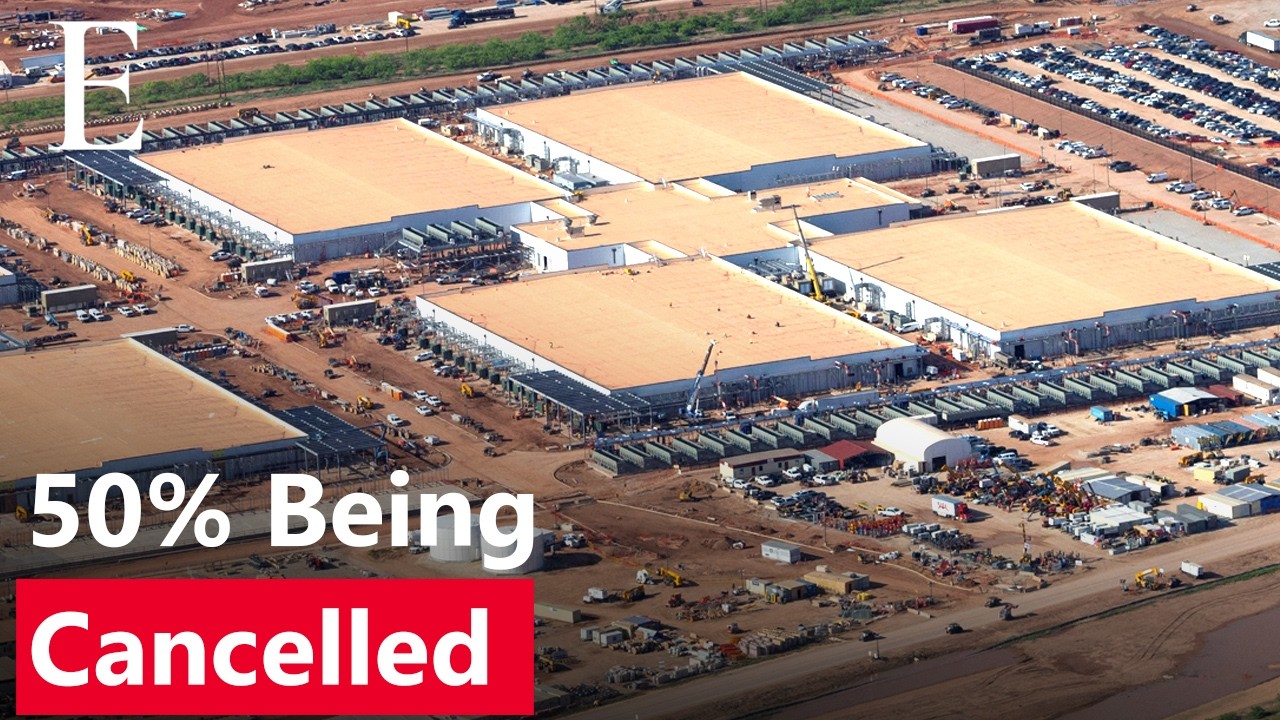
Economy Media gives the anchor version of the theme. The video says AI data-center projects are being delayed or cancelled because of grid limitations, rising energy costs, shortages of electrical components, and worries that Nvidia-driven demand forecasts overshot reality, which makes AI infrastructure look more constrained than inevitable (video).

Bloomberg Television adds the investor readthrough. The clip says Broadcom's stock sank after guidance that looked underwhelming relative to AI-demand expectations, which shows markets starting to separate "AI is growing" from "every infrastructure supplier will keep beating estimates" (video).
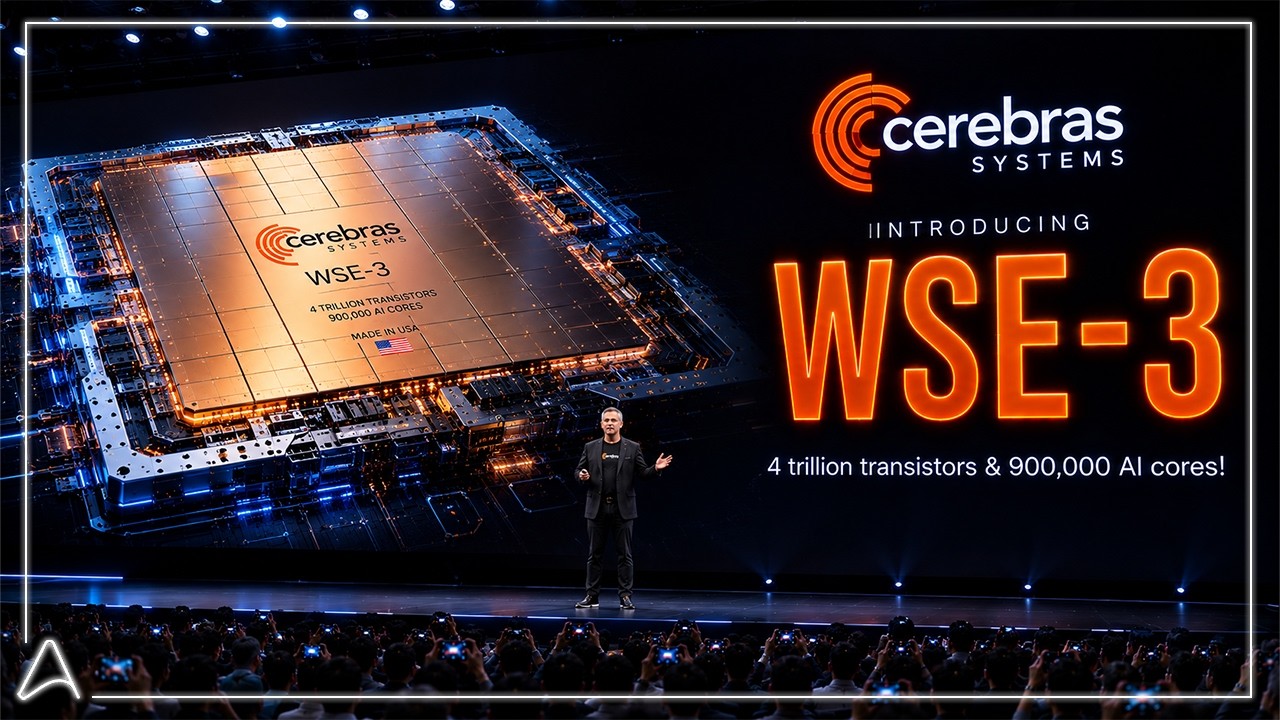
Evolving AI points to the architecture response. The video frames Cerebras' wafer-scale WSE-3 as an attack on the memory bottleneck, highlighting 900,000 AI cores, 4 trillion transistors, and 44 GB of on-chip memory, so the infrastructure conversation is also shifting toward alternative silicon designs rather than only more of the same GPU buildout (video).
Discussion insight: The recurring infrastructure message is that AI growth is colliding with physical reality. Power, bandwidth, component availability, and market expectations now matter as much as model quality in the feed.
Comparison to prior day: Compared with 2026-06-03's stronger emphasis on owned model platforms and creator workbenches, 2026-06-04 pushed deeper into the physical and financial limits of the buildout.
1.3 Teams kept adding control layers around AI work: code cleanup, cheaper long context, agent operations, and reasoning budgets 🡕
Builder conversation stayed active, but the common thread was not raw model hype. Useful AI is increasingly defined by the scaffolding around the model: maintainability, deployment economics, machine-readable business surfaces, and coordination across many agents.

Web Dev Simplified makes the code-quality problem direct. Kyle Cook says AI is still bad at writing clean maintainable code and points to Fallow as a TypeScript/JavaScript codebase-intelligence layer with static analysis plus optional runtime intelligence, which turns post-generation cleanup into a product category (video).

WorldofAI gives the price-performance counterpoint. The linked MiniMax M3 page says the model combines open-weight positioning, native multimodality, BrowseComp 83.5, and up to 1M context, which makes long-horizon coding and agent workflows look more affordable and more operationally viable than a closed-model-only stack (video).

Greg Isenberg turns the agent conversation into infrastructure requirements. He argues that machine customers need identity, inboxes, memory, wallets, receipts, structured docs, schemas, MCP tools, and executable actions, which means the "agent opportunity" is increasingly about preparing business surfaces for automated buyers and workers rather than merely launching one more chatbot (video).
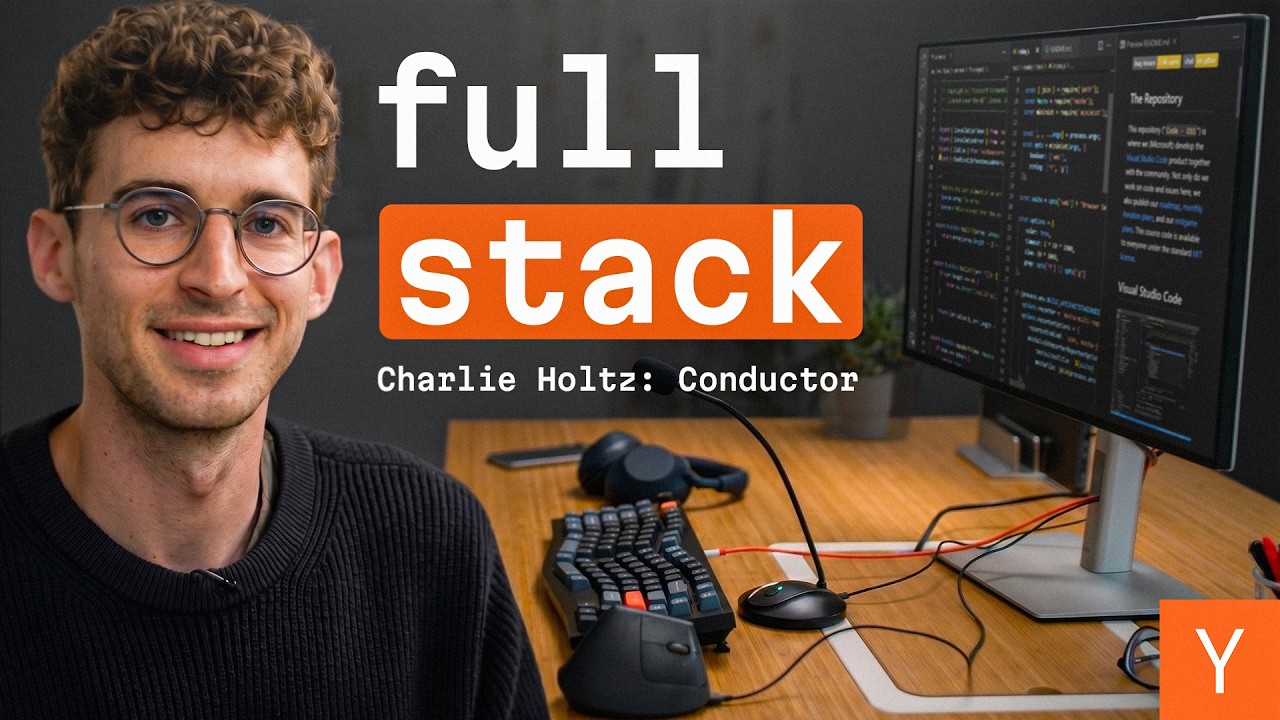
Y Combinator makes that operational turn concrete. Charlie Holtz shows how Conductor manages parallel coding agents, and Conductor itself pitches isolated workspaces for Codex and Claude Code plus a review-and-merge workflow, which shows team-of-agents management becoming a product in its own right (video).
Discussion insight: The shared move is to restore control around AI output. Codebase intelligence, cheaper long context, agent-readable business surfaces, and multi-agent coordination all reduce the risk of treating raw model output as sufficient.
Comparison to prior day: Compared with 2026-06-03's routing-and-context focus, 2026-06-04 leaned harder into team operations and the software layers that make autonomous work manageable.
1.4 AI moved deeper into mainstream institutions: anxiety, oversight, healthcare, and scientific discovery 🡕
The fourth cluster was institutionalization. The current feed split in two directions at once: public institutions got louder about oversight and risk, while research institutions got louder about what reasoning models can now do.
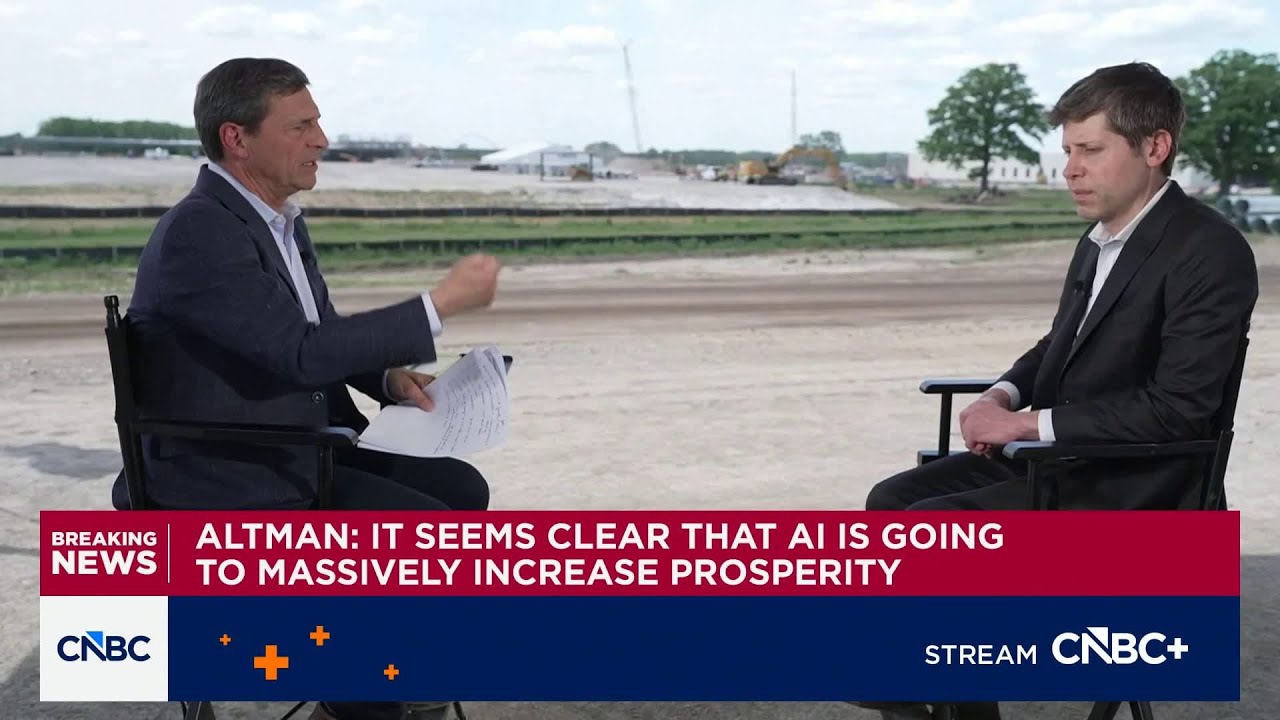
CNBC Television gives the clearest public-trust signal. Sam Altman says people are right to be anxious about AI, which is notable because a major AI company leader is validating concern rather than dismissing it (video).

New York Times Podcasts brings AI oversight into daily political coverage. The episode says Trump signed an executive order asking companies to voluntarily provide government access to new models before release, which means frontier-model oversight is now a mainstream White House topic rather than a niche policy debate (video, NYT).

CNBC Television shifts from general concern to domain deployment. Pairing Mustafa Suleyman with Mayo Clinic's CEO makes healthcare the clearest high-sensitivity application area in the feed, with medical credibility and governance sitting next to model ambition (video).

OpenAI adds the capability-side legitimacy signal. The podcast says a general-purpose reasoning model helped disprove the 80-year-old Erdős unit distance conjecture and spends time on human verification of the proof, which makes AI research feel more like scientific collaboration than demo theater (video).
Discussion insight: The common thread is not hype. It is that AI is now being judged inside institutions that care about safety, regulation, scientific validity, and domain ownership.
Comparison to prior day: Compared with 2026-06-03's heavier focus on platform and business infrastructure, 2026-06-04 broadened AI into public oversight and research legitimacy.
2. What Frustrates People
Search that hides sources and turns browsing into delegated behavior
This is High severity because the complaint is emotional, practical, and already changing user behavior. SAMTIME, SomeOrdinaryGamers, Techlore, and The Tech Report all describe Google's AI-search direction as something that reduces source visibility, removes explicit user choice, or concentrates too much power in one surface. The coping behavior is immediate migration to DuckDuckGo, Brave, Startpage, Kagi, SearXNG, Mojeek, and search bangs rather than waiting for Google to rebuild trust. This is directly worth building for.
AI infrastructure plans that outrun power, parts, and investor confidence
This is High severity because the top infrastructure story in the feed is about constraint, not expansion. Economy Media says projects are being delayed or cancelled because of grid limits, energy costs, and electrical-component shortages, while Bloomberg Television says Broadcom was punished for an AI outlook that still failed to clear investor expectations. Evolving AI adds the technical side of the same frustration by centering the memory bottleneck and Cerebras' wafer-scale response. The workaround is a mix of slower buildouts, alternative chip bets, and more cautious demand assumptions. This is directly worth building for.
AI coding and agent teams that still need cleanup, routing, and coordination
This is High severity because builders are already surrounding models with extra layers. Web Dev Simplified says AI code is messy enough to justify Fallow, WorldofAI frames MiniMax M3 as a cheaper long-context option, and Greg Isenberg plus Y Combinator show that agent deployments need identity, memory, schemas, tools, and multi-agent workflow management. IBM Technology sharpens the same point by explaining that better reasoning comes with more latency and compute. The workaround is layered scaffolding around the model instead of trusting one model call. This is directly worth building for.
AI deployment that increases anxiety and raises governance burdens
This is Medium severity because the tone is serious, but the feed is more about caution than outright rejection. CNBC Television has Sam Altman saying people are right to be anxious, New York Times Podcasts frames model oversight as a White House issue, CNBC Television ties AI ambition to healthcare, and OpenAI emphasizes verification even in a math-discovery success story. The current coping behavior is more oversight, narrower domain deployment, and human verification rather than unconstrained rollout. This is worth building for, but it is slower and more trust-heavy than the software-only categories above.
3. What People Wish Existed
Search help that keeps links visible and switching painless
SAMTIME, Techlore, SomeOrdinaryGamers, and The Tech Report all point to the same practical need: search assistance that preserves source discovery and makes alternative engines easy to adopt. The urgency is high because migration is already underway, not hypothetical. Existing alternatives solve parts of the problem, but the experience is still fragmented across several engines and habits. Opportunity: direct.
Infrastructure planning that ties model demand to power, site, and chip reality
Economy Media, Bloomberg Television, and Evolving AI point to a clear operational need: tools that tell teams where AI buildout will fail first, whether that is grid capacity, energy cost, electrical parts, memory bandwidth, or overoptimistic ROI assumptions. This is a practical need because the current conversation still compresses too many constraints into "buy more GPUs." Existing reports and market coverage help, but teams still lack a shared operating layer that joins physical infrastructure and AI demand planning. Opportunity: direct.
Control layers for AI coding and multi-agent teams
Web Dev Simplified, WorldofAI, Y Combinator, Greg Isenberg, and IBM Technology all point to the same need: something that decides when to use which model, keeps code maintainable, coordinates many agents, and exposes a business in machine-readable ways. The need is practical and immediate because teams are already working around it with separate tools, schemas, and workflows. Existing products solve slices of it, but not the full loop from generation to review to execution. Opportunity: direct.
Governance surfaces for high-sensitivity AI
New York Times Podcasts, CNBC Television, CNBC Television, and OpenAI point toward oversight that is both technical and institutional: audit trails, release controls, verification, domain-specific review, and clear ownership of models used in sensitive settings. The urgency is medium-high because public anxiety and policy action are now visible in mainstream venues. Governance products already exist, but the trust burden is still high and the category is crowded. Opportunity: competitive.
Creator studios that make Gemini Omni-style video work practical without constant workflow juggling
Kevin Stratvert and the Google Flow page show demand for surfaces that handle reference-based generation, storyboarding, edits, avatars, and larger projects in one place. The need is practical, but the evidence is lighter than the categories above because the current feed emphasizes tutorialization more than explicit complaints. Existing creator suites already cover parts of the workflow, so the opportunity is competitive.
4. Tools and Methods in Use
| Tool | Category | Sentiment | Strengths | Limitations |
|---|---|---|---|---|
| Google AI-first search / AI Mode | Search surface | (-) | Fast conversational answers, intent expansion, default distribution | Repeatedly criticized for hiding links, reducing agency, and attracting competition scrutiny |
| DuckDuckGo / Brave / Startpage / Kagi / SearXNG / Mojeek / bangs | Search method | (+) | Restores visible sources, explicit choice, and more deliberate search control | Still fragmented across several engines and habits |
| Fallow | Codebase intelligence | (+) | Free static analysis plus optional runtime intelligence for JS/TS codebases | Adds another layer teams must learn and is focused on JavaScript and TypeScript |
| MiniMax M3 | Coding / agentic model | (+) | Open-weight positioning, native multimodality, BrowseComp 83.5, and up to 1M context | Teams still need to validate price-performance claims and govern long-context usage |
| Conductor | Agent orchestration | (+) | Parallel coding agents in isolated workspaces with review-and-merge workflow | Multi-agent coordination still adds operational complexity |
| Test-time compute / reasoning models | Inference method | (+/-) | Improves harder-task accuracy through deliberate reasoning | Adds latency and extra compute cost |
| Cerebras WSE-3 / wafer-scale AI chips | AI hardware | (+/-) | Attacks the memory bottleneck with a radically different architecture | Still needs ecosystem trust and broader deployment proof |
| Google Flow with Gemini Omni and Veo 3.1 | Creator workbench | (+) | Handles reference-based video creation, editing, storyboards, natural-language tools, and agent help in one surface | Feature access varies by subscription tier, platform, and region |
Overall sentiment is strongest for tools that restore control: alternative search methods, codebase intelligence, explicit agent orchestration, and creator workbenches all land as ways to make AI easier to direct instead of merely more powerful. Mixed sentiment concentrates around reasoning-heavy inference and new hardware architectures because they promise real gains but also introduce cost, latency, or adoption risk. Migration patterns are clear across the feed: from Google search toward visible-source alternatives, from raw model output toward cleanup and orchestration layers, from single-agent workflows toward managed agent teams, and from standalone creator demos toward fuller workbenches.
5. What People Are Building
| Project | Who built it | What it does | Problem it solves | Stack | Stage | Links |
|---|---|---|---|---|---|---|
| DuckDuckGo no-AI search | DuckDuckGo | AI-free search mode that disables AI answers and AI-generated images by default | Gives users a visible-source search experience without forced AI search behavior | Search engine, privacy stack, AI-free mode | Shipped | page, article, video |
| Fallow | Fallow | Codebase-intelligence layer for JavaScript and TypeScript projects | Helps teams clean up and reason about AI-generated code inside real codebases | Static analysis, runtime intelligence, JS/TS focus | Shipped | site, video |
| MiniMax M3 | MiniMax | Open-weight coding and agentic model with native multimodality and long context | Gives builders a cheaper route to long-horizon coding and agent workflows | MSA architecture, multimodality, 1M context, API | Shipped | site, video |
| Conductor | Charlie Holtz / Conductor | Workspace for running parallel coding agents and reviewing their changes | Helps teams manage multi-agent coding without collapsing everything into one chat thread | Parallel Codex and Claude Code agents, isolated workspaces, review workflow | Shipped | site, video |
| Google Flow | AI creative studio for video generation, editing, storyboards, and custom tools | Reduces creator workflow fragmentation across many isolated model interfaces | Gemini Omni, Veo 3.1, Nano Banana, built-in agent, natural-language tools | Shipped | site, video |
DuckDuckGo no-AI search and Fallow solve different problems, but they win for the same reason: both products restore user control after AI systems start feeling too opaque. One keeps search results legible and optional, while the other makes generated code more inspectable and maintainable inside a real codebase.
MiniMax M3 and Conductor package AI capability as workflow rather than raw model access. MiniMax pushes cheaper long-horizon capability, while Conductor treats agent management, isolation, and review as the core product surface.
Google Flow shows the same orchestration pattern on the creator side. The current feed suggests the next layer of AI products is not just a better model, but a better environment for routing, editing, reviewing, and staying in control across a longer workflow.
6. New and Notable
Data-center cancellations became a mainstream AI storyline
Economy Media turned AI infrastructure skepticism into the highest-reach item in the whole feed. That matters because the lead narrative was no longer "who has the biggest buildout," but whether grid limits, power costs, and component shortages are already forcing the sector to slow down.
White House AI oversight became a daily-news topic
New York Times Podcasts makes frontier-model oversight feel politically mainstream, not niche. When a daily political-news product frames voluntary government access to unreleased models as a central White House debate, AI policy has clearly moved into broader public governance.
OpenAI framed reasoning models as research collaborators, not just chatbots
OpenAI used its podcast to discuss a reasoning model helping disprove an 80-year-old Erdős conjecture and the verification work required afterward. That is notable because the conversation shifts from "models can answer harder questions" to "models can participate in original scientific discovery under human review."
Gemini Omni moved from launch excitement to step-by-step creator training
Kevin Stratvert treats Gemini Omni as a practical workflow surface, not a flashy announcement. Paired with the Google Flow page, the signal is that creator AI is becoming tutorialized software with repeatable operations around generation, editing, avatars, and project management.
7. Where the Opportunities Are
[+++] Source-visible search and switching layers — SAMTIME, SomeOrdinaryGamers, Techlore, and The Tech Report all point to the same gap: people want AI help without losing links, agency, or competitive alternatives. This is strong because the pain is high-reach and already changing user behavior.
[+++] AI coding control and multi-agent orchestration — Web Dev Simplified, WorldofAI, Greg Isenberg, Y Combinator, and IBM Technology all show the same pattern: better AI still needs cleanup, routing, schemas, orchestration, and review. This is strong because the workaround today is clearly manual and layered.
[++] Infrastructure planning and hardware-selection intelligence — Economy Media, Bloomberg Television, and Evolving AI show a widening gap between AI demand narratives and the realities of power, memory bandwidth, supply, and investor tolerance. This is moderate because the pain is real and visible, but some of the spend still sits with larger enterprises and infrastructure providers.
[++] Governance and audit surfaces for high-sensitivity AI — CNBC Television, New York Times Podcasts, CNBC Television, and OpenAI show that anxiety, oversight, healthcare deployment, and proof verification are now part of the mainstream AI conversation. This is moderate because the need is concrete, but the trust and compliance bar is much higher than in ordinary software categories.
[+] Creator workbenches with lower-friction video editing and cost control — Kevin Stratvert and the Google Flow page show creator demand for one surface that can handle generation, editing, avatars, and larger projects. This is emerging because the workflow need is clear, but the current date's evidence is narrower than the search, infrastructure, and builder-control categories above.
8. Takeaways
- Search backlash was still the biggest AI story on YouTube, but now it has measurable switching behavior behind it. SAMTIME ties the mood shift to TechCrunch's DuckDuckGo install numbers, while Techlore turns that frustration into a concrete migration toolkit. (source)
- The infrastructure narrative turned more skeptical and more physical. Economy Media, Bloomberg Television, and Evolving AI all frame AI scale through grid limits, supply bottlenecks, market disappointment, and chip-architecture tradeoffs instead of simple expansion hype. (source)
- Useful AI kept looking like a control stack wrapped around the model, not just a better model. Web Dev Simplified, MiniMax M3, Greg Isenberg, and Conductor all point to the same pattern: maintainability, orchestration, schemas, and workflow matter as much as raw capability. (source)
- AI is being judged more seriously inside institutions that care about policy, medicine, and verification. New York Times Podcasts, CNBC Television, and OpenAI show oversight, healthcare deployment, and proof checking landing as mainstream AI concerns. (source)
- Creator AI is settling into repeatable software workflows rather than isolated demos. Kevin Stratvert and the Google Flow page make Gemini Omni feel like a practical studio surface for generation, editing, avatars, and project management. (source)