YouTube AI - 2026-06-05
1. What People Are Talking About
1.1 Search backlash stayed dominant, but the sharper signal is now opt-out demand and measurable switching 🡒
Search skepticism remained the clearest high-reach theme in the 2026-06-05 feed, supported by three strong items. Compared with 2026-06-04, the story is a little less about broad competition rhetoric and a little more about explicit user choice: opting out of AI, keeping links visible, and making alternative search habits practical.

SAMTIME packages the complaint as comedy, but the linked evidence is quantitative. TechCrunch says DuckDuckGo's U.S. app installs rose 18.1% week over week on average and peaked at 30.5%, while visits to its AI-free noai.duckduckgo.com page averaged 22.7% growth and peaked at 27.7%, which means the backlash is showing up in product behavior rather than only mood (video, TechCrunch, PC Gamer).

Scroll Deep shows how far the complaint has spread beyond search specialists. Benedict Townsend frames Google's search change as one of the most significant events in internet history, which matters because the backlash is now living inside general internet-culture commentary rather than only privacy or product-news circles (video).

Techlore turns the complaint into a migration playbook. Henry Fisher walks through DuckDuckGo, Brave, Startpage, Kagi, SearXNG, Mojeek, and bangs, which makes the alternative stack feel operational instead of hypothetical (video).
Discussion insight: Across the three items, the core complaint is forced participation. AI-first search hides links, expands delegated actions, and leaves users wanting explicit control over how much AI touches search.
Comparison to prior day: Compared with 2026-06-04, the theme is still dominant, but the most concrete evidence now comes from opt-out behavior and switching data rather than broader market-structure arguments.
1.2 AI infrastructure stopped looking like a single capex story and turned into a fight over constraints, chip design, and sovereign buildout 🡕
Infrastructure produced the single biggest video in the feed and broadened into four different sub-stories: data-center pullbacks, alternative chip architecture, backend primitives for AI apps, and national AI infrastructure policy. Compared with 2026-06-04, the cluster feels less like a one-note bottleneck story and more like a stack-wide repricing of what AI buildout actually requires.

Economy Media anchors the theme with the highest-reach item in the whole feed. The video says AI infrastructure projects are being delayed or canceled because of grid limitations, rising energy costs, and shortages of key electrical components, turning the buildout into a constraints story instead of a straight-line scaling story (video).
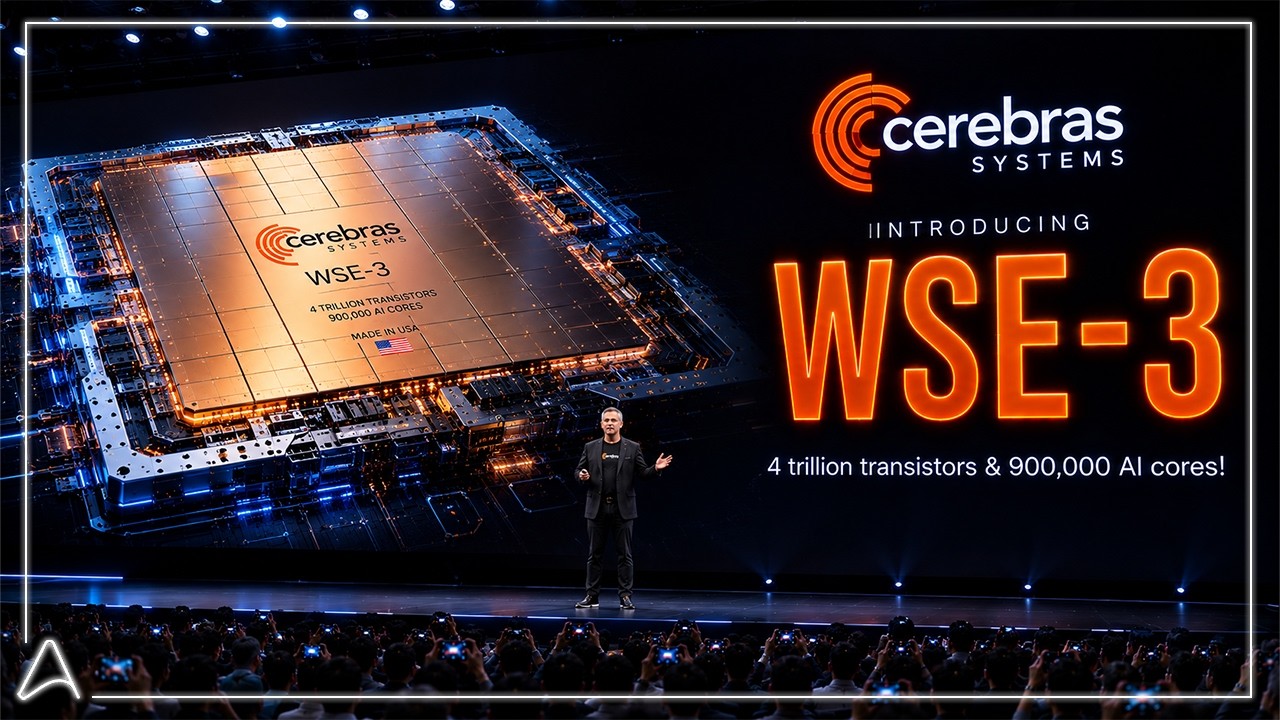
Evolving AI makes the hardware response concrete. The video frames Cerebras' wafer-scale WSE-3 as a direct attack on the memory bottleneck, highlighting 900,000 AI cores, 4 trillion transistors, and 44 GB of on-chip memory, so the infrastructure conversation is also about radically different chip layouts rather than only more conventional GPU spend (video).

AIM Network shifts the infrastructure discussion down the stack into software primitives. The segment says Supabase just secured $500 million at a $10 billion valuation and claims 60% of all new databases are now AI-created, which turns "AI infrastructure" into a backend-default story for AI-built applications instead of a chips-only story (video).
TheGlobalshift packages infrastructure as national policy. The linked Canadian government release says the new AI for All strategy targets $200 billion in economic growth, 250,000 AI-related jobs, adoption moving from just over 12% to 60% by 2034, and a world-leading public AI supercomputer, which makes sovereign compute and adoption policy part of the same buildout conversation (video, Prime Minister of Canada).
Discussion insight: The common message is that AI capacity is no longer one procurement problem. Power, chip architecture, database primitives, and national sovereignty are all being treated as part of the same operating stack.
Comparison to prior day: Compared with 2026-06-04, the theme expanded from cancellations and chip skepticism into sovereign-compute planning and AI-app backend winners.
1.3 Builder attention kept moving toward open-model routing, reasoning budgets, and long-lived personal agents 🡒
Builder videos still cared more about control than leaderboard bragging. The strongest items center on open-model comparisons, local-versus-cloud decisions, reasoning costs, and persistent assistants that live on a server rather than inside a one-off chat.

WorldofAI gives the strongest open-model performance claim in the set. MiniMax's own M3 page says the model supports up to 1M tokens of context, scores 83.5 on BrowseComp, and is aimed squarely at coding assistants and automated workflows, which keeps long-context coding and agentic work at the center of the builder conversation (video, MiniMax M3).
Awesome makes model choice into a deployment question. The topic list centers local models, Apple Silicon, llama.cpp, quantization, local-versus-cloud tradeoffs, and "the tokens economics collapse," which shows builders evaluating AI as a routing and cost problem, not only a capability race (video).
IBM Technology adds the budget side of the same issue. Martin Keen explains that better answers come from extra test-time compute and deliberate reasoning, which means quality is increasingly being discussed as something you buy with more latency and inference cost rather than something a model simply has for free (video).

Tech With Tim turns the personal-agent category into a step-by-step deployment workflow. The video promises a 24/7 VPS-hosted assistant connected to email and calendar, while the Hermes docs describe an autonomous agent that lives on a server, remembers what it learns, and gets more capable the longer it runs (video, Hermes Agent).
Discussion insight: Mehul Mohan adds a useful adjacent signal by comparing MiniMax, GLM, DeepSeek, and Qwen on the same coding task and packaging access into a paid bundle. Model shopping itself is becoming routine builder work.
Comparison to prior day: Compared with 2026-06-04's broader focus on orchestration, 2026-06-05 feels more tactical: which open model to use, when local inference is good enough, how much reasoning to buy, and how to host an agent continuously.
1.4 Elite voices kept framing AI as a governance, labor, and verification problem rather than a pure product launch 🡕
Institutional coverage stayed strong, but the center of gravity moved toward explicit governance, labor displacement, and scientific verification. The current day pairs executive caution, White House oversight, healthcare deployment, labor concentration concerns, and research validation into one cluster.
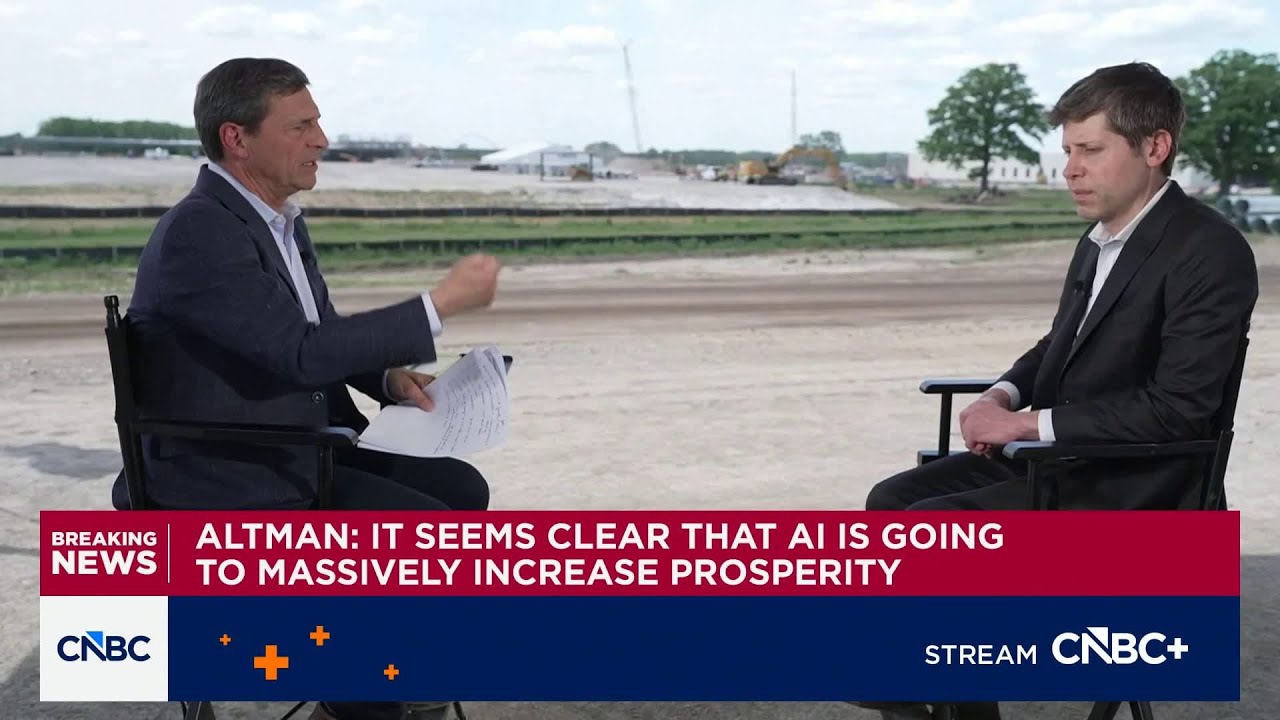
CNBC Television gives the clearest executive-trust signal. Sam Altman says people are right to be anxious about AI and ties the discussion to the pace of AI buildouts, which is notable because a leading model-company CEO is validating concern rather than minimizing it (video).

Neural Nutshell packages Geoffrey Hinton's warning as a structural problem, not a one-company issue. The description says competition between countries and companies makes restraint unlikely, while AI could replace large amounts of intellectual labor and concentrate wealth and power in the firms that control the systems (video, NBER paper).

New York Times Podcasts makes model oversight a daily political-news topic. The episode says Trump signed an executive order asking companies to voluntarily provide the government access to new models before public release, which moves frontier-model oversight further into mainstream governance coverage (video).

CNBC Television keeps high-sensitivity deployment visible by pairing Mustafa Suleyman with Mayo Clinic's CEO. That makes healthcare the clearest vertical where credibility, governance, and model ambition are being discussed together rather than separately (video).

OpenAI gives the capability-side version of the same institutional turn. The podcast says a general-purpose reasoning model helped disprove an 80-year-old Erdős conjecture and spends substantial time on checking the proof, which makes human verification part of the achievement rather than an afterthought (video).
Discussion insight: What unifies these items is not hype but governance burden. Anxiety, labor effects, release controls, domain ownership, and proof checking are all being treated as necessary companions to stronger models.
Comparison to prior day: Compared with 2026-06-04, the institutional theme is more explicit about state oversight, labor concentration, and verification rather than general trust alone.
1.5 Humanoid robotics broke out as its own cluster, with creators treating robots as products, platforms, and race material 🡕
A dedicated robotics cluster surfaced for the first time in several days. The shared move is from spectacle to concrete platforms: buyable machines, split-brain architectures, and open reference designs for researchers.

IntelliCore turns humanoids into a catalog rather than a distant research category. The video runs through Fourier GR-3 for elder care, Atlas for industrial work, Unitree G1 as a lower-cost developer-friendly option, and AgiBot's endurance story, which makes the current robotics conversation feel closer to deployment profiles than to lab demos (video).

AI Revolution stitches together the platform side of the category. The video links JAKA Pi, Vietnam's humanoids, and NVIDIA's Isaac GR00T reference robot; the linked coverage says JAKA Pi separates high-level AI reasoning from low-level motion control, while NVIDIA's reference design is meant to reduce the fragmented path from robot hardware to deployment (video, Interesting Engineering, NVIDIA).

PRO ROBOTS shows how mainstream the cluster has become. The video bundles Figure, Atlas, the China robot expo, and dexterous hands into a general tech-recap format, which suggests humanoid robotics is now stable enough to anchor recurring creator coverage rather than only isolated breakthrough videos (video).
Discussion insight: The strongest practical signal is platform unification. NVIDIA explicitly says humanoid researchers still face a fragmented process spanning hardware integration, data collection, simulation, training, evaluation, and deployment.
Comparison to prior day: Compared with 2026-06-04, robotics moved from background mentions to a standalone cluster with commercial and research-platform framing.
2. What Frustrates People
Search that hides links and forces people into AI-first behavior
This is High severity because the complaint is high-reach and already changing user behavior. SAMTIME, Scroll Deep, and Techlore all describe Google's search shift as something that removes visible sources or pushes people into delegated actions, and the linked TechCrunch and PC Gamer reporting shows that DuckDuckGo installs and no-AI search traffic rose after Google's push. The coping behavior is immediate switching to DuckDuckGo, Brave, Startpage, Kagi, SearXNG, Mojeek, and bangs instead of trying to rehabilitate the default experience. This is directly worth building for.
AI infrastructure plans that keep colliding with power, chip, backend, and sovereignty realities
This is High severity because the biggest item in the entire feed is about infrastructure pullbacks, and the supporting items widen the problem rather than narrowing it. Economy Media says projects are being delayed or canceled because of grid limits, energy costs, and component shortages, Evolving AI treats the memory wall as the core hardware bottleneck, AIM Network says the vibe-coding wave is making backend databases strategic, and TheGlobalshift frames sovereign compute as national policy. The workaround is a mix of alternative chip designs, backend specialization, and state-backed infrastructure planning rather than simple "buy more GPUs" thinking. This is directly worth building for.
Builders still have to route models manually, pay for reasoning, and babysit persistent agents
This is High severity because the builder feed keeps adding layers around the model. WorldofAI frames MiniMax M3 as a cheaper long-context option, Awesome centers local-versus-cloud tradeoffs, IBM Technology explains that better answers cost more latency and compute, and Tech With Tim turns personal-agent usefulness into a VPS setup and maintenance problem. Mehul Mohan sharpens the same point by turning model comparison and access bundling into a product. The workaround is layered routing, benchmarking, and hosting rather than trusting one model call or one chat surface. This is directly worth building for.
Stronger AI keeps increasing governance, verification, and labor anxiety
This is High severity because the current day puts elite voices behind the concern. CNBC Television has Sam Altman saying people are right to be anxious, Neural Nutshell packages Hinton's warning about labor displacement and concentrated power, New York Times Podcasts turns model oversight into White House news, CNBC Television centers healthcare as a high-sensitivity deployment target, and OpenAI emphasizes proof checking even in a breakthrough research story. The coping behavior is more release control, more human review, and more domain-specific governance rather than unconstrained rollout. This is worth building for, but it is more trust-heavy than the software-only categories above.
Humanoid robotics still arrives as fragmented platforms, not turnkey workers
This is Medium severity because the excitement is real, but the operational stack is still fragmented. AI Revolution links JAKA Pi, Vietnam's humanoids, and NVIDIA's Isaac GR00T platform into one story, while NVIDIA's own release says researchers still face a fragmented process across hardware integration, data capture, simulation, training, evaluation, and deployment. IntelliCore and PRO ROBOTS reinforce that the market is full of differentiated machines and roles rather than one standard operating layer. The workaround is open reference platforms and narrow deployment profiles. This is worth building for, but it is earlier and more capital-intensive than the search or coding categories above.
3. What People Wish Existed
Search assistants that keep sources visible and AI optional
SAMTIME, Scroll Deep, and Techlore all point to the same practical need: search help that does not force users into opaque AI behavior or hide the open web behind summaries and delegated actions. The urgency is high because the current evidence includes measurable switching to DuckDuckGo and growing interest in no-AI search. Alternatives already exist, but the experience is still fragmented across multiple engines and habits. Opportunity: direct.
Infrastructure planning that joins demand, power, chips, backend primitives, and sovereign compute
Economy Media, Evolving AI, AIM Network, and TheGlobalshift imply the same missing layer: a system that tells teams where AI expansion fails first and which part of the stack should change next. This is a practical need because today's conversation no longer stops at GPUs; it includes grid capacity, memory bandwidth, backend services, and national compute policy. Existing market coverage and point tools help, but they do not join the full stack into one operating view. Opportunity: direct.
Control layers for AI coding, model routing, reasoning budgets, and persistent agents
WorldofAI, Awesome, IBM Technology, Tech With Tim, and Mehul Mohan all point toward the same operational wish: one layer that decides which model to use, how much reasoning is worth paying for, what should run locally, and how a long-lived assistant should be hosted and observed. The need is immediate because builders are clearly already working around it with comparisons, VPS setups, and extra tools. Existing products solve slices of the problem, but not the full loop from evaluation to deployment to maintenance. Opportunity: direct.
Governance and verification surfaces for high-sensitivity AI
CNBC Television, Neural Nutshell, New York Times Podcasts, CNBC Television, and OpenAI all suggest the same need: release controls, audit trails, proof verification, domain review, and clearer ownership in public-interest deployments. The urgency is medium-high because the conversation now spans government, healthcare, labor effects, and scientific validation. Governance products already exist, but the trust burden is high and the category is competitive. Opportunity: competitive.
Standardized humanoid deployment stacks and evaluation workflows
AI Revolution, IntelliCore, and PRO ROBOTS all point to a practical robotics need: a common layer for integration, simulation, training, testing, and role-specific deployment. NVIDIA makes the gap explicit by saying humanoid teams still face a fragmented process across those steps. The need is real, but the category is earlier and depends on hardware access and enterprise deployment cycles. Opportunity: aspirational.
4. Tools and Methods in Use
| Tool | Category | Sentiment | Strengths | Limitations |
|---|---|---|---|---|
| Google AI-first search / AI Mode | Search surface | (-) | Conversational answers, follow-up queries, default distribution | Repeatedly criticized for hiding links, reducing user control, and forcing AI behavior people do not want |
| DuckDuckGo no-AI search / Brave / Startpage / Kagi / SearXNG / Mojeek / bangs | Search method | (+) | Restores visible sources, explicit choice, and practical migration paths | Still fragmented across several engines and habits |
| Local AI on Apple Silicon with llama.cpp and quantization | Inference method | (+/-) | Gives builders more cost control, privacy, and deployment flexibility | Requires hardware-aware setup and does not remove the routing burden |
| MiniMax M3 | Coding / agentic model | (+) | 1M context, multimodal training, strong browsing and coding claims, open-world positioning | Teams still need to validate price-performance claims and govern long-context use |
| Hermes Agent | Personal agent framework | (+/-) | Server-resident agent with memory, skills, and long-lived operation | Requires VPS setup, ongoing maintenance, and explicit security handling |
| Test-time compute / reasoning models | Inference method | (+/-) | Improves harder-task accuracy through deliberate reasoning | Adds latency and extra inference cost |
| Cerebras WSE-3 / wafer-scale AI chips | AI hardware | (+/-) | Attacks the memory bottleneck with huge on-chip memory and bandwidth | Still has cost, power, and ecosystem-adoption tradeoffs |
| Supabase and AI-created databases | Backend infrastructure | (+) | Benefits from AI-app creation demand and turns backend primitives into a strategic layer | Still depends on sustained AI-app growth and solves only one slice of the stack |
| Huawei LogicFolding / alternative chip paths | Semiconductor architecture | (+/-) | Represents a nonstandard scaling path and a geopolitical alternative to incumbent chip roadmaps | Still needs broader proof, manufacturing execution, and software-ecosystem support |
| NVIDIA Isaac GR00T / JAKA Pi humanoid platforms | Robotics platform | (+/-) | Pushes toward unified hardware-software development for humanoids and clearer embodied-AI architectures | Robotics teams still face fragmented integration, training, and deployment workflows |
Overall sentiment is strongest for tools that restore choice and control: search alternatives, local inference, long-context open models, and server-resident personal agents all land as ways to make AI more governable. Mixed sentiment concentrates around reasoning-heavy inference, new chip architectures, and humanoid platforms because they promise real gains but still come with latency, cost, ecosystem, or deployment risk. Migration patterns are clear across the feed: from Google search toward opt-out engines, from closed-model defaults toward open-model comparisons, from ephemeral chat sessions toward long-lived agents, and from robot demos toward shared research platforms.
5. What People Are Building
| Project | Who built it | What it does | Problem it solves | Stack | Stage | Links |
|---|---|---|---|---|---|---|
| DuckDuckGo no-AI search | DuckDuckGo | AI-free search mode that disables AI answers and AI-generated images by default | Gives users a visible-source search experience without forced AI search behavior | Search engine, privacy stack, opt-out mode | Shipped | page, article, video |
| MiniMax M3 | MiniMax | Open-world frontier coding and agentic model with long context and multimodality | Gives builders a cheaper route to long-horizon coding and automated workflows | MSA architecture, 1M context, multimodality, agentic benchmarks | Shipped | site, video |
| Hermes Agent | Nous Research | Server-resident personal AI agent with memory and long-lived operation | Gives users a persistent assistant outside the chat box | Open-source agent, memory, skills, VPS deployment, integrations | Shipped | site, video |
| Cerebras WSE-3 | Cerebras | Wafer-scale AI chip aimed at massive on-chip memory bandwidth and large-model performance | Attacks the memory bottleneck in advanced AI workloads | Wafer-scale silicon, 900,000 AI cores, 44 GB on-chip memory | Shipped | video |
| Supabase | Supabase | Backend platform riding the demand wave from AI-built applications | Gives AI-built apps a database and backend default instead of custom infrastructure from scratch | Database, auth, backend services | Shipped | video |
| NVIDIA Isaac GR00T Reference Humanoid Robot | NVIDIA / Unitree / Sharpa | Open reference humanoid platform for data capture, training, evaluation, and deployment | Reduces fragmentation in humanoid development workflows | Unitree H2 Plus, Sharpa hands, Jetson Thor, Isaac GR00T | Beta | press release, video |
| JAKA Pi | JAKA Robotics | Compact humanoid with a split high-level/low-level control architecture | Gives embodied-AI teams a more versatile research and development platform | 27 DOF, fusion brain architecture, Intel heterogeneous compute, EtherCAT control | Alpha | article, video |
DuckDuckGo no-AI search, MiniMax M3, and Hermes Agent solve different problems, but they win for the same reason: they give users more control over where AI runs and how much of it they accept. One restores search choice, one opens frontier-style coding capability, and one moves the assistant from a chat box into a persistent environment.
Cerebras WSE-3 and Supabase show that the builder story is not only about models. One attacks a hardware bottleneck at the silicon layer, while the other benefits from AI app creation pulling databases and backend defaults into the center of the stack.
NVIDIA Isaac GR00T Reference Humanoid Robot and JAKA Pi make the robotics build pattern explicit: humanoid products are increasingly being packaged as platforms with standard hardware, control, and evaluation layers instead of one-off demos.
6. New and Notable
Vibe coding started producing named infrastructure winners
AIM Network turns Supabase into a signal, not just a company update. The claim that the company is now valued at $10 billion and that 60% of new databases are AI-created matters because it reframes vibe coding as a backend-infrastructure demand story rather than only a prompt-and-frontend story.
Canada made sovereign compute and AI adoption targets explicit
TheGlobalshift matters less for its dramatic framing than for the official release it points to. Canada's AI for All strategy turns AI infrastructure into a national program with adoption, jobs, trust, sovereignty, and public-supercomputer targets, which is a stronger and more legible policy signal than generic "AI strategy" branding (Prime Minister of Canada).
OpenAI talked about math discovery the way labs talk about verification, not demos
OpenAI used its own podcast to discuss a reasoning model helping disprove an 80-year-old conjecture, but the striking part is how much time the episode spends on checking the proof and working with researchers. That makes the notable signal less "AI solved math" and more "AI research is being narrated as verified collaboration."
Humanoid robots moved closer to a real product stack
IntelliCore, AI Revolution, and NVIDIA's Isaac GR00T reference design together make humanoid robotics look more operational than theatrical. The category now includes buyable robots, compact split-brain designs, and open reference platforms for researchers, which is a stronger stack signal than isolated stunt clips.
7. Where the Opportunities Are
[+++] Source-visible search and switching layers — SAMTIME, Scroll Deep, and Techlore all point to the same gap: people want AI help without losing links, agency, or opt-out control. This is strong because the pain is high-reach and already backed by measurable switching behavior.
[+++] AI coding control, model routing, and persistent agent operations — WorldofAI, Awesome, IBM Technology, Tech With Tim, and Mehul Mohan all show the same pattern: better AI still needs routing, memory, hosting, evaluation, and reasoning-budget decisions. This is strong because the workaround today is clearly manual and layered.
[++] Infrastructure planning across power, chips, databases, and sovereign compute — Economy Media, Evolving AI, AIM Network, and TheGlobalshift show that AI buildout is a multi-layer problem now. This is moderate because the pain is real and visible, but much of the spend sits with larger enterprises, infrastructure vendors, and governments.
[++] Governance, audit, and verification surfaces for high-sensitivity AI — CNBC Television, Neural Nutshell, New York Times Podcasts, CNBC Television, and OpenAI all show that anxiety, oversight, healthcare deployment, and proof checking are now mainstream AI concerns. This is moderate because the need is concrete, but the trust and compliance bar is higher than in ordinary software categories.
[+] Humanoid deployment tooling and evaluation stacks — AI Revolution, IntelliCore, PRO ROBOTS, and NVIDIA's Isaac GR00T reference design all point to the same emerging gap: robotics teams need shared integration, training, and benchmarking layers. This is emerging because the need is specific, but the ecosystem is earlier and more hardware-dependent than the software categories above.
8. Takeaways
- Search backlash was still the biggest AI story on YouTube, and the clearest new evidence was behavioral. SAMTIME plus the linked TechCrunch and PC Gamer coverage show users moving toward DuckDuckGo's app and no-AI search page, while Techlore turns that dissatisfaction into a migration toolkit. (source)
- AI infrastructure on 2026-06-05 looked like a full-stack coordination problem, not a single spending race. Economy Media, Evolving AI, AIM Network, and TheGlobalshift collectively point to grid limits, chip architecture, backend databases, and sovereign compute as intertwined layers. (source)
- Useful AI kept looking like a control stack wrapped around the model. WorldofAI, Awesome, IBM Technology, and Tech With Tim all frame value in terms of routing, long context, reasoning budgets, and persistent agent operations rather than raw leaderboard status. (source)
- Institutional AI coverage became more explicit about oversight, labor risk, and proof verification. CNBC Television, Neural Nutshell, New York Times Podcasts, and OpenAI show stronger models being judged through anxiety, release control, labor concentration, and scientific checking rather than only excitement. (source)
- Humanoid robotics graduated into a clearer platform story. IntelliCore, AI Revolution, and PRO ROBOTS make robots look closer to catalog products and open reference systems, while NVIDIA explicitly positions Isaac GR00T as a unifying development platform. (source)