YouTube AI - 2026-06-07
1. What People Are Talking About
1.1 Search backlash stayed the single biggest consumer signal, but the evidence narrowed 🡖
Search distrust still produced the highest-reach item in the feed, but on 2026-06-07 the evidence narrowed to one massive carryover hit rather than a broader cluster. That matters because the remaining hit still points to measurable switching behavior, so the complaint is persisting even without as many fresh follow-on videos.

SAMTIME turns the backlash into parody, but the supporting evidence is concrete. The linked TechCrunch report says DuckDuckGo U.S. app installs averaged 18.1% week-over-week growth and peaked at 30.5%, while visits to noai.duckduckgo.com averaged 22.7% growth and peaked at 27.7%, which makes this theme more than mood alone - viewers are acting on the desire to keep AI optional and links visible (video, TechCrunch).
Discussion insight: The complaint is not generic anti-AI sentiment. It is a demand for source visibility, simpler browsing, and a real opt-out path when AI answers are not wanted.
Comparison to prior day: Compared with 2026-06-06, the reach stayed huge but the theme lost breadth because fewer companion videos pushed the same complaint.
1.2 AI anxiety moved from generic caution toward Hinton-centered superintelligence warnings 🡕
Three videos supported this cluster, and all three were insider-facing rather than outsider alarmism. The theme strengthened because the dataset combined Hinton's long-form warning, a shorter Hinton recap with labor-market framing, and Sam Altman's mainstream validation that public anxiety is reasonable.

Alex Kantrowitz hosts the highest-signal item in the cluster. Geoffrey Hinton uses the interview to discuss consciousness, fast-arriving superintelligence, self-preservation, information collapse, job loss, and the limits of voluntary corporate restraint, making this a broad risk-and-governance argument rather than one narrow safety concern (video).

Neural Nutshell compresses the same warning into a shorter, more distributable package and adds public source links, including Hinton's Nobel profile and the NBER paper Generative AI at Work. The added emphasis is economic: AI could let one worker do the work of many while concentrating gains among the companies that control the systems (video, NBER).
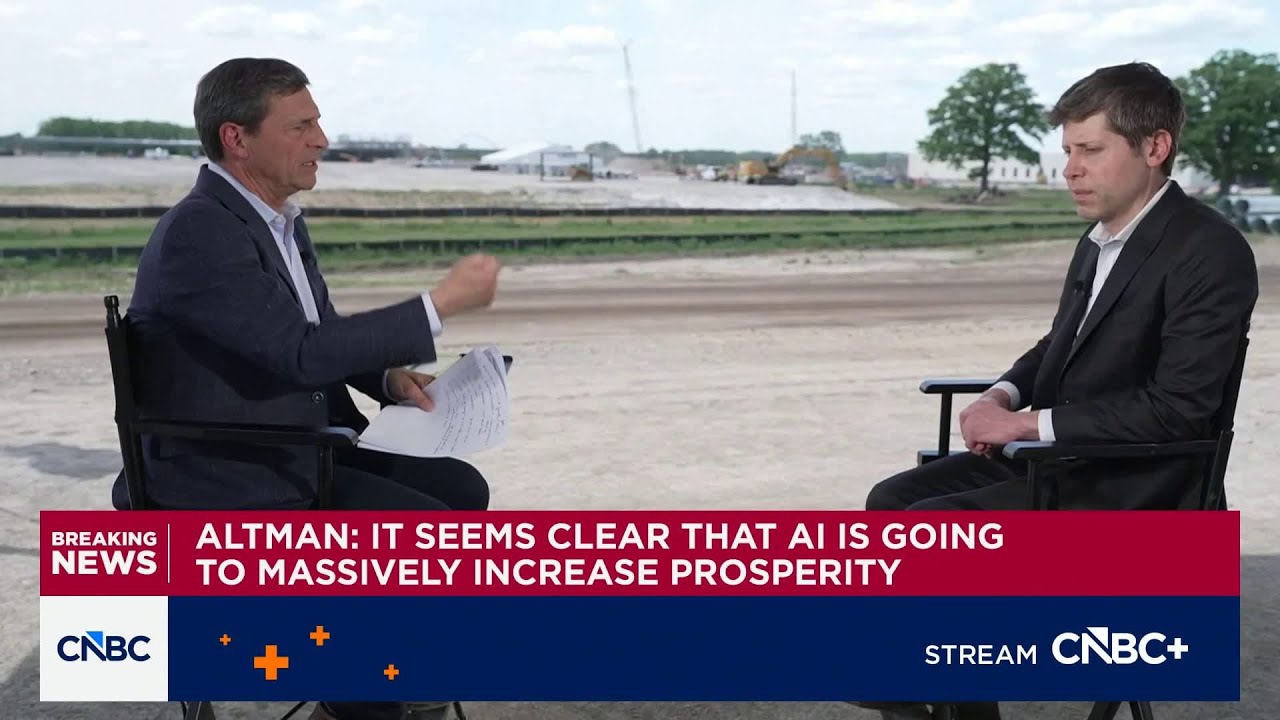
CNBC Television gives the theme its largest mainstream-business distribution. Sam Altman says people are right to be anxious about AI, which matters because a model-company CEO is validating concern instead of trying to dismiss it (video).
Discussion insight: The cluster mixes existential risk, labor displacement, and governance burden. Concern is now coming from founding researchers and current AI executives, not only critics.
Comparison to prior day: Compared with 2026-06-06, the trust theme became more concentrated around direct warnings and public anxiety instead of splitting attention with verification-heavy research stories.
1.3 Builder attention clustered around deployable multimodal systems and inference-time control 🡕
Four videos supported this theme. The shared question was not which model won, but how these systems actually run - locally, with low latency, with deliberate reasoning steps, and with enough reliability to survive production use.

AI Search makes launch density itself the story. The roundup's description spans Bernini, Magenta Realtime 2, Ideogram v4, Gemma 4 12B, Qwen 3.7 Plus, Cosmos 3, MiniMax M3, Nemotron 3 Ultra, and more, which shows how many new capabilities were competing for attention on one day; the linked Magenta page adds a concrete performance claim with about 0.2 seconds of minimum control delay for realtime audio generation, while MiniMax M3 is presented as an open-weight multimodal model with 1M context and explicit coding-and-agent focus (video, Magenta, MiniMax M3).
Better Stack makes one release especially concrete. Google's launch post says Gemma 4 12B removes separate multimodal encoders, supports native audio, runs on 16 GB of VRAM or unified memory, and ships under Apache 2.0, so the video's framing of offline multimodal AI on a laptop is grounded in a real architecture and hardware story rather than hype alone (video, Google blog).
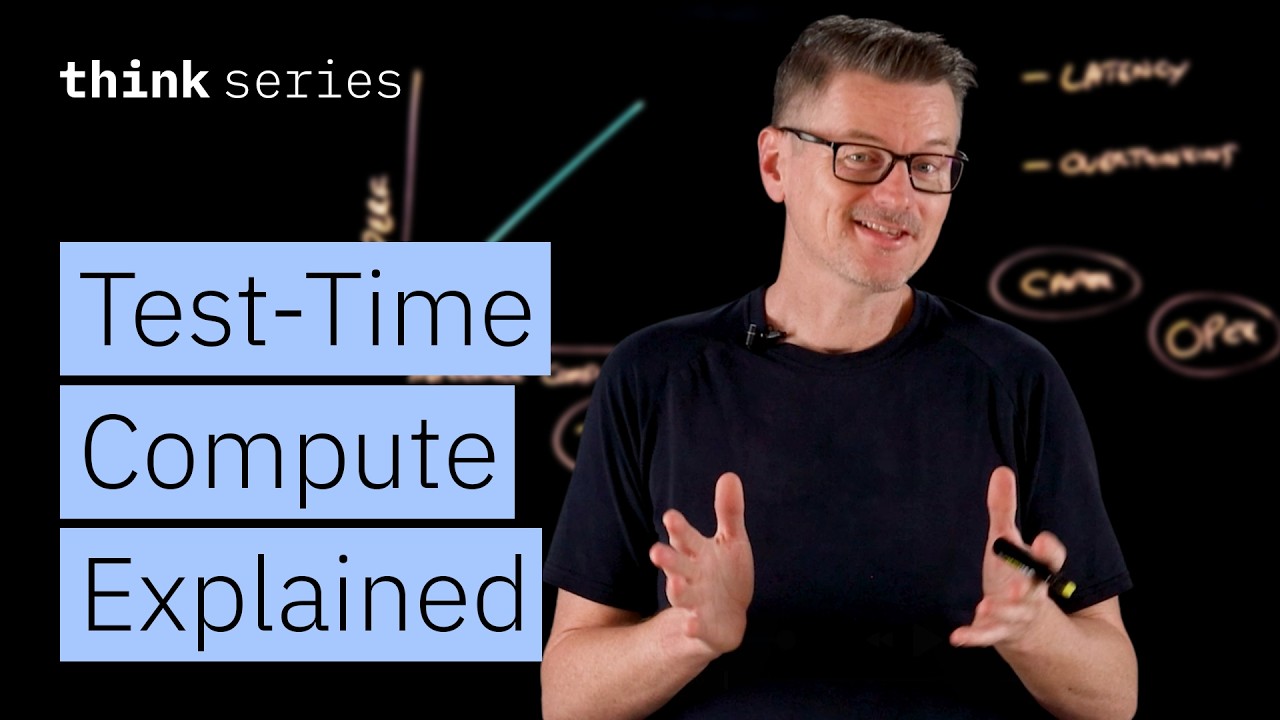
IBM Technology explains the method side of the same shift. The video treats test time compute, chain-of-thought, and reasoning models as the cause of visible thinking pauses, making inference-time control part of the builder conversation instead of a hidden implementation detail (video).

Tech With Tim brings the operations layer into view. His description says almost nobody is shipping AI agents reliably, and Temporal's site responds with a clear value proposition: workflows capture state at every step and can resume after failures without manual recovery (video, Temporal).
Discussion insight: The builder stack is spreading into layers - model architecture, reasoning method, latency control, and durable execution - instead of collapsing toward one assistant or one benchmark.
Comparison to prior day: Compared with 2026-06-06's focus on local models and agent-sprawl control, 2026-06-07 widened the builder conversation toward launch density, runtime behavior, and reliability infrastructure.
1.4 Creator tooling kept moving toward consumer-friendly visual automation 🡕
Two videos supported this theme, and both pushed AI creation closer to ordinary consumer workflows. The important shift is accessibility: more visual output, more self-representation, and less required hardware or setup.
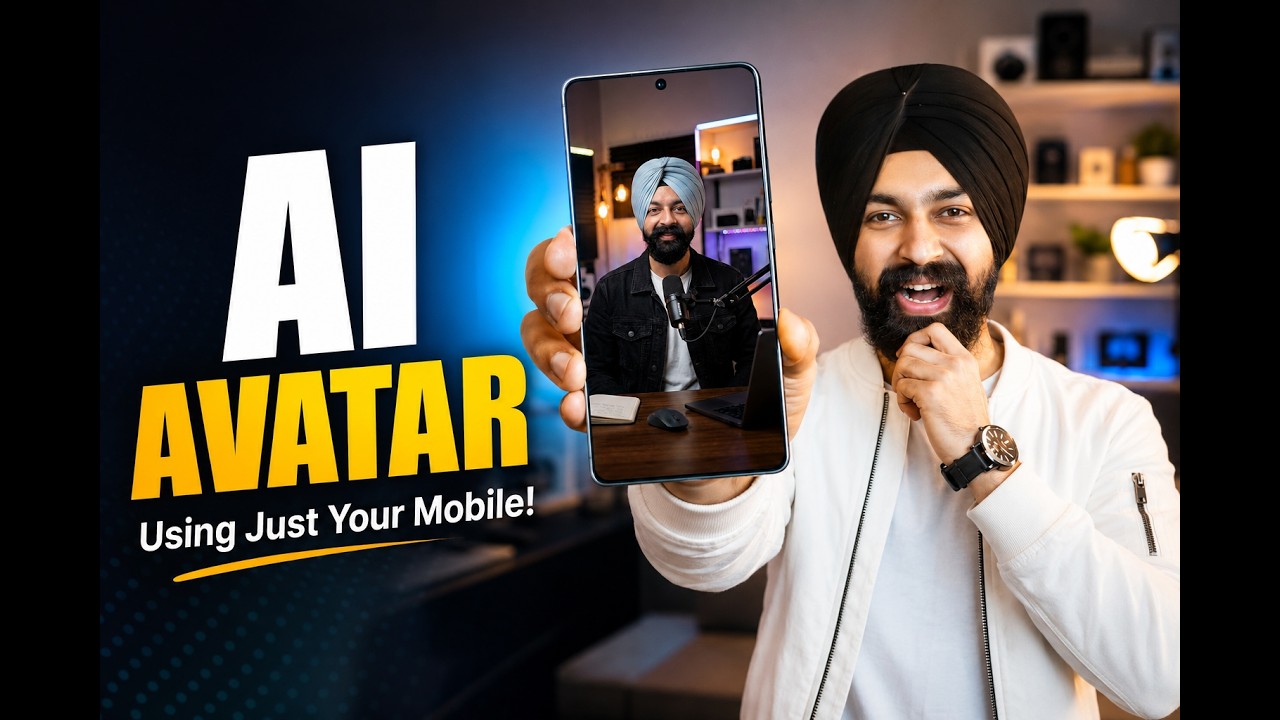
Raj Photo Editing and Much More makes the low-friction end of the market explicit. The tutorial promises free AI avatar creation, own-face and own-voice cloning, and a phone-only workflow, which shows creator demand for faster AI video production without desktop gear (video).

Aitrepreneur pushes the same area from the high-control side. The video describes Ideogram 4 as an open-weight text-to-image model that can be installed locally in ComfyUI and steered with area prompting, which makes the creator stack look simultaneously more powerful and more workflow-heavy (video).
Discussion insight: The market is splitting between convenience-first mobile flows and local, high-control visual pipelines. In both cases, the demand is for fewer manual steps between intent and publishable output.
Comparison to prior day: Compared with 2026-06-06's more enterprise- and infrastructure-heavy mix, creator automation became more visible and more consumer-facing.
2. What Frustrates People
Search that hides sources and removes user choice
This is High severity because the largest item in the dataset is explicitly about people abandoning Google's new search experience. SAMTIME and the linked TechCrunch report show that the frustration is already translating into migration toward DuckDuckGo and its no-AI page, not just complaints. The current coping strategy is switching engines or seeking AI-off surfaces rather than trying to adapt. This is directly worth building for.
AI progress that even insiders think society cannot slow or govern well
This is High severity because the safety cluster is being driven by the people closest to the field. Alex Kantrowitz's Hinton interview, Neural Nutshell's recap, and CNBC Television's Altman clip all point to the same frustration: capability is advancing faster than institutions, public understanding, and governance mechanisms. The present workaround is more warning and more discussion, not a clear operating answer. This is directly worth building for.
Agent systems that demo well but still fail in production
This is High severity because reliability is named as the bottleneck in plain language. Tech With Tim says almost nobody is shipping AI agents reliably, while Temporal answers with state capture and resume-after-failure workflows. The workaround today is extra orchestration, retries, and state-management infrastructure layered around agents. This is directly worth building for.
Local and multimodal stacks that still require too much setup and evaluation
This is Medium-High severity because the builder cluster keeps pairing exciting capability with operational homework. Better Stack, IBM Technology, AI Search, and Aitrepreneur all show the same pattern: better models and richer outputs are arriving, but builders still need to reason about memory limits, inference-time tradeoffs, control latency, and workflow tuning. The workaround is hands-on benchmarking and pipeline assembly. This is directly worth building for.
Creator automation that is powerful but still fragmented across phone and desktop workflows
This is Medium severity because demand is clear but the flow is not yet unified. Raj Photo Editing and Much More frames AI avatars as a free phone-only workflow, while Aitrepreneur shows a more advanced local visual stack in ComfyUI. People cope by stitching together several tools and devices depending on how much control they need. This is worth building for, especially in creator and small-business markets.
3. What People Wish Existed
AI-optional search that keeps links prominent
SAMTIME and the linked DuckDuckGo switching data point to the same practical need: search assistance that does not suppress source discovery or force AI mediation into every query. The urgency is high because switching behavior is already visible. Alternatives exist, but they are still fragmented across engines and special modes. Opportunity: direct.
Durable execution and agent operations for long-running workflows
Tech With Tim and Temporal point to the same missing layer: systems that keep agent state, recover cleanly after failure, and make reliability a default rather than a custom engineering exercise. The need is practical and immediate because the current complaint is not theoretical - builders are saying they can demo agents more easily than they can ship them. Existing platforms cover parts of the loop, but the opportunity remains strong. Opportunity: direct.
Consumer-hardware multimodal deployment with simpler setup
Better Stack, Google's Gemma 4 12B launch post, IBM Technology, and AI Search all imply the same need: practical ways to run, benchmark, and steer multimodal models on ordinary hardware without so much manual tuning. The need is concrete because the current workaround is still benchmark-heavy and workflow-specific. Existing tools partially address it, but not end to end. Opportunity: direct.
Mobile-native creator suites for avatars and AI video
Raj Photo Editing and Much More makes the demand explicit: creators want own-face, own-voice, and fast AI video generation without needing a laptop. Aitrepreneur shows the adjacent demand for higher-control local image generation. The need is practical, not aspirational, but current workflows are split by device and skill level. Opportunity: direct.
Verification and oversight surfaces for public-interest AI
Alex Kantrowitz's Hinton interview, Neural Nutshell, and CNBC Television all point to the same need: clearer release controls, stronger audit trails, and human-verification workflows around increasingly capable AI systems. The urgency is high, but the buying context is more institution-heavy than the creator and builder categories above. Opportunity: competitive.
4. Tools and Methods in Use
| Tool | Category | Sentiment | Strengths | Limitations |
|---|---|---|---|---|
| Google AI-first search / AI Overviews | Search surface | (-) | Conversational answers, large default reach, easy follow-up queries | Repeatedly criticized for hiding links, reducing user choice, and pushing unwanted AI mediation |
| DuckDuckGo no-AI search | Search alternative | (+) | Gives users a clear AI-off path and restores a visible-link workflow | Still requires people to switch habits and defaults |
| Gemma 4 12B | Local multimodal model | (+) | Laptop-ready target, native audio, no separate encoders, open Apache 2.0 release | Builders still need setup, evaluation, and hardware-aware tuning |
| MiniMax M3 | Frontier open-weight model | (+/-) | 1M context, native multimodality, explicit coding and agent focus | Frontier capability still comes with complexity, tooling burden, and vendor-claimed benchmarks |
| Temporal Workflows | Agent reliability platform | (+) | Captures state at each step and resumes after failure without manual recovery | Adds orchestration and workflow-management overhead |
| Test time compute | Reasoning method | (+/-) | Improves harder-task accuracy by letting models deliberate | Adds latency and makes performance more dependent on inference-time configuration |
| Magenta Realtime 2 | Audio generation model | (+) | Frame-level conditioning with about 0.2-second minimum control delay | Specialized creative workflow with a technically heavy stack |
| Ideogram 4 + ComfyUI workflow | Image generation stack | (+/-) | Strong text rendering and area-level control in local workflows | Setup and workflow tuning remain substantial |
Overall sentiment is strongest for tools that restore control - opt-out search, laptop-scale multimodal models, and durable execution for long-running workflows. Mixed sentiment concentrates around frontier multimodality and visual pipelines because the upside is real but the setup burden remains high. The clearest workarounds are switching search defaults, running smaller local models, adding workflow/state layers around agents, and choosing between phone-first convenience or desktop-first control for creator tasks.
Competitive dynamics are visible across several layers at once: Google versus opt-out search alternatives, open-weight local models versus cloud-first defaults, reliability platforms around agent operations, and creator stacks splitting between convenience and precision.
5. What People Are Building
| Project | Who built it | What it does | Problem it solves | Stack | Stage | Links |
|---|---|---|---|---|---|---|
| Temporal Workflows | Temporal | Durable execution platform for long-running AI and distributed workflows | Prevents state loss and manual recovery when agents or APIs fail mid-run | Workflow engine, persisted state, retries, recovery | Shipped | site, Replay, video |
| Gemma 4 12B | Laptop-ready multimodal model with native audio and no separate encoders | Lets builders run agentic multimodal workloads locally instead of assuming cloud-only inference | Open weights, Apache 2.0, native audio/vision, MTP | Shipped | blog, video | |
| MiniMax M3 | MiniMax | Open-weight multimodal model with 1M context and a coding-and-agent focus | Gives developers a frontier-style open model for long-horizon coding and agent work | Sparse attention, 1M context, multimodality, agent tooling | Shipped | blog, video |
| Magenta Realtime 2 | Google Magenta | Realtime music generator with frame-level conditioning and low control latency | Makes AI audio generation responsive enough for interactive use | Codec LM, decoder-only streaming, text/audio/note controls | Shipped | page, video |
| Ideogram 4 | Ideogram | Text-to-image model used in local ComfyUI workflows with area prompting | Gives creators controllable local image generation and better text-heavy assets | Text-to-image model, ComfyUI workflow, area prompting | Shipped | site, video |
| DuckDuckGo no-AI search | DuckDuckGo | AI-free search page that turns off AI features by default | Gives users a clear opt-out from AI-first search without leaving web search entirely | Search engine, privacy layer, AI-off mode | Shipped | page, article, video |
Temporal, Gemma 4 12B, and MiniMax M3 all attack the same builder pain from different directions: keeping advanced AI useful outside one-off demos. Temporal focuses on failure recovery and state, Gemma compresses multimodal capability onto ordinary hardware, and MiniMax pushes open-weight coding and agent ambitions upward.
Magenta Realtime 2 and Ideogram 4 show the creative side of the same shift. Creators want low-latency control and high-fidelity local generation, not just novelty outputs. DuckDuckGo no-AI search is the consumer-side counter-move: people also want products that reduce AI mediation when it gets in the way.
Repeated build patterns centered on control, local execution, and explicit recovery paths. The feed did not point to one universal assistant; it pointed to surrounding layers that make AI deployable, steerable, or optional.
6. New and Notable
Hinton's consciousness-and-superintelligence warning landed on one of the day's biggest long-form platforms
Alex Kantrowitz matters because the Hinton interview is long, specific, and wide-ranging rather than clip-driven. It makes consciousness, self-preservation, job loss, and regulation part of the same public discussion.
Release density became a story in its own right
AI Search is notable because the video has to package image models, audio models, agentic models, and multimodal releases into one 49-minute roundup. That is evidence that launch velocity itself is becoming a trend signal readers need help digesting.
Durable execution became conference-scale AI infrastructure language
Tech With Tim and Temporal Replay are notable because they frame reliability as a first-order conference topic, not an implementation footnote. The words durable execution now sit directly next to AI in public infrastructure messaging.
Phone-only AI avatar production reached mainstream creator tutorials
Raj Photo Editing and Much More is notable because it treats own-face, own-voice avatar generation as a standard smartphone workflow. That pushes AI video automation closer to ordinary creator tooling and away from desktop-only experimentation.
7. Where the Opportunities Are
[+++] AI agent reliability and durable execution - Tech With Tim, Temporal, and the broader builder cluster all point to the same gap: agents are easy to show and hard to keep alive through failures, retries, and long-running state. This is strong because the pain is explicit and the current workaround is more infrastructure than product.
[+++] Source-visible AI-optional search - SAMTIME and the DuckDuckGo switching data show that users will move when AI mediation becomes too heavy. This is strong because the need is already translating into measurable behavior.
[++] Consumer-hardware multimodal deployment and evaluation - Better Stack, Google's Gemma 4 12B post, IBM Technology, and AI Search show strong interest in local multimodal models and inference-time control, but setup and evaluation are still manual. This is moderate because the need is concrete, though the market is getting crowded.
[++] Creator suites that unify avatars, local visuals, and simple publishing - Raj Photo Editing and Much More and Aitrepreneur show demand for both low-friction phone workflows and high-control local image stacks. This is moderate because the need is clear, though creator tooling is highly competitive.
[+] Trust and verification surfaces for high-impact AI claims - Alex Kantrowitz, Neural Nutshell, and CNBC Television show that safety, job displacement, and public anxiety are staying in the mainstream conversation. This is emerging because the demand is real, but the buying authority and deployment context are less universal than the opportunities above.
8. Takeaways
- Search backlash remained the biggest consumer AI story in the feed even after narrowing to one dominant hit. The SAMTIME video still led the dataset by a wide margin, and the linked DuckDuckGo data shows the complaint is already producing measurable switching behavior. (source)
- Hinton-centered warning videos moved AI anxiety higher in the feed and tied it to labor, governance, and superintelligence. The long Hinton interview, the shorter Hinton recap, and Altman's CNBC clip all keep concern inside insider-led discussion rather than outsider skepticism. (source)
- Builder attention shifted toward the operating layer around AI, not just model launches. The day's strongest builder signals were deployable multimodal models, test time compute, and durable execution for agents rather than a single benchmark winner. (source)
- Creator AI became more accessible and more split between mobile simplicity and local control. Phone-only avatar tutorials and local Ideogram workflows show a market that wants both less friction and more precision. (source)
- The most interesting products in the feed were control surfaces, not generic assistants. AI-off search, laptop-ready multimodal models, workflow recovery layers, and low-latency creative tooling all reflect the same demand: more steerability over how AI shows up in daily work. (source)