YouTube AI - 2026-06-08
1. What People Are Talking About
1.1 Search backlash regained breadth and looked more like consumer revolt 🡕
Two of the three highest-reach videos in the feed pushed the same complaint: Google search is becoming too AI-mediated and too weak at surfacing direct links. The theme strengthened because 2026-06-08 was not just one runaway parody hit - it also had a second six-figure commentary video arguing that search had been fundamentally changed.

SAMTIME turns the frustration into parody, but the supporting evidence is concrete. TechCrunch reports that DuckDuckGo said U.S. app installs averaged 18.1% week-over-week growth after Google's search overhaul and peaked at 30.5%, while visits to its AI-free page averaged 22.7% growth and peaked at 27.7%, making this a measurable switching story rather than mood alone (video, TechCrunch).

Scroll Deep frames the same shift as a major change to the open-web experience. The video's own description says Google search is now "all AI," and the item's reach shows that complaint resonating well beyond niche search users (video).
Discussion insight: The backlash is not generic anti-AI sentiment. It is specifically about losing visible links, direct control, and the old search workflow.
Comparison to prior day: Compared with 2026-06-07, the same complaint regained breadth because it was carried by two top-three videos instead of one dominant outlier.
1.2 AI trust questions spread from frontier governance into everyday decisions 🡕
Three videos supported this cluster. The argument widened from whether frontier labs should slow down to whether ordinary people should trust AI in practical, high-stakes settings.

ABC News gives the theme its sharpest interventionist framing. The video's description says development should pause before AI can build itself and humans lose control over it, pushing the conversation from caution toward active restraint (video).

Alex Kantrowitz supplies the deepest insider case. Geoffrey Hinton uses the interview to connect consciousness, superintelligence, job loss, emotional attachment to chatbots, and regulation, making the trust problem much broader than one narrow safety debate (video).

TODAY brings the same concern into daily life. The segment says patients are turning to AI because of healthcare costs and appointment delays, then asks directly whether the tools are safe and accurate compared with a real doctor (video).
Discussion insight: Frontier governance and everyday trust are converging. The same worries about control now show up in both TV policy segments and ordinary healthcare decisions.
Comparison to prior day: Compared with 2026-06-07's insider-heavy warning cluster, 2026-06-08 pushed the concern further into mainstream television and consumer-health framing.
1.3 AI infrastructure shifted from builder plumbing to chips, capital, and sovereign compute 🡕
Three videos supported this cluster, and all three treated compute as a strategic asset rather than a background implementation detail. The conversation expanded across laptop-scale multimodal models, national chip procurement, and alternatives to Nvidia's dominant hardware path.
Better Stack makes the local-model angle concrete. Google's launch post says Gemma 4 12B removes separate multimodal encoders, adds native audio input, fits on 16 GB of VRAM or unified memory, and ships under Apache 2.0 with Multi-Token Prediction drafters, so the laptop story is grounded in real architecture and deployment claims rather than generic launch hype (video, Google blog).
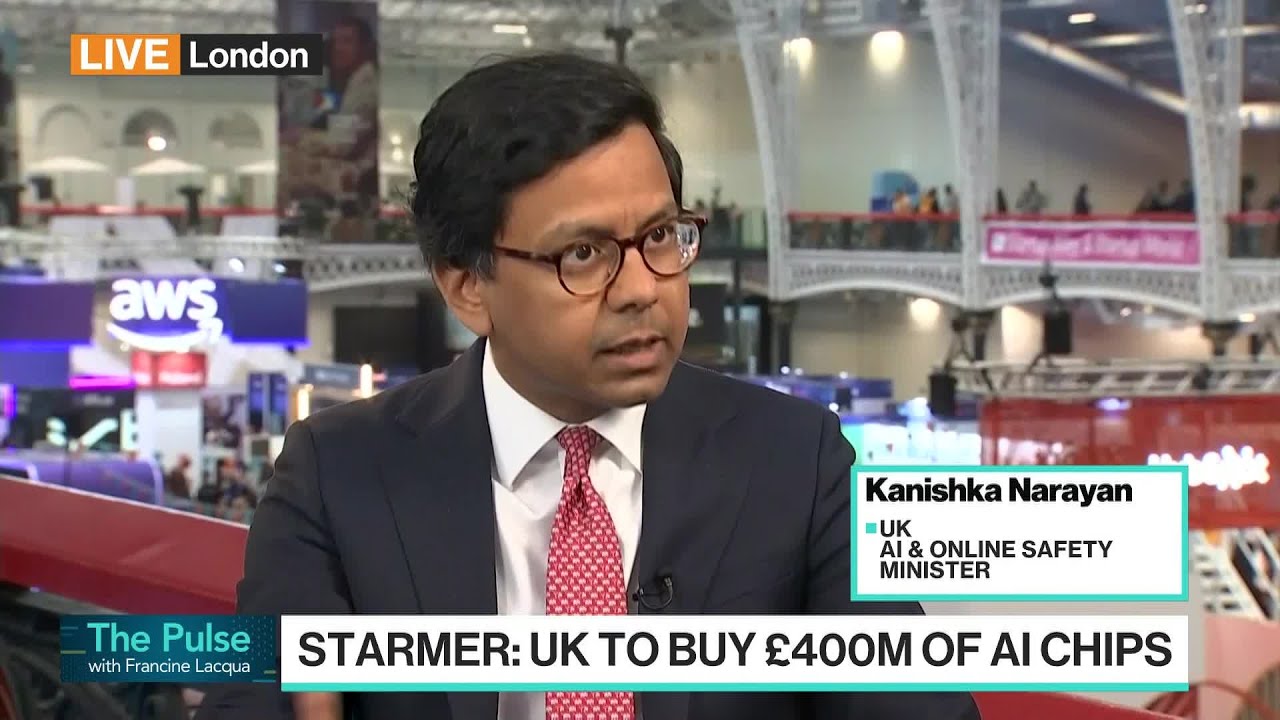
Bloomberg Television shows the public-policy side of the same shift. The linked UK government release confirms a new £1.1 billion AI Hardware Plan, including £400 million for next-generation chips and £150 million for inference chips, which turns sovereign compute into day-of-news agenda rather than a background industrial policy topic (video, GOV.UK).
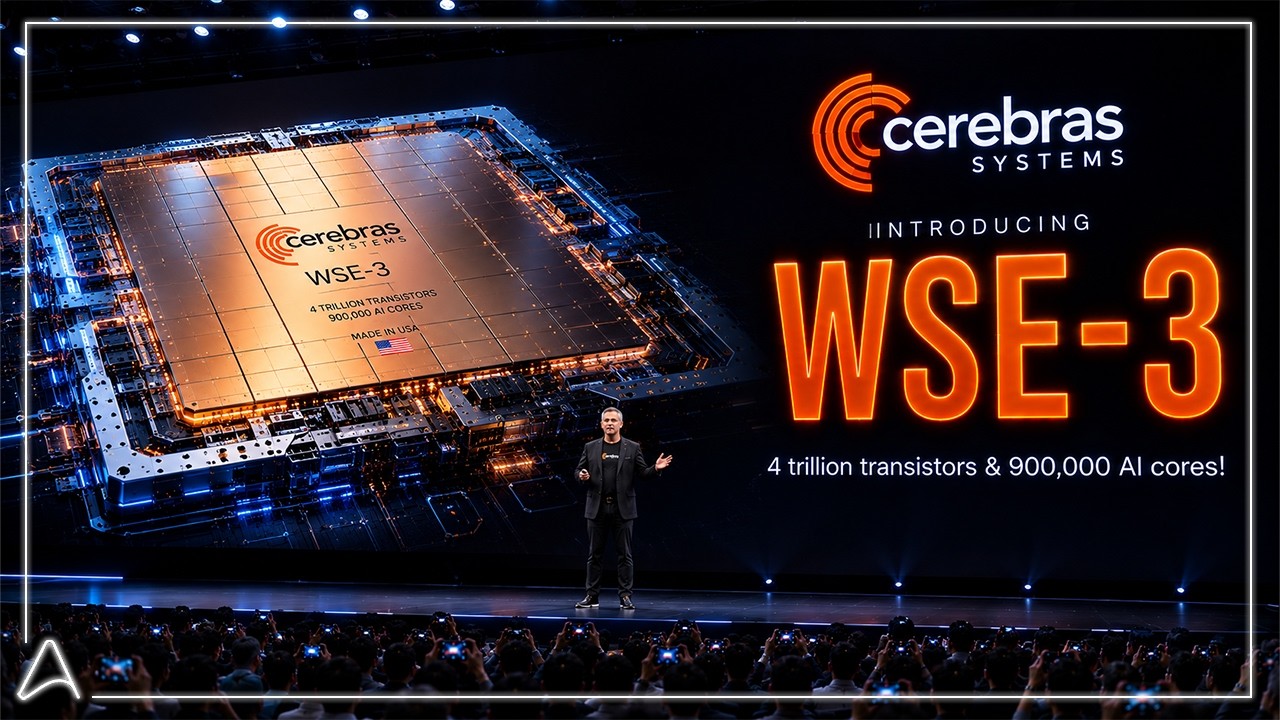
Evolving AI adds the competitive-hardware angle. The description frames Cerebras's wafer-scale design as a serious alternative to the usual Nvidia path, emphasizing on-chip memory bandwidth and the possibility that AI infrastructure does not have to stay locked to one architecture forever (video).
Discussion insight: Compute discussion is splitting across local efficiency, sovereign chip access, and alternative hardware designs. Infrastructure is becoming a product, policy, and investment story all at once.
Comparison to prior day: Compared with 2026-06-07's stronger focus on runtime behavior and durable execution, 2026-06-08 moved more attention toward chips, procurement, and capital allocation.
1.4 Agentic coding moved from conference talk to desktop workbenches and repeatable loops 🡕
Four items supported this cluster. The common thread was that coding agents now need a surrounding workspace: project context, approvals, file review, state, and a repeatable operating loop instead of a bare chat box.

WorldofAI showcases the most concrete example. The video positions DeepSeek GUI as a local-first desktop workspace for coding, writing, automation, and long-running sessions, while the linked README confirms Code and Write modes, change review surfaces, approvals, scheduled tasks, and a Kun runtime built around token-efficient long sessions (video, README).

Tech With Tim keeps the reliability problem explicit. The video says almost nobody is shipping AI agents reliably, and Temporal's site answers with a workflow model that captures state at every step and resumes exactly where it left off after failure (video, Temporal).

IBM Technology makes the software-engineering case more specific. The description says developers still spend most of their time understanding code, and frames agentic coding as a way to modernize legacy systems while reducing DevSecOps risk in complex environments (video).
Discussion insight: The market wants state, approvals, and project memory around coding agents. That same pattern also appears in Mission Control, which presents itself as a repeatable, project-aware home for Claude Code, Codex, and Cursor CLI rather than a replacement stack.
Comparison to prior day: Compared with 2026-06-07's conference-centered reliability story, 2026-06-08 added concrete workbench products and coding-specific wrappers.
1.5 AI video tooling became a benchmark-and-cost race 🡕
Two videos supported this cluster. Creator attention centered on who wins on duration, motion quality, prompt behavior, and economics rather than on novelty alone.

AI Master treats the Seedance story less as a leak to blindly repeat and more as a claim-by-claim audit. The description frames Seedance 2.0 as a leaderboard leader for audio-paired video, then evaluates whether Seedance 3.0 claims about longer movies, cost collapse, and release timing actually hold up (video).

Yaroflasher reinforces the same behavior from a more tactical angle. The video is a direct Grok-versus-Seedance comparison built around feature differences, prompt results, and a camera-movement trick meant to improve output quality for creators (video).
Discussion insight: Creator tooling discourse is getting more evaluative. People want rankings, pricing signals, workflow tricks, and side-by-side tests, not just flashy demo reels.
Comparison to prior day: Compared with 2026-06-07's split between phone avatars and local image workflows, 2026-06-08 leaned harder into head-to-head video-model benchmarking and production economics.
2. What Frustrates People
Search that hides sources and removes user choice
This is High severity because the largest consumer complaint in the feed is still about AI-first search taking over the basic link-finding workflow. SAMTIME pairs that complaint with TechCrunch's DuckDuckGo switching data, while Scroll Deep argues that Google search has become "all AI." The current coping strategy is switching engines or seeking AI-off surfaces rather than adapting to the new default. This is directly worth building for.
Trust gaps around high-stakes AI use
This is High severity because the trust problem now spans both frontier governance and everyday decisions. ABC News says AI development may need to pause before humans lose control, Alex Kantrowitz's Hinton interview ties the same concern to regulation, job loss, and superintelligence, and TODAY asks whether AI medical advice is safe and accurate enough to compare with a real doctor. The workaround today is more caution and more human verification, not a trusted operating model. This is directly worth building for.
Agentic coding that still outpaces review and recovery
This is High severity because the feed keeps describing the same bottleneck in plain language. WorldofAI opens with AI-generated code moving faster than human review, Tech With Tim says almost nobody is shipping agents reliably, and IBM Technology says developers still spend most of their time understanding code. The workaround is to add workbenches, approval layers, stateful workflows, and recovery tooling around the agents. This is directly worth building for.
Compute access and chip dependence
This is High severity because the infrastructure story is no longer abstract. Better Stack makes local deployment constraints visible, Bloomberg Television and the linked UK hardware plan turn chip access into a government priority, and Evolving AI frames alternative hardware as a necessary break from the Nvidia-centered path. The current workaround is a mix of local optimization, national procurement, and betting on alternative architectures. This is directly worth building for, though it is capital-intensive.
AI video tools that are powerful but noisy to evaluate
This is Medium severity because creator demand is strong but trustworthy evaluation is still thin. AI Master turns Seedance 3.0 into a leak-and-credibility audit, while Yaroflasher compares Grok and Seedance through prompt results and workflow tricks. The current coping strategy is creator-led benchmarking, rumor triage, and tutorial watching. This is worth building for, especially where evaluation and workflow reliability matter more than novelty.
3. What People Wish Existed
AI-optional search that keeps sources prominent
SAMTIME, Scroll Deep, and the linked DuckDuckGo switching data all point to the same practical need: search that helps when wanted but still makes direct links, source discovery, and opt-out control feel primary. The urgency is high because switching behavior is already visible. Partial alternatives exist, but the market still looks fragmented across engines and special modes. Opportunity: direct.
Trusted human-in-the-loop AI guidance for high-stakes decisions
TODAY, ABC News, and Alex Kantrowitz's Hinton interview all imply the same need: systems that make AI assistance usable without asking people to blindly trust it. This is partly a practical need and partly an emotional one because the complaint is about both accuracy and control. Human experts and existing tools cover pieces of the problem, but the market still lacks a widely trusted operating model. Opportunity: competitive.
Local-first agent workbenches with approvals, planning, and long sessions
WorldofAI, the linked DeepSeek GUI README, and Mission Control point to the same practical need: agent environments that feel like real project work rather than a disposable prompt window. The urgency is high because the current workaround is to bolt together tools, approvals, plans, and review surfaces by hand. Existing products are emerging, but the category still looks early. Opportunity: direct.
Durable execution and recovery for coding agents
Tech With Tim, Temporal, and IBM Technology point to the same missing layer: coding agents that keep state, recover after failure, and stay usable across long-running tasks in real repositories. The need is practical and immediate because the complaint is not about demos - it is about shipping. Existing workflow systems help, but reliability is still a surrounding layer rather than a default property. Opportunity: direct.
More accessible compute and alternative chip supply
Better Stack, Bloomberg Television, the linked UK hardware plan, and Evolving AI all imply the same need: easier access to capable AI compute without depending on one vendor path or one scale tier. The urgency is high, but the path is capital-heavy and competitive. Partial answers exist in laptop-class models, public procurement, and alternative chips, but the gap is still large. Opportunity: competitive.
Credible benchmarking and cost transparency for AI video tools
AI Master and Yaroflasher make the need explicit: creators want clearer answers on model quality, prompt behavior, duration limits, and cost tradeoffs before committing to a workflow. The need is practical, not aspirational, because people are already comparing tools like a production stack rather than like a novelty toy. Existing leaderboards and creator tutorials help, but they do not fully solve trust, repeatability, or workflow fit. Opportunity: direct.
4. Tools and Methods in Use
| Tool | Category | Sentiment | Strengths | Limitations |
|---|---|---|---|---|
| Google AI-first search / AI Overviews | Search surface | (-) | Conversational answers, broad default reach, follow-up flow | Repeatedly criticized for hiding links, reducing user control, and forcing unwanted AI mediation |
| DuckDuckGo no-AI search | Search alternative | (+) | Clear AI-off path, source-visible workflow, privacy-oriented positioning | Still requires users to switch habits and defaults |
| Gemma 4 12B | Local multimodal model | (+) | Native audio, no separate encoders, 16 GB laptop target, Apache 2.0, lower-latency MTP drafters | Still requires hardware-aware setup and practical evaluation work |
| Temporal Workflows | Agent reliability platform | (+) | Captures state at every step and resumes after failure, making long-running workflows more durable | Adds orchestration and workflow-management overhead |
| DeepSeek GUI | Local agent workbench | (+) | Code and Write modes, local-first sessions, approvals, file review, scheduled tasks, token-efficient long sessions | Community-built, not an official DeepSeek product, and still requires users to review permissions and policies carefully |
| Mission Control | Agent wrapper / control layer | (+/-) | Gives Claude Code, Codex, and Cursor CLI a repeatable project-aware home while keeping code local | Sits alongside existing agents rather than replacing runtime complexity; integration surface is still early |
| Cerebras wafer-scale hardware | AI chip platform | (+/-) | Offers a visible alternative to the Nvidia path with a memory-and-bandwidth-first design story | The same video notes tradeoffs around cost, power, flexibility, and ecosystem maturity |
| Seedance 2.0 / 3.0 claims | AI video model | (+/-) | Strong creator interest, leaderboard framing, and long-form video ambition | A meaningful share of the discussion is still leak-driven, sponsor-heavy, and credibility-sensitive |
| Grok Imagine Video 1.5 | AI video model | (+/-) | Useful side-by-side workflow comparisons, motion/style testing, and prompt-tuning ideas | Evaluation is still creator-led and hard to standardize across use cases |
| Agentic coding | Development method | (+/-) | Promises faster legacy-code understanding and more productive AI-assisted software work | The same feed shows that review, approvals, and recovery still lag behind generation speed |
Overall sentiment is strongest for tools that restore control: AI-off search, durable execution, local-first workbenches, and laptop-scale multimodal models. Mixed sentiment clusters around frontier chips and AI video tools because the upside is clear but evaluation, workflow fit, and ecosystem maturity remain unsettled.
The clearest workarounds are switching search defaults, moving from bare chat tools to structured workbenches, wrapping agents with stateful workflows, and treating AI video models like a benchmarked production stack instead of a toy. Competitive pressure is visible at several layers at once: Google versus opt-out search, laptop-class local models versus cloud-first assumptions, workflow platforms around coding agents, and rapidly iterating video-model contenders.
5. What People Are Building
| Project | Who built it | What it does | Problem it solves | Stack | Stage | Links |
|---|---|---|---|---|---|---|
| DeepSeek GUI | XingYu-Zhong | Local desktop workbench for DeepSeek-based project work, writing, automation, and long-running sessions | Gives coding agents project context, approvals, scheduled tasks, and change review instead of a bare chat window | Desktop app, Kun runtime, local workspaces, scheduled tasks | Shipped | repo, site, video |
| Temporal Workflows | Temporal | Durable execution layer for long-running AI and distributed workflows | Prevents state loss and manual recovery when agents or APIs fail mid-run | Workflow engine, persisted state, retries, recovery | Shipped | site, Replay, video |
| Gemma 4 12B | Laptop-ready multimodal model with native audio and no separate encoders | Lets developers run more capable local multimodal and agentic workloads on ordinary hardware | Open weights, Apache 2.0, native audio/vision, MTP drafters | Shipped | blog, video | |
| Mission Control | Agent System | Project-aware wrapper for Claude Code, Codex, and Cursor CLI | Gives existing coding agents a repeatable local home without forcing a whole new stack | macOS app, CLI integrations, local workflow orchestration | Beta | site, video |
| DuckDuckGo no-AI search | DuckDuckGo | AI-off search surface that disables AI features by default | Restores a visible-link workflow for users rejecting AI-first search | Search engine, privacy layer, AI-off mode | Shipped | page, article, video |
| UK national AI supercomputer plan | UK government | Planned national supercomputing and chip-buying program to expand sovereign AI capacity | Addresses compute scarcity and dependence on external hardware supply | Heterogeneous supercomputer, inference-chip procurement, innovation funding | RFC | plan, video |
DeepSeek GUI and Mission Control show the most obvious build pattern in the feed: agents are getting homes, not just prompts. The category is adding workspaces, approvals, planning, and long-lived session structure so agent output can survive real project work.
Temporal and the UK hardware plan show the surrounding layers that builders still need. One is about reliable execution after failure, the other is about making sure enough compute exists in the first place.
Gemma 4 12B and DuckDuckGo no-AI search sit at opposite ends of the stack, but they point to the same design instinct: more control over where AI runs and how much AI mediation a user accepts. That control-first pattern is showing up repeatedly across both developer and consumer products.
6. New and Notable
Sovereign compute became same-day public policy news
Bloomberg Television and the linked UK hardware plan are notable because they move chip procurement and national supercomputing out of background policy and into the daily AI media feed.
A polished community-built DeepSeek workbench broke through
WorldofAI is notable because DeepSeek GUI is not positioned as another chatbot skin. The linked README shows a fuller local workbench with approvals, scheduling, file review, and writing support, which is a stronger product shape than many community AI tools reach.
Medical AI trust reached mainstream morning-TV framing
TODAY is notable because it treats AI-versus-doctor comparison as a normal consumer question driven by cost and waiting time, not as a niche health-tech debate.
AI video evaluation shifted toward claims, costs, and side-by-side tests
AI Master and Yaroflasher are notable because both assume viewers want benchmarking, credibility checks, and workflow tactics instead of just another model demo.
7. Where the Opportunities Are
[+++] Source-visible AI-optional search - SAMTIME, Scroll Deep, and the linked DuckDuckGo switching data all point to the same gap: people still want search help, but they do not want AI to take over the core link-discovery workflow. This is strong because the need already shows up in measurable switching behavior.
[+++] Agentic coding control layers - WorldofAI, Tech With Tim, IBM Technology, DeepSeek GUI, and Temporal all point to the same need: workspaces, approvals, state, and recovery around coding agents. This is strong because the pain is explicit and the current workaround is a stack of surrounding tools.
[++] Accessible compute and sovereign AI infrastructure - Better Stack, Bloomberg Television, the linked UK hardware plan, and Evolving AI show a real opening around compute access, alternative chips, and smaller-footprint deployment. This is moderate because the need is large but the market is capital-heavy and already attracting serious incumbents.
[++] Creator-side AI video benchmarking and workflow tooling - AI Master and Yaroflasher show that creators now need ranking, pricing, and workflow guidance across fast-moving video models. This is moderate because the need is practical and recurring, though creator tooling competition is intense.
[+] Human-in-the-loop AI guidance for high-stakes decisions - TODAY, ABC News, and Alex Kantrowitz show that trust and oversight are becoming visible user problems, not just policy abstractions. This is emerging because the need is real, but the buying context and liability surface are harder than in the categories above.
8. Takeaways
- Search backlash broadened again and remained the largest consumer AI signal in the feed. Two of the top three videos pushed the same anti-AI-search complaint, and the linked DuckDuckGo data shows the reaction is already producing measurable switching behavior. (source)
- The trust problem moved from frontier warnings into ordinary decisions. The same day included a mainstream pause argument from ABC News, a long-form Hinton warning, and a TODAY segment asking whether AI advice is safe enough to compare with a doctor. (source)
- Infrastructure attention rotated toward chips, procurement, and hardware strategy. Gemma 4 12B, the UK chip-buying plan, and the Cerebras video all treated compute as a strategic lever rather than a background cost. (source)
- Agentic coding is coalescing around workbenches, approvals, and durable execution. The day's strongest coding-agent signals were DeepSeek GUI, Mission Control, Temporal-style recovery, and IBM's framing of agentic coding as legacy-system modernization. (source)
- AI video creation is becoming a benchmarked production market, not a novelty category. The strongest creator items were about ranking, side-by-side comparison, motion tricks, and cost credibility rather than just showing off outputs. (source)