YouTube AI - 2026-06-09
1. What People Are Talking About
1.1 AI infrastructure became a power, procurement, and challenger-chip story 🡕
Four videos supported this theme. The conversation moved beyond generic compute demand and into who controls export rules, who buys national-scale hardware, and whether Nvidia's lead can be attacked from outside the usual GPU path.

The Infographics Show turns compute politics into the main event. The description frames a Washington policy reversal as allowing Nvidia H200 shipments to reach Beijing after a lobbying surge, so the video treats AI hardware access as something shaped by state power and corporate leverage as much as by engineering (video).

CNBC gives the strongest challenger example. The report says d-Matrix's Corsair chip is in volume production with commitments from hyperscalers, neoclouds, and frontier AI labs, while d-Matrix describes its own category as ultra-low-latency batched inference built on efficient memory-compute integration rather than the standard DRAM-heavy path (video, d-Matrix).
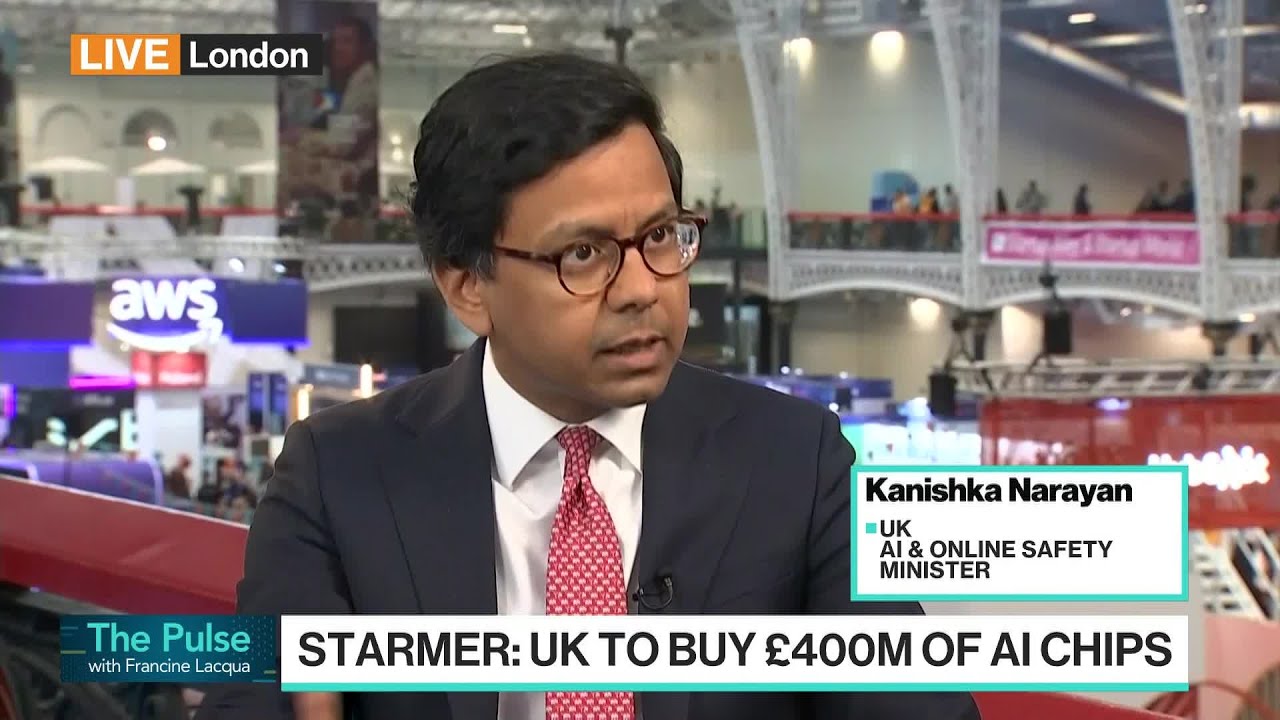
Bloomberg Television shifts the same story to sovereign procurement. The linked UK AI Hardware Plan confirms a GBP 1.1 billion program for British AI hardware capacity, including GBP 400 million for next-generation chips and GBP 150 million specifically for inference chips, which makes compute access look like national industrial strategy instead of just vendor capex (video, GOV.UK).
Discussion insight: The infrastructure story now spans lobbying, sovereign procurement, and alternative-memory chip design. The same day, Bloomberg Live's Broadcom CEO interview kept semiconductor demand and AI scaling in the executive-and-revenue frame.
Comparison to prior day: Compared with 2026-06-08, the compute story got more political and more supply-chain specific. Yesterday emphasized sovereign capacity and hardware alternatives; today the strongest item recast the whole category as a struggle over who gets the chips and on what terms.
1.2 Cost pressure pushed viewers toward open, local, and lighter-weight stacks 🡕
Four videos supported this theme. The builder-side question was less "which frontier model wins?" and more "what can I run, switch to, or assemble without getting crushed by the cost curve?"

AI Search makes the local-image workflow concrete. The description calls Ideogram 4 the best open-source image generator, then walks through bounding boxes, prompt adherence, ComfyUI manager, KJ Nodes, local model install, and benchmark/license discussion, while the linked Hugging Face page confirms that Ideogram 4 files are packaged for ComfyUI workflows (video, Hugging Face).
Better Stack gives the strongest model-side evidence for the same shift. Google's launch post says Gemma 4 12B uses a unified architecture without separate multimodal encoders, adds native audio input, targets 16GB of VRAM or unified memory, and ships under Apache 2.0 with Multi-Token Prediction drafters, making the local multimodal story concrete rather than aspirational (video, Google blog).
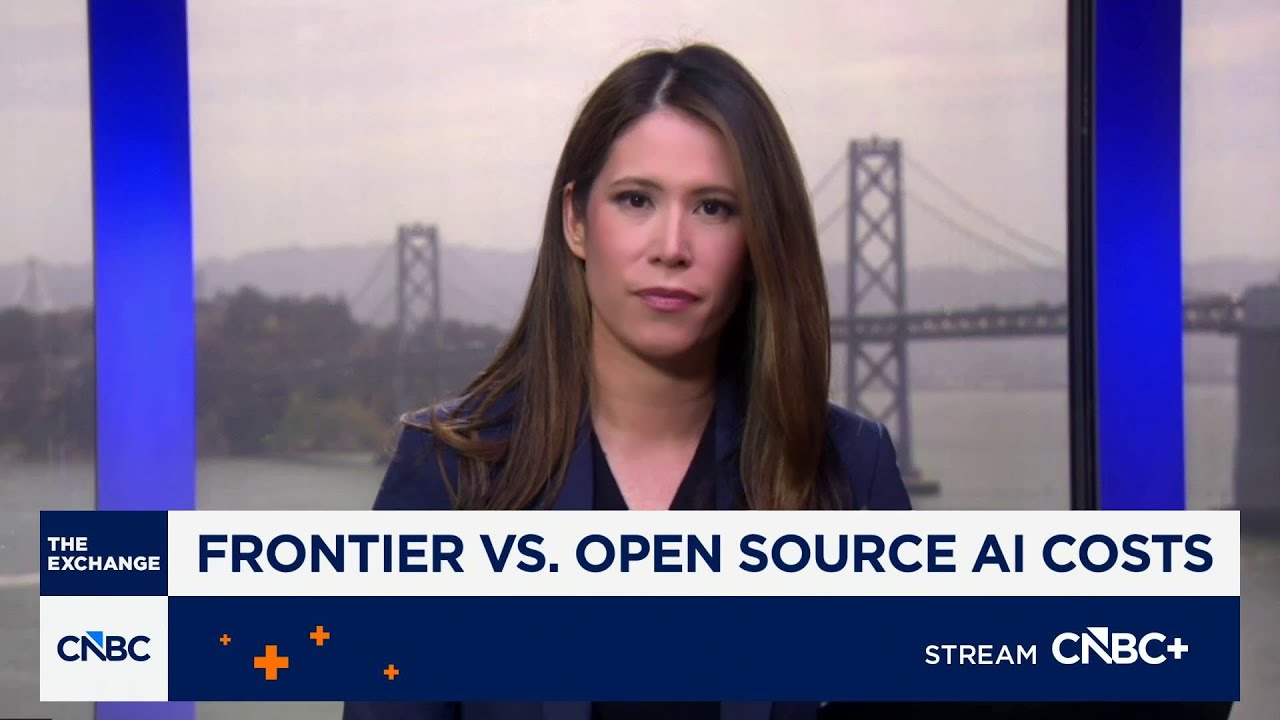
CNBC Television makes the cost point explicit in the title itself. The clip frames Chinese models as taking more share because AI's growing cost problem is forcing routing and usage decisions toward cheaper or better-priced alternatives, not just toward the brands with the most mindshare (video).
Discussion insight: Across image generation, multimodal models, and model routing, the market is rewarding control over hardware footprint and inference spend. The parallel Aiconomist Ideogram 4 tutorial reinforced that open local image workflows are being treated as cost-and-control upgrades, not just hobby setups.
Comparison to prior day: Compared with 2026-06-08's heavier emphasis on chips and capital allocation, 2026-06-09 showed more concrete cost-avoidance behavior at the workflow layer.
1.3 Agentic development moved from demo magic to scaling and recovery mechanics 🡕
Three videos supported this theme. The strongest software signals were about what survives production: scaling behavior, code understanding, and stateful recovery after failure.

IBM Technology states the pain most plainly. Sam Anthony says scaling agentic systems increases cost, latency, and failure risk, so multi-agent coordination and system architecture become first-order concerns once people try to move past toy demos (video).

IBM Technology then narrows the same argument to software work. Katie McDonald says developers spend most of their time understanding code rather than writing it, which makes agentic coding a legacy-modernization and risk-reduction story instead of a pure speed story (video).

Tech With Tim adds the production operations layer. He says almost nobody is shipping AI agents reliably, and Temporal answers with workflows that automatically capture state and resume exactly where they left off after failures, which is a much stronger product shape than "just prompt the agent again" (video, Temporal).
Discussion insight: The conversation is no longer about whether agents are useful. It is about what surrounding workflow, state, and review structure keeps them from collapsing in production.
Comparison to prior day: Compared with 2026-06-08's focus on workbenches and wrappers, 2026-06-09 pushed harder into operational mechanics: scaling behavior, code understanding, and failure recovery.
1.4 Backlash and legitimacy doubts stayed broad across search, safety, and creative work 🡒
Three videos supported this theme. The most durable anti-AI signals were not one argument repeated everywhere, but three adjacent complaints about control: over search, over frontier development, and over creative labor.

Scroll Deep keeps the search complaint alive. The description says Google search is now "all AI" and treats the shift as one of the most significant changes in internet behavior, making the backlash about loss of link-first browsing rather than about AI in the abstract (video).

ABC News carries the frontier-governance version of the same legitimacy crisis. The clip says development should pause before AI can build itself and humans lose control over it, which keeps the "slow down first" position visible in mainstream news distribution (video).

Brad Colbow brings the same legitimacy fight into creative work. He says more and more people have come around to the line of thinking many artists had from the beginning, which makes the video a summary of accumulated creator-side objection rather than a one-off reaction (video).
Discussion insight: These objections are about who decides how AI enters old workflows. Search users resent loss of link-first browsing, news clips question whether labs should slow down, and creators push back on the assumptions behind generative systems.
Comparison to prior day: Compared with 2026-06-08's more Hinton-centered warning cluster, 2026-06-09 spread skepticism across more social surfaces even if no single argument dominated the whole day.
2. What Frustrates People
Compute access shaped by politics, procurement, and vendor concentration
This is High severity because the day's biggest infrastructure items all imply that access to AI capacity is being decided above the builder's head. The Infographics Show frames chip access through lobbying and export-policy leverage, Bloomberg Television and the linked UK hardware plan turn compute into state procurement, and CNBC presents d-Matrix as valuable precisely because the current path is so concentrated around Nvidia and DRAM-heavy assumptions. The workaround is a mix of national chip buying, alternative-hardware bets, and supply-side maneuvering. This is worth building for, though it is capital-intensive.
AI costs that force constant routing and stack changes
This is High severity because cost is now being described as the reason usage is moving. CNBC Television says model routing is changing because of AI's growing cost problem, Better Stack and Google's Gemma 4 12B launch post frame local multimodal inference as practical on 16GB hardware, and AI Search shows creators accepting local setup work to get more control over the image-generation stack. The workaround is to switch among providers, use smaller local models, and favor open or downloadable workflows. This is directly worth building for.
Agent systems that become fragile when they scale
This is High severity because the agent story is now explicit about failure, not just promise. IBM Technology says scaling agentic systems increases cost, latency, and failure risk, Tech With Tim says almost nobody is shipping agents reliably, and Temporal responds with workflows that preserve state and resume after failure. IBM Technology's agentic coding explainer adds that developers still spend most of their time understanding code, so generation alone does not remove the real bottleneck. The workaround is to add orchestration, recovery, and code-understanding layers around the agents. This is directly worth building for.
Creator tools that are powerful but still workflow-heavy to evaluate
This is Medium-High severity because creator-side progress is real, but dependable evaluation still takes too much manual work. AI Search turns Ideogram 4 into a long local setup walkthrough, AI Master treats Seedance 3.0 as a leak-and-credibility audit rather than a clean launch, and Aiconomist makes the same open-image-model trend look powerful but technically involved. The workaround is creator-led benchmarking, reusable ComfyUI pipelines, and lots of tutorial watching. This is worth building for, especially if the product reduces evaluation overhead rather than merely adding another model.
AI pushed into existing workflows without enough consent or trust
This is High severity because the objection is not one narrow safety concern. Scroll Deep objects to AI taking over search, ABC News broadcasts a pause argument before humans lose control, and Brad Colbow represents the creator side of the same legitimacy dispute. The workaround today is opting out where possible, slowing adoption, or criticizing the systems in public rather than finding a trusted middle path. This is directly worth building for.
3. What People Wish Existed
Portable, cost-aware model routing across providers
CNBC Television, Better Stack, and AI Search all imply the same need: a cleaner way to move between model providers, local stacks, and hardware tiers as costs change. The urgency is high because routing decisions are already being discussed as a response to AI's cost problem. Pieces of the solution exist in local models and open workflows, but the experience is still fragmented across separate tools and manual setup. Opportunity: direct.
Durable, project-aware agent workflows for real software work
IBM Technology, IBM Technology's agentic coding explainer, and Temporal point to the same missing layer: systems that keep state, survive failures, and understand real repositories instead of treating coding as a sequence of disconnected prompts. The need is practical and immediate because the complaint is not about imagination - it is about scaling, reliability, and code comprehension. Existing workflow engines and coding agents address pieces of it, but not as a default end-to-end product. Opportunity: direct.
Local-first creator suites with strong control and much less setup friction
AI Search, Aiconomist, and the linked Ideogram 4 ComfyUI package all point to the same practical need: creators want open local image generation with layout control, but they do not want to hand-assemble every node, manager, and model file. The need is concrete because creators are already doing the setup work to get the control they want. Partial answers exist in downloadable workflows and community tutorials, but the gap is still obvious. Opportunity: direct.
Easier access to alternative compute and sovereign AI capacity
Bloomberg Television, the linked UK hardware plan, and CNBC's d-Matrix segment all point to the same need: more paths to useful AI compute than one dominant GPU stack plus whoever can afford it first. The urgency is high, but the market is capital-heavy and deeply competitive. Governments and startups are moving, yet the category still lacks easy, trusted access for most builders. Opportunity: competitive.
Trust-preserving AI surfaces that keep human control visible
Scroll Deep, ABC News, and Brad Colbow all point to the same need: ways to use AI without feeling that it has silently replaced search, outrun governance, or overridden creator consent. This is partly a practical need and partly an emotional one because the objection is about both workflow control and legitimacy. Alternatives and opt-outs exist in scattered form, but there is no widely trusted operating model. Opportunity: competitive.
4. Tools and Methods in Use
| Tool | Category | Sentiment | Strengths | Limitations |
|---|---|---|---|---|
| Google AI-first search | Search surface | (-) | Huge default reach, conversational answers, low-friction discovery | Repeatedly criticized for taking over link-first browsing and reducing visible user control |
| AI model routing | Inference orchestration method | (+/-) | Lets teams steer traffic toward lower-cost or better-fit models as economics change | Adds provider fragmentation and makes quality, latency, and governance tradeoffs harder to compare |
| Gemma 4 12B | Local multimodal model | (+) | Native audio, no separate encoders, 16GB laptop target, Apache 2.0, lower-latency MTP drafters | Still requires local setup, hardware-aware evaluation, and workflow tuning |
| Ideogram 4 + ComfyUI workflow | Local image generation stack | (+/-) | Strong text rendering, layout control, open local packaging, downloadable community workflows | Setup still depends on managers, nodes, model files, and technical tuning |
| Temporal Workflows | Agent reliability platform | (+) | Automatically captures state and resumes after failure, making long-running agent workflows more durable | Adds orchestration overhead and architectural complexity |
| Agentic coding | Development method | (+/-) | Helps with code understanding, modernization, and higher-level software tasks | Review, DevSecOps, and repository context still remain first-order challenges |
| D-Matrix Corsair | AI inference chip platform | (+/-) | Ultra-low-latency batched inference story, SRAM-centered efficiency, challenger positioning versus standard GPU assumptions | Challenger ecosystem is still early, and many claims are hard for ordinary builders to validate independently |
| Seedance 2.0 / 3.0 | AI video model / access layer | (+/-) | Strong creator interest, leaderboard framing, and a clear cost/performance narrative | Leak-driven claims and sponsor-heavy evaluation keep credibility unsettled |
| OpenCode | Open source coding agent | (+) | Free models included or can connect to outside providers, matching demand for lower-cost coding tooling | Still one component in a fragmented coding-agent stack rather than a full operating model |
Overall sentiment is strongest for tools that cut spend or restore control: local multimodal models, routing flexibility, durable execution, and open coding agents. Mixed sentiment clusters around creator video tools, challenger chips, and local visual pipelines because the upside is obvious but evaluation and setup remain heavy.
The clearest workarounds are moving from default closed tools toward open or local stacks, routing across providers when economics shift, and wrapping agents in workflow engines instead of trusting stateless chat loops. Competitive pressure is visible at several layers at once: search defaults versus AI-optional surfaces, premium cloud models versus local/open alternatives, and Nvidia-shaped inference assumptions versus challenger hardware stories.
5. What People Are Building
| Project | Who built it | What it does | Problem it solves | Stack | Stage | Links |
|---|---|---|---|---|---|---|
| Gemma 4 12B | Laptop-ready multimodal model with native audio and a unified architecture | Lets developers run stronger multimodal and agentic workloads locally instead of assuming cloud-only inference | Open weights, Apache 2.0, MTP drafters, 16GB target | Shipped | blog, video | |
| Temporal Workflows | Temporal | Durable execution platform for long-running AI and distributed workflows | Prevents state loss and manual recovery when agents or APIs fail mid-run | Workflow engine, persisted state, retries, recovery | Shipped | site, Replay, video |
| D-Matrix Corsair | d-Matrix | SRAM-centered inference chip platform for ultra-low-latency batched inference | Offers an alternative to standard GPU and DRAM-heavy inference paths | Efficient memory-compute integration, batched inference, low-latency design | Shipped | site, video |
| UK AI Hardware Plan | UK government | Planned national supercomputer and chip-buying program to expand sovereign AI capacity | Addresses compute scarcity and dependence on external hardware supply | Heterogeneous supercomputer, chip procurement, innovation funding | RFC | plan, video |
| Ideogram 4 local workflow | AI Search | Tutorialized local image-generation workflow with layout control and downloadable setup | Gives creators a high-control local alternative to closed image tools | ComfyUI, KJ Nodes, Ideogram 4, workflow file | Beta | model, repo, video |
| OpenCode | OpenCode | Open source AI coding agent with free or bring-your-own model options | Reduces dependence on expensive default coding assistants | Open source agent, multi-provider connections, free model access | Shipped | site, video |
Two build patterns dominate the day. One is reliability and control around agents: Gemma 4 12B, Temporal, and OpenCode all reduce dependence on a single cloud-default coding loop, but each does it at a different layer of the stack.
The other is creator-side local control. AI Search's Ideogram 4 workflow shows that people will accept more setup work in exchange for sharper layout control, local execution, and reusable pipelines.
D-Matrix Corsair and the UK hardware plan show the upstream version of the same instinct. Builders and institutions alike are trying to create more paths to useful compute instead of accepting one hardware bottleneck as permanent.
6. New and Notable
Compute geopolitics became front-page creator content
The Infographics Show is notable because the top-reach infrastructure item was not a product launch or earnings call. It was a narrative about export controls, lobbying, and the political terms on which top-tier AI chips move across borders.
Model-routing economics broke into mainstream business coverage
CNBC Television is notable because it compresses a real operator concern into one sentence: usage is shifting because AI has a growing cost problem. That is a much more mature signal than generic "model wars" commentary.
Ideogram 4 made local open image workflows feel more production-ready
AI Search, Aiconomist, and the linked ComfyUI package are notable because they treat local image generation as a practical, repeatable workflow with explicit setup steps and layout-control advantages, not as a curiosity.
Shipping agents reliably stayed a first-class topic
Tech With Tim, Temporal, and IBM Technology are notable because they keep AI infrastructure discussion centered on reliability, failure recovery, and architecture choices instead of on another benchmark spike.
AI video discussion kept moving from demos to credibility audits
AI Master is notable because it spends its energy testing which Seedance 3.0 claims actually hold up rather than celebrating the rumor cycle. That is a stronger sign of a maturing creator-tool market than another flashy sample reel.
7. Where the Opportunities Are
[+++] Durable, cost-aware agent operations for real codebases - IBM Technology, IBM Technology's agentic coding explainer, Tech With Tim, Temporal, and OpenCode all point to the same gap: people want agents that understand repositories, survive failures, and do not require premium-default tooling. This is strong because the pain is explicit and the current workaround is a stack of separate recovery, routing, and review tools.
[+++] Local and open creative-production control layers - AI Search, Aiconomist, the linked Ideogram 4 package, and AI Master all show the same demand: creators want more control over layout, model choice, and production cost than closed black-box tools usually provide. This is strong because users are already tolerating setup pain to get that control.
[++] Portable multi-provider model routing - CNBC Television, Better Stack, and OpenCode point to the same opportunity: better control surfaces for choosing among local, open, and cloud models as pricing and quality shift. This is moderate because the need is clear, but the space is already filling with wrappers, gateways, and routing layers.
[++] Alternative-chip evaluation, procurement, and deployment tooling - CNBC, Bloomberg Television, the linked UK hardware plan, and The Infographics Show all show that compute access is becoming a procurement and competitive-intelligence problem, not just a hardware problem. This is moderate because the demand is real but the market is capital-heavy and institutionally crowded.
[+] Trust-preserving, AI-optional user experiences - Scroll Deep, ABC News, and Brad Colbow show that many users still want control over when AI appears and how much authority it gets. This is emerging because the need is obvious, but product shape, buyer, and liability boundaries are much less settled than in the developer and creator categories above.
8. Takeaways
- The biggest infrastructure signal was about who controls compute, not just who builds the fastest model. The top item framed chip access through lobbying and export policy, while the UK hardware plan and d-Matrix coverage showed procurement and alternative hardware becoming first-order topics. (source)
- Cost pressure is now visibly changing model-choice behavior. CNBC's routing segment, Gemma 4 12B's laptop-ready positioning, and the rise of local Ideogram workflows all point to builders and creators optimizing for affordable control rather than defaulting to the heaviest stack. (source)
- Agentic development content is converging on scaling, code understanding, and recovery mechanics. IBM frames the problem as cost, latency, failure risk, and repository understanding, while Temporal's value proposition is stateful recovery instead of another prompt loop. (source)
- Creator AI is increasingly a workflow-and-benchmark market, not a novelty market. The strongest creator items were about local setup, control surfaces, leaderboard standing, and leak verification rather than just showing outputs. (source)
- Legitimacy objections remain broad across search, frontier governance, and art. Search backlash, pause rhetoric, and creator skepticism all point to the same unresolved issue: users still want clearer control over when AI enters established workflows. (source)