YouTube AI - 2026-06-10
1. What People Are Talking About
1.1 Search backlash still led the feed and stayed source-control specific 🡒
Two videos supported this theme, and they were still the biggest audience magnets in the dataset. The complaint stayed tightly focused on search defaults: users do not just dislike AI in theory, they dislike losing the old link-first workflow and the ability to opt out cleanly.

SAMTIME turns the backlash into parody, but the linked evidence is concrete. TechCrunch reports that DuckDuckGo's U.S. app installs averaged 18.1% week-over-week growth after Google's search overhaul and peaked at 30.5%, while visits to DuckDuckGo's AI-free search page averaged 22.7% growth and peaked at 27.7%, so the joke is anchored in measurable switching behavior rather than vague mood alone (video, TechCrunch, DuckDuckGo no-AI).

Scroll Deep makes the same complaint in less statistical and more cultural terms. The description says Google search is now "all AI" and frames the shift as one of the biggest changes in internet behavior, which keeps the grievance centered on loss of control over the browsing experience rather than on a single bad answer (video).
Discussion insight: Both items are really about who controls defaults. The strongest alternative signal is not "better AI" but a visible AI-off mode.
Comparison to prior day: Compared with 2026-06-09, the complaint did not broaden much, but it stayed at the very top of the feed and remained the clearest consumer-revolt story.
1.2 Local-first control spread across creative and coding workflows 🡕
Three videos supported this theme. Builders and creators increasingly treated local execution as a practical answer to cost pressure and workflow fatigue, even when that meant accepting more manual setup.

AI Search makes the creator side of the shift concrete. The video walks through text rendering, prompt adherence, bounding boxes, ComfyUI Manager, KJ Nodes, and local model installation, while the linked Hugging Face page confirms Ideogram 4 is packaged for ComfyUI and the ComfyUI docs show that Manager still has to be enabled or installed depending on setup path (video, Hugging Face, ComfyUI docs).
Better Stack gives the model-side version of the same instinct. Google's launch post says Gemma 4 12B routes vision and audio directly into the LLM backbone, runs locally with 16GB of VRAM or unified memory, ships under Apache 2.0, and includes Multi-Token Prediction drafters to reduce latency, making laptop-class multimodal work look practical rather than aspirational (video, Google blog).

Tech With Tim extends the same pattern into coding. The walkthrough pairs LM Studio and VS Code as a no-cloud, no-API-key, no-cost-per-token workflow, which turns local AI coding from a niche hardware experiment into a concrete developer operating model (video, LM Studio).
Discussion insight: Local control is showing up as a cross-category answer to recurring cost, default lock-in, and workflow fragility, not just as an open-source identity marker.
Comparison to prior day: Compared with 2026-06-09's heavier focus on local creator tooling, 2026-06-10 extended the same control-seeking behavior into coding workflows and laptop-ready multimodal models.
1.3 Agents were pitched as organizations, not chatbots 🡕
Three videos supported this theme. The agent conversation kept moving away from one-assistant-one-thread framing and toward systems that decompose work, coordinate specialists, and spend extra compute on hard tasks.

AI BROS shows the most artifact-oriented example. The demo uses Kimi Agent Swarm on a creator-research task that produces spreadsheets, charts, reports, and category outputs, while Kimi's official blog describes Agent Swarm as a self-organizing structure for large research and writing jobs rather than a smarter chat interface (video, Kimi blog).

IBM Technology makes the repository-work version of the same idea explicit. IBM's agentic coding page says coding agents can reason across whole repositories, generate structured tasks, and coordinate specialized subagents, so the value proposition is now orchestration and execution across the stack instead of autocomplete alone (video, IBM).
IBM Technology adds the lower-level execution story. The description explains why models visibly "pause to think" and frames test-time compute and reasoning models as ways to spend more deliberate inference-time effort on harder problems (video).
Discussion insight: The strongest agent content now assumes files, tool calls, subagent coordination, and repository context are the real product surface.
Comparison to prior day: Compared with 2026-06-09's focus on scaling risk and recovery mechanics, 2026-06-10 pushed harder into how the agent organization itself is structured.
1.4 Infrastructure widened from chip supply stories to AI-factory architecture 🡕
Three videos supported this theme, with a fourth adding geopolitical pressure in the background. The compute story now spans challenger chips, sovereign procurement, export controls, and enterprise deployment blueprints.

CNBC gives the clearest challenger-hardware example. The video says d-Matrix's Corsair chip is in volume production with commitments from hyperscalers, neoclouds, and frontier AI labs, while d-Matrix's own site describes the company as building ultra-low-latency batched inference around efficient memory-compute integration instead of the standard DRAM-heavy path (video, d-Matrix).
Bloomberg Television keeps sovereign compute in the frame. The linked UK AI Hardware Plan confirms a GBP 1.1 billion program that includes GBP 400 million for next-generation AI chips and GBP 150 million for inference chips from innovative startups and British firms, making compute access look like industrial policy as much as infrastructure buying (video, GOV.UK).
NVIDIA shifts the same discussion from policy to deployment mechanics. The video and NVIDIA's technical blog say Enterprise Reference Architectures provide validated guidance across compute, networking, storage, software, orchestration, and monitoring for on-prem AI factories, with RTX PRO, HGX, and NVL72 configurations for different scale targets (video, NVIDIA blog).
Discussion insight: Bloomberg Technology's June 9 episode added a China-sales-curbs angle, so the infrastructure story now mixes product design, state policy, and enterprise operations in one cluster.
Comparison to prior day: Compared with 2026-06-09's mix of lobbying, procurement, and challenger chips, 2026-06-10 pushed further into enterprise operating blueprints and cross-border controls.
1.5 Healthcare emerged as the clearest applied-enterprise wedge 🡕
Three videos supported this theme. Healthcare was the one application area repeatedly described as important enough to justify executive attention, platform building, and investment narratives all at once.
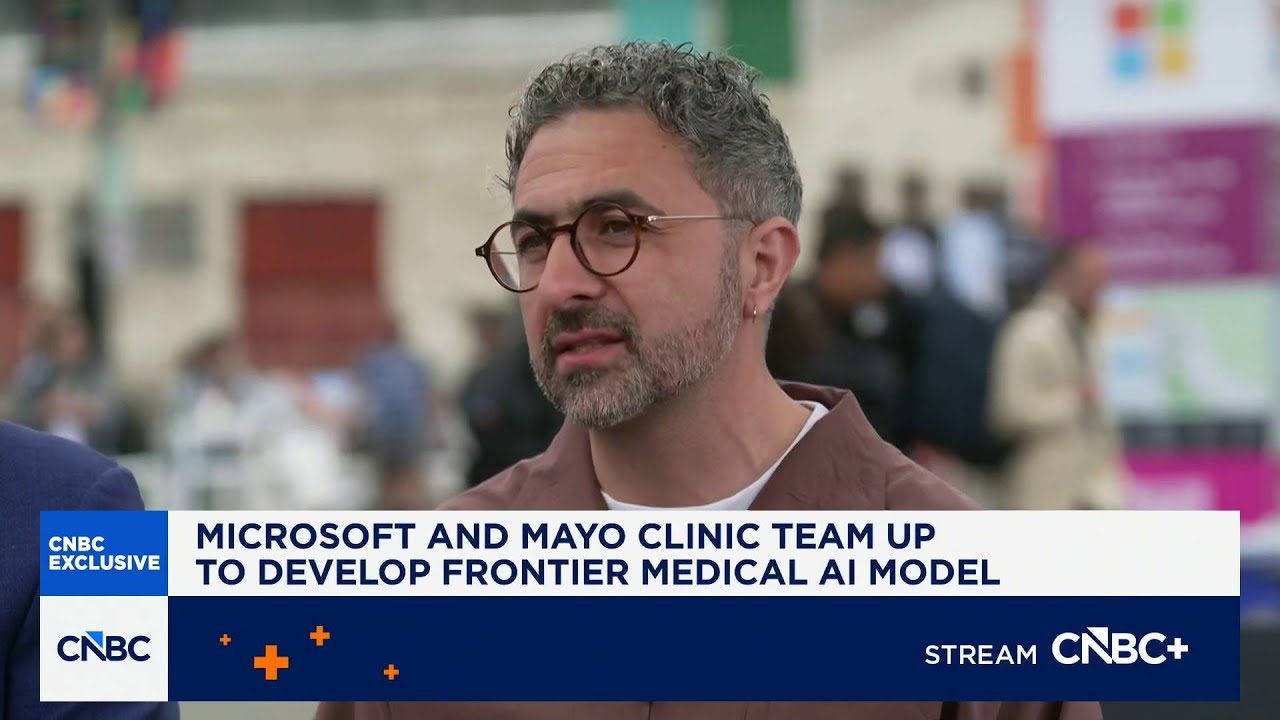
CNBC Television gives the clearest prioritization signal in the title itself: Microsoft's AI chief calls healthcare the most important application of AI, and the segment pairs him with Mayo Clinic's CEO rather than with a generic startup panel (video).
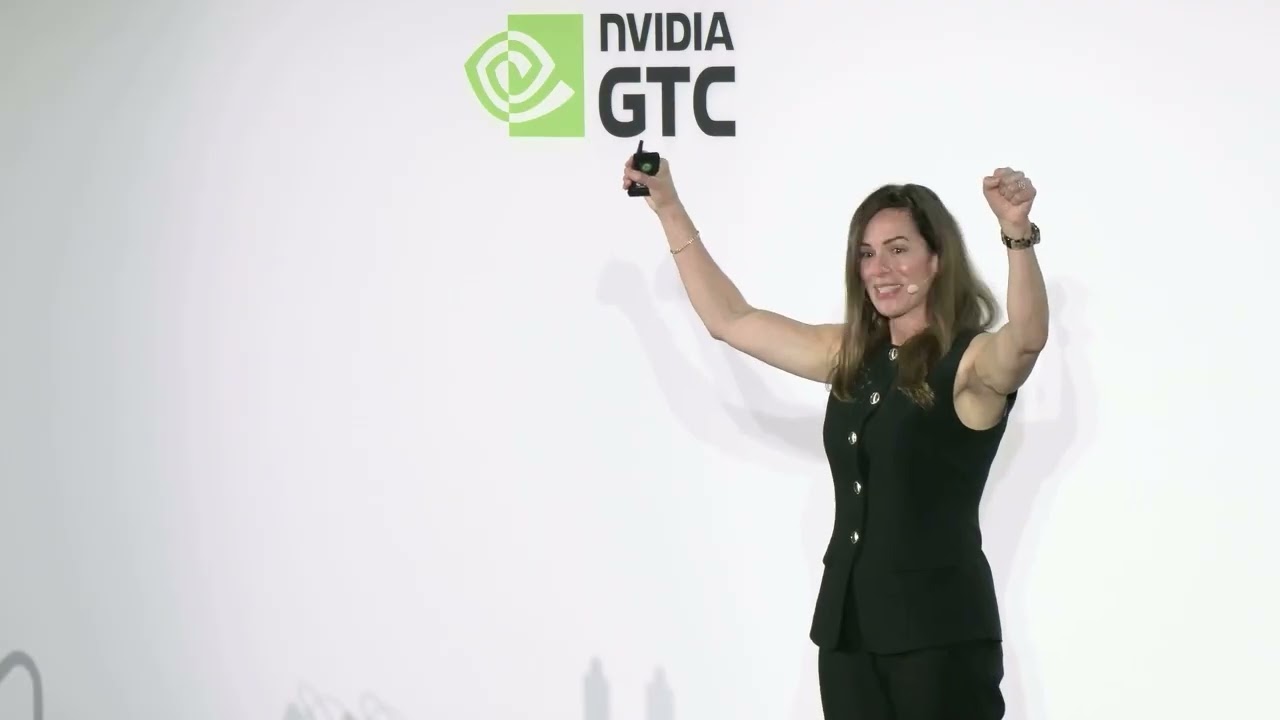
NVIDIA fills in the operational version of that claim. Kimberly Powell says open foundation models, agentic AI, and physical AI are driving new work across care delivery, drug discovery, and laboratory operations, including dry-lab and wet-lab integration plus robotics intended to expand access to care (video).
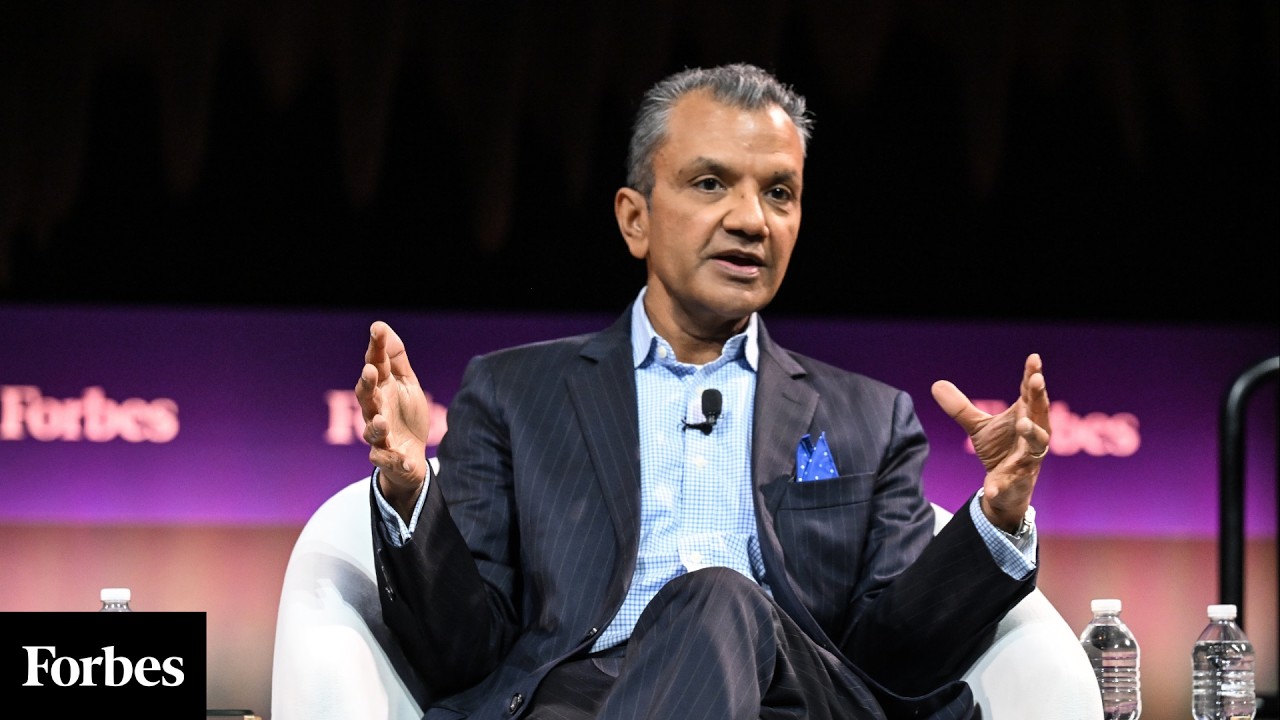
Forbes extends the same theme into capital allocation. Its panel description says investors are making concentrated bets on startups with deep domain expertise and clear AI leverage across healthcare, biotech, and life sciences (video).
Discussion insight: Unlike search backlash or creator debate, the healthcare cluster is framed less as a culture-war argument and more as the place where serious enterprise deployment and investment should happen next.
Comparison to prior day: Compared with 2026-06-09's stronger emphasis on infrastructure cost and agent mechanics, 2026-06-10 elevated healthcare as the clearest destination for those capabilities.
2. What Frustrates People
Search defaults that hide sources and remove opt-out control
This is High severity because the two biggest videos in the feed are still complaints about AI-first search, and the linked reporting shows real switching behavior instead of abstract grumbling. SAMTIME pairs the complaint with TechCrunch's DuckDuckGo growth data, while Scroll Deep argues that Google search has effectively become "all AI." The workaround today is moving to alternatives like DuckDuckGo's AI-free mode rather than fixing the default. This is directly worth building for.
Local control that still demands too much manual setup
This is Medium-High severity because creators and developers clearly want local stacks, but they still have to assemble them by hand. AI Search walks through ComfyUI Manager, KJ Nodes, and model installation for Ideogram 4, Tech With Tim turns local coding into an LM Studio plus VS Code setup exercise, and Better Stack makes Gemma 4 12B look practical on 16GB hardware without removing the need for workflow integration. The workaround is still tutorials, model-picking, and stack assembly. This is directly worth building for.
Agent systems that hit structural limits once the task gets big
This is High severity because the feed keeps spelling out the same bottleneck in different language. Kimi's Agent Swarm post says single-agent sequential execution hits a structural ceiling on long-horizon work, IBM's agentic coding explainer says useful coding agents need repository-wide reasoning and subagents, and IBM's test-time compute video shows that harder tasks increasingly demand extra deliberate inference-time work. The workaround is to add orchestration, structured tasking, and more compute at execution time. This is directly worth building for.
Compute access shaped by policy, supply bottlenecks, and enterprise integration risk
This is High severity because infrastructure access is being constrained from several directions at once. CNBC's d-Matrix segment frames SRAM-centered inference as a response to DRAM-heavy bottlenecks, Bloomberg Television and the linked UK AI Hardware Plan turn compute into procurement strategy, and NVIDIA's AI Factory Insider exists precisely because enterprises still need validated deployment blueprints. Bloomberg Technology adds export-control pressure through Taiwan chip-curb coverage. The workaround is a mix of alternative hardware, national buying, and reference architectures. This is worth building for, though it is capital-intensive.
Creative AI that still lacks legitimacy for many artists
This is Medium-High severity because better tooling has not removed creator distrust. Brad Colbow says more people have come around to the artist-side critique of generative AI, while AI Search's Ideogram 4 workflow shows creators reaching for local, open, and more controllable tools rather than embracing generic black-box generation. The workaround is to use local workflows, narrower tools, or public criticism instead of relying on a trusted middle path. This is worth building for, but the buyer and product boundaries are less settled than in search or developer tooling.
3. What People Wish Existed
AI-optional search that keeps direct links prominent
SAMTIME, Scroll Deep, TechCrunch's DuckDuckGo growth report, and DuckDuckGo's no-AI page all point to the same practical need: search that helps when wanted but still makes plain links, source visibility, and opt-out control feel primary. The urgency is high because switching behavior is already measurable. Partial alternatives exist, but users are still leaving the default rather than fixing it. Opportunity: direct.
Local-first creative and coding suites with much less setup friction
AI Search, Tech With Tim, and Better Stack all point to the same practical need: people want local image generation, local multimodal models, and local coding agents without having to hand-assemble every manager, model file, VRAM decision, and editor integration. The need is immediate because users are already doing the setup work in exchange for control and lower recurring cost. Good pieces exist in Gemma 4 12B, LM Studio, ComfyUI, and community workflows, but the experience is still fragmented. Opportunity: direct.
Artifact-first agents that can scale beyond one context window
AI BROS, the official Kimi Agent Swarm post, IBM's agentic coding explainer, and IBM's test-time compute explainer all point to the same missing layer: systems that can split work into specialists, preserve outputs as files, and keep reasoning quality high over long tasks instead of collapsing into a single-threaded chat history. The need is practical and urgent because the current workaround is to bolt together orchestration, subagents, and extra inference-time compute by hand. Partial solutions exist, but the stack is still immature. Opportunity: direct.
Easier access to deployable compute outside one default chip path
CNBC's d-Matrix segment, Bloomberg Television, NVIDIA's Enterprise Reference Architecture content, and Bloomberg Technology's Taiwan chip-curbs coverage all point to the same need: more reliable access to AI capacity than one dominant GPU path plus whoever can procure it first. The urgency is high, but the market is infrastructure-heavy and competitive. Governments, challengers, and enterprise vendors are moving, yet most builders still depend on somebody else's chip and deployment choices. Opportunity: competitive.
Trusted healthcare AI operating layers for real care and lab workflows
CNBC Television, NVIDIA's healthcare special address, and Forbes all imply the same practical need: systems that make AI usable across care delivery, drug discovery, laboratory operations, and life-sciences investment without reducing the category to a generic chatbot. The need is high-stakes and practical because the conversation is already about clinical institutions, operational workflows, and concentrated startup bets. Partial solutions exist in platform narratives and startup funding, but a trusted end-to-end operating layer is still missing. Opportunity: competitive.
4. Tools and Methods in Use
| Tool | Category | Sentiment | Strengths | Limitations |
|---|---|---|---|---|
| Google AI-first search / AI Overviews | Search surface | (-) | Huge default reach, conversational answers, low-friction follow-up flow | Repeatedly criticized for hiding links, reducing visible user control, and forcing unwanted AI mediation |
| DuckDuckGo no-AI search | Search alternative | (+) | Clear AI-optional mode, source-visible workflow, privacy-forward positioning | Still requires users to switch defaults and habits |
| Kimi Agent Swarm | Multi-agent orchestration | (+/-) | Parallel research, file outputs, multiple specialist perspectives, long-task decomposition | Preview-stage positioning and capability claims still rely heavily on vendor framing and demos |
| Test-time compute | Reasoning method | (+/-) | Gives models more deliberate inference-time work on hard problems | Costs more compute, adds latency, and does not remove the structural limits of single-agent execution |
| Agentic coding | Development method | (+/-) | Repository-aware tasking, structured execution, specialized subagents | Still depends on strong review, repository understanding, and execution environment quality |
| LM Studio + VS Code | Local coding stack | (+) | No cloud, no API keys, no per-token cost, direct editor workflow | Hardware sizing, model choice, and local setup remain manual |
| Gemma 4 12B | Local multimodal model | (+) | 16GB laptop target, native audio, unified architecture, Apache 2.0, lower-latency drafters | Still needs workflow integration and practical evaluation in real tasks |
| Ideogram 4 + ComfyUI | Local image generation stack | (+/-) | Strong text rendering, layout control, open local packaging, downloadable workflow path | Manager, nodes, model files, and safety-filter workarounds add setup friction |
| d-Matrix Corsair | AI inference chip platform | (+/-) | Ultra-low-latency batched inference story, efficient memory-compute integration, alternative to DRAM-heavy assumptions | Ecosystem maturity is still early and performance claims are hard for ordinary builders to validate independently |
| NVIDIA Enterprise Reference Architectures | Deployment blueprint | (+) | Validated guidance across compute, networking, storage, orchestration, and monitoring for on-prem AI factories | Enterprise-heavy, integration-intensive, and aimed at larger operators rather than ordinary builders |
Overall sentiment is strongest for tools that restore visible control over defaults, costs, or deployment choices: AI-off search, local runtimes, laptop-scale models, and structured multi-agent systems. Sentiment turns mixed when the price of that control is more setup work, more orchestration complexity, or harder-to-verify vendor claims.
The clearest workarounds are moving from default AI surfaces toward opt-out alternatives, from cloud-only assumptions toward local stacks, from single-agent execution toward structured orchestration, and from generic infrastructure buying toward validated deployment blueprints. Competitive pressure is visible at every layer: default search versus AI-optional search, one-agent chat versus swarm orchestration, cloud spend versus local inference, and GPU incumbency versus alternative chips plus sovereign procurement.
5. What People Are Building
| Project | Who built it | What it does | Problem it solves | Stack | Stage | Links |
|---|---|---|---|---|---|---|
| Kimi Agent Swarm | Moonshot AI / Kimi | Self-organizing multi-agent system for research, writing, and analysis | Breaks the single-agent sequential ceiling on long-horizon tasks and artifact-heavy workflows | Kimi K2.5, parallel subagents, tool calls, synthesis | Beta | blog, video |
| Gemma 4 12B | Laptop-ready multimodal model with native audio and a unified input path | Makes local multimodal and agentic workloads practical on 16GB hardware instead of assuming cloud-only inference | Unified architecture, native audio, Apache 2.0, MTP drafters | Shipped | blog, video | |
| d-Matrix Corsair | d-Matrix | SRAM-centered chip platform for ultra-low-latency batched inference | Offers an alternative to DRAM-heavy GPU inference paths | Efficient memory-compute integration, batched inference, low-latency design | Shipped | site, video |
| NVIDIA Enterprise Reference Architectures | NVIDIA | Validated AI-factory blueprints for on-prem enterprise deployments | Reduces integration risk and time-to-deployment for production AI systems | Certified systems, compute/network/storage guidance, RTX PRO/HGX/NVL72 configs | Shipped | blog, whitepaper, video |
| Ideogram 4 local workflow | Comfy-Org | Repackaged model files and workflow path for local image generation in ComfyUI | Gives creators local control over text rendering, layout, and model choice | Ideogram 4, ComfyUI, KJ Nodes, Manager | Shipped | model, nodes, video |
| UK AI Hardware Plan | UK government | National supercomputer and chip-procurement program to expand sovereign AI capacity | Addresses compute scarcity and dependence on outside chip supply | Heterogeneous supercomputer, next-generation chip procurement, startup demand support | RFC | plan, video |
Two build patterns dominate the day. One is control through software structure: Kimi Agent Swarm, Gemma 4 12B, and the Ideogram 4 local workflow all reduce dependence on one closed default by pushing work into parallel agents or local runtimes.
The other is infrastructure sovereignty and deployment discipline. d-Matrix Corsair, NVIDIA Enterprise Reference Architectures, and the UK AI Hardware Plan all show the market looking for more reliable paths to inference capacity and production deployment instead of assuming that a single incumbent hardware stack will be enough.
Tech With Tim's local coding workflow fits the same pattern from the user side. People are already assembling the software half of this future out of local models, editors, and orchestration layers even before the market has packaged it cleanly.
6. New and Notable
Search backlash still outranked most product-launch hype
SAMTIME and Scroll Deep were still the highest-reach items in the feed, and TechCrunch's DuckDuckGo data showed that the switching story had measurable user behavior behind it.
Kimi pushed multi-agent AI from "assistant" language into organizational language
AI BROS is notable because the demo is about files, charts, and reports, while Kimi's own Agent Swarm post talks about bosses, employees, and division of labor. That is a stronger signal of category change than another general-purpose chatbot launch.
AI-factory architecture became first-class content
NVIDIA's AI Factory Insider is notable because the infrastructure conversation was not limited to chip specs or funding headlines. It centered on validated deployment blueprints, observability, and system integration, which are much more operational signals than benchmark chatter.
Healthcare was framed as AI's most important serious application
CNBC Television, NVIDIA, and Forbes are notable because they converge on the same claim from different angles: executive priority, platform design, and investor concentration all now point at healthcare and life sciences.
Creator AI stayed split between open local control and legitimacy doubts
AI Search treats local open image tooling as a practical upgrade, while Brad Colbow shows that creator-side skepticism toward generative AI still draws strong reach and engagement. That split matters because it suggests "better tools" alone will not resolve the category's trust problem.
7. Where the Opportunities Are
[+++] AI-optional search and source-preserving discovery - SAMTIME, Scroll Deep, TechCrunch's DuckDuckGo report, and DuckDuckGo no-AI all point to the same gap: users want search help without losing direct links, clear defaults, and control over when AI appears. This is strong because the pain is both high-reach and measurable.
[+++] Artifact-first, project-aware agent systems - Kimi Agent Swarm, IBM's agentic coding work, IBM's test-time compute explainer, and Tech With Tim's local workflow all show the same need: people want agents that can split work, preserve outputs, understand repositories, and stay affordable to run. This is strong because the current workaround is a fragmented stack of orchestration, local runtimes, and manual review.
[++] Local control layers for creators and developers - AI Search, Better Stack, and Tech With Tim show demand for local image, multimodal, and coding workflows that trade setup pain for cost control and determinism. This is moderate because the need is obvious, but good-enough building blocks already exist and competition will be heavy.
[++] Enterprise AI-factory deployment and alternative inference infrastructure - CNBC's d-Matrix segment, Bloomberg Television, NVIDIA's Enterprise Reference Architecture work, and Bloomberg Technology's chip-curbs coverage all indicate a market for tools that help buyers evaluate, procure, and deploy AI capacity outside one default chip path. This is moderate because the demand is real, but the market is expensive and institutionally crowded.
[+] Trusted healthcare AI operating layers - CNBC Television, NVIDIA, and Forbes show strong interest in healthcare AI as a practical application area. This is emerging because the opportunity is clearly valuable, but workflow fit, trust, and regulatory boundaries are still much less settled than the demand signal.
[+] Trust-preserving creative AI surfaces - Brad Colbow and AI Search's local Ideogram workflow show the same unresolved tension: creators want more control over how generation happens and whether it is socially acceptable to use at all. This is emerging because the need is real, but product shape and buyer identity remain less clear than in search, coding, or enterprise infrastructure.
8. Takeaways
- Search backlash remained the biggest audience magnet, and it was backed by measurable switching behavior. DuckDuckGo's post-Google-overhaul install and no-AI traffic growth kept the anti-default-search narrative grounded in user movement rather than creator rhetoric alone. (source)
- Local execution is becoming a practical answer across images, multimodal models, and coding. Ideogram 4 workflows, Gemma 4 12B's 16GB target, and LM Studio plus VS Code all point to the same demand for lower-cost, higher-control AI stacks. (source)
- The agent story shifted toward orchestration, artifact output, and subagent structure. Kimi Agent Swarm, IBM's agentic coding framing, and test-time compute content all suggest that the market has moved past "just chat with a smarter model." (source)
- AI infrastructure is now a product, policy, and operating-model discussion at the same time. Challenger inference chips, sovereign procurement, export-curb coverage, and AI-factory blueprints all appeared in the same feed. (source)
- Healthcare emerged as the clearest applied-enterprise destination for AI in this dataset. Microsoft, Mayo Clinic, NVIDIA, and Forbes all framed the category as a serious deployment and investment target rather than as a speculative consumer demo. (source)