YouTube AI - 2026-06-11
1. What People Are Talking About
1.1 Search backlash became the clearest anti-AI consumer story in the feed 🡕
Two videos supported this theme, and they dominated the day by a wide margin. The complaint is no longer just that AI search feels annoying - it is that AI-first defaults reduce source visibility, weaken transparency, and make the open web feel less healthy.

House of El - AI makes the strongest product-and-web-health version of the complaint. The video says AI Mode is Google's biggest search upgrade in 25 years, but its own chapter structure centers accuracy, transparency, and "the health of Internet," which turns the argument into a critique of how AI-first search changes information retrieval rather than a narrow gripe about one feature (video).

SAMTIME packages the same backlash as comedy, but the linked evidence is concrete. TechCrunch reports that DuckDuckGo's U.S. app installs averaged 18.1% week-over-week growth after Google's search overhaul and peaked at 30.5%, while visits to noai.duckduckgo.com averaged 22.7% growth and peaked at 27.7%; DuckDuckGo's own help page says that no-AI mode turns off AI features and filters AI-generated images by default (video, TechCrunch, DuckDuckGo help).
Discussion insight: The strongest alternative demand is not "better AI search." It is explicit AI-off control plus visible links and source-first browsing.
Comparison to prior day: Compared with 2026-06-10's source-control-specific backlash, 2026-06-11 made the same complaint larger and more explicitly about transparency and the health of the web.
1.2 Open-weight and local agentic workflows moved closer to the builder default 🡕
Four videos supported this theme. The builder conversation was less about one frontier lab winning and more about open models, local execution, and whether agentic systems can stay useful without cloud dependency or runaway cost.
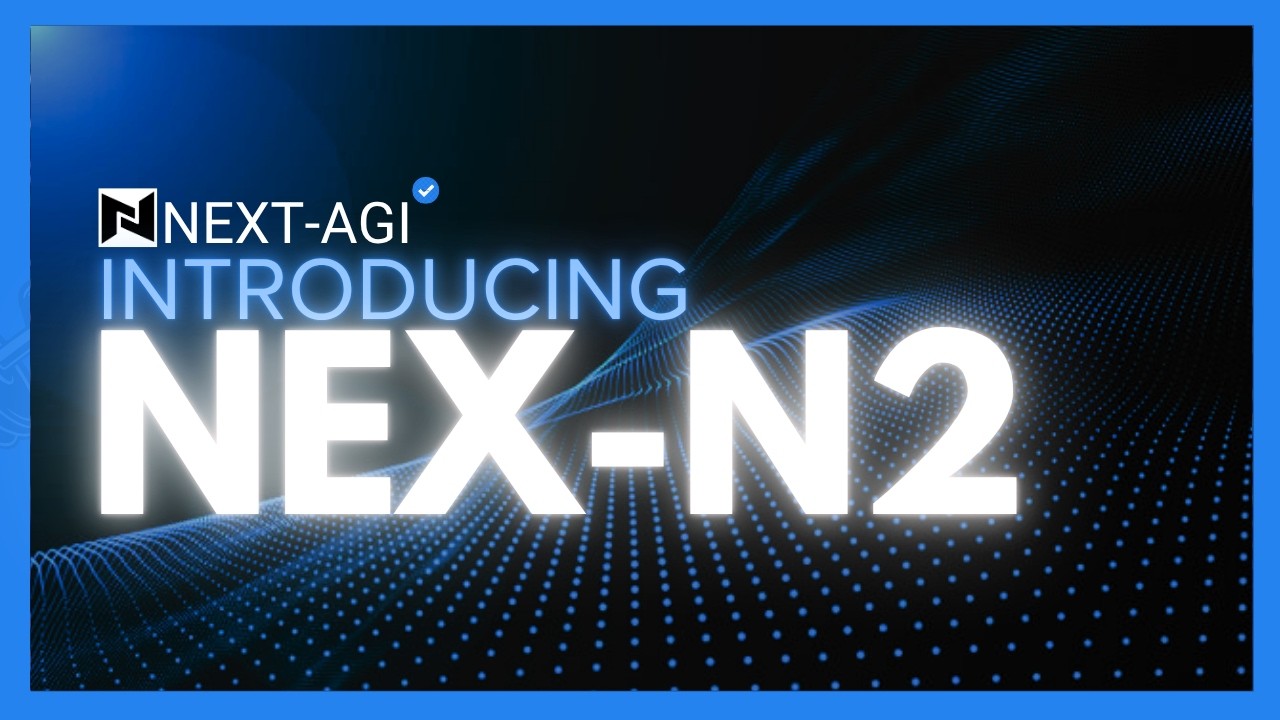
WorldofAI gives the day's clearest open-model example. The video frames Nex-N2-Pro as a serious agentic model for coding, search, tool use, and long-horizon tasks, while the Hugging Face model card confirms that Nex-N2-Pro and Nex-N2-mini were open-sourced under an "Agentic Thinking" framework and OpenRouter describes the Pro variant as a 397B mixture-of-experts model with 17B active parameters plus reasoning, function calling, and structured outputs (video, Hugging Face, OpenRouter).

Tech With Tim turns the local-control argument into a concrete developer workflow. The walkthrough pairs LM Studio with VS Code as a no-cloud, no-API-key, no-cost-per-token coding stack, while LM Studio's site reinforces the serving angle by positioning its runtime for Linux boxes, cloud servers, or CI rather than for a single desktop toy setup (video, LM Studio).
Universe of AI adds the efficiency-architecture version of the same trend. The video's second half points to Google's DiffusionGemma release, and Google's own post says the model drafts a full 256-token paragraph simultaneously so local hardware stays busy instead of waiting on one-token-at-a-time decoding, which makes "run it locally" sound more like a systems design change than a hobbyist preference (video, Google blog).
Discussion insight: IBM Technology's test-time compute explainer adds the missing tradeoff: stronger agent behavior increasingly means more deliberate inference-time work, so local control and open weights are being balanced against latency and compute cost rather than replacing those concerns.
Comparison to prior day: Compared with 2026-06-10's broader local-control theme, 2026-06-11 shifted harder toward open-weight model evaluation, local coding stacks, and efficiency architecture.
1.3 Infrastructure stopped looking like one chip story and started looking like a capital stack 🡕
Three videos supported this theme, and together they widened "AI infrastructure" from hardware performance into financing, deployment discipline, and full-stack operating models. The day did not abandon chip stories; it put them inside a bigger capital-and-systems frame.

CNBC provides the clearest hardware challenger example. The video says d-Matrix's Corsair chip is now in volume production with commitments from hyperscalers, neoclouds, and frontier AI labs, while d-Matrix's site describes the company as building ultra-low-latency batched inference around efficient memory-compute integration rather than the standard DRAM-heavy path (video, d-Matrix).

CNBC Television gives the financing side of the same story. Public reporting around the Helix launch says the company started with more than $10 billion in committed capital from KKR, KIA, NVIDIA, and Vistra, with Adam Selipsky leading the effort and the platform aimed at data centers, power, transmission, and connectivity rather than one isolated AI asset (video, KKR announcement).
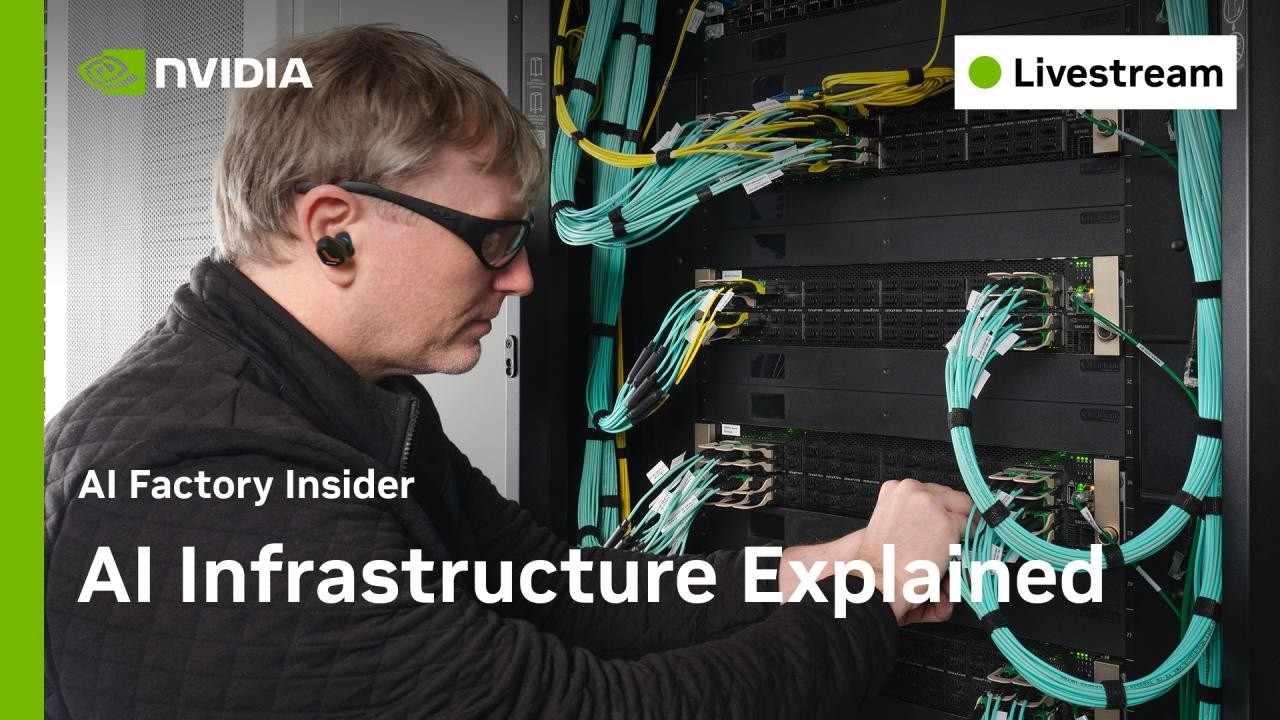
NVIDIA supplies the operational blueprint. NVIDIA's blog says enterprise reference architectures are meant to remove integration risk and define how compute, networking, storage, software, orchestration, and monitoring fit together for on-prem AI factories, with distinct RTX PRO, HGX, and NVL72 configurations for different scale targets (video, NVIDIA blog).
Discussion insight: CNBC Television's model-routing clip suggests why this infrastructure cluster matters commercially: cost pressure is already changing which models people use, so hardware, power, and deployment choices now show up directly in product usage share.
Comparison to prior day: Compared with 2026-06-10's chip-and-architecture focus, 2026-06-11 added direct capital formation through Helix and made infrastructure look more like a financing-and-deployment stack.
1.4 Healthcare remained the cleanest executive case for serious AI deployment 🡒
Two videos supported this theme. Healthcare did not dominate the feed, but it stayed the most credible place where executive attention, institutional trust, and investor capital could all point at the same application area.
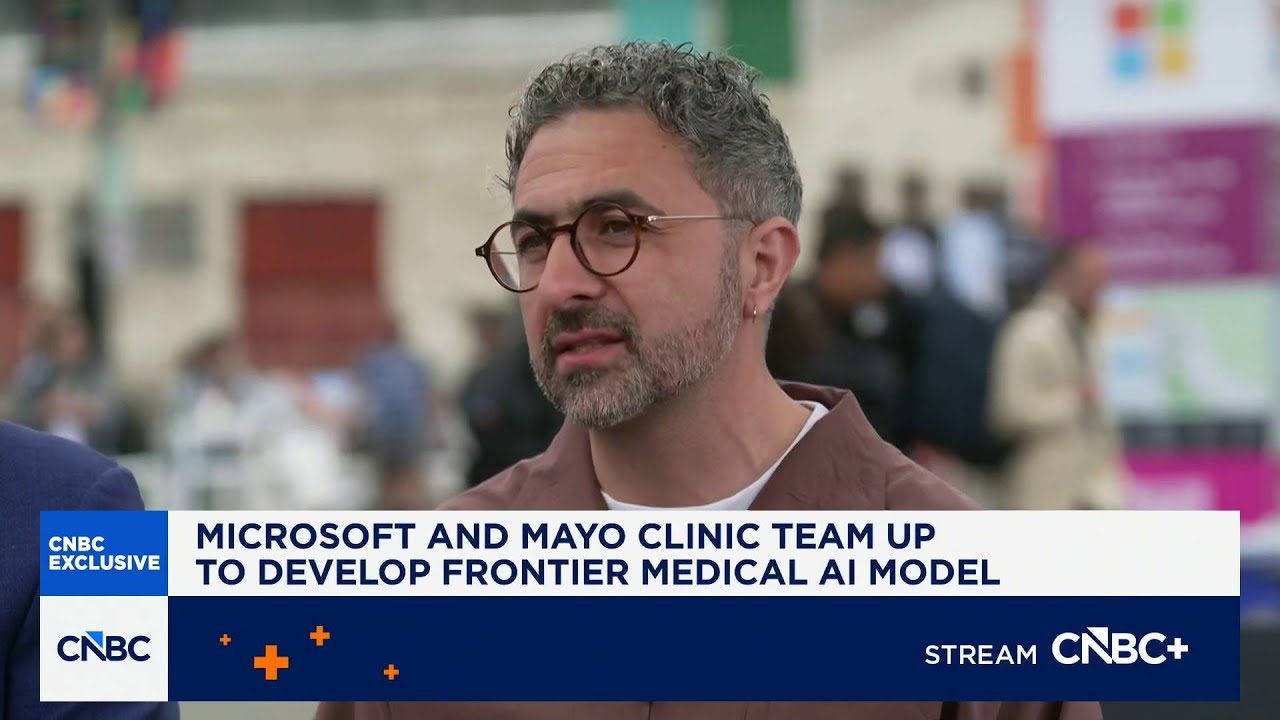
CNBC Television keeps the strongest executive framing alive. Microsoft AI CEO Mustafa Suleyman makes healthcare the most important application of AI while appearing alongside Mayo Clinic's CEO, which pulls the conversation away from generic productivity rhetoric and toward institution-level deployment credibility (video).
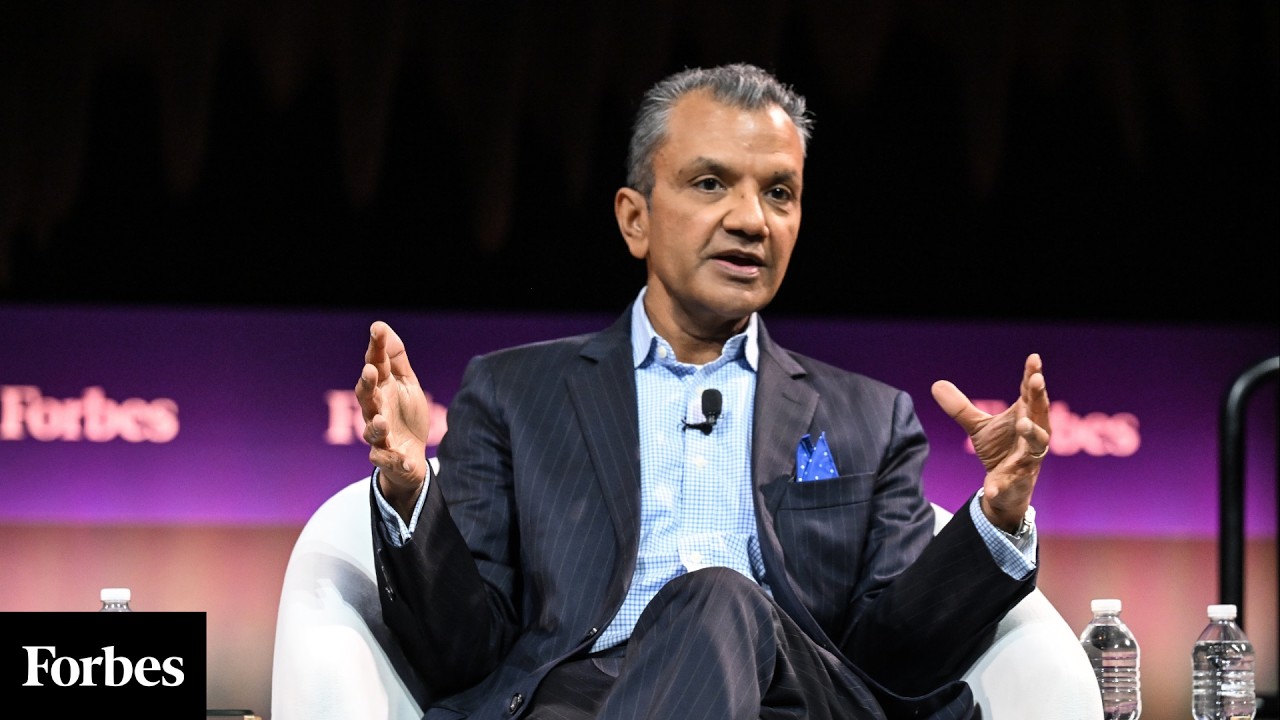
Forbes extends the same theme into capital allocation. Its panel description says investors are making concentrated bets on startups with deep domain expertise and clear AI leverage across healthcare, biotech, and life sciences, which makes the category look like a serious investment thesis instead of a consumer-AI side quest (video).
Discussion insight: Unlike search backlash or local coding, the healthcare cluster is framed as executive priority plus capital allocation, not as creator experimentation or community argument.
Comparison to prior day: Compared with 2026-06-10, the healthcare theme stayed visible but did not widen much beyond executive and investor framing.
1.5 AI moved further into motion and bodies, not just text and code 🡕
Three videos supported this theme. The lower half of the feed showed creators comparing AI video tools and viewers treating humanoid robots as increasingly commercial, not just spectacular.

Yaroflasher gives the clearest creator-tooling example. The video compares Grok Imagine Video 1.5 against Seedance 2.0 feature by feature and adds a reusable camera-movement trick for more dynamic outputs, so the item reads like practitioner evaluation rather than pure launch coverage (video).

IntelliCore pushes the same "real-world now" frame into robotics. The description says elder-care companions, factory workers, and athletic humanoids are already shipping or working alongside humans, with Fourier GR-3 highlighted for elderly assistance and safety-oriented design (video).

PRO ROBOTS adds the design-philosophy argument missing from the simpler roundup. The video uses Atlas autonomously lifting a 100-lb refrigerator to argue that a "School of the Body" centered on physical competence may diverge from the vision-heavy, world-model-first approach associated with Optimus, Figure, OpenAI, and Google DeepMind (video).
Discussion insight: These items are less about benchmark bragging and more about whether AI can produce motion, physical competence, and commercially legible products.
Comparison to prior day: Compared with 2026-06-10's software-heavy feed, 2026-06-11 added more attention to AI video tooling and embodied systems.
2. What Frustrates People
Search defaults that hide links and make AI feel mandatory
This is High severity because the two biggest videos in the feed are both complaints about AI-first search replacing visible source-first browsing. House of El - AI frames the problem through accuracy, transparency, and the health of the web, while SAMTIME pairs the same complaint with TechCrunch's DuckDuckGo data and DuckDuckGo's no-AI help page. The workaround is switching to AI-off alternatives instead of trying to fix the default. This is directly worth building for.
Cost pressure that forces model routing and local stacks
This is High severity because the feed repeatedly describes cost as the reason usage and workflow choices are moving. CNBC Television says Chinese models are taking more usage because of AI's growing cost problem, Tech With Tim turns local coding into a no-cloud, no-API-key stack, and Google's DiffusionGemma post reframes local text generation around better hardware utilization. The workaround is routing to cheaper providers, running models locally, or seeking more efficient architectures. This is directly worth building for.
Agent quality that still depends on extra setup and extra compute
This is Medium-High severity because the builder-side promise is real, but the operational burden is still obvious. WorldofAI treats Nex-N2-Pro as a serious open agentic model while still checking it against real coding tasks and benchmark skepticism, Tech With Tim makes local agentic coding a setup exercise, and IBM Technology explains that better reasoning increasingly means more deliberate inference-time work. The workaround is to add local runtimes, workflow glue, and extra "thinking" time. This is directly worth building for.
Infrastructure buildout that depends on rare capital, power, and integration discipline
This is High severity because the infrastructure story now spans hardware design, financing, and deployment operations all at once. CNBC's d-Matrix segment presents SRAM-centered inference as a response to current bottlenecks, CNBC Television's Helix launch coverage turns AI capacity into a $10B+ capital-formation effort, and NVIDIA's AI Factory Insider exists because enterprises still need validated blueprints across compute, networking, storage, orchestration, and monitoring. The workaround is a mix of alternative chips, dedicated infrastructure investors, and reference architectures. This is worth building for, though it is capital-intensive.
Evaluation noise around fast-moving models and AI media tools
This is Medium severity because multiple items imply that public benchmark tables and launch claims are not enough to make decisions. WorldofAI says official Nex-N2 benchmark claims only tell part of the story and checks the model against real coding tasks, Yaroflasher compares Grok Imagine Video 1.5 against Seedance 2.0 in a hands-on workflow, and PRO ROBOTS reframes humanoid progress around different design philosophies rather than headline hype. The workaround is manual side-by-side testing, creator demos, and longer evaluation loops. This is worth building for.
3. What People Wish Existed
AI-optional search that preserves links and user control
House of El - AI, SAMTIME, TechCrunch's DuckDuckGo growth report, and DuckDuckGo's no-AI help page all point to the same practical need: search that can help when asked but still makes links, source visibility, and opt-out control feel primary. The urgency is high because measurable switching behavior is already happening. Partial alternatives exist, but people are still leaving the default rather than fixing it. Opportunity: direct.
Local and open-weight coding suites that hide the plumbing
WorldofAI, Tech With Tim, IBM Technology, and Google's DiffusionGemma post all imply the same practical need: people want agentic coding and local reasoning systems without manually juggling runtimes, model choice, reasoning latency, and editor integration. The urgency is immediate because users are already accepting extra setup work in exchange for cost control and open models. Good components exist, but the stack is still fragmented. Opportunity: direct.
Portable routing and evaluation layers across models, benchmarks, and media tools
CNBC Television, WorldofAI, Yaroflasher, and Universe of AI all point to the same missing layer: systems that help teams compare models, route work by cost and task fit, and verify whether benchmark claims survive real workflows. The need is practical because the current workaround is still manual side-by-side testing, creator commentary, and ad hoc benchmark interpretation. Pieces exist, but confidence is low and switching costs are real. Opportunity: competitive.
Infrastructure coordinators that bridge capital, power, and deployment
CNBC Television's Helix coverage, CNBC's d-Matrix segment, and NVIDIA's AI Factory content all point to the same need: buyers want a cleaner path from AI demand to actual capacity, including hardware choice, financing, power, networking, and validated deployment patterns. The urgency is high, but the market is institution-heavy and expensive. Capital, chip vendors, and enterprise platform players are all moving already. Opportunity: competitive.
Trusted healthcare AI operating layers for real institutions
CNBC Television and Forbes both imply the same practical need: systems that make AI usable across care delivery, biotech, and life-sciences workflows without reducing the category to a generic assistant. The need is high-stakes because the conversation already involves Mayo Clinic leadership, Microsoft AI, and concentrated startup investing. Partial solutions exist in platform narratives and niche startups, but a trusted end-to-end operating layer is still missing. Opportunity: competitive.
4. Tools and Methods in Use
| Tool | Category | Sentiment | Strengths | Limitations |
|---|---|---|---|---|
| Google AI-first search / AI Mode | Search surface | (-) | Huge default reach, conversational answers, low-friction follow-up flow | Repeatedly criticized for hiding links, weakening transparency, and feeling mandatory |
| DuckDuckGo no-AI search | Search alternative | (+) | Clear AI-off mode, AI-image filtering, privacy-forward positioning | Still requires users to switch defaults and habits |
| Nex-N2-Pro | Agentic model | (+/-) | Open-source, coding/search/tool-use focus, reasoning and structured outputs | Benchmark claims still need real-world verification and the tester reports inconsistency |
| LM Studio + VS Code | Local coding stack | (+) | No cloud, no API keys, no per-token cost, direct editor workflow | Hardware sizing, runtime setup, and model choice remain manual |
| Test-time compute | Reasoning method | (+/-) | Improves hard-task accuracy through deliberate inference-time work | Adds latency and compute cost |
| DiffusionGemma | Local text-generation architecture | (+/-) | Keeps local hardware busier by drafting larger text chunks at once | Newer approach that still needs practical evaluation outside launch framing |
| Model routing to cheaper Chinese models | Inference strategy | (+/-) | Gives teams a direct cost-control lever as provider economics shift | Implies constant provider comparison and quality tradeoff management |
| d-Matrix Corsair | Inference chip platform | (+/-) | Ultra-low-latency batched inference, efficient memory-compute integration, alternative to DRAM-heavy assumptions | Ecosystem maturity is still early and performance claims are hard for ordinary builders to validate |
| NVIDIA Enterprise Reference Architectures | Deployment blueprint | (+) | Validated guidance across compute, networking, storage, orchestration, and monitoring | Enterprise-heavy and aimed at larger operators with significant integration budgets |
| Grok Imagine Video 1.5 / Seedance 2.0 comparisons | AI video workflow | (+/-) | Strong creator-side experimentation, side-by-side evaluation, practical prompting tricks | Quality still depends on manual testing, prompt craft, and repeated comparison work |
Overall sentiment is strongest for tools that restore visible control over defaults, costs, or deployment choices: AI-off search, local coding stacks, and validated infrastructure blueprints. Sentiment turns mixed when the user has to pay for that control with setup complexity, latency, or constant benchmark interpretation.
The clearest workarounds are switching away from default AI search, routing work toward cheaper models, running agents locally, and relying on creator-style side-by-side tests when official claims feel incomplete. Migration pressure is visible at every layer: Google search toward DuckDuckGo no-AI, cloud/API-key coding toward LM Studio-style local stacks, confidence in benchmark tables toward hands-on verification, and monolithic GPU assumptions toward alternative chip and deployment paths.
5. What People Are Building
| Project | Who built it | What it does | Problem it solves | Stack | Stage | Links |
|---|---|---|---|---|---|---|
| DuckDuckGo no-AI search | DuckDuckGo | Search experience with AI features turned off and AI-generated images filtered by default | Gives users a visible escape hatch from AI-first search defaults | Privacy-first search, AI-off configuration, image filtering | Shipped | help, mode, video |
| Nex-N2-Pro | Nex AGI | Open-source agentic model for coding, search, tool use, and long-horizon tasks | Gives builders a non-closed option for project-aware agent workflows | Qwen3.5-based MoE, Agentic Thinking, reasoning, function calling, structured outputs | Shipped | model, OpenRouter, video |
| Helix Digital Infrastructure | KKR, KIA, NVIDIA, and Vistra | Capitalized AI infrastructure company for data centers, power, transmission, and connectivity | Addresses the physical-capacity bottleneck behind hyperscaler-scale AI growth | Infrastructure capital, power partnerships, AI-factory-aligned deployment | Beta | announcement, video |
| d-Matrix Corsair | d-Matrix | SRAM-centered inference chip platform for ultra-low-latency batched inference | Offers an alternative to DRAM-heavy GPU inference assumptions | Efficient memory-compute integration, batched inference hardware | Shipped | site, video |
| NVIDIA Enterprise Reference Architectures | NVIDIA | Validated AI-factory blueprints for on-prem deployments | Reduces integration risk and time-to-deployment for enterprise AI systems | Compute, networking, storage, orchestration, monitoring, RTX PRO/HGX/NVL72 configs | Shipped | blog, video |
| DiffusionGemma | Diffusion-based text model that drafts larger text blocks in parallel | Improves local hardware utilization for single-user text generation | Diffusion architecture, 256-token paragraph drafting, local GPU/TPU efficiency | Shipped | blog, video |
Two build patterns dominate the day. One is control at the software layer: DuckDuckGo no-AI search, Nex-N2-Pro, and DiffusionGemma all respond to user frustration by changing defaults, opening weights, or making local execution more practical.
The other is supply-side capacity building. Helix, d-Matrix Corsair, and NVIDIA Enterprise Reference Architectures all assume that AI demand is now limited as much by power, hardware economics, and deployment discipline as by model quality itself.
Tech With Tim's local workflow fits between those two patterns. It is not a single shipped product, but it shows that users are already assembling the software half of the future out of local runtimes, editor integrations, and model-routing decisions before the market has packaged it cleanly.
6. New and Notable
Search backlash beat most launch content on raw attention
House of El - AI and SAMTIME were still the largest audience magnets in the feed, and TechCrunch's DuckDuckGo data showed that the backlash had measurable switching behavior behind it.
Nex-N2 made open model competition look more agentic and more practical
WorldofAI is notable because the conversation is no longer just "open model versus closed model." The Hugging Face card and OpenRouter listing frame Nex-N2-Pro around coding, tool use, and long-horizon execution, which is a stronger builder signal than another leaderboard-only release.
Helix gave AI infrastructure a capital-formation shape
CNBC Television is notable because it reframed infrastructure demand as an investable operating company with power, transmission, connectivity, and partner alignment rather than as one more spending headline. The linked KKR announcement makes that shift explicit.
Governance and control anxiety stayed in the mainstream news mix
ABC News is notable because Dario Amodei's warning and call for regulation were distributed through a broad-audience news channel on the report date, keeping "who controls this?" as a live question even while builder content dominated the rest of the feed.
AI looked more physical and cinematic than usual
Yaroflasher, IntelliCore, and PRO ROBOTS are notable because they move the conversation away from text-only assistants and toward comparative video-generation workflows, near-market humanoids, and diverging robotics design philosophies.
7. Where the Opportunities Are
[+++] AI-optional search and source-preserving discovery - House of El - AI, SAMTIME, TechCrunch's DuckDuckGo report, and DuckDuckGo's no-AI help page all point to the same gap: users want search help without losing links, transparency, and control over when AI appears. This is strong because the pain is both high-reach and behaviorally measurable.
[+++] Local and open-weight agentic coding stacks - WorldofAI, Tech With Tim, IBM Technology, and Google's DiffusionGemma post all show the same need: people want agents that can code, reason, and stay affordable without depending on closed cloud defaults. This is strong because users are already assembling fragmented local stacks to get there.
[++] Model routing and evaluation intelligence - CNBC Television, WorldofAI, Yaroflasher, and Universe of AI all indicate a market for tools that compare models under real workflows, route tasks by cost, and expose where benchmark claims break down. This is moderate because the need is obvious, but the market is already competitive and trust is hard to earn.
[++] Infrastructure coordination across capital, power, and deployment - CNBC Television's Helix coverage, CNBC's d-Matrix segment, and NVIDIA's AI Factory work all point to the same gap: buyers need help choosing, financing, and operationalizing AI capacity rather than merely buying more GPUs. This is moderate because demand is real, but the market is expensive and institutionally crowded.
[+] Trusted healthcare AI operating layers - CNBC Television and Forbes show strong interest in healthcare and life sciences as serious deployment targets. This is emerging because the value is clear, but workflow fit, trust, and regulatory boundaries still look less settled than the demand signal.
[+] AI video and embodied-system workflow tools - Yaroflasher, IntelliCore, and PRO ROBOTS show a growing need for better evaluation, control, and deployment tooling around motion generation and real-world robotics. This is emerging because practitioner curiosity is high, but the product shape and buyer identity are still forming.
8. Takeaways
- Search backlash was the day's clearest audience signal, and it came with measurable switching behavior. The biggest-view videos were complaints about AI-first search, and DuckDuckGo's post-Google-overhaul install and no-AI traffic growth gave that backlash real behavioral evidence. (source)
- Open-weight and local agentic workflows are being judged as practical stacks, not just ideological alternatives. Nex-N2-Pro, LM Studio plus VS Code, and DiffusionGemma all show the market asking whether open/local systems can actually perform coding and reasoning work without closed-cloud dependence. (source)
- AI infrastructure now looks like a capital, power, and deployment problem at the same time. Helix, d-Matrix, and NVIDIA's enterprise reference architectures collectively show that model demand is spilling into financing vehicles, alternative hardware paths, and full-stack operating blueprints. (source)
- Healthcare remains the cleanest institution-ready AI application in this dataset. Microsoft AI and Mayo Clinic leadership, plus Forbes' investor framing, keep healthcare and life sciences in the role of serious deployment target rather than speculative demo category. (source)
- AI is moving further into motion and bodies, but evaluation is still manual and creator-led. Grok-versus-Seedance testing and humanoid-robot debates both show rising practical interest, yet the workflow still depends on hands-on comparison rather than trusted default tooling. (source)