YouTube AI - 2026-06-12
1. What People Are Talking About
1.1 Search backlash stayed the clearest consumer AI story 🡕
Three videos supported this theme, and they were again the biggest attention magnets in the feed. The complaint is no longer just that AI answers feel sloppy; it is that AI-first search defaults hide links, reduce transparency, and make opting out harder than switching search engines.

House of El - AI makes the strongest product-and-web-health version of the complaint. The video says AI Mode is Google’s biggest upgrade to Search in 25 years, but its own chapter structure centers accuracy, transparency, and “the health of Internet,” turning the item into a critique of how AI-first search changes information retrieval rather than a narrow gripe about one feature (video).

SAMTIME packages the same backlash as comedy, but the linked evidence is concrete. TechCrunch reports that DuckDuckGo’s U.S. app installs averaged 18.1% week-over-week growth after Google’s search overhaul and peaked at 30.5%, while visits to noai.duckduckgo.com averaged 22.7% growth and peaked at 27.7%; DuckDuckGo’s own help page says that no-AI mode turns off all AI features and filters AI-generated images by default (video, TechCrunch, DuckDuckGo help).

The WAN Show shows the same complaint escaping AI-only circles. Linus and Luke frame the issue as mass user backlash against Google AI Overviews and a visible spike in DuckDuckGo adoption, which makes the trend look like a broader tech-culture reaction instead of one creator’s rant (video).
Discussion insight: The strongest alternative demand is not “better AI search.” It is explicit AI-off control plus visible links and source-first browsing.
Comparison to prior day: Compared with 2026-06-11, the same anti-AI-search complaint widened from two lead videos into a three-format cluster spanning creator polemic, comedy, and mainstream tech commentary.
1.2 AI risk and public skepticism became a full mainstream media package 🡕
Four videos supported this theme. The public conversation shifted from “what can this model do?” toward “who is accountable if it goes wrong?”, and the signal came from both mass-media outlets and long-form expert interviews.

60 Minutes turns AI into a mainstream risk bundle rather than a single topic. The compilation packages Anthropic, Character AI, humanoid robots, the AI art divide, and robotaxis into one high-reach item, and its editor’s note says Character AI and Google agreed to settle lawsuits from families alleging that teens died by suicide or harmed themselves after interacting with chatbots, while neither company admits liability (video).

Alex Kantrowitz provides the day’s densest warning discourse. Geoffrey Hinton says today’s systems already understand us, that superintelligence may arrive sooner than expected, and that society is not doing enough about risks ranging from job loss to self-preservation, with regulation framed as the steering wheel rather than a side issue (video).

ABC News compresses the same concern into a broadcast-news format. Dario Amodei’s clip is short, but it is unusually direct: he warns about rapidly developing AI and explicitly calls for government regulation as the technology races ahead (video).
Discussion insight: The same trust question also shows up in creator communities and policy venues: Brad Colbow’s long-form artist critique and PBS NewsHour’s Senate hearing coverage make the skepticism feel social and institutional, not only expert-led.
Comparison to prior day: Compared with 2026-06-11, warnings, regulation, and legitimacy concerns occupied more of the feed and reached broader audiences.
1.3 Agentic coding shifted from model hype to packaged workflows 🡕
Five videos supported this theme. The story was less a frontier-model horse race and more how to wire agents into local developer tooling and ongoing business workflows.
WorldofAI gives the strongest open-model example. The Hugging Face model card says Nex-N2-Pro and Nex-N2-mini are open-source agentic models built around “Agentic Thinking,” and OpenRouter describes the Pro variant as a 397B mixture-of-experts model with 17B active parameters plus reasoning, function calling, and structured outputs; the video’s own verdict is that the model is impressive but still slow and inconsistent in places (video, Hugging Face, OpenRouter).

Tech With Tim translates the same trend into a concrete local stack. The walkthrough uses LM Studio with VS Code as a no-cloud, no-API-key, no-cost-per-token coding workflow, and LM Studio’s site reinforces that it is being positioned for Linux boxes, cloud servers, and CI rather than as a one-off desktop toy (video, LM Studio).

Rick Mulready pushes the theme from developer tooling into business operations. The video says Hermes keeps business context updated and can handle content planning, pricing research, dashboards, and project boards, while HyperAgent’s site describes a platform for launching specialist agents connected to tools and data (video, HyperAgent).
Discussion insight: IBM’s agentic-coding explainer turns the pattern into a definition - agents now reason across repos and execution environments - while its test-time-compute explainer shows why better results still come with extra latency and setup burden.
Comparison to prior day: Compared with 2026-06-11’s local and open-weight interest, 2026-06-12 packaged the theme into how-to guides, platform demos, and business-use-case showcases.
1.4 Infrastructure challengers kept widening the hardware menu 🡒
Three videos supported this theme. AI infrastructure kept widening beyond a single GPU storyline and became a debate about memory architecture, deployment discipline, and which full-stack design will win.

CNBC provides the clearest commercially legible challenger example. The video says d-Matrix’s Corsair chip is in volume production with commitments from hyperscalers, neoclouds, and frontier AI labs, while d-Matrix’s site describes the company as pursuing ultra-low-latency batched inference through efficient memory-compute integration rather than the usual DRAM-heavy path (video, d-Matrix).
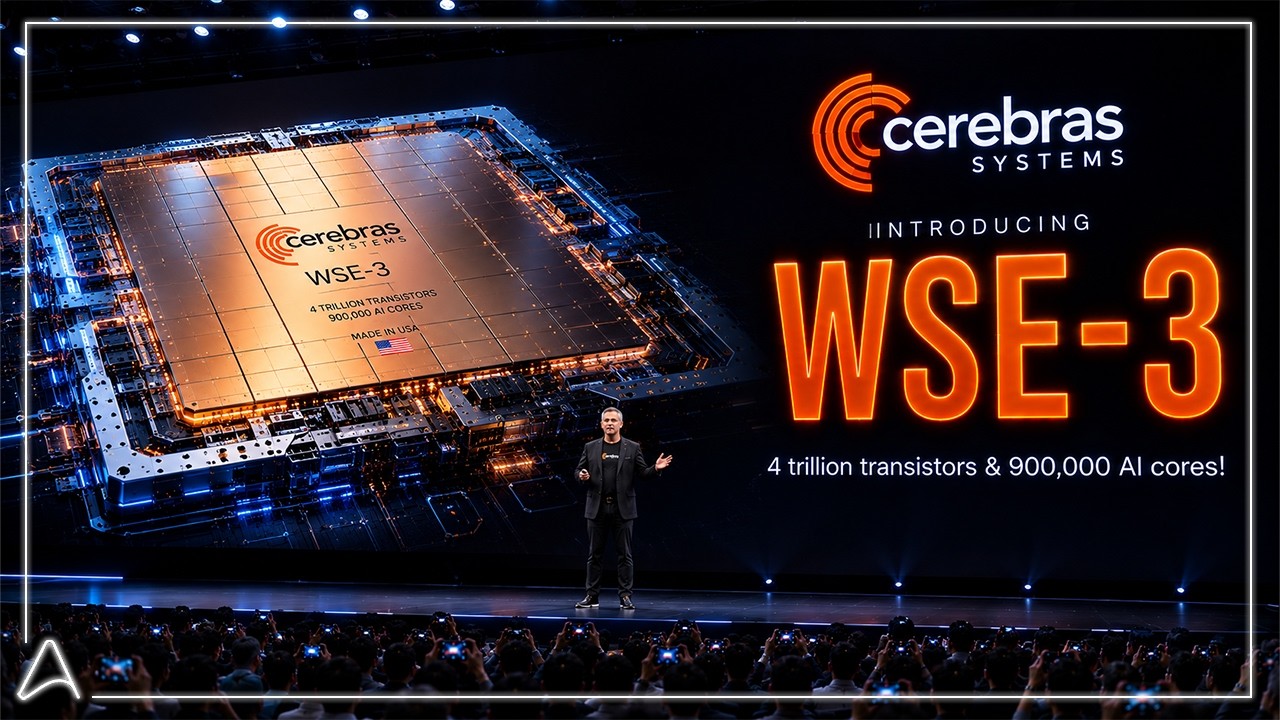
Evolving AI adds the architecture-debate version of the same story. The video frames Cerebras’s wafer-scale design around 900,000 AI cores, 44 GB of on-chip memory, and a direct attack on the memory bottleneck, while also calling out cost, power, flexibility, and ecosystem maturity as the tradeoffs that still matter (video).
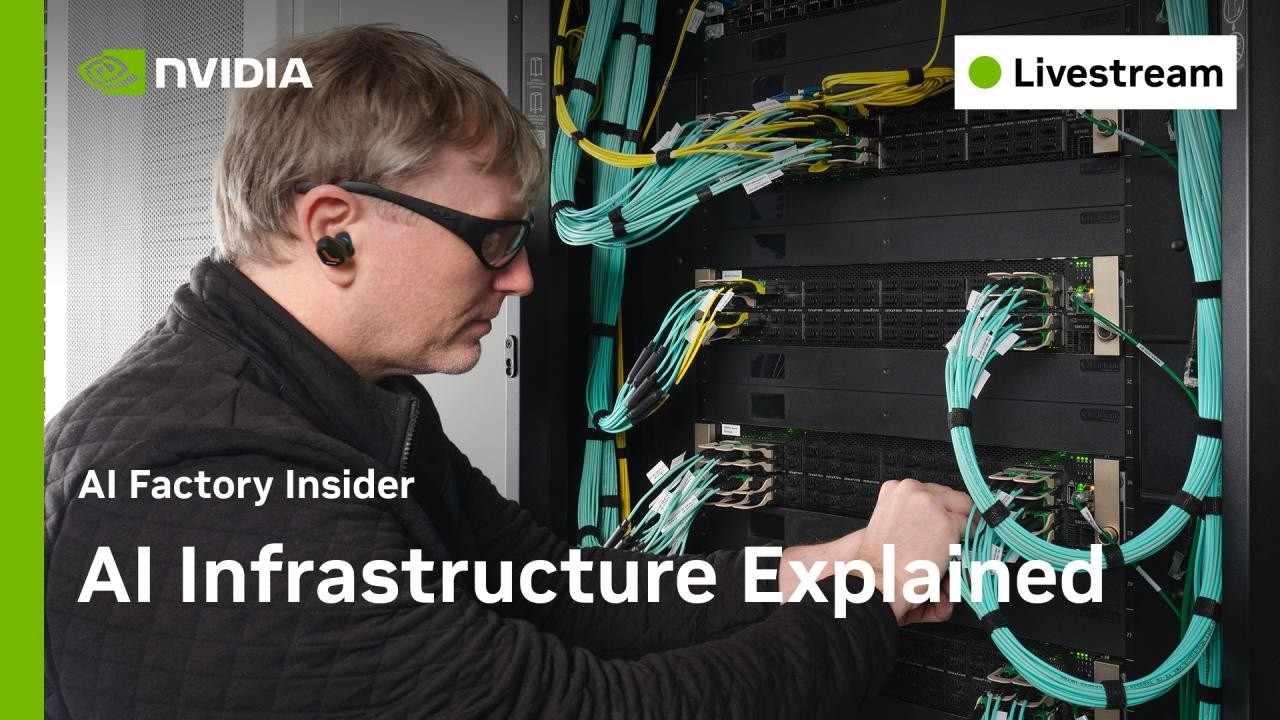
NVIDIA shows how the incumbent is answering the same pressure. Its AI Factory Insider episode and linked blog argue that enterprises now need validated guidance across compute, networking, storage, software, orchestration, and monitoring, with separate RTX PRO, HGX, and NVL72 reference configurations for different scales (video, NVIDIA blog).
Discussion insight: Even NVIDIA is teaching architecture recipes now, which implies that integration risk and deployment design are becoming as important as raw accelerator performance.
Comparison to prior day: Compared with 2026-06-11’s d-Matrix plus Helix capital story, 2026-06-12 replaced financing news with deeper hardware and architecture explainers.
1.5 Healthcare stayed the most institution-ready AI category 🡒
Two videos supported this theme. Healthcare did not dominate the feed, but it again looked like the cleanest category where executive conviction and investor framing line up.
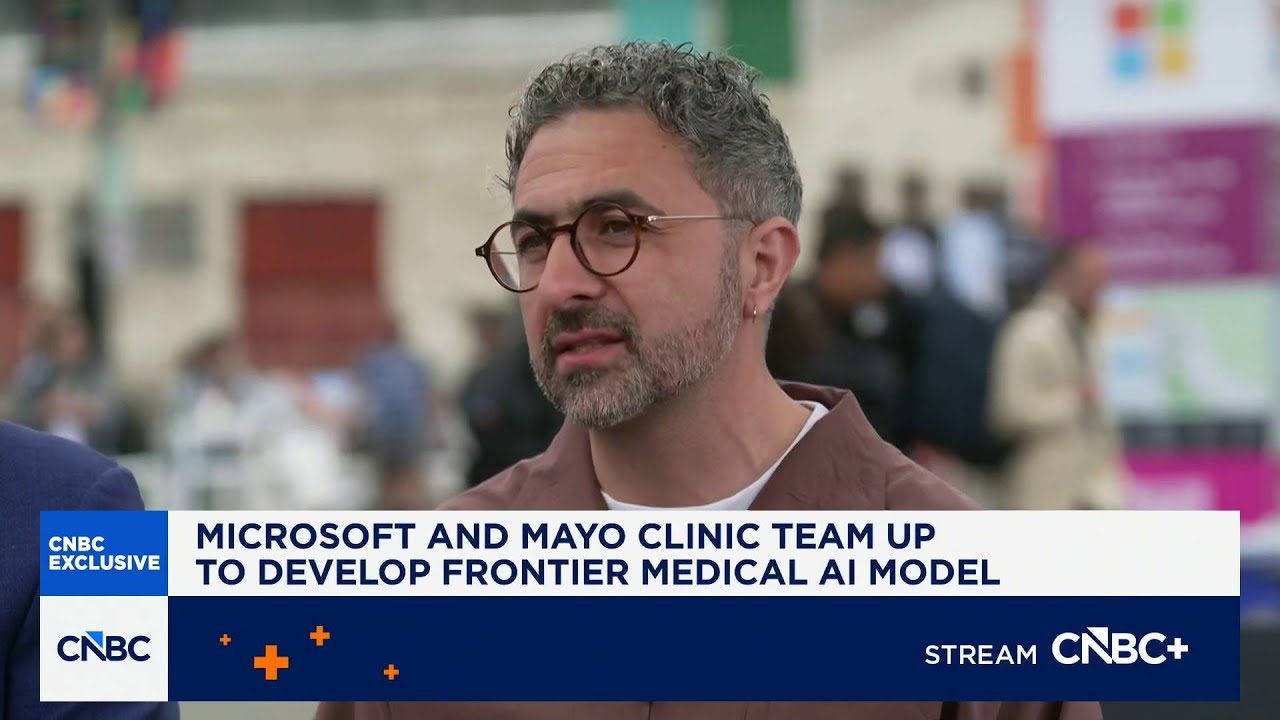
CNBC Television keeps the strongest executive framing alive. Mustafa Suleyman names healthcare as the most important application of AI while appearing alongside Mayo Clinic’s CEO, which makes the category look like an institution-level deployment target rather than a generic productivity story (video).
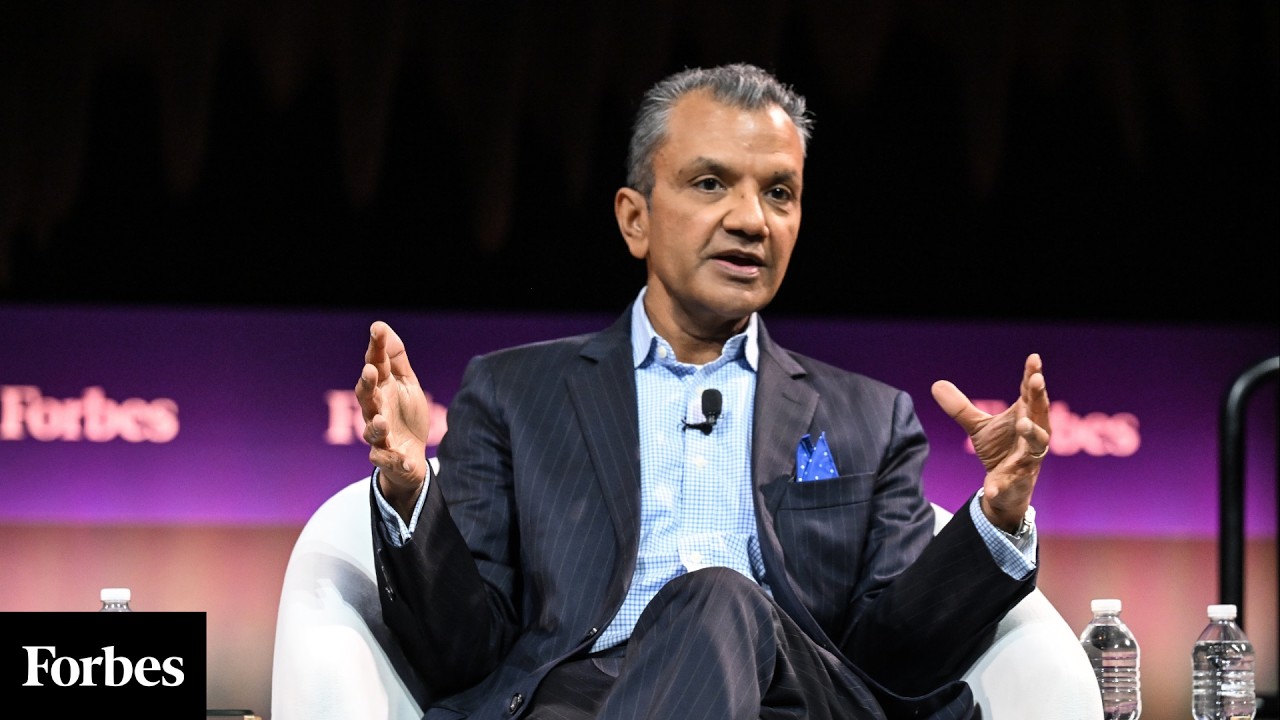
Forbes extends the same theme into capital allocation. Its panel description says investors are making concentrated bets on startups with deep domain expertise and clear AI leverage across healthcare, biotech, and life sciences, which keeps the category positioned as a serious investment thesis rather than a side conversation (video).
Discussion insight: Unlike the search or coding clusters, healthcare is framed here as institutional deployment and investment concentration rather than as user experimentation.
Comparison to prior day: This looks similar to 2026-06-11: visible, credible, and still narrower than the higher-volume debates elsewhere in the feed.
2. What Frustrates People
Search defaults that hide links and make AI feel mandatory
This is High severity because the biggest-view cluster in the feed is still a rebellion against AI-first search. House of El - AI frames the issue through accuracy, transparency, and the health of the web, SAMTIME backs the same complaint with DuckDuckGo switching data and no-AI mode evidence, and The WAN Show shows the story spreading into broader tech commentary. The workaround is switching to AI-off alternatives instead of trying to tame the default. This is directly worth building for.
Trust, safety, and accountability that still feel under-built
This is High severity because several of the day’s most prominent items are warnings rather than celebrations. Geoffrey Hinton’s interview, Dario Amodei’s ABC News warning, the 60 Minutes AI roundup, and PBS NewsHour’s Senate hearing coverage all point to the same frustration: capability is moving faster than governance, trust, and failure handling. The workaround today is more media scrutiny, hearings, and calls for regulation rather than better product affordances. This is directly worth building for, though the solution space is hard.
Agentic coding that still demands hardware, setup work, and patience
This is High severity because the builder promise is strong but the operating burden is still obvious. WorldofAI’s Nex-N2-Pro review says the model is impressive but slow and inconsistent, Tech With Tim’s workflow guide turns local coding into a hardware-and-configuration exercise, and IBM’s agentic coding explainer plus its test-time-compute video make clear that better results increasingly come from extra orchestration and extra reasoning time. The workaround is to accept slower, more manual stacks in exchange for control. This is directly worth building for.
AI infrastructure that is still constrained by memory, power, and integration risk
This is High severity because the infrastructure story keeps resolving to bottlenecks rather than abundance. CNBC’s d-Matrix segment exists because current inference economics are still painful, Evolving AI’s Cerebras breakdown focuses on the memory wall and wafer-scale tradeoffs, and NVIDIA’s AI Factory coverage is effectively a tutorial on how hard full-stack deployment remains. The workaround is alternative chip architectures plus validated reference designs. This is worth building for, though it is capital-intensive.
Creative work that still feels threatened rather than helped
This is Medium severity because the frustration is less about one broken feature and more about legitimacy, authorship, and long-term trust. Brad Colbow explicitly says many artists had these objections from the beginning and now feel the broader market is finally catching up, while the 60 Minutes roundup still treats the AI art divide as a major public-interest topic. The workaround is selective adoption, manual review, or refusal rather than enthusiastic workflow integration. This is worth building for.
3. What People Wish Existed
AI-optional search that preserves links and user control
House of El - AI, SAMTIME, The WAN Show, and DuckDuckGo’s no-AI help page all point to the same practical need: search that can help when asked but still keeps links, source visibility, and explicit opt-out control primary. The urgency is high because measurable switching behavior is already happening. Partial alternatives exist, but users are still leaving the default rather than fixing it. Opportunity: direct.
AI systems with clearer safety boundaries and accountability
Geoffrey Hinton’s interview, Dario Amodei’s ABC News warning, and the 60 Minutes package all imply the same gap: people want systems whose risks, failure modes, and escalation paths are legible before something goes wrong. The urgency is high because the current response is still regulation talk and post-hoc scrutiny. There are policy conversations and safety teams, but a trusted end-user experience is still missing. Opportunity: competitive.
Local and agentic coding suites that hide the plumbing
WorldofAI, Tech With Tim, IBM’s agentic coding explainer, and IBM’s test-time-compute explainer all point to the same practical need: people want agents that can code, reason, and use tools without forcing them to manually manage runtimes, model choice, hardware limits, and latency tradeoffs. The urgency is immediate because users are already accepting extra setup in exchange for control. Good components exist, but the stack is still fragmented. Opportunity: direct.
Neutral evaluation and routing layers across models, chips, and media tools
WorldofAI, Evolving AI, CNBC’s d-Matrix segment, and Wade McMaster’s image-generator comparison all imply the same missing layer: systems that compare models, hardware, and creative tools under real workflows rather than only by launch claims or benchmark tables. The need is practical because the current workaround is still manual side-by-side testing and creator commentary. Pieces exist, but trust is still thin. Opportunity: competitive.
Creative-safe generative workflows with provenance and user agency
Brad Colbow and the 60 Minutes roundup point to the same emotional and practical need: creators want AI tooling that does not blur authorship, devalue craft, or force participation in workflows they distrust. The urgency is Medium because resistance is sustained rather than one-off. Partial tools exist, but confidence and norms are still unsettled. Opportunity: aspirational.
Trusted healthcare AI operating layers for real institutions
CNBC Television and Forbes both imply the same practical need: systems that make AI usable across care delivery, biotech, and life-sciences workflows without reducing the category to a generic assistant. The need is high-stakes because the conversation already involves Mayo Clinic leadership, Microsoft AI, and concentrated investor interest. Partial solutions exist in platform narratives and niche startups, but a trusted end-to-end operating layer is still missing. Opportunity: competitive.
4. Tools and Methods in Use
| Tool | Category | Sentiment | Strengths | Limitations |
|---|---|---|---|---|
| Google AI-first search / AI Mode | Search surface | (-) | Huge reach, conversational answers, low-friction follow-up flow | Repeatedly criticized for hiding links, weakening transparency, and feeling hard to avoid |
| DuckDuckGo no-AI search | Search alternative | (+) | Clear AI-off mode, AI-image filtering, privacy-forward positioning | Still requires users to switch defaults and habits |
| Nex-N2-Pro | Agentic model | (+/-) | Open-source, reasoning plus tool calling, structured outputs, strong benchmark posture | Reviewer still reports slowness, inconsistency, and heavy serving requirements |
| LM Studio + VS Code | Local coding stack | (+) | No cloud, no API keys, no per-token cost, direct editor workflow | Hardware sizing, runtime setup, and model choice remain manual |
| Hermes Agent / HyperAgent | Agent platform | (+/-) | Context-aware business workflows, connected specialist agents, non-technical use cases | Product specifics remain somewhat opaque and workflow quality still depends on setup discipline |
| Agentic coding | Development method | (+/-) | Moves beyond autocomplete into repo-wide orchestration and execution-aware task flow | Requires tool access, execution environments, and more careful verification |
| Test-time compute | Reasoning method | (+/-) | Improves hard-task accuracy through deliberate inference-time work | Adds latency and compute cost |
| d-Matrix Corsair | Inference chip platform | (+/-) | Ultra-low-latency batched inference, efficient memory-compute integration, lower data-movement cost | Early ecosystem and performance claims remain hard for ordinary builders to validate |
| Cerebras WSE-3 | Wafer-scale AI hardware | (+/-) | Huge core count, on-chip memory, direct attack on the memory bottleneck | Cost, power, flexibility, and ecosystem maturity still matter |
| NVIDIA Enterprise Reference Architectures | Deployment blueprint | (+) | Validated guidance across compute, networking, storage, orchestration, and monitoring | Enterprise-heavy and aimed at operators with significant integration budgets |
Overall sentiment is strongest for tools that restore visible control over defaults, costs, or deployment choices: no-AI search, local coding stacks, and validated infrastructure blueprints. Sentiment turns mixed when the price of that control is extra setup, extra compute, or continuous evaluation work.
The clearest workarounds are switching away from default AI search, moving coding workflows onto local runtimes, accepting slower “thinking” loops for better results, and comparing hardware or media tools by watching creator-side demos rather than trusting launch claims. Migration pressure shows up at every layer: Google search toward DuckDuckGo no-AI, cloud/API-key development toward LM Studio-style local stacks, benchmark headlines toward hands-on model verification, and one-GPU assumptions toward a wider menu of chips plus deployment blueprints.
5. What People Are Building
| Project | Who built it | What it does | Problem it solves | Stack | Stage | Links |
|---|---|---|---|---|---|---|
| DuckDuckGo no-AI search | DuckDuckGo | Search experience with AI features turned off and AI-generated images filtered by default | Gives users a visible escape hatch from AI-first search defaults | Privacy-first search, AI-off configuration, image filtering | Shipped | help, mode, video |
| Nex-N2-Pro | Nex AGI | Open-source agentic model for coding, search, tool use, and long-horizon tasks | Gives builders an open-weight alternative for agentic coding workflows | Qwen3.5-based MoE, reasoning, function calling, structured outputs, sglang serving | Shipped | model, OpenRouter, video |
| Hermes Agent / HyperAgent | HyperAgent | Specialist agents that keep business context current and automate planning, research, dashboards, and project flow | Reduces the manual upkeep required to keep AI useful inside real business workflows | Connected agent platform, tool integrations, prompt-driven business workflows | Beta | site, video |
| d-Matrix Corsair | d-Matrix | SRAM-centered inference chip platform for ultra-low-latency batched inference | Offers an alternative to DRAM-heavy GPU inference assumptions | Efficient memory-compute integration, batched inference hardware | Shipped | site, video |
| NVIDIA Enterprise Reference Architectures | NVIDIA | Validated AI-factory blueprints for on-prem deployments | Reduces integration risk and time-to-deployment for enterprise AI systems | Compute, networking, storage, orchestration, monitoring, RTX PRO/HGX/NVL72 configs | Shipped | blog, video |
Two build patterns dominate the day. One is control at the software layer: DuckDuckGo no-AI search, Nex-N2-Pro, and Hermes all respond to user frustration by changing defaults, opening weights, or taking context-maintenance work off the user.
The other is supply-side capacity building. d-Matrix and NVIDIA’s reference architectures both assume that AI demand is now limited as much by memory movement, deployment risk, and full-stack operating discipline as by model quality itself.
Tech With Tim’s local workflow sits between those two patterns. It is not a single new product announcement, but it shows users already assembling the software half of the future out of local runtimes, editor integrations, and model-choice discipline before the market has packaged it cleanly.
6. New and Notable
Search backlash beat most model and product launches on raw attention
House of El - AI, SAMTIME, and The WAN Show were still the biggest audience magnets in the feed, and the linked TechCrunch DuckDuckGo report gave that backlash measurable switching behavior behind it.
60 Minutes made AI risk feel like a public-interest bundle
60 Minutes is notable because it packages Anthropic, Character AI, humanoids, AI art, and robotaxis into a single mainstream roundup instead of treating AI as one narrow beat. The item makes risk, trust, and social impact feel like durable mass-media topics rather than temporary controversies.
Nex-N2 made open model competition look more agentic and more operational
WorldofAI is notable because the conversation is no longer just “open model versus closed model.” The Hugging Face card and OpenRouter listing frame Nex-N2-Pro around coding, tool use, and long-horizon execution, which is a stronger builder signal than another leaderboard-only release.
Hermes turned “AI team” rhetoric into a concrete business-ops demo
Rick Mulready is notable because the agent pitch is no longer just about coding or research. Hermes is framed as handling content planning, pricing research, dashboards, and projects, which makes the “autonomous teammate” idea feel more productized and less speculative.
Creative distrust remained a durable counterweight to AI enthusiasm
Brad Colbow is notable because the video is not a fresh outrage cycle or a benchmark reaction. It is a long, deliberate argument that the artist-side case against generative AI is still unresolved, even as the broader market normalizes the tooling.
7. Where the Opportunities Are
[+++] AI-optional search and source-preserving discovery - House of El - AI, SAMTIME, The WAN Show, and DuckDuckGo’s no-AI help page all point to the same gap: users want help without losing links, transparency, or control over when AI appears. This is strong because the pain is both high-reach and behaviorally measurable.
[+++] Packaged local and agentic coding operating layers - WorldofAI, Tech With Tim, IBM’s agentic coding explainer, and Rick Mulready all show the same need: people want agents that can code, reason, and run ongoing workflows without demanding fragile setup and constant babysitting. This is strong because users are already assembling fragmented stacks to get there.
[++] Trust, accountability, and creator-safe AI controls - Geoffrey Hinton’s interview, Dario Amodei’s ABC News clip, 60 Minutes, and Brad Colbow all indicate a market for products that make failure boundaries, authorship, and recourse clearer. This is moderate because the need is obvious, but product solutions compete with policy, norms, and legal processes.
[++] Neutral evaluation and routing across models, chips, and media tools - WorldofAI, CNBC’s d-Matrix segment, Evolving AI, and Wade McMaster’s comparison all point to the same gap: people need help verifying which systems actually work under real workloads. This is moderate because the market is already active, but trust remains hard to win.
[++] Infrastructure coordination beyond GPU-only design - CNBC, Evolving AI, and NVIDIA’s AI Factory coverage all point to the same need: buyers need help choosing, validating, and operationalizing AI capacity rather than merely buying more accelerators. This is moderate because demand is real, but the market is expensive and enterprise-heavy.
[+] Trusted healthcare AI operating layers - CNBC Television and Forbes show strong interest in healthcare and life sciences as serious deployment targets. This is emerging because the value is clear, but workflow fit, trust, and regulation still look less settled than the demand signal.
8. Takeaways
- Search backlash remained the strongest consumer signal in the dataset, and it carried measurable switching behavior. The biggest-view videos were still complaints about AI-first search, and DuckDuckGo’s post-Google-overhaul install and no-AI traffic growth gave that backlash real behavioral evidence. (source)
- AI risk, regulation, and accountability moved closer to the center of the mainstream feed. Hinton’s long interview, Dario Amodei’s broadcast-news warning, and 60 Minutes’ AI roundup all treat trust and failure handling as first-order questions rather than side debates. (source)
- Agentic coding is being judged as a workflow package, not just a model leaderboard. Nex-N2-Pro, LM Studio plus VS Code, and Hermes all show people evaluating how agents fit into real coding and business processes, while IBM’s explainers keep reminding viewers that extra capability still costs setup and compute. (source)
- AI infrastructure now looks like an architecture and operations problem, not only a chip race. d-Matrix, Cerebras-style wafer-scale arguments, and NVIDIA’s reference architectures all point to the same reality: memory movement, deployment discipline, and full-stack design are becoming central. (source)
- Healthcare stayed the most credible institution-ready AI category in this feed. Microsoft AI and Mayo Clinic leadership, plus Forbes’ investor framing, keep healthcare and life sciences in the role of serious deployment target rather than speculative side topic. (source)