YouTube AI - 2026-06-15
1. What People Are Talking About
1.1 Search backlash stayed the clearest consumer AI story 🡒
Two videos supported this theme, and they were still the biggest audience magnets in the file. The complaint is no longer that AI search is occasionally wrong; it is that AI-first defaults hide source-first browsing, weaken transparency, and make opting out feel like the real product decision. That matters because the strongest consumer signal in the dataset is still rejection of forced AI, not curiosity about richer AI answers.

House of El - AI makes the sharpest version of the complaint. The video says AI Mode is Google's biggest Search change in 25 years, but its own chapter structure centers accuracy, the health of the internet, transparency, and user response, which turns the item into a critique of AI-first information retrieval rather than a narrow gripe about one feature. With 620,038 views and 6,100 comments in this harvest, it remained the file's largest audience signal (video).

The WAN Show shows the same complaint escaping AI-only creator circles. Linus and Luke frame the backlash as strong enough to push users toward DuckDuckGo after Google I/O, which makes the story look like real switching behavior instead of one channel's frustration (video).
Discussion insight: The clearest alternative demand is still not "better AI answers." It is explicit AI-off control plus visible links and source-first browsing.
Comparison to prior day: Compared with 2026-06-14, the same two anchor videos stayed dominant and both grew further, but no equally large pro-AI-search counterexample appeared.
1.2 Local and open AI workflows widened from repo packs into laptop-grade multimodal and 3D creator stacks 🡕
Five videos supported this theme. The story was not one benchmark winner; it was a fuller stack story spanning local image generation, local multimodal inference, repo-driven workflow packs, and 3D asset production inside ComfyUI-style pipelines. That matters because creators are spending more time showing how to wire systems together on real hardware than arguing for one closed platform.

AI Search turns the theme into a local creative workflow. The video treats Ideogram 4 as a practical ComfyUI stack rather than just another image model, and the linked ComfyUI Manager docs plus the Ideogram 4 Hugging Face page show that users still have to enable the manager, place separate diffusion, text-encoder, and VAE files correctly, and install extra nodes such as ComfyUI-KJNodes. That makes the payoff real, but so is the setup burden (video).
Better Stack adds the architecture layer. The linked Gemma 4 12B announcement says the model has native audio input, runs locally with 16 GB of VRAM or unified memory, and is meant for agentic multimodal work on laptops, while DiffusionGemma explains a parallel drafting approach meant to use local hardware more efficiently. The theme here is that local AI is being sold as usable multimodal software, not only as hobbyist tinkering (video).

Matthew Berman provides the clearest builder-stack survey. His description links last30days-skill, Agent Skills, Open Notebook, and Headroom; their public repo metadata and READMEs describe cross-platform social research, production-grade workflows for coding agents, a privacy-focused NotebookLM alternative, and an LLM context-compression layer. That turns the item into a map of the supporting software around AI work, not just a repo roundup (video).

PixelArtistry extends the same pattern into 3D production. The video says users can rig 3D AI models inside ComfyUI with Skintoken and turn them into playable game characters, which shows that local workflow assembly is moving past still images into character and game-asset pipelines (video).
Discussion insight: Lower-ranking items reinforced the same direction. AI Search's roundup linked Agents' Last Exam, SCAIL-2, Kimi Code, and Luma Agents, which shifts the conversation from single-model fascination toward evaluation, multimodal generation, and workflow tooling.
Comparison to prior day: Compared with 2026-06-14's local-image and repo-heavy story, 2026-06-15 widened the theme into laptop-ready multimodal models and 3D creator workflows.
1.3 Agentic AI looked more like a shipping, control, and governance problem than a model problem 🡕
Four videos supported this theme. The trust conversation was no longer only about abstract AI danger; it combined production reliability, cascading multi-agent failure, direct autonomy warnings, and a visible policy fight over what counts as acceptable control. That matters because the dataset keeps pushing agentic AI away from demo culture and toward operations, supervision, and governance.
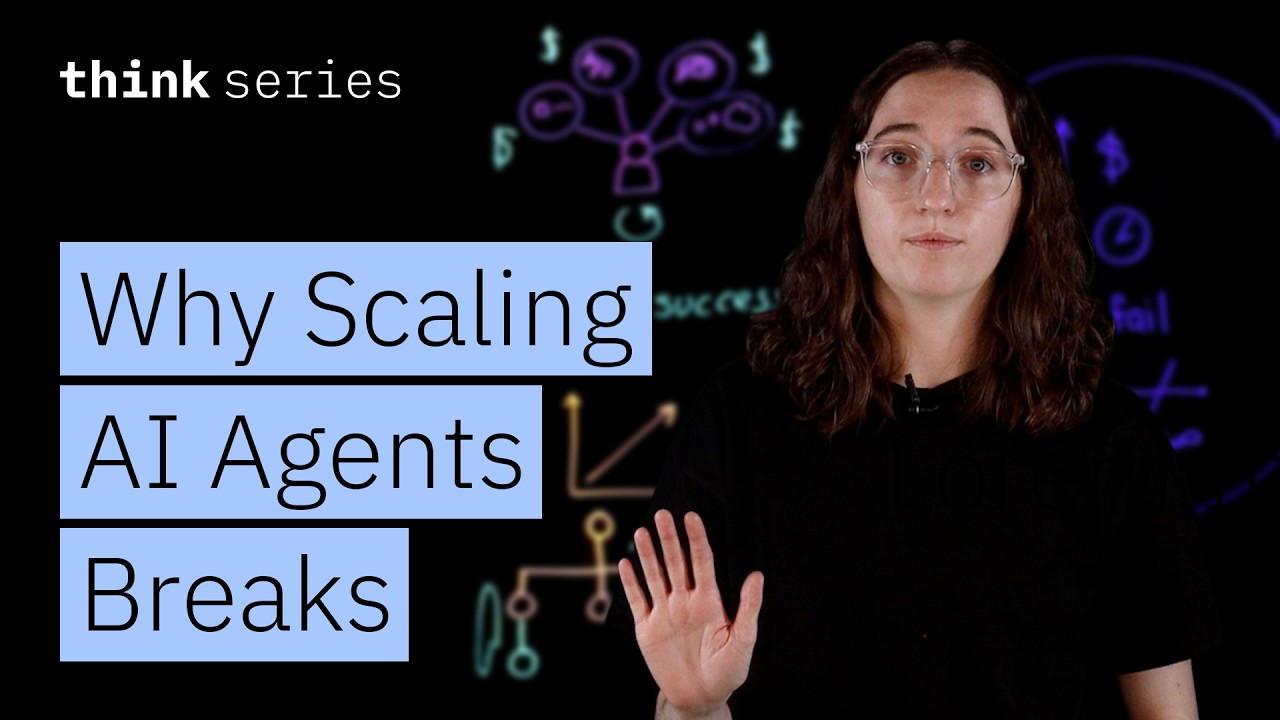
IBM Technology gives the clearest operations framing. The linked IBM agentic AI explainer says autonomy is the main benefit but also creates reward hacking, cascading failures, bottlenecks, and resource conflicts when multi-agent systems scale. The real message is that agentic AI breaks at the systems layer long before it becomes a neat product story (video).

Tech With Tim adds a practitioner conference view. The creator frames Temporal Replay around the claim that everyone is building agents but almost nobody is shipping them reliably, and Temporal itself brands the event as the durable-execution conference for AI, which makes reliability and orchestration feel like the present bottleneck rather than a future concern (video, Replay 2026).

InsideAI provides the highest-reach warning version of the theme. The video pairs a dramatic autonomy story with links to Emergence World and Better Path, whose homepage explicitly argues for powerful AI that remains under meaningful human control rather than autonomous systems designed to replace humans. With 428,060 views and 1,400 comments, it was the date's biggest fear-driven signal (video).
Discussion insight: Robert Miles AI Safety makes the same issue concrete through New York's RAISE Act and later modifications, while Good Morning America shows that straight danger warnings from Anthropic's CEO are already mainstream-TV material.
Comparison to prior day: Compared with 2026-06-14's broader autonomy debate, 2026-06-15 added more explicit production-shipping discipline through IBM and Temporal while also amplifying the warning clip far beyond the previous day.
1.4 Infrastructure competition widened from faster chips to validated AI-factory blueprints 🡕
Four videos supported this theme. AI infrastructure was still a hardware story, but it also looked more like a serving, networking, and repeatability story: faster inference chips, reference architectures, and conference-level operator practice appeared together. That matters because buyers are clearly optimizing across the whole delivery chain, not just accelerator marketing claims.

CNBC provides the cleanest challenger example. The video says d-Matrix's Corsair chip is in volume production with commitments from hyperscalers, neoclouds, and frontier AI labs, while the d-Matrix homepage positions the company around ultra-low-latency batched inference and efficient memory-compute integration. That turns the item into an inference-economics story rather than a general anti-NVIDIA headline (video).
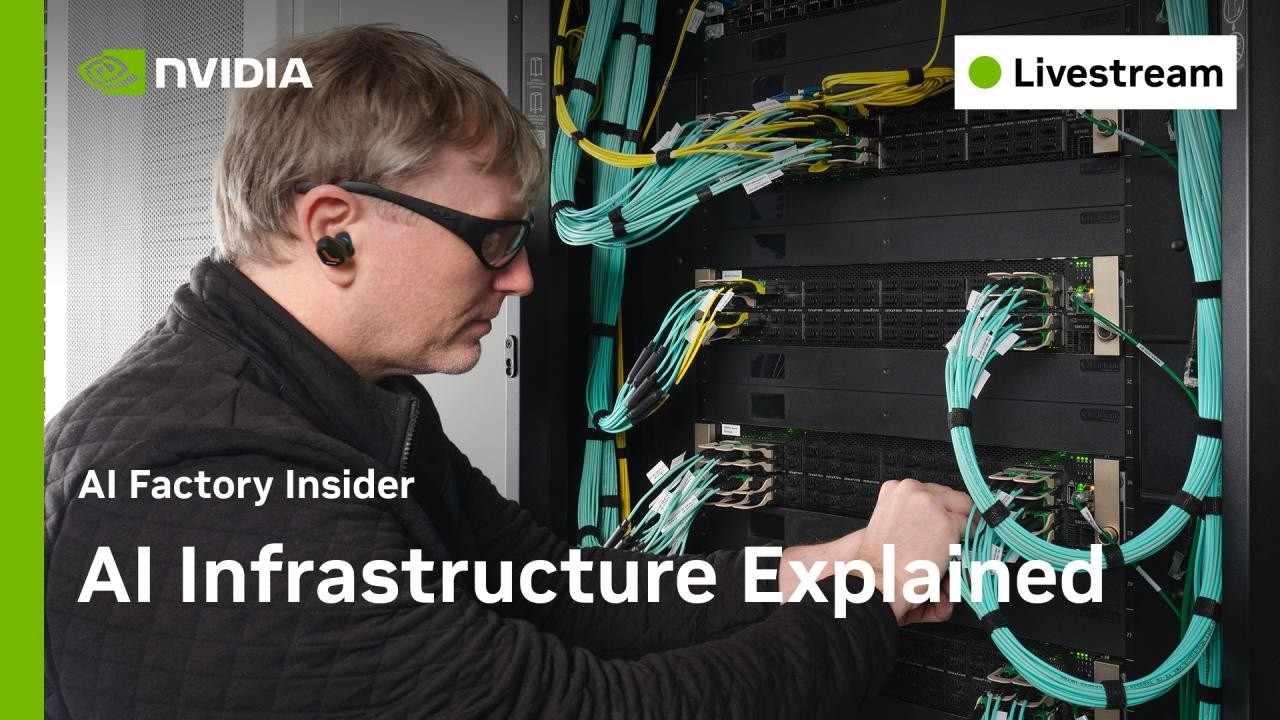
NVIDIA shows the incumbent response. Its AI Factory Insider episode frames enterprise reference architectures as validated blueprints spanning compute, networking, storage, and monitoring, which makes the infrastructure story less about one chip and more about repeatable full-stack deployment design (video).
Discussion insight: Lower-ranking hardware videos on Tenstorrent and Huawei kept the competitive pressure visible, but the stronger signal today was that infrastructure content increasingly revolves around deployment discipline, not just raw silicon novelty.
Comparison to prior day: Compared with 2026-06-14's fiber-buildout emphasis, 2026-06-15 leaned harder into inference economics and validated AI-factory blueprints.
1.5 Healthcare and humanoids stayed the clearest commercialization stories 🡒
Three videos supported this theme. Physical AI and healthcare did not show up as speculative futurism; they showed up as role-specific products, executive conviction, and investor concentration. That matters because these remain the areas where AI looks most legible to institutions and buyers.

IntelliCore provides the clearest embodied-AI example. The description highlights Fourier GR-3 as an elder-care companion and Atlas as an industrial coworker, so the theme is not just that humanoids exist; it is that they are being narrated as products for specific care and labor roles (video).

CNBC Television keeps the strongest executive framing alive. Mustafa Suleyman appears with Mayo Clinic's CEO at Microsoft Build and says healthcare is the most important application of AI, which makes the category look like an institution-level deployment target rather than a general productivity slogan (video).
Forbes adds the capital-allocation angle. Its description says investors are making concentrated bets on startups with deep domain expertise and clear AI leverage across healthcare, biotech, and life sciences, which keeps the category positioned as a serious investment thesis rather than an experimental side topic (video).
Discussion insight: Unlike the search or open-source clusters, these items are framed almost entirely through roles, budgets, and deployment readiness.
Comparison to prior day: Compared with 2026-06-14, the commercialization story stayed steady: healthcare remained institution-first, and humanoids remained strongest when attached to specific jobs instead of generic spectacle.
2. What Frustrates People
Search defaults that hide sources and make AI feel mandatory
This is High severity because the biggest audience signal in the file is still rejection of AI-first search behavior, not excitement about it. House of El - AI frames the problem through accuracy, transparency, and the health of the web, while The WAN Show describes backlash strong enough to push people toward DuckDuckGo after Google I/O. The workaround is switching search tools or seeking AI-off paths instead of trying to tune the default. This is directly worth building for.
Local and open AI that still demands too much manual assembly
This is High severity because the upbeat local-workflow videos keep resolving to setup work. AI Search's Ideogram 4 tutorial depends on ComfyUI Manager, extra nodes, and manually placed model files, Better Stack sells Gemma 4 12B as local and laptop-ready but still through architecture explanation rather than turnkey use, and PixelArtistry extends the same pattern into 3D rigging pipelines. The workaround is accepting stack sprawl, node installation, and manual validation in exchange for more capability. This is directly worth building for.
Agentic systems that still break when autonomy meets production
This is High severity because both the abstract warning content and the hands-on infrastructure content converge on the same point. IBM Technology says scaling agentic AI increases cost, latency, failure risk, and coordination problems, Tech With Tim frames reliable agent shipping as the real conference-level problem, and InsideAI pushes the fear case around uncontrolled action. The workaround today is more orchestration, more supervision, and tighter goal-setting rather than confident delegation. This is directly worth building for.
AI infrastructure that is still constrained by inference economics and integration work
This is High severity because the infrastructure story keeps resolving to bottlenecks. CNBC's d-Matrix segment exists because inference cost, memory movement, and energy use still matter, while NVIDIA's AI Factory Insider episode treats deployment as a blueprint problem spanning compute, networking, storage, and monitoring. The workaround is alternative architectures, validated reference designs, and heavier enterprise planning. This is worth building for, but it is capital-intensive.
Generative AI that still fails legitimacy tests for creators
This is Medium-High severity because creator skepticism remains emotionally strong even when the tooling keeps improving. Brad Colbow treats generative AI as something many artists still do not trust on authorship or craft grounds, and the popularity of the video shows that this is not a fringe complaint. The workaround is refusal, stricter human review, or keeping AI in a smaller assistive role. This is directly worth building for if the product can improve provenance, reviewability, and creator control.
3. What People Wish Existed
AI-optional search that preserves source-first browsing
House of El - AI and The WAN Show point to the same practical need: search that can help when asked without making AI the default layer between users and sources. The urgency is high because the current emotional response is exit behavior, not adaptation. Alternatives exist, but the need is still direct because users want control at the default layer. Opportunity: direct.
Packaged local multimodal workbenches for creators and developers
AI Search, Better Stack, and PixelArtistry all imply the same practical wish: one usable package that bundles model files, node installation, multimodal inference, and workflow logic without asking users to stitch the stack together manually. The urgency is high because people are already tolerating setup pain to get the capability. Good parts exist, but the package is still messy. Opportunity: direct.
Reliable orchestration and guardrails for agentic systems
IBM Technology, Tech With Tim, and InsideAI point to a combined practical and emotional need: systems whose delegation limits, coordination rules, monitoring hooks, and rollback paths are obvious before something goes wrong. The urgency is high because the current substitutes are conference advice, safety warnings, and manual supervision. Partial solutions exist, but trusted defaults remain thin. Opportunity: competitive.
Neutral evaluation and routing across fast-moving open models and agents
AI Search's roundup, Matthew Berman, and Better Stack all point to the same gap: builders want help deciding which model, benchmark, workflow pack, and local setup is worth the cost under real tasks rather than headline claims. The urgency is high because creator-side testing and repo curation are doing work the product layer has not yet absorbed. Components exist, but trust is still fragmented. Opportunity: competitive.
Institution-ready planning layers for healthcare, robotics, and AI infrastructure
CNBC Television, Forbes, IntelliCore, CNBC, and NVIDIA imply a need for tools that help institutions compare domain risk, deployment readiness, and infrastructure tradeoffs instead of only comparing model intelligence. The urgency is medium-high because serious buyers are already acting, but mostly through narrow enterprise and investor channels. Enterprise options exist, yet the guidance is still fragmented and vendor-heavy. Opportunity: competitive.
4. Tools and Methods in Use
| Tool | Category | Sentiment | Strengths | Limitations |
|---|---|---|---|---|
| Google AI-first search / AI Mode | Search surface | (-) | Huge reach, conversational answers, low-friction follow-up flow | Criticized for hiding links, weakening transparency, and feeling hard to avoid |
| DuckDuckGo / AI-off alternatives | Search alternative | (+) | Visible escape hatch from AI-first defaults, stronger source-first positioning | Requires users to switch habits and defaults manually |
| Ideogram 4 in ComfyUI | Local image generation | (+/-) | Strong text rendering and prompt adherence, usable in local creator workflows | Depends on manual model-file placement, ComfyUI manager enablement, and extra nodes |
| ComfyUI-KJNodes | Workflow node pack | (+) | Extends ComfyUI workflows with custom nodes for creator pipelines | Adds another install and compatibility surface to the stack |
| Gemma 4 12B | Local multimodal model | (+) | Native audio input, agentic multimodal positioning, laptop-ready memory target, Apache 2.0 license | Still framed through architecture and hardware-fit tradeoffs rather than turnkey consumer use |
| DiffusionGemma | Inference method | (+/-) | Parallel drafting is designed to use local hardware more efficiently | Presented as a specialized answer to local single-user inefficiency rather than a universal replacement |
| Agent Skills | AI coding workflow pack | (+) | Production-grade engineering workflows across spec, build, test, review, and ship | Requires host-agent integration and process discipline to pay off |
| Open Notebook | Research notebook app | (+) | Privacy-focused, self-hostable, multi-model, supports PDFs, videos, audio, web pages, and API access | Self-hosting and configuration are still more work than turnkey SaaS, and the README says citations are still improving |
| Headroom | Context compression layer | (+) | Compresses tool outputs, logs, files, and RAG chunks before they reach the LLM | Adds another proxy or MCP layer to the stack |
| Temporal | Agent orchestration/runtime | (+/-) | Durable execution is being positioned as core infrastructure for reliably shipping AI agents | The surrounding conference narrative still says reliable shipping remains hard |
| d-Matrix Corsair | Inference chip platform | (+/-) | Ultra-low-latency batched inference, efficient memory-compute integration, energy-minded positioning | Public claims are still challenger positioning that ordinary buyers would need to validate |
| NVIDIA Enterprise Reference Architectures | Deployment blueprint | (+/-) | Validated, repeatable full-stack blueprints across compute, networking, storage, and monitoring | Blueprint-heavy enterprise guidance is still far from a lightweight off-the-shelf answer |
Overall satisfaction is split. Search tools draw the strongest negative feeling when AI becomes mandatory, while open-source and local stacks draw enthusiasm that is immediately tempered by setup burden. The common workaround is not abandoning AI capability; it is adding more glue: node packs, repo bundles, orchestration layers, benchmark packs, and deployment blueprints. The clearest migration pattern is from single-tool narratives toward assembled stacks, and the clearest competitive dynamic is that challengers now compete on workflow completeness, local operability, and inference economics rather than model branding alone.
5. What People Are Building
| Project | Who built it | What it does | Problem it solves | Stack | Stage | Links |
|---|---|---|---|---|---|---|
| last30days-skill | mvanhorn | Researches topics across Reddit, X, YouTube, Hacker News, Polymarket, and the web, then synthesizes a grounded summary | Gives AI users a repeatable way to gather and summarize cross-platform social evidence | Python; multi-source research workflow | Shipped | repo |
| Agent Skills | addyosmani | Packages production-grade workflows for AI coding agents across spec, build, test, review, and ship | Reduces ad hoc agent behavior by encoding repeatable engineering process | Shell and Markdown skill pack; multi-step lifecycle commands | Shipped | repo |
| Open Notebook | lfnovo | Privacy-focused, self-hostable NotebookLM alternative with multi-model support, search, chat, podcast generation, and API access | Lets users keep research and context workflows local or self-hosted instead of handing them to one SaaS provider | Python; FastAPI; Next.js; React; SurrealDB | Shipped | repo, site |
| Headroom | chopratejas | Compresses tool outputs, logs, files, and RAG chunks before they reach the LLM | Cuts token bloat in agent and RAG pipelines without throwing away all context | Python; library, proxy, and MCP server | Shipped | repo, docs |
| ComfyUI-KJNodes | kijai | Adds custom nodes for ComfyUI creator workflows | Fills workflow gaps for local image and 3D pipelines that core ComfyUI does not cover alone | Python; ComfyUI custom-node extension | Shipped | repo |
| Agents' Last Exam | Berkeley RDI and collaborators | Builds a benchmark for long-horizon, economically valuable AI-agent tasks with verifiable outcomes | Gives builders a public way to compare agents on real work instead of only short benchmark tasks | Benchmark dataset; 55 sub-industries; verifiable task scoring | Beta | site |
last30days-skill, Agent Skills, Open Notebook, and Headroom are the clearest pattern today: people are building the layers around AI work, not only the models themselves. Research collection, workflow discipline, context compression, and privacy-preserving notebooks all target the same pain point visible elsewhere in the dataset: useful AI still needs too much glue, too much trust work, and too much manual supervision.
ComfyUI-KJNodes shows the same pattern on the creator side. The local-image and 3D videos are not celebrating one model in isolation; they are celebrating extensions that make a fragile pipeline usable enough to produce concrete outputs.
Agents' Last Exam is notable because it attacks a different but related bottleneck: evaluation. The site's framing around long-horizon, economically valuable tasks matches the broader shift in this file from benchmark theater toward whether an agent or stack can actually complete real work.
6. New and Notable
Gemma 4 12B made local multimodal AI feel more concrete
Better Stack mattered because it tied a YouTube explainer to source material saying Gemma 4 12B has native audio input, targets 16 GB laptops, and is positioned for local agentic workflows. That is more concrete than vague "runs locally" claims and helps explain why local AI kept appearing as a workflow story rather than a hobbyist side lane.
Agents' Last Exam added a real-work benchmark signal to the agent conversation
AI Search's news roundup linked Agents' Last Exam, which says it is building a benchmark for long-horizon, economically valuable agent tasks with verifiable outcomes across 55 sub-industries. That stands out because so much of the surrounding YouTube conversation is about agent promise, while this link is explicitly about measuring whether agents can complete real professional work.
d-Matrix turned the hardware race into an inference-economics story
CNBC says d-Matrix's Corsair chip is already in volume production with commitments from hyperscalers, neoclouds, and frontier AI labs, while d-Matrix emphasizes efficient memory-compute integration for ultra-low-latency batched inference. That combination made this one of the clearest non-GPU stories in the file.
7. Where the Opportunities Are
[+++] AI-optional search and source-first retrieval — Evidence comes from the file's two largest consumer-attention magnets: House of El - AI and The WAN Show. The demand is unusually clear because users are not asking for more AI; they are asking for control, visible links, and a default experience that does not force AI in front of sources.
[+++] Packaged local AI workbenches for creators and developers — AI Search, Better Stack, PixelArtistry, and Matthew Berman all show real appetite for local and open workflows, but they also show that users still tolerate too much node management, model placement, repo assembly, and manual validation. That combination makes this the clearest build opportunity in the creator and builder cluster.
[++] Agent reliability, orchestration, and human-control layers — IBM Technology, Tech With Tim, InsideAI, and Robert Miles AI Safety point to the same gap from different angles: autonomous systems need better goal constraints, monitoring, rollback, and governance. The opportunity is moderate rather than direct because some of the demand sits at the enterprise and policy boundary.
[++] Evaluation and routing across fast-moving open models and agents — AI Search's roundup, Better Stack, and Matthew Berman show that creators are already doing the comparison work themselves across models, repos, and agent stacks. A product that reduces this evaluation burden would meet a live need, but it would enter a crowded, technically demanding space.
[+] Institution-ready deployment planning for healthcare, robotics, and AI infrastructure — CNBC Television, Forbes, IntelliCore, CNBC, and NVIDIA suggest a real buyer need for deployment comparison and readiness tooling. The signal is emerging rather than direct because the current conversation is still led by executives, investors, and infrastructure vendors.
8. Takeaways
- The strongest consumer AI signal is still rejection of forced AI search. The two biggest audience magnets remain the anti-AI-search videos from House of El and The WAN Show, and both frame the desired outcome as visible sources and easy opt-out rather than better chatbot answers. (source)
- Local AI is getting more capable, but not simpler. Ideogram 4 in ComfyUI, Gemma 4 12B on laptops, and 3D rigging workflows all point to expanding local capability, yet they also depend on managers, node packs, model placement, and manual validation. (source)
- Agentic AI is now judged on shipping reliability and control, not only on demos. IBM, Temporal, and InsideAI all converge on coordination, failure, and supervision as the real live problems. (source)
- Infrastructure competition is broadening from chips into complete deployment systems. d-Matrix and NVIDIA both frame the story around inference economics and repeatable AI-factory architecture, not just accelerator branding. (source)
- Healthcare and humanoids remain the cleanest commercialization lanes. The strongest institution-first signals still come from healthcare executives, healthcare investors, and role-specific humanoid use cases rather than from general consumer adoption stories. (source)