YouTube AI - 2026-06-17
1. What People Are Talking About
1.1 Open-weight AI shifted from generic enthusiasm to a direct coding-model leaderboard fight 🡕
Three videos supported this theme, and the top-ranked item in the file belonged to it. The center of gravity moved from "open source is catching up" to "which open-weight model should be the default for serious coding and agent work." That matters because creators are now selling these models through concrete workflow fit - supported tools, context windows, token speed, benchmarks, and pricing - instead of treating openness as the whole story.
AI Search frames GLM 5.2 as something developers can adopt immediately, not just admire. The description links the GLM coding plan, Z Code, chat.z.ai, and the official quick-start, where Z.AI says the coding plan uses a dedicated coding API and supports Claude Code plus other coding tools. With 190,363 views, it was the clearest sign that open-model attention is translating into setup behavior and toolchain decisions (video).

Sam Witteveen adds the neutral scoreboard. His description points directly to the official blog, weights, and Artificial Analysis, whose model page says GLM-5.2 max has a 1M-token context window, runs at 111 tokens per second, and sits among the leading intelligence models even if it is expensive for its class. The point is not just that Z.AI published another model; it is that third-party ranking and benchmark pages are now part of the creator story around open weights (video).

WorldofAI supplies the rival. The linked Kimi K2.7 Code docs describe a 256K context window, improved long-horizon coding and agentic performance, and a HighSpeed variant around 180 tokens per second, while the video pitches it as a cheaper open-weight coding model that can stand beside Opus 4.8 Max and GPT-5.5 on benchmark-style tasks. That keeps the day from collapsing into a one-model GLM story; the file looks like a live contest for the open coding default (video).
Discussion insight: The strongest open-model claims are now practical, not ideological. Context length, supported coding tools, token speed, and cost-performance have become the language creators use to differentiate open models.
Comparison to prior day: Compared with 2026-06-16, when the builder story centered more on workflow packs, local setup, and repo collections, 2026-06-17 concentrated that same energy into head-to-head open-model ranking and coding-tool adoption.
1.2 AI coding became more explicitly multi-agent, permissioned, and security-aware 🡕
Three videos supported this theme. The coding conversation moved another step away from "AI writes code faster" and toward "how do teams structure, review, and secure agentic software work?" That matters because the file increasingly treats coding agents as a coordination and trust problem, not just a model-quality problem.
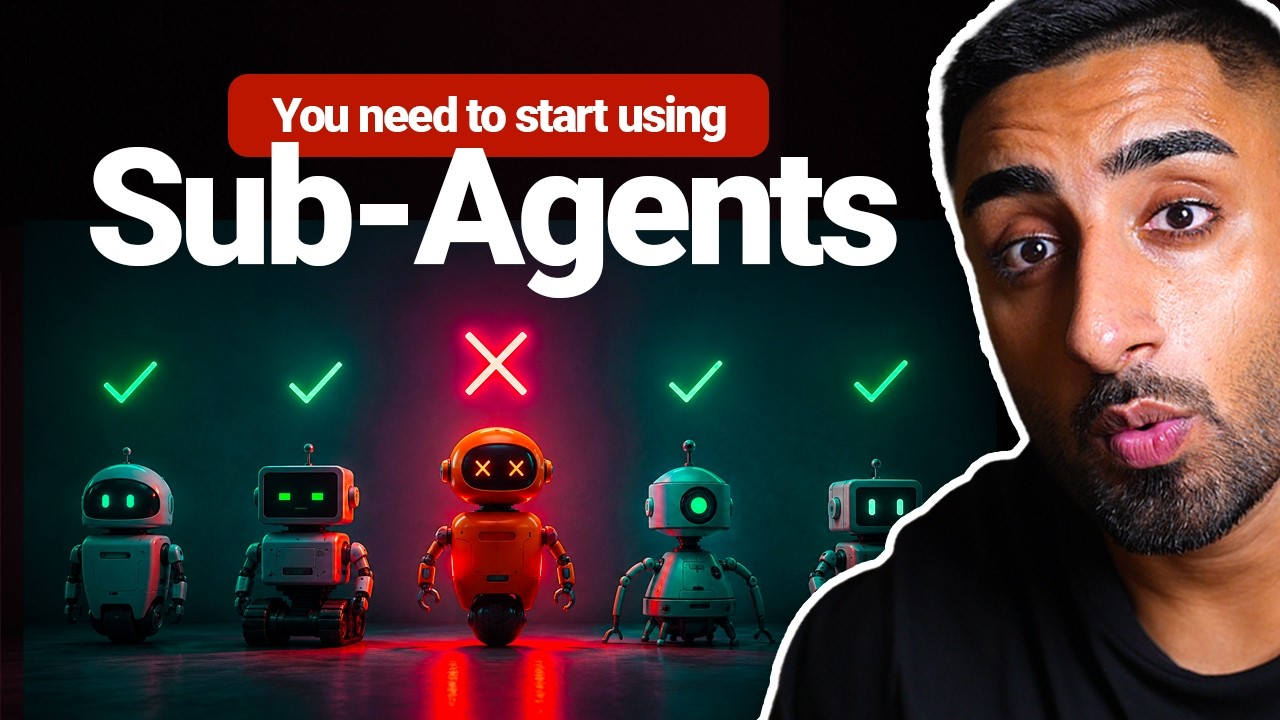
Sonny Sangha makes the orchestration shift explicit. His walkthrough argues that using one agent for writing, testing, reviewing, scaling, and security is the wrong pattern, then demonstrates a Mistral Vibe workflow built from specialized sub-agents, parallel reviewers, isolated permissions, and a reusable audit command. The important signal is not brand choice; it is the idea that AI coding now benefits from team-like role separation and repeatable review pipelines (video).

IBM Technology adds the trust model. The video and IBM's AI agent security explainer both argue that tool-calling and multiagent systems create a broader attack surface: attackers can manipulate agent behavior or attack the tools themselves, which is why the Kagenti framing leans on identity and delegation chains in production. That raises the conversation from code generation quality to system-level containment and accountability (video).

IBM Technology also grounds the human process side. IBM's pair programming page still stresses driver-navigator role clarity, constant communication, role switching, and shared problem solving, which means even the more optimistic coding content is framed as supervised collaboration rather than autonomous replacement. The result is a coding theme that looks more disciplined and more operational than the raw productivity framing common a few months ago (video).
Discussion insight: The adjacent runtime story points in the same direction. Temporal's Replay 2026 page calls itself "the durable execution conference for AI," which reinforces that orchestration, retries, and reliable execution are now part of the same coding-agent conversation.
Comparison to prior day: Compared with 2026-06-16, when coding content leaned more on review discipline and software adoption, 2026-06-17 pushed harder into sub-agents, permission boundaries, and explicit agent-security architecture.
1.3 AI infrastructure moved lower in the stack, from flashy chips to boards, power, and factory blueprints 🡕
Four videos supported this theme. The file no longer treats infrastructure as a simple GPU brand contest. Instead it moves lower into printed circuit boards, enterprise reference architectures, durable execution, and power-backed data-center capacity. That matters because the bottlenecks being discussed are increasingly physical, operational, and financial.
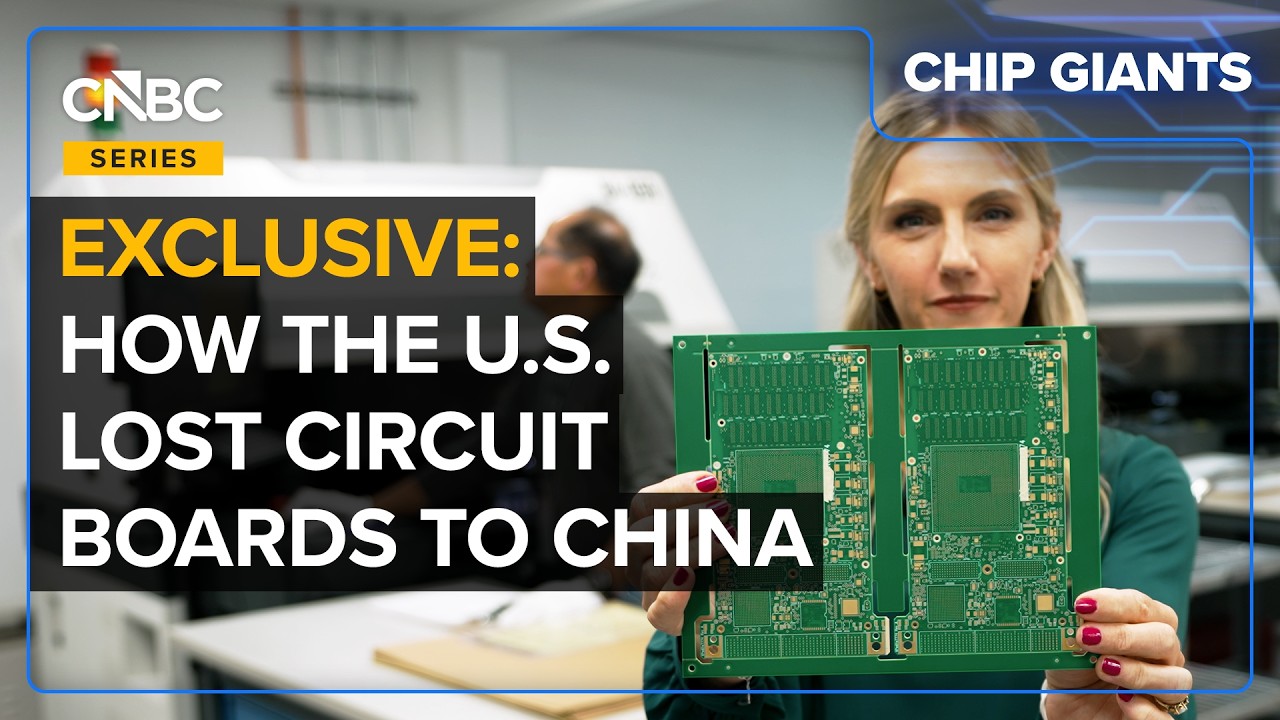
CNBC supplies the clearest substrate-level warning. Its description says nearly all AI circuit boards for Nvidia, Google, Apple, and others are made in China, which creates both supply-chain vulnerability and room for malicious components in a market where PCB demand and prices are already elevated. The key shift is that AI infrastructure risk is no longer being narrated only in terms of chip design; it is also about the quiet hardware layers underneath the chips (video).
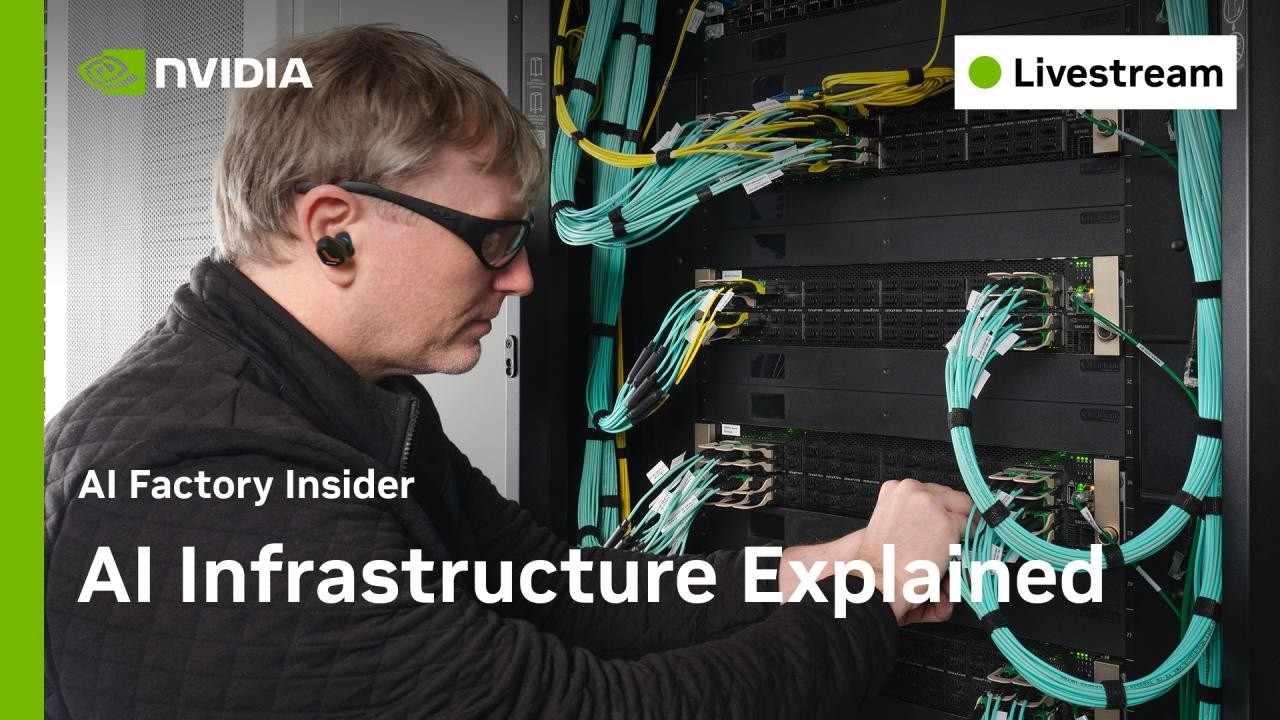
NVIDIA pushes the blueprint version of the same story. The description says Enterprise Reference Architectures are validated, repeatable patterns that help enterprises turn data centers into high-performance AI factories, with specific configuration types and customer examples rather than pure theory. The important signal is that AI infra is increasingly being sold as an operational template, not just a hardware bill of materials (video).

Tech With Tim adds the runtime layer. His description says everyone is building agents but almost nobody is shipping them reliably, and the linked Replay 2026 page calls itself "the durable execution conference for AI." That expands infrastructure beyond racks and boards into retries, state, and long-lived workflow execution for agents (video).

Rick Orford - Trading Stocks and Options For All contributes the power-and-capital angle. His description frames Applied Digital's moat as power-backed data-center capacity, long-term lease revenue, and execution risk around debt, dilution, and construction timelines, which means AI infra is being discussed as a utility-style capacity business as much as a technology business. Even at lower views, it adds a non-redundant infrastructure lens the higher-ranked videos do not cover (video).
Discussion insight: Across all four items, the shared concern is not novelty but constraint. Boards, factory blueprints, durable execution, and power access all show up as ways to turn AI ambition into something that can actually run at scale.
Comparison to prior day: Compared with 2026-06-16, which leaned more on rival-chip narratives like d-Matrix, Cerebras, and Tenstorrent, 2026-06-17 dropped lower into supply chain, runtime reliability, and data-center economics.
1.4 Frontier capability stories now arrive with immediate governance anxiety 🡕
Three videos supported this theme. The file is not choosing between capability excitement and safety worry; it is making them adjacent parts of the same conversation. That matters because even mainstream creator coverage now treats frontier progress, regulation, and control as tightly coupled rather than separate audiences.

Sabine Hossenfelder gives the most legible capability shock. Her description says mathematicians grew more worried after OpenAI revealed that a general-purpose reasoning model had written a proof for a problem that had sat unsolved for more than 80 years, which reframes AI progress as a threat to a specific high-skill discipline rather than another abstract benchmark gain. Whether viewers accept the framing or not, it is clear evidence that reasoning advances are now being narrated as profession-level disruption (video).

AI Revolution provides the structured roadmap counterpart. The linked DeepMind abstract says AGI is now a concrete next-decade target and describes four pathways from AGI to ASI - scaling AGI, paradigm shifts, recursive improvement, and large multi-agent collectives - while warning that progress could unfold as a series of accelerating transformations. That raises the level of the conversation from generic "superintelligence" talk to a more specific post-AGI planning problem (video).

Robert Miles AI Safety makes the governance side concrete. The description links the original RAISE Act, later modifications, and a campaign site while arguing that more than $10 million has been pledged to stop one congressional candidate from winning office. The significance is not merely that regulation exists; it is that AI safety policy is now framed as a live political spending fight (video).
Discussion insight: The file repeatedly pairs "AI can do more than we thought" with "we still do not have a settled control story." The capability and governance narratives are becoming harder to separate.
Comparison to prior day: Compared with 2026-06-16, which leaned more toward post-AGI governance and abstract control questions, 2026-06-17 adds a more concrete reasoning-capability jolt through the math storyline while keeping the regulatory conflict visible.
2. What Frustrates People
Open models that still need too much benchmarking, setup, and workflow glue
This is High severity because the most visible open-model wins still arrive with a lot of surrounding decision work. AI Search, Sam Witteveen, and WorldofAI all frame GLM 5.2 and Kimi K2.7 through benchmark pages, coding-plan setup, context windows, speed, pricing, and tool compatibility rather than a turnkey "just use this" story. The workaround is more scorecard reading, more toolchain configuration, and more side-by-side testing. This is directly worth building for.
AI coding agents that add a new supervision and security burden
This is High severity because the coding videos now assume orchestration and trust problems instead of hiding them. Sonny Sangha argues against one agent doing everything, IBM Technology's Kagenti segment says multiagent systems need identity and delegation controls, and IBM's pair-programming explainer still depends on strong human communication and review discipline. The workaround is more sub-agents, more permission design, and more human oversight. This is directly worth building for.
AI infrastructure that is bottlenecked by supply chain, power, and capital intensity
This is High severity because the infrastructure cluster is full of constraint language. CNBC points to PCB dependence on China and malicious-component risk, NVIDIA frames AI-factory rollout through validated blueprints instead of plug-and-play simplicity, and Rick Orford centers power access, debt, timelines, and dilution as part of the AI data-center story. The workaround is more planning, more capital, and more operational discipline. This is worth building for, but it is enterprise-heavy.
Capability progress that is outpacing clear governance and control stories
This is High severity because the strongest frontier-AI videos pair progress with unease. Sabine Hossenfelder frames reasoning gains as a threat to mathematicians, AI Revolution links to DeepMind's structured AGI-to-ASI pathways, and Robert Miles AI Safety makes regulation look like an active political spending fight. The workaround today is more warning, more debate, and more institutional improvisation rather than a settled safety stack. This is worth building for, though parts of the demand live at the policy layer.
Healthcare AI that looks promising but still carries cyber-risk and domain-expertise requirements
This is Medium-High severity because the healthcare items are positive only when tightly scoped. Stanford Online pairs clinician uptake of Open Evidence and GPT-style tools with the claim that hospitals are sitting targets for cyberattacks, while Forbes frames the commercial opportunity through concentrated bets on startups with deep domain expertise. The workaround is narrow deployment under expert oversight instead of broad default adoption. This is worth building for, but shallow general-purpose products will struggle.
3. What People Wish Existed
Open-model evaluation and deployment layers that hide the comparison work
AI Search, Sam Witteveen, and WorldofAI all imply the same practical need: one place that turns benchmark position, context limits, coding-tool support, speed, and price into a trustworthy default recommendation and setup path. The urgency is high because people are already trying to swap these models into real coding workflows. Pieces exist, but the user still has to assemble the decision. Opportunity: direct.
Secure multi-agent coding workflows with built-in role separation and trust boundaries
Sonny Sangha, IBM Technology's Kagenti video, and IBM's pair-programming guidance imply a combined need for sub-agent templates, permission policies, delegation tracing, review gates, and safe defaults around tool use. The urgency is high because the current best practice still sounds like "design your own org chart and security model." Partial solutions exist, but the integrated workflow is still thin. Opportunity: direct.
AI-factory planning tools that connect boards, power, runtime reliability, and capital risk
CNBC, NVIDIA, Tech With Tim, and Rick Orford together imply a need for products that compare hardware dependencies, power constraints, factory blueprints, durable execution choices, and financing tradeoffs in one model. The urgency is medium-high because enterprises clearly care, but the buying process is still specialized and fragmented. Vendor materials exist, yet independent planning help is scarce. Opportunity: competitive.
Healthcare AI control planes for evidence, cyber defense, and governed deployment
Stanford Online and Forbes both point to the same missing layer: software that helps institutions adopt clinician-facing AI while handling evidence quality, security posture, accountability, and domain-specific workflow integration. The urgency is medium because the buyer logic is visible, but adoption remains careful and expert-led. Practical need dominates the emotional one here: institutions want to use AI without creating new clinical or cyber failure modes. Opportunity: emerging.
4. Tools and Methods in Use
| Tool | Category | Sentiment | Strengths | Limitations |
|---|---|---|---|---|
| GLM 5.2 | Open-weight model | (+) | Strong benchmark positioning, 1M-token context window, fast inference, and official coding-tool onboarding | Still requires dedicated API/tool setup and is expensive for its open-weight peer group on Artificial Analysis |
| Kimi K2.7 Code | Coding model | (+/-) | Stronger long-horizon coding, 256K context, tool calling, and a HighSpeed option | Standard mode is still framed as slow/token-heavy, and performance claims still need real workflow validation |
| Artificial Analysis | Benchmark | (+/-) | Gives creators a neutral way to compare intelligence, speed, cost, and context | Benchmark strength does not remove the need for workflow-specific testing |
| Mistral Vibe workflow | Agentic coding tool | (+/-) | Supports specialized sub-agents, parallel review passes, and reusable audit workflows | Requires more setup, permissions design, and process maturity than one-agent usage |
| AI pair programming | Development method | (+/-) | Improves debugging, review quality, and shared understanding | Depends on constant communication and active human supervision |
| Kagenti / AI agent security | Agent security architecture | (+/-) | Identity-based controls, delegation chains, and a clearer model of agent attack surfaces | Threats are still evolving alongside the agent frameworks themselves |
| Temporal durable execution | Agent runtime | (+/-) | Strong framing around shipping agents reliably over long-lived workflows | Adds orchestration and state-management complexity |
| NVIDIA Enterprise Reference Architectures | Infrastructure blueprint | (+/-) | Validated, repeatable data-center-to-AI-factory patterns for enterprise rollout | Vendor-centered and most useful to larger organizations with existing infra budgets |
| Open Evidence and GPT-style clinician tools | Clinical assistant workflow | (+/-) | Faster evidence access, stronger clinician productivity, and higher patient engagement interest | Cyber-risk, unclear policy ownership, and domain-specific deployment constraints |
Overall satisfaction is split between excitement and burden. The strongest positive sentiment surrounds open models, structured coding workflows, and domain-specific AI assistance, but almost every promising tool comes bundled with comparison work, configuration overhead, or new trust requirements. The most common workaround is to add more layers - benchmarks, sub-agents, identity controls, durable runtimes, or infrastructure blueprints - rather than expect any one model or product to solve the entire workflow. The clearest migration pattern is from one general AI tool toward stacked systems: model plus benchmark plus workflow plus security plus runtime.
5. What People Are Building
| Project | Who built it | What it does | Problem it solves | Stack | Stage | Links |
|---|---|---|---|---|---|---|
| GLM 5.2 | Z.AI | Packages an open-weight frontier model for coding and agent workflows | Gives developers an open alternative that is positioned for real coding-tool use instead of chat-only experimentation | Open-weight model; coding API; 1M context window | Shipped | quick-start, chat |
| Kimi K2.7 Code | Moonshot AI | Ships a coding-focused open-weight multimodal model with long-context and HighSpeed variants | Targets long-horizon coding, tool use, and cheaper frontier-style developer workflows | 1T-parameter open-weight multimodal model; 256K context; OpenAI-compatible API | Shipped | docs, site |
| last30days-skill | mvanhorn | Searches Reddit, X, YouTube, TikTok, GitHub, and the web with an agent-led synthesis layer | Reduces fragmented multi-platform research work | Multi-source agent-led search workflow | Shipped | repo |
| Agent Skills | addyosmani | Packages production-grade engineering workflows for AI coding agents | Turns ad hoc coding-agent behavior into repeatable engineering process | Markdown skill pack and lifecycle command workflows | Shipped | repo |
| Open Notebook | lfnovo | Provides a private, local, multi-model alternative to NotebookLM | Gives users a research notebook without provider lock-in | Python; FastAPI; Next.js; React; SurrealDB | Shipped | repo, site |
| Headroom | chopratejas | Compresses tool outputs, logs, files, and RAG chunks before they reach the LLM | Cuts token bloat and context overflow in agent workflows | Python/TypeScript library; proxy; MCP server | Shipped | repo, docs |
The strongest build pattern is still enabling infrastructure around AI work rather than breakout consumer apps. The model vendors are productizing open weights as coding platforms with APIs, onboarding, and benchmark positioning, while the independent builders in Matthew Berman's project cluster are packaging research aggregation, workflow discipline, privacy-preserving notebooks, and context compression around those models.
GLM 5.2 and Kimi K2.7 Code are especially notable because they do not present themselves as raw research artifacts; they present themselves as usable developer products with setup guides, context claims, and coding-specific positioning. That matches the broader theme of the file: attention is moving from "what can the model do?" toward "how does this fit into a working developer stack?"
last30days-skill, Agent Skills, Open Notebook, and Headroom point in the same direction from the other side. Builders are not waiting for one foundation model to make everything easy; they are creating research, workflow, privacy, and compression layers that make AI systems more usable and more controllable. The absence of a breakout end-user app in this table is itself a signal that workflow quality remains the more urgent build target.
6. New and Notable
Open-weight coding models became the clearest headline in the file
AI Search, Sam Witteveen, and WorldofAI mattered because they turned open weights into a practical developer-choice story. The notable shift was not merely that GLM 5.2 and Kimi K2.7 exist; it was that creators framed them through coding-plan setup, third-party benchmark rank, context size, speed, and value against proprietary models.
AI reasoning anxiety reached mathematics in a mainstream creator format
Sabine Hossenfelder stands out because she makes one reasoning-model claim feel like a labor-market event for mathematicians rather than another benchmark win. That is a more socially legible framing of capability progress than the usual "model got better" update, and it helps explain why the safety and governance items remain adjacent to capability coverage.
Agent security became a named architectural topic instead of a vague caution
IBM Technology's Kagenti segment is notable because it gives agent security a concrete vocabulary: identity, delegation chains, tool misuse, and multiagent attack surfaces. Together with Sonny Sangha's workflow video, it suggests the market is moving from "agents are useful" to "agents need an org chart and a threat model."
The infrastructure conversation dropped below GPUs into boards, blueprints, and power
CNBC, NVIDIA, and Rick Orford stand out because they frame AI infrastructure through printed circuit boards, AI-factory reference designs, and power-backed data-center capacity. That is a more operational and constrained story than the hardware-hero narratives that often dominate AI infrastructure coverage.
7. Where the Opportunities Are
[+++] Open-model evaluation, onboarding, and routing layers - AI Search, Sam Witteveen, and WorldofAI all show the same gap from different angles: developers need help deciding which open-weight model to trust, how to wire it into real coding tools, and when the benchmark story is actually good enough for production. The opportunity is strong because demand is already visible and the current workflow is still comparison-heavy.
[+++] Secure multi-agent development platforms - Sonny Sangha, IBM Technology's Kagenti segment, IBM's pair-programming guidance, and Temporal Replay all point to the same need: teams want AI coding systems that bundle sub-agent roles, permissions, traceability, review discipline, and reliable execution into one coherent workflow. The signal is strong because the best current advice is still a manual process recipe.
[++] Infrastructure planning across supply chain, power, and runtime - CNBC, NVIDIA, Tech With Tim, and Rick Orford suggest a real need for tools that connect PCB dependence, AI-factory architecture, durable execution, and power-backed capacity into one planning surface. The need is real, but more enterprise-weighted than creator-led, which makes it moderate rather than direct.
[++] Healthcare AI evidence, security, and deployment operating systems - Stanford Online and Forbes show that healthcare remains one of the few domains where buyer logic is visible, but they also show why adoption stays narrow: evidence quality, cyber-risk, governance, and workflow fit all have to be handled together. The opportunity is moderate now and could strengthen quickly if institutional deployment expands.
8. Takeaways
- Open-weight model competition replaced generic builder chatter as the center of the file. GLM 5.2 and Kimi K2.7 were discussed less as abstract research wins and more as practical defaults for coding and agent workflows, complete with setup paths, benchmark positioning, and price-performance arguments. (source)
- AI coding is being redefined as an orchestration and security problem, not just a generation problem. The strongest workflow guidance now emphasizes specialized sub-agents, permissions, delegation, review discipline, and reliable execution rather than trusting one model to do everything. (source)
- The infrastructure story dropped below GPUs into boards, factories, power, and runtime reliability. PCB dependence on China, AI-factory blueprints, durable execution, and power-backed data-center capacity all appeared as part of the same scaling conversation. (source)
- Capability gains and governance anxiety are now arriving as one package. The math-breakthrough framing, DeepMind's AGI-to-ASI pathways, and the RAISE Act spending fight all suggest that frontier progress is becoming harder to separate from control and policy questions. (source)
- Healthcare remains one of the clearest buyer stories for AI, but only under heavy governance constraints. The most credible healthcare items pair real clinician and investor interest with cyber-risk, evidence quality, and domain-expertise requirements, which keeps the opportunity attractive but narrow. (source)