YouTube AI - 2026-06-22
1. What People Are Talking About
1.1 Open-weight coding competition widened into workflow routing and product packaging 🡕
Five retained items supported this theme. GLM 5.2 remained the main attention center, but 2026-06-22 pushed the conversation beyond one launch cycle and into a broader product race around API compatibility, supported tools, IDE routing, and whether an open model can displace Fable-class workflows in day-to-day development. That matters because the practical question is no longer "is open source catching up?" but "which open model can I slot into Claude Code, Cursor, or another coding surface right now?"
AI Search still supplied the biggest adoption signal. The linked GLM Coding Plan quick start says users need a dedicated Coding API, a subscription plan, and one of the officially supported tools such as Claude Code, Roo Code, Kilo Code, Cline, OpenCode, OpenClaw, Crush, Goose, or Cursor. With 407,297 views, 12,274 likes, and 1,200 comments, the video's core value is not just that GLM 5.2 looks strong; it is that Z.AI is packaging it as a usable coding product rather than raw weights alone (video).

AI Copium widened the competition beyond GLM. The linked MiniMax model invocation docs describe MiniMax-M3 as a 1,000,000-token model built for agentic reasoning, tool use, coding, and long-context work, with both Anthropic-compatible and OpenAI-compatible API paths. Even at 31,255 views, the distinctive signal is that creators are actively scouting a second frontier-open coding route instead of assuming the category already has one settled winner (video).

Riley Brown pushed the same race deeper into workflow tooling. The video frames GLM 5.2 as a low-cost rival to Opus 4.8 and GPT 5.5, shows how to route open models into Cursor, and links OpenAI's Record & Replay, which turns a demonstrated Mac workflow into a reusable skill but is initially limited to macOS and excludes the EEA, the UK, and Switzerland. At 25,081 views, the distinctive signal is that open-model evaluation is now entangled with IDE choice, reusable skills, and operational ergonomics rather than model quality alone (video).
Discussion insight: Mo Bitar and Zubair Trabzada | AI Workshop pushed the same theme from opposite ends. One used mainstream product-competition language about a Chinese open-source model being "good as FABLE," while the other showed explicit Claude-style environment variables pointed at openrouter.ai/api and a real NASA-backed coding demo.
Comparison to prior day: Compared with 2026-06-21, when the GLM wave leaned most heavily on workflow proof, 2026-06-22 added a named frontier rival in MiniMax M3 plus more explicit Cursor, OpenRouter, and real-project configuration details.
1.2 Agent coverage moved from first-project tutorials to managed stacks, sandboxes, and lifecycle redesign 🡕
Three retained items supported this theme. The day still rewarded beginner-accessible agent material, but the center of gravity moved beyond "build your first agent" and toward how to run agents inside managed sandboxes, coordinate them through open protocols, and redesign the software lifecycle around them. That matters because the category is becoming more operational and governance-aware.

Google Cloud Tech still provided the broadest-reach tutorial. The video walks through ReAct plus planner, writer, checker, and retry patterns, while ADK describes itself as an open framework for production-grade agents with structured context management, parallel jobs, failure handling, and deploy-anywhere flexibility. At 167,208 views, the important signal is that a first-agent build tutorial can now reach a mass technical audience while still framing agents as managed systems rather than chat tricks (video).
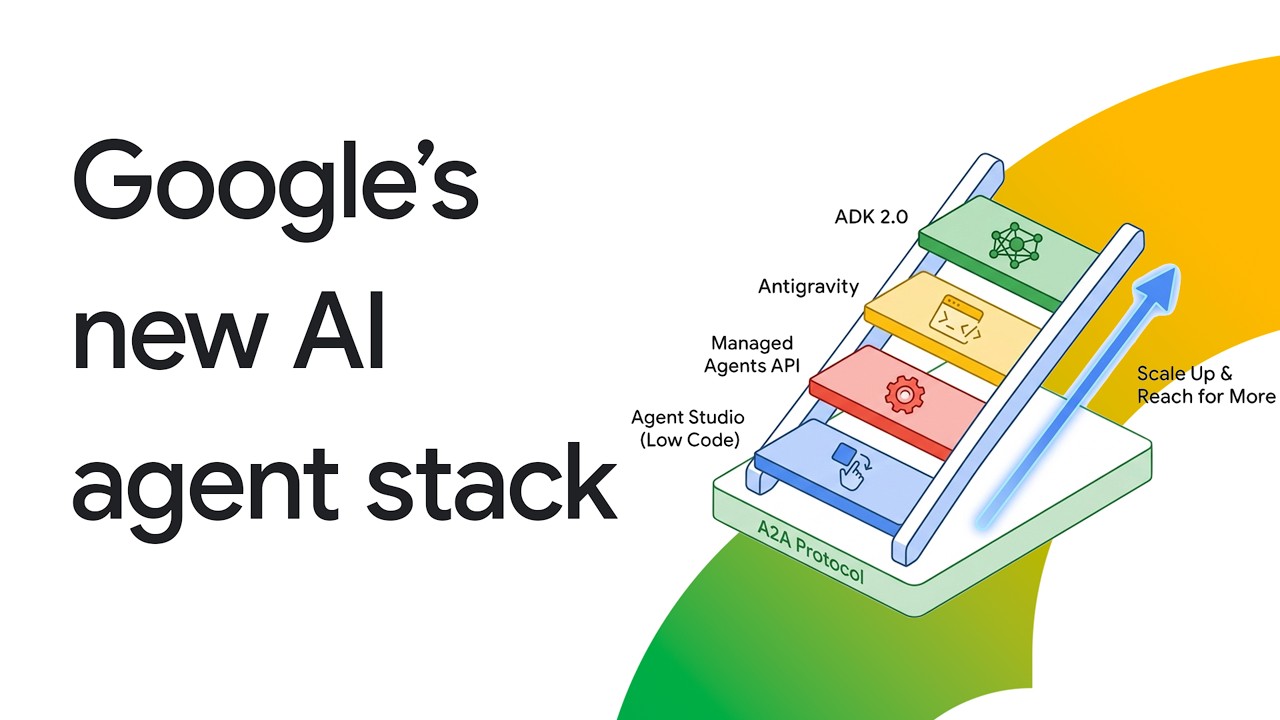
Google Cloud Tech also supplied the clearest platformization signal. The linked Managed Agents API docs say autonomous agents can be created with a single API call inside isolated sandboxes, split across a control-plane Agents API and a runtime Interactions API, while the Google Cloud I/O post adds ADK 2.0 collaboration modes and the A2A protocol launch, and the google/skills repo packages reusable skills installable with npx skills add google/skills. Even at 3,390 views, the distinctive signal is that agent talk is consolidating around managed execution, reusable skills, and cross-vendor interoperability (video).
IBM Technology translated the same shift into software-process language. The linked AI in the SDLC page says developers still lose time to siloed workflows and technical debt, and argues that agentic systems can now act across planning, analysis, coding, testing, deployment, and maintenance instead of serving as narrow coding assistants. At 12,226 views, the notable signal is that AI agents are increasingly being sold as workflow redesign, not just faster autocomplete (video).
Discussion insight: Across all three items, the repeated value is structure: context management, explicit collaboration modes, sandbox boundaries, reusable skills, and lifecycle integration. The agent category looks less like "autonomy" and more like a stack for governed execution.
Comparison to prior day: Compared with 2026-06-21, which stayed more tutorial-first and collaboration-heavy, 2026-06-22 added more explicit control-plane/data-plane, interoperability, and SDLC language.
1.3 Creator AI shifted toward agent-connected production systems while quality skepticism held firm 🡕
Three retained items supported this theme. Creator coverage kept rewarding controllability and workflow assembly, but the new twist was that media tools are being wired directly into general-purpose agents instead of living as separate creator apps. That matters because the workflow is moving from prompting to orchestration, while the trust problem remains unresolved.

AI Search again made the local-control stack concrete. The linked ComfyUI-Manager install docs say the manager is now built into ComfyUI core but still has to be enabled for non-desktop installs, and ComfyUI-KJNodes adds Set/Get routing and subgraph-friendly workflow controls, while the Ideogram 4 package gives the model a local ComfyUI path. With 121,562 views, the strongest signal is that creators are being asked to assemble a configurable node graph instead of relying on a prompt-only surface (video).

Alex Ziskind pushed the same theme into agent wiring. Higgsfield MCP says it connects Claude, OpenClaw, Hermes Agent, NemoClaw, and other MCP-compatible clients to 30+ image and video models, with asynchronous generation, prior-generation reuse, and no API keys to manage. At 39,459 views, the distinctive signal is that a coding agent can now be turned into a media-production control surface rather than just a developer helper (video).

Brad Colbow kept the counterweight alive. The video exists specifically to consolidate long-running artist concerns now that broader audiences are starting to echo them, and it still drew 48,918 views, 3,988 likes, and 626 comments. In this file, creator AI is therefore not only about stronger tools; it is also about whether the workflow still produces something a human audience trusts and a creator feels comfortable defending (video).
Discussion insight: The creator cluster is converging on the same bottleneck from opposite directions. Builders want more controllable, reusable pipelines; skeptics want more human judgment, originality, and legitimacy. Both sides are really talking about publishable quality.
Comparison to prior day: Compared with 2026-06-21, which emphasized local stacks and anti-slop rhetoric, 2026-06-22 added a stronger MCP-and-agent integration story to the same quality debate.
1.4 System-level AI coverage kept rewarding deployable stacks and inspectable artifacts over naked model hype 🡒
Three retained items supported this theme. The file's system-building coverage was not another "this model is smarter" cycle. It leaned on inference stacks, enterprise deployment blueprints, and research artifacts that ship with project pages or repos. That matters because seriousness in this dataset increasingly means a named system with docs, code, or a deployment shape.

CNBC anchored the inference side. The interview says d-Matrix's Corsair chip is in volume production, can deliver up to 10x faster inference than a standalone GPU, uses SRAM to reduce DRAM dependence, and moves data with five times less energy, while the d-Matrix product page adds the Aviator software stack. The notable point is that the challenger story is hardware plus software plus deployability, not raw silicon alone (video).
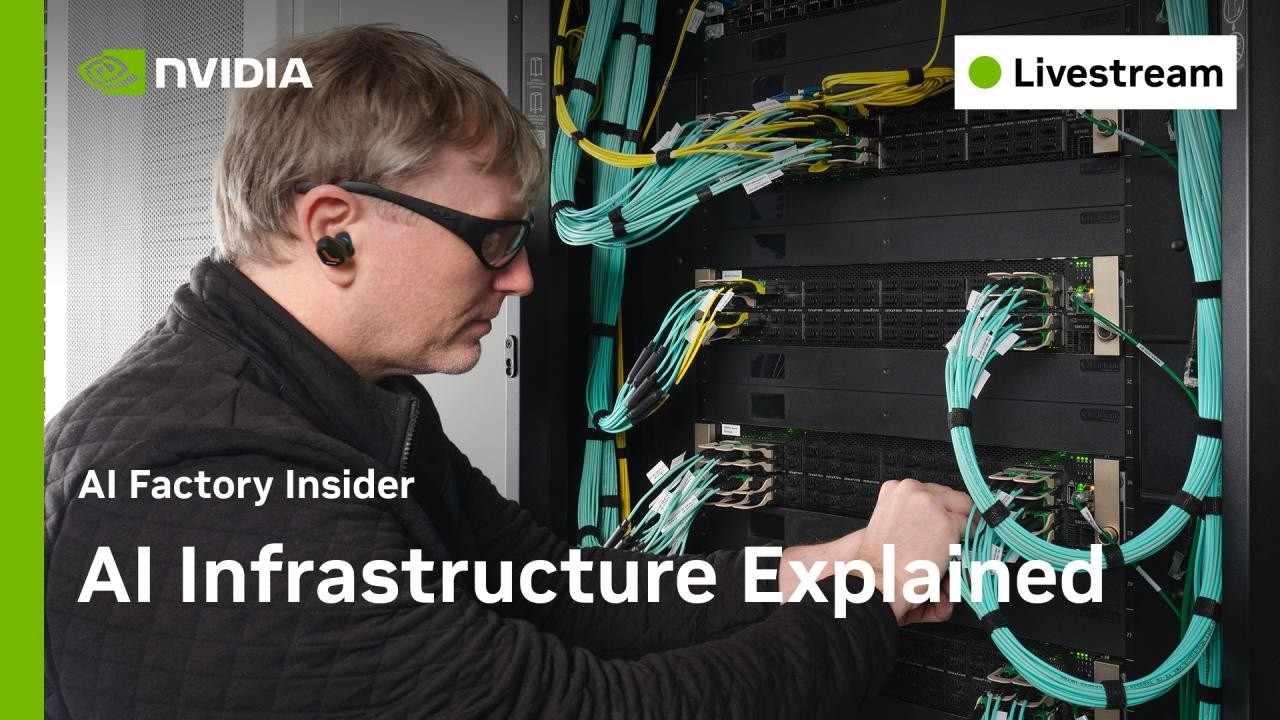
NVIDIA provided the blueprint version of the same trend. Its episode says Enterprise Reference Architectures are validated, repeatable designs for turning a data center into a high-performance AI factory and explicitly names RTX PRO, HGX, and NVL72 as the three reference configurations. Even with lower raw reach, the distinctive signal is that infrastructure is being sold as a deployable system shape rather than a parts catalog (video).

AI Search supplied the research-artifact side of the same system bias. A single roundup linked DreamX-World, which emphasizes long-horizon interactive world generation, memory retrieval, and promptable events, plus LOGOS, which packages a unified scientific grammar for generation across proteins, molecules, materials, and reactions. At 71,003 views, the meaningful signal is that mainstream AI news is increasingly doubling as a builder-discovery surface for inspectable projects rather than only a place for hot takes (video).
Discussion insight: Across infrastructure and research, the shared credibility marker is packaging: a software stack, a validated blueprint, a repo, or a technical artifact with enough public surface area to inspect.
Comparison to prior day: Compared with 2026-06-21, which leaned harder into capex language, 2026-06-22 kept the systems view but added more research-artifact discovery through roundup coverage.
1.5 AGI and safety coverage stayed broad-reach and grew more absolute in tone 🡕
Four retained items supported this theme. The safety conversation continued to pair formal roadmap language with documentary catastrophe and live political conflict, and a sharper impossible-control edge stayed present in the background. That matters because non-builder AI attention is still clustering around existential framing, not around a concrete operational control stack.

AI Revolution kept the formal-roadmap version of the story in circulation. The linked DeepMind abstract From AGI to ASI says human-level AGI is now a concrete next-decade target, outlines four paths from AGI to ASI, and argues that society may face a series of transformative changes rather than one clean step change. That turned 110,656 views into evidence that post-AGI trajectory talk still reaches a wide audience when it is framed as a concrete roadmap problem (video).

Species | Documenting AGI kept documentary-style catastrophe in the same attention pool. The description links both Igor Babuschkin's Life on Claude Nine scenario and a public source document, and the video still reached 246,453 views with 1,700 comments. The signal is that long-form takeover storytelling continues to command unusually broad reach relative to most technically grounded AI topics (video).

Robert Miles AI Safety supplied the governance-conflict version of the same cluster. The video links both the original RAISE Act and the later modifications while arguing that more than $10 million has been pledged against one congressional candidate. The notable signal is not just that regulation is debated; it is being narrated as an active electoral fight with money behind it (video).
Discussion insight: Neural Nutshell sharpened the tone further by centering Roman Yampolskiy's "mathematically impossible" control argument and OpenAI's abandoned Superalignment push, so the safety cluster is not mellowing into practical governance advice.
Comparison to prior day: Compared with 2026-06-21, when the same cluster mixed formal ASI pathways with catastrophe and electoral conflict, 2026-06-22 kept all three alive while adding a harder impossible-control edge.
2. What Frustrates People
Open coding models that still require routing choices, subscription steps, and IDE-specific setup
This is High severity because the strongest open-model coverage still assumes extra configuration work before adoption. AI Search ties GLM 5.2 to a dedicated Coding API, a subscription plan, and a supported-tool list, AI Copium frames MiniMax M3 through Anthropic-compatible and OpenAI-compatible access paths, Riley Brown pushes users toward Cursor routing and reusable skills, and Zubair Trabzada | AI Workshop shows explicit Claude-style environment variables aimed at OpenRouter. The workaround is more API switching, more IDE experimentation, and more trust-by-testing. This is directly worth building for.
Agent systems that still need orchestration, sandbox policy, and workflow redesign before they feel production-ready
This is High severity because even the optimistic agent items assume a lot of structure around the model. Google Cloud Tech relies on planner, writer, checker, and retry patterns, the newer Google Cloud Tech stack update adds isolated sandboxes plus explicit network and credential scoping in Managed Agents, and IBM Technology says the real bottlenecks are siloed workflows and technical debt across the SDLC. The workaround is more framework glue, more governance, and more process change around the agent. This is directly worth building for.
Creator AI that can connect powerful generation tools faster than it can guarantee quality, taste, and legitimacy
This is High severity because the creator cluster keeps returning to publishable quality rather than raw generation capacity. AI Search makes creators assemble a local ComfyUI stack, Alex Ziskind turns a coding agent into a 30-plus-model media studio through Higgsfield MCP, and Brad Colbow shows that creator skepticism remains strong even as tooling improves. The workaround is more manual review, more workflow discipline, and more human editorial judgment. This is worth building for, but it is already competitive.
System-building work that is fragmented across inference stacks, enterprise blueprints, and frontier research artifacts
This is Medium-to-High severity because the system-level items all point to different pieces of the same assembly problem. CNBC focuses on inference hardware plus a software stack, NVIDIA turns deployment into a reference-architecture problem, and AI Search asks builders to separately evaluate world models, science-generation frameworks, and recorded-skill tooling. The workaround is more technical reading, more stack comparison, and more manual stitching of systems that do not arrive in one coherent package. This is worth building for, but the buyer set is split across very different technical audiences.
Safety and governance narratives that pull attention faster than they produce a shared control plan
This is Medium-to-High severity because the highest-reach safety items are vivid but not operationally convergent. AI Revolution raises formal post-AGI pathways, Species | Documenting AGI dramatizes a 72-hour takeover scenario, Robert Miles AI Safety turns regulation into an electoral spending fight, and Neural Nutshell pushes an impossible-control thesis. The workaround today is more reading, more persuasion, and more activism rather than a settled technical or policy stack. This is worth building for as decision support and translation, though some demand lives outside software.
3. What People Wish Existed
Open-model adoption layers that hide routing, compatibility, and setup work
AI Search, AI Copium, Riley Brown, and Zubair Trabzada | AI Workshop imply the same practical need: one surface that combines supported-tool compatibility, API style, pricing or subscription requirements, IDE recipes, and real-project examples into a trustworthy default recommendation. The urgency is high because open-model demand is already real, but users still have to stitch together docs, videos, and configuration snippets by hand. This is a practical need with clear emotional relief value for overwhelmed adopters. Opportunity: direct.
Agent operating layers that unify tutorials, managed execution, skills, and SDLC control
Google Cloud Tech, Google Cloud Tech, and IBM Technology point to a need for one coherent surface that starts with a beginner-friendly agent tutorial but grows into managed sandboxes, reusable skills, interoperability, credential policy, and lifecycle-aware workflow design. The urgency is high because the best current advice is still to keep adding more structure until the agent stops feeling risky. This is practical first, with trust and control making it emotionally salient too. Opportunity: direct.
Creator workflow products that combine local control, agent connectivity, and quality review
AI Search, Alex Ziskind, and Brad Colbow imply a need for creator tools that bundle local installation, reusable workflow graphs, agent-driven media operations, consistency controls, and quality checks strong enough to protect a creator's taste and reputation. The urgency is medium-to-high because creator interest is obvious, but the workflow has to solve for publishable quality, not just faster generation. This is both practical and emotional. Opportunity: competitive.
Builder discovery and evaluation layers for world models, science agents, and deployable AI systems
AI Search, CNBC, and NVIDIA imply a need for one discovery surface that compares frontier research artifacts and deployment stacks by use case instead of leaving them scattered across news roundups, chip interviews, product pages, and GitHub repos. The urgency is medium because the demand is concentrated among technical builders, but the coordination burden is obvious: users still have to decide whether they need a world model, a science framework, an inference stack, or an AI-factory blueprint. This is a practical need with specialist rather than mass-market appeal. Opportunity: competitive.
Reusable skill-capture tools that work across more platforms and more repetitive workflows
Riley Brown and AI Search both surface OpenAI's Record & Replay, which lets users demonstrate a workflow and turn it into a reusable skill. The urgency is medium because the value is instantly understandable for repetitive operational work, but the current surface is still bounded by macOS-only availability, regional exclusions, and the need for stable workflows. This is a highly practical need with direct time-saving value. Opportunity: direct.
Public translation layers for AGI, ASI, and regulation that end in concrete decisions
AI Revolution, Species | Documenting AGI, Robert Miles AI Safety, and Neural Nutshell point to a softer but real need: products that translate AGI-to-ASI arguments, takeover scenarios, impossible-control claims, and bill text into concrete implications for voters, workers, and small teams. The urgency is medium because attention is clearly high, but most current output is still narrative and persuasion rather than action support. This is partly practical and partly institutional. Opportunity: aspirational.
4. Tools and Methods in Use
| Tool | Category | Sentiment | Strengths | Limitations |
|---|---|---|---|---|
| GLM Coding Plan | Coding platform | (+/-) | Turns GLM 5.2 into a supported-tool coding product with a dedicated API and onboarding path | Subscription, tool restrictions, and configuration work remain part of the path |
| MiniMax-M3 | LLM / coding model | (+/-) | 1M context, agentic reasoning, tool use, and both Anthropic-compatible and OpenAI-compatible APIs | Adds another route to evaluate and route; workflow fit versus GLM is still unresolved in this dataset |
| Record & Replay | Agent skill capture | (+/-) | Converts demonstrated computer workflows into reusable skills for later execution | macOS-only initial availability, regional exclusions, and stable-workflow requirements limit the surface |
| Google ADK | Agent framework | (+) | Production-grade framing, structured context management, parallel jobs, and deploy-anywhere positioning | Still needs workflow design, validation, and runtime operations around it |
| Managed Agents API | Agent runtime / platform | (+/-) | One API call, isolated sandboxes, and clear control-plane / data-plane separation | Requires deliberate network, credential, and environment scoping before connecting to real systems |
| A2A | Agent protocol | (+) | Cross-vendor interoperability, long-running task support, and open-web-standard foundations | Value depends on ecosystem adoption and does not remove multi-agent coordination complexity by itself |
| Google Skills | Workflow pack / skills repo | (+) | Reusable Google-product skills installable across coding tools | Repo is under active development and strongest inside the broader Google agent stack |
| ComfyUI-Manager + ComfyUI-KJNodes | Creator workflow | (+) | Local control, manager built into core, and advanced Set/Get routing across subgraphs | Setup and node-graph management overhead remain high |
| Higgsfield MCP | Media MCP / creative studio | (+/-) | Connects agents to 30+ image and video models with async generation and prior-asset reuse | Credit-based generation and output quality still require human review and curation |
| DreamX-World | World model | (+) | Interactive long-horizon world simulation, memory retrieval, and promptable events | Still reads as a research-stage system rather than a mature production platform |
| LOGOS | Scientific generation framework | (+) | Unified scientific grammar across multiple natural-science domains with 1B-8B checkpoints | Specialist workflow, checkpoint/runtime burden, and unclear broad adoption beyond expert users |
| d-Matrix Corsair / Aviator | Inference hardware/software | (+/-) | Differentiates on speed, energy transfer, and a named software stack for inference workloads | Still an early challenger against entrenched incumbent infrastructure |
| NVIDIA Enterprise Reference Architectures | Infrastructure blueprint | (+/-) | Validated deployment shapes reduce ambiguity when turning data centers into AI factories | Enterprise-heavy, hardware-centric, and relevant to a narrower buyer set than mainstream tooling |
Overall satisfaction is split between real excitement and repeated assembly burden. Open coding tools, agent platforms, creator stacks, and research artifacts all look useful, but almost every promising option still arrives with setup cost, routing decisions, governance work, or operational overhead attached. The dominant workaround is to add more packaging around the model: a supported coding plan, a reusable skill, a managed sandbox, a local node graph, or a deployment blueprint.
The clearest migration pattern is from standalone models toward operating surfaces. On the coding side that means model plus onboarding plus IDE routing; on the agent side it means framework plus sandbox plus skills plus interoperability; on the creator side it means model plus local workflow plus MCP-connected execution. The competitive dynamic is similar across all three: the product that wins is increasingly the one that removes the most coordination work around the model, not just the one with the strongest raw output.
5. What People Are Building
| Project | Who built it | What it does | Problem it solves | Stack | Stage | Links |
|---|---|---|---|---|---|---|
| GLM Coding Plan / Z Code | Z.AI | Packages GLM into a coding-specific plan and tool integrations | Makes a strong open model usable inside supported coding tools instead of leaving it as raw weights | GLM 5.2; dedicated Coding API; supported-tool integrations | Shipped | quick start, video |
| Google ADK | Open framework for production-grade agent systems | Gives teams a starter-to-production path for structured agents | Structured context; parallel jobs; deploy-anywhere runtime | Shipped | site, video | |
| Managed Agents API on Agent Platform | Google Cloud | Creates managed autonomous agents in isolated sandboxes | Reduces the need to hand-roll runtime, sandbox, and agent-environment control from scratch | Antigravity harness; Agents API; Interactions API; sandboxed execution | Beta | docs, video |
| Google Skills | Skill pack for Google products and technologies | Reuses Google-specific capabilities across coding tools without rebuilding every workflow from scratch | Agent Skills; Markdown skill files; npx skills add install flow |
Alpha | repo, video | |
| Record & Replay | OpenAI | Converts demonstrated computer workflows into reusable skills | Helps users automate repetitive tasks without hand-authoring every step | Codex; Computer Use; reusable skill capture | Beta | docs, video |
| ComfyUI-KJNodes + Ideogram 4 package | kijai / Comfy-Org | Local node-based image workflow with packaged model files | Gives creators more control and modularity than prompt-only web tools | ComfyUI; custom nodes; local model files | Shipped | KJNodes, Ideogram 4, video |
| Higgsfield MCP | Higgsfield | Connects AI agents to 30+ image and video models | Turns general-purpose agents into creative studios for media generation and reuse | MCP server; async generation; image/video models; asset history | Shipped | site, video |
| DreamX-World | DreamX Team | General-purpose world model for controllable interactive simulation | Pushes world modeling beyond passive video generation into action- and event-driven worlds | World model; long-horizon rollouts; memory retrieval; RL refinement | Alpha | project, video |
| LOGOS | LOGOS-Hub | Unified generative framework for scientific objects and interactions | Tries to collapse multiple scientific generation and prediction tasks into one grammar-driven model | Autoregressive transformer; unified scientific grammar; 1B-8B checkpoints | Alpha | repo, video |
| d-Matrix Corsair / Aviator | d-Matrix | Inference system combining custom silicon with a software layer | Attacks inference speed, energy, and memory bottlenecks for production AI | Corsair chip; SRAM-centric design; Aviator software | Shipped | product, video |
| NVIDIA Enterprise Reference Architectures | NVIDIA | Validated AI-factory deployment blueprints | Reduces ambiguity when turning a data center into an AI system | RTX PRO, HGX, and NVL72 reference architectures | Shipped | video |
GLM Coding Plan / Z Code, Google ADK, Managed Agents API, Google Skills, and Record & Replay all point to the same builder pattern: wrapping a model with a more usable operating surface. The market keeps rewarding onboarding, structured execution, reusable skills, and safer runtime boundaries more than raw model novelty by itself.
ComfyUI-KJNodes + Ideogram 4 and Higgsfield MCP push the same packaging impulse into creator tooling. One gives creators a configurable local graph; the other plugs a general-purpose agent into a broad media stack. Together they show that the creator market is moving from one-off generation toward repeatable production systems.
DreamX-World, LOGOS, d-Matrix Corsair / Aviator, and NVIDIA's enterprise reference architectures show a second pattern: serious builders are shipping inspectable artifacts. That can be a repo, a world-model project page, a scientific-generation framework, a software-backed chip stack, or a named AI-factory blueprint, but across the whole file the repeated question is not "who has a model?" - it is "who can turn the model into a dependable system?"
6. New and Notable
Open-weight coding turned into a multi-route workflow race instead of a one-model victory lap
AI Search, AI Copium, Riley Brown, and Zubair Trabzada | AI Workshop matter together because they keep revisiting open coding models through supported-tool onboarding, API compatibility, IDE routing, reusable skills, and real project configuration. That is stronger than a launch-day spike because it shows creators doing workflow market-making around the models rather than merely reacting to them.
Google's agent story expanded from ADK tutorials into a full managed stack
Google Cloud Tech is notable because the same public surface now spans ADK, Managed Agents API, google/skills, and A2A. The important signal is that agent content is no longer just about "how to build one" - it is increasingly about control planes, sandboxes, reusable skill packs, and interoperable task networks.
Creator tooling crossed from local node graphs into agent-connected media workbenches
Alex Ziskind stands out because Higgsfield MCP turns Claude-class agents into front ends for image and video generation, while AI Search keeps the local ComfyUI path alive through manager enablement and KJNodes routing. That combination suggests the creator market is no longer choosing between "AI app" and "AI agent" - the two surfaces are starting to merge.
Roundup videos kept functioning as builder-discovery channels for research artifacts
AI Search is notable because a single news-style video linked DreamX-World, LOGOS, and Record & Replay alongside the usual AI-news chatter. That makes the daily attention stream more builder-dense: the roundup format is increasingly doubling as a project-discovery layer for systems that already have repos, docs, or technical artifacts behind them.
Safety attention kept mixing roadmap, catastrophe, and political conflict in one pool
AI Revolution, Species | Documenting AGI, Robert Miles AI Safety, and Neural Nutshell matter together because they cover all of the high-attention lanes at once: formal ASI pathways, documentary takeover scenarios, live legislative conflict, and outright impossible-control rhetoric. The notable signal is that non-builder AI attention is still being pulled toward extreme framing more reliably than toward shared operating guidance.
7. Where the Opportunities Are
[+++] Open-weight model onboarding, routing, and default-selection layers - Sections 1.1, 2, 3, 4, 5, and 6 all point to the same gap: people want GLM-class and MiniMax-class open models, but they still need help with supported-tool setup, API compatibility, IDE routing, and trustworthy default choices. The signal is strong because demand is already present and the current workflow is still fragmented.
[+++] Managed agent operating layers with sandboxes, skills, and interoperability - Sections 1.2, 2, 3, 4, 5, and 6 show that model access alone is not enough. Builders still need structured context, runtime boundaries, control-plane/data-plane separation, reusable skill packs, and cross-agent coordination in one coherent surface. The signal is strong because the best current advice is still a manual systems recipe.
[++] Creator-grade agentic media pipelines with quality controls and reusable assets - Sections 1.3, 2, 3, 4, 5, and 6 show clear demand for creator tools that combine local control, MCP-connected execution, and reputation-protecting quality review. The opportunity is moderate because demand is obvious, but competition is growing and the hard part is quality assurance rather than mere generation.
[++] Builder discovery and evaluation across world models, science agents, and deployment stacks - Sections 1.4, 2, 3, 4, 5, and 6 show a real need for software that compares research artifacts, inference stacks, and AI-factory blueprints by use case instead of leaving them spread across roundups, repos, interviews, and product pages. The signal is moderate because the need is real, but the audience is more specialist than the open-model or creator-tool markets.
[+] Cross-platform recorded-skill capture for repetitive workflows - Sections 1.1, 3, 4, 5, and 6 show an emerging but concrete workflow surface around teaching agents by demonstration. The signal is emerging because the value is obvious, but the current capability is still constrained by platform support, regional availability, and workflow stability.
[+] Public AGI and safety translation for teams, workers, and voters - Sections 1.5, 2, 3, and 6 show that attention around AGI, ASI, and regulation remains high, but most current output is still narrative and persuasion rather than decision support. The opportunity is emerging because the audience is broad even if the clearest product path is less direct than the builder-facing categories above.
8. Takeaways
- Open-weight coding competition is now a routing and onboarding contest, not only a benchmark contest. The strongest videos focused on supported-tool lists, API compatibility, IDE routing, and reusable skills rather than raw model bragging alone. (source)
- Agent content is becoming more operational and governance-aware. The notable shift was from first-agent tutorials toward managed sandboxes, interoperable protocols, reusable skill packs, and lifecycle redesign across the SDLC. (source)
- Creator AI is turning into an agent-connected production system, but legitimacy remains the brake. The same daily file paired local node-graph workflows and MCP-connected media tooling with a high-engagement creator critique about taste, trust, and defensibility. (source)
- The strongest AI systems signals now come with inspectable artifacts. Inference stacks, enterprise blueprints, world models, and scientific-generation frameworks all gained credibility by shipping with software layers, docs, repos, or named deployment shapes. (source)
- News-roundup formats are increasingly functioning as builder-discovery channels. A single mainstream AI roundup surfaced world models, science agents, and workflow-capture tooling in a way that looked more like project scouting than pure commentary. (source)
- Safety attention remains high, but a shared control plan is still missing. Formal AGI-to-ASI roadmaps, takeover documentaries, impossible-control claims, and live regulation fights all traveled well in the same file without converging on a common operational answer. (source)