YouTube AI - 2026-06-24
1. What People Are Talking About
1.1 Zero-click AI answers turned publisher economics into the highest-reach backlash theme 🡕
Two items and adjacent infrastructure coverage supported this theme. The biggest reach signal in the file was not another model benchmark or agent demo; it was a mass-market complaint that Google is answering questions itself and starving the sites that created the information. That matters because AI backlash moved from specialist debates about alignment or coding quality into a broad argument about who gets paid on the web.

The Infographics Show delivered the clearest high-reach version of that complaint. The description says AI-powered search results answer questions before users click through, keeping traffic inside Google's ecosystem while publishers, review sites, and niche experts lose visitors, revenue, and sometimes their businesses. With 439,769 views, 11,897 likes, and 2,300 comments, the distinctive signal is that "AI is taking value from the web" is now mainstream explanatory content rather than an SEO-insider grievance (video).

CBS News pushed the same anxiety from the investor side. Its segment says a tech stock sell-off dragged the S&P 500 and Nasdaq lower on AI cost concerns, which turns the AI economy story from growth theater into a return-on-investment question. The important shift is that the pressure is no longer only "how do I use AI?" but also "who is absorbing the cost while someone else captures the upside?" (video).
Discussion insight: CNBC Television made the same redistribution point from the infrastructure side when Greg Brockman and Broadcom's Hock Tan framed OpenAI's Jalapeno chip as a real performance improvement tied to compute demand. The value story in this file keeps moving toward whoever owns the answer surface or the hardware surface, not the sites in between (video).
Comparison to prior day: Compared with 2026-06-23, which was dominated by builder workflows, model packaging, and governance coverage, 2026-06-24 pulled AI harm into open-web business models and capital allocation.
1.2 Open AI ecosystems broadened into libraries, skills, and local creative stacks 🡕
Four items supported this theme. On 2026-06-23, the open side of the story was still mostly a race among coding models and routing options. On 2026-06-24, it widened into workflow libraries, code-intelligence tools, IDE skills, and local creative stacks, which means the winning layer is increasingly the packaging around the model rather than the model by itself.
AI Search remained the largest packaging signal. The public GLM Coding Plan quick start says users subscribe, obtain a plan-specific API key, and connect one of the supported tools such as Claude Code, Roo Code, Kilo Code, Cline, OpenCode, OpenClaw, Crush, Goose, or Cursor, with both Anthropic and OpenAI protocol endpoints plus plan-exclusive MCP servers for vision, web search, and web reading. With 428,975 views, the distinctive signal is that an open model is being sold as a full coding surface with onboarding and utilities, not as raw weights alone (video).

Matthew Berman showed how broad the open layer has become. His roundup links Loop Library, which publishes bounded loops with checks and explicit stopping rules, and codebase-memory-mcp, which describes itself as a local code-intelligence engine that full-indexes repositories into a knowledge graph for fast structural queries. The important signal is breadth: open-source AI on YouTube is no longer one repo or one model, but a stack of reusable workflow primitives (video).

AI Search also pushed the local creative side of the same story. The Krea 2 technical report says the release includes open weights designed for wide aesthetic diversity and user creative control, with a prompt expander and a style-reference system on top; the video pairs that with ComfyUI nodes and "uncensored" local setup. At 74,765 views and 592 comments, the signal is that creator-side open models are now competing on controllability and local ownership, not only on cost (video).

Tech With Tim supplied the workflow-reality version. His live build of an AI shorts tool leans on ImageKit's build-with-AI docs, which say ImageKit ships MCP servers and agent skills so coding assistants use current docs and can upload, search, tag, and organize media instead of hallucinating old API behavior. The distinctive angle is that builders are rewarding surfaces that reduce integration mistakes inside a real session, not just polished demo outputs (video).
Discussion insight: Asian Dad Energy is the strongest skepticism check on this theme. Its 405 comments show that experienced developers still do not believe coding is "solved," which is exactly why loops, skills, memory layers, and reproducible workflows are getting more attention than model bravado alone (video).
Comparison to prior day: Compared with 2026-06-23, which still framed open competition mostly around GLM, MiniMax, and workflow routing, 2026-06-24 broadened the open story into reusable libraries, IDE skills, local creative control, and production-shaped coding workflows.
1.3 Agent infrastructure went ambient: background workers, Slack teammates, and budgeted shopping assistants 🡕
Four items supported this theme. The agent conversation kept moving away from solo terminal sessions and closer to surfaces where agents persist in shared channels, run asynchronously, and interact with tools or budgets over time. That matters because the key question is no longer "can this model act?" but "can it operate inside a team without becoming a governance problem?"

Google Cloud Tech still provided the broadest entry point. ADK and the public ADK repository position the framework as open-source, code-first, and built around a workflow runtime, task delegation, structured context management, and deploy-anywhere flexibility. At 176,715 views, the important signal is that the mass tutorial surface is now teaching an operating framework, not just a chatbot pattern (video).
AI Revolution added the strongest team-surface shift. The linked Economic Times explainer says Claude Tag replaces Anthropic's earlier Slack chatbot with a shared channel teammate that can use organization-approved tools, repositories, and context, continue tasks in the background, revisit unfinished work, and notify users when it is done. Even at only 923 views, the distinctive signal is that the agent is no longer sold as a private coding shell; it is sold as a multiplayer work participant inside Slack (video).
Metics Media took the same idea downmarket. The pitch is explicit: build a small team of AI agents that work in the background, schedule an always-on agent with a budget cap, connect tools through integrations and MCP, and put the agent in Slack as a teammate. The distinctive signal is operational posture: "always-on" and "while you sleep" are now standard product claims rather than experimental behavior (video).

Creator Magic supplied the most concrete applied example. The description says the agent uses GStack plus the Zapier SDK to hunt eBay for Mac Mini deals, score listings against sold prices, post the best finds to Slack, and log them to Google Sheets, with the flow packaged as an open-source skill. The important signal is that agent demos are starting to touch real procurement and hardware-sourcing workflows instead of staying inside sandboxed text tasks (video).
Discussion insight: Google DeepMind explains why this shift creates a control problem. Its linked AI Control Roadmap treats internal agents as potential insider threats, layers supervisor monitoring over alignment and sandboxing, and measures success through coverage, recall, and time-to-response (video).
Comparison to prior day: Compared with 2026-06-23, when agent coverage was still tutorial-heavy and concept-heavy, 2026-06-24 added shared-channel agents, scheduled background workers, and tool-connected procurement flows.
1.4 Creator AI demand hardened into free-tool shopping and a China-led video model race 🡕
Four items supported this theme. The creator cluster got more explicit about price, access, and release cadence: viewers wanted free or cheap generation without credits and watermarks, while creators tracked whether Chinese labs were shipping stronger video models faster than U.S. labs. That matters because the market is still winning demand through low-friction access, but it is increasingly judged by control and delivery speed.

Malva AI turned creator frustration into the title itself. The video promises the only three free and unlimited video generators worth keeping, while the description explicitly attacks credits, watermarks, low-quality exports, and hidden limits as the reasons paid-looking "free" tools fail in practice. At 24,512 views, the distinctive signal is that pricing friction and access rules are now a primary discovery problem, not a secondary complaint (video).
AI For Humans widened the story from tools to geopolitical cadence. The description says Seedance 2.5 adds 30-second one-shot generations while "America is stalling," and it links both the Google DeepMind and A24 research partnership and beehiiv MCP as examples of adjacent workflow infrastructure. The important signal is that creator AI is no longer only about visuals; it is becoming a race over release speed, studio partnerships, and data-connected toolchains (video).

Brain Project pushed the same model from the access angle. The description says Seedance 2.5 adds native 4K generation, 30-second outputs, better prompt understanding, stronger character consistency, and up to 50 reference assets, but the framing is still "how do I get this for free or without restrictions?" The distinctive signal is that premium-spec video capability is being evaluated through access and workaround language before anything else (video).
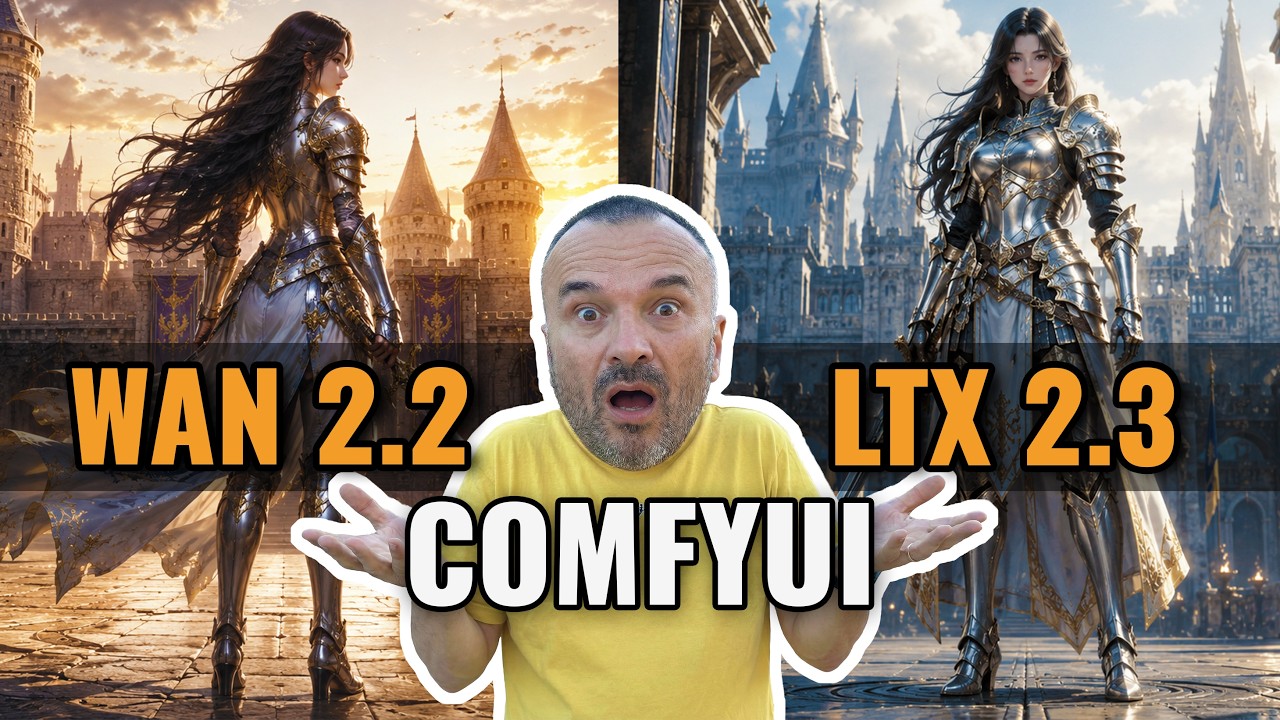
Vladimir Chopine [GeekatPlay] supplied the local-control counterpoint. The video benchmarks LTX 2.3 against Wan 2.2 inside ComfyUI on an RTX 3090 across text-to-video, image-to-video, and first/last-frame workflows, comparing local generation to commercial services instead of just praising a single app. The distinctive signal is that serious creator demand still values side-by-side controllability and local hardware fit, not only flashy SaaS launches (video).
Discussion insight: Across all four items, the coping strategy is the same: shop aggressively for free tiers, then drop to local stacks when hosted limits become too expensive or too restrictive. That is a stronger sign of market fragmentation than of stable platform loyalty.
Comparison to prior day: Compared with 2026-06-23, which already split creator demand between free generators and higher-control stacks, 2026-06-24 sharpened the conversation into direct "stop paying" positioning and China-versus-U.S. release anxiety.
1.5 Governance and AI-control debates got more specific in bills, deadlines, chips, and cyber warnings 🡕
Four items supported this theme. 2026-06-23 already showed governance entering mainstream TV and business coverage, but 2026-06-24 made the stakes more operational: specific deadlines, named bills, quantified spending, custom chips, and warnings about AI overwhelming cyber defenses. That matters because the argument is moving from abstract alignment into control over infrastructure and institutional response.
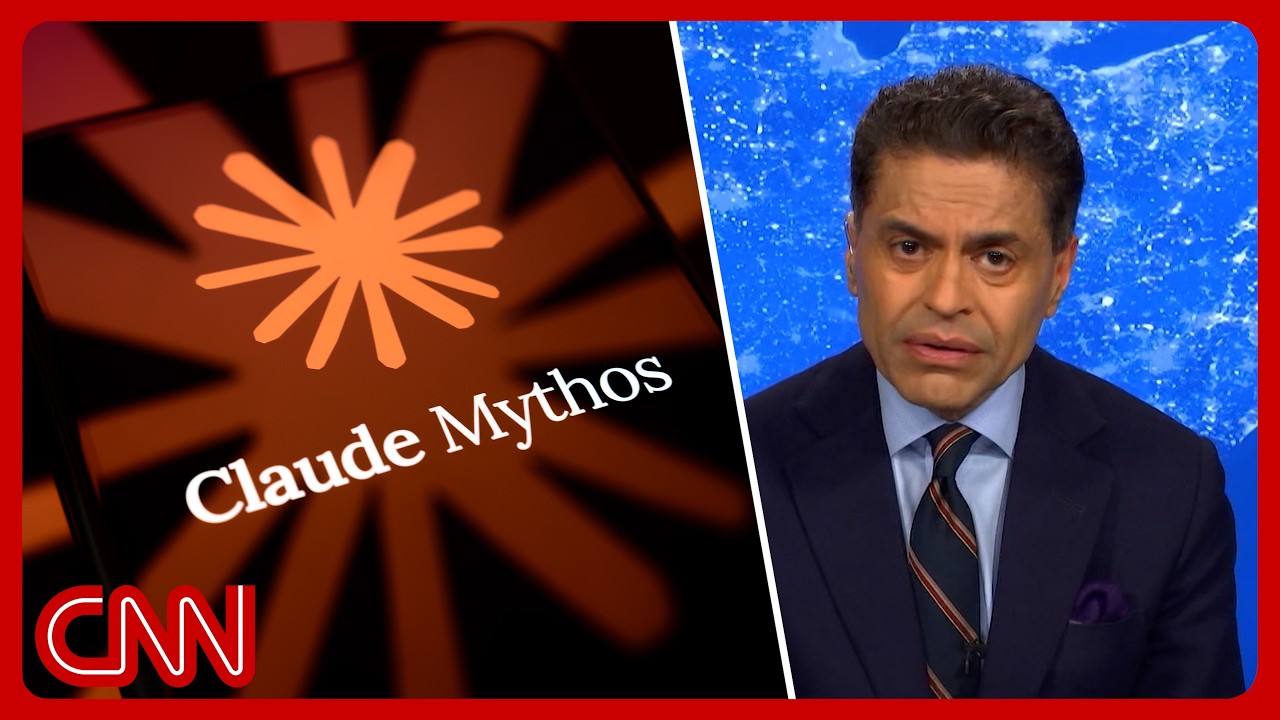
CNN remained the anchor item. The description says the administration gave Anthropic 90 minutes to pull its newest model and frames the clash as the "first visible battle over who governs artificial intelligence," while also surfacing Jack Clark on self-designing AI and a frontier-development pause. With 220,524 views, the distinctive signal is governance with a clock attached to it, not just a policy roundtable (video).

Robert Miles AI Safety made the policy fight concrete. The description says more than $10 million has been pledged against Alex Bores and links both the original RAISE Act and its modified version. The distinctive signal is not just safety rhetoric; it is named legislation plus named political spending in a live contest (video).
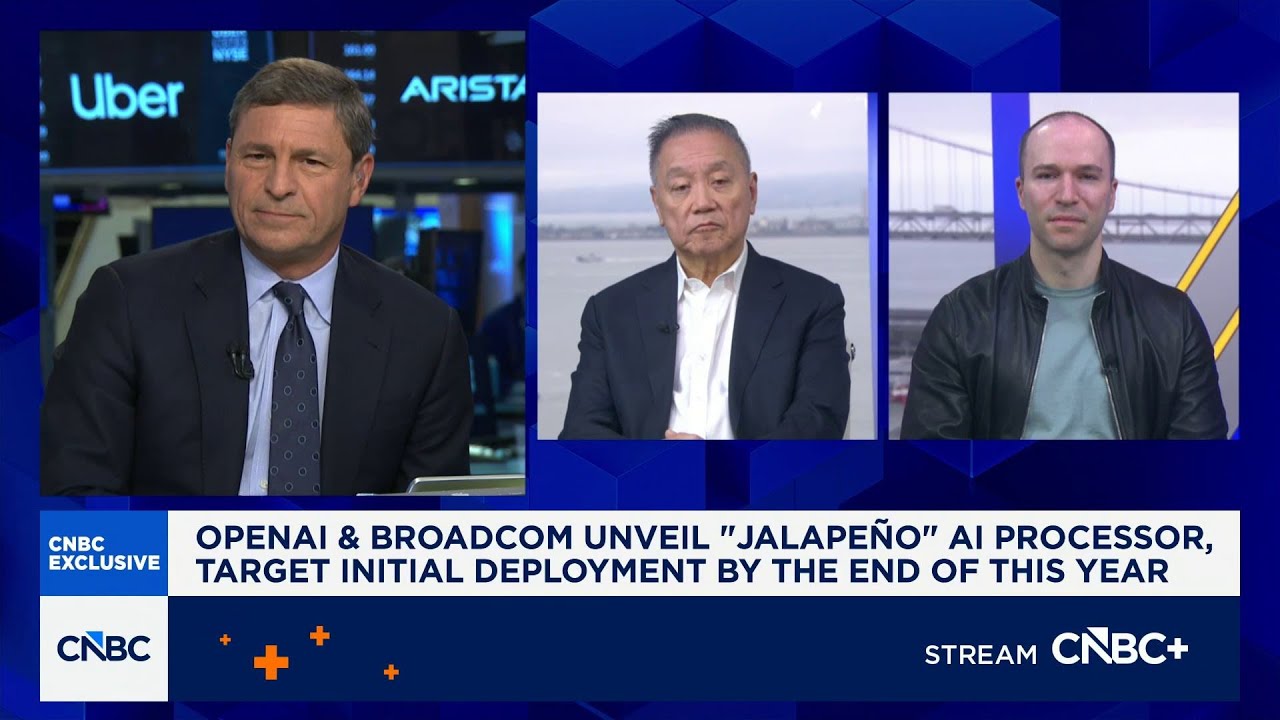
CNBC Television pulled the same control question down into hardware. The interview centers OpenAI and Broadcom's first custom AI chip, Jalapeno, and frames it as a real performance improvement tied to compute demand and bubble risk. The important signal is that frontier labs are no longer only competing on models; they are trying to own more of the physical stack underneath them (video).

CBS News added the cyber-defense angle. Its segment says an international alliance warns that advanced models are on the brink of overwhelming cybersecurity systems for governments and businesses, shifting the debate from headline politics to operational institutional risk. Even at smaller reach, the signal matters because it grounds the abstract control discussion in a concrete defensive failure mode (video).
Discussion insight: The same file keeps linking governance talk to actual control engineering. DeepMind's control-roadmap material and the CNBC chip coverage both imply that whoever wants to ship more powerful agents will also have to own more of the surrounding monitoring, hardware, and response stack.
Comparison to prior day: Compared with 2026-06-23, when governance mainly broadened into mainstream news and business framing, 2026-06-24 added quantified money, named bills, tighter deadlines, and sharper cyber-risk language.
2. What Frustrates People
Zero-click distribution collapse for the open web
This is High severity because the most-viewed backlash item in the file argues that AI answer surfaces are consuming the click that funded the source material in the first place. The Infographics Show frames the loss in terms of publisher traffic and revenue, while CBS News shows the same unease appearing as AI cost pressure in market coverage. No strong workaround appears in this dataset; the strongest items are still diagnosing the shift rather than solving it. This is directly worth building for.
AI coding still needs debugging, context, and honest evaluation before teams trust it
This is High severity because the strongest coding items are still about how much scaffolding and skepticism the workflow requires. Asian Dad Energy argues that "coding is solved" does not survive contact with big-company software development, Tech With Tim shows a live build with bugs and iteration instead of a polished montage, IBM Technology says developers still deal with fires, siloed workflows, and technical debt across the SDLC, and AI Search still needs tool-specific onboarding and protocol setup around GLM. The workaround is more human debugging, more workflow memory, and more tool-specific packaging around the model. This is directly worth building for.
Ambient agents need spend limits, scoped permissions, and supervision before organizations can let them run
This is High severity because the agent trend is pushing directly into shared channels and background execution. AI Revolution describes Claude Tag with admin-scoped access and activity controls, Metics Media sells scheduled agents with budgets, Creator Magic adds a tool-connected procurement flow, and Google DeepMind argues that advanced internal agents should be treated like insider threats. The workaround is to layer supervision, bounded access, and explicit approval surfaces around the agent. This is directly worth building for.
Creator AI pricing and access are still opaque, and "free" often means hidden limits
This is Medium-to-High severity because the creator cluster keeps discovering value through workaround hunting rather than stable platform trust. Malva AI centers credits, watermarks, and low-quality exports as the core problem, Brain Project frames premium-spec video through unrestricted access, AI For Humans treats release cadence and availability as a strategic issue, and Vladimir Chopine [GeekatPlay] responds by benchmarking local models in ComfyUI. The workaround is constant tool-shopping and, for advanced users, local execution. This is worth building for, but it is already competitive.
Governance and compute control are too unpredictable to plan around comfortably
This is Medium-to-High severity because the governance story now mixes arbitrary deadlines, political spending, custom chips, and cyber-risk warnings. CNN treats AI regulation as personalized and unpredictable, Robert Miles AI Safety ties regulation to real money and bill text, CNBC Television moves the control fight into hardware, and CBS News warns about cyber systems being overwhelmed. The workaround today is more monitoring and shorter planning horizons, not a settled operating model. This is worth building for as decision support and compliance translation.
3. What People Wish Existed
A recovery layer for publishers and experts losing traffic to AI answers
The strongest zero-click item is mostly diagnosis, but it implies an urgent missing product category: a system that helps publishers understand what AI answer surfaces are taking, where direct demand still exists, and how to recover monetizable audience relationships outside the old click path. The practical need is high because the harm is already visible in mass-market content, and there is no strong counterexample in this file. Opportunity: direct.
Production-grade AI coding benchmarks and workflow truth surfaces
Asian Dad Energy, Tech With Tim, IBM Technology, and AI Search imply the same need: something that compares models, tools, and coding agents in real codebases, under real debugging conditions, with enough memory and context to explain why a workflow did or did not hold up. The urgency is high because attention is there, but trust is not. This is practical first, and it directly reduces anxiety for teams trying to adopt AI coding seriously. Opportunity: direct.
Trusted team-native agent operations, not just agent demos
Google Cloud Tech, AI Revolution, Metics Media, Creator Magic, and Google DeepMind point to a shared gap: builders want agents that can live in Slack, work asynchronously, use tools, and stay bounded by permissions, budgets, and reviews. The urgency is high because the category is clearly moving into deployment, but the safety and admin stack is still fragmented. This is a practical need with strong willingness to pay. Opportunity: direct.
Creator AI workbenches with transparent limits and a clean handoff to local control
Malva AI, AI For Humans, Brain Project, and Vladimir Chopine [GeekatPlay] imply that creators want one surface that starts with cheap or free discovery but clearly explains credits, rights, export quality, and upgrade paths, while preserving a path to local tools when hosted limits become unacceptable. The urgency is high because the existing market is organized around workaround videos instead of trustworthy defaults. This is practical and emotional at the same time. Opportunity: competitive.
Governance and compute-control intelligence that ends in action
CNN, Robert Miles AI Safety, CNBC Television, and CBS News imply a need for software that turns bill text, deadlines, chip announcements, and cyber-risk warnings into concrete guidance for product, legal, infrastructure, and security teams. The urgency is medium-to-high because the attention is clearly present, but the current discourse is still media-native rather than operationally translated. This is both practical and institutional. Opportunity: competitive.
4. Tools and Methods in Use
| Tool | Category | Sentiment | Strengths | Limitations |
|---|---|---|---|---|
| GLM Coding Plan / Z Code | Coding platform | (+/-) | Supported-tool onboarding, Anthropic/OpenAI protocol endpoints, and bundled MCP utilities make an open model feel productized | Subscription, plan-specific API keys, and supported-tool limits remain part of the path |
| Loop Library | Agent workflow library | (+) | Publishes bounded loops with checks and clear stopping rules, plus an optional skill that helps agents discover and adapt them | It is a library and guide, not a full execution environment or control plane |
| codebase-memory-mcp | Code intelligence | (+) | Local knowledge graph and very fast structural queries make large-codebase exploration more concrete for coding agents | Adds another setup and trust surface before value is realized |
| Google ADK | Agent framework | (+) | Workflow runtime, task API, context management, and deploy-anywhere flexibility make it feel production-oriented | Still needs orchestration, evaluation, and policy around the model |
| Claude Tag | Team agent surface | (+/-) | Shared Slack-native agent with org-approved tools, context, and asynchronous execution | Beta-only for Team/Enterprise and tightly bound to admin controls |
| Hyperagent | No-code agent platform | (+/-) | Background execution, scheduling, and tool connectivity lower the barrier to always-on agents | Invite/credit gating and observability concerns are still visible in the surrounding discussion |
| Krea 2 + ComfyUI nodes | Local creative stack | (+) | Open weights, style control, prompt expansion, and local execution appeal to creators who want more control | Local setup and node management remain significant overhead |
| Seedance 2.5 and related free-video stacks | Video generation | (+/-) | Strong excitement around longer clips, richer control, and high-end output potential | Access, price, limits, and regional/platform fragmentation remain unstable |
| ImageKit skills + MCP | Media developer tooling | (+) | Keeps coding agents aligned with current docs and enables media actions inside IDE workflows | Public preview status means the interface and practices are still evolving |
| beehiiv MCP | Newsletter MCP | (+/-) | Direct account analysis and cross-tool workflow ideas make AI more operational for audience businesses | V1 is read-only and early-access only for paid users |
Overall satisfaction is split between promising packaging and stubborn operational drag. Coding tools, agent runtimes, creator stacks, and MCP surfaces all look more usable than they did even a few months ago, but almost every strong item still carries setup work, admin policy, or workflow redesign with it.
The clearest workaround pattern is to wrap the model with a stronger operating surface. On the coding side that means plans, loops, memory, and current docs. On the agent side it means budgets, permissions, supervision, and shared channels. On the creator side it means either accept fragmented free tiers or move toward local control. The competitive dynamic is similar everywhere: the winner is increasingly the product that removes coordination work around the model, not the one that only claims the best raw output.
5. What People Are Building
| Project | Who built it | What it does | Problem it solves | Stack | Stage | Links |
|---|---|---|---|---|---|---|
| Loop Library | Forward Future | Public catalog of reusable loops plus an optional agent skill | Gives agents bounded playbooks with checks, progress logic, and stopping rules instead of open-ended prompts | Website catalog, skill package, JSON/plain-text catalogs, loop playbooks | Shipped | site, repo, video |
| codebase-memory-mcp | DeusData | Local code-intelligence engine that builds a repository knowledge graph for agents | Makes large codebases easier for AI tools to inspect without file-by-file wandering | Static binary, tree-sitter parsing, Hybrid LSP, MCP tools, local knowledge graph | Shipped | repo, video |
| Google ADK | Open-source framework for building and deploying structured agents | Gives teams a starter-to-production path for workflow-driven agents | Python, workflow runtime, task API, context management, deploy-anywhere runtime | Shipped | site, repo, video | |
| Claude Tag | Anthropic | Shared Slack-native AI teammate that works across channels and tools | Moves agent work into public team workflows instead of private terminal sessions | Slack, Opus 4.8, org-approved tools and repos, async task execution | Beta | article, video |
| Hyperagent | Hyperagent | No-code platform for background specialists connected to tools and data | Gives non-developers a way to schedule always-on agent work without installing an agent stack | Hosted platform, tool integrations, MCP support, scheduled tasks, budget controls | Beta | site, video |
| GStack | Garry Tan | Open-source "software factory" that turns Claude Code into a role-based virtual team | Packages planning, review, QA, and release workflows around coding agents | Claude Code skills, slash commands, review/QA/release workflows, Markdown playbooks | Shipped | repo, video |
| ImageKit skills + MCP | ImageKit | Agent skills and MCP servers for media tasks inside coding tools | Prevents stale-doc integrations and lets agents act on media workflows directly | Skills CLI, MCP servers, IDE integrations, upload/search/tag APIs | Beta | docs, video |
| beehiiv MCP | beehiiv | Account-connected MCP for newsletter analytics and workflow automation | Lets AI reason over newsletter data instead of static pasted snapshots | Read-only v1 MCP, workspace data access, Slack/Gmail/Calendar workflow hooks | Beta | page, video |
| Krea 2 | Krea | Open-weight image generation system tuned for creative exploration and control | Gives creators a local or semi-local alternative to hosted image tools with stronger style control | Open weights, prompt expander, style-reference system, local ComfyUI ecosystem | Shipped | report, video |
The repeated build pattern is clear: wrap the model with an operating surface. Loop Library, codebase-memory-mcp, GStack, and ImageKit skills + MCP all try to make agent work more bounded, inspectable, or less error-prone rather than simply "more intelligent."
Google ADK, Claude Tag, and Hyperagent show a second pattern: the destination is not another chat window but a persistent work surface with tasks, permissions, and context. The strongest application example in the file is Creator Magic's eBay-hunting flow, which turns that stack into a concrete hardware-sourcing assistant.
Krea 2 and beehiiv MCP show that builder energy is now spreading into both local creator tooling and audience-business infrastructure. The common thread is not "better AI" in the abstract; it is a tighter workflow between the model and the job to be done.
6. New and Notable
Zero-click backlash hit mass explanatory media
The Infographics Show is notable because it turned AI-overview harm into a broad, high-reach explanation of why websites lose traffic when the answer page keeps the click. That is a stronger cultural signal than another publisher-side complaint because it reached a general audience, not just operators.
Claude Tag made the team-agent story concrete
AI Revolution stands out because the linked Claude Tag coverage describes a shared Slack-native agent with org-approved tools, memory, and background execution. That is a meaningful shift from "coding assistant" to "work participant."
Krea 2 pushed open-weight creative control into the same attention layer as coding models
AI Search matters because it treats open creative models as a serious local-control alternative, backed by a public technical report and real ComfyUI tooling. The creative side of open models is no longer a side quest.
Seedance 2.5 made creator AI feel like a release-cadence race
AI For Humans and Brain Project matter together because they frame video generation as a moving frontier where 30-second outputs, 4K, reference-asset support, and geopolitical timing all influence attention. The notable shift is not just feature count; it is the sense that creators are now tracking who ships first.
OpenAI's Jalapeno chip showed vertical integration moving down the stack
CNBC Television is notable because it frames OpenAI's first custom chip with Broadcom as a concrete performance step rather than a vague hardware partnership. That pulls the AI-control conversation into compute ownership and infrastructure strategy.
7. Where the Opportunities Are
[+++] Zero-click publisher recovery and monetization infrastructure - Sections 1, 2, 3, and 6 all point to the same gap: AI answer surfaces are absorbing value from the open web, but this file offers no convincing replacement for publishers, experts, or niche sites. The signal is strong because the backlash is already mass-market and the coping toolkit is weak.
[+++] Trustable ambient-agent control layers for shared channels and background work - Sections 1.3, 2, 3, 4, 5, and 6 show agents moving into Slack, scheduled workflows, and tool-connected tasks, while DeepMind-style supervision logic keeps appearing as the missing guardrail. The signal is strong because the behavior is already here and the control plane is still fragmented.
[+++] Production-grade AI coding evaluation and workflow-truth surfaces - Sections 1.2, 2, 3, 4, and 8 show that developers still need context, debugging, memory, and honest comparisons before they trust AI coding claims. The signal is strong because both the optimism and the backlash are visible in the same dataset.
[++] Creator AI orchestration across free tiers, local stacks, and predictable limits - Sections 1.4, 2, 3, 4, and 6 show clear demand for tools that start with cheap discovery, expose the real limits, and provide a clean handoff to local or premium workflows when needed. The signal is moderate because demand is obvious, but competition is already heating up.
[++] Governance and compute-control intelligence for product, legal, and security teams - Sections 1.5, 2, 3, and 6 show a messy but real need for software that translates deadlines, bills, chips, and cyber warnings into action. The signal is moderate because the pain is clear, even if the buyer set is more fragmented than the developer and creator categories above.
8. Takeaways
- The biggest YouTube AI backlash on 2026-06-24 was about Google taking the click away, not about one model beating another. The day's highest-reach item argued that AI answer pages are hollowing out the business model of websites themselves. (source)
- Open AI ecosystems are winning attention by shipping packaging layers around models. GLM onboarding, Loop Library loops, codebase-memory-mcp, ImageKit skills, and Krea's open creative tooling all matter because they reduce the work around the model, not because they only raise benchmark scores. (source)
- The agent story is moving from private terminal sessions into ambient team surfaces. Claude Tag, Hyperagent, and GStack-style workflows all point to agents that live in channels, work asynchronously, and interact with real tools or budgets over time. (source)
- Creator AI demand is still extremely price-sensitive, but control is becoming the durable differentiator. Free-tool roundups win discovery, yet local benchmarks and Krea-style open weights keep pulling advanced users toward stacks they can actually steer. (source)
- Governance coverage is getting more operational and more expensive. A 90-minute Anthropic deadline, a $10 million anti-RAISE political fight, a custom OpenAI chip, and cyber warnings together show the debate moving from opinion into institutions, money, and infrastructure. (source)
- AI coding hype is meeting a serious trust gap inside real software work. The strongest practitioner response in the file says production engineering is still full of debugging, context, and judgment that current agentic workflows have not removed. (source)