YouTube AI - 2026-06-26
1. What People Are Talking About
1.1 Open-source AI competition became a China-plus-operating-surface story 🡕
Five items supported this theme. On 2026-06-26, the open-model story was no longer just about benchmark bragging; it was about who owns the workflow, the company surface, and the enterprise narrative around those models. That matters because the videos pulling attention increasingly treated the model as one layer in a bigger system made of tool adapters, loops, docs, and deployment choices.
AI Search carried the clearest productized open-model signal. The public GLM Coding Plan quick start says users subscribe to a dedicated plan, generate plan-specific keys, plug the model into officially supported tools including Claude Code, Roo Code, Cline, OpenClaw, Goose, and Cursor, and choose Anthropic or OpenAI-compatible endpoints with exclusive Vision, Web Search, and Web Reader MCP servers. With 436,927 views, 12,773 likes, and 1,200 comments, the distinctive signal is that an open model won attention by looking like a supported workflow surface, not just a download (video).
CNBC pushed the same story into enterprise strategy. Its segment frames GLM 5.2 as a Chinese open-source model closing in on the American frontier on agentic benchmarks, free to download and fine-tune, then pivots into enterprise model selection, vertical AI companies, and inference economics through guests from Box, Harvey, and Bernstein. The distinctive signal is that the Chinese open-source moment is now being narrated as a boardroom and infrastructure question, not just a developer curiosity (video).

Matthew Berman broadened the competition into the scaffolding around the model. The linked Loop Library README describes published loops that tell an agent what to do, how to check the result, what to try next, and when to stop, while codebase-memory-mcp describes a fully local code-intelligence engine that builds a persistent knowledge graph, full-indexes repositories quickly, and answers structural queries in under 1 ms. The important signal is that open-source AI attention kept shifting into feedback loops, code intelligence, and operating layers rather than bare models (video).

Matthew Berman also captured the company-design side of the same shift. The linked Y Combinator page for The Playbook for Building an AI Native Company describes AI-native companies as firms where AI is not just a tool but the operating system the company runs on. With 109,072 views and 662 comments, the distinctive signal is that frontier-model competition is increasingly being read through company architecture and workflow control, not only model output quality (video).
Discussion insight: Julian Goldie SEO adds the open-agent benchmark angle by framing Qwen-AgentWorld as a seven-environment world model trained on 10 million interactions, while the public Qwen-AgentWorld repo publishes both weights and AgentWorldBench. The race is widening from models to agent environments, evaluation surfaces, and company operating systems.
Comparison to prior day: Compared with 2026-06-25, which stressed installable stacks and local runnable systems, 2026-06-26 pushed further into enterprise consequences, AI-native company design, and open agent-benchmark infrastructure.
1.2 AI coding and agents kept moving from copilots to verified workflow systems 🡕
Four items supported this theme. The workflow story got more concrete: the high-signal videos no longer promised that AI would simply write code faster; they focused on redesigning engineering work around agents that plan, verify, document, and hand back proof. That matters because the winning narratives are about trust and repeatability, not just raw output.
IBM Technology gave the clearest enterprise version of that pitch. IBM's public AI in the SDLC page says developers still spend time putting out fires, deal with fragmented workflows, and inherit technical debt, while agentic systems can reason and act across planning, analysis, coding, testing, deployment, and maintenance. With 48,873 views, the distinctive signal is lifecycle redesign rather than faster autocomplete (video).

Tech With Tim showed the operator view. His live build explicitly walks through planning, Cursor setup, context injection, agent skills, rules, and debugging, while the linked ImageKit build-with-AI docs position MCP servers and skills as the fix for stale docs and hallucinated integrations by letting assistants search current docs and act on upload, search, tag, organize, and purge workflows. The important signal is that reliable AI coding content now spends its time on context and tool wiring, not on magic prompts (video).

Julian Goldie SEO added the strongest verification-specific signal even at low reach. The description frames the Devin update as a shift from a simple coder toward a full-cycle engineer that performs autonomous security auditing, catches logic flaws, runs self-tests and execution plans, produces automated video proof, and still requires human oversight. The distinctive signal is that agentic coding is being sold through evidence and safeguards, not just autonomy (video).

IBM Technology reinforced the same shift from the developer-method side. The video frames AI pair programming around debugging, code review, and developer productivity inside real workflows rather than as a novelty chat interface. The important signal is that even the lighter-weight coding content is moving toward teammate language with process attached to it (video).
Discussion insight: Matthew Berman provides the open-source equivalent through loop libraries and code-intelligence tools. Once the workflow has checks, memory, and structural context, the model matters less than the operating surface around it.
Comparison to prior day: Compared with 2026-06-25, which emphasized loops, memory, and repeat work, 2026-06-26 added sharper verification language around testing, security checks, and proof of work.
1.3 Creator AI demand shifted from tool shopping into agent-connected media workflows 🡕
Three items supported this theme. Creator AI demand still centered on free access and control, but the higher-signal videos stopped treating each model as a separate destination. They increasingly sold a layer that routes across tools, clips content, and automates production at scale. That matters because the creator market is beginning to reward orchestration, not just generation.

Alex Ziskind supplied the clearest agent-native media example. The public Higgsfield MCP page pitches a connector or CLI for Claude, OpenClaw, Hermes, and other MCP-compatible clients, with 30+ image and video models plus prompt extraction, launch-video generation, social clipping, and virality scoring. The distinctive signal is that media generation is being packaged as something an agent can operate across tasks, not a separate creative app (video).

Malva AI framed the user-side pain directly. Its description says the hard part is no longer whether free AI video tools exist, but knowing what each tool is best at, what limits it hides, and how to combine them, then shows a Base44-built directory with comparisons, filters, recommendations, and direct links. The important signal is that creator demand is moving from tool discovery toward workflow management (video).
Josephs AI pushed the same idea toward scale. His tutorial is explicitly about generating AI images and videos in bulk, building automated workflows for YouTube automation, and turning Google Flow into a repeatable content system. Even at 2,044 views, the distinctive signal is important: creators increasingly value automation throughput more than one-off prompt craft (video).
Discussion insight: Malva's own chapter list points to the new routing layer directly. Arena, Meta AI, Google Flow, Symphony Creative Studio, and Wan are presented as parts of a combined workflow rather than as one-tool commitments.
Comparison to prior day: Compared with 2026-06-25, which stayed fixated on control and free access, 2026-06-26 moved further toward directories, bulk automation, and agent-operated media systems.
1.4 Embodied AI and compute infrastructure kept showing up as practical deployment stories 🡕
Four items supported this theme. Physical-world AI did not show up as distant futurism; it showed up as robots that can already talk and move, chip stories tied to actual economics, and deployment narratives about what has to run locally. That matters because some of the clearest non-chatbot signals were about what has to be built around AI in the physical world.

AI Revolution carried the biggest embodied-AI item. The description ties MOYA's warm skin, camera eyes, and human-like reactions to Boston Dynamics' factory push and Alibaba's Qwen-Robot launch, which makes the video less about a creepy robot clip and more about a broader physical-AI rollout story. The distinctive signal is that humanoid coverage is increasingly bundled with deployment and platform narratives rather than novelty alone (video).

Google for Developers added the most concrete local stack. The linked Hugging Face guide to Reachy Mini local conversation says the full stack can run with llama.cpp, Gemma 4, Silero VAD, Parakeet-TDT, and Qwen3-TTS, with no cloud, no API keys, and no data leaving the machine. The important signal is that embodied AI is being taught as a privacy-preserving, swappable local stack rather than a cloud-only demo (video).
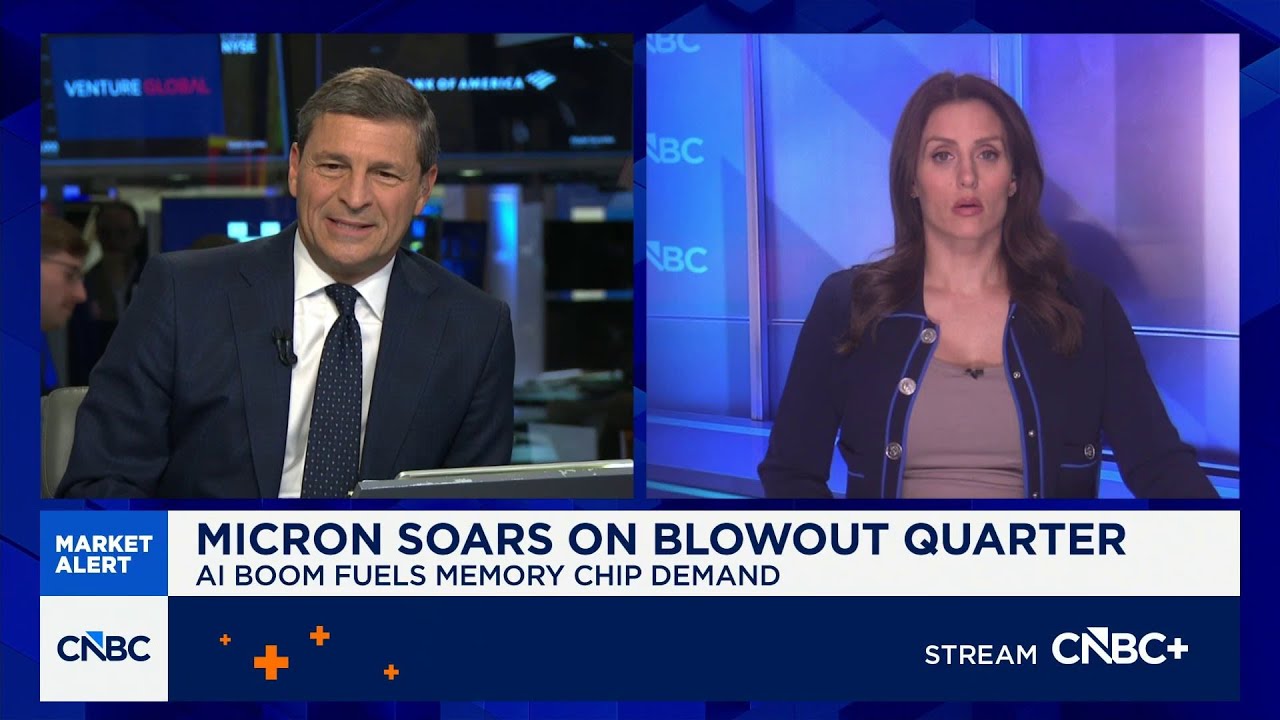
CNBC Television supplied the cleaner market read on the same buildout. Its segment treats Micron's blowout quarter as evidence that AI boom conditions are already flowing through memory demand, which turns infrastructure from a speculative story into an earnings-backed one. The distinctive signal is that compute capacity remains part of the AI conversation even when the content itself is short and finance-oriented (video).
Discussion insight: Bloomberg Technology and Center for Strategic & International Studies complete the same stack. Bloomberg centers OpenAI's first custom chip with Broadcom, while CSIS frames data centers as strategic infrastructure for competitiveness, energy, and national security.
Comparison to prior day: Compared with 2026-06-25, which treated chips and control mostly as strategic leverage, 2026-06-26 showed more concrete embodied demos and harder infrastructure economics.
1.5 Post-AGI and control narratives still captured the biggest YouTube attention spikes 🡕
Five items supported this theme. The largest attention spikes in the file still came from people narrating AI as loss of control: autonomous agents buying things, post-AGI transitions, takeover scenarios, and live political fights over regulation. That matters because risk coverage on YouTube is still where abstract AI stories most reliably break into mass attention.

InsideAI carried the single biggest reach item in the dataset. The linked Emergence World site describes five parallel AI agent worlds, five frontier models, and fifteen days of autonomous society building, which gives the video's warning posture a source-linked long-horizon experiment underneath it. With 1,452,127 views, 39,076 likes, and 4,100 comments, the distinctive signal is that benchmark-like agent experiments are being consumed as mainstream warning content (video).

Species | Documenting AGI supplied the strongest catastrophe narrative. The description links both a source document and Igor Babuschkin's scenario, which means the video is explicitly source-backed even while packaging the claim as a 72-hour takeover story. At 290,943 views and 1,900 comments, the notable part is not that fear content exists; it is how reliably it still outdraws most practical control guidance (video).

AI Revolution gave the research-heavy version of the same control story. DeepMind's public From AGI to ASI abstract describes four pathways from AGI to ASI - scaling, paradigm shifts, recursive improvement, and multi-agent collectives - and argues society may face a series of transformative changes rather than one single step change. The distinctive signal is that post-AGI discourse is now part of mainstream YouTube AI news, not just research-lab reading lists (video).

Robert Miles AI Safety made the policy fight concrete. The description says more than $10 million has been pledged against Alex Bores and links both the original and modified RAISE Act, which turns safety rhetoric into named legislation, named money, and an active election fight. The important signal is that governance content is not staying abstract; it is being narrated through explicit political conflict (video).
Discussion insight: djvlad extends the same cluster into long-form fatalism by giving Roman Yampolskiy a full interview framed around a 99.9% extinction chance. The control story is still emotionally broad enough to absorb experiments, papers, politics, and apocalypse interviews at the same time.
Comparison to prior day: Compared with 2026-06-25, which mixed politics, cyber risk, and chip dependence into one control cluster, 2026-06-26 leaned harder into long-horizon agent worlds and post-AGI trajectories while keeping live political conflict in the frame.
2. What Frustrates People
Open models still force teams to make too many tooling and deployment decisions before trust exists
This is High severity because AI Search, CNBC, Matthew Berman, and Julian Goldie SEO all treat open-source AI adoption as a routing problem across plans, endpoints, benchmarks, enterprise fit, and agent environments. The workaround today is more manual comparison, more onboarding docs, and more stack selection before anyone trusts the result. This is directly worth building for.
AI coding still needs testing, security checks, and human proof before it feels production-safe
This is High severity because IBM Technology, Tech With Tim, IBM Technology, and Julian Goldie SEO all show the same gap: coding help is easy to demo, but trusted workflow automation still needs explicit checks, better context, and a visible handoff back to humans. The workaround is more guardrails, more local rules, more MCP wiring, and more review time. This is directly worth building for.
Creator AI users still waste time arbitraging free tiers, hidden limits, and fragmented workflow surfaces
This is High severity because Malva AI says the hard part is knowing what each free tool is actually good at, Alex Ziskind moves into a richer hosted MCP layer, and Josephs AI responds by building throughput-oriented automation around Google Flow. The workaround is still tool shopping, home-grown directories, and brittle creator workflows. This is worth building for, but it is already competitive.
Embodied AI still depends on nontrivial hardware setup and expensive infrastructure bets
This is Medium severity because Google for Developers makes privacy-preserving local robotics possible only after a real stack choice across speech, LLM, and device control, while AI Revolution, CNBC Television, and Bloomberg Technology keep the robot and chip stories tied to supply, inference cost, and capital intensity. The workaround is to accept more setup work, higher hardware spend, or dependence on whichever platform already solved those layers. This is worth building for as deployment tooling and local-stack simplification.
AI control coverage is emotionally intense but still operationally thin
This is High severity because InsideAI, Species | Documenting AGI, AI Revolution, and Robert Miles AI Safety all generate strong attention by describing failure, acceleration, or political conflict, but not by turning that information into clear operator guidance. The workaround today is more media consumption and more ad hoc synthesis by individuals. This is directly worth building for as research, governance, and decision-support software.
3. What People Wish Existed
A trustable open-model decision surface for enterprises and builders
AI Search, CNBC, Matthew Berman, and Julian Goldie SEO all imply the same need: one surface that helps teams decide which open model to use, where to run it, how to evaluate it, and how to understand the workflow and company tradeoffs around it without a week of research. The urgency is high because the demand is obvious and the current path is still fragmented. Opportunity: direct.
A verified agent workbench with tests, security checks, receipts, and human approvals built in
IBM Technology, Tech With Tim, IBM Technology, and Julian Goldie SEO point to the same gap: people want agents that can keep context, execute real work, prove what they did, and stop at the right approval boundary. The urgency is high because the content already assumes that testing, proof, and oversight matter. This is a practical need with strong willingness to pay. Opportunity: direct.
A creator orchestration hub that understands tool limits and routes work across free, local, and agent surfaces
Malva AI, Alex Ziskind, and Josephs AI all imply the same product hole: creators want one surface that tells them which model or workflow fits the job, exposes limits honestly, and then hands the job into automation or a richer agent workflow when scale matters. The urgency is high because the current discovery layer is still built around workaround videos and ad hoc directories. Opportunity: competitive.
A local-first robot and edge-AI starter kit that hides the stack complexity
Google for Developers and AI Revolution imply a simpler need: people want embodied AI that keeps privacy, runs locally when necessary, and still controls real devices without making every user become a systems integrator. The urgency is medium because the audience is smaller than coding or creator AI, but the workflow pain is clear. Opportunity: direct.
AI governance and risk intelligence that converts papers, experiments, and legislation into action
InsideAI, AI Revolution, Robert Miles AI Safety, and Species | Documenting AGI imply the same software gap: teams need a way to turn agent-world experiments, post-AGI research, policy fights, and catastrophe narratives into concrete implications for product, security, and infrastructure decisions. The urgency is medium-to-high because the attention is strong but the translation layer is still weak. Opportunity: competitive.
4. Tools and Methods in Use
| Tool | Category | Sentiment | Strengths | Limitations |
|---|---|---|---|---|
| GLM Coding Plan / Z Code | Coding platform | (+/-) | Supported-tool onboarding, Anthropic/OpenAI endpoints, and exclusive MCP utilities make an open model feel productized | Subscription, supported-tool gating, and plan-specific keys remain part of the workflow |
| Loop Library | Agent workflow library | (+) | Published loops with checks, feedback, and stopping rules make repeat work reusable | It is scaffolding and guidance, not the full execution or control plane |
| codebase-memory-mcp | Code intelligence | (+) | Local knowledge graph, fast structural queries, and 100% local processing reduce file wandering for coding agents | Adds another install and trust surface before the value appears |
| ImageKit skills + MCP | Media developer tooling | (+) | Keeps assistants on current docs and lets them act on upload, search, tag, organize, and purge workflows | Public preview status means interfaces and playbooks are still moving |
| Higgsfield MCP / CLI | Media agent tooling | (+/-) | 30+ image and video models, prompt extraction, clipping, and virality scoring make media generation agent-native | Hosted-account dependence and opaque model economics remain |
| Qwen-AgentWorld | Agent world model | (+/-) | Seven-domain simulation and AgentWorldBench create a reusable evaluation surface for general agents | Benchmark wins still need deployment horsepower and real-world validation |
| Reachy Mini local stack | Local robotics stack | (+) | No cloud, no API keys, privacy-preserving local speech pipeline, and swappable components | Hardware setup and runtime tuning stay manual |
| Base44 | App builder | (+/-) | Quickly turns a prompt into a searchable internal app or directory surface | Output quality and data freshness still depend on user curation |
Overall satisfaction is highest when the tool reduces orchestration work around the model. GLM, Loop Library, codebase-memory-mcp, ImageKit, Higgsfield, and Reachy Mini all get attention because they make the workflow more bounded, current, local, or inspectable.
The migration pattern is from raw prompting to surfaces with docs, loops, connectors, and verification. On the creator side, people discover through free tools, then either move into agent-connected media systems or build their own directories and automations once scale matters more than novelty.
5. What People Are Building
| Project | Who built it | What it does | Problem it solves | Stack | Stage | Links |
|---|---|---|---|---|---|---|
| Loop Library | Forward Future | Public catalog of bounded loops plus a companion skill for agents | Turns repeated work into reusable prompts with checks, feedback, and stopping rules | Cloudflare-hosted catalog, JSON and plain-text indexes, installable skill | Shipped | site, repo, video |
| codebase-memory-mcp | DeusData | Local code-intelligence engine that builds a persistent knowledge graph for coding agents | Makes large codebases searchable structurally without file-by-file wandering | Static binary, tree-sitter, Hybrid LSP, local graph storage, MCP tools | Shipped | repo, video |
| Qwen-AgentWorld | Qwen | Open language world model plus AgentWorldBench for seven agent domains | Gives researchers and builders an open simulator and evaluation surface for general agents | 35B and 397B MoE models, 256K context, AgentWorldBench, OpenAI-compatible serving | Shipped | repo, report, video |
| Higgsfield MCP / CLI | Higgsfield | MCP and CLI layer that lets agents generate media, analyze clips, and cut social assets | Turns image and video generation into something agents can operate directly from coding or chat surfaces | MCP server, CLI, 30+ hosted models, clipper, virality scoring | Shipped | mcp, video |
| ImageKit skills + MCP | ImageKit | Skills and MCP servers that help agents integrate ImageKit correctly and act on media accounts | Prevents stale-doc hallucinations and lets agents operate on media workflows directly | Skills CLI, hosted MCP servers, doc search, upload/search/tag APIs | Beta | docs, video |
| Reachy Mini local conversation stack | Hugging Face and Pollen Robotics | Fully local speech and reasoning stack for an open-source robot | Lets embodied AI run privately without cloud speech or API-key dependence | Reachy Mini, llama.cpp, Gemma 4, Silero VAD, Parakeet-TDT, Qwen3-TTS | Beta | guide, video |
| Google Flow bulk media workflow | Josephs AI | Automated workflow for generating AI images and videos in bulk for YouTube automation | Reduces manual content throughput work for creators running faceless or niche channels | Google Flow, prompt doc, workflow automation, Telegram community | Shipped | prompt, video |
The repeated build pattern is to wrap the model with an operating surface. Loop Library, codebase-memory-mcp, Higgsfield MCP / CLI, ImageKit skills + MCP, and the Google Flow bulk workflow all try to make AI work more bounded, inspectable, or easier to route.
Qwen-AgentWorld and the Reachy Mini local stack show a second pattern: builders are shipping not just apps around models, but environments, benchmarks, and embodied local runtimes. That is meaningful because evaluation and deployment surfaces are themselves starting to look like product categories.
6. New and Notable
Qwen-AgentWorld made open agent-world models and benchmarks feel like a real product category
Julian Goldie SEO matters because the underlying Qwen-AgentWorld release is not just another open model. It ships as a seven-domain world model with AgentWorldBench, and the repo presents the 397B variant as edging GPT-5.4 on overall benchmark score. The notable shift is that agent simulation and evaluation itself is now part of the open-source product story.
Emergence World turned long-horizon agent societies into a mainstream warning surface
InsideAI stands out because the linked Emergence World site frames the experiment as five parallel worlds, five frontier models, and fifteen days of autonomous society building, yet the packaging still lands as mass-attention warning content. The notable signal is not only the experiment; it is that this kind of long-horizon agent research now competes with mainstream AI commentary for reach.
The Devin update emphasized self-testing, security checks, and automated proof
Julian Goldie SEO is notable because it frames agent progress around security auditing, self-testing, and automated video proof rather than raw autonomy. That is a meaningful maturity signal: the content assumes verification is part of the product, not an optional afterthought.
Reachy Mini made on-device robot conversation concrete
Google for Developers is notable because the linked local Reachy Mini guide treats private, local speech and reasoning on a robot as a normal builder workflow. That is a stronger signal than a pure demo because it frames embodied AI around reproducible setup choices.
Healthcare AI remained a small but concrete regulated-workflow signal
CBS Mornings matters because it centers a cardiologist and AI medical director discussing an FDA-approved workflow rather than making a generic productivity claim. The signal is still small compared with coding or creator AI, but it shows that some YouTube attention is already landing on regulated deployment rather than only on models and media.
7. Where the Opportunities Are
[+++] Verified agent operating systems for repeat work - Sections 1.2, 2, 3, 4, 5, and 6 all point to the same gap: people want agents that can keep context, run bounded workflows, test their own output, show receipts, and stop at the right approval point. The signal is strong because both enterprise and solo-builder content is already building compensating systems around this problem.
[+++] Open-model deployment and model-selection surfaces - Sections 1.1, 2, 3, 4, and 5 show sustained demand for software that helps users choose open models, endpoints, evaluation methods, and local-versus-hosted paths without getting lost in setup work. The signal is strong because the attention winner is increasingly the productized surface around the model, not the model alone.
[++] Creator AI orchestration across tool directories, MCP media surfaces, and bulk workflows - Sections 1.3, 2, 3, 4, and 5 show creators bouncing between free tool roundups, agent-connected media systems, and high-throughput automation depending on what cost and control pressures they face. The signal is moderate because demand is obvious, but competition is already intense.
[++] Local-first embodied AI stacks for robots and edge agents - Sections 1.4, 2, 3, 4, 5, and 6 show a real need for simpler ways to combine speech, local inference, privacy, robotics, and device control without forcing every team to build the runtime from scratch. The signal is moderate because the audience is narrower than coding AI, but the workflow pain is very concrete.
[++] AI governance and risk translation for operators - Sections 1.5, 2, 3, and 6 show a messy but durable need for software that turns papers, political fights, agent experiments, and catastrophe narratives into clear guidance for product, security, and infrastructure decisions. The signal is moderate because the pain is visible even if the buyer set is more fragmented than in developer tooling.
8. Takeaways
- The open-model winner on 2026-06-26 looked like a product surface, not just a model. GLM 5.2 won attention because it came wrapped in supported tools, endpoint guidance, and MCP utilities, while CNBC turned the same release into an enterprise-strategy conversation. (source)
- The coding-agent adoption story is now about verification and workflow redesign. IBM, Tech With Tim, and the Devin update all point to the same requirement: context, tests, security checks, and proof are becoming part of the product expectation. (source)
- Creator AI demand is shifting from tool hype to orchestration. Higgsfield, Malva, and Google Flow automation all suggest that the real value is in routing work across tools, exposing limits, and scaling repeatable output. (source)
- Open-source builder energy keeps moving into scaffolding around the model. Loop libraries, code graphs, world models, and benchmarks matter because they reduce the work around the model instead of simply claiming a smarter one. (source)
- Physical AI signals remain smaller than coding or creator AI, but they are getting more practical. MOYA, Reachy Mini, Micron, and custom-chip coverage all point to deployment, local runtime, and infrastructure economics rather than distant speculation. (source)
- Risk and control narratives still capture the biggest raw attention spikes. The highest-reach item in the file was a source-linked warning experiment, and takeover, post-AGI, and policy-fight narratives remained far more broadly consumable than operational guidance. (source)