YouTube AI - 2026-06-29
1. What People Are Talking About
1.1 Open-source AI widened from one Chinese model story into a local-and-edge platform race 🡕
Five items supported this theme. On 2026-06-29, the open-source AI story was no longer only "GLM 5.2 is strong." The evidence spread across productized coding access, enterprise adoption, a second Chinese model family, and Google's edge/offline push for Gemma 4. That matters because open-model competition is expanding from leaderboard arguments into distribution, workflow packaging, and where the model can actually run.
AI Search remained the highest-reach anchor for the theme. Its GLM 5.2 video (446,691 views, 12,925 likes, 1,200 comments) is not just a benchmark celebration; the linked GLM Coding Plan quick start shows a paid-but-open workflow with plan-specific API keys, official support for Claude Code, Roo Code, Kilo Code, Cline, OpenCode, OpenClaw, Crush, Goose, and Cursor, plus Anthropic- and OpenAI-compatible endpoints and exclusive Vision, Web Search, and Web Reader MCP servers. The distinctive signal is that the open model winning attention looks like a supported developer product, not just a checkpoint download (video).
CNBC kept the enterprise frame alive. Its 52-minute segment (121,275 views, 607 comments) says GLM 5.2 is closing in on the American frontier for agentic work, is free to download and fine-tune, and is seeing adoption on OpenRouter faster than DeepSeek did earlier in the quarter, before asking what that means for enterprises, vertical AI companies, and inference economics. The important shift is that Chinese open-source AI is being narrated as a boardroom and infrastructure issue, not only a builder curiosity (video).

Google for Developers added the clearest fresh 2026-06-29 signal. Its Gemma 4 video (6,725 views, 567 likes) says frontier-level AI no longer needs an internet connection and can run efficiently on local devices for low-connectivity healthcare and indigenous-language use cases, while the linked Gemma 4 page explicitly markets autonomous agents with native function calling. The distinctive signal is that the open-model story broadened from "best open source" into "best place to run frontier AI" (video).

Universe of AI reinforced the multi-family competition. Its video (36,814 views) says DeepSeek open-sourced DeepSpec with full repo, weights, and training code under MIT, while a new GLM model is closing in on Mythos-level performance - evidence that the Chinese open-model race is not narrowing to a single winner (video).

Discussion insight: Mehul Mohan turned the same theme adversarial with "Anthropic's War On Opensource AI" (27,875 views, 245 comments), tagging the conversation with regulatory capture, monopoly, self-hosting, and AI sovereignty. The open/closed debate is no longer only about quality and cost; it is also about who gets to define the rules of deployment.
Comparison to prior day: Compared with 2026-06-28, which centered Chinese open-source breadth and enterprise switching friction, 2026-06-29 widened the theme further by adding Gemma 4's offline edge pitch and more explicit open-vs-closed political conflict.
1.2 AI futures stayed mass-audience content, but the claims got more concrete and operational 🡕
Three items supported this theme. The AI-futures cluster on 2026-06-29 still drew major attention, but the strongest items were no longer only philosophical or civilizational. They attached a named recursive-self-improvement timeline, a benchmark showing multi-day autonomous coding runs, and a restricted frontier release with safety and infrastructure implications. That matters because futures discourse on YouTube is becoming more evidence-backed and deployment-aware.

Sabine Hossenfelder again carried the highest-engagement mass-audience signal. "The AI Future No One Wants to Talk About" reached 323,883 views, 19,191 likes, and 3,600 comments - a roughly 5.9 percent like-to-view ratio, far above most product-news videos in the same dataset. The distinctive point is that a broad, critical AI-futures conversation can now compete with product releases for audience attention at mainstream scale (video).

AI Revolution made the topic more concrete. Its 2028-warning video (39,175 views) says Jack Clark put a timeline on recursive self-improvement, and the linked Reason interview confirms Clark discussing what happens if AI can build itself without human input. The same video links to MirrorCode coverage, which describes a 19-day autonomous coding run and a Claude Opus 4.7 example that rebuilt a 16,000-line bioinformatics toolkit in 14 hours for $251. The distinctive signal is that recursive-self-improvement talk is now bundled with public benchmark artifacts, not only speculative rhetoric (video).
The same channel's GPT 5.6 Sol video (41,301 views, 196 comments) adds the deployment-control layer. Its description says access was limited to trusted partners after U.S. government pressure, cites a public safety page, and ties the release to OpenAI's Jalapeno inference chip effort with Broadcom. The distinctive signal is that frontier-model future talk is now inseparable from access governance, cyber capability framing, and infrastructure control (video).
Discussion insight: The nuance across the three items is that "future AI risk" is no longer a single genre. Hossenfelder pulls a mass audience into the topic, while AI Revolution narrows it into concrete questions about recursive self-improvement, evaluation failure, and who gets early access to frontier systems.
Comparison to prior day: Compared with 2026-06-28, which revolved around AGI-to-ASI pathways and multi-agent control theory, 2026-06-29 added a named 2028 marker and a benchmark/runtime evidence chain that made the futures theme more operational.
1.3 AI coding content moved deeper into agent operations, scaffolding, and runtime design 🡕
Four items supported this theme. Coding-AI coverage on 2026-06-29 was less about "the model writes code" and more about the supporting system: lifecycle redesign, current docs, reusable loops, persistent memory, and always-on runtime infrastructure. That matters because the bottleneck is shifting from prompt quality to how teams package context, tools, and execution environments around agents.
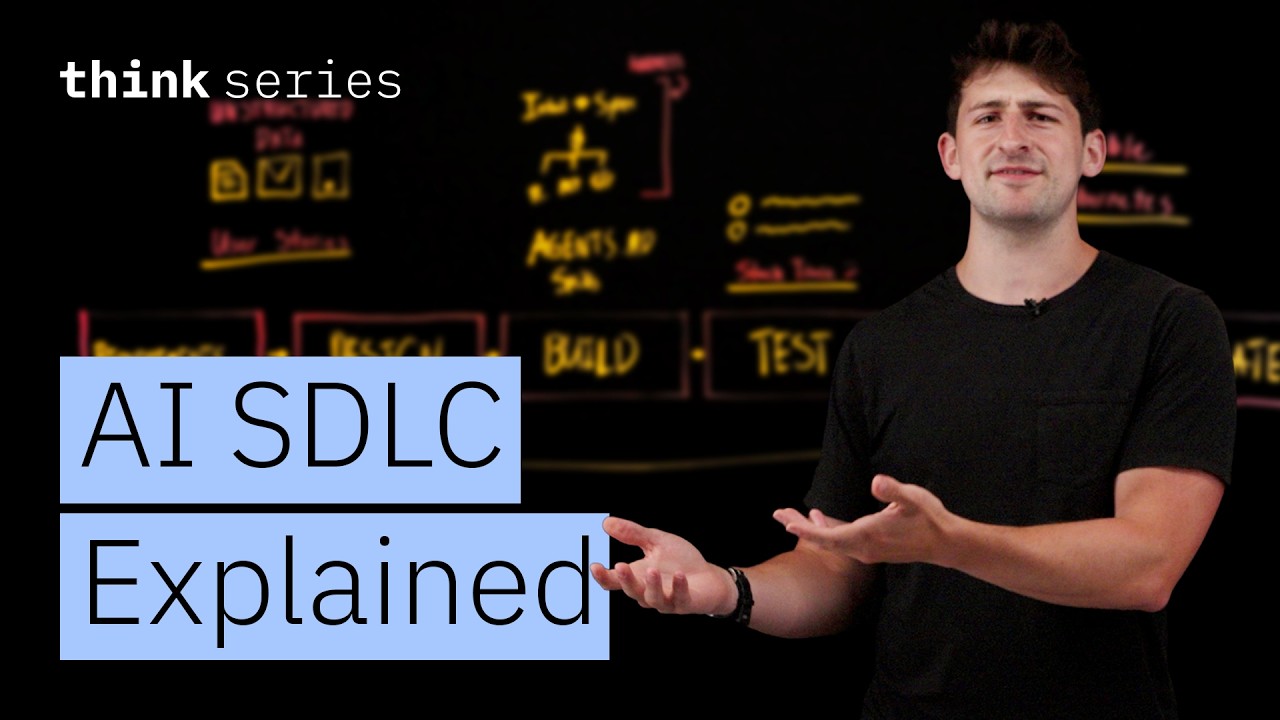
IBM Technology supplied the enterprise workflow thesis. Its SDLC video (60,535 views, 1,994 likes) argues that faster coding alone does not fix productivity because planning, analysis, testing, delivery, and maintenance are still fragmented. The distinctive signal is lifecycle redesign framing: AI value shows up when agents operate across the whole workflow rather than simply autocompleting code (video).

Tech With Tim gave the most practical builder view. His live AI-shorts build (27,977 views) emphasizes planning, context, agent skills, and MCP setup, while the linked ImageKit build-with-AI docs explicitly say assistants otherwise invent transformation parameters, stale API signatures, or the wrong integration path. The distinctive signal is that current-doc distribution and tool wiring are becoming first-class reliability surfaces in AI coding (video).

DevOps & AI Toolkit added the freshest operational angle. Its 24/7 agent-server video says the hard problems are persistence, remote access, resource contention, and isolation, then proposes a small Linux PC with terminal agents in a persistent multiplexer, reachable over SSH via Tailscale; the linked transcript expands the case with cloud-cost comparisons and tools like Devbox, vals, and MCP servers. The distinctive signal is that multi-agent runtime operations are now their own content category, separate from prompting or IDE demos (video).

Discussion insight: Matthew Berman broadens the builder activity beyond one workflow. His open-source roundup links Loop Library - reusable bounded loops that tell an agent what to do, how to check work, what to try next, and when to stop - and codebase-memory-mcp, which describes a persistent code knowledge graph with sub-millisecond structural queries. The center of gravity is moving toward reusable scaffolding around the agent.
Comparison to prior day: Compared with 2026-06-28, which treated AI coding as a stable background theme, 2026-06-29 pushed it further into durable runtime design and reusable loop/memory infrastructure.
1.4 Creator AI stacks shifted from headline quality to routing, packaging, and cost control 🡕
Four items supported this theme. The creator-side AI story on 2026-06-29 was not "one model wins." It was about which workspace bundles the right models, which stack gets costs down, and how to stop losing time switching surfaces. That matters because the scarce resource for creators is increasingly orchestration rather than raw generation capability.

AI Geeked framed the theme in direct business terms. Its CapCut tutorial (13,097 views) says the real challenge for brands is not making one ad but continuously generating campaign assets, then pitches GPT Image 2.0 plus Seedance 2.0 Mini inside CapCut as the cheaper production path - 33 percent fewer credits and up to 55 percent lower cost than Seedance 2.0 during the promo window, with Seedance 2.5 positioned as the next jump. The distinctive signal is cost-aware packaging, not standalone model novelty (video).
AI Mind Revolution supplied the integrated-workspace version. Its Google Flow walkthrough (1,870 views, 160 likes) says creators can move from Draw and layer blending to Outpaint, Mask Magic, storyboards, and even an internal AI agent for remixing or building custom tools. The distinctive signal is that creator platforms are no longer only generators; they are becoming editable, layered operating environments (video).

Money Degree covered the zero-budget end of the market. Its full-course video (2,067 views, 150 likes) teaches a two-path pipeline for horror shorts using Korpi AI, Claude, ElevenLabs, Flow, and CapCut, explicitly promising no money and no prior experience. The distinctive signal is that lower-budget creators still care less about one best model than about a stack recipe that gets content out the door (video).

Discussion insight: VEED STUDIO makes the routing problem explicit in one sentence: every model has a real strength, and the hard part is finding yours without burning half your day switching tools. Its comparison video maps Flux to photorealism, Ideogram to typography, Nano Banana to spatial logic, Recraft to vectors, Krea to product marketing, and Stable Diffusion to customization - a strong argument that the winner may be the comparison workspace rather than any one model (video).
Comparison to prior day: Compared with 2026-06-28, which emphasized the AI-video quality arms race, 2026-06-29 shifted toward integrated workspaces, pricing efficiency, and multi-model routing.
1.5 Embodied AI rotated from spectacle into rollout, logistics, and national infrastructure 🡕
Four items supported this theme. Physical AI on 2026-06-29 was less about uncanny demos alone and more about where the systems land: factories, warehouses, chips, data centers, and regulated sectors. That matters because embodied AI is increasingly being narrated as a deployment stack rather than a single robot story.

AI Revolution still carried the clearest spectacle-to-platform bridge. Its MOYA video (79,765 views, 270 comments) pairs the lifelike robot with Boston Dynamics Atlas factory progress and Alibaba's Qwen-Robot launch, turning the topic from a creepy demo into a physical-machine platform story. The distinctive signal is that humanoid coverage is now bundled with deployment and operating-stack language (video).
Fox Business supplied the commercial rollout frame. Its Amazon segment (10,272 views) ties robotics expansion directly to Prime Day and warehouse operations, making physical AI part of retail execution and logistics strategy rather than future-of-work theater (video).

Bloomberg Television added the infrastructure layer. Its June 29 segment says South Korea is orchestrating at least $880 billion in investment from Samsung, SK Hynix, and others into chips and data centers because digital infrastructure is essential to surviving the AI era. The distinctive signal is that the embodied-AI conversation is bleeding into national industrial policy and long-horizon capex planning (video).

Discussion insight: CBS Mornings shows the same diffusion in a regulated domain. Its interview on medical AI names EchoNext as an FDA-approved tool through Pathway Labs while still stressing that clinicians should not lean on AI too much, which is a different deployment tone from either robot spectacle or warehouse automation (video).
Comparison to prior day: Compared with 2026-06-28, which paired physical AI with a sharper job-displacement critique, 2026-06-29 rotated toward rollout surfaces - robots, logistics, national chips/data-center buildout, and regulated deployment.
2. What Frustrates People
Open models can win attention before they win trust
This is High severity. AI Search, CNBC, and Mehul Mohan all point at the same gap from different angles: open models can be free, capable, and wrapped in decent tooling, yet adoption still hits enterprise trust friction and political resistance from closed-model incumbents. The workaround is a productized wrapper like the GLM Coding Plan or continued dependence on closed providers with clearer support boundaries. This is directly worth building for.
AI agents still need too much runtime plumbing around them
This is High severity. DevOps & AI Toolkit names the concrete problems - persistence, accessibility, resource contention, and isolation - while IBM Technology frames the broader workflow fragmentation across the SDLC and Tech With Tim shows how current docs, skills, and MCP setup are still manual. The workaround today is piecing together Linux hosts, multiplexers, Tailscale, skills, MCP servers, and custom rules. This is directly worth building for.
Creator AI users still have to route manually across overlapping tools and pricing tiers
This is High severity. VEED STUDIO says every model has a different strength and the hard part is switching among them, while AI Geeked turns the same problem into a credit-budget question and Money Degree turns it into a long stack recipe. The workaround is comparison workspaces, bundled suites, or tutorial-driven multi-tool pipelines. This is worth building for, but the field is already competitive.
Embodied AI deployment is constrained by capex and real-world operations, not only model quality
This is Medium-to-High severity. Bloomberg Television frames at least $880 billion of Korean investment in chips and data centers as necessary to survive the AI era, while Fox Business shows warehouse automation as a live operational program and AI Revolution ties robot progress to factory and platform deployment. The workaround is concentrated spending by states, hyperscalers, and logistics leaders. This is worth building for, but most opportunities sit in enabling layers rather than consumer apps.
Regulated AI adoption still comes with visible human-oversight anxiety
This is Medium severity. CBS Mornings presents a named FDA-approved healthcare tool, EchoNext, yet still emphasizes not leaning on AI too much. The frustration is not lack of AI capability; it is the trust burden that remains even after formal approval. The workaround is explicit human-in-the-loop review. This is worth building for in regulated markets.
3. What People Wish Existed
Enterprise-ready trust and deployment layer for open and edge models
AI Search, CNBC, and Google for Developers together imply a need for something stronger than "the model is good." Teams want open or local-capable models that fit real workflows, but they still need support, approval paths, policy clarity, and deployment guardrails before they switch. The urgency is high because the performance story is already good enough to create demand. Opportunity: direct.
An operating system for persistent multi-agent work
DevOps & AI Toolkit, IBM Technology, and Tech With Tim imply a product that owns persistence, remote access, context packaging, docs freshness, permissions, and observability for agents in one place. Builders clearly want to run agents for hours or days, not only inside a foreground editor tab. The urgency is high because the manual assembly burden is explicit in the content itself. Opportunity: direct.
A creator router that makes model strengths, caps, and costs legible
VEED STUDIO, AI Geeked, and Money Degree point to the same wish: creators want one surface that tells them which model fits which task, what the credit tradeoffs are, and how to move from image generation to editing to publishing without rebuilding the workflow every time. The urgency is high because the routing problem is now more visible than raw capability gaps. Opportunity: competitive.
A deployment layer that connects physical AI software to infrastructure reality
AI Revolution, Fox Business, and Bloomberg Television imply demand for tools that coordinate the physical-AI stack: robot operating software, fleet management, hardware integration, warehouse/logistics rollout, and the chip/data-center economics beneath them. The urgency is medium-to-high because spending is already real but concentrated in a few large actors. Opportunity: direct.
Regulated-workflow copilot layers that keep humans visibly in control
CBS Mornings implies a need for interfaces that document review, escalation, and accountability instead of only producing suggestions. The practical need is not another raw model endpoint; it is an oversight surface that makes approved AI tools easier to trust in clinical or other regulated settings. The urgency is medium because adoption is early but clearly moving forward. Opportunity: direct.
4. Tools and Methods in Use
| Tool | Category | Sentiment | Strengths | Limitations |
|---|---|---|---|---|
| GLM 5.2 / Z.AI Coding Plan | Open coding model + workflow platform | (+/-) | Strong open-model performance, supported IDE/tool list, Anthropic/OpenAI-compatible endpoints, exclusive MCP servers | Trust, policy, and enterprise-approval friction remain outside the model itself |
| Gemma 4 | Open model / edge AI | (+) | Offline or local-device deployment, function calling, clear low-connectivity use cases | Evidence in this dataset is early-stage positioning rather than broad deployment proof |
| GPT 5.6 Sol + Jalapeno | Frontier model + infrastructure | (+/-) | Strong coding/cyber positioning, custom chip strategy, high perceived capability | Restricted access, government pressure, opaque evaluation surface |
| ImageKit skills + MCP | Docs/MCP integration layer | (+) | Fixes stale-doc and wrong-integration failures, gives agents current knowledge and account actions | Still vendor-specific and in public preview |
| Loop Library / Loopy | Agent workflow library | (+) | Bounded loops with checks, next steps, and stopping rules; reusable public catalog | Needs selection and adaptation to a given workflow; not a full runtime by itself |
| codebase-memory-mcp | Code intelligence / repo memory | (+) | Persistent code knowledge graph, fast indexing, sub-millisecond structural queries, broad language support | Separate install and indexing step; adds another system to maintain |
| Persistent Linux agent server with Tailscale, multiplexer, Devbox, vals, and MCP | Agent operations method | (+) | Persistence, remote access, isolation, lower long-run cost than always-on cloud | Manual assembly burden; self-hosting complexity stays with the user |
| CapCut + Dreamina Seedance 2.0 Mini / 4K | AI video suite | (+/-) | Integrated ad-production workflow, lower credit use on Mini, roadmap to richer references and longer clips | Pricing and credit economics are still central to the decision |
| Google Flow | AI media workspace | (+) | One surface for generation, layer editing, outpainting, storyboards, and custom-tool building | Public evidence here comes from creator tutorials more than official docs |
| VEED multi-model workspace | AI media workspace | (+/-) | Makes side-by-side model comparison easier and reduces tool switching | Solves routing friction more than underlying model quality gaps |
| Korpi + Claude + ElevenLabs + Flow + CapCut | DIY creator stack | (+/-) | End-to-end, low-budget publishing recipe for shorts creators | Fragmented stack with many handoffs and tutorial dependency |
The overall satisfaction spectrum on 2026-06-29 is positive toward tools that reduce orchestration work and mixed toward tools that add capability without removing adoption friction. GLM, ImageKit, Loop Library, codebase-memory-mcp, and Google Flow all get their strongest signal from making an existing workflow easier to operate. GPT 5.6 Sol gets attention for capability and infrastructure ambition, but the restricted-access story keeps sentiment mixed.
The common workaround pattern is wrapping the model with more structure: MCP servers for current docs, loops for repeatable agent behavior, knowledge graphs for codebase memory, self-hosted servers for runtime persistence, and workspaces like VEED or Flow for model routing. Migration is visible in three directions at once: from single-model use to multi-model routing, from prompt craft to operational plumbing, and from standalone media generators to integrated creator suites.
5. What People Are Building
| Project | Who built it | What it does | Problem it solves | Stack | Stage | Links |
|---|---|---|---|---|---|---|
| GLM 5.2 Coding Plan | Z.AI | Productizes an open coding model for supported tools with managed endpoints and MCP add-ons | Makes an open model usable inside familiar coding workflows instead of leaving users with raw weights only | GLM 5.2, Anthropic/OpenAI-compatible endpoints, Vision/Web Search/Web Reader MCP | Shipped | quick start, video |
| Loop Library / Loopy | Forward Future | Publishes reusable loops and an installable skill that helps agents discover, adapt, and run bounded workflows | Gives agents repeatable task playbooks with checks, stopping rules, and reuse across projects | Public catalog, loop metadata, installable skill | Shipped | site, repo, video |
| codebase-memory-mcp | DeusData | Provides a persistent code knowledge graph and structural search layer for coding agents | Reduces file-by-file exploration and missing repo memory during AI coding | Tree-sitter, hybrid LSP, MCP, local knowledge graph | Shipped | repo, video |
| ImageKit skills + MCP | ImageKit | Gives coding agents current ImageKit docs plus account actions through skills and MCP servers | Prevents stale-doc, wrong-parameter, and wrong-integration failures in AI-assisted coding | Agent skills, public/private MCP servers, plain-text docs | Beta | docs, video |
| Self-hosted 24/7 agent server | DevOps & AI Toolkit | Runs multiple coding agents persistently on a dedicated machine reachable from anywhere | Keeps agents alive when laptops close and prevents them from fighting the daily-driver machine | Linux PC, persistent multiplexer, SSH, Tailscale, Devbox, vals, MCP | Alpha | transcript, video |
| Google Flow workspace | Combines generation, layer editing, storyboarding, and custom AI tool remixing in one workspace | Reduces context switching across creative tools and turns media creation into an editable surface | Nano Banana 2, layered canvas tools, storyboards, internal agent workflows | Beta | video, mentioned in stack | |
| CapCut + Dreamina Seedance 2.0 Mini / 4K | CapCut | Uses image-to-ad and image-to-video workflows to generate repeated campaign assets inside one suite | Cuts the reshoot cost and time of producing many marketing creatives | GPT Image 2.0, Seedance 2.0 Mini, Seedance 2.0 4K, CapCut PC | Shipped | site, video |
Loop Library and codebase-memory-mcp show the same meta-build pattern from different sides. One packages task structure so agents know what to do next and when to stop; the other packages repository structure so agents know where to look and what connects to what. Both are evidence that builder energy is moving above the base model into process and context infrastructure.
GLM 5.2 Coding Plan, Google Flow, and CapCut's Seedance workflow show another repeated pattern: the winning surface is increasingly the operating environment around the model. Product teams are not only shipping model access; they are bundling routing, editing, docs, and workflow scaffolding into one place.
The 24/7 agent server setup is still more pattern than product, but it is significant because it captures a real demand edge. Once builders trust agents enough to let them run for hours, persistence and remote control become build targets in their own right.
6. New and Notable
Gemma 4 moved the frontier-model conversation toward offline and low-connectivity deployment
Google for Developers stood out because it did not pitch Gemma 4 as another benchmark entrant. It pitched "frontier AI to the edge," tied to local healthcare, indigenous-language work, and devices without continuous connectivity, while the linked Gemma 4 page adds autonomous-agent positioning with native function calling.
South Korea's $880 billion AI infrastructure push made chips and data centers part of the daily YouTube AI feed
Bloomberg Television is notable not because of engagement volume but because of the number: at least $880 billion in chips and data-center investment framed as necessary to survive the AI era. That is unusually explicit national-industrial-policy language inside a general business-news segment.
Persistent agent runtime design became its own tutorial genre
DevOps & AI Toolkit is notable because it treats multi-agent persistence, accessibility, and isolation as the primary product problem rather than as background setup. That is a step beyond IDE tips or prompt advice; it is infrastructure thinking for AI coding as an ongoing operating model.
Mainstream morning TV is now comfortable discussing named, approved healthcare AI tools
CBS Mornings is notable because it names EchoNext as an FDA-approved tool through Pathway Labs while still emphasizing caution about overreliance. That combination - formal approval plus visible restraint - is a strong signal that AI adoption in regulated sectors is moving forward, but only with explicit oversight language attached.
7. Where the Opportunities Are
[+++] Trust and deployment layer for open and edge AI - AI Search, CNBC, Google for Developers, and Mehul Mohan together show the same gap from multiple sides: the models are good enough, but enterprises still need approval, policy clarity, supported tooling, and governance before adoption moves at full speed.
[+++] Agent operations platform for long-running work - IBM Technology, Tech With Tim, and DevOps & AI Toolkit all point to the same unbundled stack: lifecycle workflow redesign, current-doc distribution, permissions, persistence, remote access, and runtime isolation. A product that owns that layer would meet an explicit pain point.
[++] Multi-model creator routing and cost optimization - VEED STUDIO, AI Geeked, AI Mind Revolution, and Money Degree all show creators manually solving the same problem: which model to use, when, at what credit cost, and inside which workspace.
[++] Physical-AI rollout software and infrastructure coordination - AI Revolution, Fox Business, and Bloomberg Television imply demand for orchestration across robots, warehouses, chips, data centers, and deployment economics. The opportunity is strong, but the buyer set is concentrated.
[+] Oversight tooling for regulated AI workflows - CBS Mornings suggests an early but important opening for interfaces that document review, escalation, and accountability around approved AI tools in regulated settings. The opportunity is emerging because the adoption signal is real, but the evidence base is still thin.
8. Takeaways
- Open-source AI is broadening into a platform and deployment race, not just a benchmark race. GLM 5.2 still leads reach, but the 2026-06-29 dataset also adds DeepSeek competition, Gemma 4 edge deployment, and explicit open-vs-closed policy tension. (AI Search)
- AI-futures content remains a top engagement magnet when it becomes concrete. Sabine Hossenfelder's 323,883-view futures video and AI Revolution's 2028 recursive-self-improvement framing show that timelines and benchmark artifacts travel farther than generic doom language. (Sabine Hossenfelder)
- AI coding discourse is shifting from prompts to operating systems around the agent. IBM focuses on SDLC redesign, Tech With Tim focuses on current docs and MCP, and DevOps & AI Toolkit focuses on persistence and isolation - three layers of the same structural problem. (DevOps & AI Toolkit)
- Creator AI is becoming a routing and packaging market. CapCut, Flow, VEED, and zero-budget tutorial stacks all assume creators will use multiple models; the differentiator is now orchestration, cost, and workflow continuity. (VEED STUDIO)
- Embodied AI is now discussed as industrial rollout and infrastructure spend, not only spectacle. MOYA/Atlas/Qwen-Robot, Amazon warehouse robotics, and South Korea's data-center and chip push all point to deployment layers that sit well beyond the robot demo itself. (Bloomberg Television)