YouTube AI - 2026-07-01
1. What People Are Talking About
1.1 Agent coverage jumped from coding help to agent economies, control planes, and reusable scaffolding 🡕
Six items supported this theme. The strongest genuinely fresh signal on 2026-07-01 was not another editor demo but Google DeepMind's debut discussion of what happens when millions of agents negotiate, delegate, and monitor one another. Around that, builders filled in the operating layer: bounded loops, repository memory, telemetry, verification, and even a business model that sells an agent as labor first and software second. That matters because YouTube's AI-agent conversation moved further away from prompting tricks and toward governance, observability, and product shape.
Google DeepMind supplied the day's clearest fresh anchor. Its 42-minute agentic-economy video (119,708 views, 2,198 likes, 203 comments) asks what changes when agents start transacting, negotiating, and delegating to one another, then points viewers to the AI Control Roadmap, which treats internal agents as potential insider threats and measures safeguards through coverage, recall, and time-to-response. The distinctive signal is that multi-agent security is now being explained as system design, not prompt hygiene (video).

Matthew Berman made the builder layer concrete. His open-source roundup (78,840 views, 3,816 likes) links Loop Library / Loopy, where loops tell an agent what to do, how to check work, what to try next, and when to stop, alongside codebase-memory-mcp, which pitches a persistent local knowledge graph with sub-millisecond structural queries for coding agents. The distinctive signal is that builders are publishing reusable agent infrastructure rather than just showing one-off demos (video).
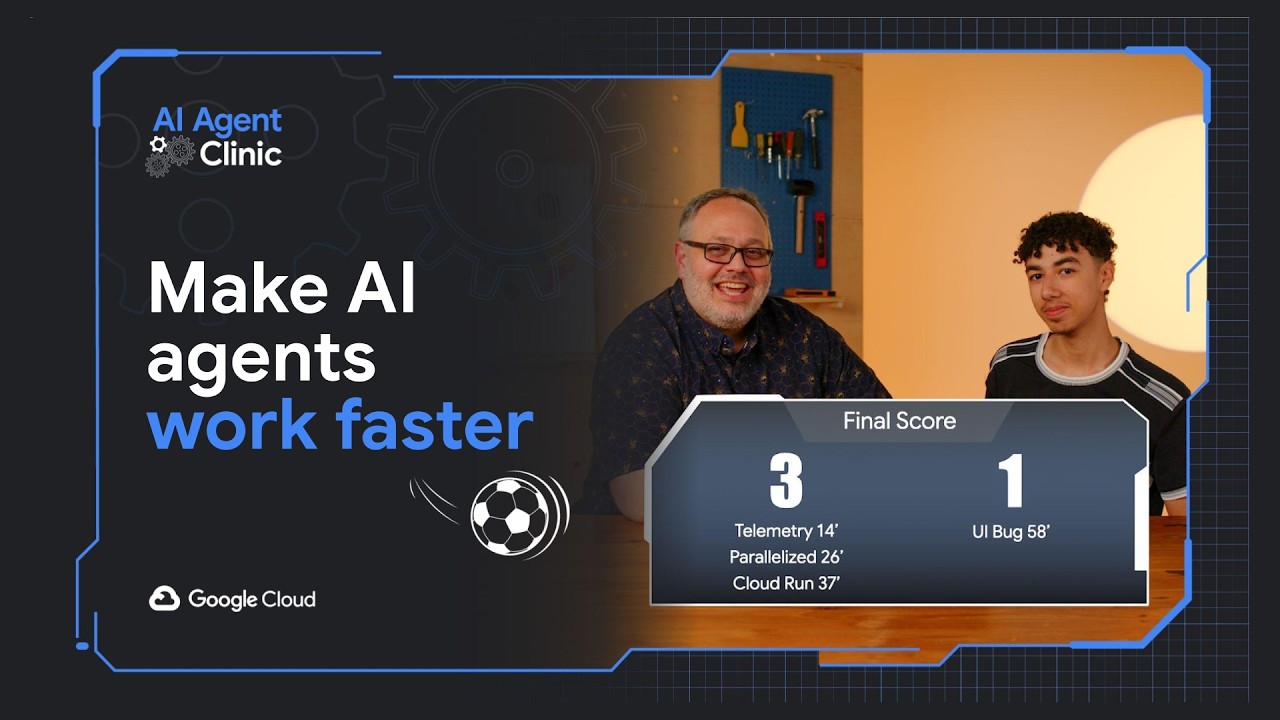
Google Cloud Tech turned observability into a headline feature. Its Agent Clinic episode says Playback IQ cut slow generation paths by 80 percent with parallel processing, OpenTelemetry instrumentation, and Cloud Run deployment, while the linked Gemini Enterprise Agent Platform observability docs emphasize p95 latency, topology views, token usage, tool metrics, and Model Armor telemetry. The distinctive signal is that tracing and operational health are now part of the on-camera product story for agents (video).
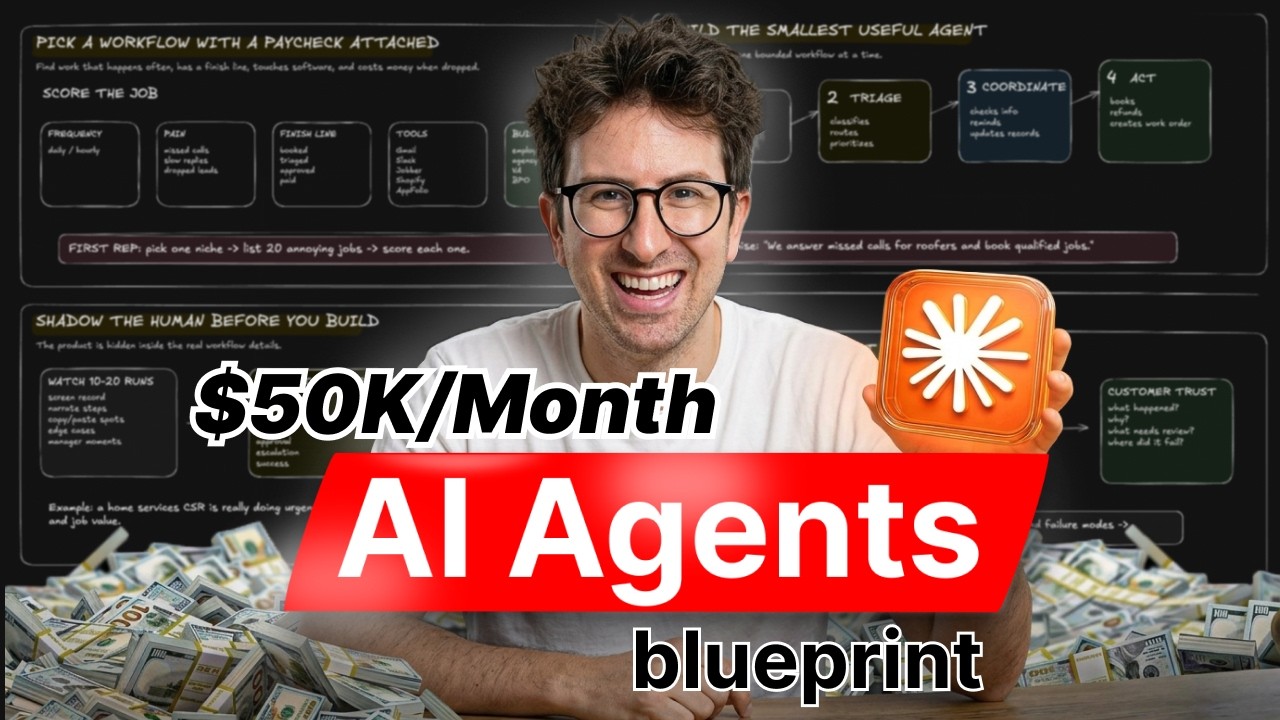
Greg Isenberg pushed the theme into business-model language. His solo episode argues that "agents are the new SaaS" by starting with a workflow that already has a paycheck attached, shadowing the human operator, selling the pilot like labor, and only then productizing the repeatable parts. The distinctive signal is that agent-first businesses are being framed as wrappers around work, not just wrappers around a model (video).
Discussion insight: IBM Technology, Maddy Zhang, and Marina Wyss - AI & Machine Learning compress the same practical lesson from different levels. IBM says AI value only compounds when planning, testing, deployment, and maintenance change with coding, while Maddy Zhang pushes persistent rules and smaller blast radii and Marina Wyss adds real-time verification through Sonar's Claude Code plugin instead of more prompt theatrics (IBM video).
Comparison to prior day: Compared with 2026-06-30, which emphasized control planes around coding agents, 2026-07-01 broadened the frame into multi-agent governance, telemetry, reusable scaffolding, and agent-first business design.
1.2 GLM 5.2 stayed the open-model anchor, but the framing shifted to switching and access hedging 🡒
Five items supported this theme. The same GLM 5.2 coverage that dominated 2026-06-30 remained at the top of the ranking, but fresh uploads changed the emphasis. Instead of only celebrating a benchmark winner, creators and news channels asked how to route traffic to it, whether to trust it in production, how it fits existing coding tools, and what happens if frontier access tightens elsewhere. That matters because open-model attention is starting to turn into migration and procurement behavior.
AI Search remained the carryover reach anchor. Its GLM 5.2 video reached 450,056 views, 12,966 likes, and 1,200 comments, and the linked GLM Coding Plan quick start shows why the video keeps traveling: official support for Claude Code, Roo Code, Kilo Code, Cline, OpenCode, OpenClaw, Crush, Goose, Cursor, Anthropic- and OpenAI-compatible endpoints, and exclusive Vision, Web Search, and Web Reader MCP servers. The distinctive signal is that the highest-reach open model is already being packaged as a supported developer product, not just a checkpoint drop (video).

Matt Wolfe added the sharpest new deployment angle. His 2026-07-01 upload says GLM-5.2 is a 1 million token, MIT-licensed open-weight model that can be used through a hosted web app, API and agent harness, or self-hosted if the team has the infrastructure, and he explicitly calls out risk-free traffic mirroring before a full switch. The distinctive signal is not that GLM wins every benchmark, but that it now looks realistic enough to trial on long, code-heavy, and document-heavy workflows without a one-way migration (video).
CNBC kept the enterprise frame alive. Its 52-minute segment (140,488 views) says GLM 5.2 is closing in on the American frontier for agentic work, is free to download and fine-tune, and is already altering how enterprises, vertical AI companies, and infrastructure investors think about model selection and inference cost. The distinctive signal is that the GLM story now lives inside boardroom and semiconductor conversations, not only builder curiosity (video).
AI Revolution gave the strongest frontier-model contrast case. Its GPT 5.6 Sol video (46,645 views) says access is limited to trusted partners after reported U.S. government pressure and ties the release to OpenAI's Jalapeno chip effort with Broadcom. The distinctive signal is that open-model enthusiasm and frontier-model restriction are now being watched together as one switching problem: which capabilities stay reachable, through which surface, and at what infrastructure cost (video).
Discussion insight: sentdex and ABC News (Australia) show how quickly the same topic turned geopolitical. One asks whether open or Chinese models could be banned while pointing viewers to OpenRouter and Together AI as access hedges; the other asks directly whether GLM-5.2 can rival Anthropic and OpenAI platforms at all (sentdex video).
Comparison to prior day: Compared with 2026-06-30, which centered bans, dangerous labels, and access asymmetry, 2026-07-01 kept the same political tension but added more concrete switching logic: supported toolchains, mirrored traffic, and "good enough for this workload" cost math.
1.3 The biggest audience still wanted AI futures, but the camps stayed divided 🡒
Three high-engagement items dominated this theme, with smaller reasoning explainers orbiting them. The feed still held a mass-audience future critique, a labor-and-unit-economics argument, and a full existential-risk interview at the same time. That matters because YouTube AI attention remains huge without converging on one social meaning for the technology.

Sabine Hossenfelder again carried the broadest audience. "The AI Future No One Wants to Talk About" reached 331,214 views, 19,478 likes, and 3,600 comments, clear evidence that a general critical future-of-AI frame can still outrun most product videos in the same daily feed (video).

Democracy Now! kept the political-economy critique explicit. Its Cory Doctorow interview reached 100,758 views and centers his line that labor-driven automation tends to improve the product while capital-driven automation tends to make more of the product. The distinctive signal is that anti-AI coverage on YouTube is increasingly about incentives and who captures the value, not only about whether models get smarter (video).

djvlad held the opposite end of the spectrum. Its Roman Yampolskiy interview climbed to 131,199 views and stays explicit about superintelligence, privacy, security, labor disruption, and the possibility of catastrophic outcomes. The distinctive signal is that extinction-risk framing still draws large attention when it is given long-form room rather than squeezed into a news clip (video).
Discussion insight: Bernard Marr and NVIDIA Developer show a quieter layer growing underneath the spectacle. Bernard Marr reduces reasoning models to stepwise problem-solving with human oversight, while NVIDIA's Nemotron challenge turns better reasoning into verified traces, token budgets, solver-built data, fine-tuning, and validation rather than philosophy alone (Bernard Marr video).
Comparison to prior day: Compared with 2026-06-30, which already split between labor critique and existential-risk acceleration, 2026-07-01 mostly held the line. The fresh twist was not a new camp, but more educational content trying to make reasoning behavior legible.
1.4 Physical AI moved closer to homes and clinics, while the hard limits stayed industrial 🡕
Six items supported this theme. Fresh uploads made robotics feel more human-facing: lifelike companion robots, AI patient follow-up calls, and a constant stream of humanoid comparison videos. But the strongest explanations of what will actually decide deployment still pointed back to factories, power availability, and the software stack that runs machines at scale. That matters because the robotics narrative is expanding outward without escaping infrastructure reality.

South China Morning Post made the consumer-facing shift explicit. Its 2026-07-01 upload says UBTech's humanlike robot combines lifelike silicone skin with "emotional AI" as Chinese firms push robots from the factory floor toward the family living room. The distinctive signal is not just uncanny design, but a direct claim that the target environment is broadening from industrial use to domestic companionship (video).

RAVATAR showed the service-work version of the same move. Its demo has an AI patient assistant verify identity, log recovery progress, work through scheduling conflicts, and answer a medication question before handing anything clinical back to the care team. The distinctive signal is that physical or human-facing AI is being sold less as a spectacle and more as a narrow operational interface for real workflows (video).

AI Revolution kept the humanoid spectacle in the mix but tied it to deployment. Its MOYA video (88,354 views) pairs warm-skin reactions with Boston Dynamics Atlas factory work and Alibaba's Qwen-Robot push for embodied AI machines. The distinctive signal is that even the most attention-grabbing robot clips now arrive bundled with platform and factory language (video).
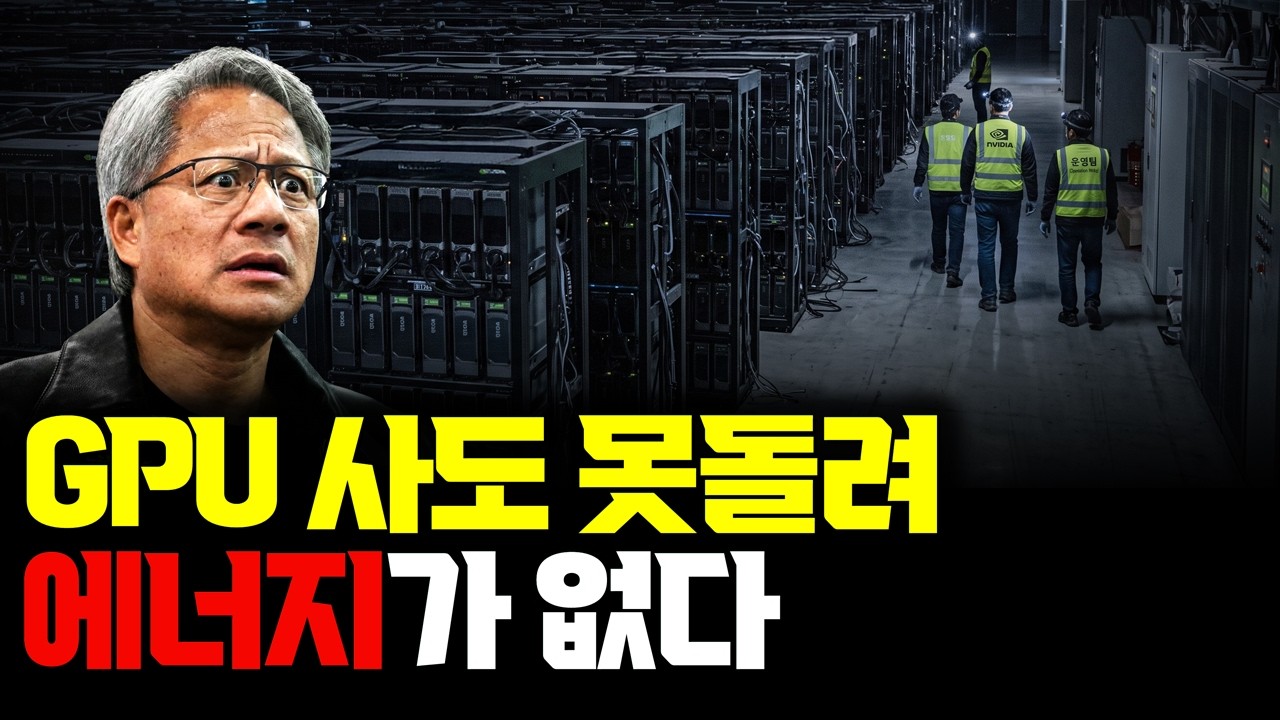
안될공학 - IT 테크 신기술 named the constraint most plainly. Its SemiAnalysis-based infrastructure video says data centers can secure GPUs, HBM, and buildings yet still fail to open because the electricity delivery date slips, shifting the AI race from how many chips a buyer can acquire to when that buyer can actually power them. The distinctive signal is that power bottlenecks and behind-the-meter energy strategies are now first-class AI content, not hidden infra detail (video).
Discussion insight: NVIDIA Omniverse and the lower-view AI News robot comparison videos keep dragging the conversation back to execution details: robotic factories, payloads, battery swaps, tactile sensing, and which platforms can survive real deployment (NVIDIA Omniverse video).
Comparison to prior day: Compared with 2026-06-30, which stressed job displacement and robotics data scarcity, 2026-07-01 made robots feel more consumer- and service-adjacent while shifting the bottleneck language toward power delivery and factory operations.
1.5 Creator AI kept selling lower friction rather than one perfect model 🡕
Four items supported this theme, mostly outside the very top of the ranking. The pitch was less "here is the best generator" and more "here is the stack that removes one more limit" - unrestricted generation, fewer quotas, easier model comparison, or a guided editing workflow that can be steered with another model. That matters because creator AI competition increasingly looks like a routing and workflow problem rather than a raw quality race.

Brain Project made the anti-restriction pitch explicit. Its Seedance 2.0 tutorial promises four new AI video generators with zero restrictions, free or unlimited usage, and an image editor that supposedly beats Nano Banana Pro without the usual limits. The distinctive signal is that creator demand is being framed around freedom to iterate, not only output quality (video).

Creator Magic gave the guided-workflow version. Its 45-minute walkthrough uses Claude to help control Gemini Omni for video generation and editing, then spends real time on motion-path control, API pricing, and quota-limit errors. The distinctive signal is that creator tooling is now judged as much by workflow steering and operational friction as by the raw quality of one clip (video).

VEED STUDIO made the routing problem explicit. Its comparison video argues that different models win different jobs - Flux for photorealism, Ideogram for typography, Nano Banana for spatial logic, Recraft for vectors, and Krea for product marketing. The distinctive signal is that the creator-side winner may be the comparison workspace that reduces switching cost, not a single model (video).
Discussion insight: metricsmule and lower-view videos that fold Omni Flash or Seedance 2.5 into broader AI-news packages point at the same behavior from another angle: creators are optimizing for controllability and fit - realism, spatial logic, pricing, motion control, or clip length - rather than betting on one tool for everything (metricsmule video).
Comparison to prior day: Compared with 2026-06-30's anti-credit and one-canvas rhetoric, 2026-07-01 sharpened into unrestricted access, quota troubleshooting, and explicit routing between Omni-, Seedance-, and comparison-style workspaces.
2. What Frustrates People
Agent workflows still need too much scaffolding, telemetry, and human verification
This is High severity. Google DeepMind, Google Cloud Tech, IBM Technology, Matthew Berman, Maddy Zhang, and Marina Wyss - AI & Machine Learning all point at the same failure mode: once agents touch real work, teams need loops, memory, trace data, tool metrics, smaller change scopes, and verification layers just to keep the output trustworthy. The workaround is stacking observability, bounded workflows, repo memory, and review plugins around the model. This is directly worth building for.
Strong model choice still comes with switching, trust, and access risk
This is High severity. AI Search, CNBC, Matt Wolfe, sentdex, AI Revolution, and ABC News (Australia) all show the same gap from different directions: the model may look good enough, but teams still worry about who supports it, how to route traffic safely, whether it will stay reachable, and what happens if policy or procurement changes. The workaround is supported wrappers like the GLM Coding Plan, gateways like OpenRouter and Together AI, local fallbacks, and mirrored traffic before a cutover. This is directly worth building for.
Physical AI deployment still runs into power, facilities, and narrow workflow constraints
This is Medium-to-High severity. 안될공학 - IT 테크 신기술, NVIDIA Omniverse, AI Revolution, RAVATAR, and South China Morning Post all describe the same reality from different layers: robots and human-facing assistants still need power delivery, factory software, narrow task definition, and visible human escalation paths before broad rollout works. The workaround today is to stay industrial, highly scoped, or heavily supervised. This is worth building for, but the buyer set is concentrated.
Creator AI users are still routing around restrictions, quotas, and tool sprawl
This is Medium severity. Brain Project, Creator Magic, VEED STUDIO, and metricsmule all sell relief from the same pain: too many caps, too many model-specific strengths, and too much manual comparison before the work even starts. The workaround is free or unrestricted stacks, side-by-side comparison workspaces, and another assistant helping steer the video model. This is worth building for, but the field is already competitive.
3. What People Wish Existed
Operating layer for bounded, observable agents
Google DeepMind, Google Cloud Tech, Matthew Berman, IBM Technology, Maddy Zhang, and Marina Wyss - AI & Machine Learning together imply a product that combines loops, repo memory, permissions, traces, tool metrics, and verification in one place. The need is practical rather than emotional: builders already trust agents enough to run real workflows, but not enough to let them operate without receipts and guardrails. The urgency is high because the manual assembly burden is visible in the content itself. Opportunity: direct.
Switching and governance layer for open and restricted models
AI Search, Matt Wolfe, CNBC, AI Revolution, and sentdex imply demand for something stronger than "this model benchmarks well." Teams want approval paths, failover, traffic routing, support boundaries, and policy-aware access controls before they switch serious work to an open or newly restricted model. The urgency is high because the capability story is already strong enough to trigger migration pressure. Opportunity: direct.
Benchmark-to-production translator for model selection
Matt Wolfe, CNBC, Bernard Marr, NVIDIA Developer, and ABC News (Australia) imply a need for something that tells teams when reasoning, context length, token cost, safety posture, and benchmark gains actually matter in production. The need is practical: people are already comparing open models, reasoning models, and frontier releases, but they still have to translate those claims into workflow fit by hand. The urgency is Medium-to-High because the curiosity is real even when the buyer is not ready to switch immediately. Opportunity: direct.
Physical AI deployment stack that connects software to power and human oversight
안될공학 - IT 테크 신기술, NVIDIA Omniverse, AI Revolution, RAVATAR, and South China Morning Post imply demand for tools that do more than animate a robot or avatar. The practical gap is software that coordinates deployment scopes, facilities, power, escalation, and workflow accountability while these systems move into homes, clinics, and factories. The urgency is Medium because rollout is visibly happening, but the constraints are still obvious. Opportunity: direct.
Creator routing workspace that makes restrictions, pricing, and fit legible
Brain Project, Creator Magic, VEED STUDIO, and metricsmule point to the same wish: creators want one surface that tells them which model fits which job, what the quota or pricing tradeoff is, and how to move from generation to editing without rebuilding the workflow every time. The urgency is high because the routing problem is more visible than raw capability gaps. Opportunity: competitive.
Agent-first vertical SaaS templates
Greg Isenberg, Google Cloud Tech, RAVATAR, and Matthew Berman imply demand for starter patterns that turn a bounded workflow into a sellable agent product. The need is practical rather than aspirational: the playbook is already visible - shadow a human, define a workflow, add observability, then package the repeatable parts - but most builders still need to assemble the primitives themselves. The urgency is Medium because the appetite is real, but the category is still being defined in public. Opportunity: direct.
4. Tools and Methods in Use
| Tool | Category | Sentiment | Strengths | Limitations |
|---|---|---|---|---|
| GLM 5.2 / GLM Coding Plan | Open model + coding workflow | (+/-) | Strong open-model attention, supported tool list, Anthropic/OpenAI-compatible endpoints, exclusive MCP servers | Trust, policy, and switching-risk questions remain outside the model itself |
| OpenRouter | Model gateway | (+) | Unified interface, better pricing positioning, better uptime messaging, no subscriptions | Depends on upstream model availability and does not solve governance by itself |
| Together AI | AI cloud / inference platform | (+) | Full-stack inference, fine-tuning, GPU clusters, and explicit production-coding-agent performance messaging | Adds another infrastructure layer and assumes teams want to operate more stack surface |
| Gemini Enterprise Agent Platform observability | Agent runtime observability | (+) | Metrics, traces, topology, p95 latency, token usage, tool metrics, and Model Armor telemetry | Platform-specific and requires deliberate telemetry setup |
| Loop Library / Loopy | Agent workflow library | (+) | Bounded loops with checks, next steps, stopping rules, and a reusable public catalog | Needs adaptation to the local workflow and is not a full runtime by itself |
| codebase-memory-mcp | Code intelligence / MCP | (+) | Persistent local knowledge graph, broad language support, fast structural queries, and wide coding-agent compatibility | Separate install and indexing step; another local system to maintain |
| AI Control Roadmap | Security and governance method | (+) | Defense-in-depth framing, supervisor monitoring, insider-threat model, and concrete detection/response metrics | Assumes a strong surrounding security stack and adds operational overhead |
| Sonar plugin for Claude Code | Verification / security plugin | (+/-) | Real-time code-quality and security analysis inside the coding loop | Another plugin in the stack and tied to a specific toolchain |
| Gemini Omni Flash / Google Omni | AI video editing model | (+/-) | Multi-turn editing, image-to-video control, and visible pricing analysis in the workflow | Quota-limit errors and experimentation overhead stay front and center |
| Seedance 2.0 and unrestricted video stacks | AI video generation | (+/-) | Low-cost or unrestricted experimentation pitch and fast iteration appeal | Fragmented ecosystem, hype-heavy comparisons, and unclear quality ceilings |
| RAVATAR AI Patient Assistant | Interactive avatar / healthcare workflow | (+/-) | Identity checking, follow-up, scheduling, medication guidance, and a human-facing interface layer | Trust, escalation, and clinical-accountability burdens remain heavy |
| NVIDIA physical AI platform | Robotics platform | (+/-) | Design, build, operate, and scale robotic factories from one stack narrative | Industrial complexity and a concentrated buyer set limit who can adopt it |
The overall satisfaction spectrum on 2026-07-01 is positive toward wrappers that constrain and instrument a workflow, and mixed toward tools that add capability without removing trust, quota, or deployment friction. GLM Coding Plan, Gemini Enterprise Agent Platform observability, Loop Library, codebase-memory-mcp, and Sonar-style verification all get their strongest signal from reducing uncertainty around the agent rather than making a headline capability claim by themselves.
The common workaround pattern is more structure around the model: gateways for routing, loops for bounded execution, repo memory for context, telemetry for operations, verification for code quality, and comparison workspaces for creator routing. Migration is visible in four directions at once: from single-model loyalty to route-and-hedge behavior, from prompt craft to operational plumbing, from robot demos to deployment stacks, and from one "best" generator to workflow-specific creator tool chains.
5. What People Are Building
| Project | Who built it | What it does | Problem it solves | Stack | Stage | Links |
|---|---|---|---|---|---|---|
| GLM Coding Plan | Z.AI | Productizes GLM 5.2 inside supported coding tools with managed endpoints and MCP add-ons | Makes an open model usable inside familiar coding workflows instead of leaving users with raw weights only | GLM 5.2, Anthropic/OpenAI-compatible endpoints, Vision/Web Search/Web Reader MCP | Shipped | quick start, video |
| Loop Library / Loopy | Forward Future | Publishes reusable loops and an installable skill that helps agents find, adapt, and run bounded workflows | Gives agents repeatable task playbooks with checks, stopping rules, and reuse across projects | Live loop catalog, agent guide, installable skill for Claude Code, Cursor, and Codex | Shipped | site, repo, video |
| codebase-memory-mcp | DeusData | Provides a persistent code knowledge graph and structural search layer for coding agents | Reduces file-by-file exploration and missing repo memory during AI coding | Tree-sitter, hybrid LSP, MCP, local knowledge graph | Shipped | repo, video |
| DeerFlow | ByteDance | Runs multi-step work through an open-source super-agent harness with sub-agents, memory, and sandboxes | Orchestrates deeper research and execution without each builder reinventing the runtime | Sub-agents, memory, sandboxes, configurable model providers, optional web search | Beta | site, repo, video |
| SkillSpector | NVIDIA | Scans AI agent skills for vulnerabilities, malicious patterns, and security risks before install | Reduces unsafe skill installation and supply-chain risk in agent ecosystems | Static analysis, optional LLM semantic evaluation, 68 vulnerability patterns, MCP server mode | Shipped | repo, video |
| RAVATAR AI Patient Assistant | RAVATAR | Handles patient follow-up calls with identity checks, progress logging, scheduling, and medication guidance | Scales routine healthcare follow-up without dropping the human-facing interface | Interactive AI avatar layer, real-time voice workflow, enterprise integration | Beta | site, video |
| Jalapeno custom chip | OpenAI | Develops custom inference silicon with Broadcom for the serving stack | Reduces dependence on third-party GPU vendors and targets lower inference cost | Custom silicon, Broadcom partnership, OpenAI inference stack | Alpha | chip page, video |
| Physical AI factory platform | NVIDIA | Packages the stack for designing, building, operating, and scaling robotic factories | Moves physical AI from demo clips into repeatable factory operations | Physical AI platform, robotics and edge computing, factory workflow stack | Shipped | video |
Loop Library, codebase-memory-mcp, DeerFlow, and SkillSpector show the same meta-build pattern from four different angles. One packages task structure, one packages repository structure, one packages orchestration, and one packages safety. The common move is upward in the stack: builders are putting workflow control, memory, and trust around the model instead of waiting for the base model to solve those problems alone.
GLM Coding Plan and Jalapeno show the same stack race from opposite directions. Z.AI pushes upward into supported tools and MCP-driven workflows, while OpenAI pulls downward into custom silicon and inference economics. The practical reading is that model competition is now happening both above and below the model API.
Greg Isenberg's "agents are the new SaaS" playbook helps explain why these builds cluster the way they do. The product is increasingly the workflow wrapper, receipt system, or operating layer around the model. RAVATAR and NVIDIA's factory platform fit that pattern on the physical side: narrow workflow ownership first, broader autonomy later.
6. New and Notable
The largest fresh video of the day was about governing millions of agents, not launching a new model
Google DeepMind stood out because the biggest new entry in the dataset did not center a benchmark or model release. It centered delegation, cognitive monoculture, agentic traps, and a linked control roadmap that treats advanced agents as insider threats to be monitored and contained.
Power bottlenecks became plain-language AI content
안될공학 - IT 테크 신기술 is notable because it says the AI race is shifting from who bought the GPUs to who can actually power them on time, then walks through behind-the-meter generation, transformers, utilities, and why the bottleneck reroutes rather than simply suppresses GPU demand. Schwab Network makes the same turn from a markets angle by explicitly tying AI upside to data-center and energy names.
Reasoning got treated as an engineering discipline, not just a model label
NVIDIA Developer is notable because it frames better reasoning around verified traces, token-aware prompts, solver-built data, targeted fine-tuning, and validation from a 5,000-person Kaggle challenge. Bernard Marr pushes the same signal into mainstream business language by treating reasoning models as stepwise problem solvers that still need human oversight.
Human-facing AI assistants moved into concrete clinic workflows
RAVATAR is notable because it does not present "AI in healthcare" as a concept piece. It shows identity checking, recovery logging, appointment booking, and medication guidance as one end-to-end patient follow-up workflow, which is a much more operational signal than a generic avatar demo.
7. Where the Opportunities Are
[+++] Operating system for bounded, observable agent work - Google DeepMind, Google Cloud Tech, Matthew Berman, IBM Technology, Maddy Zhang, and Marina Wyss - AI & Machine Learning all point to the same missing layer: loops, context, permissions, telemetry, and verification for agents that do real work.
[+++] Routing and governance layer for open and restricted models - AI Search, CNBC, Matt Wolfe, AI Revolution, and sentdex show the same gap from different sides: model quality is no longer the only question; safe routing, approval, access resilience, and production switching matter just as much.
[++] Benchmark-to-production translator for model switching - Matt Wolfe, Bernard Marr, NVIDIA Developer, CNBC, and ABC News (Australia) imply demand for tools that turn benchmark, reasoning, context-length, and pricing claims into plain workflow guidance.
[++] Physical-AI deployment and power coordination stack - 안될공학 - IT 테크 신기술, NVIDIA Omniverse, AI Revolution, South China Morning Post, and RAVATAR all point to the same opening: better orchestration across robots, avatars, facilities, power, and human escalation paths.
[+] Creator routing and quota intelligence - Brain Project, Creator Magic, VEED STUDIO, and metricsmule show creators manually solving the same problem: which model to use, at what price or quota cost, for which kind of output.
[+] Agent-first vertical workflow products - Greg Isenberg, Google Cloud Tech, RAVATAR, and Matthew Berman imply an emerging market for products that own one bounded workflow end to end, then layer observability, guardrails, and pricing on top.
8. Takeaways
- The freshest YouTube AI signal on 2026-07-01 was agent governance, not a new benchmark. The biggest new video in the dataset centered delegation, control, and monitoring for millions of agents rather than another model release. (Google DeepMind)
- The GLM 5.2 wave is maturing from hype into switching behavior. Supported toolchains, mirrored traffic, and enterprise model-selection talk now matter as much as "best open model" rhetoric. (Matt Wolfe)
- AI's social meaning is still unresolved at mainstream scale. Labor-and-incentive critique and extinction-risk framing continue to coexist in the same high-reach daily feed instead of converging on one narrative. (Democracy Now!)
- Physical AI is reaching more human-facing surfaces without escaping industrial constraints. Companion robots and patient assistants are more visible, but power delivery, factory software, and narrow workflow design still set the limits. (안될공학 - IT 테크 신기술)
- Creator AI competition is being won by lower friction, not one unbeatable generator. The strongest creator pitches revolve around unrestricted iteration, routing help, and quota-aware workflows rather than one model claiming universal quality leadership. (Creator Magic)
- Builder energy keeps moving into wrappers around the model. Loops, repo memory, observability, verification, and skill scanning are where the clearest product-building activity clustered on this date. (Matthew Berman)