YouTube AI - 2026-07-02
1. What People Are Talking About
1.1 High-reach AI attention stayed with consequences, incentives, and safety rather than product demos 🡕
Five items supported this theme. On 2026-07-02, the biggest audience in the YouTube AI dataset still went to questions about what AI does to society and whether it should be trusted, not to product walkthroughs. The top of the ranking combined mass-audience critique, labor-and-incentive analysis, existential-risk warning, and a fresh explainer about reasoning with human oversight. That matters because the broadest YouTube AI audience is still trying to decide what AI means, not just which tool to install.

Sabine Hossenfelder again carried the broadest reach. "The AI Future No One Wants to Talk About" reached 333,845 views, 19,578 likes, and 3,600 comments, clear evidence that a general future-of-AI critique can still outrun most tool or model coverage in the same feed. The distinctive signal is not a new product claim, but that the most watched item in the dataset is still a broad argument about the direction of the technology (video).

Democracy Now! kept the political-economy critique explicit. Its Cory Doctorow interview rose to 109,194 views and centers his argument that AI has "bad unit economics" and that labor-driven automation tends to improve the product while capital-driven automation tends to make more of the product. The distinctive signal is that anti-AI coverage is still being framed through incentives, ownership, and labor, not just model capability (video).

djvlad held the existential-risk pole. Its Roman Yampolskiy interview climbed to 137,148 views and 1,000 comments while staying explicit about superintelligence, containment, and catastrophic downside. The distinctive signal is that long-form safety pessimism still draws major engagement when it is given room to make the case in detail (video).

Bernard Marr supplied the clearest fresh explainer. His 2026-07-01 upload says reasoning models differ from standard chatbots because they break problems into steps, but still require human oversight when they act on those steps. The distinctive signal is that educational content is increasingly trying to make reasoning behavior legible to a mainstream audience rather than treating it as a brand label (video).
Discussion insight: Ed Zitron sharpened the skeptical side by using CNBC airtime to argue that generative AI does not work and that big tech is out of hypergrowth ideas, showing that business-model skepticism now sits alongside labor critique and extinction-risk talk in the same feed (video).
Comparison to prior day: Compared with 2026-07-01, which already split between labor critique and existential-risk framing, 2026-07-02 pushed this cluster to the very top of the ranking after the prior day's open-model lead fell out of the dataset.
1.2 Open-model excitement persisted, but the framing shifted from benchmark bragging to access hedging and security controls 🡒
Five items supported this theme. GLM 5.2 remained the anchor for open-model attention on 2026-07-02, but the conversation no longer looked like a simple winner's-circle recap. CNBC and Matt Wolfe kept the migration case alive, sentdex kept asking whether open or Chinese models could be restricted, and Siliconversations pulled the discussion toward Anthropic's Glasswing program and the cyber power of gated frontier systems. That matters because "best open model" is now being evaluated together with route-to-access, policy risk, and trust.
CNBC remained the highest-reach open-model frame. Its 52-minute GLM 5.2 segment reached 144,903 views and says the model is closing in on the American frontier on agentic benchmarks, is free to download and fine-tune, and is seeing developer adoption on OpenRouter faster than DeepSeek did in April. The distinctive signal is that GLM is being discussed as an enterprise and infrastructure story, not only a hobbyist release (video).

Matt Wolfe added the most concrete switching logic. His 2026-07-01 upload says GLM-5.2 is a 1 million token, MIT-licensed open-weight model that can be used through a hosted web app, an API, or self-hosted infrastructure, and he explicitly recommends risk-free traffic mirroring before a full cutover. The distinctive signal is that open-model enthusiasm is being translated into staged production trials rather than pure benchmark admiration (video).
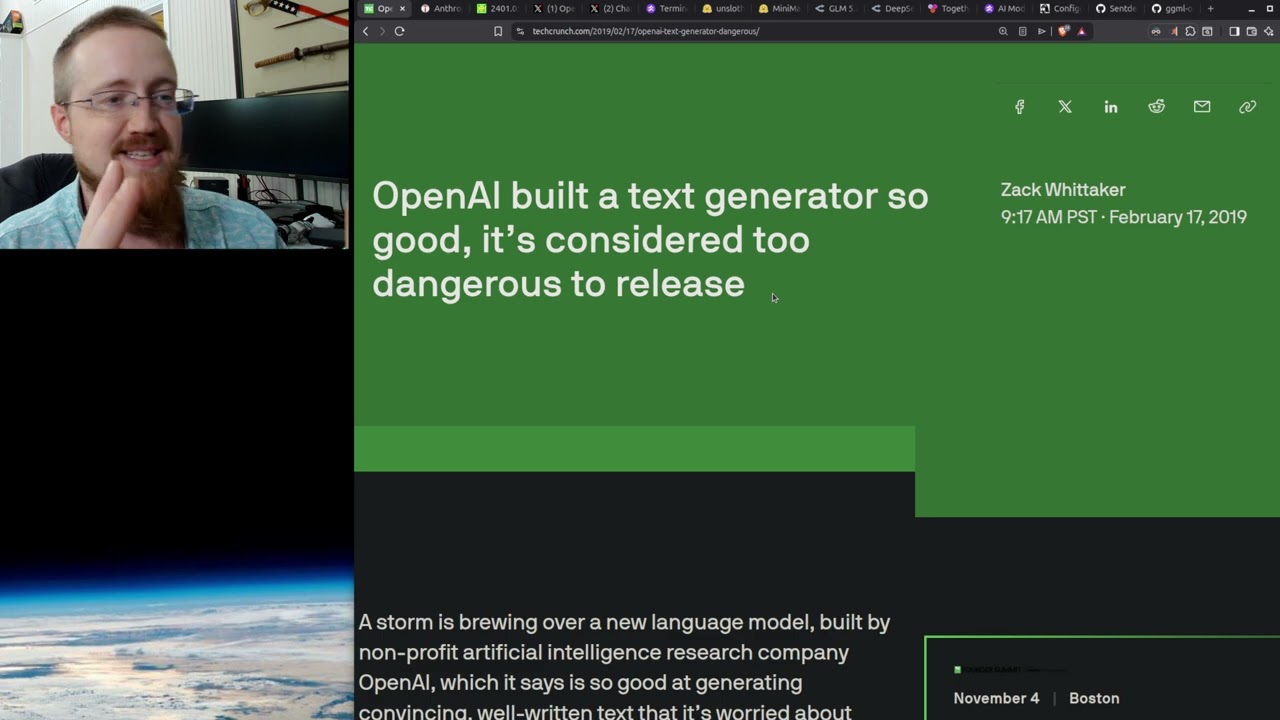
sentdex kept the access-risk argument alive. His long video asks directly whether open-source or Chinese AI models could be banned, then points viewers to OpenRouter and Together AI as access hedges alongside local deployment paths. The distinctive signal is that model access is being treated as a supply-risk and policy-risk problem, not just a capability comparison (video).

Siliconversations added the freshest security-control angle. Its 2026-07-02 upload points viewers to Anthropic's Project Glasswing / Mythos Preview, which says the model identified thousands of zero-day vulnerabilities and that access will stay inside a partner program rather than broad general availability. The distinctive signal is that frontier-model safety is now being framed through concrete cyber capability and gated deployment, not only abstract alignment language (video).
Discussion insight: ABC News (Australia) kept the competitive doubt visible by asking whether GLM-5.2 can really rival Anthropic and OpenAI platforms at all, a useful reminder that adoption curiosity and production trust are not the same thing (video).
Comparison to prior day: Compared with 2026-07-01, the support-tool and switching narrative stayed present, but 2026-07-02 pulled the theme harder toward access hedging, restriction risk, and concrete security controls.
1.3 Builders kept moving up-stack from raw models to workflow wrappers, bounded agents, and docs-aware coding 🡒
Six items supported this theme. The strongest builder signal on 2026-07-02 was still not another editor demo, but the continued packaging of loops, repository memory, SDLC redesign, live docs, and business playbooks around models. DeepMind framed millions of agents as a control problem, Matthew Berman highlighted reusable open-source scaffolding, IBM argued AI only matters when it changes the full delivery workflow, and Tech With Tim showed a real build that depended on current docs and MCP-style integration instead of prompting alone. That matters because teams are still buying reliability and workflow ownership, not just raw intelligence.
Google DeepMind remained the cleanest control-layer anchor. Its 42-minute video asks what changes when agents transact, negotiate, and delegate to one another, while the linked AI Control Roadmap treats internal agents as insider threats and measures defense by coverage, recall, and time-to-response. The distinctive signal is that multi-agent work is being described as a systems-and-governance problem, not a prompt-formatting problem (video).

Matthew Berman kept the reusable-infrastructure story concrete. His roundup points to Loop Library / Loopy, where loops tell an agent what to do, how to check work, what to try next, and when to stop, and codebase-memory-mcp, which packages a persistent local knowledge graph and sub-millisecond structural queries for coding agents. The distinctive signal is that more builders are publishing repeatable control surfaces around agents instead of one-off demos (video).
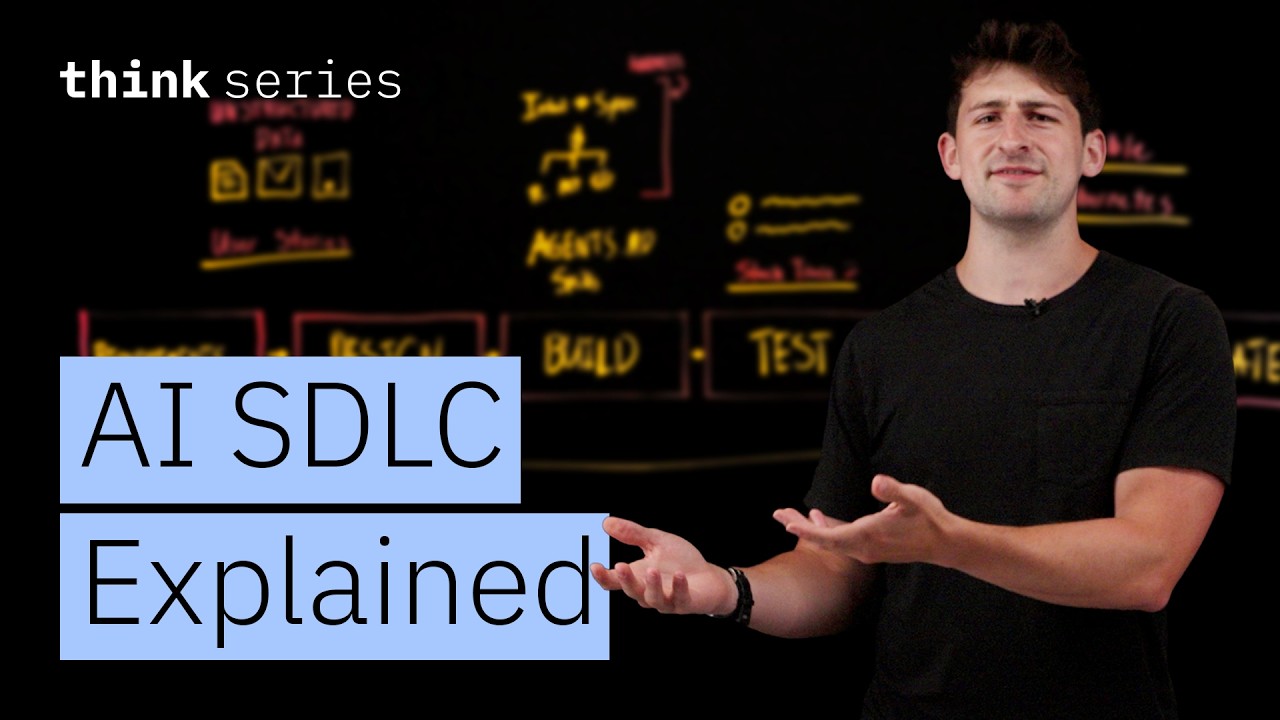
IBM Technology kept the workflow thesis explicit. Its SDLC video says the real gains from AI come only when planning, analysis, coding, testing, deployment, and maintenance are redesigned together rather than leaving agents trapped inside a faster coding loop. The distinctive signal is that enterprise education is treating agentic coding as a delivery-system change, not a typing-speed upgrade (video).

Tech With Tim supplied the most concrete live workflow example. His build walkthrough leans on ImageKit, and the linked Build with AI docs say models otherwise suggest outdated API signatures, invent transformation parameters, or choose the wrong integration path; the recommended fix is a package of skills plus hosted MCP servers. The distinctive signal is that current documentation and tool routing are becoming first-class reliability surfaces for coding agents (video).
Discussion insight: Greg Isenberg and Maddy Zhang compress the same lesson into product and engineering language: start with a workflow that already has a paycheck attached, keep the scope small, and preserve human judgment so the wrapper around the model stays trustworthy (Greg Isenberg video).
Comparison to prior day: Compared with 2026-07-01, the observability-heavy control-plane rhetoric softened a little, but the wrapper-around-the-model thesis held steady and became more concrete through live workflow examples.
1.4 AI moved further into real-world operations, from companion robots to scientific copilots 🡕
Four items supported this theme. Fresh 2026-07-02 data broadened applied AI beyond chat and editor contexts. The strongest physical signal was UBTech's companion robot breakout, while lower-view but high-signal entries showed AI moving into mine clearance, robotic factories, and biology-and-chemistry workflows. That matters because the feed is increasingly about domain-specific execution surfaces where the model has to work through tools, machines, or structured scientific systems.

South China Morning Post delivered the clearest breakout. Its 2026-07-01 upload jumped from 21,963 to 77,658 views in a day while the linked article says UBTech's U1 companion robot uses 88 servo joints, a silicone exterior, an on-device emotional AI model running on Rockchip's RK3588, local data storage, and price tiers from 119,800 yuan to 990,000 yuan. The distinctive signal is that human-facing robotics coverage now comes with concrete product specs, local-processing language, and a home-use target rather than pure spectacle (video).
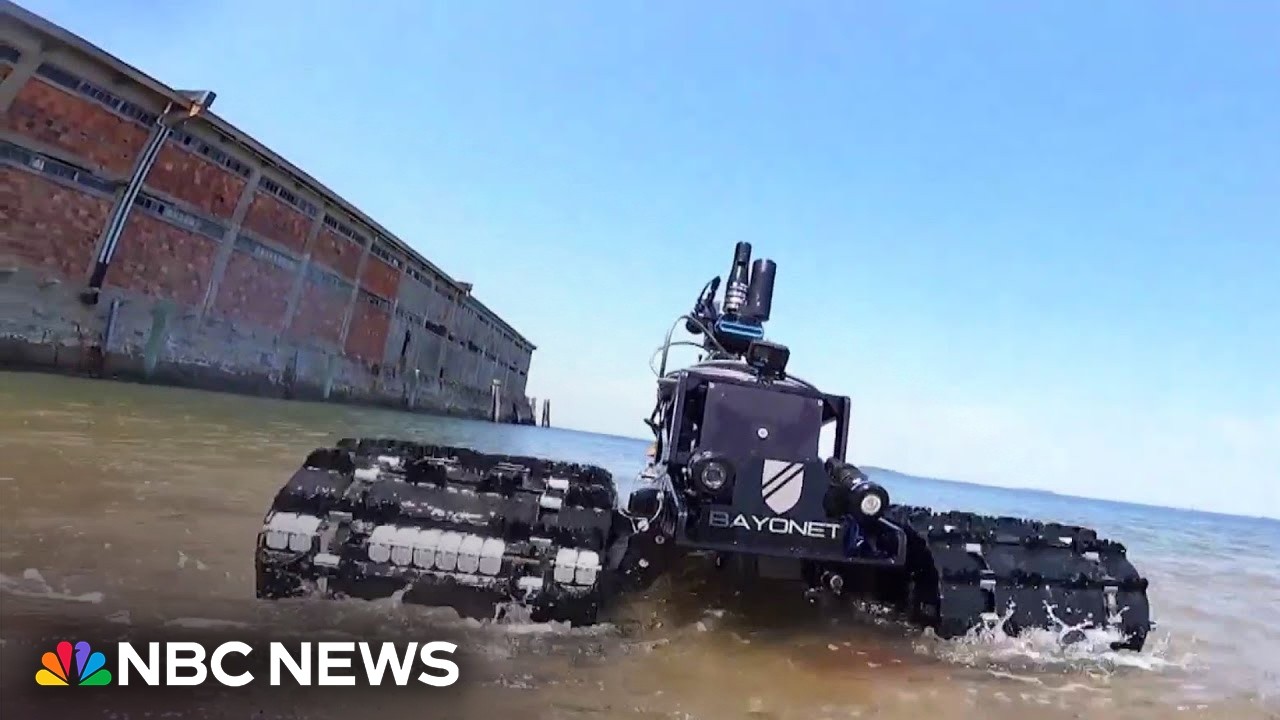
NBC News pushed the same "real work" theme into defense operations. Its new report gives an exclusive look at Greensea IQ robots that search for and clear mines on the ocean floor, with the pitch centered on reducing the human risk of deactivating those hazards. The distinctive signal is that AI robots are being framed as narrow operational tools in dangerous environments, not as general-purpose humanoids (video).

NVIDIA added the highest-signal scientific-workflow entry. Its BIO26 special address points to the BioNeMo Agent Toolkit, which packages domain-specific skills for protein structure prediction, molecular docking, genomics, and biomarker discovery, and says more than 50 organizations are already using it. The distinctive signal is that general-purpose agents are being turned into task-capable scientific copilots through domain toolboxes, not just bigger models (video).

NVIDIA Omniverse kept the factory-scale version of the story alive. Its physical-AI session argues that robotic factories can now be designed, built, operated, and scaled through one platform narrative for electronics manufacturers. The distinctive signal is that the "physical AI" story increasingly lives inside operations software and industrial workflow stacks, not only robot demo clips (video).
Discussion insight: Across these items, the recurring nuance is that deployment stories talk about narrow tasks, tool access, safety boundaries, and data locality far more than they talk about generic intelligence.
Comparison to prior day: Compared with 2026-07-01, which emphasized companion robots, patient assistants, and power bottlenecks, 2026-07-02 broadened the theme into defense robotics and agent-ready scientific tooling.
1.5 Creator AI still sold free, guided workflows instead of one perfect model 🡖
Four items supported this theme. Creator AI sat lower in the ranking than the policy, workflow, and robotics clusters, but the pitch stayed consistent. The most visible creator videos on 2026-07-02 sold some combination of free tiers, unrestricted generation, reusable prompts, or no-skill workflows that let people route work across models instead of betting on a single generator. That matters because creator demand still appears to be about lowering friction and cost, not agreeing on one dominant model.

Brain Project made the anti-restriction pitch most directly. Its video promises four AI video generators with "zero restrictions" that are free and unlimited, plus an image editor that supposedly beats Nano Banana Pro without the usual limits. The distinctive signal is that creator competition is still being sold through freedom to iterate and lower spend before anything else (video).

zapiwala ai gave the strongest guided-workflow example. Its 2026-07-01 upload shows a fully free pipeline that combines Claude AI's free plan with Google Gemini OMNI to write a dialogue script, generate scenes, keep characters consistent, and assemble a 2D animated movie without drawing or animation skills. The distinctive signal is that the creator-side value proposition is increasingly a recipe that strings models together, not a claim that one model is enough (video).

Malva AI pushed the same idea into long-form output. Its fresh upload promises a workflow for researching ideas, generating scripts, making images, turning them into clips, adding AI narration and music, and assembling YouTube-ready long videos without expensive subscriptions. The distinctive signal is that "free and unlimited" now extends beyond short clips into full-channel production rhetoric (video).

metricsmule added the reusable-method angle. Its video turns one image-prompt formula into a repeatable Claude Artifact workflow and explicitly suggests trying it across Midjourney, Nano Banana 2, Ideogram 4, Seedream 4 4k, and Recraft v4. The distinctive signal is that creator-side differentiation is drifting toward reusable assets and model-routing habits instead of loyalty to one generation stack (video).
Discussion insight: Unlike 2026-07-01's more explicit comparison-workspace framing, the 2026-07-02 creator cluster spent more time on "free," "unlimited," and "no skills needed" than on proving one model wins every job.
Comparison to prior day: Compared with 2026-07-01, creator AI slipped lower in the ranking and lost some of the explicit side-by-side comparison rhetoric, but the anti-subscription and anti-restriction message got louder.
2. What Frustrates People
Agent workflows still need too much scaffolding, current docs, and human review
This is High severity. Google DeepMind, Matthew Berman, IBM Technology, Tech With Tim, Greg Isenberg, and Maddy Zhang all point to the same failure mode: once agents touch real work, teams still need loops, repository memory, live docs, bounded scopes, and explicit review just to keep the output trustworthy. The workaround is stacking control plans, skills, MCP servers, business-process wrappers, and smaller blast radii around the model. This is directly worth building for.
Strong models still come with access, policy, and switching risk
This is High severity. CNBC, Matt Wolfe, sentdex, ABC News (Australia), and Siliconversations all show the same gap from different sides: a model may look good enough, but support boundaries, possible restrictions, frontier gating, and cutover risk still sit outside the benchmark story. The workaround is compatible endpoints, gateways like OpenRouter and Together AI, self-hosting, and traffic mirroring before a switch. This is directly worth building for.
Real-world AI deployments still need domain toolkits, narrow scopes, and explicit safety boundaries
This is Medium-to-High severity. South China Morning Post, NBC News, NVIDIA, and NVIDIA Omniverse all point to the same reality: once AI leaves the chat window, it needs local data handling, task-specific tools, narrow operational scopes, and visible human or procedural guardrails. The workaround today is to keep deployments tightly bounded around one companion interface, one dangerous task, one factory stack, or one scientific workflow. This is worth building for, but the domain burden is high.
Creator AI users are still routing around cost, restrictions, and model sprawl
This is Medium severity. Brain Project, zapiwala ai, Malva AI, and metricsmule all sell relief from the same pain: too many quotas, too many subscriptions, and too much cross-model trial and error before the work even starts. The workaround is free plans, reusable prompt assets, and stitched-together multimodel workflows. This is worth building for, but the field is already crowded.
3. What People Wish Existed
Operating layer for bounded, documentation-aware, observable agents
Google DeepMind, Matthew Berman, IBM Technology, Tech With Tim, and Maddy Zhang together imply a product that combines permissions, loops, repo memory, live docs, traces, and human review in one place. The need is practical rather than emotional: builders already trust agents enough to use them, but not enough to let them run without receipts and current context. The urgency is high because the manual assembly burden is visible in the videos themselves. Opportunity: direct.
Routing and governance layer for open and restricted models
CNBC, Matt Wolfe, sentdex, Siliconversations, and ABC News (Australia) imply demand for something stronger than "this model benchmarks well." Teams want failover, approval paths, policy-aware access, support boundaries, and safe migration controls before they move meaningful work onto an open or newly gated model. The urgency is high because the capability story is already strong enough to create switching pressure. Opportunity: direct.
Benchmark-to-production translator for model choice
Matt Wolfe, CNBC, ABC News (Australia), and Bernard Marr imply a need for tools that tell teams when context length, reasoning behavior, self-hosting, and safety posture actually matter for a real workload. The need is practical: people are already comparing open models and reasoning models, but they still have to translate those claims into workflow fit by hand. The urgency is Medium-to-High because the curiosity is real even when the buyer is not ready to switch immediately. Opportunity: direct.
Domain-specific toolkits that let agents do scientific and industrial work
NVIDIA, NVIDIA Omniverse, NBC News, and South China Morning Post point to a need for more than general-purpose chat or planning. What these workflows want is packaged tools, safe execution environments, and domain reasoning that make an agent useful inside a lab, factory, home, or mission-specific robot stack. The urgency is Medium-to-High because adoption is happening, but it is still constrained by tooling and execution risk. Opportunity: direct.
Creator routing workspace for low-cost multimodel production
Brain Project, zapiwala ai, Malva AI, and metricsmule point to the same wish: one surface that tells creators which model fits which task, what the quota or pricing tradeoff is, and how to move from prompts to assets to final edits without rebuilding the workflow every time. The urgency is high because the routing problem is more visible than any one raw capability gap. Opportunity: competitive.
Agent-first vertical workflow templates
Greg Isenberg, IBM Technology, and Tech With Tim imply demand for starter patterns that turn one bounded workflow into a sellable product. The need is practical rather than aspirational: the playbook is already visible - shadow a human, define a workflow, package the tools, then productize the repeatable parts - but most builders still need to assemble the pieces themselves. The urgency is Medium because the appetite is real, even if the category is still being named in public. Opportunity: direct.
4. Tools and Methods in Use
| Tool | Category | Sentiment | Strengths | Limitations |
|---|---|---|---|---|
| GLM 5.2 / GLM Coding Plan | Open model + coding workflow | (+/-) | 1 million token context, MIT license, supported tools, Anthropic/OpenAI-compatible endpoints, exclusive MCP servers | Switching, trust, and policy risk remain outside the model itself |
| OpenRouter | Model gateway | (+) | Unified interface, access hedge, pricing positioning, no subscription pitch | Depends on upstream model availability and does not solve governance by itself |
| Together AI | AI cloud / inference platform | (+) | Full-stack inference, fine-tuning, GPU clusters, and production-coding-agent performance claims | Adds another infrastructure layer and assumes teams want more stack surface |
| AI Control Roadmap | Agent governance method | (+) | Defense-in-depth framing, insider-threat model, supervisor monitoring, and concrete detection metrics | Requires a surrounding monitoring stack and adds operational overhead |
| Project Glasswing / Mythos Preview | Cybersecurity program / frontier model | (+/-) | Concrete zero-day discovery claims and partner-grade defensive-cyber workflows | Gated access and concentration risk stay front and center |
| Loop Library / Loopy | Agent workflow library | (+) | Bounded loops, checks, stopping rules, reusable catalog, installable skill | Not a runtime by itself and still needs local adaptation |
| codebase-memory-mcp | Code intelligence / MCP | (+) | Persistent local knowledge graph, fast structural queries, and broad agent support | Separate install and indexing step; another local system to maintain |
| ImageKit skills + MCP servers | Docs-aware integration tool | (+) | Accurate docs search, transformation builder, account operations, and hosted MCP endpoints | Product-specific and still in public preview |
| BioNeMo Agent Toolkit | Scientific agent toolkit | (+) | Ready-to-call skills for biology, chemistry, genomics, and biomarker workflows | Specialized domain and meaningful data/infrastructure burden |
| Claude + Gemini OMNI free workflow | Creator workflow stack | (+/-) | End-to-end script, scene, and animation workflow using free plans | Multi-tool brittleness and manual orchestration remain heavy |
| Seedance 2.0 / unrestricted video stacks | AI video generation | (+/-) | Low-cost experimentation and unrestricted iteration pitch | Fragmented ecosystem and unclear quality ceilings |
The overall satisfaction spectrum on 2026-07-02 is positive toward wrappers that add context, checks, and domain tools, and mixed toward tools that add capability without removing switching, policy, or workflow friction. GLM Coding Plan, Loop Library, codebase-memory-mcp, ImageKit's MCP stack, and BioNeMo all get their strongest signal from reducing uncertainty around the model rather than trying to be the model itself.
The common workaround pattern is more structure around the base model: gateways for routing, loops for bounded execution, live docs for accuracy, human review for trust, and domain-specific toolkits for labs or factories. Migration is visible in three directions at once: from single-model loyalty to hedged multi-tool access, from generic chat to domain-executing agents, and from creator tool hype to reusable workflows and prompt assets.
5. What People Are Building
| Project | Who built it | What it does | Problem it solves | Stack | Stage | Links |
|---|---|---|---|---|---|---|
| GLM Coding Plan | Z.AI | Productizes GLM 5.2 inside supported coding tools with managed endpoints and MCP add-ons | Makes an open model usable inside familiar coding workflows instead of leaving teams with raw weights only | GLM 5.2, Anthropic/OpenAI-compatible endpoints, Vision/Web Search/Web Reader MCP | Shipped | quick start, video |
| Loop Library / Loopy | Forward Future | Publishes reusable loops and an installable skill that helps agents find, adapt, and run them | Gives agents bounded playbooks with checks, stopping rules, and a reusable catalog | Loop catalog, agent guide, installable skill for Claude Code, Cursor, and Codex | Shipped | site, repo, video |
| codebase-memory-mcp | DeusData | Provides a persistent code knowledge graph and structural search layer for coding agents | Reduces file-by-file exploration and missing repository memory | Tree-sitter, Hybrid LSP, local knowledge graph, MCP | Shipped | repo, video |
| ImageKit skills + MCP servers | ImageKit | Gives coding agents current docs, transformation building, and media-library operations | Prevents stale API hallucinations and wrong integration paths in media applications | Skills CLI, docs search, transformation builder, hosted MCP servers | Beta | docs, repo, video |
| BioNeMo Agent Toolkit | NVIDIA BioNeMo | Turns general-purpose agents into life-science specialists with callable skills | Lets agents execute scientific workflows instead of only summarizing papers | BioNeMo, NIM microservices, Nemotron, NemoClaw, OpenShell, Parabricks | Shipped | repo, news, video |
| U1 companion robot | UBTech | Sells a consumer humanoid built for companionship with local emotional AI | Moves humanoid interaction from industrial demos toward home use | 88 servo joints, silicone exterior, Rockchip RK3588, local data storage | Shipped | article, video |
| Physical AI factory platform | NVIDIA | Packages the stack for designing, building, operating, and scaling robotic factories | Moves robotics from demo clips into repeatable factory operations | Physical AI platform, robotics and edge computing, factory operations stack | Shipped | video |
Loop Library, codebase-memory-mcp, and ImageKit's skills point to the same meta-build pattern from three angles. One packages task structure, one packages repository structure, and one packages current product knowledge plus account actions. The common move is upward in the stack: builders are trying to make the agent dependable by surrounding it with context, checks, and tool routing.
GLM Coding Plan and BioNeMo Agent Toolkit show specialization in opposite directions. GLM packages a general model so it fits existing coding environments and protocols, while BioNeMo packages domain tools so general-purpose agents can do real scientific work. In both cases, the product is not just the model - it is the model plus a usable operating surface.
UBTech's U1 and NVIDIA's factory platform show the embodied version of the same shift. Human-facing robots and industrial robotics are being sold less as abstract AI milestones and more as bounded operating systems for homes, factories, and other real environments with clear task surfaces.
6. New and Notable
The highest-view item in the dataset was again a broad future-of-AI critique
Sabine Hossenfelder is notable because the largest audience in the 2026-07-02 feed still went to a general argument about where AI is heading rather than to a new model, framework, or launch event. That reinforces how strong mainstream appetite remains for interpretation and skepticism.
Frontier-model safety moved from abstract warnings to concrete cyber capability
Siliconversations is notable because it pulls Anthropic's Project Glasswing / Mythos Preview into the daily YouTube conversation as a model that reportedly found thousands of zero-day vulnerabilities and is being kept inside a partner-only program. That is a much more operational safety signal than generic "alignment" talk.
Companion robotics arrived with product specs, pricing, and local-AI positioning
South China Morning Post is notable because the UBTech U1 story did not stop at "humanlike robot." It came with price tiers, local data storage, local emotional AI on RK3588, and a direct claim that the target environment is the home rather than the factory.
BioNeMo turned agents from scientific explainers into scientific operators
NVIDIA is notable because the BioNeMo Agent Toolkit is framed as a way for agents to run biology and chemistry workflows - protein structure, docking, genomics, biomarker work - rather than just summarize papers about them. That is a sharper product signal than a generic "AI for healthcare" panel.
7. Where the Opportunities Are
[+++] Operating system for bounded, documentation-aware agent work - Google DeepMind, Matthew Berman, IBM Technology, Tech With Tim, and Maddy Zhang all point to the same missing layer: loops, current docs, context, review, and control for agents that do real work.
[+++] Routing and governance layer for open, gated, and politically fragile model access - CNBC, Matt Wolfe, sentdex, Siliconversations, and ABC News (Australia) show the same gap: model quality is no longer the only question; access resilience, approval, support, and policy risk matter just as much.
[++] Scientific and industrial agent toolkits - NVIDIA, NVIDIA Omniverse, NBC News, and South China Morning Post all point to a strong opening for products that package domain tools, safe execution, and operational guardrails for agents outside generic chat.
[++] Embodied-AI deployment workflow stacks - South China Morning Post, NBC News, and NVIDIA Omniverse imply a market for systems that connect robots to data locality, facility rules, task boundaries, and human escalation instead of leaving those layers manual.
[+] Creator routing and quota intelligence - Brain Project, zapiwala ai, Malva AI, and metricsmule show creators manually solving the same problem: which model to use, at what cost, with which prompt asset, for which kind of output.
[+] Agent-first vertical workflow product templates - Greg Isenberg, IBM Technology, and Tech With Tim imply an emerging market for products that own one bounded workflow end to end, then layer tools, approval, and pricing on top.
8. Takeaways
- The broadest YouTube AI audience still rewards interpretation and skepticism over launches. The most watched item in the 2026-07-02 dataset was again a general argument about where AI is heading, not a new tool demo. (Sabine Hossenfelder)
- The GLM 5.2 story has matured from benchmark hype into access, routing, and trust decisions. Self-hosting, mirrored traffic, supported endpoints, and policy risk now matter as much as model quality. (Matt Wolfe)
- Builder energy remains concentrated in wrappers around the model. Loops, repository memory, live docs, SDLC redesign, and workflow packaging are where the clearest product-building activity clustered on this date. (Matthew Berman)
- Applied AI is moving through domain-specific execution surfaces, not just chat windows. Companion robots, mine-clearing robots, factory platforms, and scientific toolkits all point to AI value being packaged inside narrow operational systems. (NVIDIA)
- Creator AI demand still clusters around lower cost and lower friction rather than one unbeatable model. The strongest creator pitches revolve around free plans, no-skill workflows, reusable prompts, and unlimited experimentation. (zapiwala ai)
- Safety talk is getting more operational. The most distinctive fresh safety signal in the dataset was not a philosophical warning but a frontier-model cyber program framed around concrete vulnerability discovery and controlled access. (Siliconversations)