YouTube AI - 2026-07-04
1. What People Are Talking About
1.1 Search backlash and AI-risk framing still carried the broadest audience 🡒
Three items supported this theme. The highest-reach cluster in the 2026-07-04 YouTube AI dataset again sat with search frustration, existential risk, and safety governance rather than with a breakout product launch. That matters because the broadest YouTube AI audience is still using the feed to decide whether AI makes core systems more trustworthy or more dangerous.

Switch and Click delivered the clearest behavior-change signal. "Google Just Ruined Search, So I Tested Every Alternative" reached 331,597 views, 16,950 likes, and 2,300 comments, and the description links directly to DuckDuckGo, Startpage, Brave Search, and Kagi. The distinctive signal is that search frustration is translating into active switching tests, not just generic complaints about AI answers (video).

djvlad kept catastrophe framing near the top of the ranking. Its Roman Yampolskiy interview reached 144,685 views and 1,100 comments while staying explicit about AGI, superintelligence, and catastrophic downside. The distinctive signal is that long-form safety pessimism still attracts mainstream engagement when it is presented as a detailed argument rather than a quick headline (video).

Siliconversations pushed safety talk into operational territory. Its 2026-07-02 upload reached 57,051 views, 9,095 likes, and 1,000 comments, and the linked Project Glasswing page says Claude Mythos Preview identified thousands of zero-day vulnerabilities and remains restricted to a partner program. The distinctive signal is that frontier-model safety is being discussed through concrete cyber capability and controlled access, not only abstract alignment language (video).
Discussion insight: Bernard Marr kept the same trust-and-interpretation demand visible by explaining why reasoning models break problems into steps and still need human oversight (video).
Comparison to prior day: Compared with 2026-07-03, which leaned on Sabine Hossenfelder and explicit cost skepticism, 2026-07-04 kept distrust and safety at the top even after those specific voices rotated out, with search-switching behavior and Glasswing doing more of the work.
1.2 Builder attention stayed above the model layer, but the tone shifted toward bounded autonomy and review surfaces 🡕
Four items supported this theme. The strongest builder signals on 2026-07-04 were still not about another frontier model. They were about who supervises the agent, where the context comes from, and how the work gets reviewed. That matters because the feed keeps rewarding teams that package control, memory, and approval rather than raw autonomy.
Google DeepMind remained the cleanest control-layer anchor. Its 42-minute video reached 141,978 views and points viewers to the AI Control Roadmap, which treats internal agents as potential insider threats and measures defenses through coverage, recall, and time-to-response. The distinctive signal is that advanced-agent work is still being framed as security architecture and controlled permissions, not prompt craft (video).

Matthew Berman provided the strongest reusable-infrastructure evidence. His roundup reached 81,128 views and links to Loop Library / Loopy and codebase-memory-mcp, turning the builder story toward reusable loops, stop conditions, and local code intelligence rather than one-off demos. The distinctive signal is that more builder energy is going into repeatable scaffolding around agents than into another wrapper with a prettier chat surface (video).
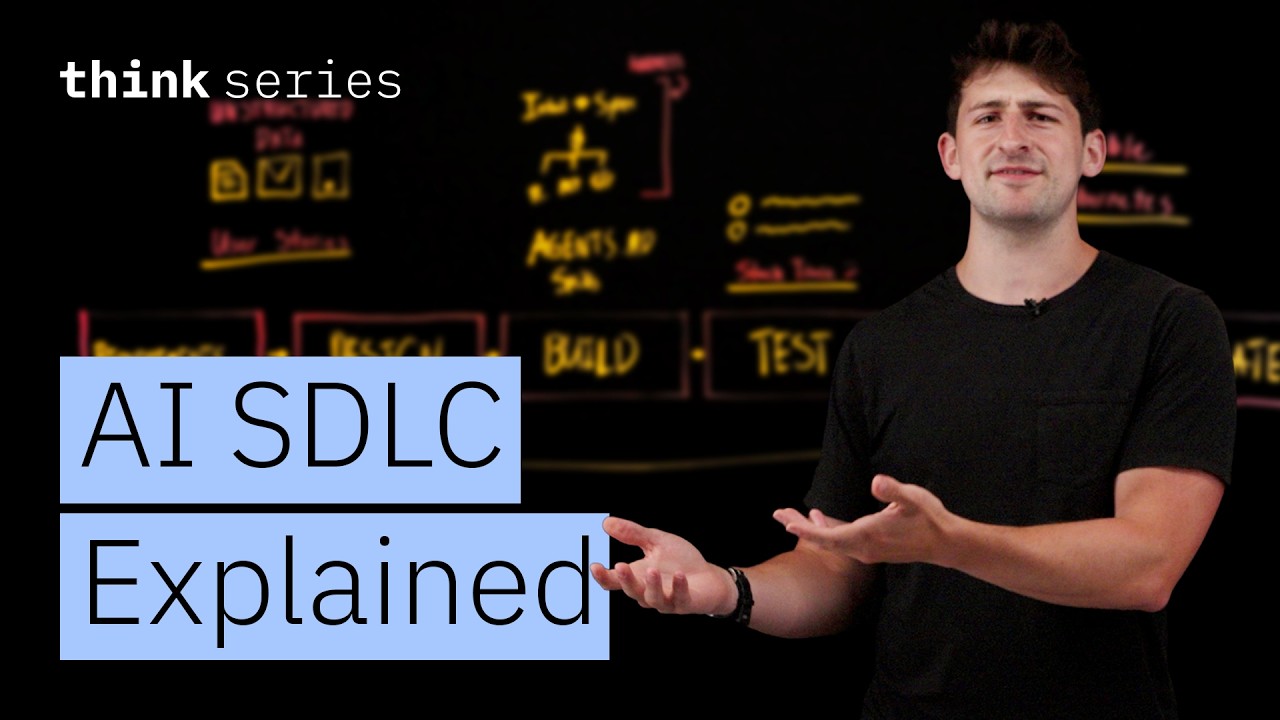
IBM Technology kept the workflow-redesign thesis explicit. Its SDLC video reached 66,754 views and argues that productivity stalls if AI only accelerates coding while planning, testing, deployment, and maintenance stay unchanged. The distinctive signal is that enterprise-facing AI education is treating agents as a delivery-system redesign problem rather than as a faster autocomplete story (video).
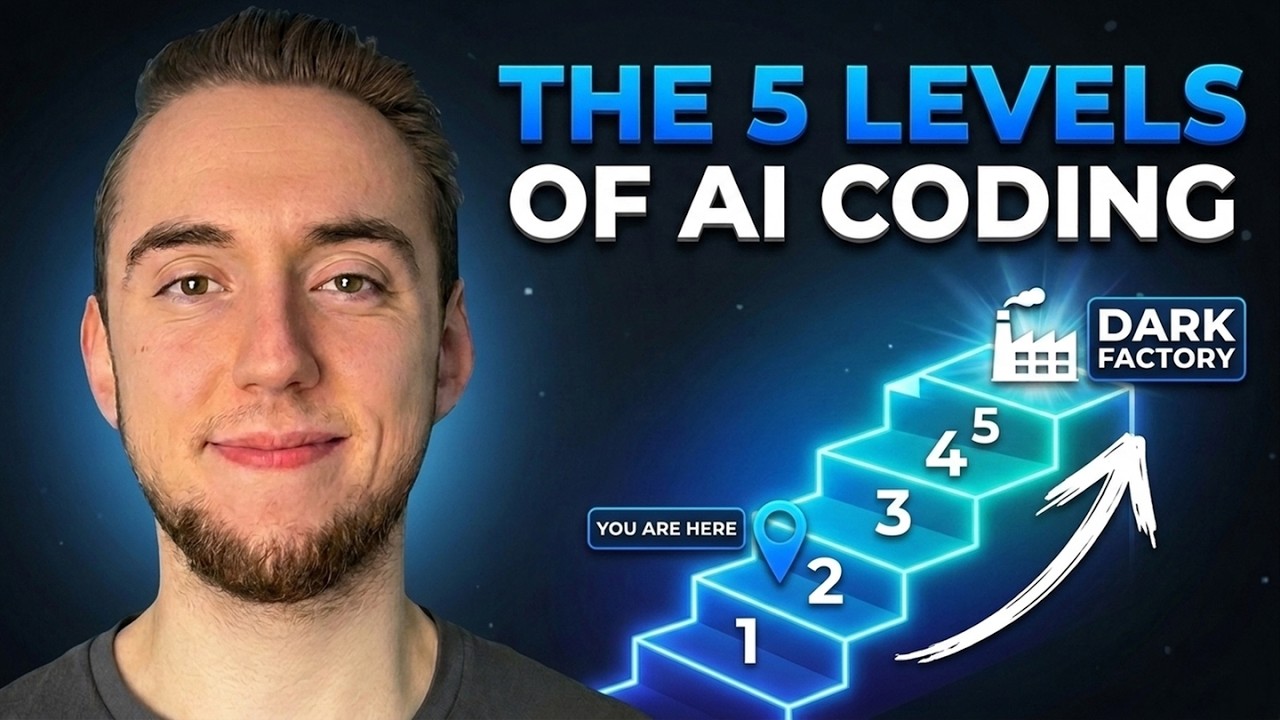
Cole Medin supplied the sharpest limit on full autonomy. His video uses Dan Shapiro's five-level coding-autonomy ladder to argue that most teams should aim for Level 3, with humans still planning the work and reviewing each change, rather than jump straight to a Dark Factory ideal. The distinctive signal is that experienced builders are now explaining why less-than-max autonomy is often the better operating point (video).
Discussion insight: The Stack pushed the same idea from the tool side by framing Aider as a model-agnostic, terminal-native coding assistant that keeps git as the review surface instead of hiding changes inside an editor UI (video).
Comparison to prior day: Compared with 2026-07-03, which already emphasized wrappers around the model and workflow ownership, 2026-07-04 made the ceiling on autonomy more explicit and added stronger interest in review-native terminal tooling.
1.3 Open and local AI stories kept widening from model choice to workflow control and deployment fit 🡒
Four items supported this theme. The open and local cluster on 2026-07-04 was anchored by a local image stack, an open-weight LLM rollout, a git-native coding tool, and a multimodel creator workspace. That matters because users are increasingly evaluating AI systems as operational surfaces rather than isolated models.

AI Search delivered the highest-reach local-model signal. Its Krea 2 review reached 136,801 views and links directly to Krea 2 weights, a ComfyUI Conditioning Rebalance node, Ostris AI Toolkit, and the Krea 2 Technical Report, which describes open-weight models built for aesthetic diversity and creative control. The distinctive signal is that local creative AI is being sold as a configurable stack, not as one magic image generator (video).

Matt Wolfe kept the open-model deployment story practical. His GLM-5.2 guide reached 57,124 views and describes a 1 million token, MIT-licensed open-weight model that can be used through a hosted app, an API and agent harness, or self-hosted infrastructure, with traffic mirroring recommended before a full cutover. The distinctive signal is that open-model excitement is still being translated into staged migration tactics rather than benchmark bragging alone (video).

The Stack supplied the cleanest model-agnostic coding angle. Its Aider video has modest reach so far, but it is explicit that the product's value is not a fixed model or proprietary editor - it is a terminal-native workflow where Claude, GPT, Gemini, DeepSeek, or a local model can share the same git-native review loop. The distinctive signal is that free coding tools are now competing on control and workflow transparency rather than on exclusive model access (video).
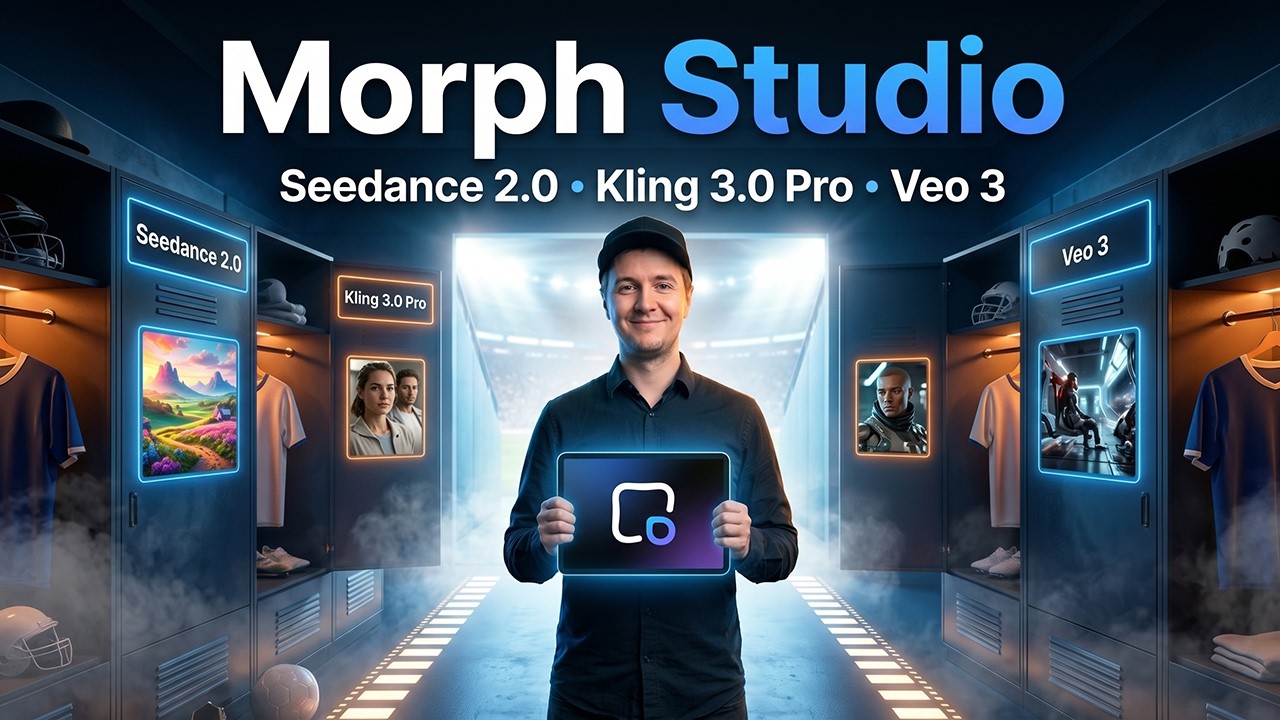
Eigi and AI pushed the same routing instinct into creator video. Its Morph Studio review says the workspace brings Seedance 2.0, Veo, Kling, GPT Image, and Nano Banana into one canvas for generating, comparing, and refining assets without jumping across separate tools. The distinctive signal is that workflow consolidation is now a selling point in its own right, not just a convenience feature (video).
Discussion insight: Across these items, the common pattern is more control surface around the model: local weights, explicit deployment paths, model swapping, or one workspace that routes across multiple generators.
Comparison to prior day: Compared with 2026-07-03, the open and local theme stayed strong but moved a step closer to workflow packaging: more emphasis on model-agnostic tools and consolidated workspaces, less emphasis on one headline model alone.
1.4 AI literacy and packaged workflow guidance climbed higher in the feed 🡕
Four items supported this theme. The middle of the 2026-07-04 feed was full of attempts to explain what AI changes about learning, reasoning, and day-to-day work. That matters because audiences are not only shopping for tools; they are shopping for orientation.
Lattice added the strongest career-reframing signal. "Computer Science in the AI Era" climbed to 96,806 views and 4,645 likes, making the question of how programming education changes under AI visible near the top of the ranking. The distinctive signal is that AI-era skill adaptation is now a mainstream audience topic, not a niche builder debate (video).

Bernard Marr provided the clearest explainer. His reasoning-models video reached 71,346 views and spells out why these systems try to break problems into steps instead of simply predicting the next word, while still emphasizing the need for human oversight. The distinctive signal is that "reasoning" is becoming a concept people want translated, not just marketed (video).
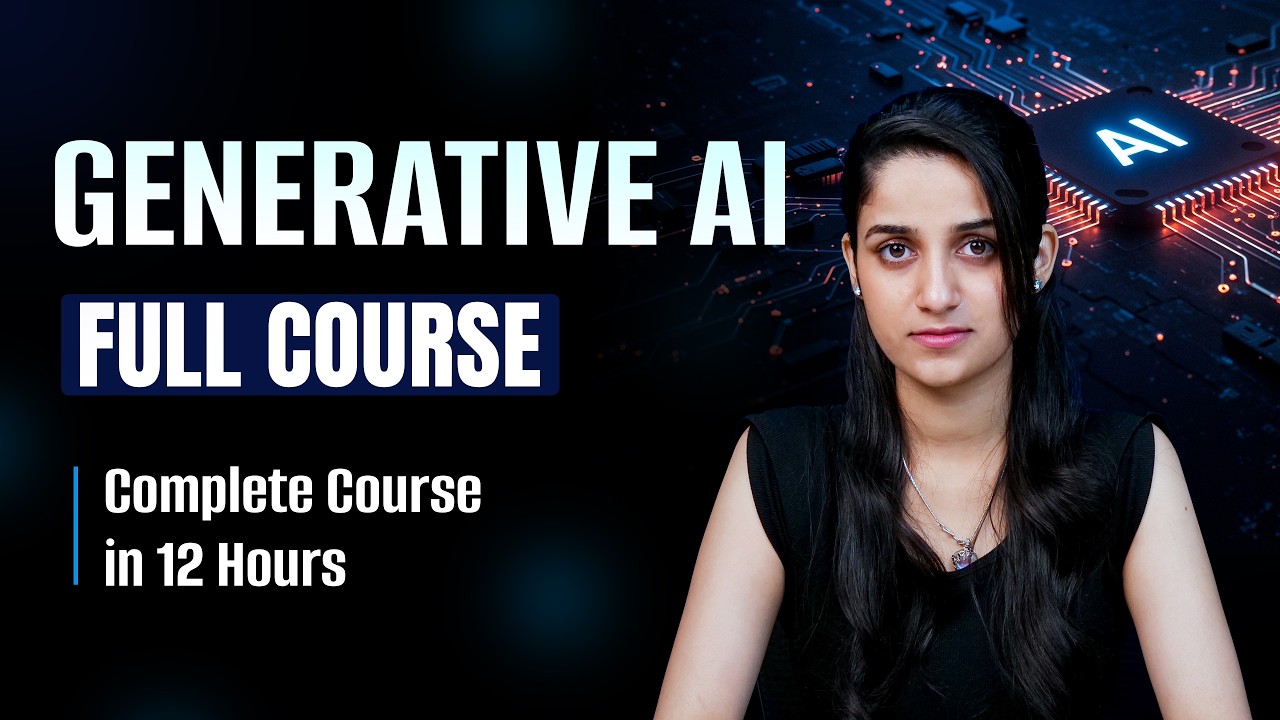
Intellipaat showed the same demand in curriculum form. Its 11 hour 44 minute free generative-AI course covers agentic AI, transformer architecture, Hugging Face, inference pipelines, RAG, LangChain, prompt engineering, and deployment-oriented topics in one package. The distinctive signal is that large education brands are moving from teaser content to full-stack AI training paths (video).
Discussion insight: Eigi and AI reflects the same packaging instinct on the creator side by selling one guided workspace for multimodel video creation instead of one more isolated generator (video).
Comparison to prior day: Compared with 2026-07-03's louder creator-automation rhetoric, 2026-07-04 spent more mid-rank attention on courses, explainers, and guided workspaces.
1.5 Physical AI stayed in the mix, but credibility still came from explicit stacks and task bounds 🡒
Two items supported this theme. Physical AI occupied a smaller share of the 2026-07-04 feed than search backlash and builder workflows, but the credible items were still concrete about hardware, models, or deployment context. That matters because embodied AI on YouTube still looks strongest when the stack is named rather than implied.

AI Revolution kept humanoid spectacle tied to platform claims. Its MOYA video reached 99,686 views and links the warm-skin robot moment to Boston Dynamics Atlas and Alibaba's Qwen-Robot push for physical machines. The distinctive signal is that even attention-grabbing robot clips are now bundled with model and factory narratives instead of pure sci-fi theater (video).

Coding with Lewis supplied the most concrete builder example. His Bop robot uses an NVIDIA Jetson Orin Nano Super as the brain, Mistral Voxtral for voice, Mistral Vibe for firmware writing, and a 3D-printed body on an off-the-shelf chassis and battery stack. The distinctive signal is that embodied AI in the current feed is still being assembled from reachable dev kits and explicit component choices (video).
Discussion insight: Across both items, the recurring pattern is narrow capability plus visible components - chip, model, chassis, and task boundary - rather than claims of general humanoid intelligence.
Comparison to prior day: Compared with 2026-07-03, physical AI narrowed from a broader mix of spectacle and maker builds to a smaller but still concrete stack-integration story.
2. What Frustrates People
Search and discovery quality feels less trustworthy under AI mediation
This is High severity. Switch and Click, Siliconversations, djvlad, and Bernard Marr show the same trust problem from different angles: users are testing alternatives because search feels worse, safety coverage is framed through restricted cyber capability, and even basic model behavior still needs explanation before people feel comfortable with it. The current coping pattern is to switch tools, look for translators, or hold back trust until the system is more legible. This is directly worth building for.
Agentic coding still needs too much supervision, memory, and explicit review
This is High severity. Google DeepMind, Matthew Berman, IBM Technology, Cole Medin, and The Stack all point to the same failure mode: once agents touch real work, teams still need loops, codebase memory, SDLC redesign, staged autonomy, and git-native review to keep outputs trustworthy. The workaround is to wrap the model in supervisors, bounded playbooks, local context layers, and human diff review. This is directly worth building for.
Open and local AI still requires too much workflow glue
This is High severity. AI Search, Matt Wolfe, The Stack, and Eigi and AI show the same friction from different angles: local and open systems are attractive, but they still need ComfyUI nodes, toolkit layers, self-hosting decisions, model routing, or unified workspaces before they feel usable. The workaround is more control surface, not less. This is directly worth building for.
AI learning is still fragmented across career advice, explainers, and long-form courses
This is Medium severity. Lattice, Bernard Marr, and Intellipaat point to the same gap: people want a practical map of what to learn, how reasoning works, and which builder concepts matter, but the current answer is split across separate explainers, sponsor-backed career advice, and marathon courses. The workaround is piecing together an education stack video by video. This is worth building for, but the category will be competitive.
Physical AI still depends on manual integration and narrow task design
This is Medium severity. AI Revolution and Coding with Lewis both make the same constraint visible: embodied AI still works best when the builder is explicit about the chip, the model, the chassis, the power system, and the narrow task boundary. The workaround is to keep scope small and build on dev kits plus off-the-shelf parts instead of aiming for a general robot from day one. This is worth building for, but the hardware burden is real.
3. What People Wish Existed
Trustworthy discovery surfaces for the AI-shaped web
Switch and Click, Siliconversations, djvlad, and Bernard Marr together imply a practical need for search and information products that feel more accountable, less polluted, and easier to understand when AI changes how results are produced and ranked. The urgency is high because users are already testing alternatives instead of waiting for incumbent fixes. Opportunity: direct.
Operating layer for bounded, reviewable agent work
Google DeepMind, Matthew Berman, IBM Technology, Cole Medin, and The Stack all imply the same missing layer: permissions, loops, memory, traces, and human review in one system. The need is practical rather than emotional because builders already want agents in production, but not without clear boundaries. The urgency is high because almost every serious builder video is filling in part of this stack manually. Opportunity: direct.
Control plane for open, local, and model-agnostic AI workflows
AI Search, Matt Wolfe, The Stack, and Eigi and AI imply demand for something stronger than "this model is open" or "this tool is free." Teams and creators want deployment paths, local control, model routing, and workflow fit before they commit real work to the stack. The urgency is high because adoption curiosity is already outrunning operational clarity. Opportunity: direct.
AI-native learning and workflow guidance in one place
Lattice, Bernard Marr, Intellipaat, and Eigi and AI point to a need for a product that combines skill maps, concept explainers, task recipes, and tool selection inside one learning surface. The need is practical because users are actively trying to adapt their work, not just satisfy curiosity. The urgency is Medium-to-High because education demand is visible, but many players can compete for it. Opportunity: competitive.
Narrow-task embodied-AI starter stacks
AI Revolution and Coding with Lewis imply a need for easier starter stacks that combine models, chips, sensors, power, and safe task boundaries for one physical job at a time. The need is practical, but the urgency is only Medium because most current evidence still sits at the demo or enthusiast-build stage rather than broad deployment. Opportunity: aspirational.
4. Tools and Methods in Use
| Tool | Category | Sentiment | Strengths | Limitations |
|---|---|---|---|---|
| DuckDuckGo / Startpage / Brave Search / Kagi | Search alternatives | (+/-) | Give users concrete ways to test different retrieval behavior when Google search feels degraded | Fragmented experience and no single clear replacement winner |
| Krea 2 + local creator stack | Open-weight image workflow | (+/-) | Open weights, aesthetic diversity, creative control, local execution appeal | Needs ComfyUI, rebalance nodes, toolkit setup, and tuning |
| GLM-5.2 | Open model | (+/-) | 1 million token context, MIT license, hosted/API/self-hosted paths, low-cost positioning | Production trust and migration still need traffic mirroring and evaluation |
| AI Control Roadmap | Agent governance method | (+) | Defense-in-depth framing, insider-threat model, measurable coverage/recall/time-to-response | Requires supervisors, monitoring, and surrounding controls |
| Loop Library / Loopy | Agent workflow library | (+) | Reusable loops with checks and stop conditions for repeated work | Still needs a runtime and local adaptation |
| codebase-memory-mcp | Code intelligence / MCP | (+) | Local code memory, structural search, and fast context retrieval for coding agents | Separate indexing and maintenance layer |
| Aider | Terminal AI coding tool | (+/-) | Model-agnostic, git-native review, repo map, terminal workflow | Still shifts work into diff review and human judgment |
| Morph Studio | AI video workspace | (+/-) | One workspace for Seedance 2.0, Veo, Kling, GPT Image, Nano Banana, and asset comparison | Still depends on upstream model behavior and creator experimentation |
| Project Glasswing / Mythos Preview | Frontier cyber program | (+/-) | Demonstrated autonomous vulnerability discovery and partner-grade security workflows | Gated access and concentration risk stay central |
| Jetson Orin Nano Super + Mistral Voxtral/Vibe | Robotics build stack | (+) | Reachable dev-kit path for embodied AI experimentation | Wiring, power, mechanics, and task design remain manual |
The overall satisfaction spectrum on 2026-07-04 is most positive toward tools that add structure around the model and mixed toward tools that add raw capability without removing workflow friction. The strongest praise went to approaches that make AI behavior more inspectable, routable, or teachable.
The common workaround pattern is more wrapper around the base capability: search switching for trust, loops and code memory for agent work, traffic mirroring before a model cutover, multimodel canvases for creator workflows, and dev kits for narrow robotics builds. Migration is visible in four directions at once: from Google search to alternatives, from editor-bound coding AI to terminal-native and review-native tools, from one favored model to model-routing surfaces, and from scattered AI education to packaged guidance.
5. What People Are Building
| Project | Who built it | What it does | Problem it solves | Stack | Stage | Links |
|---|---|---|---|---|---|---|
| Loop Library / Loopy | Forward Future | Publishes reusable loops and an installable skill that helps agents find, adapt, and run them | Gives agents bounded playbooks with checks and stop rules for repeated work | Loop catalog, Loopy skill, agent guide | Shipped | repo, video |
| codebase-memory-mcp | DeusData | Provides a local code-intelligence and memory layer for coding agents | Reduces file-by-file exploration and missing repository memory | Hybrid LSP, structural search, local index, MCP | Shipped | repo, video |
| Krea 2 local creator stack | Krea | Ships open-weight image models that creators can run locally and extend with community tooling | Gives creators more control, local execution, and fewer hard defaults than closed image products | Krea 2, ComfyUI, Conditioning Rebalance, AI Toolkit | Shipped | report, rebalance node, toolkit, video |
| Aider | Aider AI | Pairs with many LLMs in the terminal and turns git into the review surface | Avoids proprietary editor lock-in and keeps AI edits auditable | Terminal CLI, repo map, git commits, multi-model support | Shipped | site, repo, video |
| Morph Studio | Morph Studio | Puts image generation, video generation, editing, and version comparison inside one canvas | Reduces creator workflow sprawl across separate model tools | Seedance 2.0, Veo, Kling, GPT Image, Nano Banana, Infinite Canvas | Shipped | site, video |
| Bop AI robot | Coding with Lewis | Shows a DIY robot build with voice and generated firmware on an edge-compute dev kit | Makes embodied-AI experimentation more approachable to individual builders | Jetson Orin Nano Super, Mistral Voxtral, Mistral Vibe, 3D-printed body | Alpha | video, Jetson |
Loop Library, codebase-memory-mcp, and Aider all show the same meta-build pattern from different angles. The product is not only the model. It is the surrounding surface that makes the model inspectable, bounded, and easier to trust inside real work.
Krea 2 and Morph Studio package control in opposite directions. Krea 2 pushes toward local weights and community tooling, while Morph Studio pulls multiple closed and open generators into one guided workspace. In both cases, the build pattern is about workflow fit rather than about declaring one model the permanent winner.
Bop shows the embodied version of the same instinct. The most credible robot build in the dataset is the one that names the chip, the voice model, the firmware path, and the hardware compromises instead of pretending autonomy is turnkey.
6. New and Notable
Search-alternative testing held the top slot again
Switch and Click is notable because the highest-reach item in the 2026-07-04 dataset was again about leaving Google search for alternatives. That is a stronger behavior-change signal than generic complaints about AI quality.
AI career and skill reframing broke into the upper tier of the feed
Lattice is notable because "Computer Science in the AI Era" climbed to rank 6 by the dataset's engagement-weighted ordering. The signal is that AI adaptation is now a broad audience topic, not just a builder-side conversation.
Safety coverage stayed operational through Glasswing rather than abstract alignment language
Siliconversations is notable because it anchors the day's safety coverage in Anthropic's Project Glasswing, where Mythos Preview reportedly found thousands of zero-day vulnerabilities and remains partner-gated. That is a much more operational signal than a generic "be careful with AI" warning.
Model-agnostic terminal coding tools got a dedicated breakout
The Stack is notable because the Aider pitch is not another exclusive model or new editor shell. It is a git-native workflow that can swap models underneath, showing where at least part of the coding-tools competition is moving.
7. Where the Opportunities Are
[+++] Trustworthy search and discovery products for the AI-shaped web - Switch and Click, Siliconversations, and djvlad show a user base willing to change behavior when search quality and AI trust feel misaligned.
[+++] Operating layer for bounded, reviewable agent work - Google DeepMind, Matthew Berman, IBM Technology, Cole Medin, and The Stack all point to loops, memory, supervisors, and review as the missing layer.
[+++] Control plane for open, local, and model-agnostic AI workflows - AI Search, Matt Wolfe, The Stack, and Eigi and AI show that users want model choice plus deployment clarity and routing.
[++] AI-native learning and workflow guidance - Lattice, Bernard Marr, Intellipaat, and Eigi and AI show demand for one surface that maps concepts and tools to practical jobs.
[+] Embodied-AI starter stacks for narrow jobs - AI Revolution and Coding with Lewis imply a smaller but real opening for products that package chips, models, sensors, and safe task boundaries into approachable robotics workflows.
8. Takeaways
- The biggest YouTube AI audience still leans toward trust breakdown and switching behavior, not launches. The highest-reach item in the dataset was again a test of alternative search tools rather than a new model or app. (source)
- Builder energy keeps climbing above the model layer. The strongest product signals came from control plans, loops, memory, SDLC redesign, and staged autonomy rather than from raw capability gains alone. (source)
- Open and local interest only converts when the workflow path is legible. Krea 2, GLM-5.2, Aider, and Morph Studio all got their clearest traction by explaining how the stack is used, routed, or reviewed, not by asserting that the underlying model is best. (source)
- AI-native learning is becoming its own product category. The feed carried career reframing, reasoning explainers, and full-stack courses because audiences are actively trying to adapt their work to AI rather than just watch the next launch. (source)
- Creator workflow consolidation looks more compelling than one more isolated generator. Morph Studio's pitch is not a single new model; it is a workspace that reduces the cost of using many models together. (source)
- Physical AI remains credible when builders name the chip, model, and task boundary. The strongest embodied-AI evidence in the feed still comes from explicit stack choices, not from vague humanoid claims. (source)