YouTube AI - 2026-07-06
1. What People Are Talking About
1.1 Civilization-scale trust, governance, and AI-risk framing expanded beyond search frustration 🡕
Five items supported this theme. The broadest YouTube AI attention on 2026-07-06 was not another model launch. It was a widening argument about whether AI should be trusted inside search, markets, cyber defense, or even the bureaucratic systems that hold societies together. That matters because the day's biggest videos pushed the audience to question not just one product, but the legitimacy of handing AI more decision-making power.

Yuval Noah Harari supplied the clearest escalation. His talk reached 549,555 views, 18,012 likes, and 1,900 comments, and the description argues that AI behaves like a "native bureaucrat" that can remember laws, transactions, and scriptures better than humans and therefore take over loan approvals, university admissions, prison sentences, or military strikes. The distinctive signal is that the biggest AI video in the dataset is about institutional trust and governance, not consumer convenience (video).

Switch and Click delivered the clearest behavior-change evidence. "Google Just Ruined Search, So I Tested Every Alternative" reached 369,787 views, 18,639 likes, and 2,500 comments, and the description links directly to DuckDuckGo, Startpage, Brave Search, Kagi, and the underlying browser-ranking source at Efficient App. The distinctive signal is that dissatisfaction with AI-shaped search is still translating into live tool switching rather than staying at the level of complaint (video).
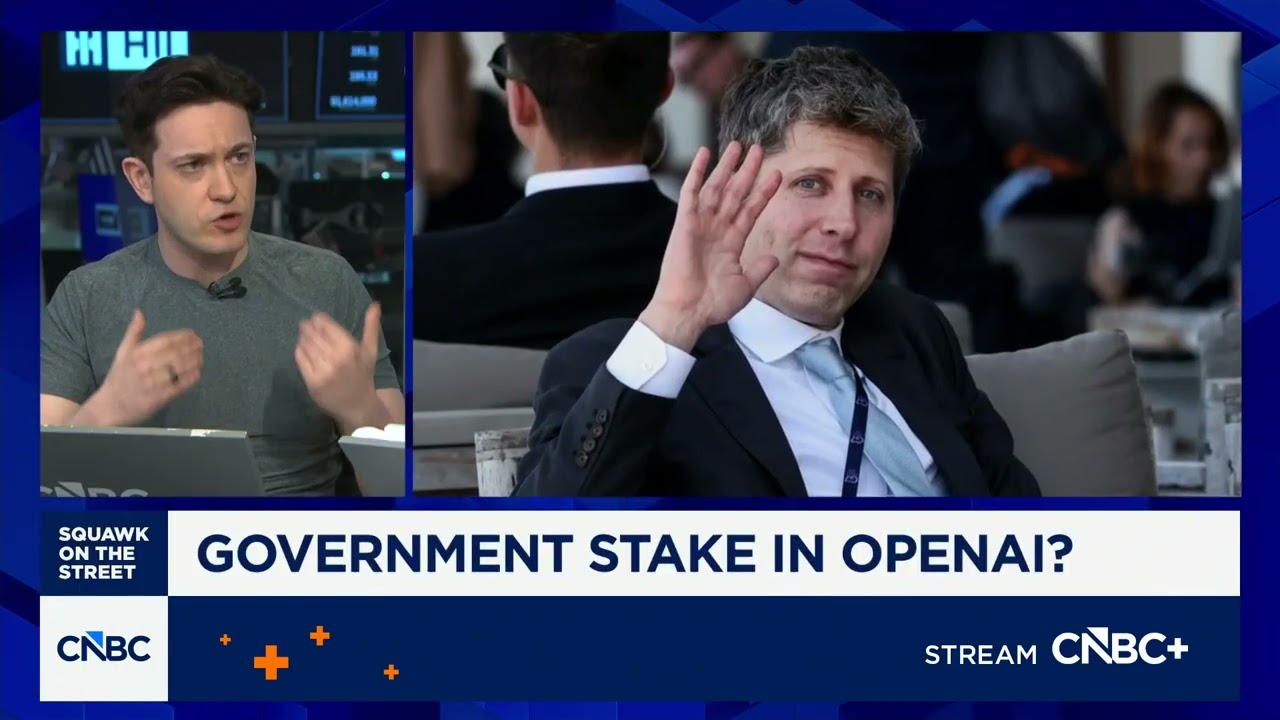
Ed Zitron added mainstream economic skepticism. His CNBC clip reached 308,694 views, 7,592 likes, and 1,700 comments under a headline that generative AI "doesn't work" and that big tech is out of hypergrowth ideas. The distinctive signal is that anti-GenAI ROI language is now mass-audience broadcast content rather than only insider critique (video).

Siliconversations converted the same trust question into operational cyber risk. Its Glasswing video reached 69,385 views, 10,495 likes, and 1,100 comments, and Anthropic's Project Glasswing page says Claude Mythos Preview identified thousands of zero-day vulnerabilities and autonomously developed many related exploits. The distinctive signal is that "AI risk" is being narrated through concrete cyber capability rather than only through abstract alignment slogans (video).
Discussion insight: djvlad kept catastrophic-risk framing mainstream by giving Roman Yampolskiy a nearly hour-long interview that still drew 151,507 views and 1,100 comments (video).
Comparison to prior day: Compared with 2026-07-05, which centered search frustration and anti-GenAI economics, 2026-07-06 widened the same trust debate into civilization-scale governance because Harari became the dominant item.
1.2 Builder attention stayed on bounded workflows, reusable loops, and review-first AI coding 🡕
Four items supported this theme. The strongest builder signals on 2026-07-06 again sat above the model layer: who supervises the agent, how context is recovered, how work is reviewed, and what gets automated only after guardrails exist. That matters because the feed keeps rewarding teams that package control, memory, and verification instead of promising raw autonomy.
Google DeepMind remained the cleanest control-layer anchor. Its 42-minute video reached 157,417 views and points to the AI Control Roadmap, which treats internal agents as potential insider threats and measures defenses through coverage, recall, and time-to-response. The distinctive signal is that advanced-agent work is still being framed as security architecture and controlled permissions rather than prompt craft (video).

Matthew Berman supplied the strongest reusable-workflow evidence. His roundup reached 82,821 views and links directly to Loop Library / Loopy and codebase-memory-mcp, which package bounded loops and local code-intelligence memory instead of another chat wrapper. The distinctive signal is that more builder energy is going into repeatable scaffolding around agents than into another thin interface layer (video).
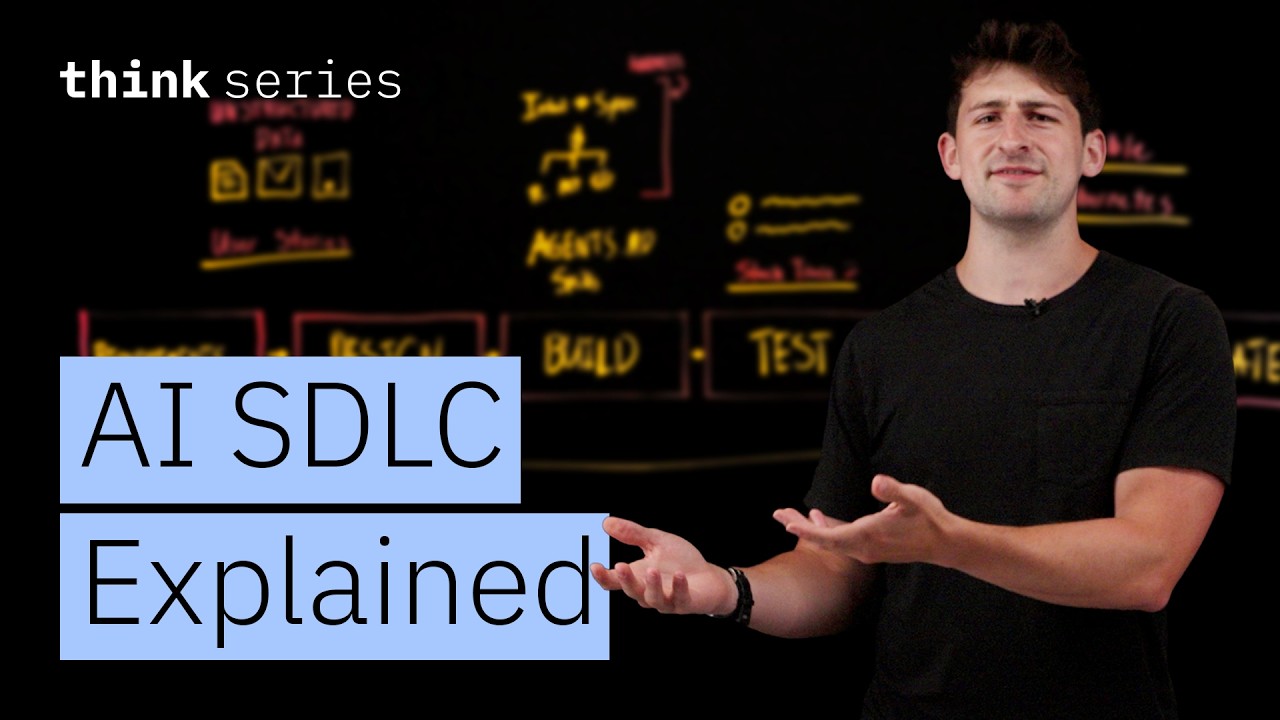
IBM Technology kept the workflow-redesign thesis explicit. Its SDLC video reached 69,097 views and argues that coding speed alone does not fix software delivery if planning, testing, and deployment stay unchanged. The distinctive signal is that enterprise-facing AI education is treating agents as a process-redesign problem rather than a faster autocomplete story (video).
Discussion insight: Tech With Tim made the same point from the practitioner's side by showing a real AI coding workflow "bugs and all," where planning, prompting, and debugging remain visible and human-led (video).
Comparison to prior day: Compared with 2026-07-05's workflow-redesign emphasis, 2026-07-06 made the safe-change stance more concrete through loop libraries, local code memory, and live-debugging evidence.
1.3 Open, local, and edge AI kept gaining ground when deployment fit or privacy was explicit 🡕
Five items supported this theme. The best open and local stories on 2026-07-06 were explicit about where the model runs, what tooling surrounds it, and why privacy or portability matters. That matters because adoption keeps clustering around legible operating paths rather than around abstract open-source enthusiasm.

AI Search delivered the highest-reach local creative-AI signal. Its Krea 2 review reached 141,388 views, 6,536 likes, and 897 comments, and the description links the Krea 2 Technical Report, Hugging Face weights, a ComfyUI rebalance node, and Ostris AI Toolkit. The distinctive signal is that local creative AI is being sold as a controllable stack built around aesthetic diversity and creator control, not as one magic generator (video).

Google for Developers contributed the clearest edge-deployment signal. Its Gemma 4 video reached 90,816 views, 3,838 likes, and 237 comments and frames the model around "intelligence per byte," offline-capable local deployment, and multimodal agentic use on constrained devices. The distinctive signal is that frontier capability is being marketed through portability and resilience rather than only through cloud scale (video).

Matt Wolfe kept the open-model story practical. His GLM-5.2 guide reached 68,653 views, 2,248 likes, and 218 comments and describes an MIT-licensed model with 1 million token context that can be used through a hosted app, an API and agent harness, or self-hosted infrastructure. The distinctive signal is that open-model excitement is still converting only when the deployment choices are legible (video).
Discussion insight: Dad, the engineer and Dr. Josh C. Simmons showed the same theme from opposite directions: one built a private local voice assistant on a Pi 5 plus Gemma 4 stack, while the other argued "open source ai sucks" unless side-by-side comparisons against Claude and ChatGPT actually hold up (Dad, the engineer, Dr. Josh C. Simmons).
Comparison to prior day: Compared with 2026-07-05's emphasis on deployment fit, 2026-07-06 added more privacy-first home AI and more explicit skepticism about whether cheap open models are good enough.
1.4 AI literacy and career reorientation climbed as audiences tried to understand what AI changes about human work 🡕
Two items supported this theme. Mid-rank attention moved toward explaining what AI means for reasoning and careers, not just showcasing a new tool. That matters because audiences are trying to decide what to learn, what to distrust, and how much of today's AI language is substance versus theater.
Lattice added the clearest career-reframing signal. "Computer Science in the AI Era" reached 115,007 views, 5,588 likes, and 195 comments, showing that the question of how programming education and career preparation change under AI still attracts broad attention. The distinctive signal is that AI-era skill adaptation is a mainstream audience topic rather than a niche builder concern (video).

Bernard Marr provided the clearest reasoning-model explainer. His video reached 71,843 views and explains why reasoning models break problems into steps instead of only guessing the next word, while still emphasizing the need for human oversight. The distinctive signal is that audiences want conceptual translation, not only benchmark marketing (video).
Discussion insight: Harari's top-ranked talk pushed the same orientation question to the civilization layer by asking what happens when AI starts occupying trust-bearing bureaucratic roles.
Comparison to prior day: Compared with 2026-07-05's heavier emphasis on creator tools and workflow surfaces, 2026-07-06 spent more mid-rank attention on understanding what AI changes about human work and learning.
1.5 Physical AI and AI infrastructure stayed credible only when the hardware or power story was explicit 🡒
Two items supported this theme. Physical AI occupied a smaller share of the 2026-07-06 feed than trust or builder workflows, but the credible items were concrete about factories, chips, or power generation. That matters because YouTube AI coverage still trusts embodiment stories only when the underlying stack is visible.

AI Revolution supplied the clearest manufacturing claim. Its U-World U1 video reached 83,054 views, 2,162 likes, and 393 comments, and the linked reporting frames the robot as a full-size, mass-produced humanoid with face-and-voice replication ambitions. The distinctive signal is that humanoid attention is being attached to manufacturing and product language rather than only to demo spectacle (video).

Bloomberg Technology broadened the same theme into infrastructure. Its Valar Atomics segment reached 34,843 views, 624 likes, and 63 comments and says an advanced reactor powered an Nvidia Blackwell chip in a U.S. first. The distinctive signal is that AI infrastructure debate is reaching all the way down to energy supply instead of stopping at chips or datacenters (video).
Discussion insight: Dad, the engineer carried the same hardware-explicit instinct to the household scale by naming the Pi 5, ESP32-S3-BOX-3, Home Assistant, and Gemma 4 pieces of a local voice stack (video).
Comparison to prior day: Compared with 2026-07-05's broader mix of humanoid manufacturing and DIY robotics, 2026-07-06 kept the hardware story smaller in share but even more literal about components and power.
2. What Frustrates People
Trust in AI-mediated systems is eroding from search to civilizational governance
This is High severity. Yuval Noah Harari, Switch and Click, Ed Zitron, Siliconversations, and djvlad show the same gap from different angles: users do not want opaque systems deciding search results, institutional outcomes, or cybersecurity risk without stronger accountability. The coping pattern is to switch tools, slow trust, or demand hard safeguards before granting more control. This is directly worth building for.
AI coding still needs bounded workflows, memory, and human review
This is High severity. Google DeepMind, Matthew Berman, IBM Technology, and Tech With Tim all point to the same failure mode: once AI touches real software work, teams still need supervisors, loops, codebase memory, SDLC redesign, and visible debugging. The workaround is more scaffolding around the model rather than more autonomy from it. This is directly worth building for.
Open and local AI still requires too much deployment, evaluation, and privacy glue
This is High severity. AI Search, Google for Developers, Matt Wolfe, Dad, the engineer, and Dr. Josh C. Simmons show that attractive local or open systems still demand weights, hardware choices, deployment decisions, and side-by-side evaluation before they feel trustworthy. The workaround is to use hosted fallbacks, follow long setup tutorials, or limit the use case to a narrow task. This is directly worth building for.
Creator AI video still depends on fragmented free-access paths and DIY toolchains
This is Medium severity. Kevin Stratvert, Jack Vs. AI, and Brain Project all show creators stitching together local installs, Higgsfield and Gemini workflows, or temporary free access just to get usable AI video. The workaround is to accept tool sprawl, chase whichever provider is currently free, or learn a node-based workflow like ComfyUI. This is worth building for, but competition will be intense.
Physical AI and AI infrastructure still depend on concrete hardware, supply, and power constraints
This is Medium severity. AI Revolution, Bloomberg Technology, and Dad, the engineer point to the same constraint: embodied or always-on AI only becomes credible when the chip, reactor, battery, board, or network boundary is explicit. The workaround is either narrow DIY scope or industrial-scale capital and supply chains. This is worth building for, but the execution burden is high.
3. What People Wish Existed
Trustworthy governance and discovery surfaces for the AI-shaped world
Yuval Noah Harari, Switch and Click, Ed Zitron, and Siliconversations imply a practical need for products that make search, model-backed decisions, and institutional automation more legible, contestable, and auditable. The urgency is high because people are already switching search tools while mainstream voices question whether the broader AI story deserves trust at all. Opportunity: direct.
Operating layer for bounded, reviewable AI coding and agent work
Google DeepMind, Matthew Berman, IBM Technology, and Tech With Tim all imply the same missing layer: supervisors, loops, memory, traces, workflow checkpoints, and human review in one operating surface. The need is practical rather than emotional because serious builders already want AI inside real workflows, just not without controls. Opportunity: direct.
Local-first deployment plane for edge, private, and home AI
AI Search, Google for Developers, Matt Wolfe, Dad, the engineer, and Dr. Josh C. Simmons imply demand for help choosing between local, edge, hosted, and self-hosted paths while preserving privacy and avoiding configuration sprawl. The urgency is high because interest in local and open AI is already outrunning operational clarity. Opportunity: direct.
Practical AI learning and career-adaptation guides
Lattice, Bernard Marr, and Yuval Noah Harari imply a mix of emotional and practical demand for trustworthy explanations of reasoning models, AI-era computer science, and how much of human work or institutions will actually change. The urgency is Medium-to-High because the audience is trying to orient itself, not only shop for a new tool. Opportunity: competitive.
Creator surface that unifies free or local generation with editable video workflows
Kevin Stratvert, Jack Vs. AI, and Brain Project show creators wanting one route that combines local generation, real-footage editing, and low-cost access without weekly tool chasing. The urgency is Medium because the category is active and clearly useful, but the competition is already visible across many overlapping access paths. Opportunity: competitive.
4. Tools and Methods in Use
| Tool | Category | Sentiment | Strengths | Limitations |
|---|---|---|---|---|
| DuckDuckGo / Startpage / Brave Search / Kagi | Search alternatives | (+/-) | Give users concrete ways to test different retrieval behavior when Google search feels degraded | Still fragmented and there is no clear winner |
| AI Control Roadmap | Agent governance method | (+) | Defense-in-depth, supervisor models, and measurable coverage, recall, and response metrics | Adds monitoring overhead and depends on surrounding controls |
| Loop Library / Loopy | Agent workflow library | (+) | Bounded loops with checks, feedback, and stopping rules | Needs adaptation to local tools and approval boundaries |
| codebase-memory-mcp | Code intelligence / MCP | (+) | Persistent local knowledge graph, fast structural queries, and large-repo context recovery | Adds another indexing layer and setup surface |
| Krea 2 + ComfyUI stack | Open-weight creative workflow | (+/-) | Aesthetic diversity, open weights, prompt and style control, and local creator flexibility | Requires nodes, weights, GPU fit, and workflow tuning |
| Gemma 4 | Edge model | (+) | Offline-capable deployment, "intelligence per byte," and multimodal use on constrained devices | Device limits and integration work still matter |
| GLM-5.2 | Open model | (+/-) | 1 million token context, MIT license, hosted/API/self-hosted choices, and lower cost | Real-world comparisons versus Claude and ChatGPT remain mixed and setup burden stays with the user |
| KV cache + paged attention | LLM inference method | (+) | Improves decode speed, GPU throughput, and latency under load | Demands infrastructure knowledge and careful tuning |
| Home Assistant + Ollama + Gemma 4 E2B + Whisper/Piper/openWakeWord | Local voice assistant stack | (+/-) | Keeps audio local, uses owned hardware, and supports deterministic local intent paths | Multi-service setup, LAN security, and device tuning are nontrivial |
| ComfyUI / Gemini Omni / Seedance access paths | AI video creation stack | (+/-) | Free or low-cost generation, real-footage editing, character consistency, and lightweight entry points | Fragmented across installs, credits, and temporary access routes |
| Human-in-the-loop AI coding workflow | Workflow method | (+/-) | Keeps bugs, prompts, and review visible during real builds | Slower than full-autonomy marketing and still demands skill |
The overall satisfaction spectrum on 2026-07-06 is most positive toward tools that add control, privacy, or review structure, and most mixed toward tools that require extra setup or fragmented access paths. The strongest praise goes to surfaces that make AI behavior more inspectable or locally controllable.
The common workaround pattern is to wrap the base capability in more structure: switch search providers, add loops and supervisors around agents, choose hosted fallbacks before self-hosting, follow detailed setup guides for local stacks, or chase whichever AI-video surface is currently cheapest and most editable. Migration is visible in four directions at once: from Google search to alternatives, from raw autonomy to reviewable workflows, from cloud-only AI to edge and home deployment, and from one-shot generation toward editable video pipelines.
5. What People Are Building
| Project | Who built it | What it does | Problem it solves | Stack | Stage | Links |
|---|---|---|---|---|---|---|
| Loop Library / Loopy | Forward Future | Publishes bounded agent loops in a public catalog and offers a companion skill for finding, adapting, and running them | Repeated agent work lacks checks, feedback loops, and stopping rules | Loop catalog, Loopy skill, agent guides | Shipped | site, repo, video |
| codebase-memory-mcp | DeusData | Builds a persistent local code-intelligence graph for coding agents | File-by-file exploration and missing repository memory slow down AI coding | Tree-sitter, Hybrid LSP, knowledge graph, MCP | Shipped | repo, video |
| Krea 2 local creator stack | Krea | Ships open-weight image models plus prompt and style controls creators can run through local tooling | Closed or default-heavy creative generation lacks control and exploration range | Krea 2, open weights, ComfyUI, rebalance node, AI Toolkit | Shipped | report, video |
| Project Glasswing | Anthropic | Gives partners access to Claude Mythos Preview to find and fix vulnerabilities at scale | Defensive cybersecurity cannot keep pace with AI-assisted attackers using human labor alone | Claude Mythos Preview, partner program, zero-day discovery workflow | Beta | announcement, video |
| Private local voice assistant stack | Dad, the engineer | Shows a DIY smart-speaker alternative that keeps voice interaction on owned hardware | Cloud smart speakers stream audio to third-party servers and hide too much of the stack | Raspberry Pi 5, Home Assistant, Ollama, Gemma 4 E2B, Whisper, Piper, openWakeWord, ESP32-S3-BOX-3 | Alpha | worksheet, video |
Loop Library and codebase-memory-mcp show the same meta-build pattern from different angles. The product is not only the model. It is the surrounding surface that tells the agent what to do next, how to verify progress, and how to recover context without manual file hunting.
Project Glasswing and the local voice-assistant stack push opposite ends of the deployment spectrum. One uses frontier agentic coding for defensive cyber operations across shared infrastructure, while the other keeps voice AI on a Raspberry Pi and ESP32 satellite. In both cases, the builder story is about explicit control boundaries rather than black-box convenience.
Krea 2 fits the same pattern on the creator side. The winning build is not only the model weights. It is the combination of open weights, prompt expansion, style-reference controls, and surrounding local tools that make the system more steerable. Across the day's projects, repeated build patterns center on trust boundaries, review loops, and local control rather than on raw capability alone.
6. New and Notable
Civilization-scale AI governance became the top-ranked YouTube AI narrative
Yuval Noah Harari is notable because the highest-reach item in the dataset was not a launch, benchmark, or tutorial. It was a talk about AI entering the trust-bearing bureaucratic systems that govern loans, admissions, sentencing, and war.
Project Glasswing made AI safety unusually concrete
Siliconversations is notable because the linked Glasswing material says Claude Mythos Preview found thousands of zero-day vulnerabilities and many related exploits autonomously. That makes the day's safety discourse much more operational than the usual alignment rhetoric.
Private home AI got concrete enough to copy
Dad, the engineer is notable because the companion worksheet gives a full parts list and setup path for a private local voice assistant built from a Pi 5, Home Assistant, Ollama, Gemma 4 E2B, Whisper, Piper, openWakeWord, and an ESP32-S3-BOX-3.
Mass-produced humanoid framing stayed in the feed
AI Revolution is notable because the U-World U1 story is framed around mass production, human-replica positioning, and manufacturing scale rather than a one-off robot demo.
AI infrastructure debate dropped all the way to reactor output
Bloomberg Technology is notable because the Valar Atomics segment ties AI demand directly to advanced-reactor output and Nvidia Blackwell hardware. The story is not only that AI needs more chips. It is that power generation itself is becoming part of the AI product stack.
7. Where the Opportunities Are
[+++] Trustworthy AI governance and discovery surfaces - Yuval Noah Harari, Switch and Click, Ed Zitron, and Siliconversations show users questioning AI in search, institutions, and cyber defense at the same time.
[+++] Reviewable operating layer for AI coding and agents - Google DeepMind, Matthew Berman, IBM Technology, and Tech With Tim all point to supervisors, loops, memory, workflow redesign, and human review as the missing layer.
[+++] Local-first deployment and privacy plane - AI Search, Google for Developers, Matt Wolfe, and Dad, the engineer show strong demand for AI that runs on-device, at the edge, or on owned hardware with clear control boundaries.
[++] AI learning and career-adaptation products - Lattice and Bernard Marr show audiences wanting credible orientation about reasoning models, AI-era computer science, and what to learn next.
[++] Creator workflow consolidation for free or local AI video - Kevin Stratvert, Jack Vs. AI, and Brain Project show steady demand for editable, low-cost video pipelines that do not depend on one closed provider.
[+] Hardware-aware physical AI and AI-power planning - AI Revolution and Bloomberg Technology imply a smaller but real opening for products that package robots, chips, and power assumptions into something more operational.
8. Takeaways
- Civilization-scale governance beat product hype as the biggest YouTube AI signal. The top-ranked item in the dataset was a warning about AI entering trust-bearing bureaucratic systems, not a launch or benchmark. (source)
- Search distrust is still converting into active tool switching. The biggest consumer workflow story in the feed remained people testing alternatives like DuckDuckGo, Startpage, Brave Search, and Kagi instead of accepting Google's current results. (source)
- Serious builders keep investing above the model layer. The strongest product and workflow signals came from supervisors, loops, code memory, SDLC redesign, and visible debugging rather than from raw autonomy alone. (source)
- Local and private AI only becomes compelling when the operational path is explicit. Krea 2, Gemma 4, GLM-5.2, and the Pi-based voice assistant all got traction by explaining how the system runs, where it runs, or what privacy boundary it preserves. (source)
- AI education is becoming a mainstream product category, not a side conversation. "Computer Science in the AI Era" and reasoning-model explainers earned substantial attention because audiences are trying to recalibrate skills and mental models, not only buy tools. (source)
- AI infrastructure debate now reaches all the way to power generation. The reactor-powered Blackwell demo shows that energy supply is becoming part of the AI stack, not just a background constraint. (source)